
VERBOS REFLEXIVOS Espanol II What are reflexive verbs
VERBOS REFLEXIVOS Espanol II
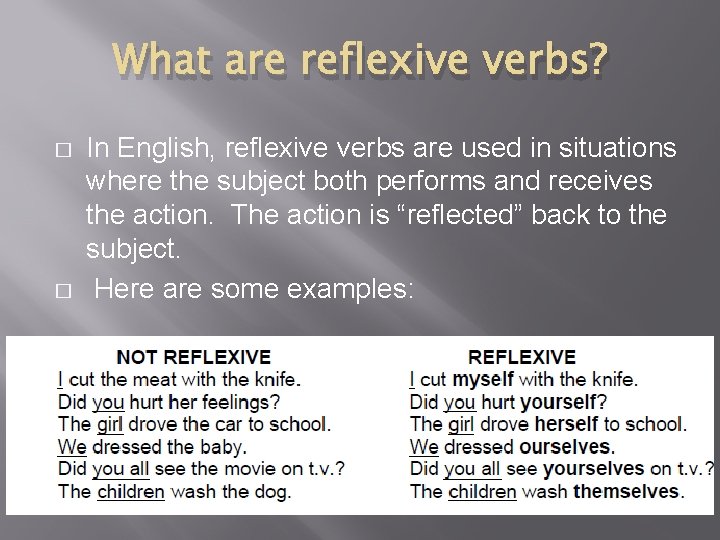
What are reflexive verbs? � � In English, reflexive verbs are used in situations where the subject both performs and receives the action. The action is “reflected” back to the subject. Here are some examples:
� � In Spanish, reflexive verbs serve the same purpose. They are used more often in Spanish and they are easily recognized because they use reflexive pronouns. In the infinitive forms, they are attached to the end of the verbs. When conjugated, they are placed before the conjugated forms of the verbs. � The reflexive pronouns are as follows: me nos te ---- se se
Common Spanish Reflexive Verbs 1. 2. 3. 4. 5. 6. 7. 8. 9. 10. 11. 12. 13. 14. 15. 16. acostarse (o>ue): to go to bed afeitarse: to shave bañarse: to take a bath cepillarse: to brush (one’s hair, teeth, etc. ) despertarse (e>ie): to wake up dormirse (o>ue): to fall asleep ducharse: to take a shower irse (irregular): to go away lavarse: to wash oneself levantarse: to get out of bed; to stand up llamarse: to call oneself, to be named maquillarse: to put on makeup peinarse: to comb one’s hair ponerse: to put on secarse: to dry (off) vestirse (e>i): to get dressed
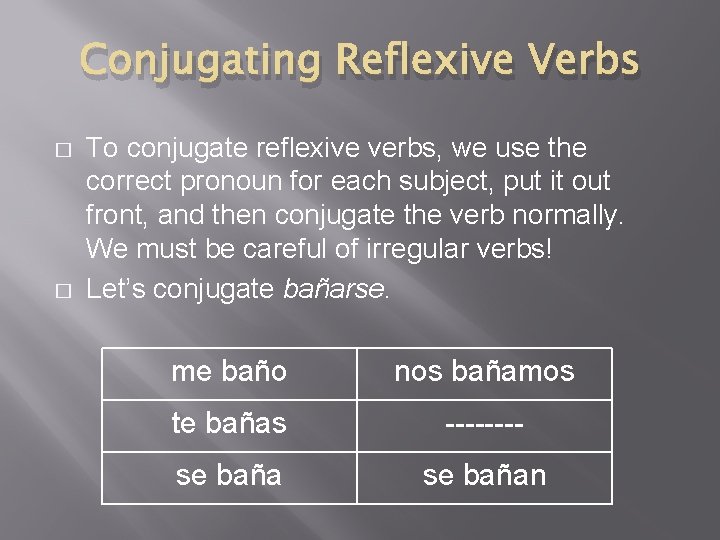
Conjugating Reflexive Verbs � � To conjugate reflexive verbs, we use the correct pronoun for each subject, put it out front, and then conjugate the verb normally. We must be careful of irregular verbs! Let’s conjugate bañarse. me baño nos bañamos te bañas ---- se bañan
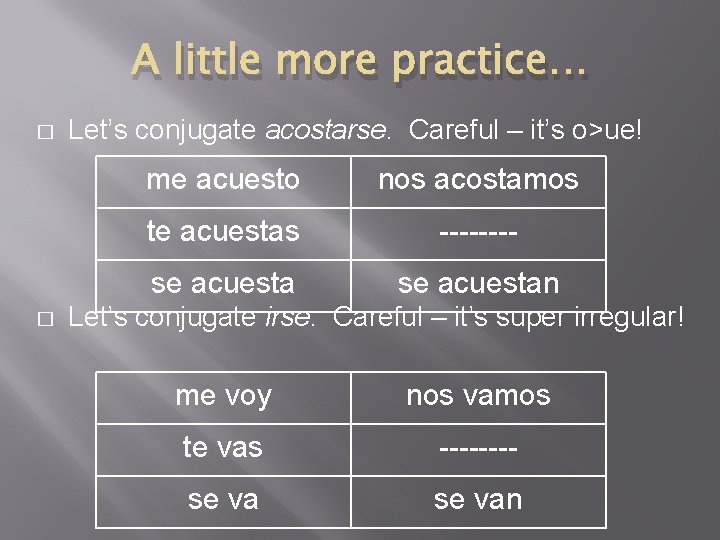
A little more practice… � � Let’s conjugate acostarse. Careful – it’s o>ue! me acuesto nos acostamos te acuestas ---- se acuestan Let’s conjugate irse. Careful – it’s super irregular! me voy nos vamos te vas ---- se van
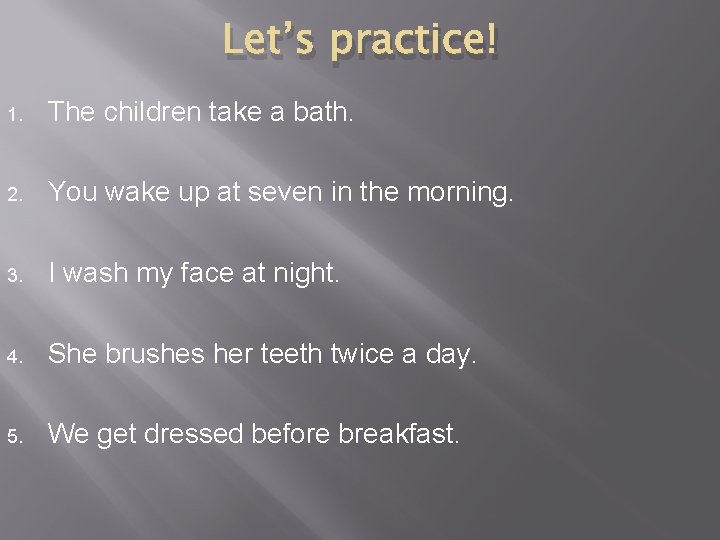
Let’s practice! 1. The children take a bath. 2. You wake up at seven in the morning. 3. I wash my face at night. 4. She brushes her teeth twice a day. 5. We get dressed before breakfast.
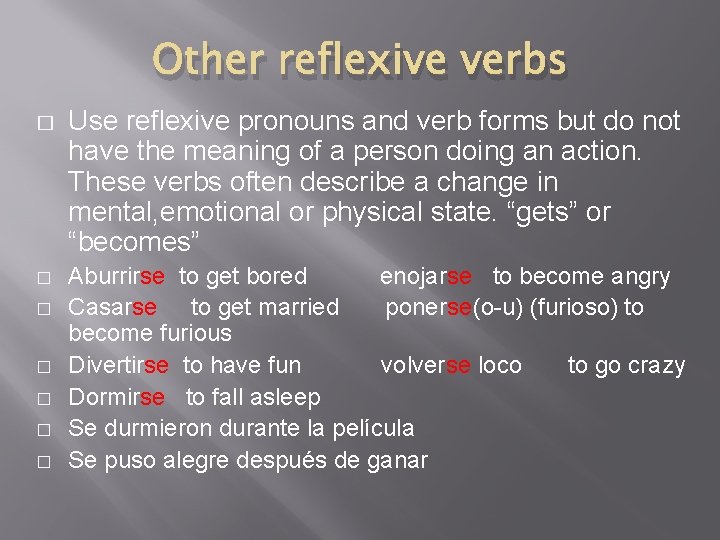
Other reflexive verbs � � � � Use reflexive pronouns and verb forms but do not have the meaning of a person doing an action. These verbs often describe a change in mental, emotional or physical state. “gets” or “becomes” Aburrirse to get bored enojarse to become angry Casarse to get married ponerse(o-u) (furioso) to become furious Divertirse to have fun volverse loco to go crazy Dormirse to fall asleep Se durmieron durante la película Se puso alegre después de ganar
- Slides: 8