
Verbal Deescalation Strategies 2009 2010 Kathy Huppe Sara
Verbal De-escalation Strategies 2009 -2010 Kathy Huppe Sara Dilday
Questions to Ask? o. How do I recognize the early warning signs that a person’s behavior may escalate? o. How can I intervene effectively before the person’s behavior becomes dangerous?
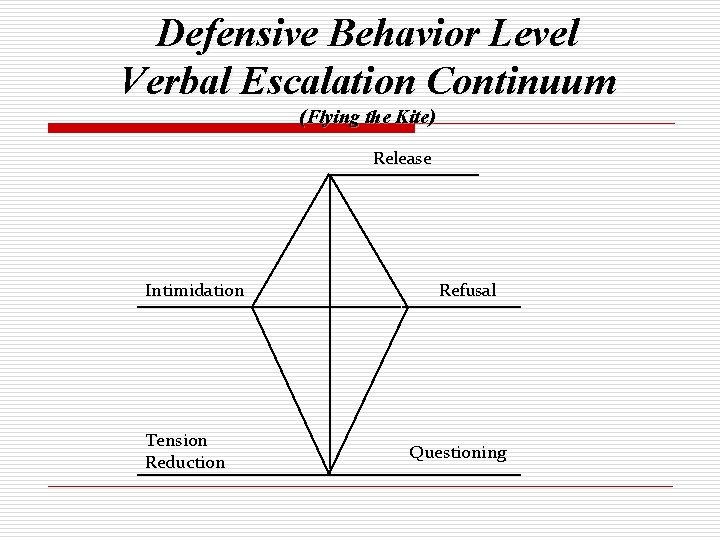
Defensive Behavior Level Verbal Escalation Continuum (Flying the Kite) Release Intimidation Tension Reduction Refusal Questioning
Stage 1 -Questioning Characterized by: o. A. Information Seeking Questions: a rational question seeking a rational response OR o. B. Challenging Questions: questioning authority or being evasive. An attempt to engage in a power struggle. Staff Attitudes/Approaches o. A. Answer the questions, Give a rational response, Avoid Power struggles o. B. Stay on topic, redirect, repeat, set limits
Stage 2 -Refusal Characterized by: q. Noncompliance, a slight loss of rationalization Staff Attitudes/Approaches q. Set limits
Stage 3 -Release Characterized by: o. Acting out, emotional outburst, loss of rationalization. Venting, screaming, swearing. High energy output Staff Attitudes/Approaches: o. Allow venting! Isolate the situation by removing audience or individual, set limits, state directives, be prepared to enforce limits
Stage 4 - Intimidation Characterized by: o. Verbally and/or nonverbally threatening. Hands on approach at this time may trigger a physical response Staff Attitudes/Approaches: o. Set limits, take threats seriously, document the situation, seek assistance, wait for team, try to avoid individual intervention.
Stage 5 -Tension Reduction Characterized by: o. Decrease in emotional and physical energy. This is always are goal, to get them calmed. This drop in energy occurs after every crisis situation. Staff Attitudes/Approaches: o. Re-establish trust, communication, and Therapeutic Rapport with the client. Care, Welfare, Safety, and Security!
Additional Considerations o Personal space n o Body language n n o Maintain a safe/comfortable distance What non-verbal messages are you communicating Body positioning, facial expressions, posture, movements, gestures Paraverbals n n n Voice volume Voice tone Voice speed
Additional Considerations (cont). o Integrated Experience: n The idea that the behaviors and attitudes of staff directly impact the behavior and attitudes of students in your care and vice versa. o Rational Detachment n The ability to stay in control of your own behaviors and not take the acting out behavior personally. n It’s Not About You!
- Slides: 10