
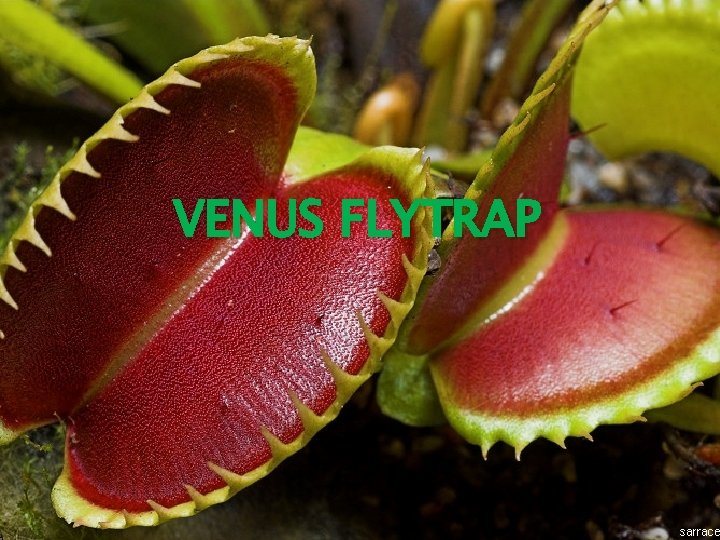
VENUS FLYTRAP Overview The Venus fly trap is
- Slides: 9
VENUS FLYTRAP
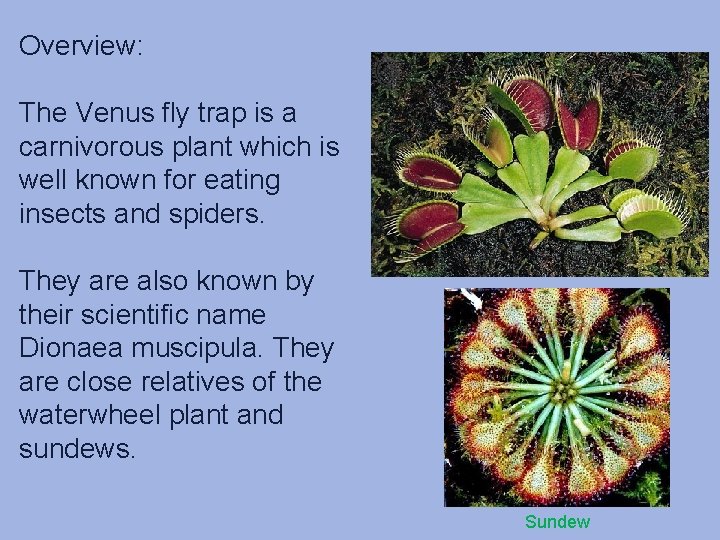
Overview: The Venus fly trap is a carnivorous plant which is well known for eating insects and spiders. They are also known by their scientific name Dionaea muscipula. They are close relatives of the waterwheel plant and sundews. Sundew
Name: The Venus flytrap is named after Venus the Roman goddess of love. Their scientific name refers to Dione who was a Greek goddess. They have also been known as the mousetrap.
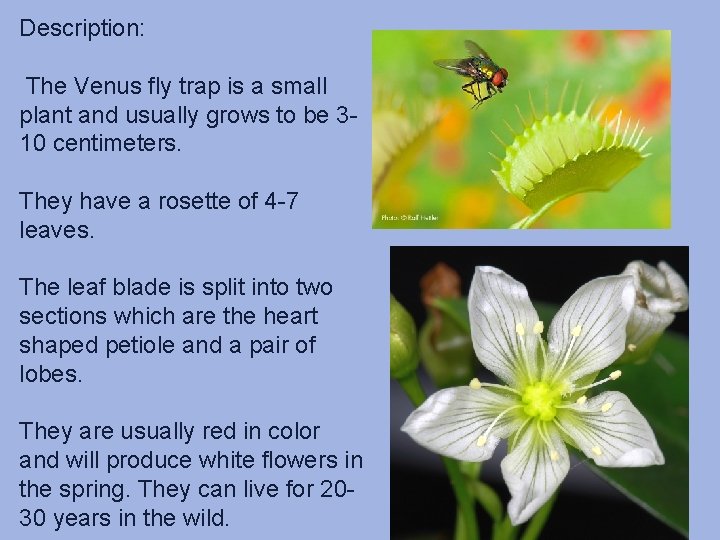
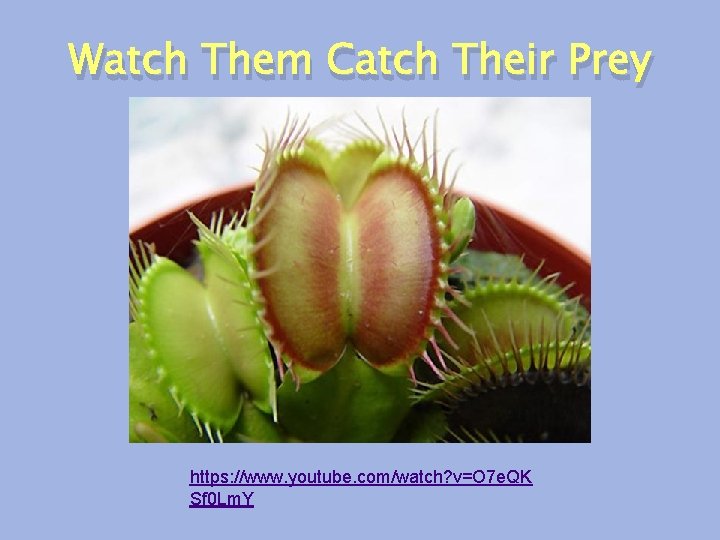
Description: The Venus fly trap is a small plant and usually grows to be 310 centimeters. They have a rosette of 4 -7 leaves. The leaf blade is split into two sections which are the heart shaped petiole and a pair of lobes. They are usually red in color and will produce white flowers in the spring. They can live for 2030 years in the wild.
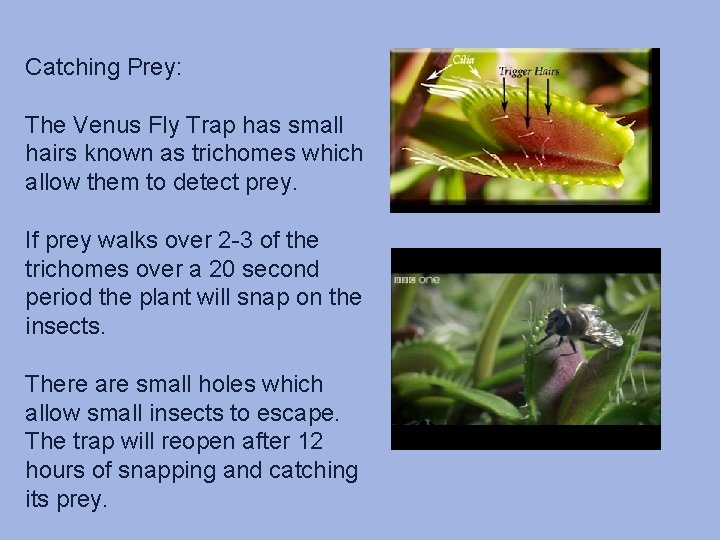
Catching Prey: The Venus Fly Trap has small hairs known as trichomes which allow them to detect prey. If prey walks over 2 -3 of the trichomes over a 20 second period the plant will snap on the insects. There are small holes which allow small insects to escape. The trap will reopen after 12 hours of snapping and catching its prey.
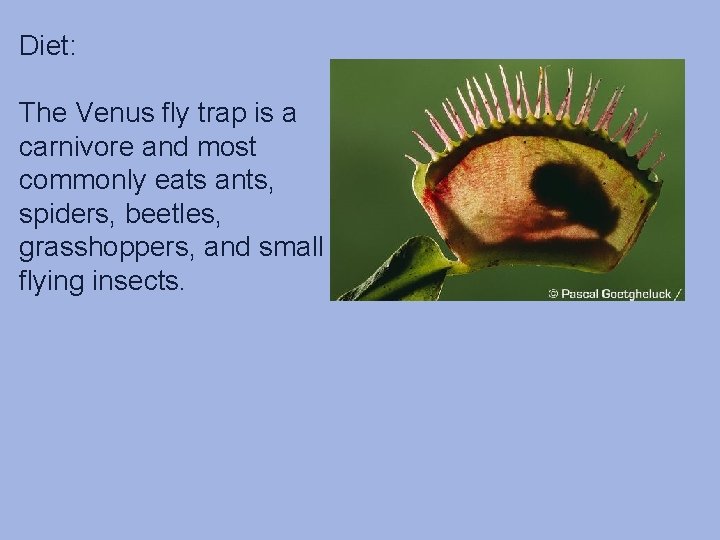
Diet: The Venus fly trap is a carnivore and most commonly eats ants, spiders, beetles, grasshoppers, and small flying insects.
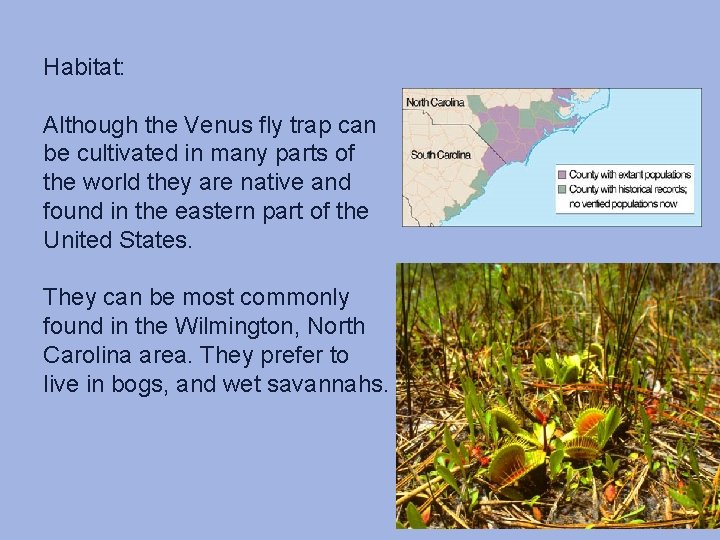
Habitat: Although the Venus fly trap can be cultivated in many parts of the world they are native and found in the eastern part of the United States. They can be most commonly found in the Wilmington, North Carolina area. They prefer to live in bogs, and wet savannahs.
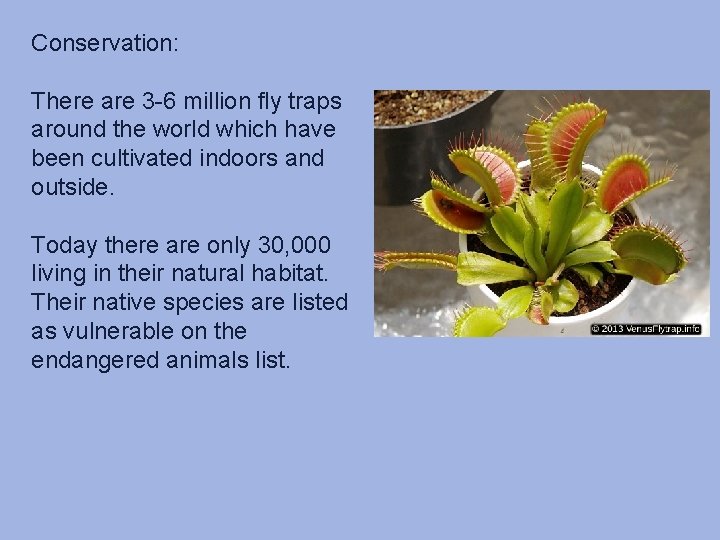
Conservation: There are 3 -6 million fly traps around the world which have been cultivated indoors and outside. Today there are only 30, 000 living in their natural habitat. Their native species are listed as vulnerable on the endangered animals list.
Watch Them Catch Their Prey https: //www. youtube. com/watch? v=O 7 e. QK Sf 0 Lm. Y