
Venue Traps and Rules Considerations for choices of
- Slides: 22
Venue Traps and Rules: Considerations for choices of venue when filing suit, venue contests (procedure and substance), and potential impact on case outcomes 11/4/2020 © 2017 Riley Law Firm 1
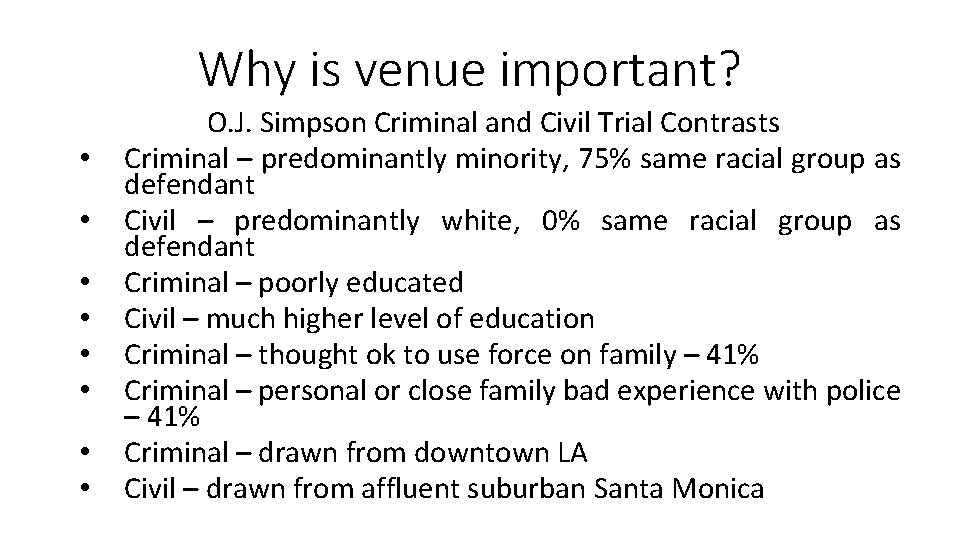
Why is venue important? • • O. J. Simpson Criminal and Civil Trial Contrasts Criminal – predominantly minority, 75% same racial group as defendant Civil – predominantly white, 0% same racial group as defendant Criminal – poorly educated Civil – much higher level of education Criminal – thought ok to use force on family – 41% Criminal – personal or close family bad experience with police – 41% Criminal – drawn from downtown LA Civil – drawn from affluent suburban Santa Monica
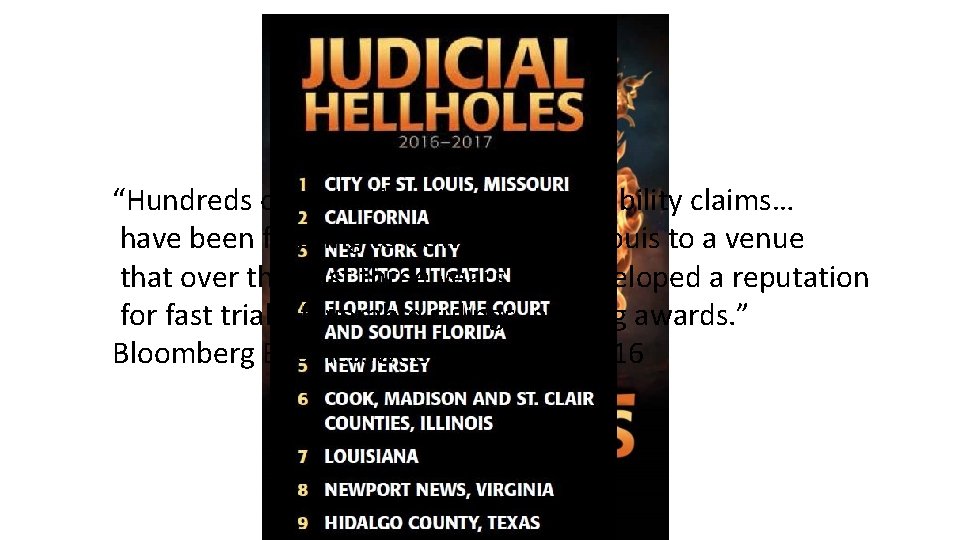
“Hundreds of plaintiffs with product liability claims… have been flocking to downtown St. Louis to a venue that over the past three years has developed a reputation for fast trials, favorable rulings, and big awards. ” Bloomberg Businessweek, Sept. 29, 2916
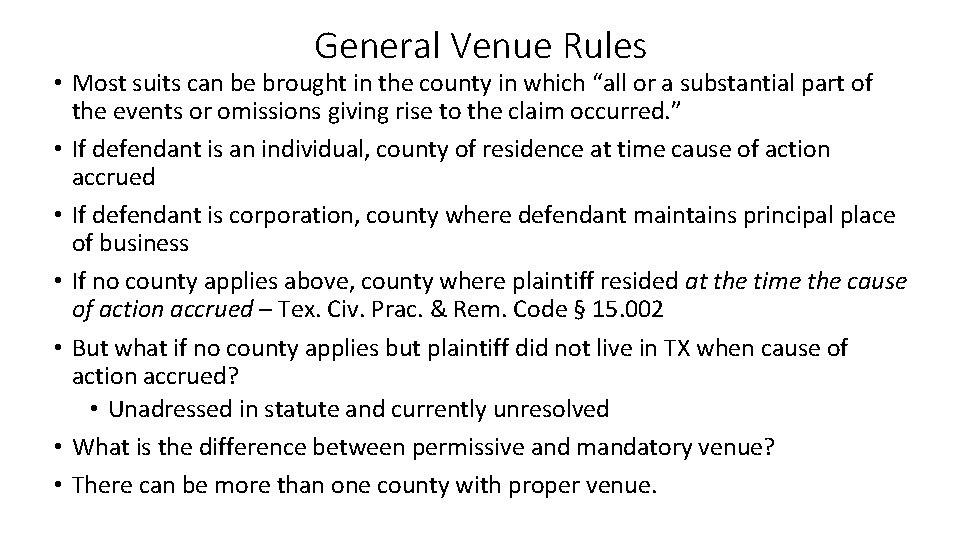
General Venue Rules • Most suits can be brought in the county in which “all or a substantial part of the events or omissions giving rise to the claim occurred. ” • If defendant is an individual, county of residence at time cause of action accrued • If defendant is corporation, county where defendant maintains principal place of business • If no county applies above, county where plaintiff resided at the time the cause of action accrued – Tex. Civ. Prac. & Rem. Code § 15. 002 • But what if no county applies but plaintiff did not live in TX when cause of action accrued? • Unadressed in statute and currently unresolved • What is the difference between permissive and mandatory venue? • There can be more than one county with proper venue.
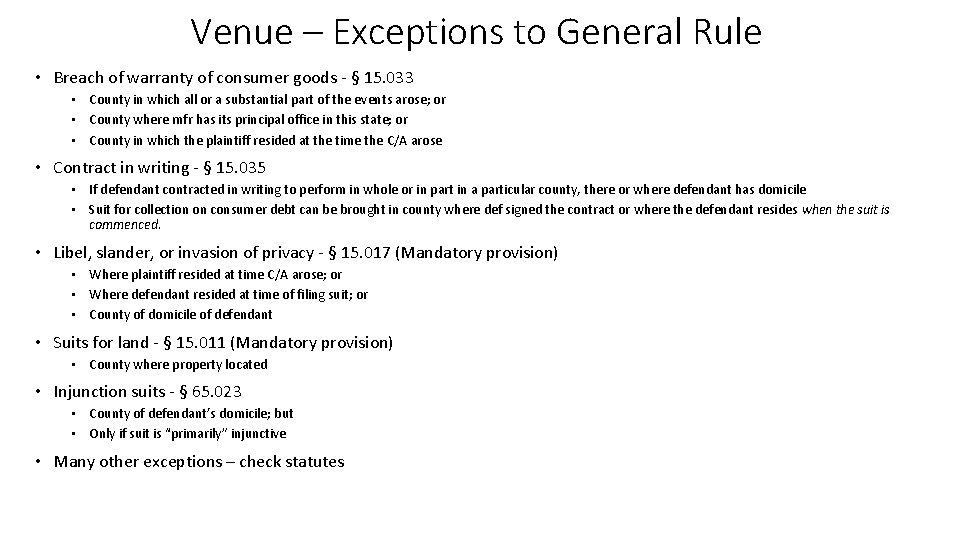
Venue – Exceptions to General Rule • Breach of warranty of consumer goods - § 15. 033 • County in which all or a substantial part of the events arose; or • County where mfr has its principal office in this state; or • County in which the plaintiff resided at the time the C/A arose • Contract in writing - § 15. 035 • If defendant contracted in writing to perform in whole or in part in a particular county, there or where defendant has domicile • Suit for collection on consumer debt can be brought in county where def signed the contract or where the defendant resides when the suit is commenced. • Libel, slander, or invasion of privacy - § 15. 017 (Mandatory provision) • Where plaintiff resided at time C/A arose; or • Where defendant resided at time of filing suit; or • County of domicile of defendant • Suits for land - § 15. 011 (Mandatory provision) • County where property located • Injunction suits - § 65. 023 • County of defendant’s domicile; but • Only if suit is “primarily” injunctive • Many other exceptions – check statutes
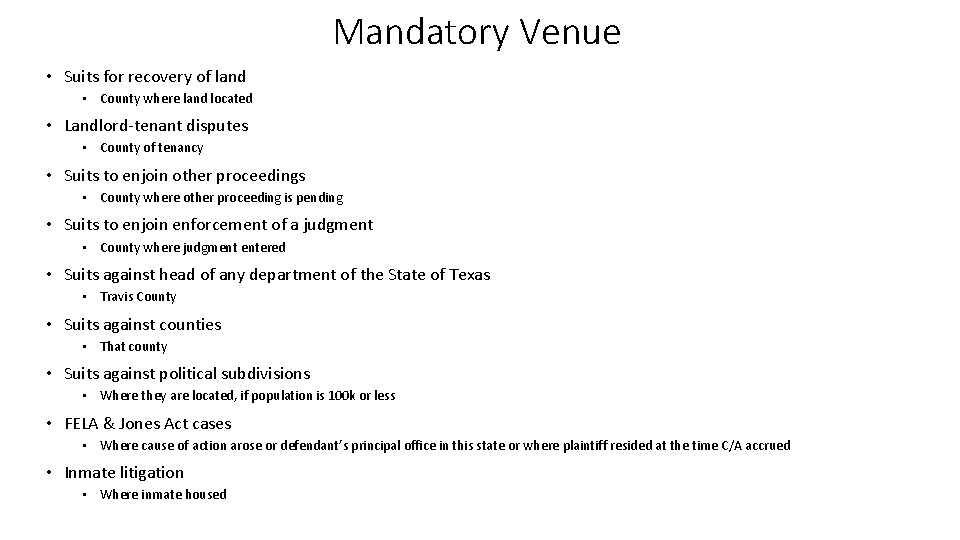
Mandatory Venue • Suits for recovery of land • County where land located • Landlord-tenant disputes • County of tenancy • Suits to enjoin other proceedings • County where other proceeding is pending • Suits to enjoin enforcement of a judgment • County where judgment entered • Suits against head of any department of the State of Texas • Travis County • Suits against counties • That county • Suits against political subdivisions • Where they are located, if population is 100 k or less • FELA & Jones Act cases • Where cause of action arose or defendant’s principal office in this state or where plaintiff resided at the time C/A accrued • Inmate litigation • Where inmate housed
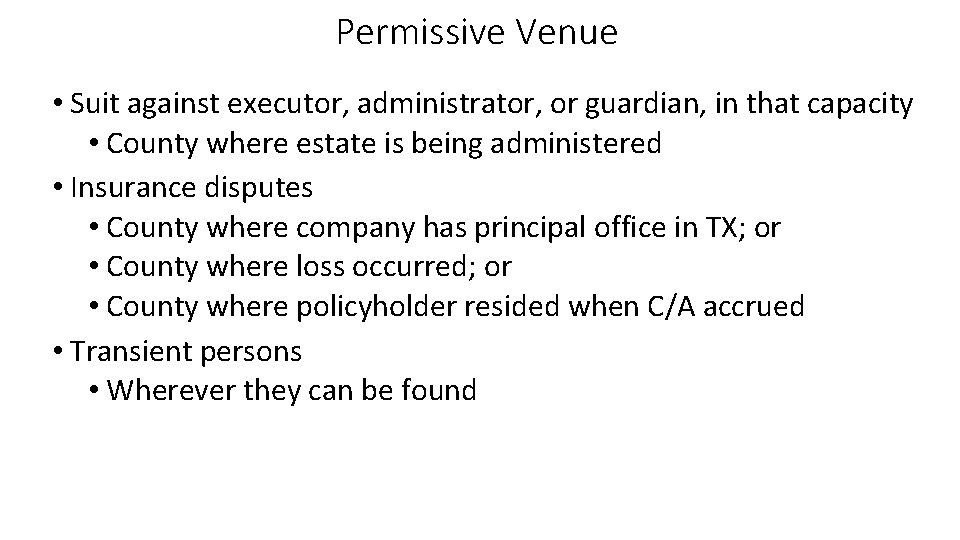
Permissive Venue • Suit against executor, administrator, or guardian, in that capacity • County where estate is being administered • Insurance disputes • County where company has principal office in TX; or • County where loss occurred; or • County where policyholder resided when C/A accrued • Transient persons • Wherever they can be found
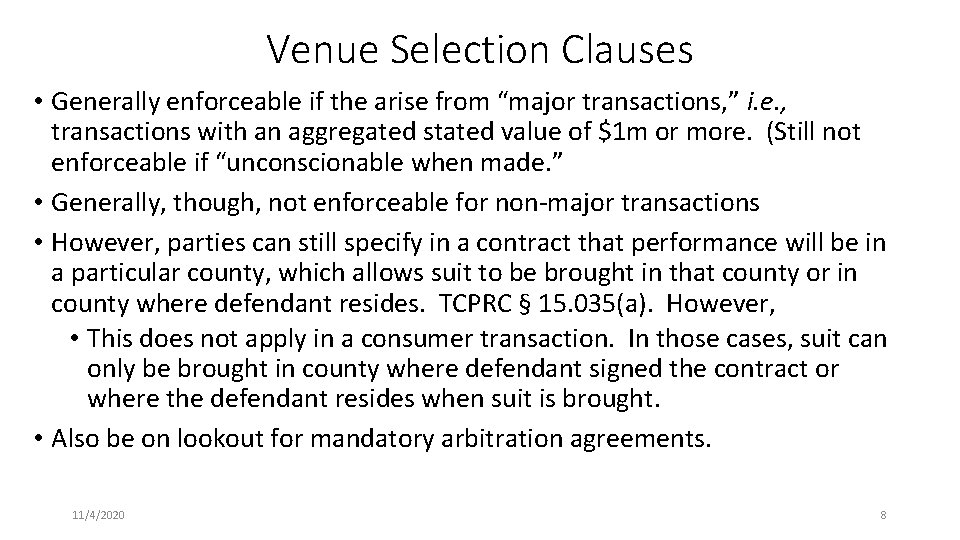
Venue Selection Clauses • Generally enforceable if the arise from “major transactions, ” i. e. , transactions with an aggregated stated value of $1 m or more. (Still not enforceable if “unconscionable when made. ” • Generally, though, not enforceable for non-major transactions • However, parties can still specify in a contract that performance will be in a particular county, which allows suit to be brought in that county or in county where defendant resides. TCPRC § 15. 035(a). However, • This does not apply in a consumer transaction. In those cases, suit can only be brought in county where defendant signed the contract or where the defendant resides when suit is brought. • Also be on lookout for mandatory arbitration agreements. 11/4/2020 8
Plaintiff Selects Venue in Original Petition – But What Must Plaintiff Plead Under TRCP 47? • Discovery level plaintiff intends to pursue; • Short statement of the cause of action sufficient to give fair notice of the claim involved; • Statement that damages are within jurisdictional limits of the court; • Statement as to maximum amounts sought; • Demand for judgment and all other relief requested • TCPRC § 30. 014 provides that the initial pleading (petition and answer), must also contain the last 3 numbers of the party’s DL and SSN • Not widely done or widely enforced • Does not apply to pleadings in statutory probate courts • But notice what is not required –venue statement 11/4/2020 9
Multiple Claims and Parties – Joinder of Plaintiff’s Claims • TRCP 40 - All persons may join in one action as plaintiffs if they assert any right to relief jointly, severally, or in the alternative in respect of or arising out of the same transaction, occurrence, or series of transactions or occurrences and if any question of law or fact common to all of them will arise in the action. • In other words, multiple plaintiffs can file suit together in the same lawsuit if: (a) their claims all arose out of the same occurrences; and (b) there is any common issue of fact or law to be resolved. • However, for venue purposes, each plaintiff must independently establish venue for his or her case. 11/4/2020 10
Multiple Claims and Parties – Joinder of Multiple Defendants • TRCP 40 - All persons may be joined in one action as defendants if there is asserted against them jointly, severally, or in the alternative any right to relief in respect of or arising out of the same transaction, occurrence, or series of transactions or occurrences and if any question of law or fact common to all of them will arise in the action. • In other words, multiple defendants can be sued in the same lawsuit if: (a) claims against all arose out of the same occurrences; and (b) there is any common issue of fact or law to be resolved. • In addition, if one plaintiff has multiple claims against a defendant, venue is proper as to that defendant in any county in which venue is good as to one of the claims. • For venue purposes, venue good as to one defendant is venue good as to all defendants properly joined. • If a claim against one defendant has mandatory venue, venue is in that county as to all properly joined defendants. • However, waiver by one defendant does not impute to others. • Careful, also, about joining defendants fraudulently. 11
Litigating Venue Rights • TRCP 86 Motion to Transfer Venue 1. Waived if not filed prior to or concurrently with all other pleadings or motions, except for a Rule 120 a special appearance. However, 1. Written consent to transfer venue can be filed at any time; and 2. MTV b/c impartial trial cannot be had governed by TRCP 257 2. MTV need not be verified, but may be supported by affidavits as per TRCP 87. However, MTV must state: 1. County where action pending is improper or mandatory venue lies in another county; 2. Legal and factual basis for transfer; 3. Specific county to which transfer is requested.
Determination of MTV • TRCP 87, 88, 89 • MTV must be heard “promptly” • Must be determined at a “reasonable time” prior to trial • Movant has duty to request hearing • Must give 45 days notice of hearing • Opposing affidavits must be filed no less than 30 days prior to hearing, responsive affidavits no less than 7 days prior to hearing • When venue facts alleged by plaintiff are denied in MTV, plaintiff has burden of proving venue in county where suit was filed, on a prima facie basis
• Party seeking venue transfer has burden of proof that county where change is sought is proper county • Not necessary to prove prima facie case on the merits • Once one determination made on MTV, no more hearings, even as to parties who were not in the case when the venue transfer motion was determined. However, • If new parties timely raise MTV, can have that considered on appeal • No interlocutory appeals • Discovery not abated while MTV pending • Determination of MTV for lack of impartial trial covered by TRCP 258 and 259 • If MTV sustained, case is transferred. IMPORTANT PRACTICE NOTE: Make sure you pay a new filing fee in transferee county or case will be DWOP
Venue Rulings • “In all venue hearings, no factual proof concerning the merits of the case shall be required to establish venue. [No prima facie standard of proving meritorious case, only of right to venue of choice. ]” • “The court shall determine venue questions from the pleadings and affidavits. ” • “No interlocutory appeal shall lie from the determination. ” • “On appeal from a trial on the merits, if venue was improper it shall in no event be harmless error and shall be reversible error. ” • “In determining whether venue was or was not proper, the appellate court shall consider the entire record, including the trial on the merits. ”
Venue Hearing • Unless MTV is on grounds of mandatory venue in another county, or for impartial trial basis, how does trial court weigh conflicting evidence? • Does not. If plaintiff proves prima facie venue facts cannot be impeached or controverted by defendant • Does this create an incentive for a plaintiff to manufacture facts to support venue choice? • What happens on appeal if the venue facts are not supported by proof at trial? • Automatic reversal, without necessity of showing harmful error 11/4/2020 16
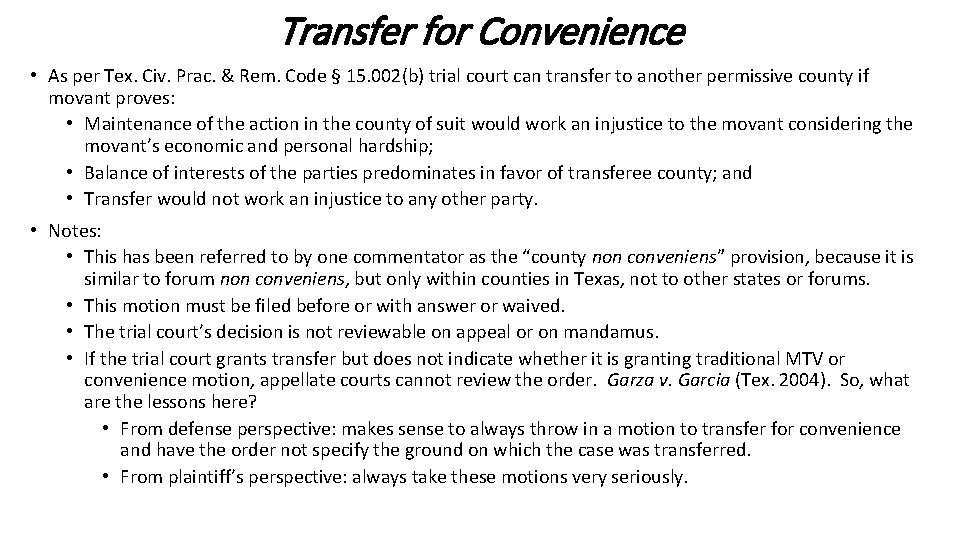
Transfer for Convenience • As per Tex. Civ. Prac. & Rem. Code § 15. 002(b) trial court can transfer to another permissive county if movant proves: • Maintenance of the action in the county of suit would work an injustice to the movant considering the movant’s economic and personal hardship; • Balance of interests of the parties predominates in favor of transferee county; and • Transfer would not work an injustice to any other party. • Notes: • This has been referred to by one commentator as the “county non conveniens” provision, because it is similar to forum non conveniens, but only within counties in Texas, not to other states or forums. • This motion must be filed before or with answer or waived. • The trial court’s decision is not reviewable on appeal or on mandamus. • If the trial court grants transfer but does not indicate whether it is granting traditional MTV or convenience motion, appellate courts cannot review the order. Garza v. Garcia (Tex. 2004). So, what are the lessons here? • From defense perspective: makes sense to always throw in a motion to transfer for convenience and have the order not specify the ground on which the case was transferred. • From plaintiff’s perspective: always take these motions very seriously.
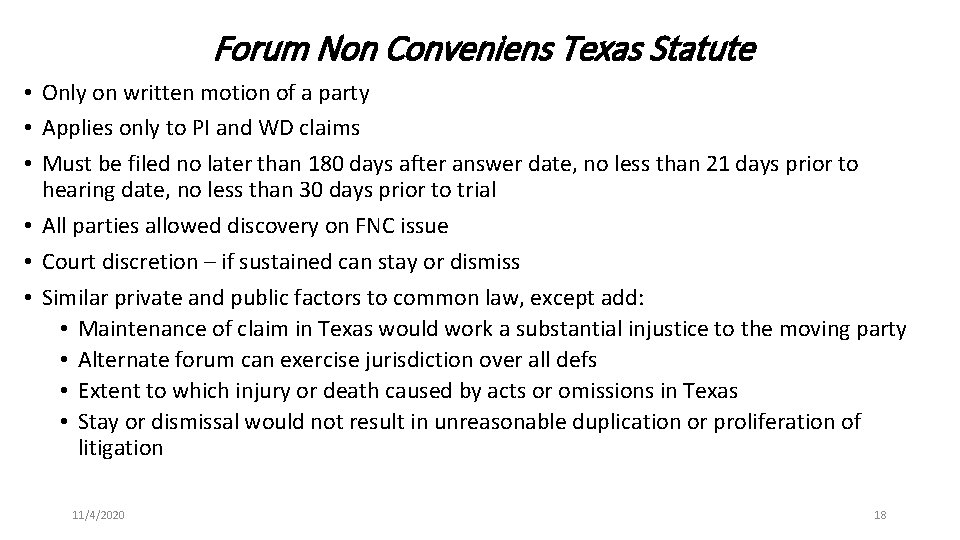
Forum Non Conveniens Texas Statute • Only on written motion of a party • Applies only to PI and WD claims • Must be filed no later than 180 days after answer date, no less than 21 days prior to hearing date, no less than 30 days prior to trial • All parties allowed discovery on FNC issue • Court discretion – if sustained can stay or dismiss • Similar private and public factors to common law, except add: • Maintenance of claim in Texas would work a substantial injustice to the moving party • Alternate forum can exercise jurisdiction over all defs • Extent to which injury or death caused by acts or omissions in Texas • Stay or dismissal would not result in unreasonable duplication or proliferation of litigation 11/4/2020 18
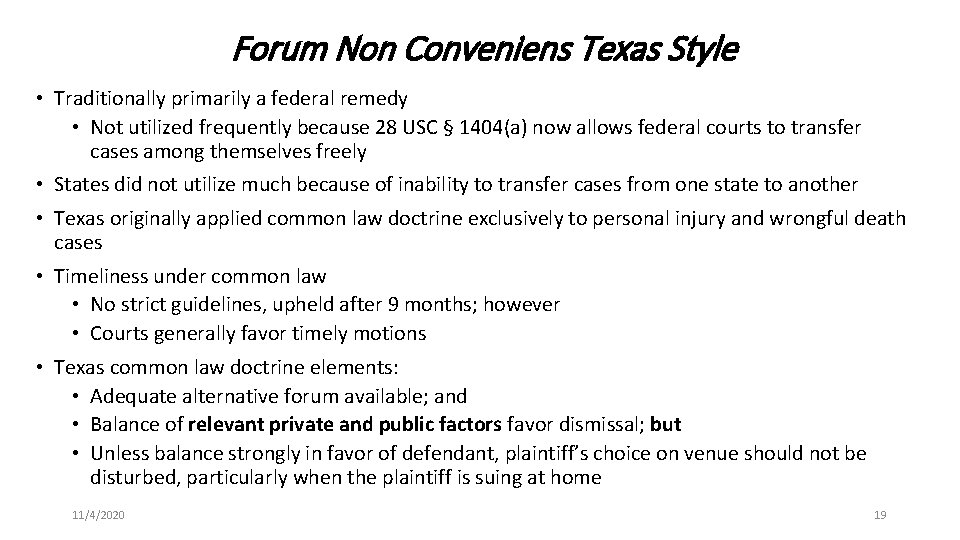
Forum Non Conveniens Texas Style • Traditionally primarily a federal remedy • Not utilized frequently because 28 USC § 1404(a) now allows federal courts to transfer cases among themselves freely • States did not utilize much because of inability to transfer cases from one state to another • Texas originally applied common law doctrine exclusively to personal injury and wrongful death cases • Timeliness under common law • No strict guidelines, upheld after 9 months; however • Courts generally favor timely motions • Texas common law doctrine elements: • Adequate alternative forum available; and • Balance of relevant private and public factors favor dismissal; but • Unless balance strongly in favor of defendant, plaintiff’s choice on venue should not be disturbed, particularly when the plaintiff is suing at home 11/4/2020 19
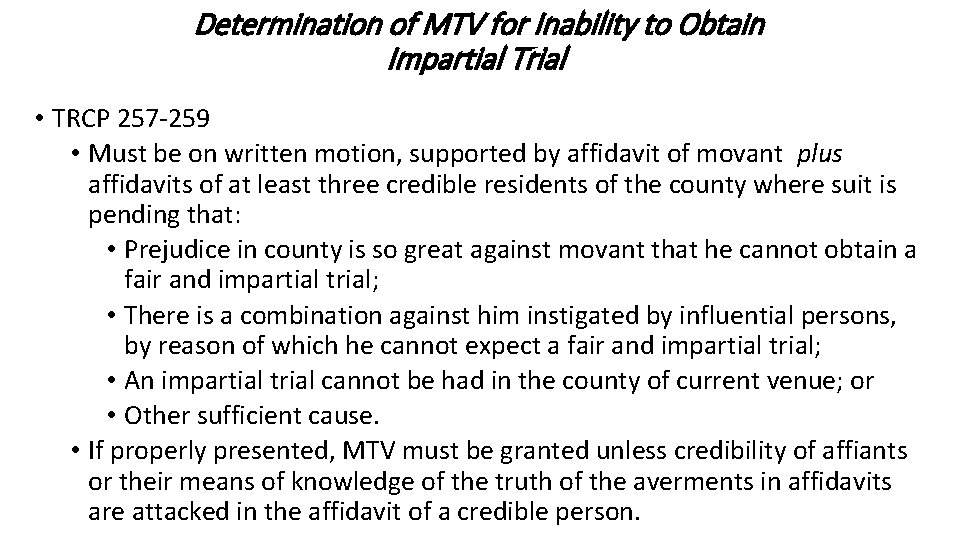
Determination of MTV for Inability to Obtain Impartial Trial • TRCP 257 -259 • Must be on written motion, supported by affidavit of movant plus affidavits of at least three credible residents of the county where suit is pending that: • Prejudice in county is so great against movant that he cannot obtain a fair and impartial trial; • There is a combination against him instigated by influential persons, by reason of which he cannot expect a fair and impartial trial; • An impartial trial cannot be had in the county of current venue; or • Other sufficient cause. • If properly presented, MTV must be granted unless credibility of affiants or their means of knowledge of the truth of the averments in affidavits are attacked in the affidavit of a credible person.
Determination of MTV for Inability to Obtain Impartial Trial • TRCP 257 -259 • If attacked appropriately, just must allow discovery on issue and hold bench trial • If granted, case must be transferred to: • If from a district court, to any county of proper venue in the administrative district that is adjoining the transferee county • If from a county court, to any adjoining county of proper venue • If no adjoining county, to any county of proper venue • If county of proper venue cannot be found, then: • If a district court, to any county in the same or any adjoining judicial district or where an impartial trial can be had • If a county court, to any county in which an impartial trial can be had • If the parties agree to a particular county, court must comply
MTV for No Impartial Trial • Not clear whether trial court can hear oral testimony. • Not clear whether MTV for No Impartial Trial must be filed with or before answer. What about publicity that arises during course of the lawsuit? 11/4/2020 22