
VENTILATOR GRAPHICS LOOPS AND CURVES dr r selvakumar
- Slides: 46
VENTILATOR GRAPHICS LOOPS AND CURVES dr. r. selvakumar
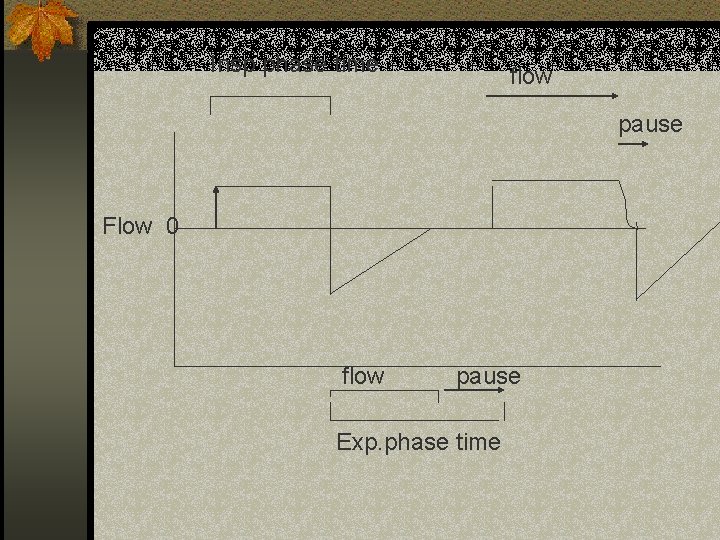
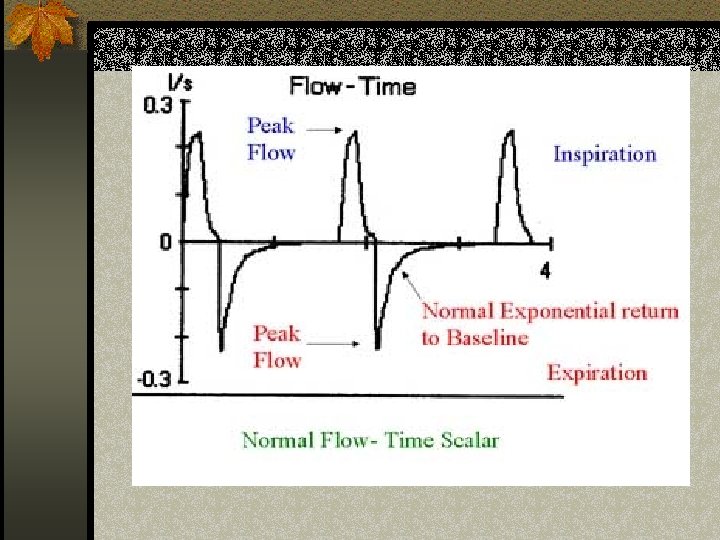
Some definitions… • Inspiratory flow time: beginning of flow to end of flow during inspiration • Inspiratory pause time: time in inspiration where flow is zero • Inspiratory phase time: Insp. flow time+insp. pause time
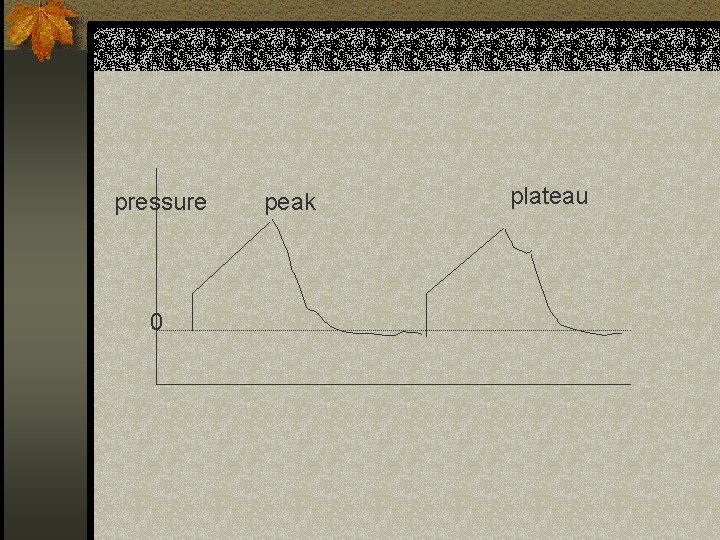
Some definitions…contd Expiratory flow time, Exp. pause time Exp. phase time Inspiratory flow rate: rate at which gas flows into the pt expressed as volume per unit of time Peak pressure: max. pressure during the insp. phase time Plateau pressure: resting pressure during the insp. pause
Some definitions…contd • Resistance: ratio of the change in driving pressure to the change in flow rate. cm. H 2 O/L/sec • Compliance: ratio of a change in volume to a change in pressure
Insp phase time flow pause Flow 0 flow pause Exp. phase time
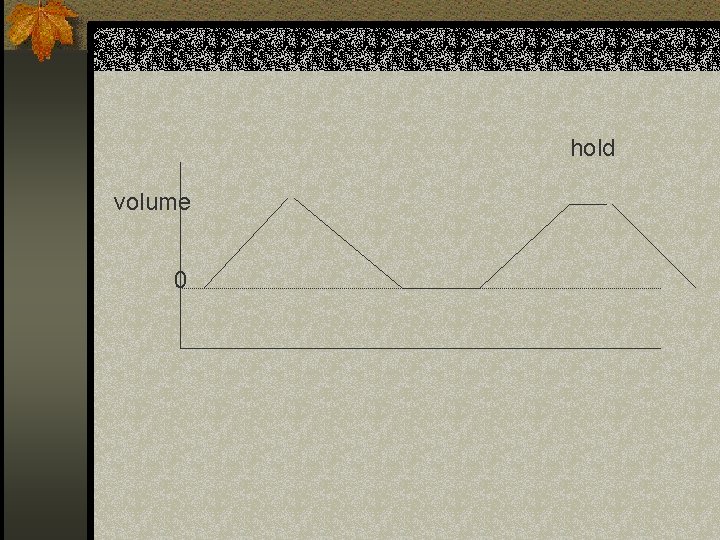
hold volume 0
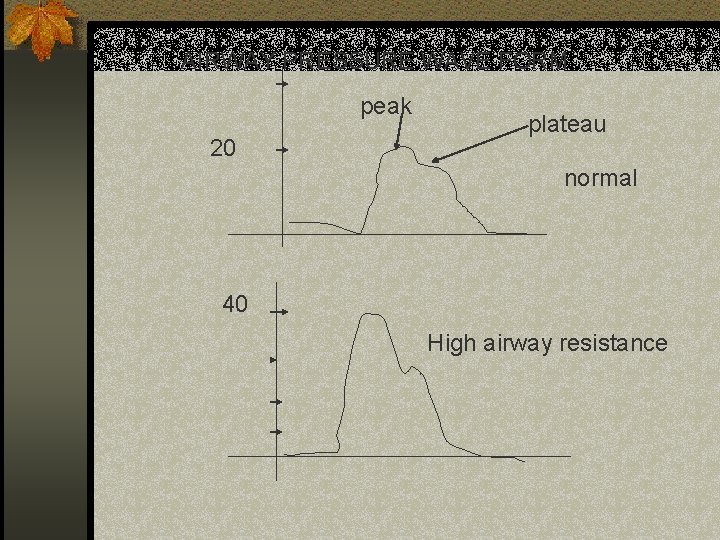
pressure 0 peak plateau
AIRWAY PRESSURE WAVE FORM peak 20 plateau normal 40 High airway resistance
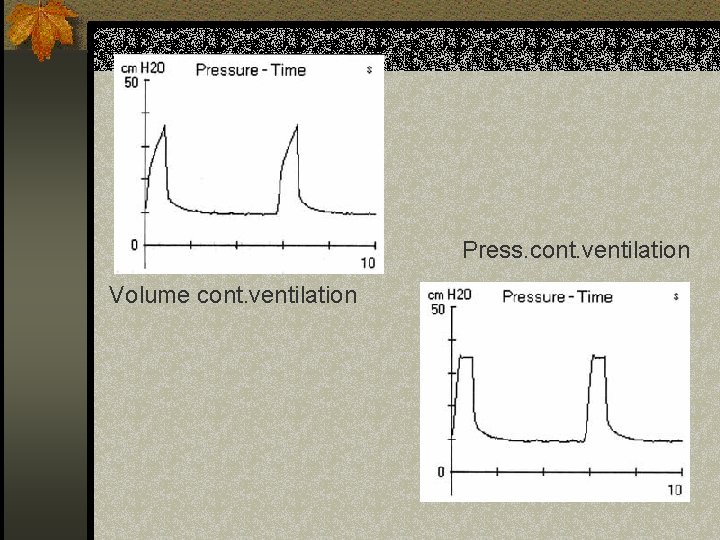
Press. cont. ventilation Volume cont. ventilation
LOOPS: Dynamic relationship between two variables on a graph
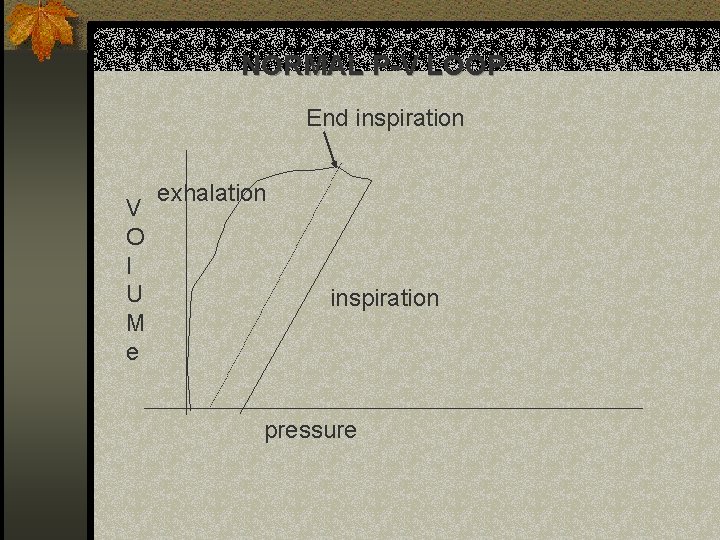
NORMAL P-V LOOP End inspiration V O l U M e exhalation inspiration pressure
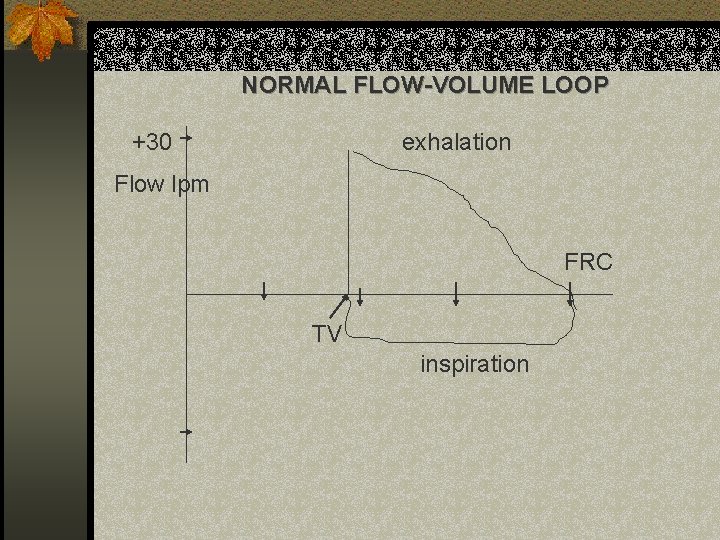
NORMAL FLOW-VOLUME LOOP +30 exhalation Flow lpm FRC TV inspiration
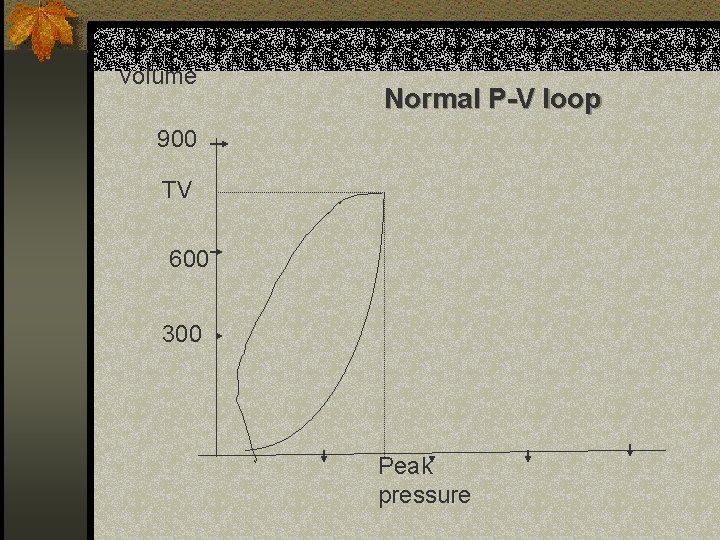
CONTROLLED VENTILATION - No ins. pause P-V LOOP ØDouble convex ØBegins at zero volume and near zero pressure ØIns. Slope – compliance ØEnd of insp- peak press and TV attained
volume Normal P-V loop 900 TV 600 300 Peak pressure
Normal flow-volume loop v. Smoothly curved, rectangular insp. limb v. Upper triangular exp. portion v. Apex – peak exp. flow v. Slope of exp. flow- reflects the resistance v. And recoil pressure of the entire ventilatory system
Cont. ventilation with PEEP q P-V loop shifts to the right q Begins at the PEEP value
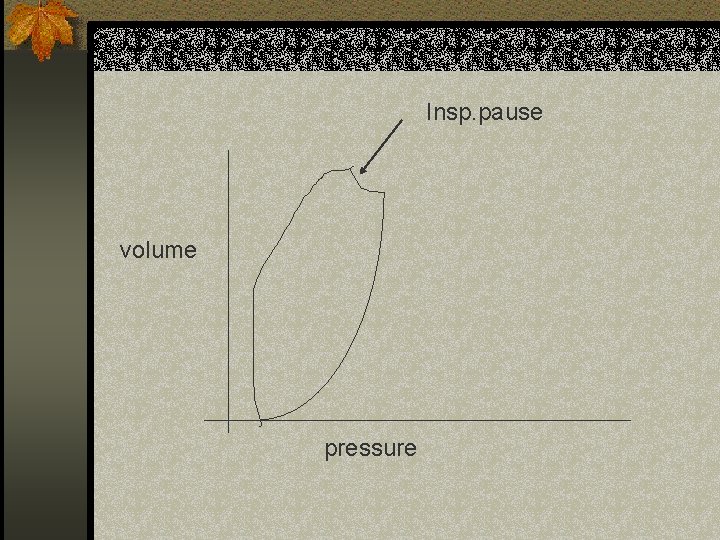
Insp. pause volume pressure
Controlled ventilation with insp. pause • After peak press. Is reached, there is a pause • During pause, press. drops to a plateau level • Insp. volume will increase during insp. pause
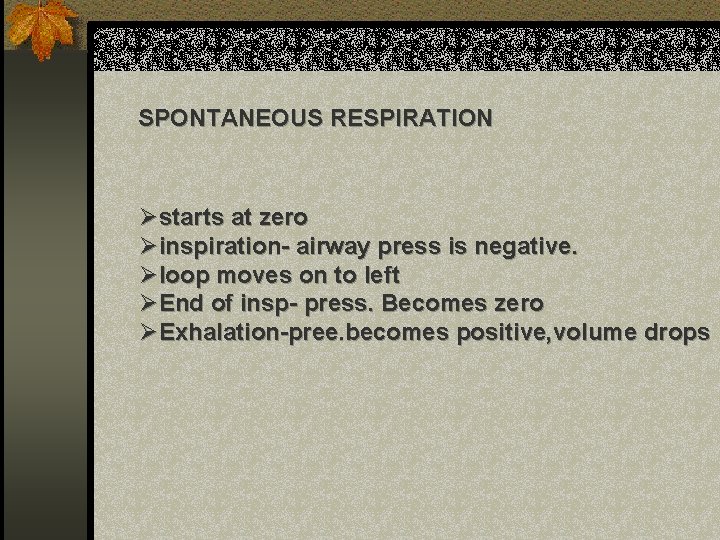
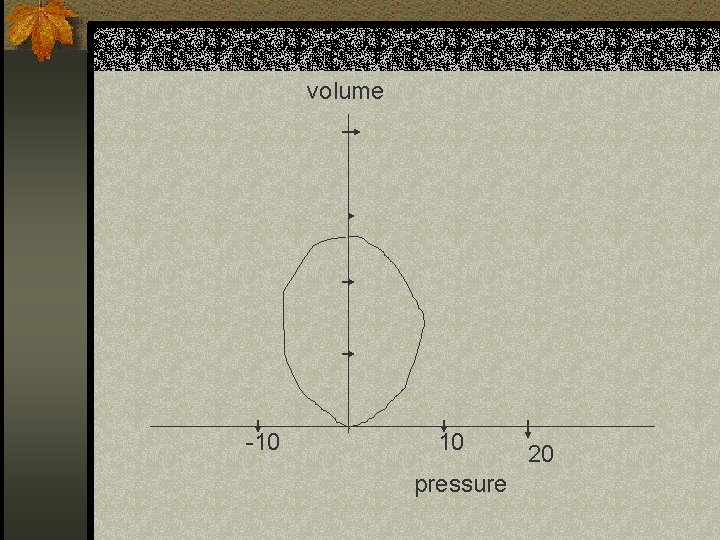
SPONTANEOUS RESPIRATION Østarts at zero Øinspiration- airway press is negative. Øloop moves on to left ØEnd of insp- press. Becomes zero ØExhalation-pree. becomes positive, volume drops
volume -10 10 pressure 20
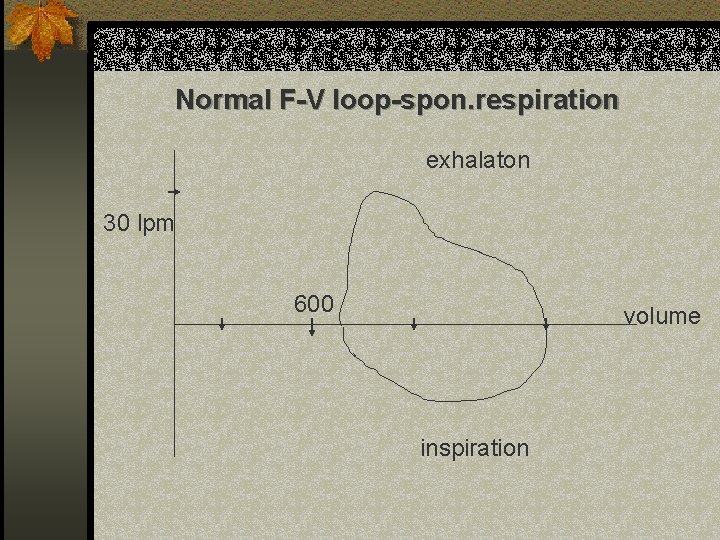
Normal F-V loop-spon. respiration exhalaton 30 lpm 600 volume inspiration
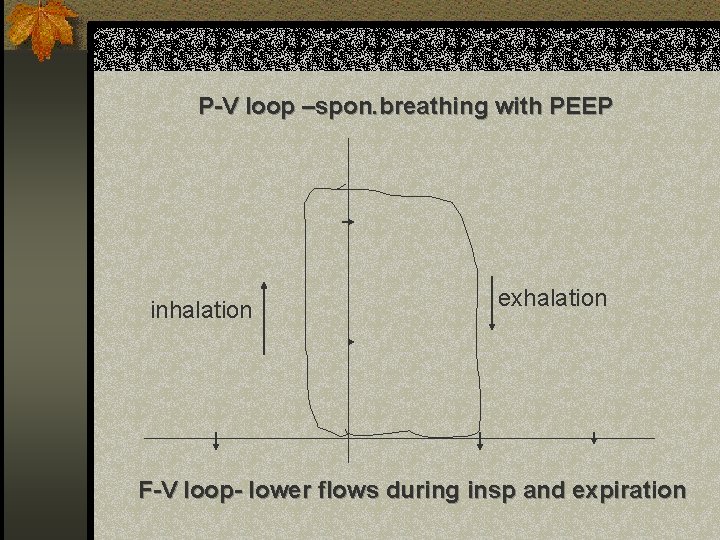
P-V loop –spon. breathing with PEEP inhalation exhalation F-V loop- lower flows during insp and expiration
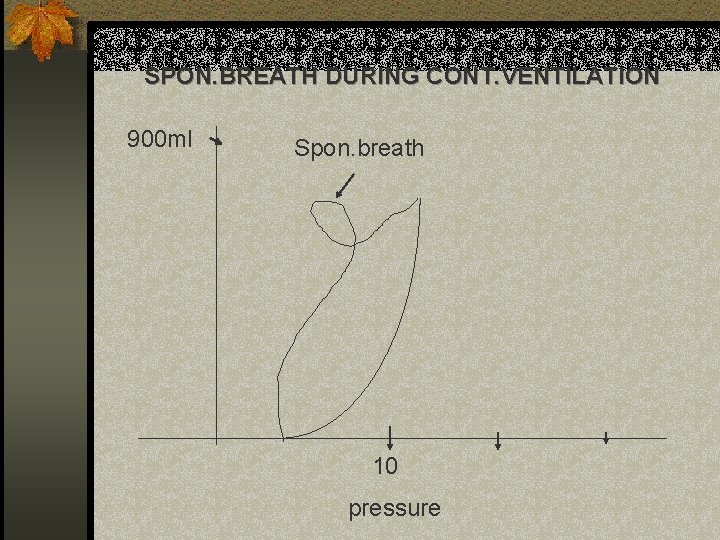
SPON. BREATH DURING CONT. VENTILATION 900 ml Spon. breath 10 pressure
Spon. breath during cont. ventilation If it occurs during expiration, the pressure drops and volume increases As the pt exhales, press. increases briefly and volume drops
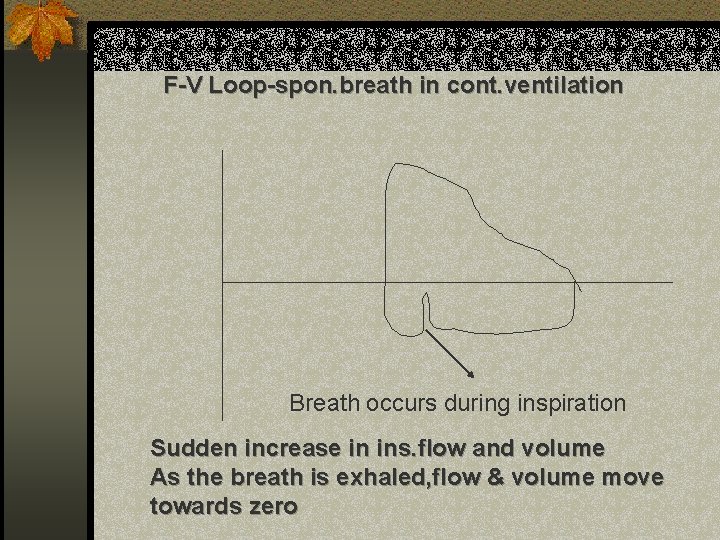
F-V Loop-spon. breath in cont. ventilation Breath occurs during inspiration Sudden increase in ins. flow and volume As the breath is exhaled, flow & volume move towards zero
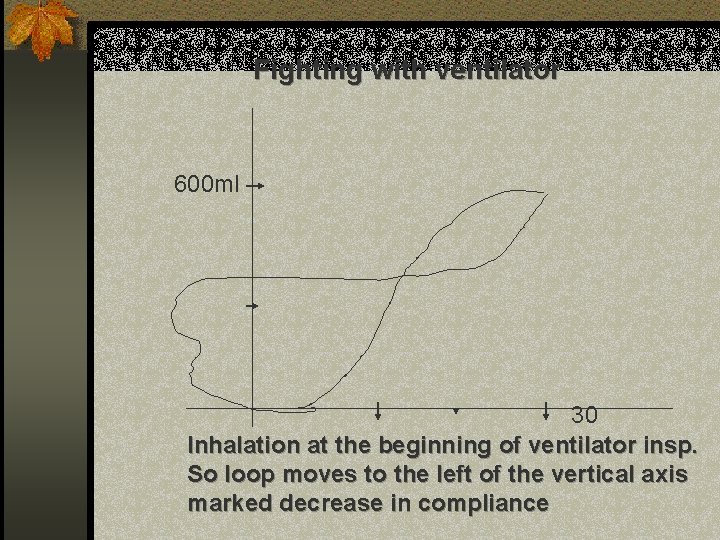
Fighting with ventilator 600 ml 30 Inhalation at the beginning of ventilator insp. So loop moves to the left of the vertical axis marked decrease in compliance
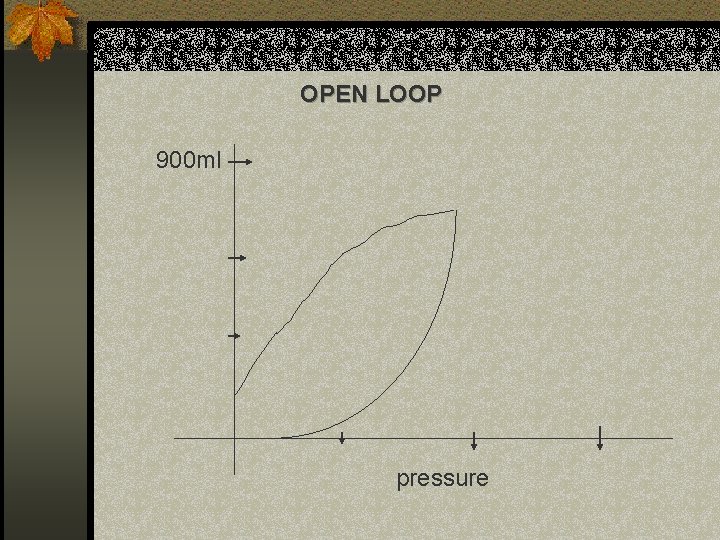
OPEN LOOP 900 ml pressure
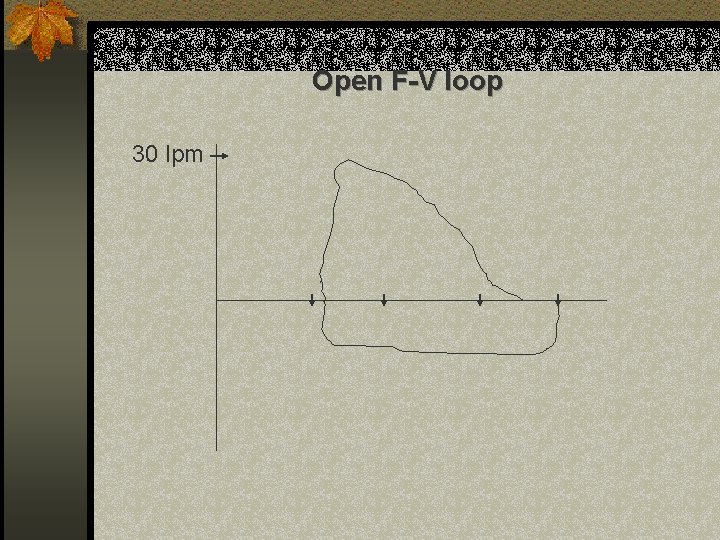
Open F-V loop 30 lpm
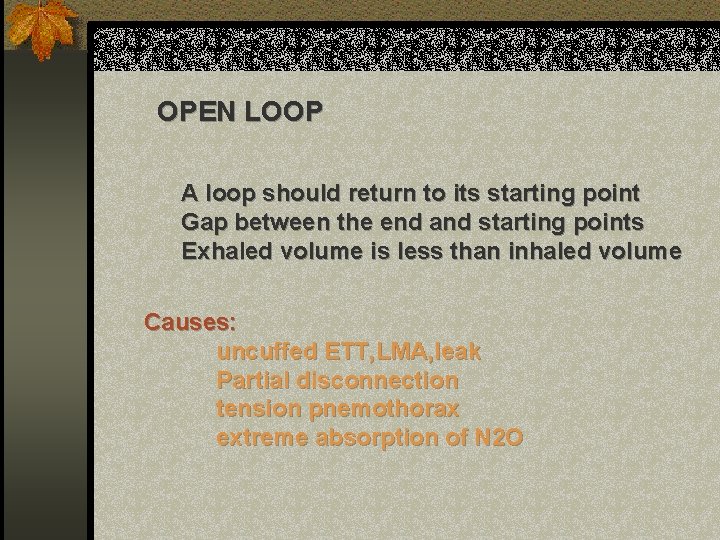
OPEN LOOP A loop should return to its starting point Gap between the end and starting points Exhaled volume is less than inhaled volume Causes: uncuffed ETT, LMA, leak Partial disconnection tension pnemothorax extreme absorption of N 2 O
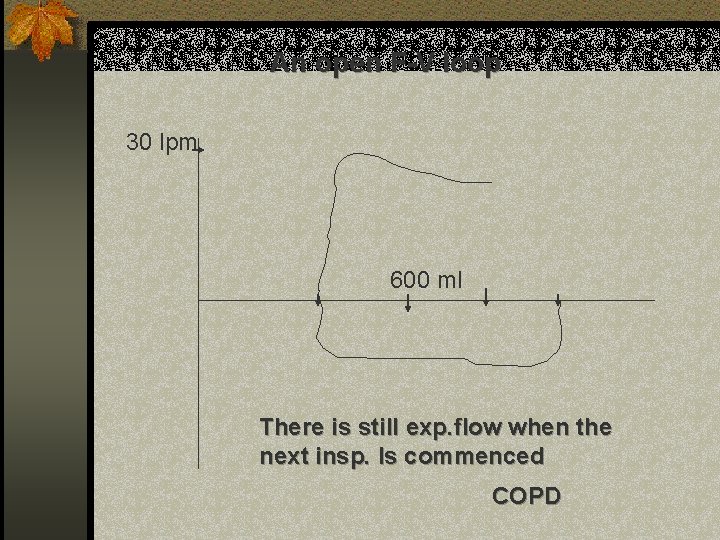
An open F-V loop 30 lpm 600 ml There is still exp. flow when the next insp. Is commenced COPD
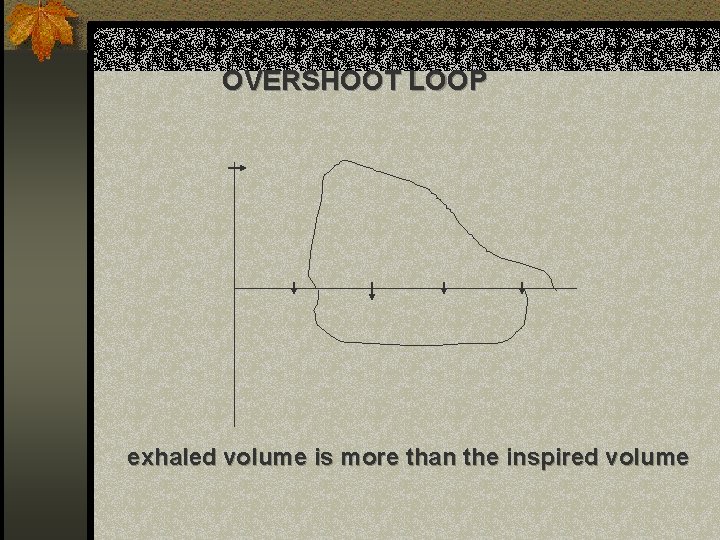
OVERSHOOT LOOP exhaled volume is more than the inspired volume
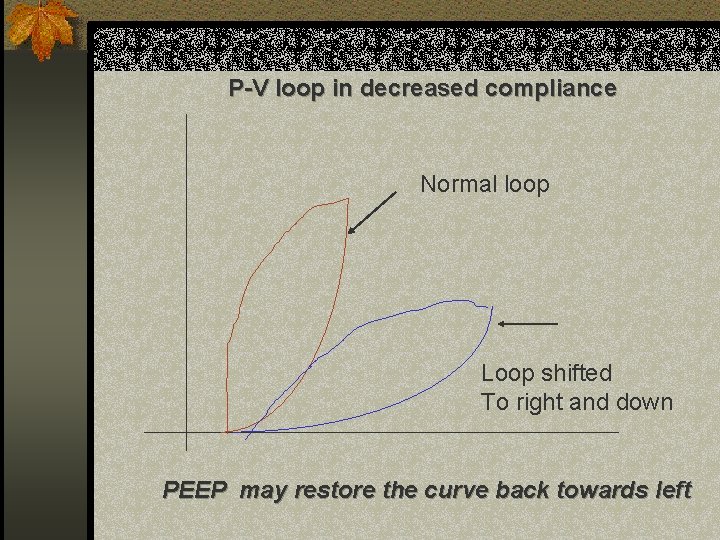
P-V loop in decreased compliance Normal loop Loop shifted To right and down PEEP may restore the curve back towards left
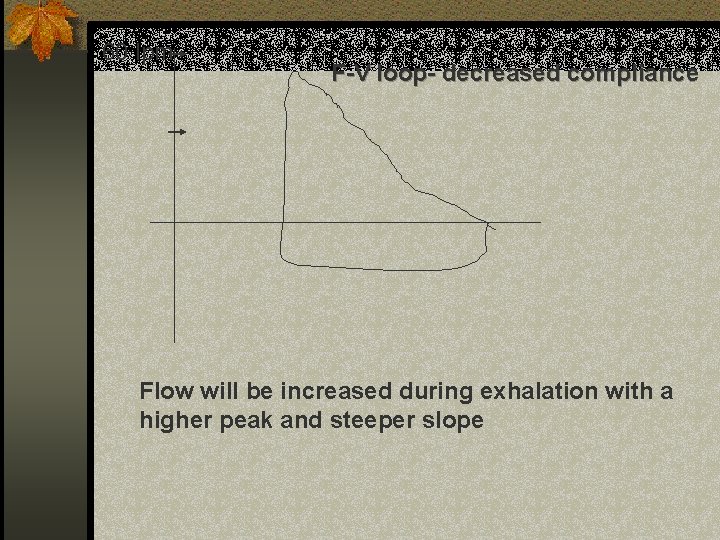
60 lpm F-V loop- decreased compliance Flow will be increased during exhalation with a higher peak and steeper slope
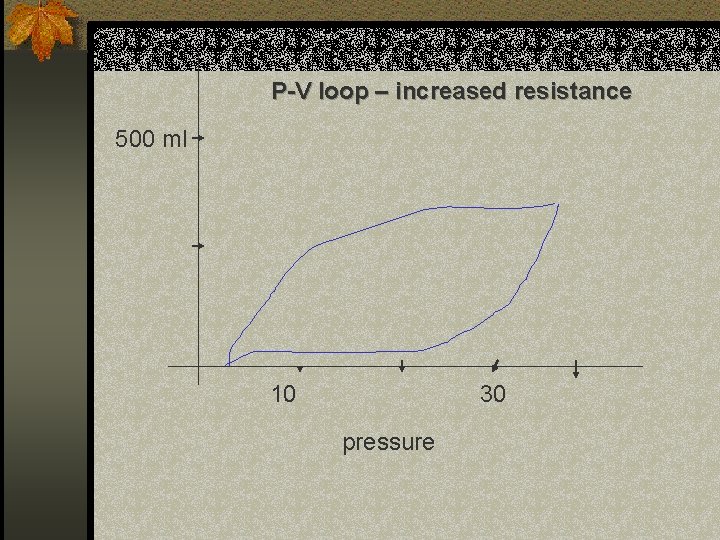
P-V loop – increased resistance 500 ml 10 30 pressure
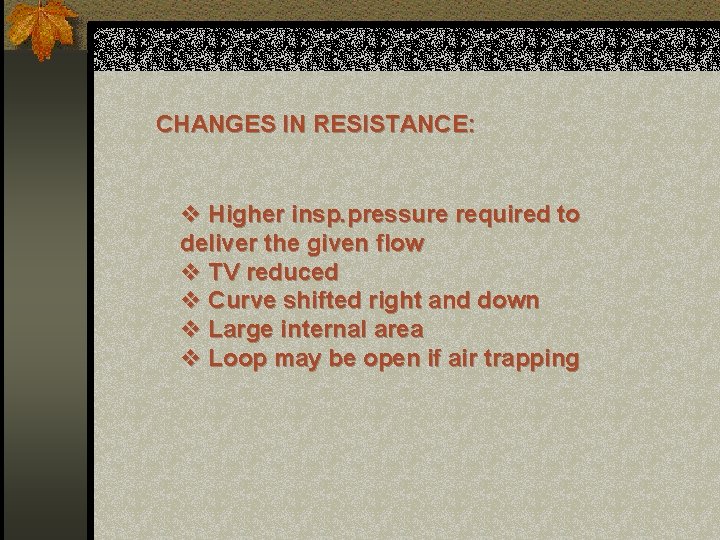
CHANGES IN RESISTANCE: v Higher insp. pressure required to deliver the given flow v TV reduced v Curve shifted right and down v Large internal area v Loop may be open if air trapping
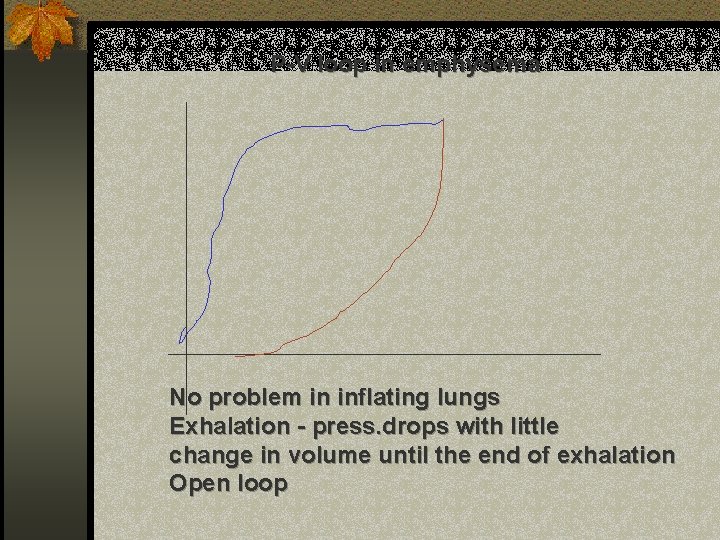
P-V loop in emphysema No problem in inflating lungs Exhalation - press. drops with little change in volume until the end of exhalation Open loop
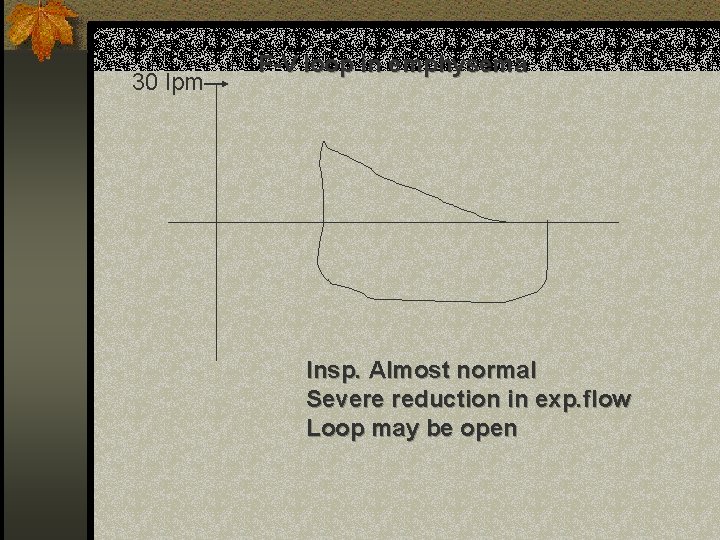
30 lpm F-V loop in emphysema Insp. Almost normal Severe reduction in exp. flow Loop may be open
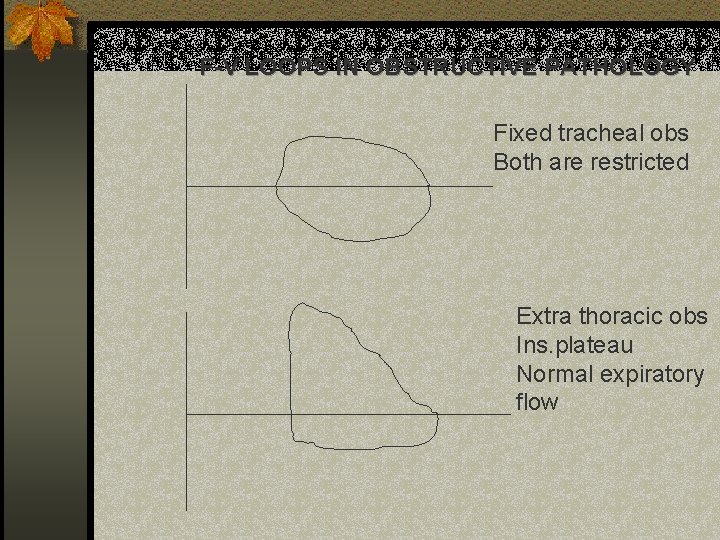
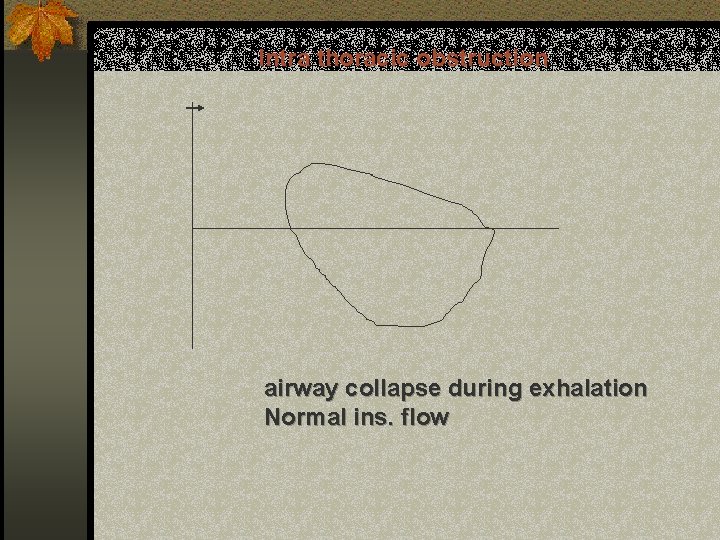
F-V LOOPS IN OBSTRUCTIVE PATHOLOGY Fixed tracheal obs Both are restricted Extra thoracic obs Ins. plateau Normal expiratory flow
Intra thoracic obstruction airway collapse during exhalation Normal ins. flow
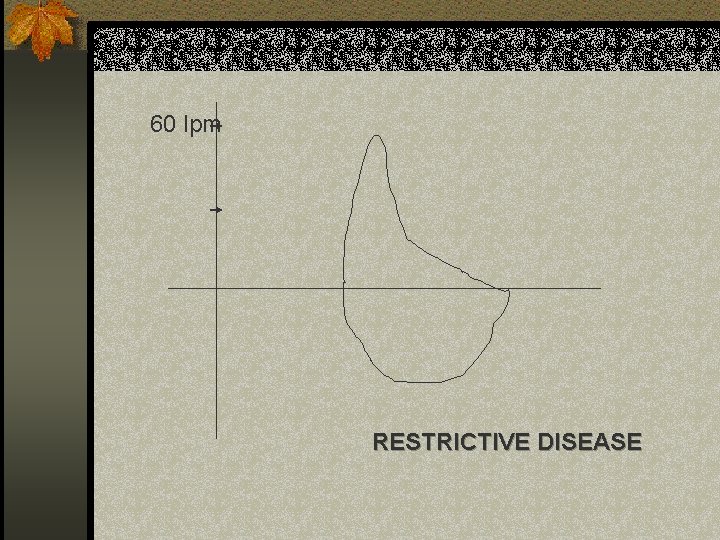
RESTRICTIVE LUNG DISEASE üincrease in elastic recoil üassociated with high exp. flow and üdeep descending flow üAs disease progresses, lung volume decreases üAnd the loop becomes tall and narrow
60 lpm RESTRICTIVE DISEASE
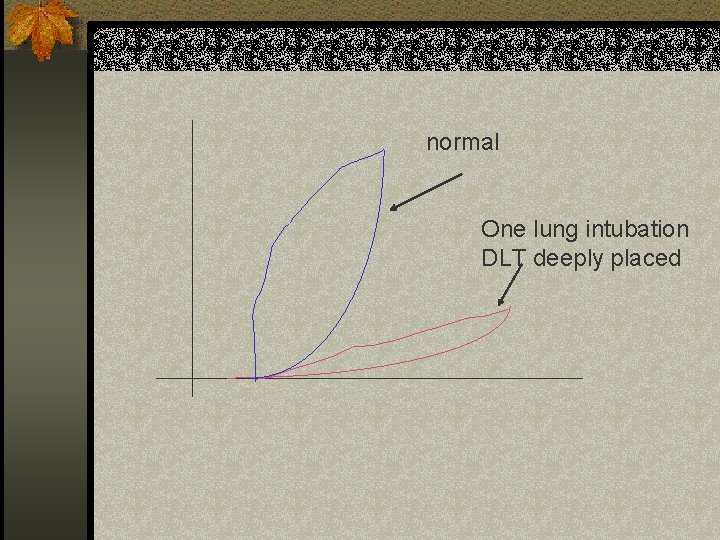
normal One lung intubation DLT deeply placed
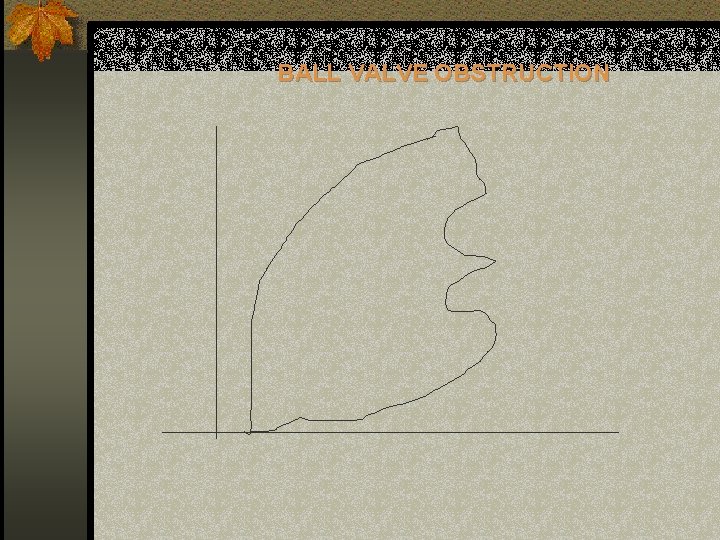
BALL VALVE OBSTRUCTION
BALL VALVE OBSTRUCTION Tip of the tube impinging on the side wall of trachea Press. Rises rapidly with little increase in volume Until press is sufficient to overcome the obstruction. The vol. Increases and press. drops. If the press. drops low enough, there will be again an obstruction to flow, creating another notch on the upswing of the loop