
Ventilation strategies targets and goals in acute respiratory

- Slides: 52
Ventilation strategies, targets and goals in acute respiratory failure Peter C. Rimensberger Pediatric and Neonatal ICU University Hospital of Geneva Switzerland
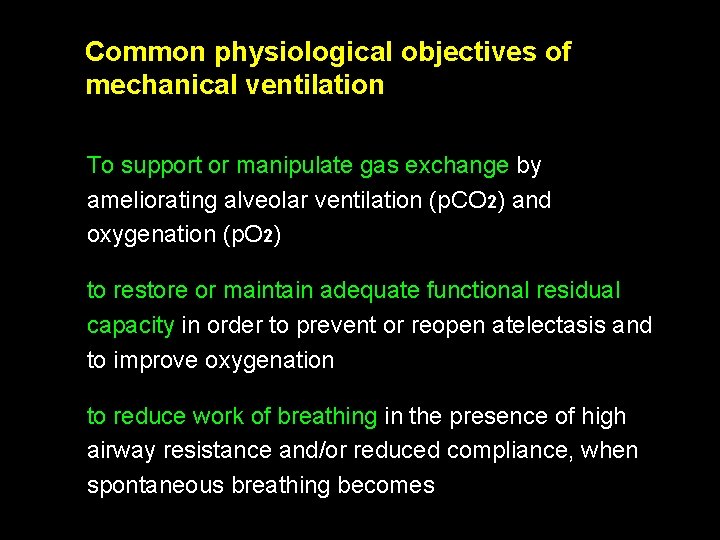
Common physiological objectives of mechanical ventilation 1) To support or manipulate gas exchange by ameliorating alveolar ventilation (p. CO 2) and oxygenation (p. O 2) 2) to restore or maintain adequate functional residual capacity in order to prevent or reopen atelectasis and to improve oxygenation lung compliance; 3) to reduce work of breathing in the presence of high airway resistance and/or reduced compliance, when spontaneous breathing becomes ineffective.
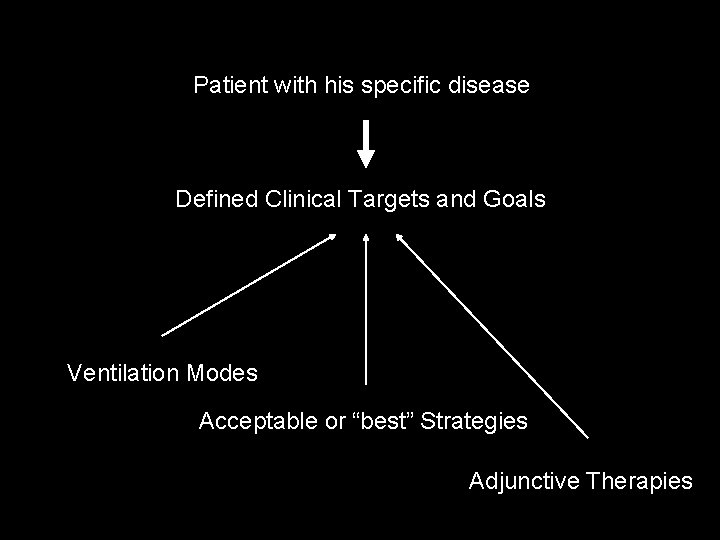
Patient with his specific disease Defined Clinical Targets and Goals Ventilation Modes Acceptable or “best” Strategies Adjunctive Therapies
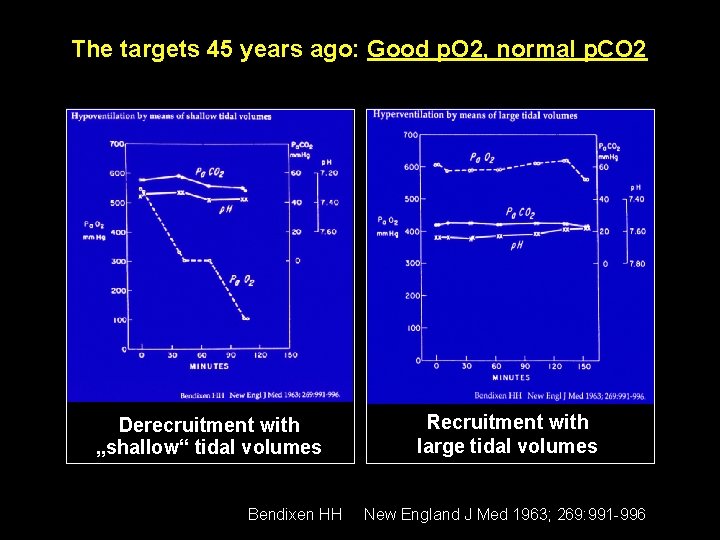
The targets 45 years ago: Good p. O 2, normal p. CO 2 Derecruitment with „shallow“ tidal volumes Bendixen HH Recruitment with large tidal volumes New England J Med 1963; 269: 991 -996
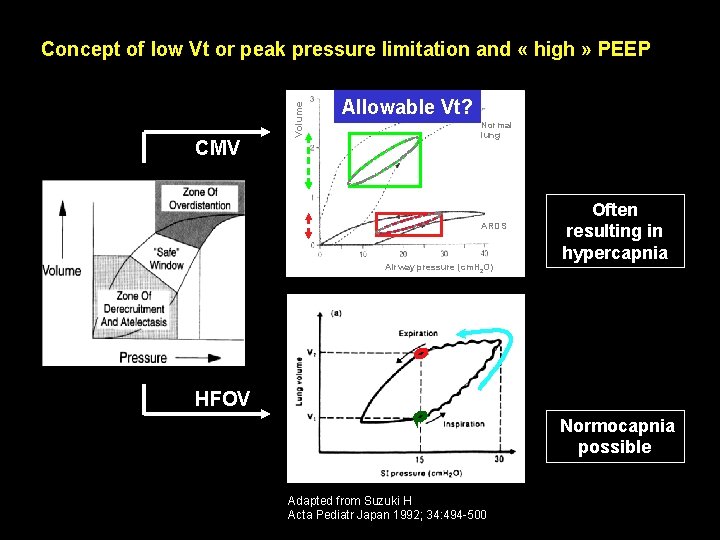
CMV Volume Concept of low Vt or peak pressure limitation and « high » PEEP Allowable Vt? Normal lung ARDS Airway pressure (cm. H 2 O) Often resulting in hypercapnia HFOV Normocapnia possible Adapted from Suzuki H Acta Pediatr Japan 1992; 34: 494 -500
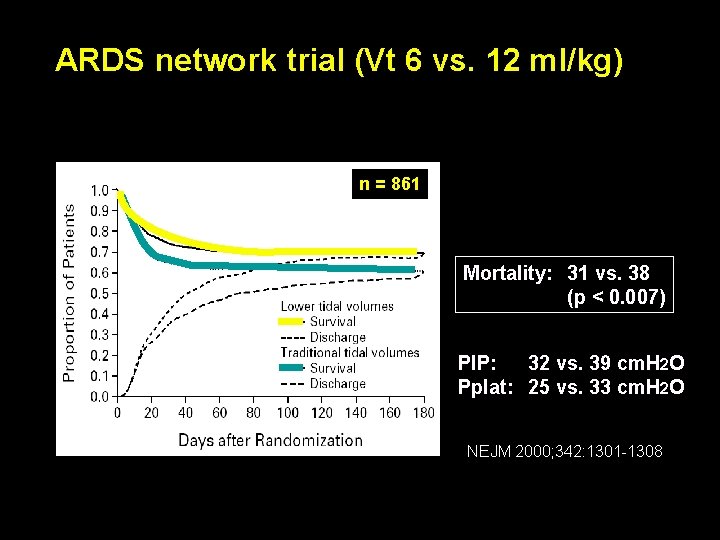
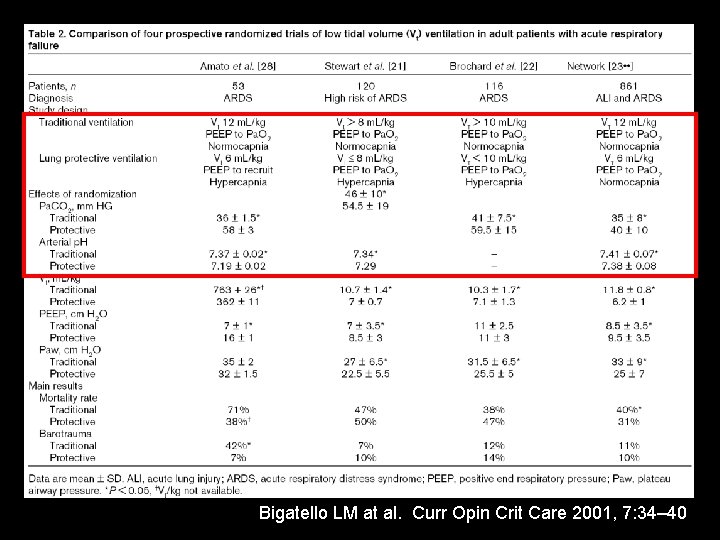
ARDS network trial (Vt 6 vs. 12 ml/kg) n = 861 Mortality: 31 vs. 38 (p < 0. 007) PIP: 32 vs. 39 cm. H 2 O Pplat: 25 vs. 33 cm. H 2 O NEJM 2000; 342: 1301 -1308
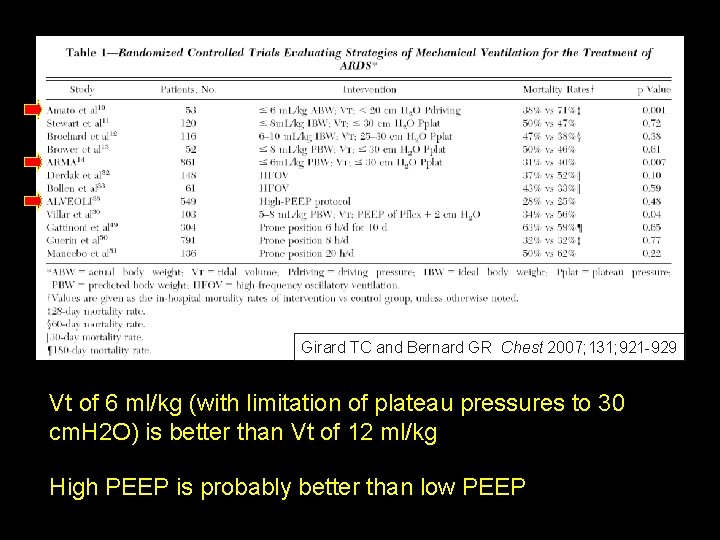
Girard TC and Bernard GR Chest 2007; 131; 921 -929 Vt of 6 ml/kg (with limitation of plateau pressures to 30 cm. H 2 O) is better than Vt of 12 ml/kg High PEEP is probably better than low PEEP
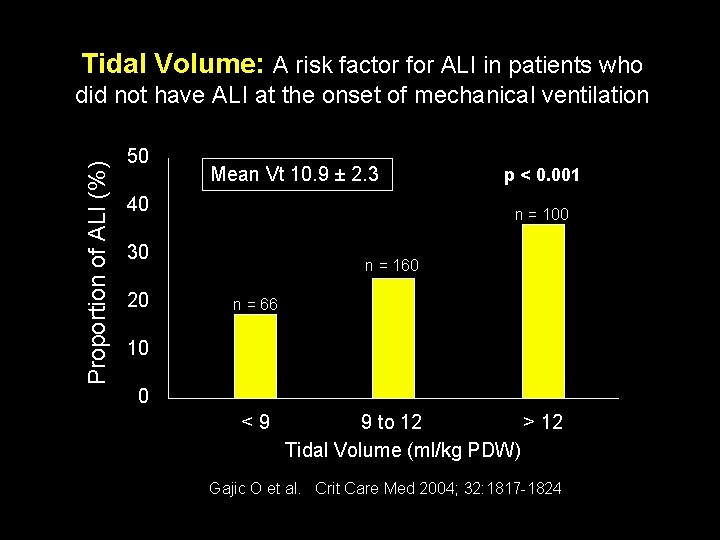
Tidal Volume: A risk factor for ALI in patients who Proportion of ALI (%) did not have ALI at the onset of mechanical ventilation 50 Mean Vt 10. 9 ± 2. 3 40 n = 100 30 20 p < 0. 001 n = 160 n = 66 10 0 <9 9 to 12 > 12 Tidal Volume (ml/kg PDW) Gajic O et al. Crit Care Med 2004; 32: 1817 -1824
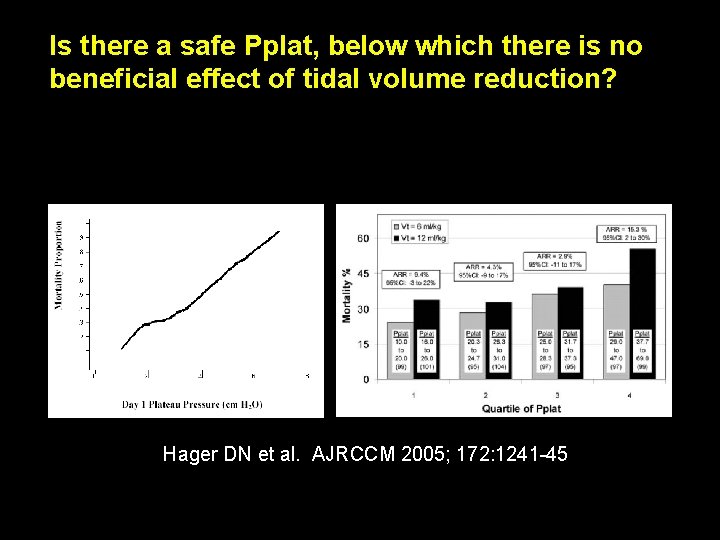
Is there a safe Pplat, below which there is no beneficial effect of tidal volume reduction? Hager DN et al. AJRCCM 2005; 172: 1241 -45
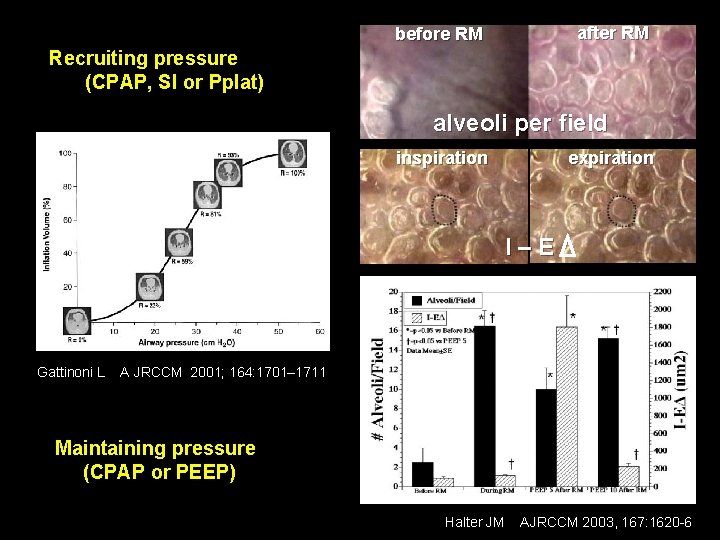
after RM before RM Recruiting pressure (CPAP, SI or Pplat) alveoli per field inspiration expiration I – E Gattinoni L A JRCCM 2001; 164: 1701– 1711 Maintaining pressure (CPAP or PEEP) Halter JM AJRCCM 2003, 167: 1620 -6
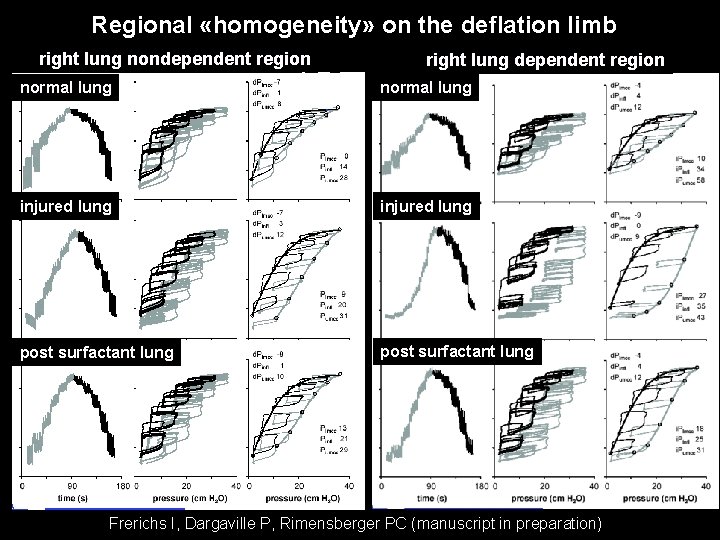
Regional «homogeneity» on the deflation limb right lung nondependent region right lung dependent region normal lung injured lung post surfactant lung Frerichs I, Dargaville P, Rimensberger PC (manuscript in preparation)
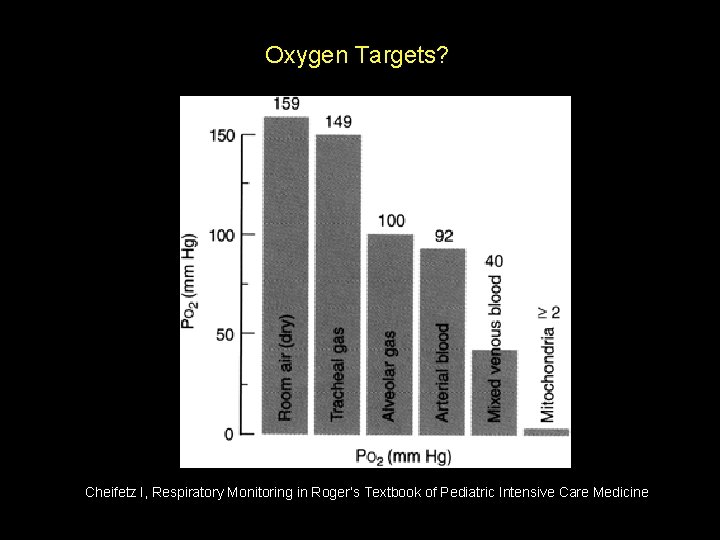
Oxygen Targets? Cheifetz I, Respiratory Monitoring in Roger’s Textbook of Pediatric Intensive Care Medicine
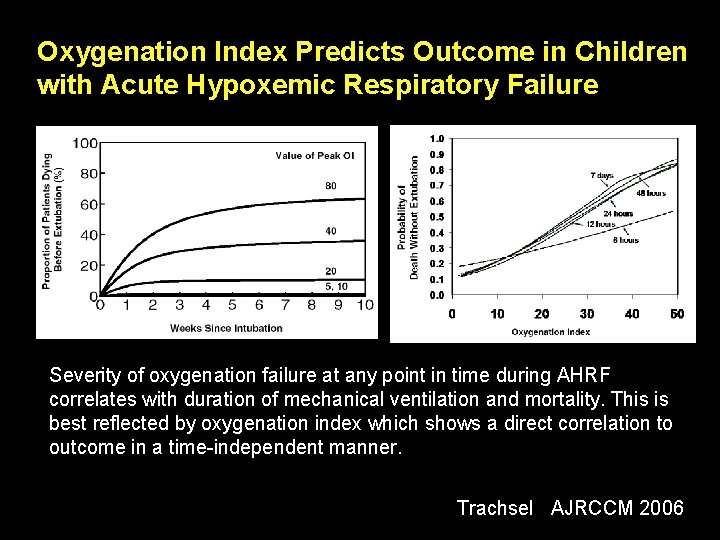
Oxygenation Index Predicts Outcome in Children with Acute Hypoxemic Respiratory Failure Severity of oxygenation failure at any point in time during AHRF correlates with duration of mechanical ventilation and mortality. This is best reflected by oxygenation index which shows a direct correlation to outcome in a time-independent manner. Trachsel AJRCCM 2006
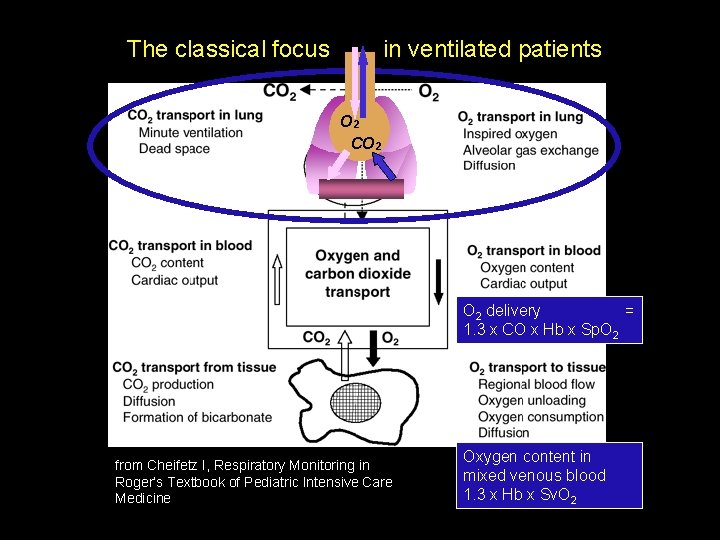
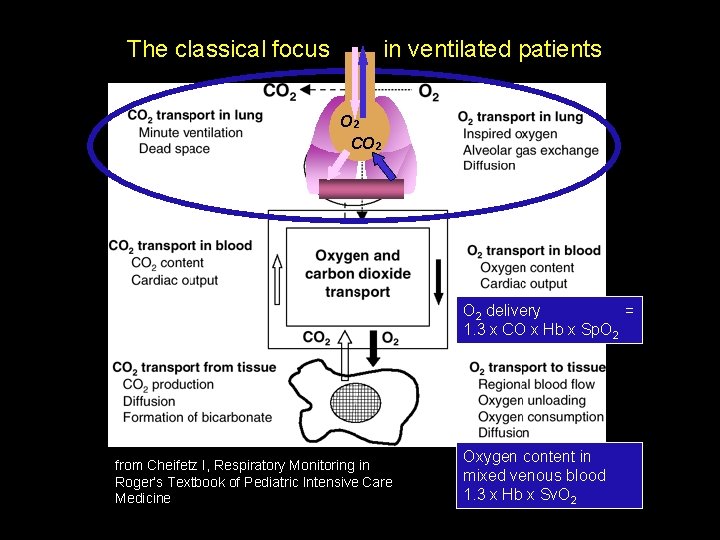
The classical focus in ventilated patients O 2 CO 2 delivery = 1. 3 x CO x Hb x Sp. O 2 from Cheifetz I, Respiratory Monitoring in Roger’s Textbook of Pediatric Intensive Care Medicine Oxygen content in mixed venous blood 1. 3 x Hb x Sv. O 2
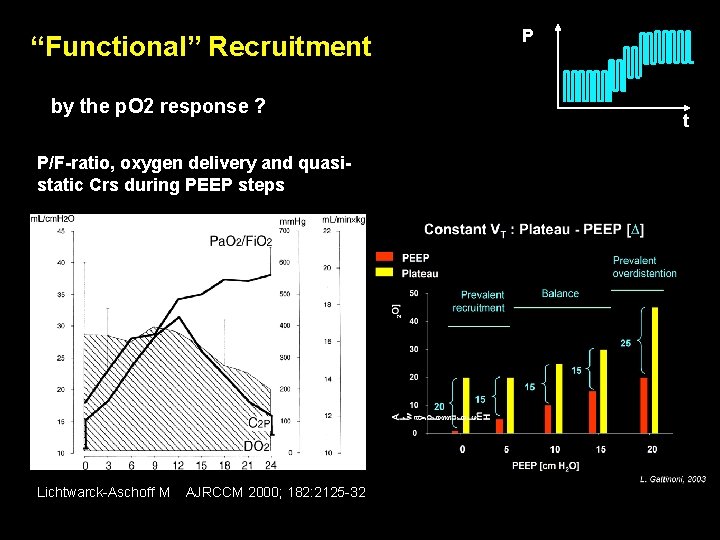
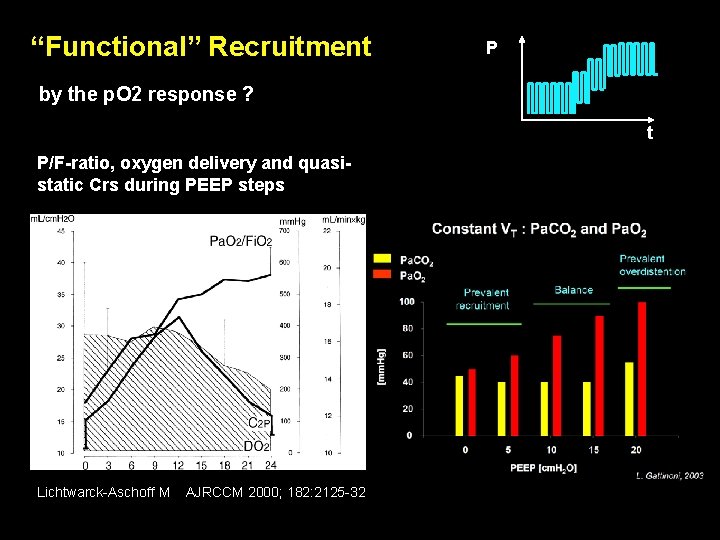
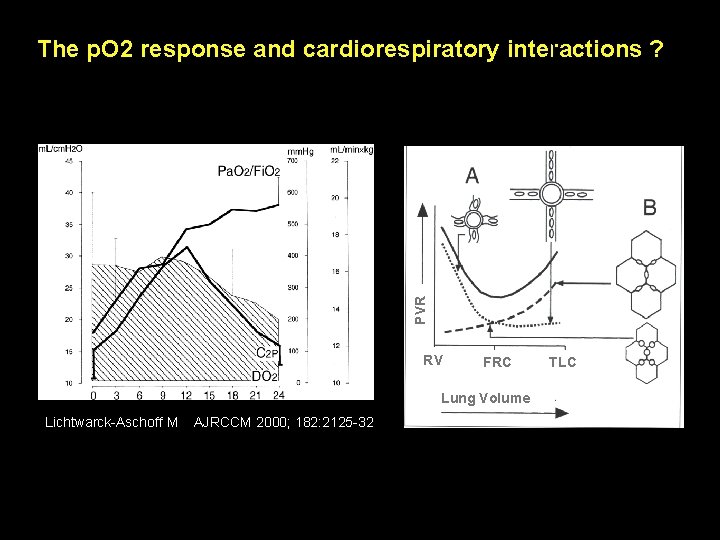
“Functional” Recruitment by the p. O 2 response ? P/F-ratio, oxygen delivery and quasistatic Crs during PEEP steps Lichtwarck-Aschoff M AJRCCM 2000; 182: 2125 -32 P t
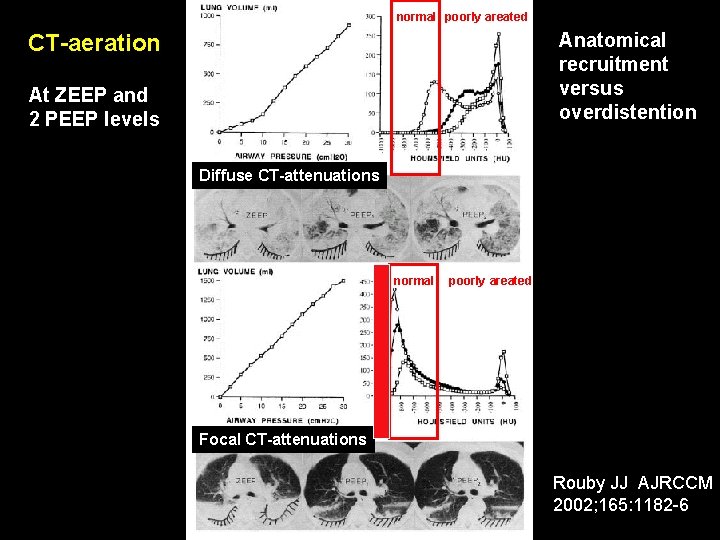
normal poorly areated Anatomical recruitment versus overdistention CT-aeration At ZEEP and 2 PEEP levels Diffuse CT-attenuations normal poorly areated Focal CT-attenuations Rouby JJ AJRCCM 2002; 165: 1182 -6
“Functional” Recruitment P by the p. O 2 response ? t P/F-ratio, oxygen delivery and quasistatic Crs during PEEP steps Lichtwarck-Aschoff M AJRCCM 2000; 182: 2125 -32
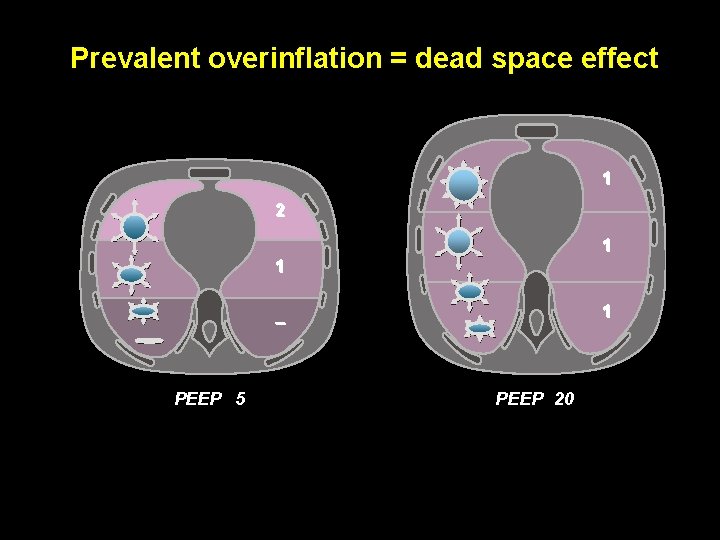
Prevalent overinflation = dead space effect 1 2 1 1 1 – PEEP 5 PEEP 20
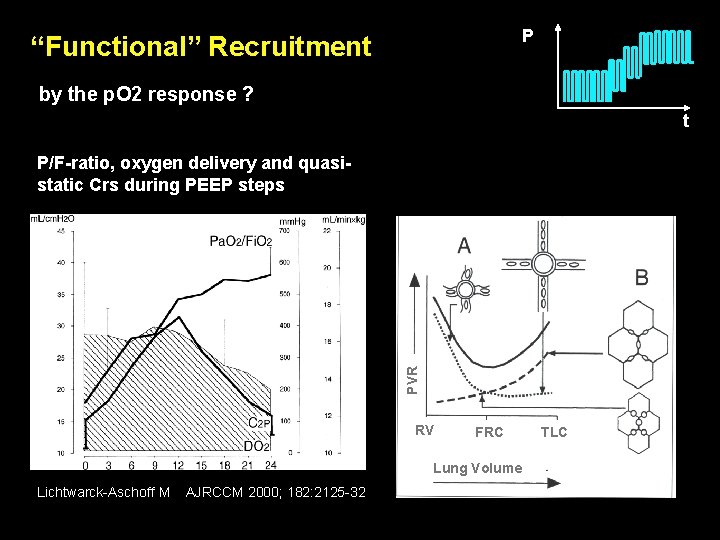
P “Functional” Recruitment by the p. O 2 response ? t PVR P/F-ratio, oxygen delivery and quasistatic Crs during PEEP steps RV FRC Lung Volume Lichtwarck-Aschoff M AJRCCM 2000; 182: 2125 -32 TLC
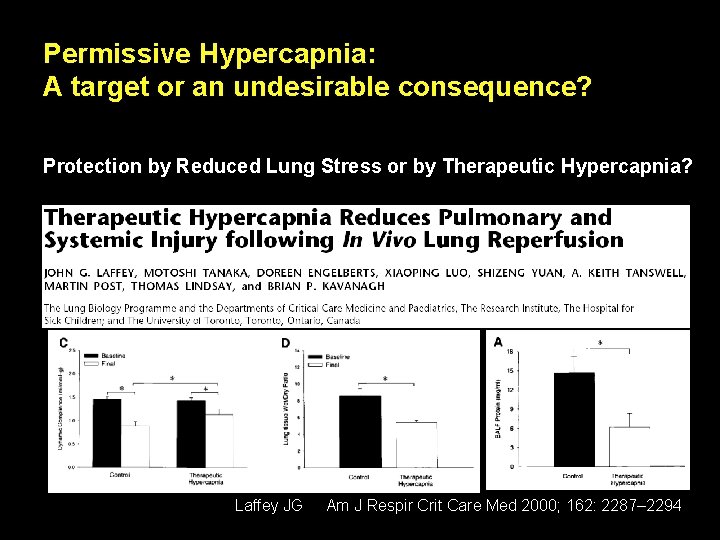
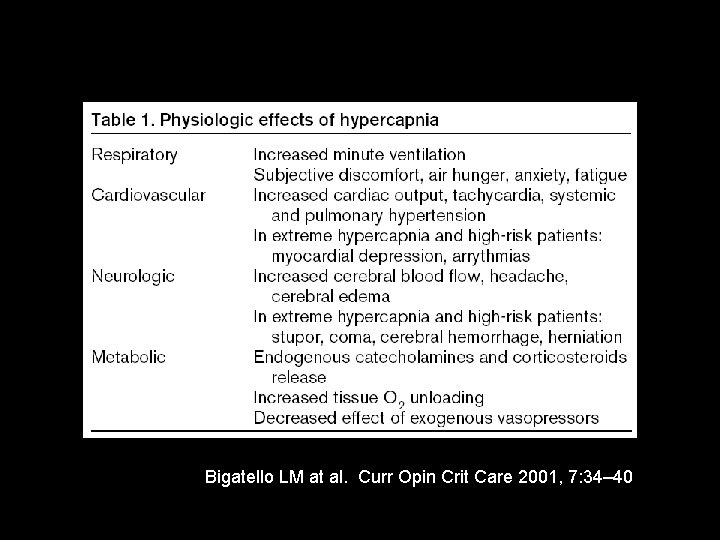
Permissive Hypercapnia: A target or an undesirable consequence? Protection by Reduced Lung Stress or by Therapeutic Hypercapnia? Laffey JG Am J Respir Crit Care Med 2000; 162: 2287– 2294
Bigatello LM at al. Curr Opin Crit Care 2001, 7: 34– 40
Bigatello LM at al. Curr Opin Crit Care 2001, 7: 34– 40
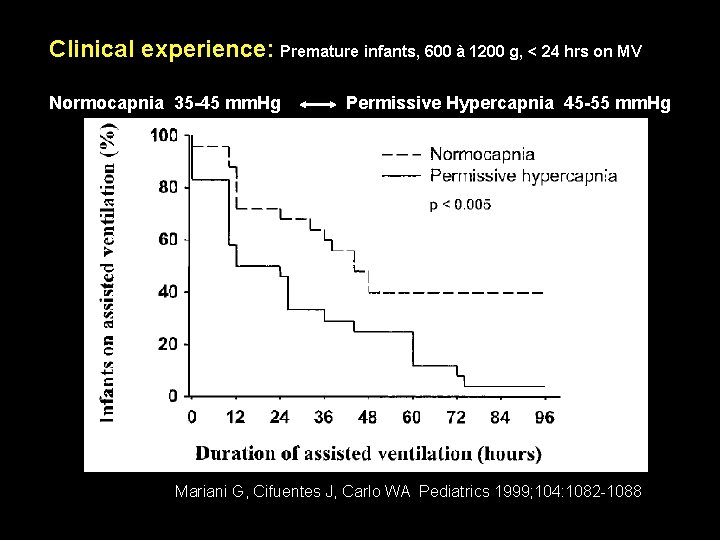
Clinical experience: Premature infants, 600 à 1200 g, < 24 hrs on MV Normocapnia 35 -45 mm. Hg Permissive Hypercapnia 45 -55 mm. Hg Mariani G, Cifuentes J, Carlo WA Pediatrics 1999; 104: 1082 -1088
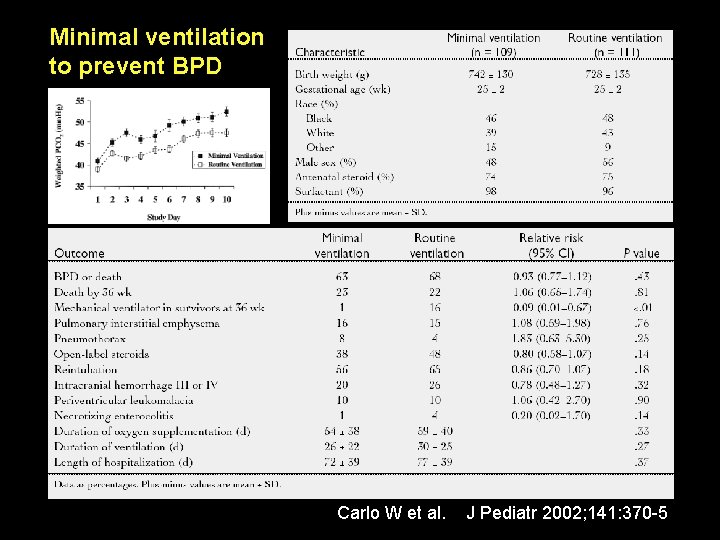
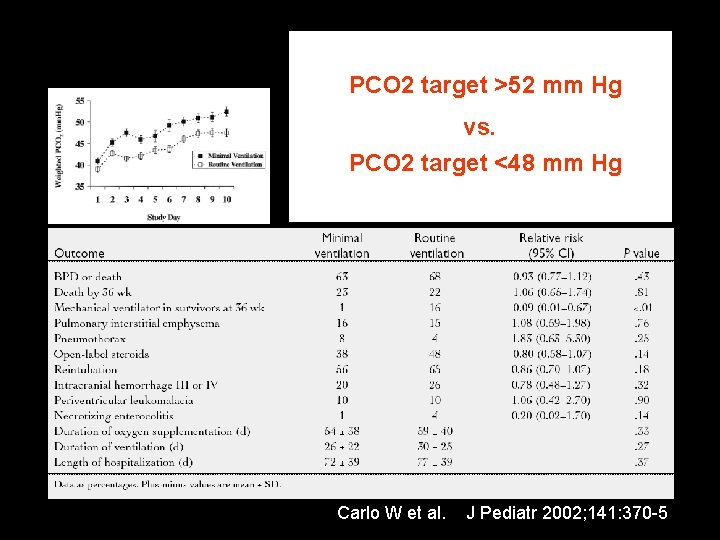
Minimal ventilation to prevent BPD Carlo W et al. J Pediatr 2002; 141: 370 -5
Minimal ventilation to prevent BPD PCO 2 target >52 mm Hg vs. PCO 2 target <48 mm Hg Carlo W et al. J Pediatr 2002; 141: 370 -5
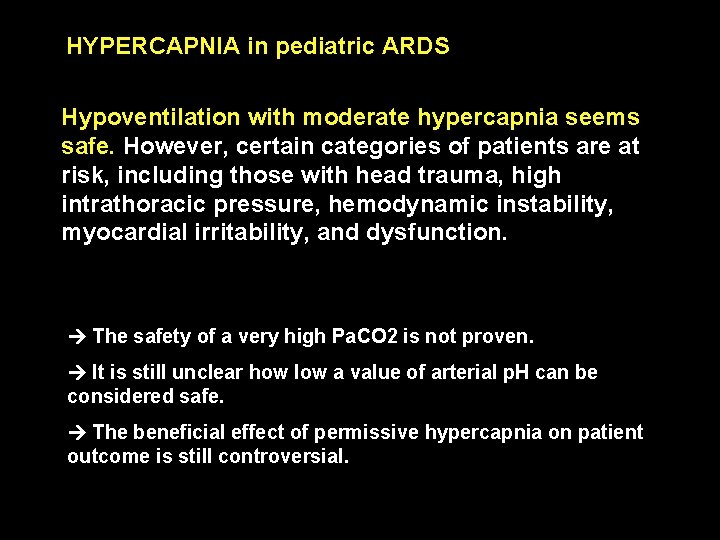
HYPERCAPNIA in pediatric ARDS Hypoventilation with moderate hypercapnia seems safe. However, certain categories of patients are at risk, including those with head trauma, high intrathoracic pressure, hemodynamic instability, myocardial irritability, and dysfunction. The safety of a very high Pa. CO 2 is not proven. It is still unclear how low a value of arterial p. H can be considered safe. The beneficial effect of permissive hypercapnia on patient outcome is still controversial.
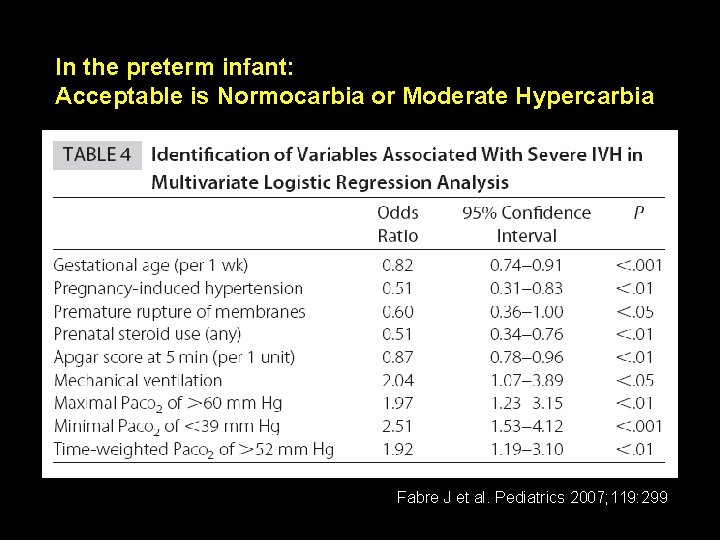
In the preterm infant: Acceptable is Normocarbia or Moderate Hypercarbia Fabre J et al. Pediatrics 2007; 119: 299
PVR The p. O 2 response and cardiorespiratory interactions ? RV FRC Lung Volume Lichtwarck-Aschoff M AJRCCM 2000; 182: 2125 -32 TLC
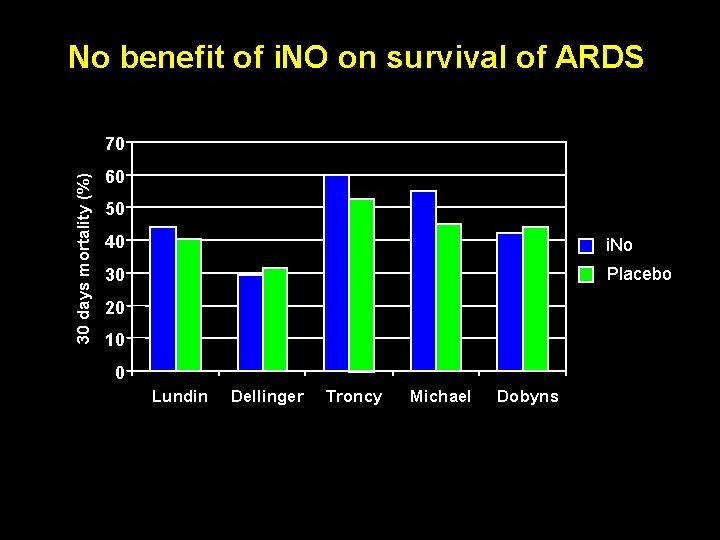
No benefit of i. NO on survival of ARDS 30 days mortality (%) 70 60 50 40 i. No 30 Placebo 20 10 0 Lundin Dellinger Troncy Michael Dobyns
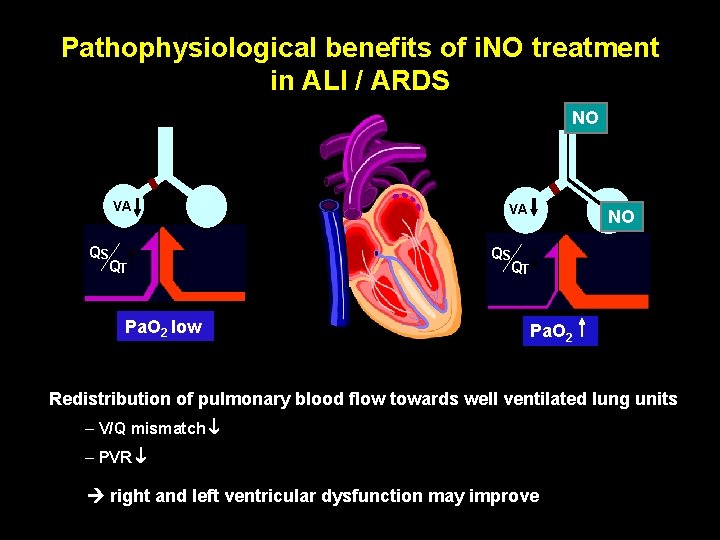
Pathophysiological benefits of i. NO treatment in ALI / ARDS NO VA QS QT Pa. O 2 low VA NO QS QT Pa. O 2 Redistribution of pulmonary blood flow towards well ventilated lung units – V/Q mismatch – PVR right and left ventricular dysfunction may improve
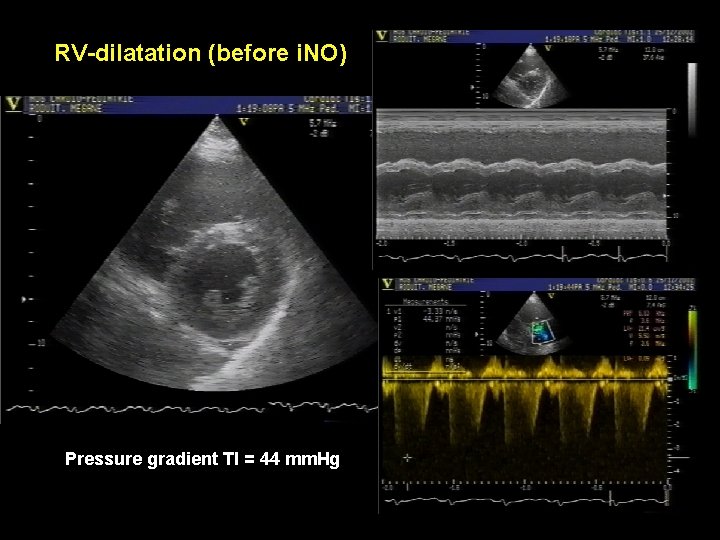
RV-dilatation (before i. NO) Pressure gradient TI = 44 mm. Hg
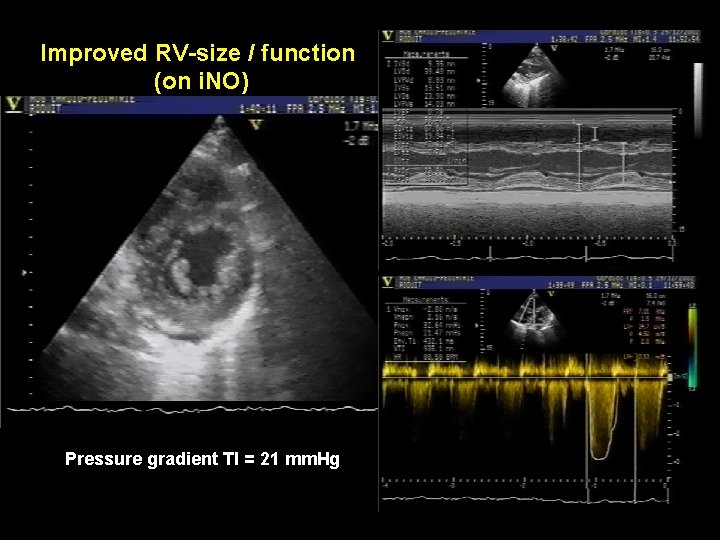
Improved RV-size / function (on i. NO) Pressure gradient TI = 21 mm. Hg
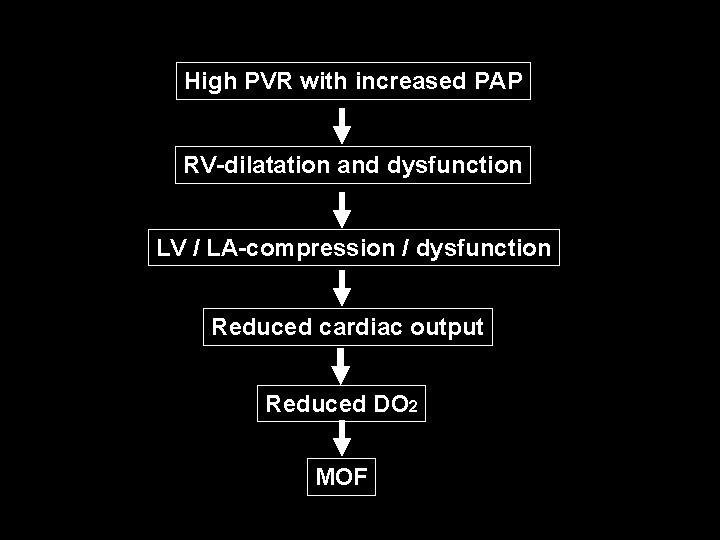
High PVR with increased PAP RV-dilatation and dysfunction LV / LA-compression / dysfunction Reduced cardiac output Reduced DO 2 MOF
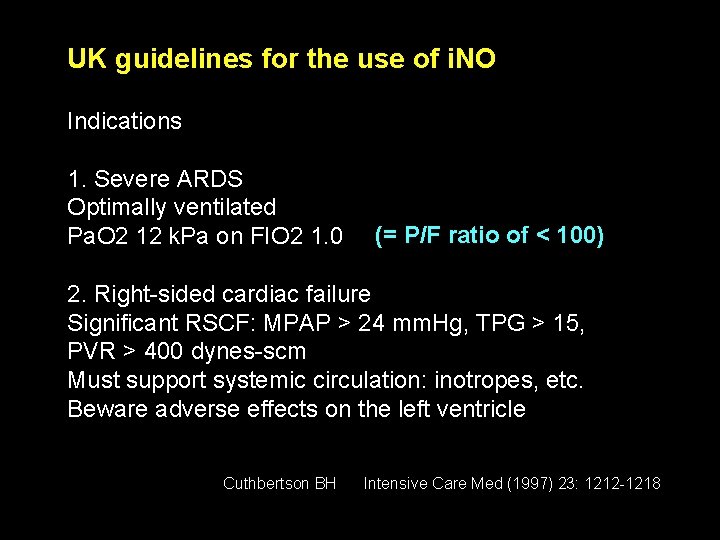
UK guidelines for the use of i. NO Indications 1. Severe ARDS Optimally ventilated Pa. O 2 12 k. Pa on FIO 2 1. 0 (= P/F ratio of < 100) 2. Right-sided cardiac failure Significant RSCF: MPAP > 24 mm. Hg, TPG > 15, PVR > 400 dynes-scm Must support systemic circulation: inotropes, etc. Beware adverse effects on the left ventricle Cuthbertson BH Intensive Care Med (1997) 23: 1212 -1218
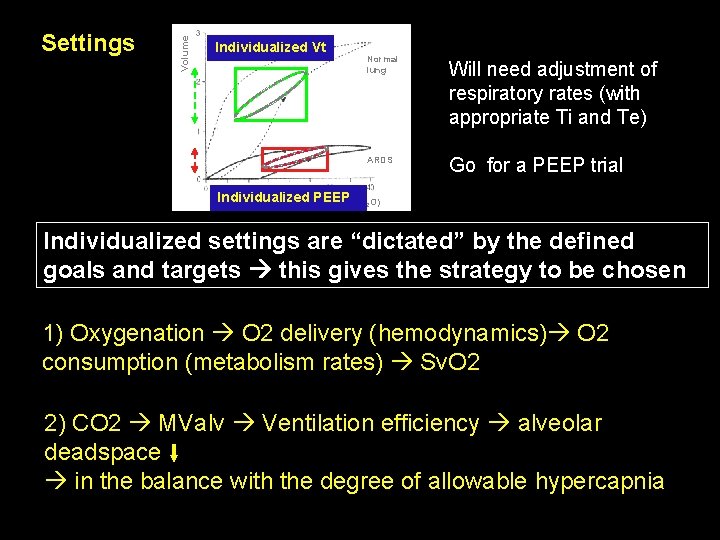
Volume Settings Individualized Vt Normal lung Will need adjustment of respiratory rates (with appropriate Ti and Te) ARDS Go for a PEEP trial Individualized PEEP Airway pressure (cm. H 2 O) Individualized settings are “dictated” by the defined goals and targets this gives the strategy to be chosen 1) Oxygenation O 2 delivery (hemodynamics) O 2 consumption (metabolism rates) Sv. O 2 2) CO 2 MValv Ventilation efficiency alveolar deadspace in the balance with the degree of allowable hypercapnia
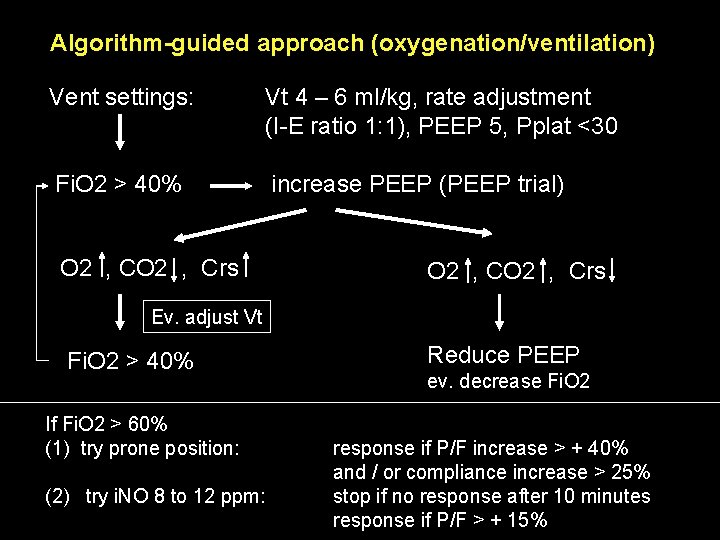
Algorithm-guided approach (oxygenation/ventilation) Vent settings: Vt 4 – 6 ml/kg, rate adjustment (I-E ratio 1: 1), PEEP 5, Pplat <30 Fi. O 2 > 40% increase PEEP (PEEP trial) O 2 , CO 2 , Crs Ev. adjust Vt Fi. O 2 > 40% If Fi. O 2 > 60% (1) try prone position: (2) try i. NO 8 to 12 ppm: Reduce PEEP ev. decrease Fi. O 2 response if P/F increase > + 40% and / or compliance increase > 25% stop if no response after 10 minutes response if P/F > + 15%
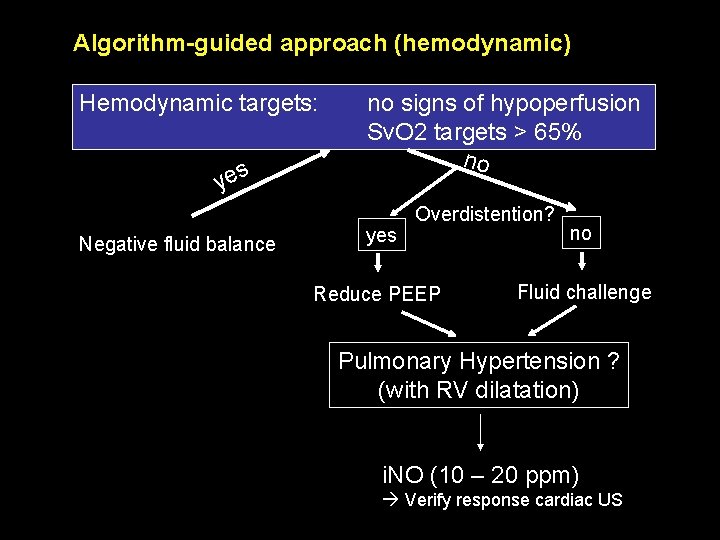
Algorithm-guided approach (hemodynamic) Hemodynamic targets: yes Negative fluid balance no signs of hypoperfusion Sv. O 2 targets > 65% no yes Overdistention? Reduce PEEP no Fluid challenge Pulmonary Hypertension ? (with RV dilatation) i. NO (10 – 20 ppm) Verify response cardiac US
The classical focus in ventilated patients O 2 CO 2 delivery = 1. 3 x CO x Hb x Sp. O 2 from Cheifetz I, Respiratory Monitoring in Roger’s Textbook of Pediatric Intensive Care Medicine Oxygen content in mixed venous blood 1. 3 x Hb x Sv. O 2
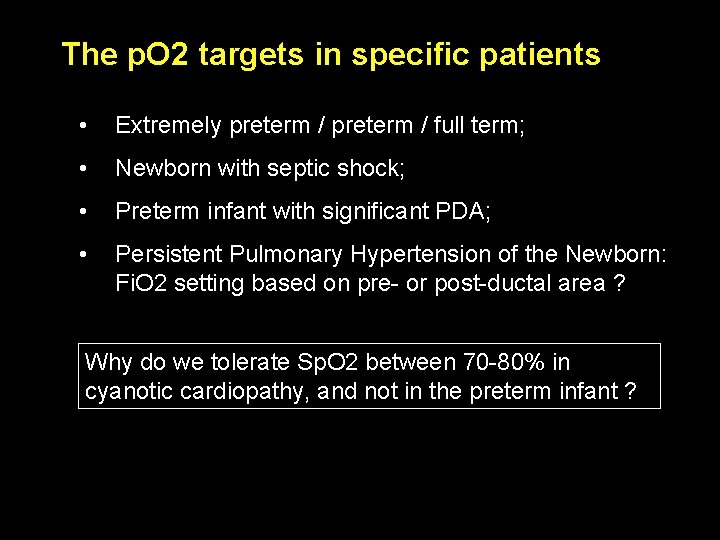
The p. O 2 targets in specific patients • Extremely preterm / full term; • Newborn with septic shock; • Preterm infant with significant PDA; • Persistent Pulmonary Hypertension of the Newborn: Fi. O 2 setting based on pre- or post-ductal area ? Why do we tolerate Sp. O 2 between 70 -80% in cyanotic cardiopathy, and not in the preterm infant ?
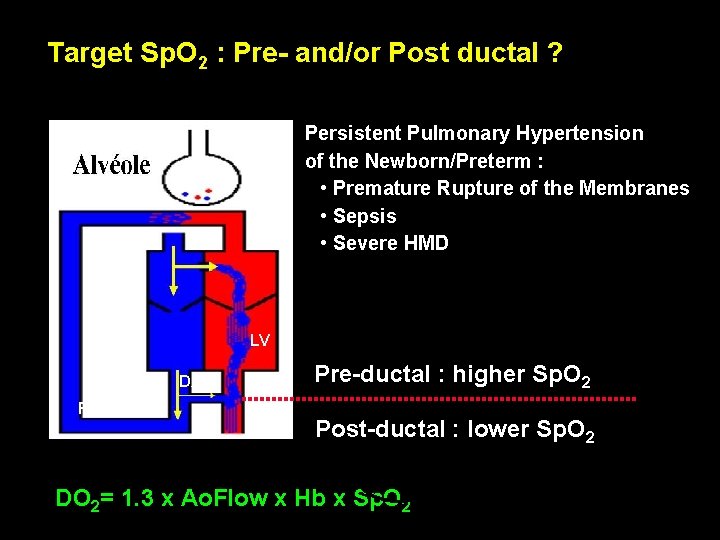
Target Sp. O 2 : Pre- and/or Post ductal ? Persistent Pulmonary Hypertension of the Newborn/Preterm : • Premature Rupture of the Membranes • Sepsis • Severe HMD RA RV LV DA PA Pre-ductal : higher Sp. O 2 Post-ductal : lower Sp. O 2 DO 2= 1. 3 x Ao. Flow x Hb x Sp. O 2
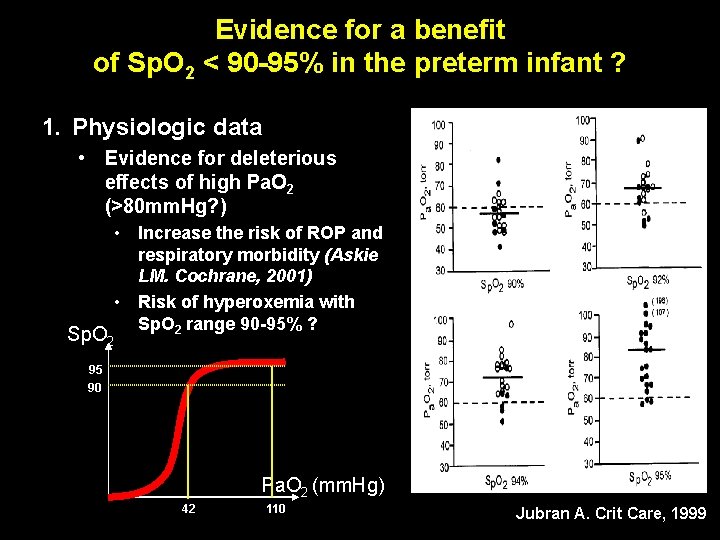
Evidence for a benefit of Sp. O 2 < 90 -95% in the preterm infant ? 1. Physiologic data • Evidence for deleterious effects of high Pa. O 2 (>80 mm. Hg? ) • Increase the risk of ROP and respiratory morbidity (Askie LM. Cochrane, 2001) • Risk of hyperoxemia with Sp. O 2 range 90 -95% ? Sp. O 2 95 90 Pa. O 2 (mm. Hg) 42 110 Jubran A. Crit Care, 1999
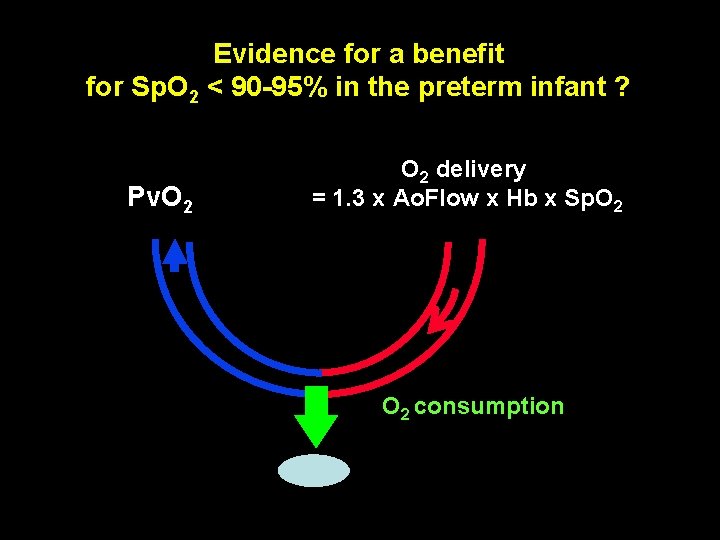
Evidence for a benefit for Sp. O 2 < 90 -95% in the preterm infant ? Pv. O 2 delivery = 1. 3 x Ao. Flow x Hb x Sp. O 2 consumption
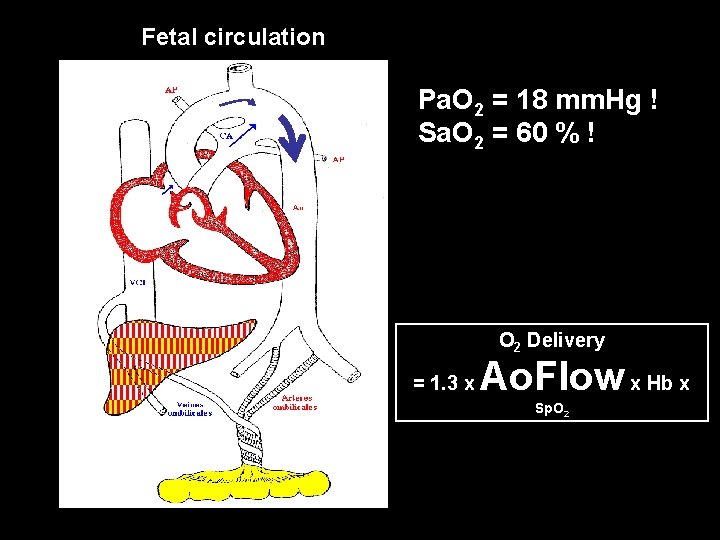
Fetal circulation Pa. O 2 = 18 mm. Hg ! Sa. O 2 = 60 % ! O 2 Delivery = 1. 3 x Ao. Flow x Hb x Sp. O 2
Evidence for a benefit for Sp. O 2 < 90 -95% in the preterm infant ? • Lack of evidence for hypoxia in hypoxemic preterm infants (Petrova A et al. Pediatr Crit Care Med, 2006) • Prospective study • 10 preterm infants 24 -32 weeks GA • Mesurement of tissular oxygenation (NIRS, brain and kidney) when Sp. O 2 < 80% ; No tissular hypoxia (Tissular SO 2 and Fractional O 2 Extraction : Adequate)
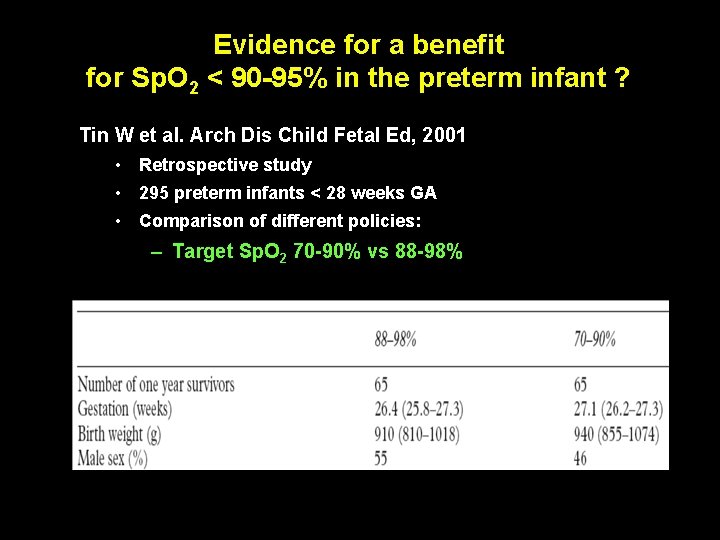
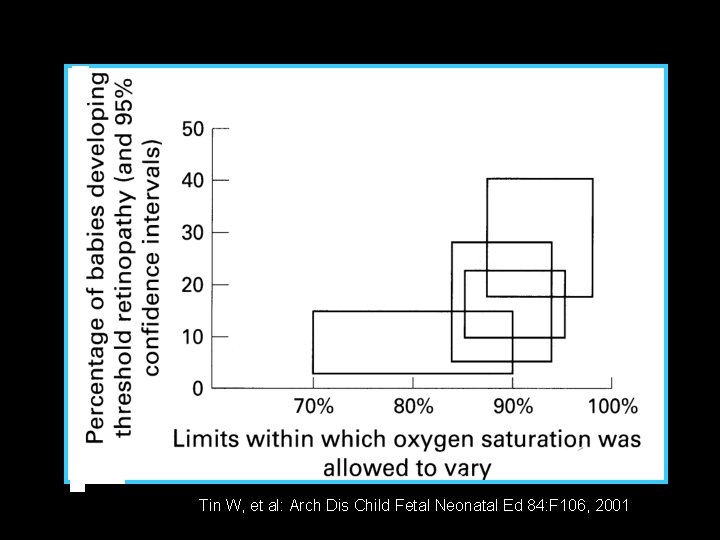
Evidence for a benefit for Sp. O 2 < 90 -95% in the preterm infant ? Tin W et al. Arch Dis Child Fetal Ed, 2001 • Retrospective study • 295 preterm infants < 28 weeks GA • Comparison of different policies: – Target Sp. O 2 70 -90% vs 88 -98%
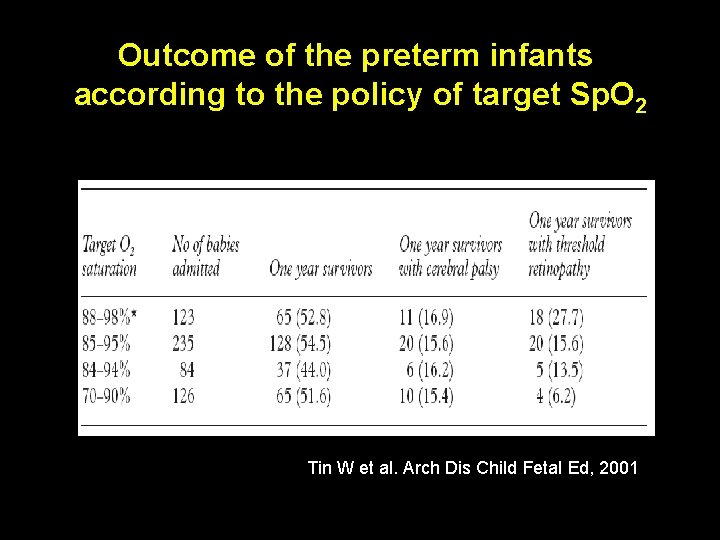
Outcome of the preterm infants according to the policy of target Sp. O 2 Tin W et al. Arch Dis Child Fetal Ed, 2001
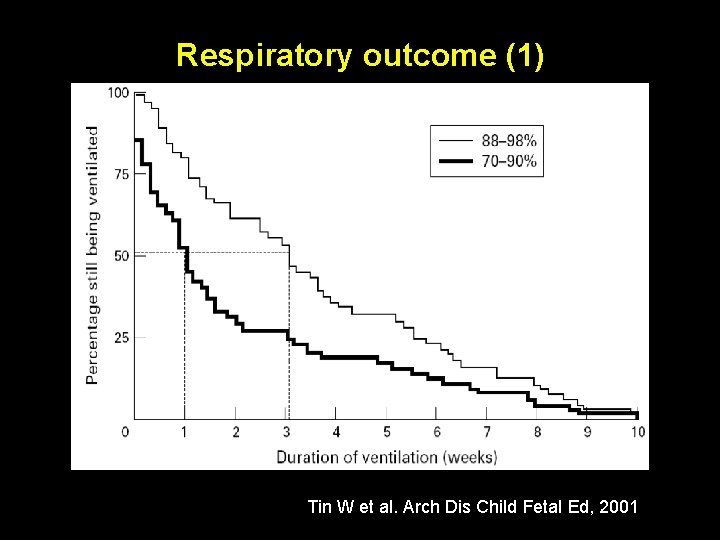
Respiratory outcome (1) Tin W et al. Arch Dis Child Fetal Ed, 2001
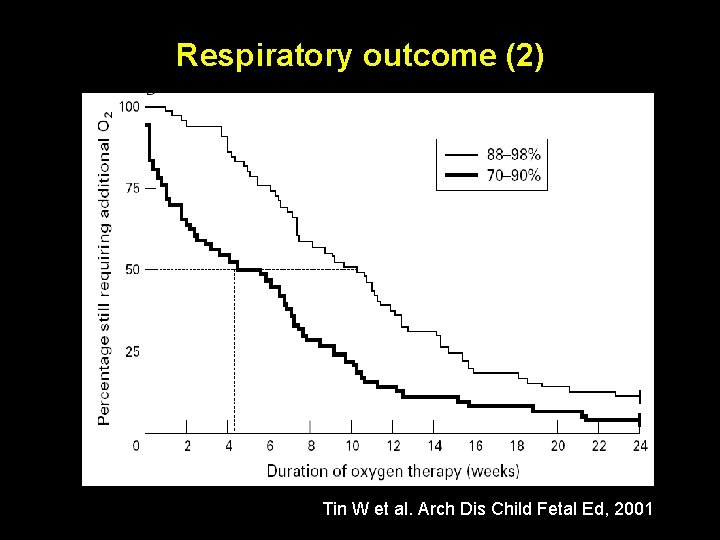
Respiratory outcome (2) Tin W et al. Arch Dis Child Fetal Ed, 2001
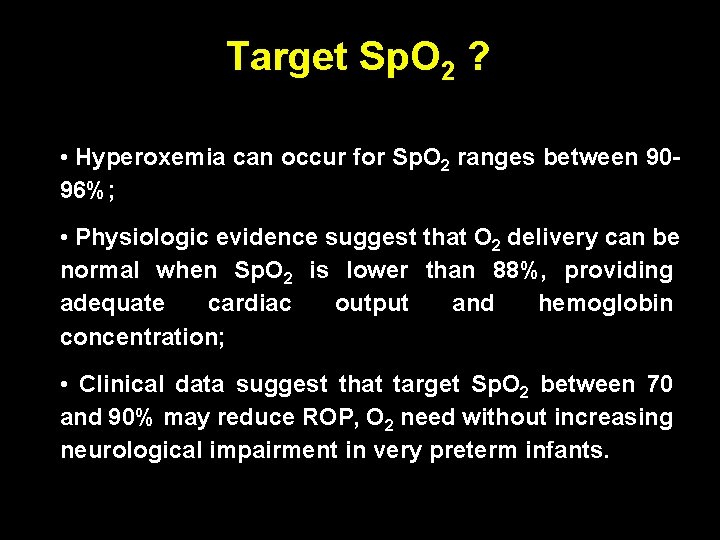
Target Sp. O 2 ? • Hyperoxemia can occur for Sp. O 2 ranges between 9096%; • Physiologic evidence suggest that O 2 delivery can be normal when Sp. O 2 is lower than 88%, providing adequate cardiac output and hemoglobin concentration; • Clinical data suggest that target Sp. O 2 between 70 and 90% may reduce ROP, O 2 need without increasing neurological impairment in very preterm infants.
Tin W, et al: Arch Dis Child Fetal Neonatal Ed 84: F 106, 2001
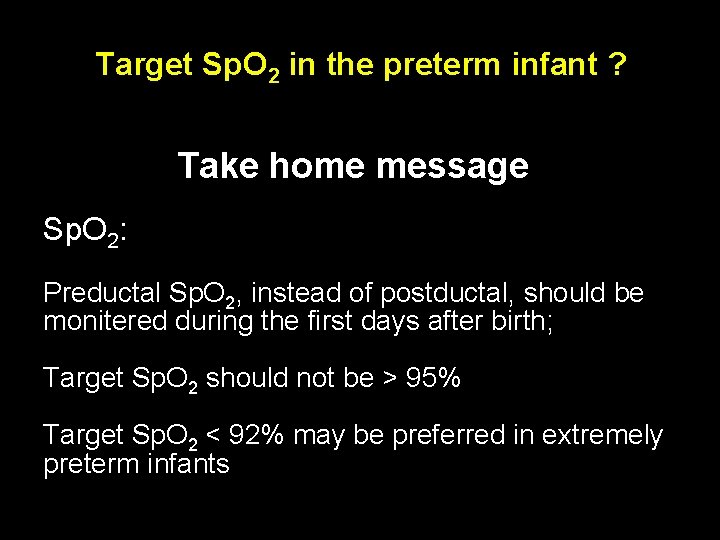
Target Sp. O 2 in the preterm infant ? Take home message Sp. O 2: Preductal Sp. O 2, instead of postductal, should be monitered during the first days after birth; Target Sp. O 2 should not be > 95% Target Sp. O 2 < 92% may be preferred in extremely preterm infants