
Ventilation forecast Mixing height top of the layer
- Slides: 10
Ventilation forecast • Mixing height - top of the layer through which relatively vigorous mixing will take place. • Transport winds (average speed in the layer) 11/1/2020 1
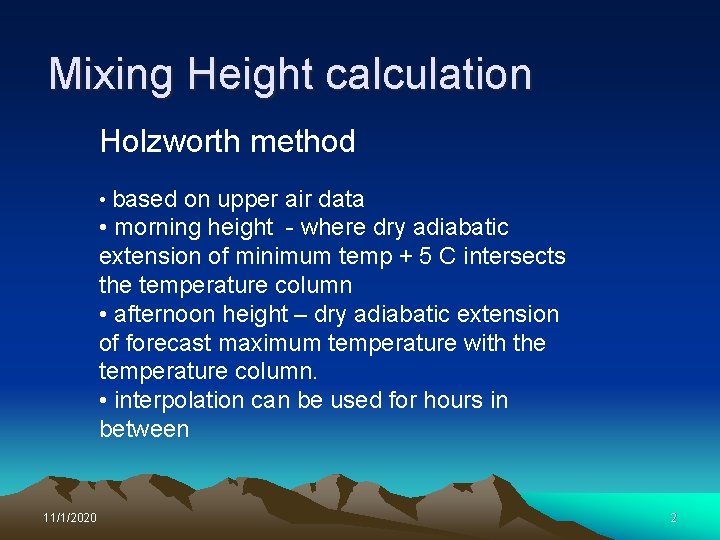
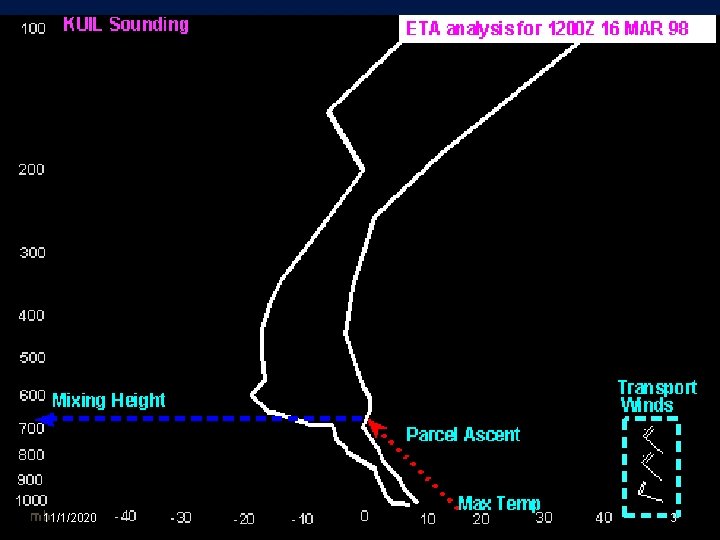
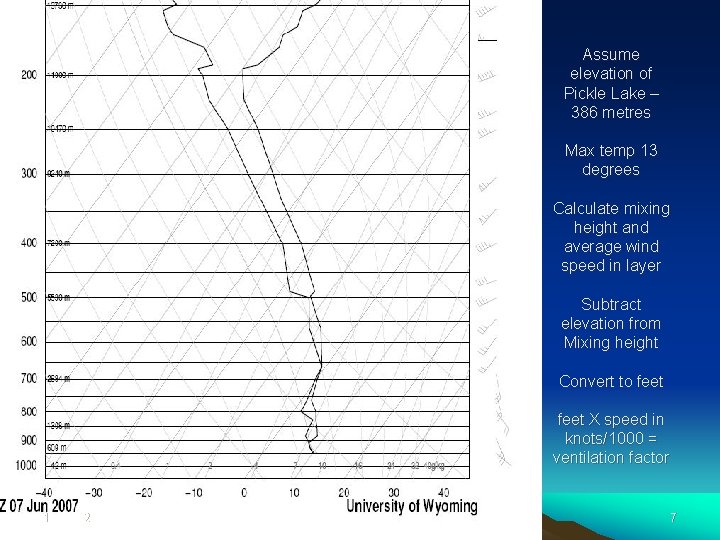
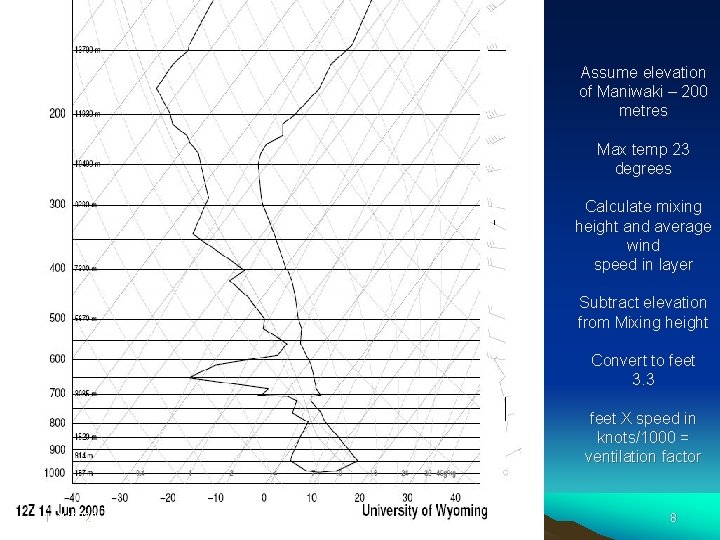
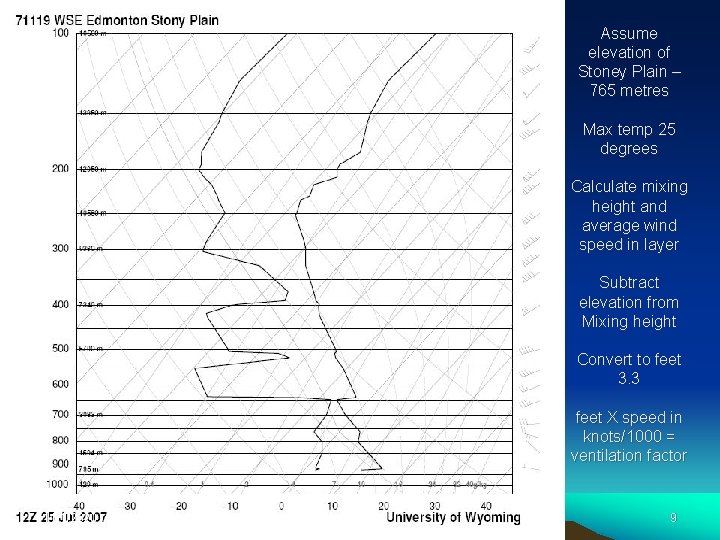
Mixing Height calculation Holzworth method • based on upper air data • morning height - where dry adiabatic extension of minimum temp + 5 C intersects the temperature column • afternoon height – dry adiabatic extension of forecast maximum temperature with the temperature column. • interpolation can be used for hours in between 11/1/2020 2
11/1/2020 3
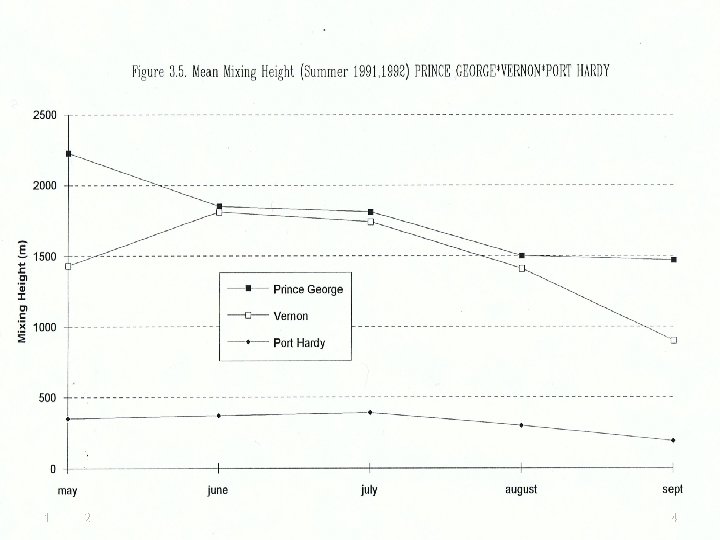
11/1/2020 4
Mixing Height calculation • Holzworth method doesn’t take into account: - low level heating or cooling (ground surface, terrain) - synoptic scale lift or subsidence - mid level temperature and moisture advection • Use prog tephi 11/1/2020 5
Transport winds • average wind speed and direction of all winds in the layer from ground to mixing height. • can use vectors – meridional, zonal components to calculate accurate measurement. • doesn’t work too well in mountainous areas. • estimate should work out fairly well 11/1/2020 6
Assume elevation of Pickle Lake – 386 metres Max temp 13 degrees Calculate mixing height and average wind speed in layer Subtract elevation from Mixing height Convert to feet X speed in knots/1000 = ventilation factor 11/1/2020 7
Assume elevation of Maniwaki – 200 metres Max temp 23 degrees Calculate mixing height and average wind speed in layer Subtract elevation from Mixing height Convert to feet 3. 3 feet X speed in knots/1000 = ventilation factor 11/1/2020 8
Assume elevation of Stoney Plain – 765 metres Max temp 25 degrees Calculate mixing height and average wind speed in layer Subtract elevation from Mixing height Convert to feet 3. 3 feet X speed in knots/1000 = ventilation factor 11/1/2020 9
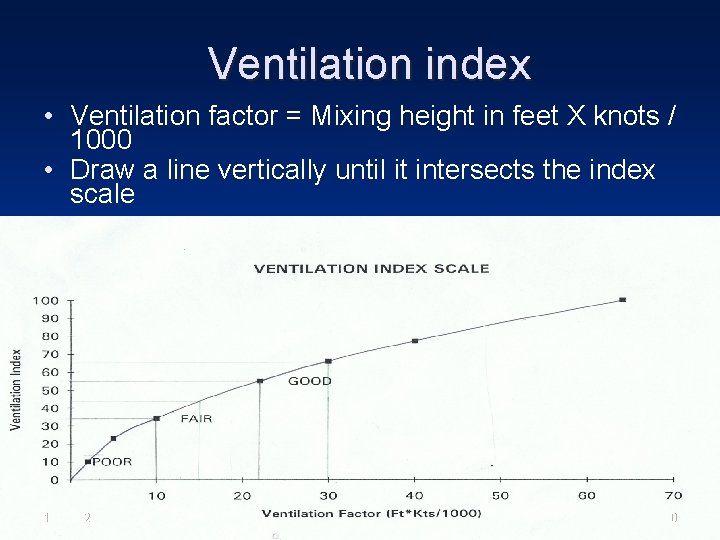
Ventilation index • Ventilation factor = Mixing height in feet X knots / 1000 • Draw a line vertically until it intersects the index scale 11/1/2020 10