
Venous Ulcers Barbara Pieper Ph D RN FAAN
Venous Ulcers Barbara Pieper Ph. D, RN, FAAN, CWOCN, ACNS-BC Module #4
Objectives 1. 2. 3. 4. To define chronic venous insufficiency To identify at least three common traits of venous ulcers To describe treatment options for venous ulcers To correlate venous ulcers to nursing concepts, nursing diagnoses and nursing issues
Risk Factors for Chronic Venous Insufficiency (CVI) Older age Immobility Major surgery General anesthesia Major trauma Heart disease Cancer Varicose veins Injection drug use Pregnancy Oral contraceptive use Post-menopausal hormone replacement therapy Hypercoagulation states Obesity History of DVT
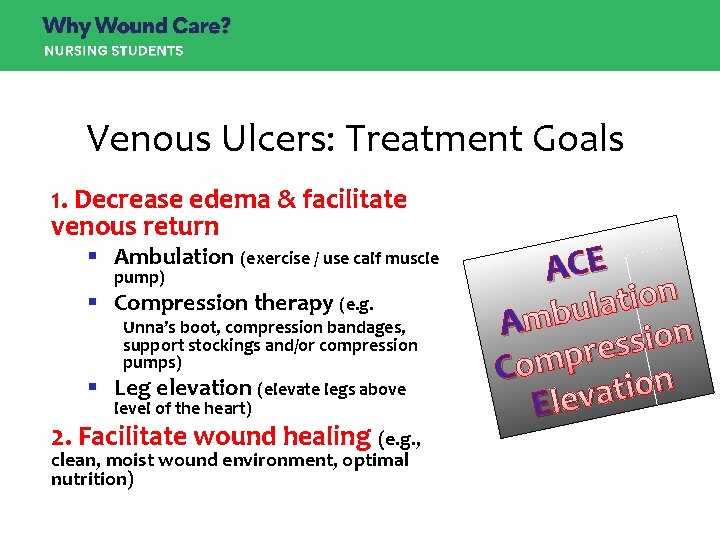
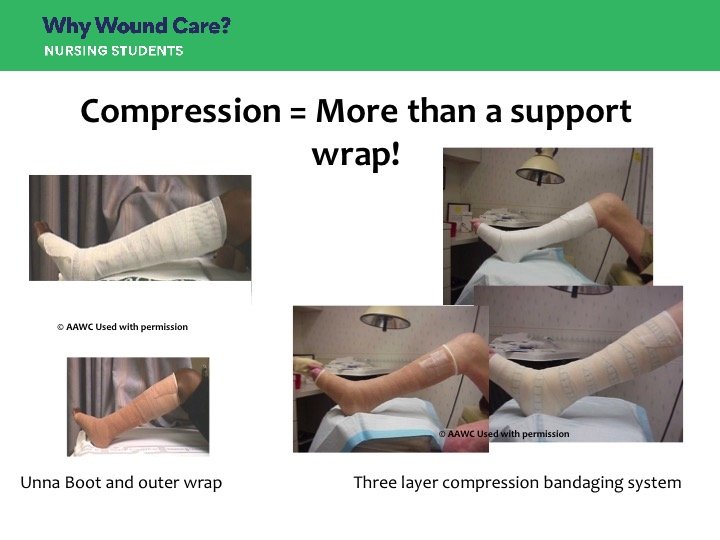
Venous Ulcers: Treatment Goals 1. Decrease edema & facilitate venous return § Ambulation (exercise / use calf muscle pump) § Compression therapy (e. g. Unna’s boot, compression bandages, support stockings and/or compression pumps) § Leg elevation (elevate legs above level of the heart) 2. Facilitate wound healing (e. g. , clean, moist wound environment, optimal nutrition) ACE n o i t a l u b m A n o i s s e r p C om n o i t E leva
Venous Ulcers and Nutrition § Nutrition needs to be assessed in patients with venous leg ulcers as protein deficiency is associated with: § Increased inflammation § Greater wound area § More frequent wound complications § Protein requirements tend to be underestimated in patients with wounds
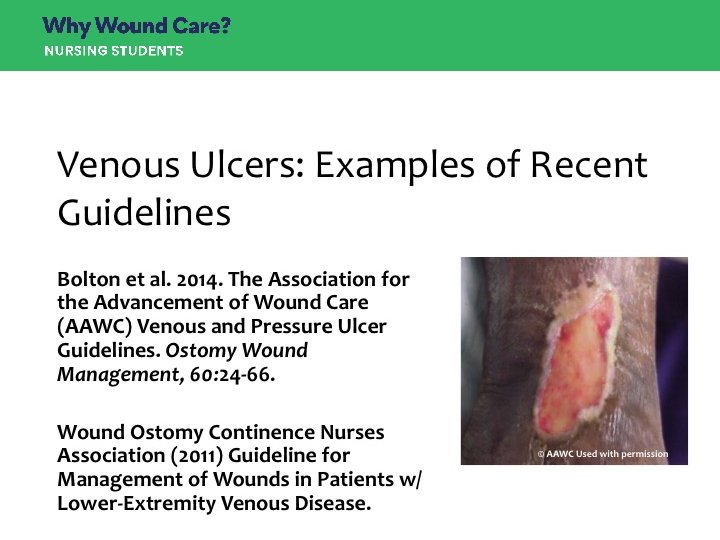
Safety: Balance, Gait & Falls Chronic Venous Insufficiency + Trauma = Venous Ulcer
Fall Prevention – Venous Disease § Shoe on foot versus walking on back of shoe § Assistive devices (cane, walker) § tips in good condition § used properly § Podiatry referral for nail/foot care § Balance assessment – work with physical therapist § Get-up and Go Test § Functional Reach § Watch gait – walk with foot versus shuffle
Key Nursing Concepts § § § § § Assessment Body Image Infection Control Pain Patient Education Prevention Self Care Deficit Safety Wound Healing
Key Nursing Diagnoses: CVI and/or Venous ulcer § Potential for Alteration in Skin Integrity § Potential for Alteration in Tissue Integrity § Impaired Skin Integrity § Impaired Tissue Integrity § Pain § Self-care deficit § Self-image
Key Nursing Practice Issues § Registered Nurses assess wounds; Licensed Practice Nurses monitor wounds per state nurse practice acts § Physicians diagnose wound etiology; some Advance Practice Nurses diagnose wound etiology per state nurse practice acts § Correct etiology is key to selecting the correct clinical practice guideline to follow for an individualized wound care plan of care
Websites for Further Information on Types of Wounds - Association for the Advancement of Wound Care www. aawc 1. org - Canadian Association for Wound Care www. cawc. net - - World Union of Wound Healing Societies www. wuwhs. org - Wound Ostomy Continence Nurses Society www. wocn. org
Why Wound Care? A Campaign for a Rewarding Nursing Career in Wound Care www. Why. Wound. Care. com
- Slides: 20