
Venous Thromboembolism VTE Reducing the Risk in Maternity
![Venous Thromboembolism (VTE) Reducing the Risk in Maternity Patients [insert presenters name] [insert presenters](https://slidetodoc.com/presentation_image_h/04d15c588eaa3cb0f0148a29be9a62c2/image-1.jpg "Venous Thromboembolism (VTE) Reducing the Risk in Maternity Patients [insert presenters name] [insert presenters")
Venous Thromboembolism (VTE) Reducing the Risk in Maternity Patients [insert presenters name] [insert presenters facility]
Objectives • Provide an introduction to venous thromboembolism (VTE) • Discuss how VTE affects pregnant and postpartum women • Identify which pregnant and postpartum women require assessment • Provide an overview of VTE Risk Assessment with regards to: § Using the Maternity VTE Risk Assessment Tool § Factors to consider when performing VTE risk assessments • Practise performing VTE Risk Assessments Clinical Excellence Commission 2

Venous Thromboembolism (VTE) VTE Deep Vein Thrombosis (DVT) Pulmonary Embolism (PE) Occurs in deep veins (most commonly in legs and groin) Occurs after DVT dislodges and travels to the lungs Can cause long-term issues – ‘post-thrombotic syndrome’ (PTS). PTS affects 23 -60% of DVT patients within 2 years Serious complication which can lead to death Lower-extremity DVT has 3% PE-related mortality rate Patients with PE have 30 -60% chance of dying from it Clinical Excellence Commission 3
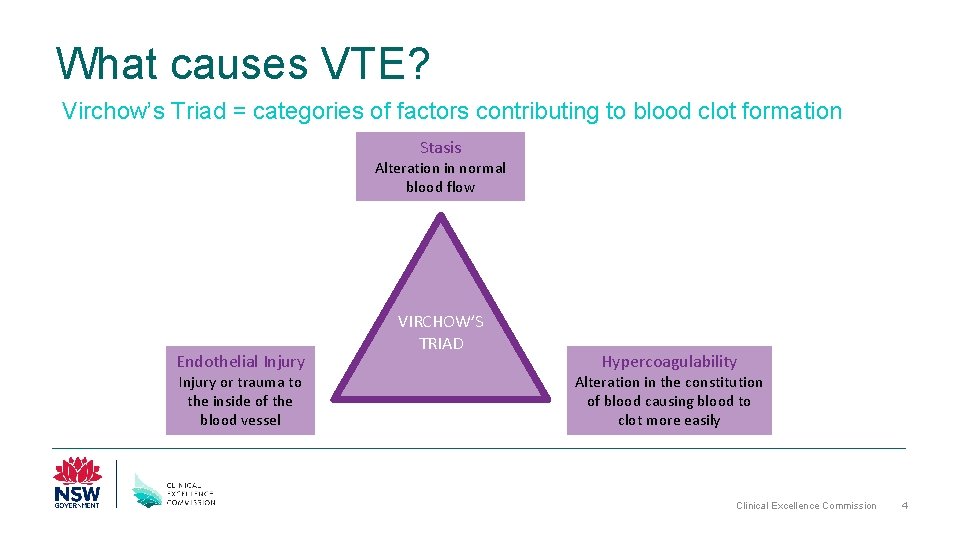
What causes VTE? Virchow’s Triad = categories of factors contributing to blood clot formation Stasis Alteration in normal blood flow Endothelial Injury or trauma to the inside of the blood vessel VIRCHOW’S TRIAD Hypercoagulability Alteration in the constitution of blood causing blood to clot more easily Clinical Excellence Commission 4
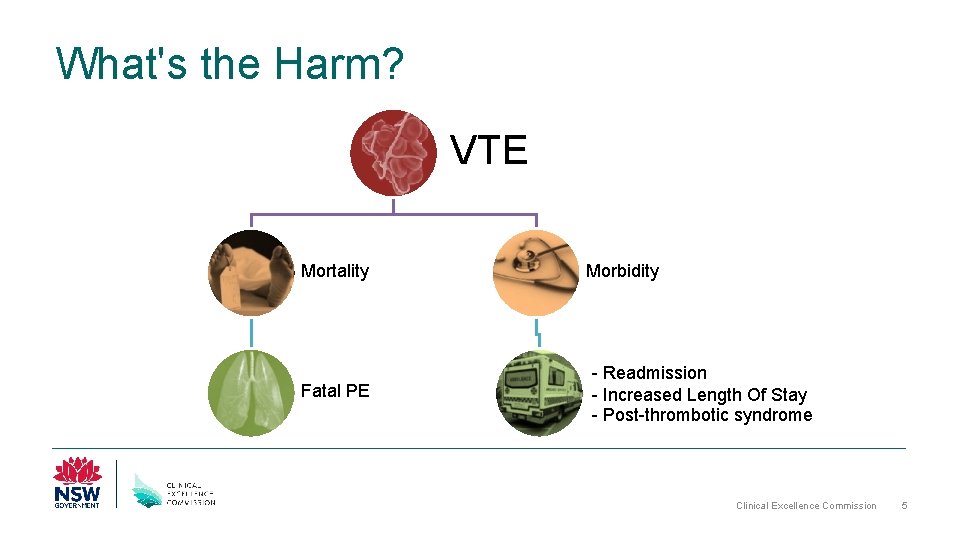
What's the Harm? VTE Mortality Fatal PE Morbidity - Readmission - Increased Length Of Stay - Post-thrombotic syndrome Clinical Excellence Commission 5
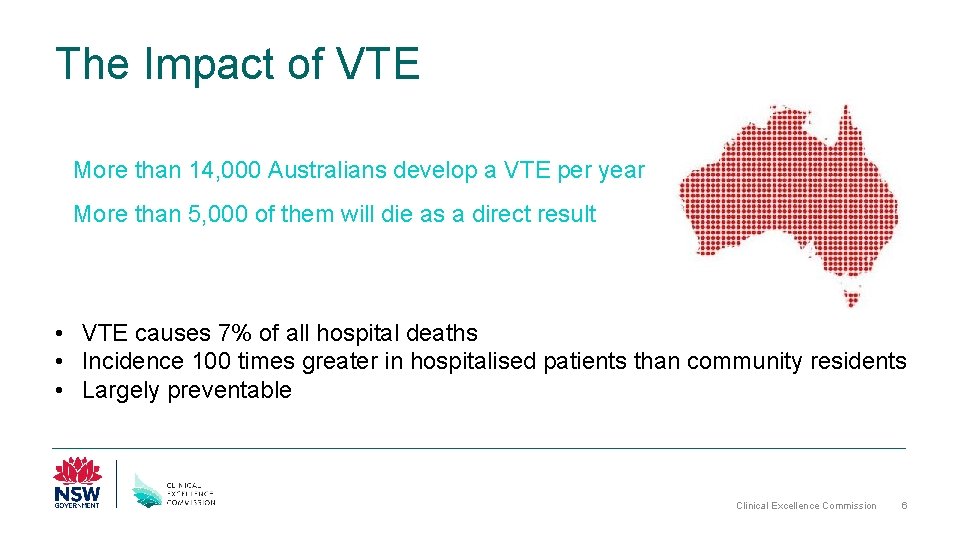
The Impact of VTE More than 14, 000 Australians develop a VTE per year More than 5, 000 of them will die as a direct result • VTE causes 7% of all hospital deaths • Incidence 100 times greater in hospitalised patients than community residents • Largely preventable Clinical Excellence Commission 6
So how does VTE affect women who are pregnant or just given birth? Clinical Excellence Commission 7
Of the 49 direct causes of maternal death identified in Australia between 2008 -2012, which leading two accounted for almost 43% of direct deaths? • Obstetric haemorrhage • Thromboembolism Clinical Excellence Commission 8
VTE and Pregnancy • Identified as a direct cause of maternal death accounting for 3. 2% of deaths worldwide L Say et al. Global causes of maternal death: a WHO systematic analysis. Lancet Glob Health 2014; 2: e 323– 33 • Also found to be one of the leading causes of direct maternal death in Australia (2008 -2012) accounting for 9. 5% of deaths Humphrey MD, Bonello MR, Chughtai A, Macaldowie A, Harris K & Chambers GM 2015. Maternal deaths in Australia 2008– 2012. Maternal deaths series no. 5. Cat. no. PER 70. Canberra: AIHW. Clinical Excellence Commission 9
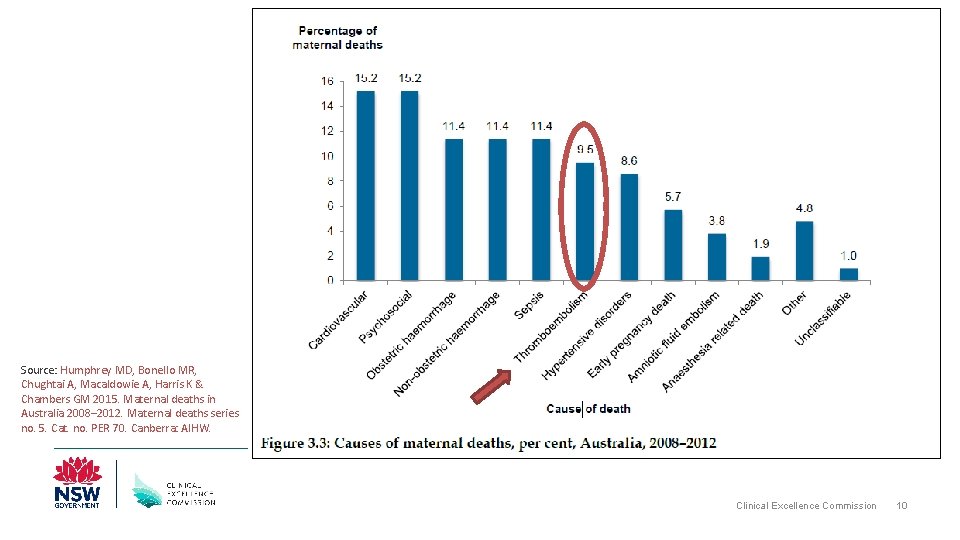
Source: Humphrey MD, Bonello MR, Chughtai A, Macaldowie A, Harris K & Chambers GM 2015. Maternal deaths in Australia 2008– 2012. Maternal deaths series no. 5. Cat. no. PER 70. Canberra: AIHW. Clinical Excellence Commission 10
What’s the Harm? Case ONE • 28 year old presented at 34 weeks • Underwent emergency LSCS for placental abruption • Hx indicates previous DVT post-op requiring 3 month warfarin therapy • Prescribed Clexane 40 mg post. LCSC • Ceased Day 4 Clinical Excellence Commission 11
What’s the Harm? Case ONE • Represented 28 days post-partum with significant pain and swelling of calf • U/S confirmed DVT • Commenced on treatment dose of anticoagulant for 6 months Clinical Excellence Commission 12
What’s the Harm? Case TWO • • 32 year old presented at 40+1 weeks Fully dilated Rapid NVB, nil complications Hx notes BMI = 42, family history of PE • Nil VTE Risk Assessment completed • Discharged 3/7 post-partum Clinical Excellence Commission 13
What’s the Harm? Case TWO • 10 days post-partum found collapsed at home • Paramedics called and transported patient to hospital • Dead on arrival • Post-mortem findings: Extensive pulmonary embolism Clinical Excellence Commission 14
Completing a VTE risk assessment and prescribing appropriate prophylaxis can save a mother’s life Clinical Excellence Commission 15
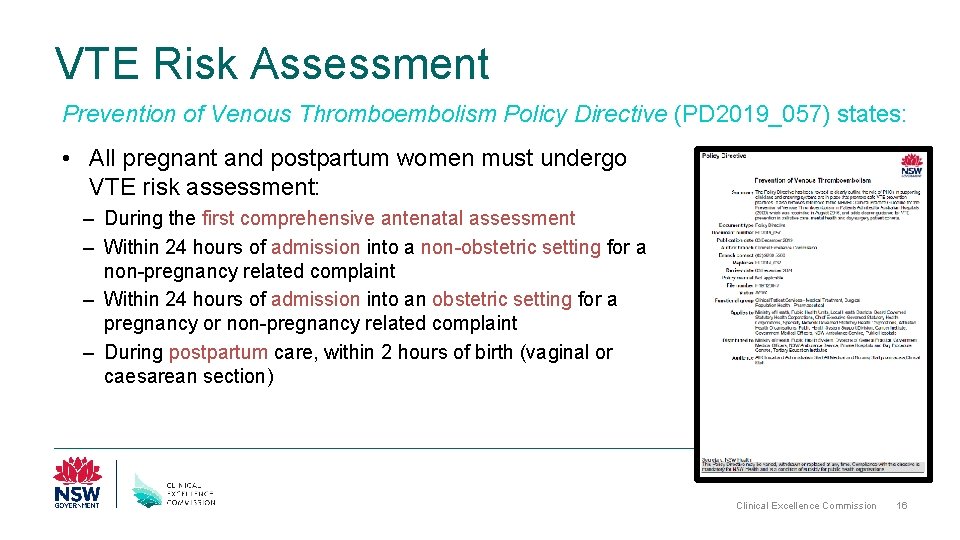
VTE Risk Assessment Prevention of Venous Thromboembolism Policy Directive (PD 2019_057) states: • All pregnant and postpartum women must undergo VTE risk assessment: – During the first comprehensive antenatal assessment – Within 24 hours of admission into a non-obstetric setting for a non-pregnancy related complaint – Within 24 hours of admission into an obstetric setting for a pregnancy or non-pregnancy related complaint – During postpartum care, within 2 hours of birth (vaginal or caesarean section) Clinical Excellence Commission 16
Who Should Complete the Tool? • Either a Midwife or Medical Officer (JMO, Resident, Register or Consultant) can complete the tool • At <your facilities name> we encourage <midwives and/or medical officers> to complete the tool Remember, following assessment, only an authorised prescriber (usually a Medical Officer) can prescribe appropriate prophylaxis Clinical Excellence Commission 17
Who to assess and reassessment Special conditions to be aware of Risk Factors Step-by-step use of the tool Using the Maternal VTE Risk Assessment Tool Clinical Excellence Commission 18
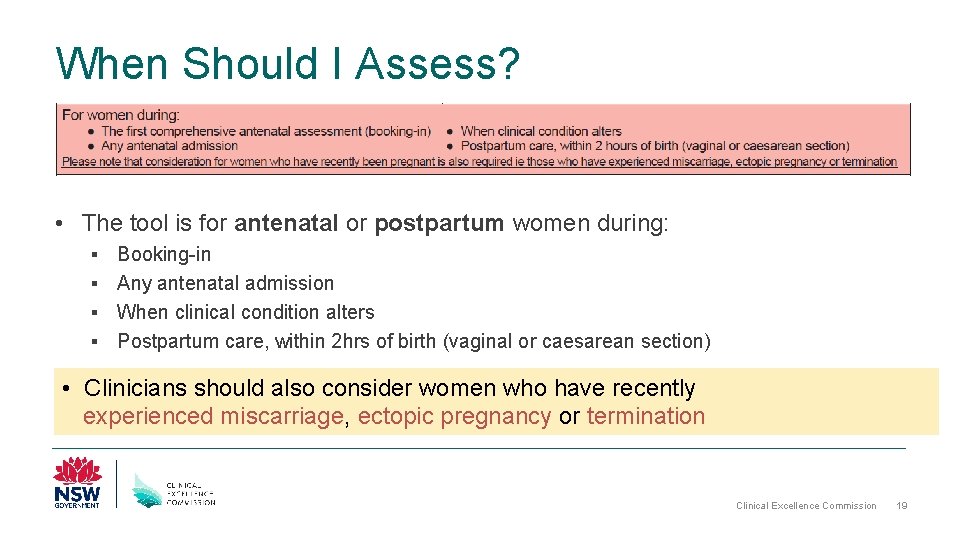
When Should I Assess? • The tool is for antenatal or postpartum women during: Booking-in § Any antenatal admission § When clinical condition alters § Postpartum care, within 2 hrs of birth (vaginal or caesarean section) § • Clinicians should also consider women who have recently experienced miscarriage, ectopic pregnancy or termination Clinical Excellence Commission 19
Reassessment • Reassessment is just as important as the initial assessment • Reassessment should take place at different points eg admission, postpartum BUT ALSO • For admitted women, reassessment needs to occur every 7 days (or as clinical condition changes) The tool can be used on 3 occasions If more than 3 assessments are required, use a new form Clinical Excellence Commission 20
Care with Special Conditions • Some women may have particular conditions that need a unique approach • Take care in the following situations: Women on therapeutic anticoagulation § Women who have undergone IVF § Women with Ovarian Hyperstimulation Syndrome § • The way these women are managed may differ slightly……. Clinical Excellence Commission 21
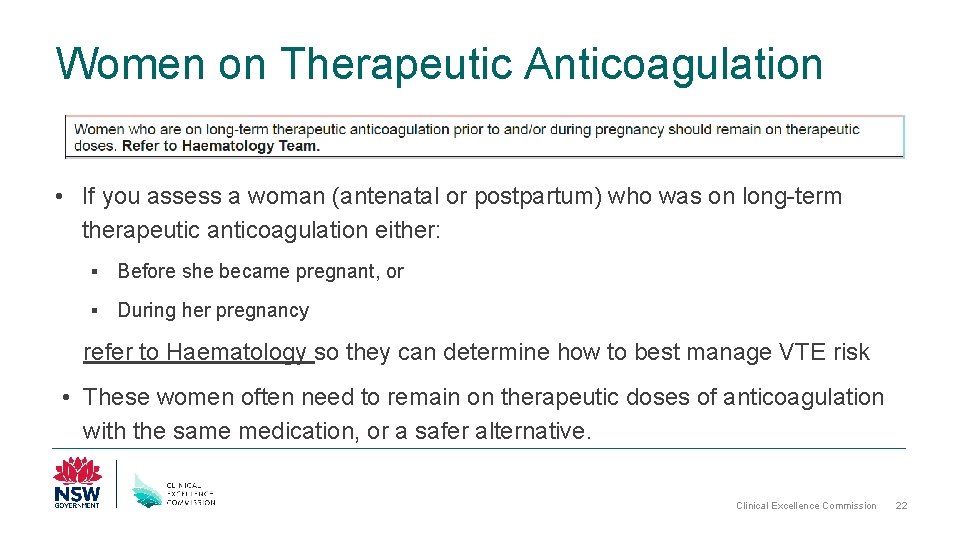
Women on Therapeutic Anticoagulation • If you assess a woman (antenatal or postpartum) who was on long-term therapeutic anticoagulation either: § Before she became pregnant, or § During her pregnancy refer to Haematology so they can determine how to best manage VTE risk • These women often need to remain on therapeutic doses of anticoagulation with the same medication, or a safer alternative. Clinical Excellence Commission 22
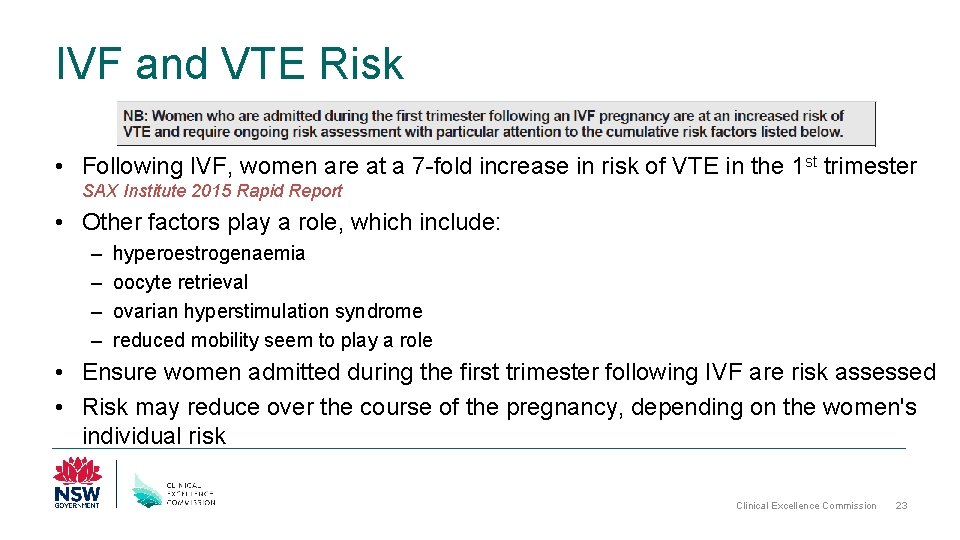
IVF and VTE Risk • Following IVF, women are at a 7 -fold increase in risk of VTE in the 1 st trimester SAX Institute 2015 Rapid Report • Other factors play a role, which include: – – hyperoestrogenaemia oocyte retrieval ovarian hyperstimulation syndrome reduced mobility seem to play a role • Ensure women admitted during the first trimester following IVF are risk assessed • Risk may reduce over the course of the pregnancy, depending on the women's individual risk Clinical Excellence Commission 23
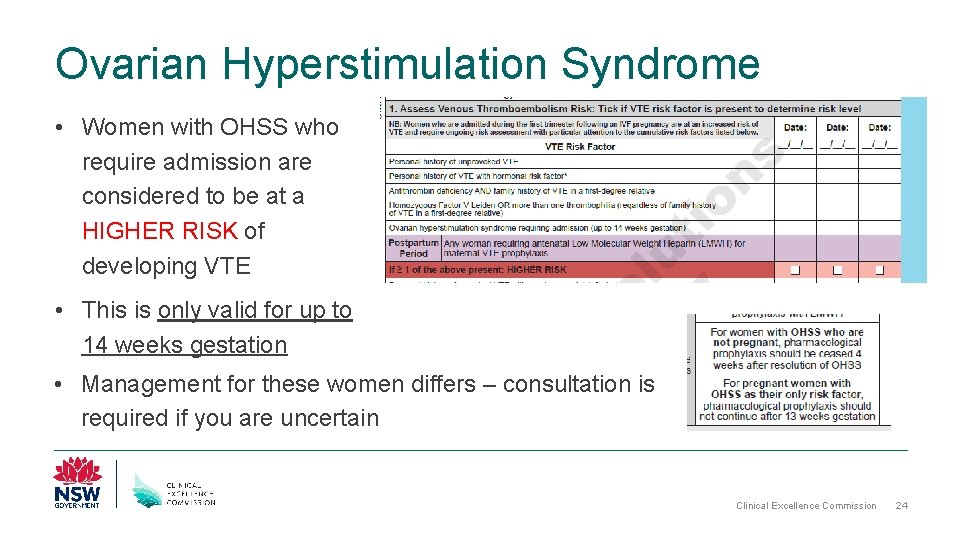
Ovarian Hyperstimulation Syndrome • Women with OHSS who require admission are considered to be at a HIGHER RISK of developing VTE • This is only valid for up to 14 weeks gestation • Management for these women differs – consultation is required if you are uncertain Clinical Excellence Commission 24
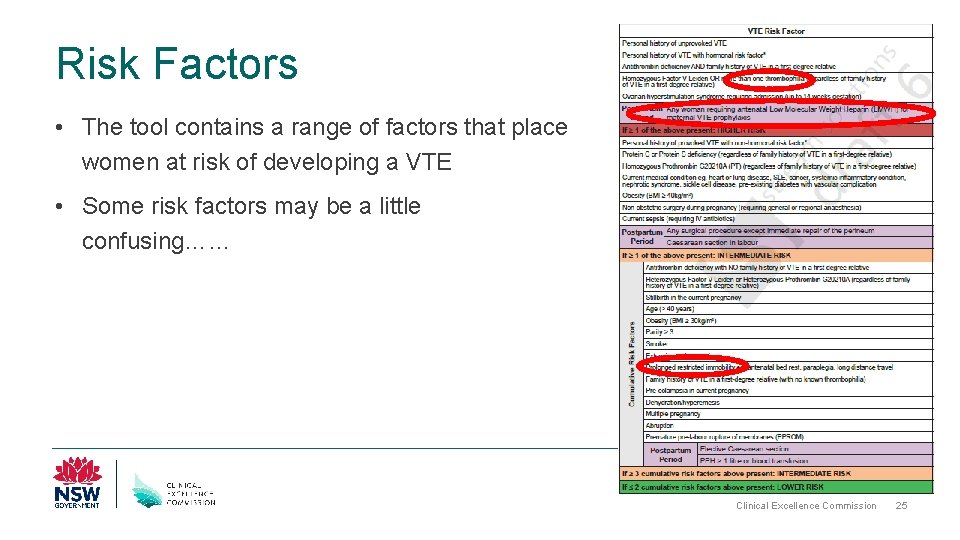
Risk Factors • The tool contains a range of factors that place women at risk of developing a VTE • Some risk factors may be a little confusing…… Clinical Excellence Commission 25
Thrombophilia • Some risk factors refer to thrombophilia • There are several types of thrombophilia’s, which can be overwhelming! • Here are the ones to keep an eye out for: § § § § Homozygous Factor V Leiden Heterozygous Factor V Leiden Antithrombin deficiency Protein C deficiency Protein S deficiency Homozygous Prothrombin G 20210 A Heterozygous Prothrombin G 20210 A If you are unsure, speak to a consultant Obstetrician or Haematologist Clinical Excellence Commission 26
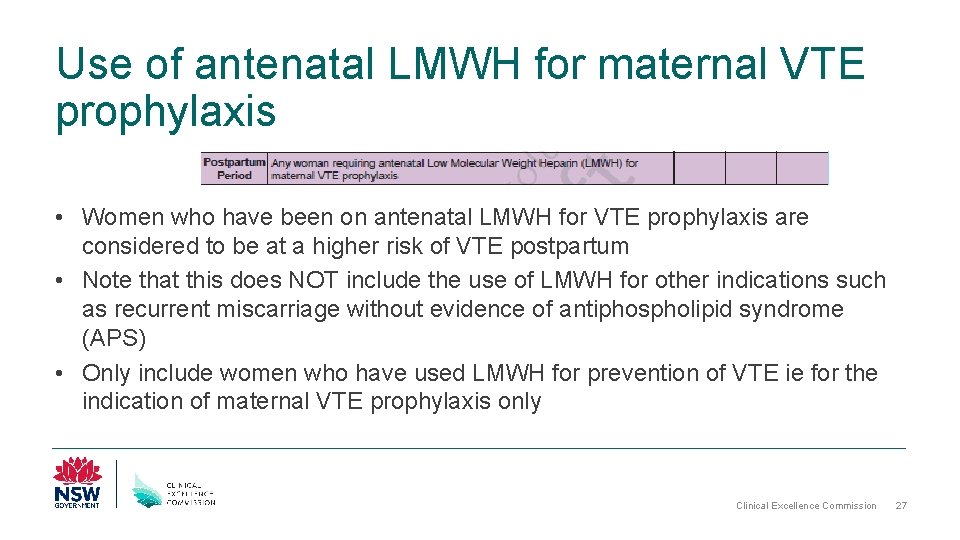
Use of antenatal LMWH for maternal VTE prophylaxis • Women who have been on antenatal LMWH for VTE prophylaxis are considered to be at a higher risk of VTE postpartum • Note that this does NOT include the use of LMWH for other indications such as recurrent miscarriage without evidence of antiphospholipid syndrome (APS) • Only include women who have used LMWH for prevention of VTE ie for the indication of maternal VTE prophylaxis only Clinical Excellence Commission 27
Prolonged Restricted Mobility • A woman that has experienced prolonged restricted mobility can be at a higher risk of VTE • This may be due to antenatal bed rest, paraplegia or long distance travel • Also take into account women who have experienced prolonged labour ( >24 hours) Clinical Excellence Commission 28
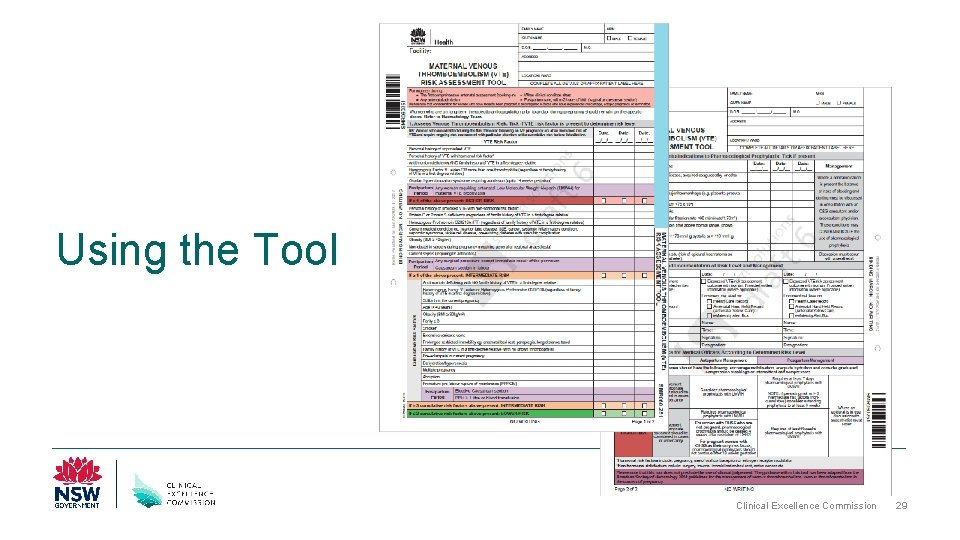
Using the Tool Clinical Excellence Commission 29
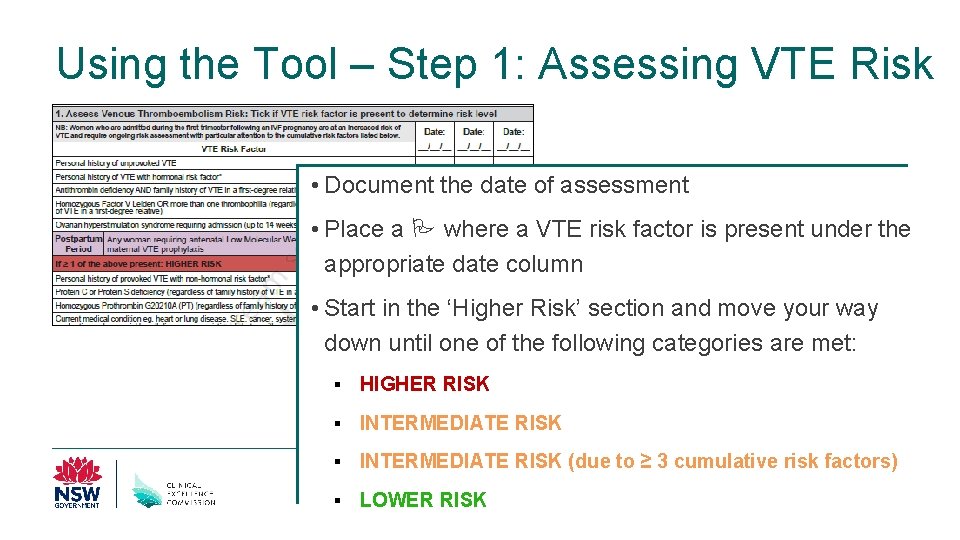
Using the Tool – Step 1: Assessing VTE Risk • Document the date of assessment • Place a where a VTE risk factor is present under the appropriate date column • Start in the ‘Higher Risk’ section and move your way down until one of the following categories are met: § HIGHER RISK § INTERMEDIATE RISK (due to ≥ 3 cumulative risk factors) § LOWER RISK Clinical Excellence Commission 30
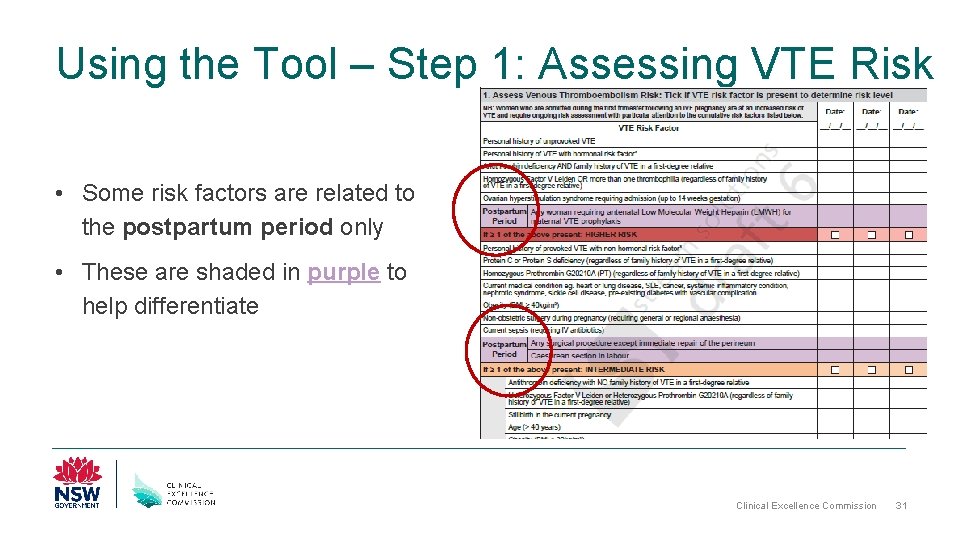
Using the Tool – Step 1: Assessing VTE Risk • Some risk factors are related to the postpartum period only • These are shaded in purple to help differentiate Clinical Excellence Commission 31
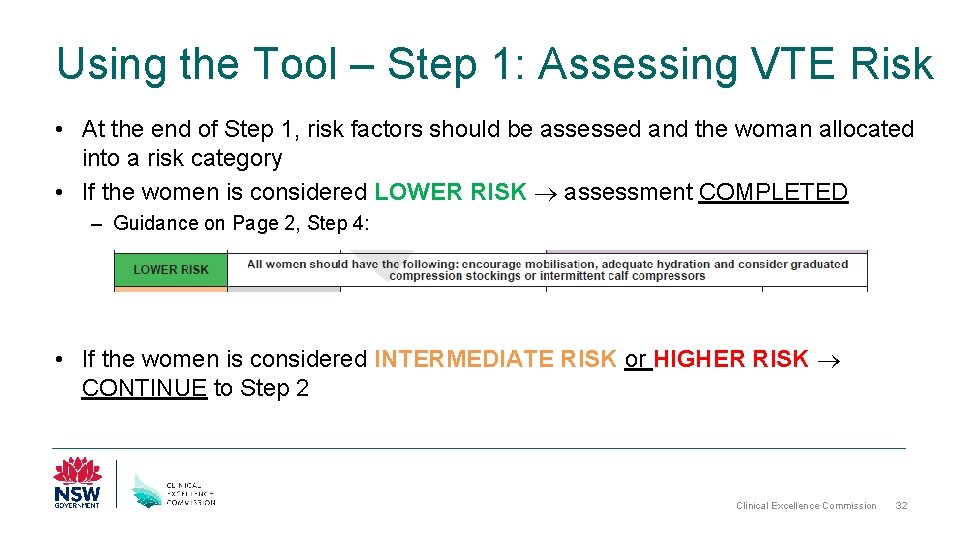
Using the Tool – Step 1: Assessing VTE Risk • At the end of Step 1, risk factors should be assessed and the woman allocated into a risk category • If the women is considered LOWER RISK assessment COMPLETED – Guidance on Page 2, Step 4: • If the women is considered INTERMEDIATE RISK or HIGHER RISK CONTINUE to Step 2 Clinical Excellence Commission 32
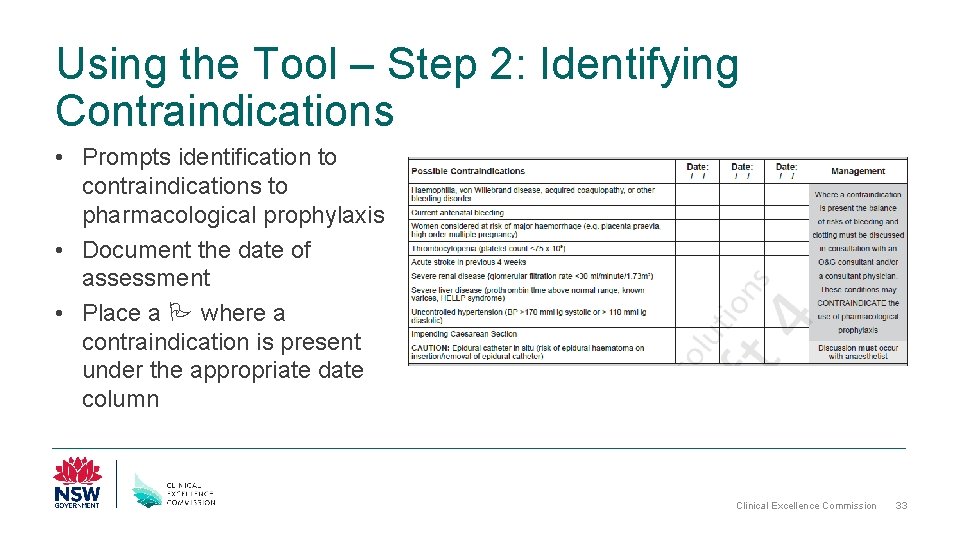
Using the Tool – Step 2: Identifying Contraindications • Prompts identification to contraindications to pharmacological prophylaxis • Document the date of assessment • Place a where a contraindication is present under the appropriate date column Clinical Excellence Commission 33
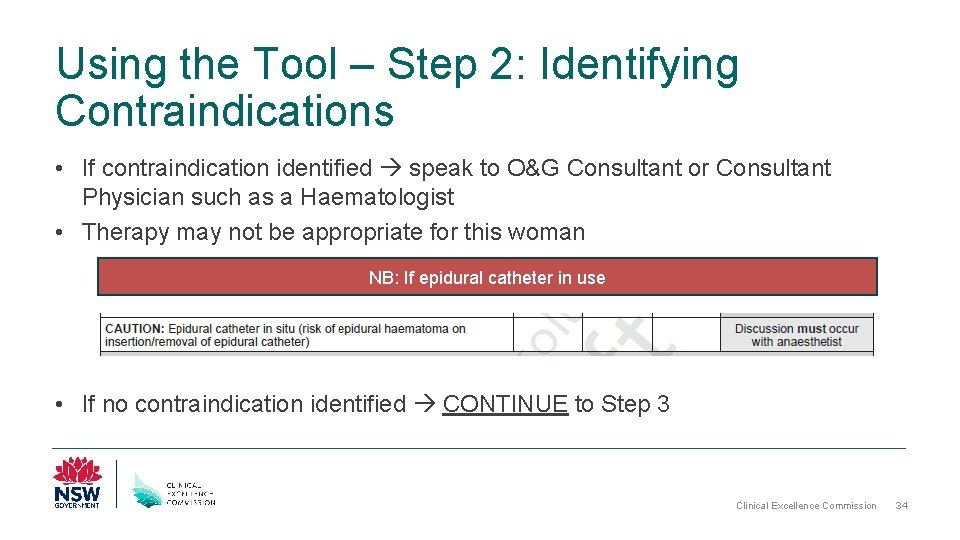
Using the Tool – Step 2: Identifying Contraindications • If contraindication identified speak to O&G Consultant or Consultant Physician such as a Haematologist • Therapy may not be appropriate for this woman NB: If epidural catheter in use • If no contraindication identified CONTINUE to Step 3 Clinical Excellence Commission 34
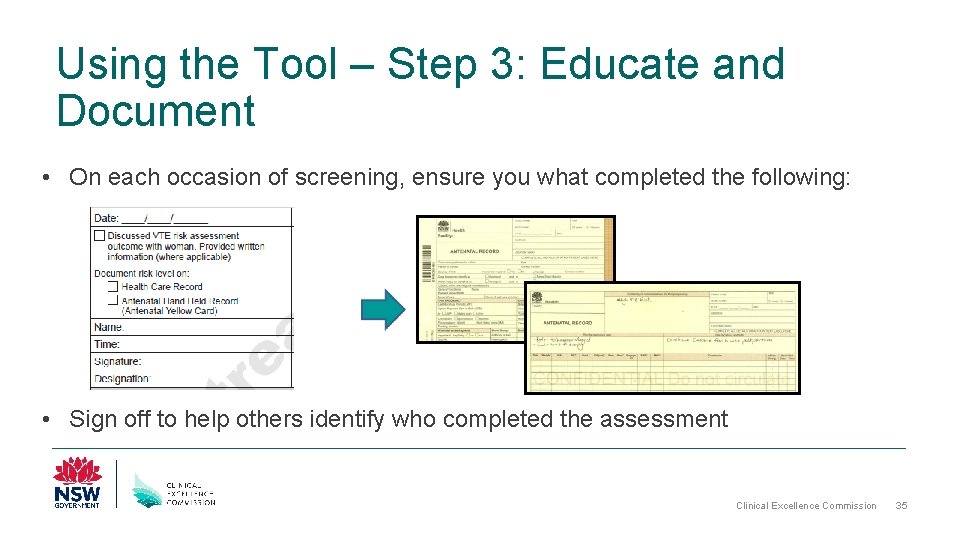
Using the Tool – Step 3: Educate and Document • On each occasion of screening, ensure you what completed the following: • Sign off to help others identify who completed the assessment Clinical Excellence Commission 35
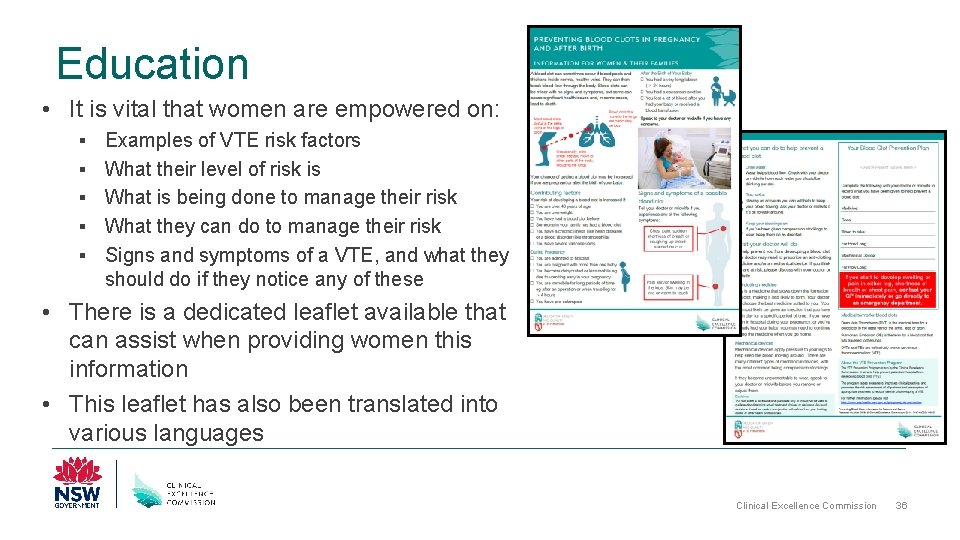
Education • It is vital that women are empowered on: § § § Examples of VTE risk factors What their level of risk is What is being done to manage their risk What they can do to manage their risk Signs and symptoms of a VTE, and what they should do if they notice any of these • There is a dedicated leaflet available that can assist when providing women this information • This leaflet has also been translated into various languages Clinical Excellence Commission 36
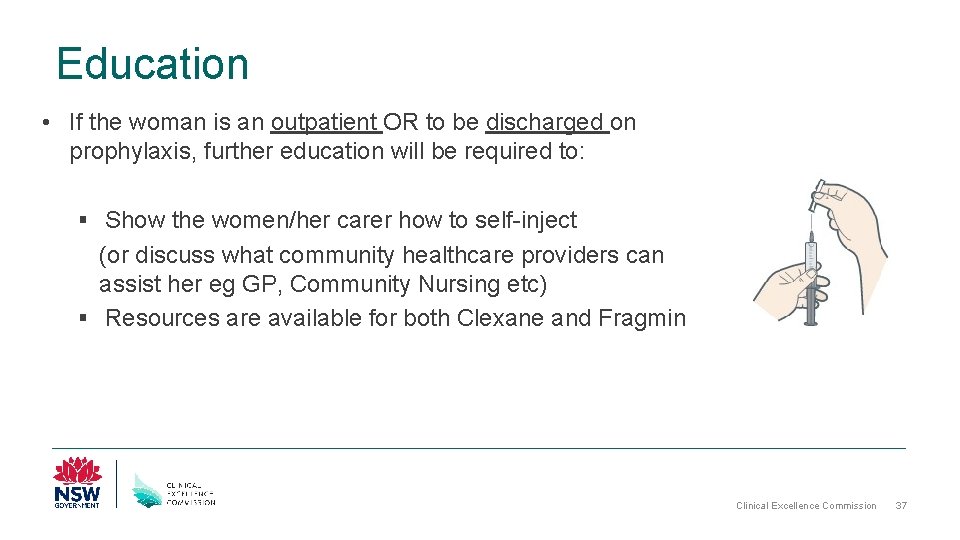
Education • If the woman is an outpatient OR to be discharged on prophylaxis, further education will be required to: § Show the women/her carer how to self-inject (or discuss what community healthcare providers can assist her eg GP, Community Nursing etc) § Resources are available for both Clexane and Fragmin Clinical Excellence Commission 37
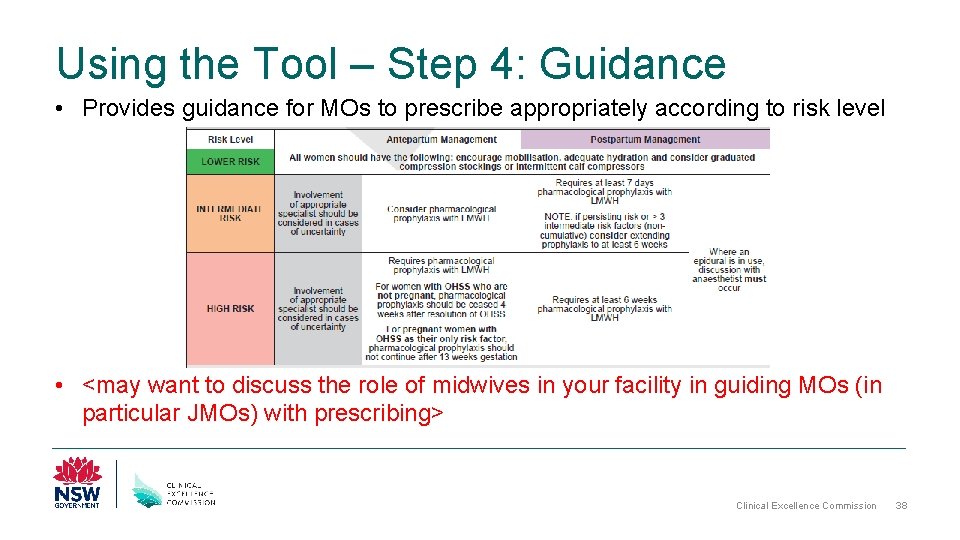
Using the Tool – Step 4: Guidance • Provides guidance for MOs to prescribe appropriately according to risk level • <may want to discuss the role of midwives in your facility in guiding MOs (in particular JMOs) with prescribing> Clinical Excellence Commission 38
Prophylaxis and Prescribing Clinical Excellence Commission 39
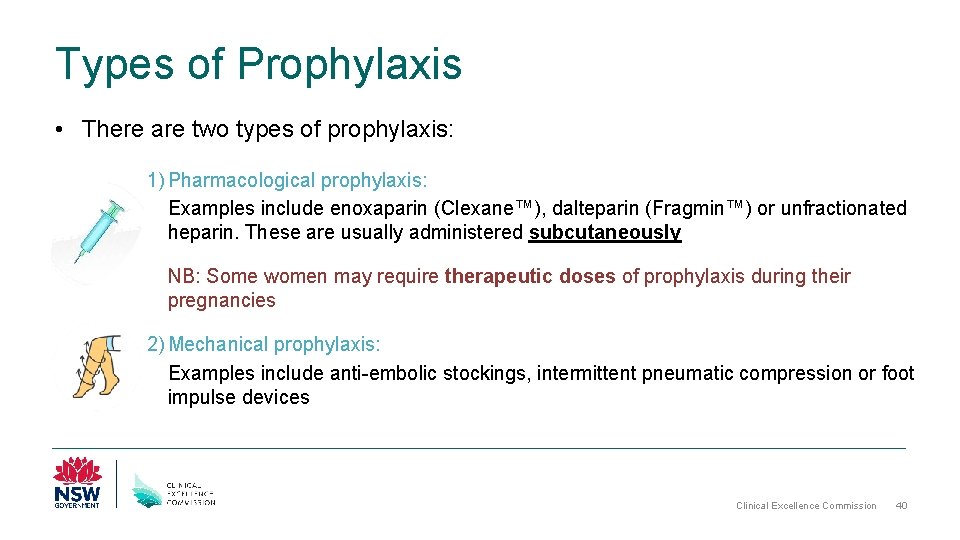
Types of Prophylaxis • There are two types of prophylaxis: 1) Pharmacological prophylaxis: Examples include enoxaparin (Clexane™), dalteparin (Fragmin™) or unfractionated heparin. These are usually administered subcutaneously NB: Some women may require therapeutic doses of prophylaxis during their pregnancies 2) Mechanical prophylaxis: Examples include anti-embolic stockings, intermittent pneumatic compression or foot impulse devices Clinical Excellence Commission 40
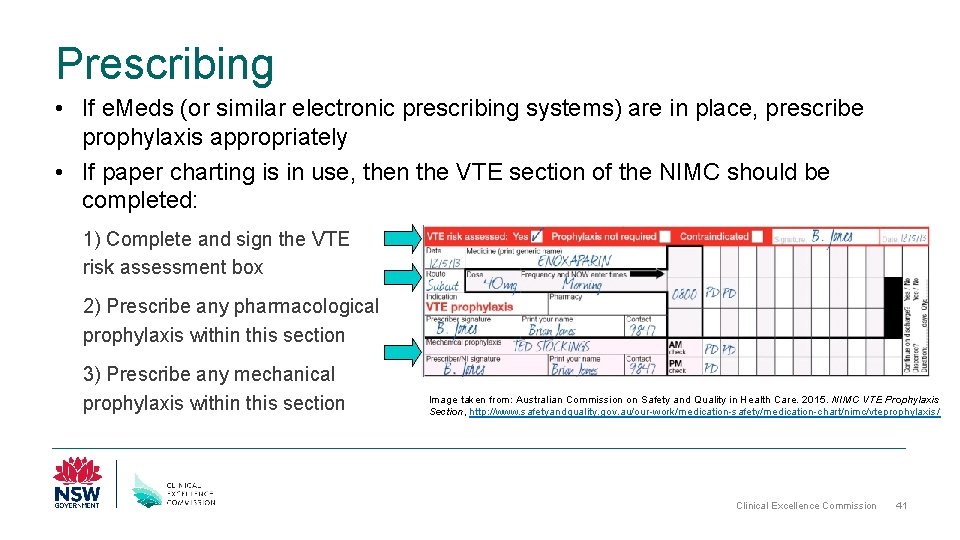
Prescribing • If e. Meds (or similar electronic prescribing systems) are in place, prescribe prophylaxis appropriately • If paper charting is in use, then the VTE section of the NIMC should be completed: 1) Complete and sign the VTE risk assessment box 2) Prescribe any pharmacological prophylaxis within this section 3) Prescribe any mechanical prophylaxis within this section Image taken from: Australian Commission on Safety and Quality in Health Care. 2015. NIMC VTE Prophylaxis Section, http: //www. safetyandquality. gov. au/our-work/medication-safety/medication-chart/nimc/vteprophylaxis / Clinical Excellence Commission 41
Prescribing If the women is an outpatient OR to be discharged on prophylaxis, ensure an appropriate outpatient prescription is provided Clinical Excellence Commission 42
Mechanical Prophylaxis Midwife Responsibilities • Regular monitoring of mechanical prophylaxis to ensure correct application • Check morning and evening shift – skin integrity (colour, warmth, pulse, pressure area) – stockings are being worn – responsible clinician signs their initials in the space provided when the check has been satisfactorily completed • NB: Graduated compression stockings may increase the risk of falls in mobilising women. Approved non-slip oversocks or appropriate footwear should be worn to avoid falls. Clinical Excellence Commission 43
Practise VTE Risk Assessments Clinical Excellence Commission 44
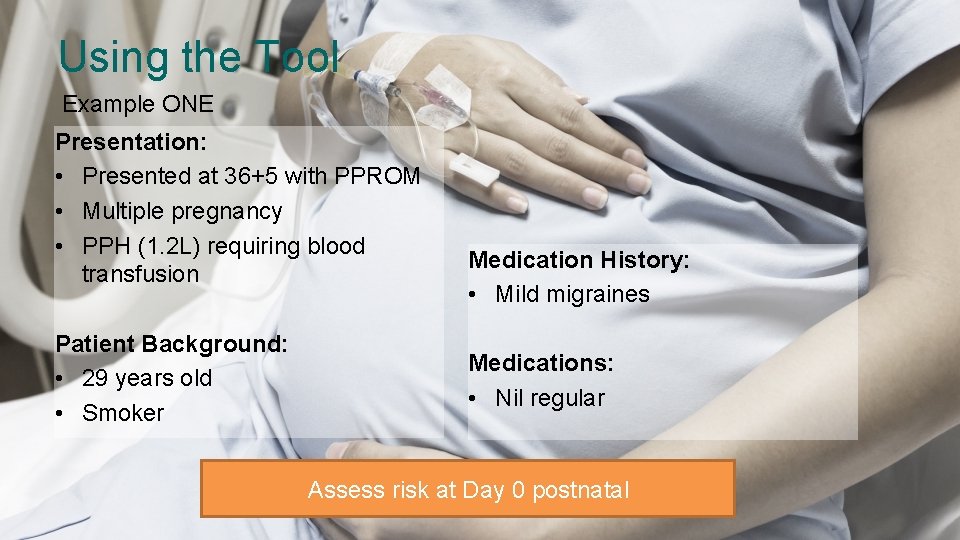
Using the Tool Example ONE Presentation: • Presented at 36+5 with PPROM • Multiple pregnancy • PPH (1. 2 L) requiring blood transfusion Patient Background: • 29 years old • Smoker Medication History: • Mild migraines Medications: • Nil regular Assess risk at Day 0 postnatal Clinical Excellence Commission 45
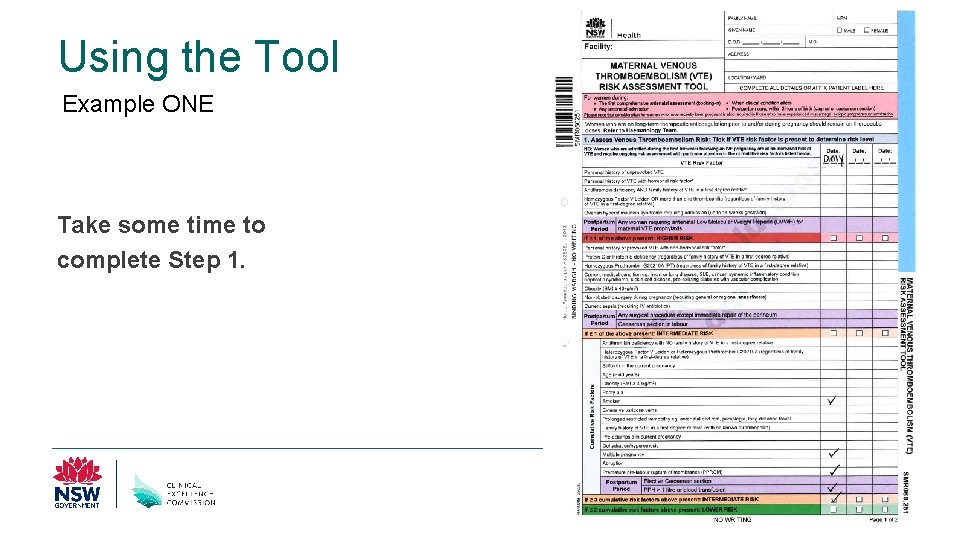
Using the Tool Example ONE Take some time to complete Step 1. Clinical Excellence Commission 46
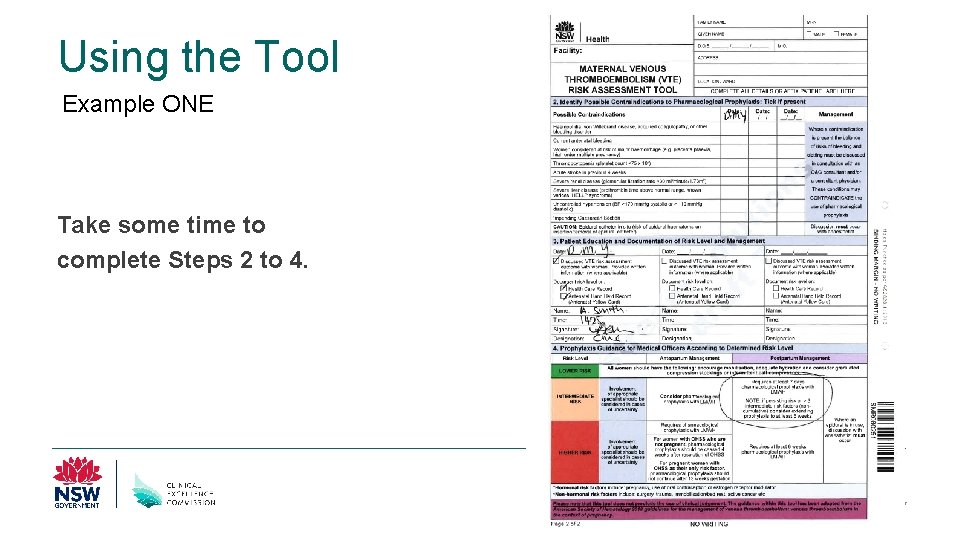
Using the Tool Example ONE Take some time to complete Steps 2 to 4. Clinical Excellence Commission 47
Using the Tool Example TWO Presentation: • Presented at 6+1 with OHSS • Requires admission Patient Background: • 41 years old Medication History: • Previous VTE following ankle surgery 3 years ago Medications: • Nil regular Assess risk on hospital admission Clinical Excellence Commission 48
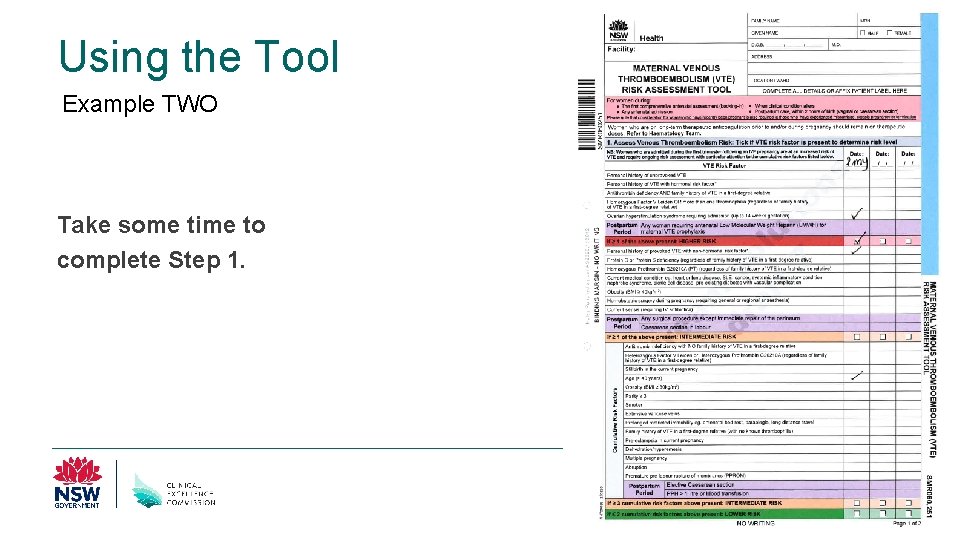
Using the Tool Example TWO Take some time to complete Step 1. Clinical Excellence Commission 49
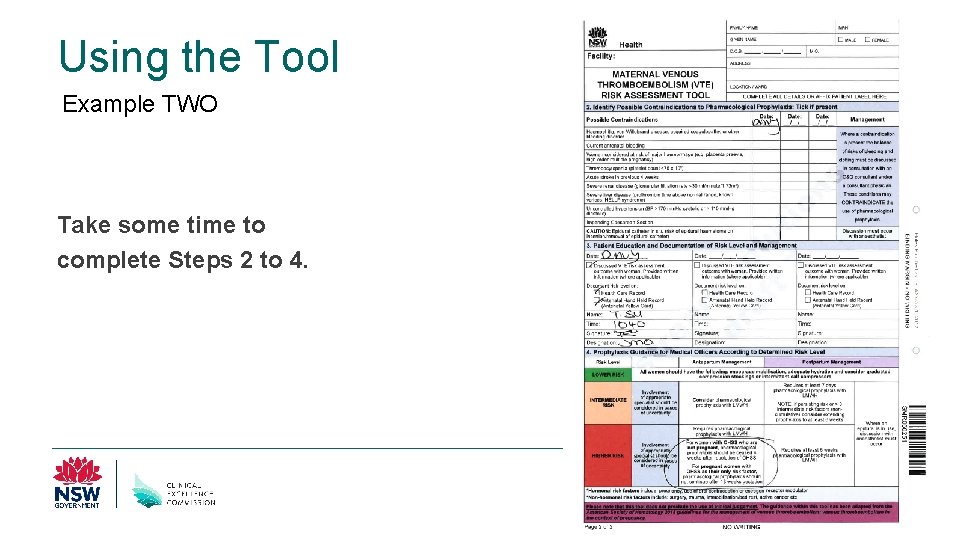
Using the Tool Example TWO Take some time to complete Steps 2 to 4. Clinical Excellence Commission 50
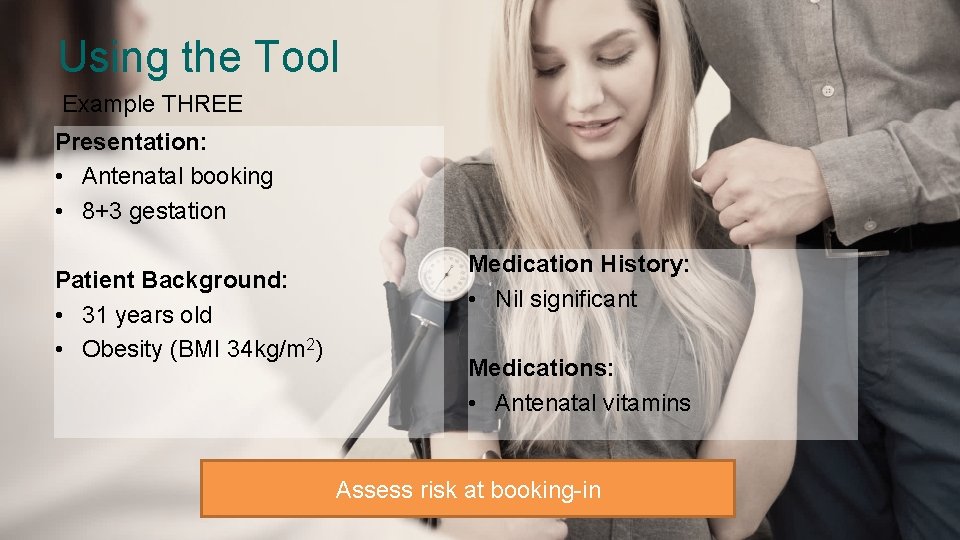
Using the Tool Example THREE Presentation: • Antenatal booking • 8+3 gestation Patient Background: • 31 years old • Obesity (BMI 34 kg/m 2) Medication History: • Nil significant Medications: • Antenatal vitamins Assess risk at booking-in Clinical Excellence Commission 51
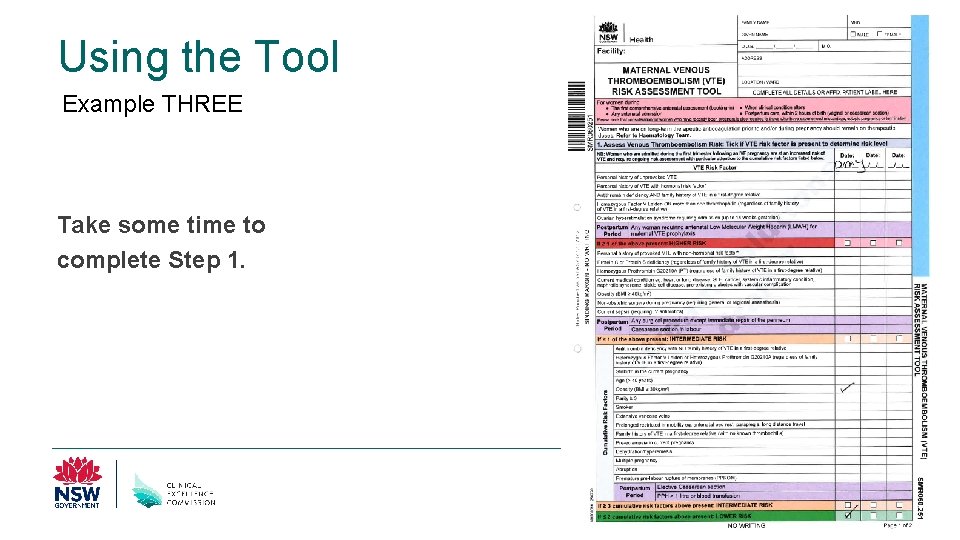
Using the Tool Example THREE Take some time to complete Step 1. Clinical Excellence Commission 52
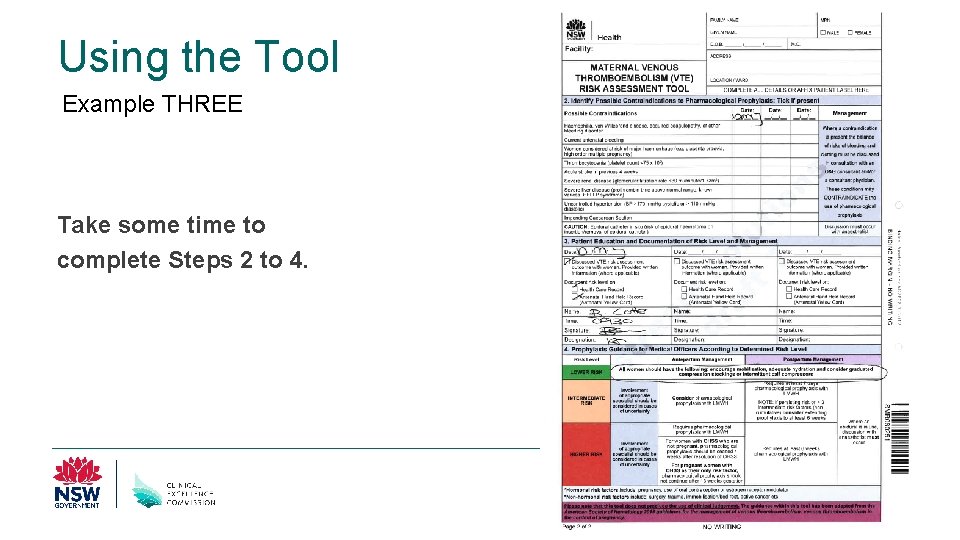
Using the Tool Example THREE Take some time to complete Steps 2 to 4. Clinical Excellence Commission 53
Questions/Concerns Clinical Excellence Commission 54
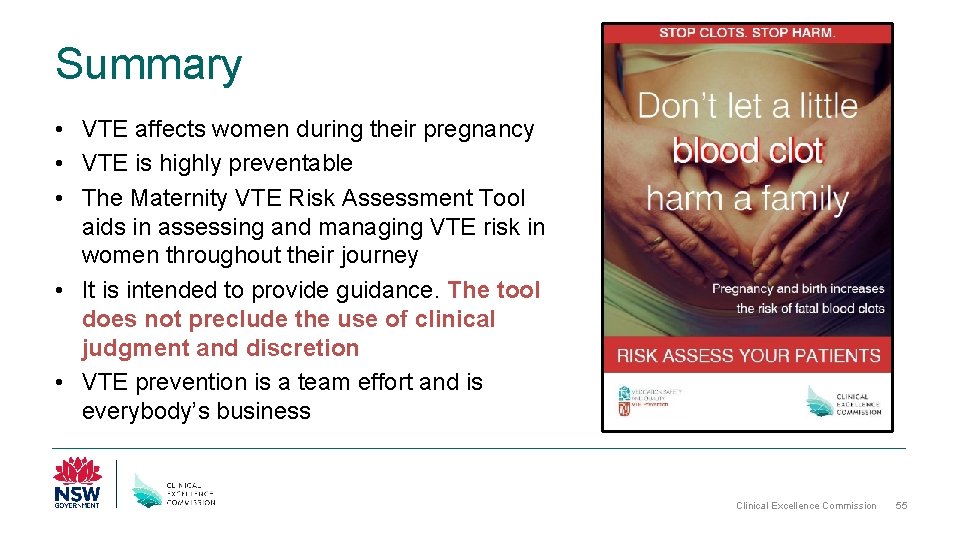
Summary • VTE affects women during their pregnancy • VTE is highly preventable • The Maternity VTE Risk Assessment Tool aids in assessing and managing VTE risk in women throughout their journey • It is intended to provide guidance. The tool does not preclude the use of clinical judgment and discretion • VTE prevention is a team effort and is everybody’s business Clinical Excellence Commission 55

www. cec. health. nsw. gov. au Clinical Excellence Commission 56
- Slides: 56