
Venous thromboembolic disease John C Stevenson Editor Martin
Venous thromboembolic disease John C. Stevenson Editor: Martin Birkhäuser
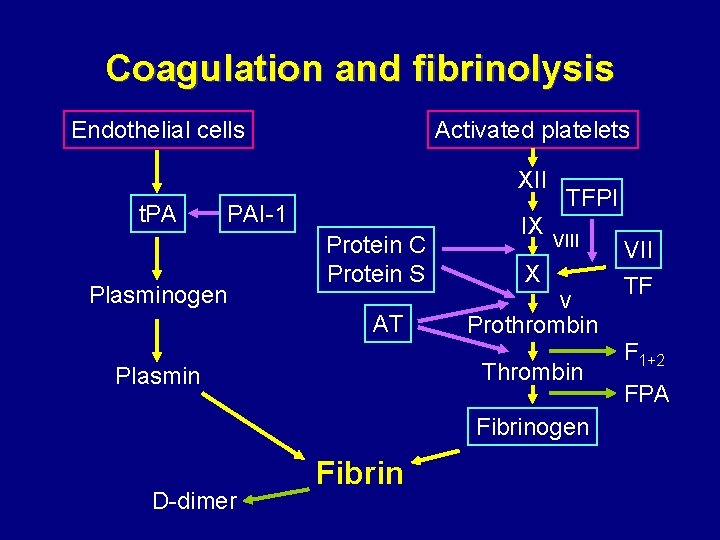
Coagulation and fibrinolysis Endothelial cells Activated platelets XII t. PA PAI-1 Plasminogen Protein C Protein S AT IX TFPI VIII X V Prothrombin Thrombin Plasmin Fibrinogen D-dimer Fibrin VII TF F 1+2 FPA
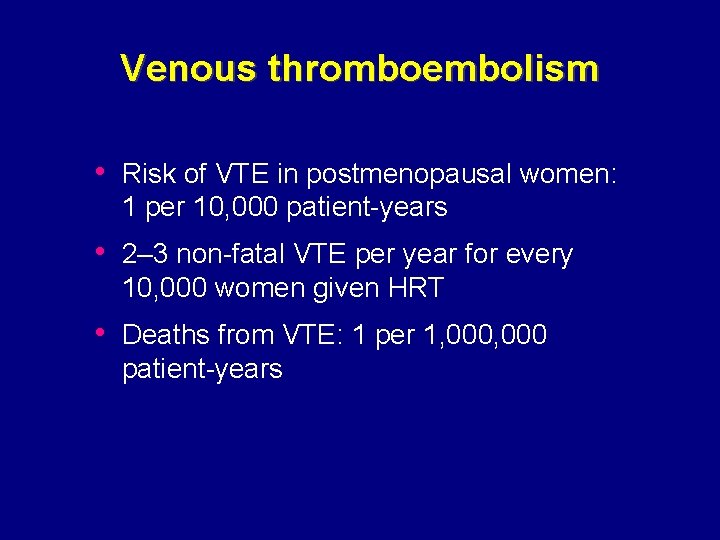
Venous thromboembolism • Risk of VTE in postmenopausal women: 1 per 10, 000 patient-years • 2– 3 non-fatal VTE per year for every 10, 000 women given HRT • Deaths from VTE: 1 per 1, 000 patient-years
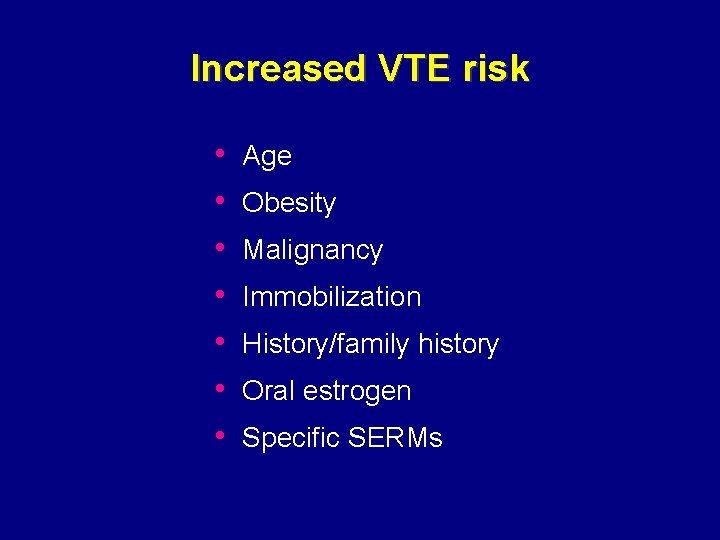
Increased VTE risk • • Age Obesity Malignancy Immobilization History/family history Oral estrogen Specific SERMs
Venous thromboembolism • HRT affects vascular endothelium • Oral HRT affects hepatic production and clearance of hemostatic factors
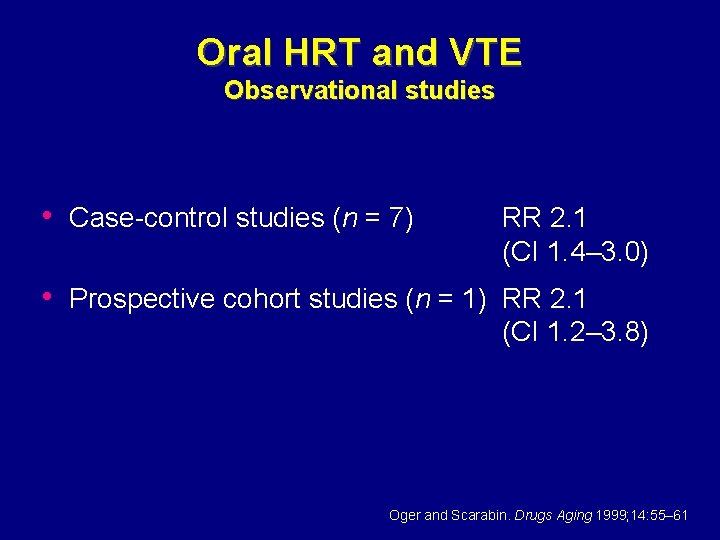
Oral HRT and VTE Observational studies • Case-control studies (n = 7) RR 2. 1 (CI 1. 4– 3. 0) • Prospective cohort studies (n = 1) RR 2. 1 (CI 1. 2– 3. 8) Oger and Scarabin. Drugs Aging 1999; 14: 55– 61
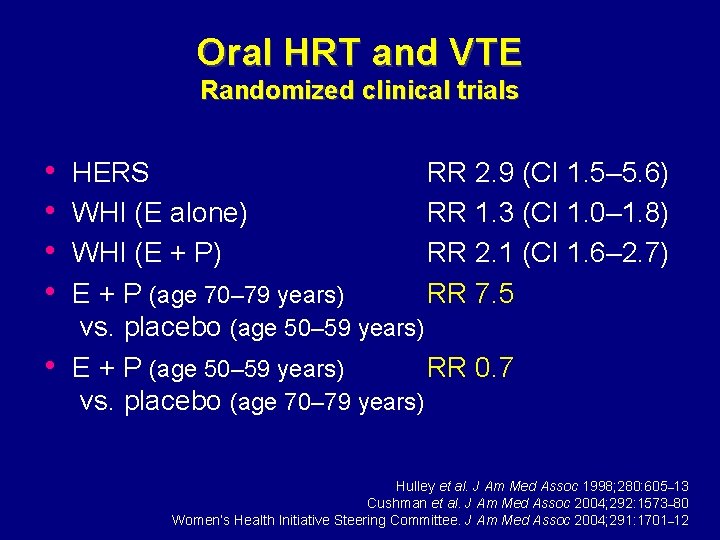
Oral HRT and VTE Randomized clinical trials • • • HERS RR 2. 9 (CI 1. 5– 5. 6) WHI (E alone) RR 1. 3 (CI 1. 0– 1. 8) WHI (E + P) RR 2. 1 (CI 1. 6– 2. 7) E + P (age 70– 79 years) RR 7. 5 vs. placebo (age 50– 59 years) E + P (age 50– 59 years) RR 0. 7 vs. placebo (age 70– 79 years) Hulley et al. J Am Med Assoc 1998; 280: 605– 13 Cushman et al. J Am Med Assoc 2004; 292: 1573– 80 Women’s Health Initiative Steering Committee. J Am Med Assoc 2004; 291: 1701– 12
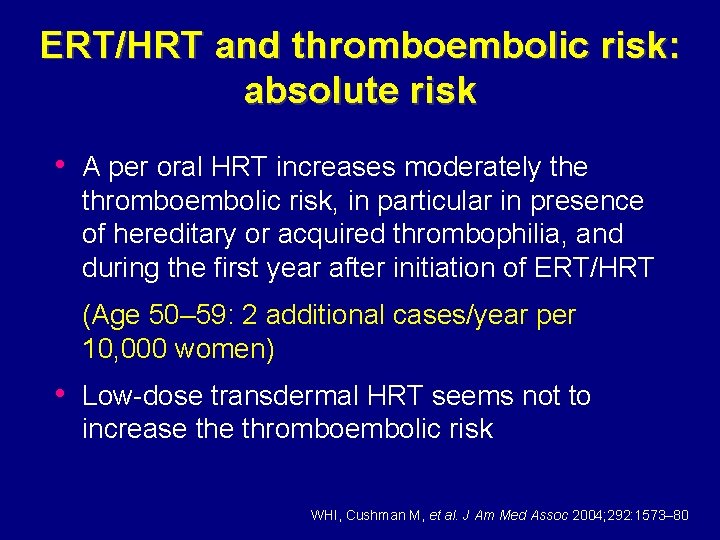
ERT/HRT and thromboembolic risk: absolute risk • A per oral HRT increases moderately the thromboembolic risk, in particular in presence of hereditary or acquired thrombophilia, and during the first year after initiation of ERT/HRT (Age 50– 59: 2 additional cases/year per 10, 000 women) • Low-dose transdermal HRT seems not to increase thromboembolic risk WHI, Cushman M, et al. J Am Med Assoc 2004; 292: 1573– 80
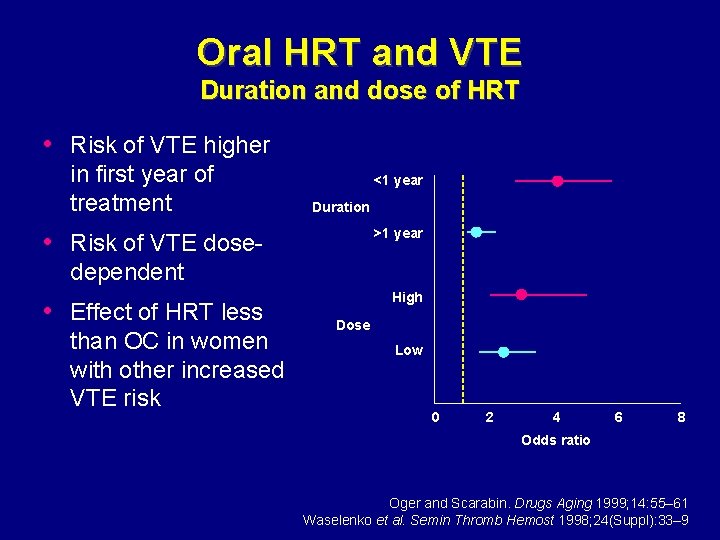
Oral HRT and VTE Duration and dose of HRT • Risk of VTE higher in first year of treatment <1 year Duration • Risk of VTE dose- >1 year dependent • Effect of HRT less than OC in women with other increased VTE risk High Dose Low 0 2 4 6 8 Odds ratio Oger and Scarabin. Drugs Aging 1999; 14: 55– 61 Waselenko et al. Semin Thromb Hemost 1998; 24(Suppl): 33– 9
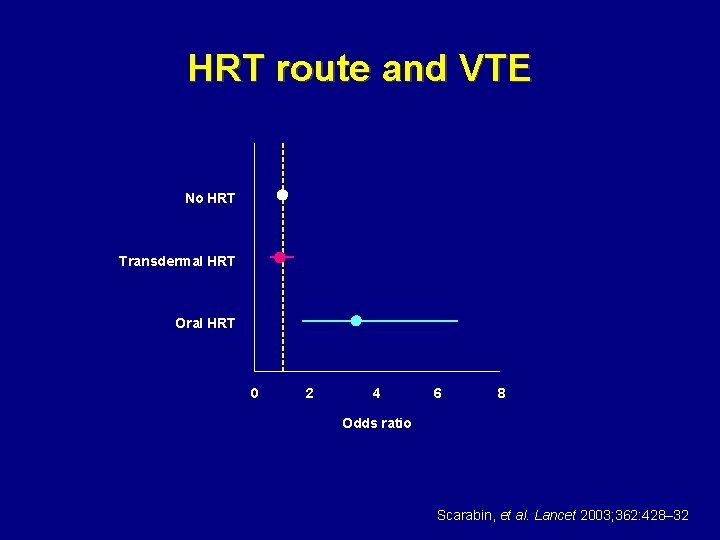
HRT route and VTE No HRT Transdermal HRT Oral HRT 0 2 4 6 8 Odds ratio Scarabin, et al. Lancet 2003; 362: 428– 32
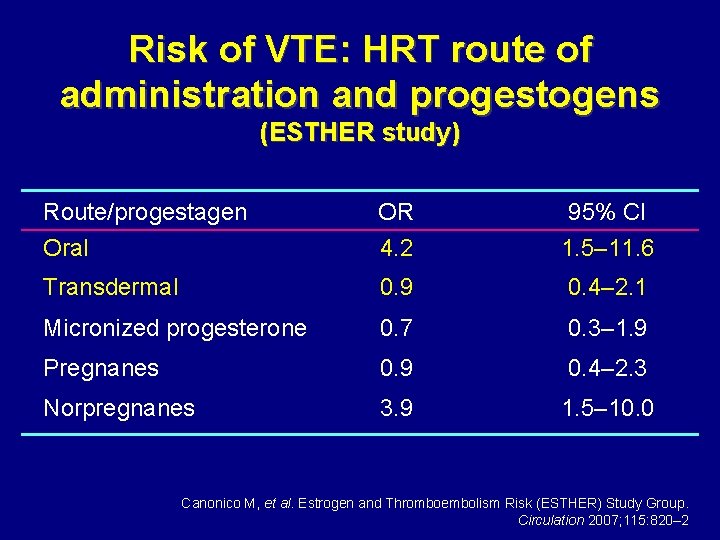
Risk of VTE: HRT route of administration and progestogens (ESTHER study) Route/progestagen OR 95% CI Oral 4. 2 1. 5– 11. 6 Transdermal 0. 9 0. 4– 2. 1 Micronized progesterone 0. 7 0. 3– 1. 9 Pregnanes 0. 9 0. 4– 2. 3 Norpregnanes 3. 9 1. 5– 10. 0 Canonico M, et al. Estrogen and Thromboembolism Risk (ESTHER) Study Group. Circulation 2007; 115: 820– 2
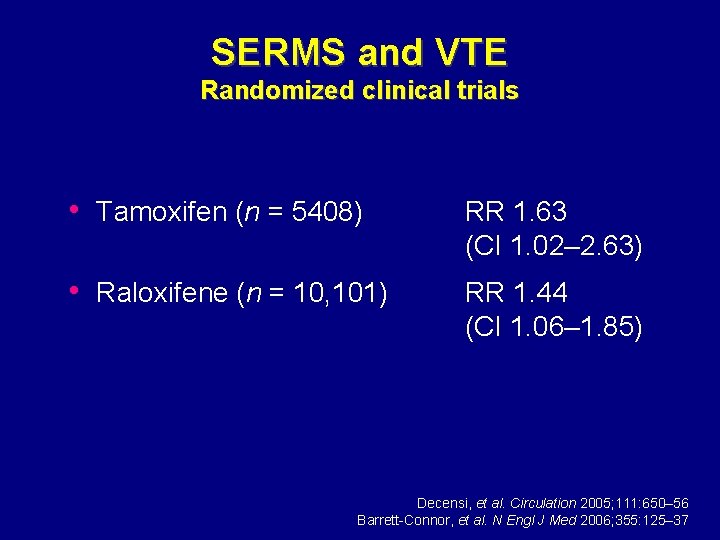
SERMS and VTE Randomized clinical trials • Tamoxifen (n = 5408) RR 1. 63 (CI 1. 02– 2. 63) • Raloxifene (n = 10, 101) RR 1. 44 (CI 1. 06– 1. 85) Decensi, et al. Circulation 2005; 111: 650– 56 Barrett-Connor, et al. N Engl J Med 2006; 355: 125– 37
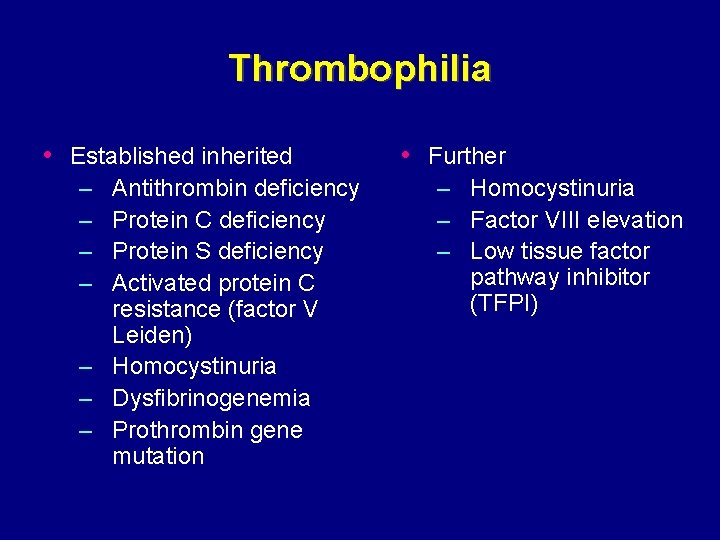
Thrombophilia • Established inherited – – Antithrombin deficiency Protein C deficiency Protein S deficiency Activated protein C resistance (factor V Leiden) – Homocystinuria – Dysfibrinogenemia – Prothrombin gene mutation • Further – Homocystinuria – Factor VIII elevation – Low tissue factor pathway inhibitor (TFPI)
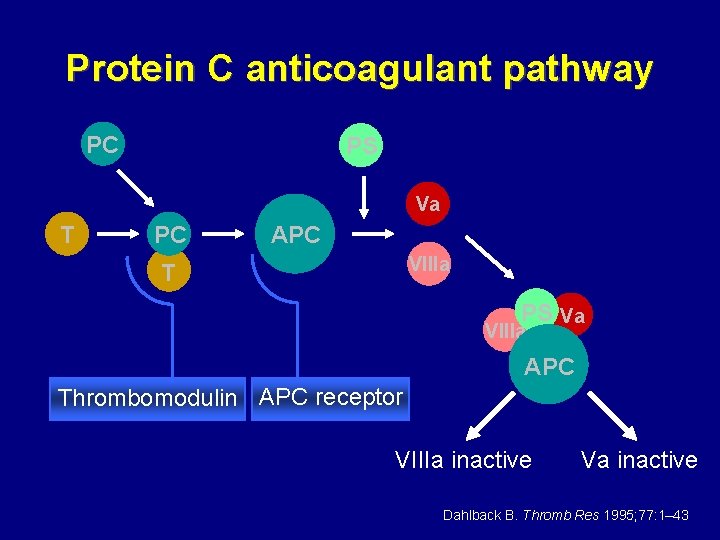
Protein C anticoagulant pathway PC PS Va T PC APC VIIIa T PS Va VIIIa APC Thrombomodulin APC receptor VIIIa inactive Va inactive Dahlback B. Thromb Res 1995; 77: 1– 43
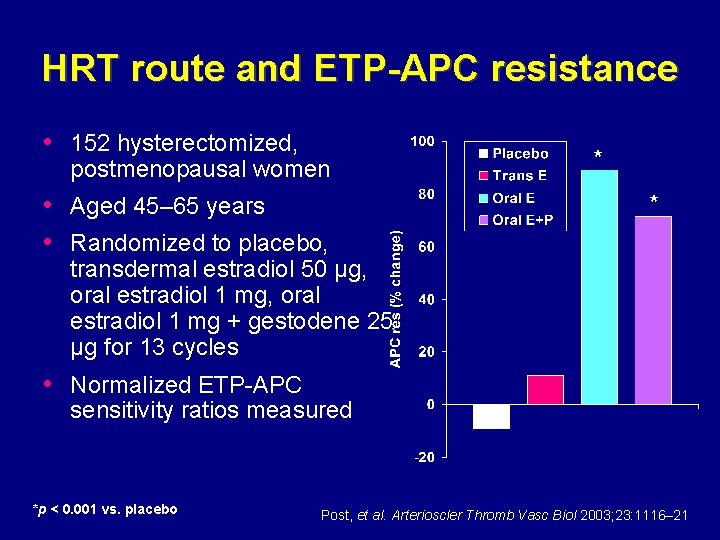
HRT route and ETP-APC resistance • 152 hysterectomized, postmenopausal women • Aged 45– 65 years • Randomized to placebo, * * transdermal estradiol 50 μg, oral estradiol 1 mg + gestodene 25 μg for 13 cycles • Normalized ETP-APC sensitivity ratios measured *p < 0. 001 vs. placebo Post, et al. Arterioscler Thromb Vasc Biol 2003; 23: 1116– 21
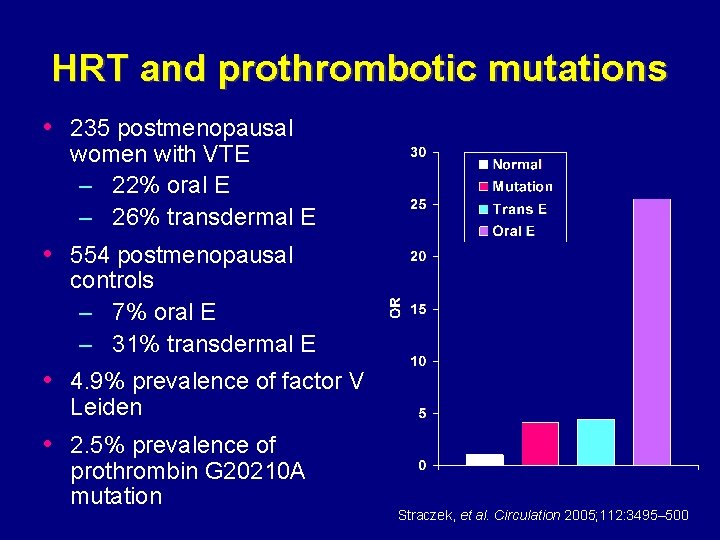
HRT and prothrombotic mutations • 235 postmenopausal women with VTE – 22% oral E – 26% transdermal E • 554 postmenopausal controls – 7% oral E – 31% transdermal E • 4. 9% prevalence of factor V Leiden • 2. 5% prevalence of prothrombin G 20210 A mutation Straczek, et al. Circulation 2005; 112: 3495– 500
Acquired ETP-APC resistance • • Antiphospholipid syndrome Oral contraception Pregnancy Oral estrogen (CEE and E 2) replacement
Thrombophilia screening • Patients with personal history of VTE • Patients with first- or second-degree relative with VTE
VTE management • • Full anti-coagulation Low-dose warfarin (1 mg/day) lifelong Low-dose aspirin lifelong Avoidance of oral HRT (CEE, E 2, tamoxifen, raloxifene)
HRT and thromboembolism: Misperceptions • The risk of both venous and arterial thromboembolism is increased during HRT • Stroke risk is substantially increased in women receiving HRT IMS Global Summit 2008. Climacteric 2008; 11: 267– 72
HRT and thromboembolism: Evidence • The risk of venous thrombosis is approximately twofold higher with standard doses of oral HRT, but is a rare event in that the background prevalence is extremely low in a healthy woman under 60 years of age. It is also associated with obesity and with thrombophilia • The risk of venous thrombosis is possibly less with transdermal, compared with oral, estrogen therapy IMS Global Summit 2008. Climacteric 2008; 11: 267– 72
- Slides: 21