
Venipuncture Procedures Review Objectives List the types of
Venipuncture Procedures Review
Objectives List the types of laboratory procedures performed in the various disciplines of the clinical laboratory department. Demonstrate knowledge of collection equipment, various types of additives used, special precautions necessary and substances that can interfere in clinical analysis of blood constituents. Identify the various types of additives used in blood collection, and explain the reasons for their use. Identify the evacuated tube color codes associated with the additives.
Venipuncture Overview Patient Identification 2. Phlebotomy Supplies 3. Order of Draw 4. Procedure: 1. Vacutainer Syringe 5. Potential Complications

Patient Identification Most important aspect of phlebotomy Ask for a minimum of 2 identifiers: Name DOB Patient should state these and not just answer yes or no Verify information with: Lab requisition Patient’s armband if in hospital setting
How Would You… Identify a patient who is in a coma? Identify an infant? Unconscious patient from a trauma in the ER?
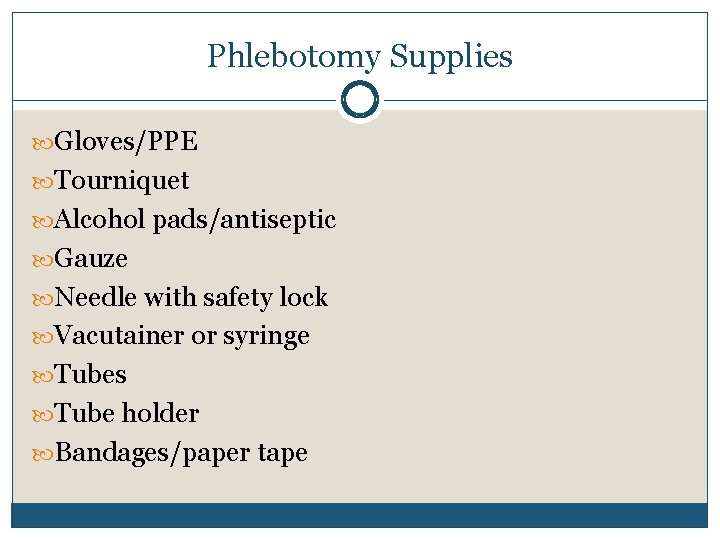
Phlebotomy Supplies Gloves/PPE Tourniquet Alcohol pads/antiseptic Gauze Needle with safety lock Vacutainer or syringe Tubes Tube holder Bandages/paper tape
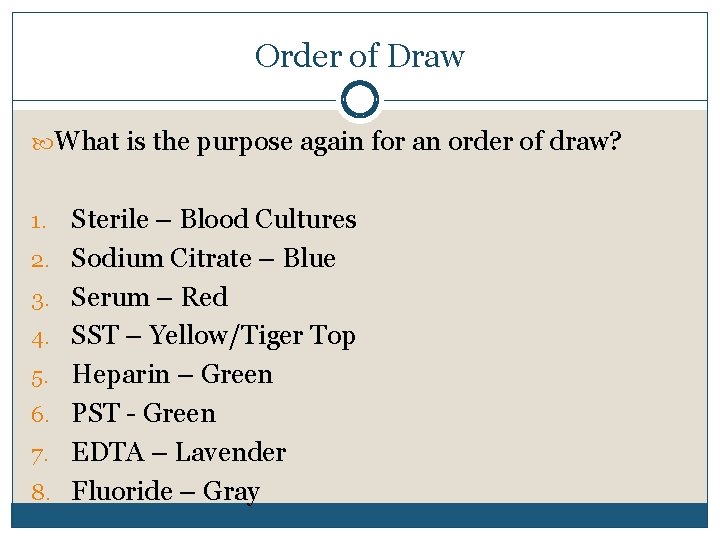
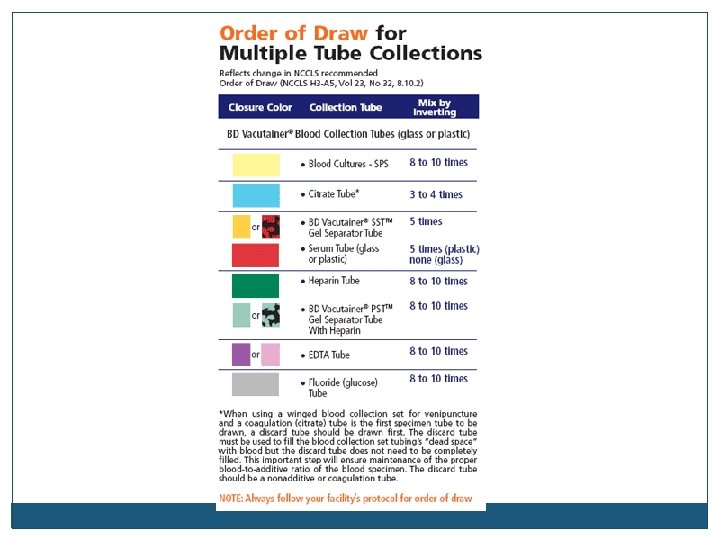
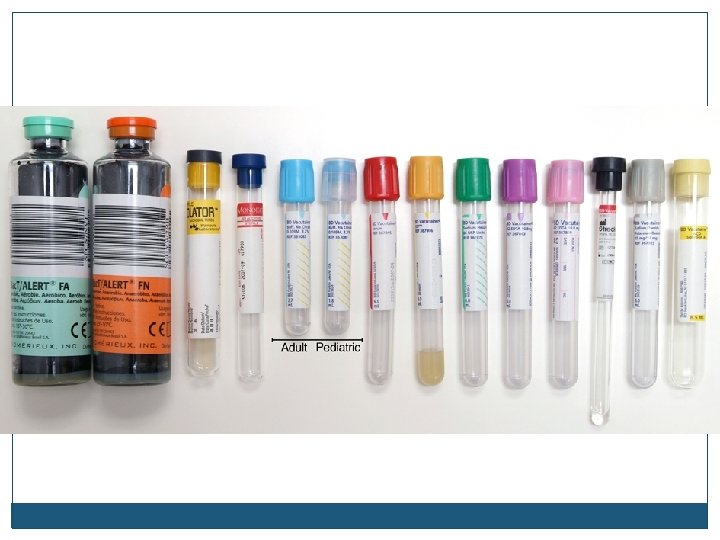
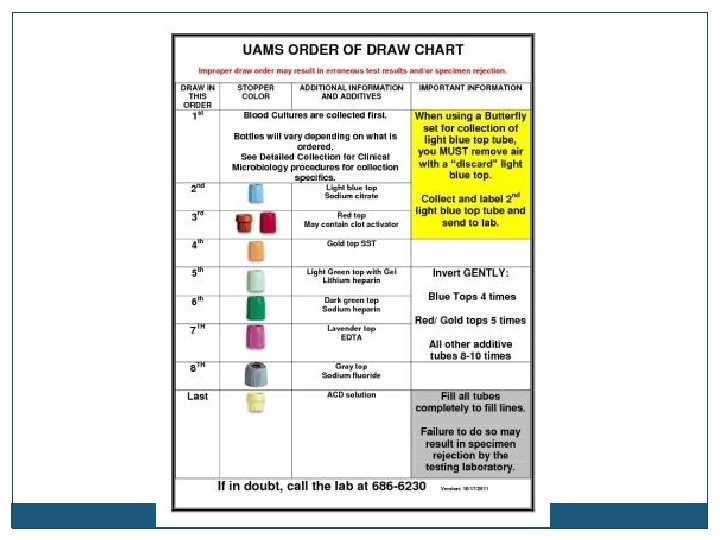
Order of Draw What is the purpose again for an order of draw? 1. 2. 3. 4. 5. 6. 7. 8. Sterile – Blood Cultures Sodium Citrate – Blue Serum – Red SST – Yellow/Tiger Top Heparin – Green PST - Green EDTA – Lavender Fluoride – Gray
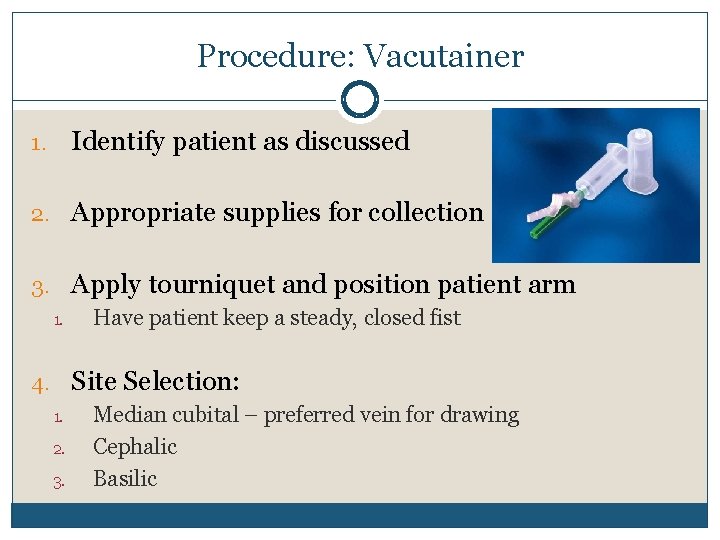
Procedure: Vacutainer Identify patient as discussed 1. 2. Appropriate supplies for collection 3. Apply tourniquet and position patient arm 1. Have patient keep a steady, closed fist 4. Site Selection: 1. 2. 3. Median cubital – preferred vein for drawing Cephalic Basilic

Vein Selection
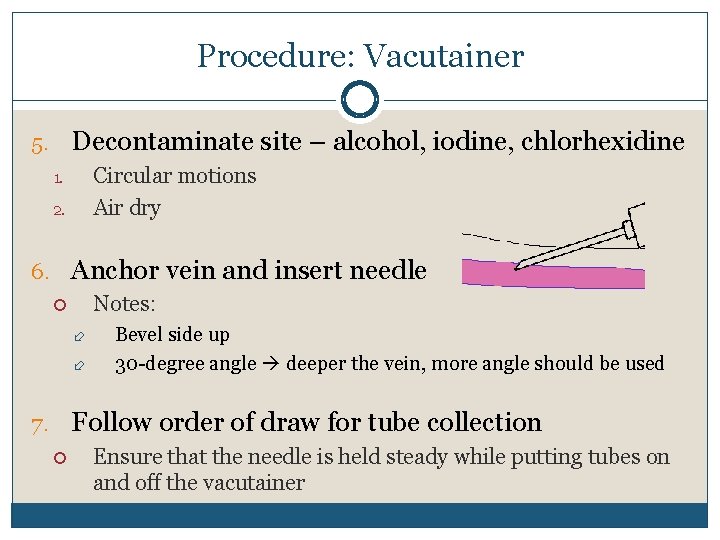
Procedure: Vacutainer 5. Decontaminate site – alcohol, iodine, chlorhexidine Circular motions Air dry 1. 2. 6. Anchor vein and insert needle Notes: Bevel side up 30 -degree angle deeper the vein, more angle should be used 7. Follow order of draw for tube collection Ensure that the needle is held steady while putting tubes on and off the vacutainer
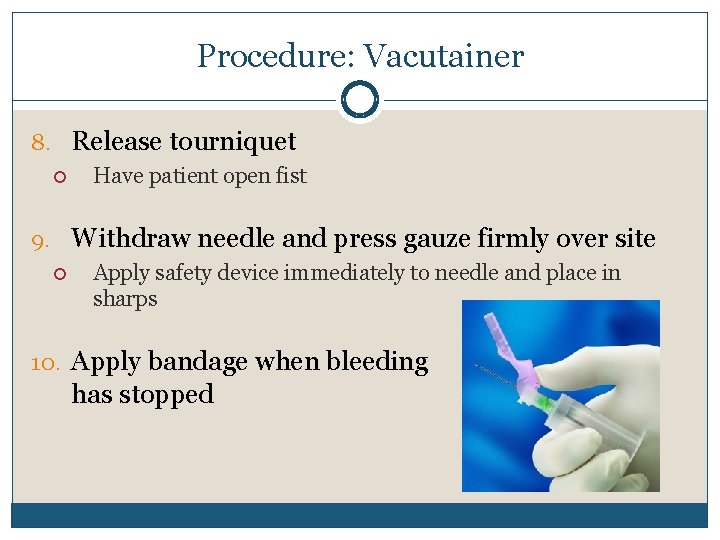
Procedure: Vacutainer 8. Release tourniquet Have patient open fist 9. Withdraw needle and press gauze firmly over site Apply safety device immediately to needle and place in sharps 10. Apply bandage when bleeding has stopped
Procedure: Vacutainer 11. Label tubes with the following information minimally: Name and DOB Date and Time drawn Phleb Initials 12. Mix each tube gently by inverting 8 -10 x 13. Dispose of all materials 14. Thank the patient!
Procedure: Syringe 1. 2. 3. 4. 5. 6. 7. 1. Identify patient as discussed Appropriate supplies for collection Apply tourniquet and position patient arm Site Selection and decontaminate Prime syringe and attach needle Anchor vein and insert needle Slowly pull back on plunger of syringe to fill Be careful to not pull too fast or specimen will be hemolyzed
Procedure: Syringe 8. Release tourniquet, withdraw needle and apply safety, and press gauze on site 9. Apply bandage when bleeding has stopped 10. Detach needle and dispose into sharps container 11. Attach blood transfer device and fill tubes 12. Label tubes and mix by inversion 13. Dispose of materials and thank patient
Potential Complications Hematoma – caused by blood leaking into surrounding tissues Hemolysis – breakdown of blood cells caused by collection process Syncope Patient Refusal
- Slides: 18