
Ven Conmigo Spanish 1 Captulo 3 Nuevas clases
- Slides: 30
¡Ven Conmigo! Spanish 1 Capítulo 3: Nuevas clases, nuevos amigos
Chapter Objectives By the end of this chapter, you will be able to describe teachers and other students, read a class schedule, and write to a friend about your experiences at school.
Primer paso Objectives: 1. talk about classes and sequence events 2. tell time
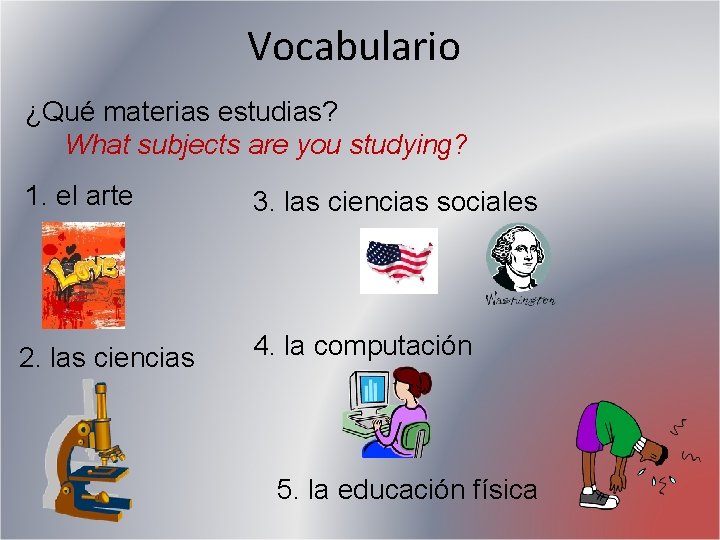
Vocabulario ¿Qué materias estudias? What subjects are you studying? 1. el arte 3. las ciencias sociales 2. las ciencias 4. la computación 5. la educación física
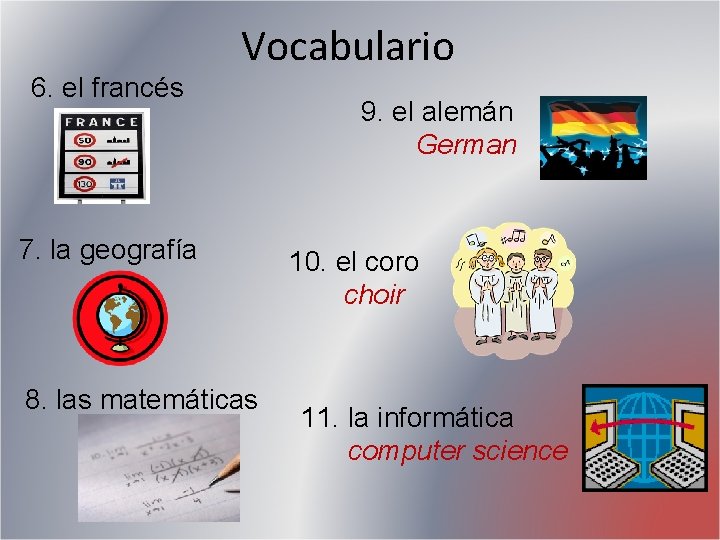
6. el francés Vocabulario 7. la geografía 8. las matemáticas 9. el alemán German 10. el coro choir 11. la informática computer science
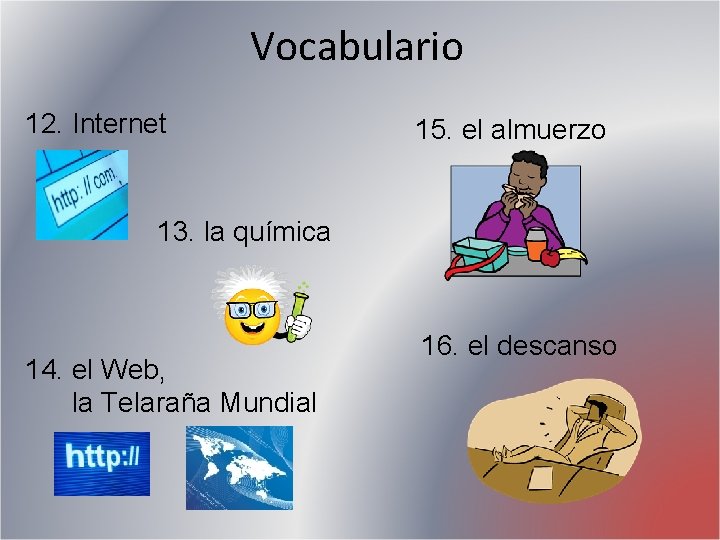
Vocabulario 12. Internet 15. el almuerzo 13. la química 14. el Web, la Telaraña Mundial 16. el descanso
Talking about classes and sequencing events To find out what classes a friend has, ask: ¿Qué clases tienes este semestre? …this semester? ¿Qué clases tienes hoy? …today? ¿ Y cuándo tienes un día libre? And when do you have a free day?
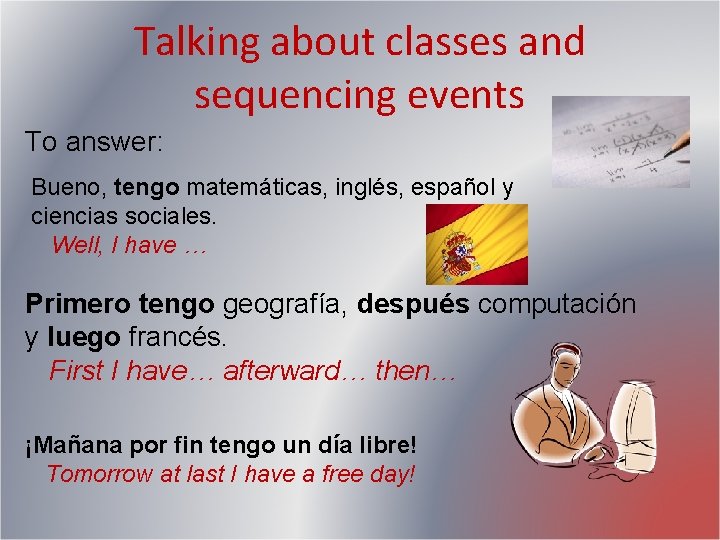
Talking about classes and sequencing events To answer: Bueno, tengo matemáticas, inglés, español y ciencias sociales. Well, I have … Primero tengo geografía, después computación y luego francés. First I have… afterward… then… ¡Mañana por fin tengo un día libre! Tomorrow at last I have a free day!
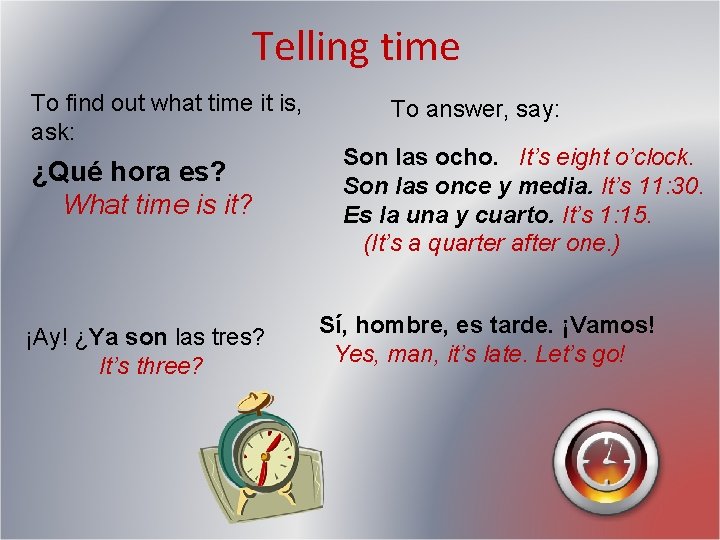
Telling time To find out what time it is, ask: ¿Qué hora es? What time is it? ¡Ay! ¿Ya son las tres? It’s three? To answer, say: Son las ocho. It’s eight o’clock. Son las once y media. It’s 11: 30. Es la una y cuarto. It’s 1: 15. (It’s a quarter after one. ) Sí, hombre, es tarde. ¡Vamos! Yes, man, it’s late. Let’s go!
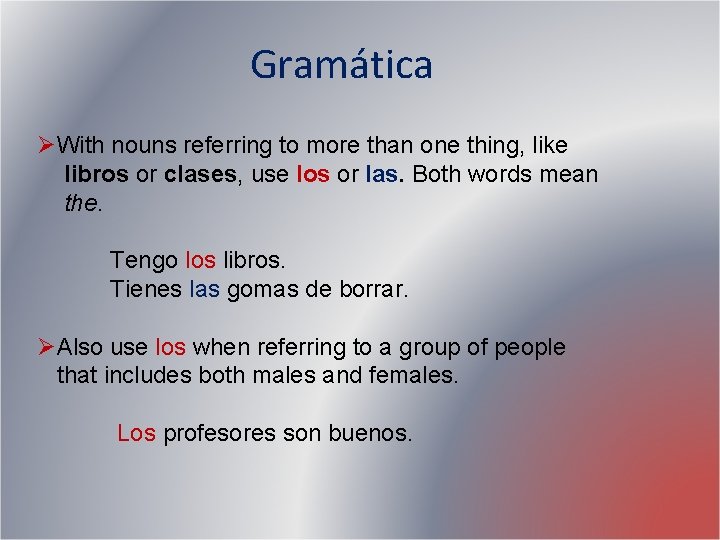
Gramática ØWith nouns referring to more than one thing, like libros or clases, use los or las. Both words mean the. Tengo los libros. Tienes las gomas de borrar. ØAlso use los when referring to a group of people that includes both males and females. Los profesores son buenos.
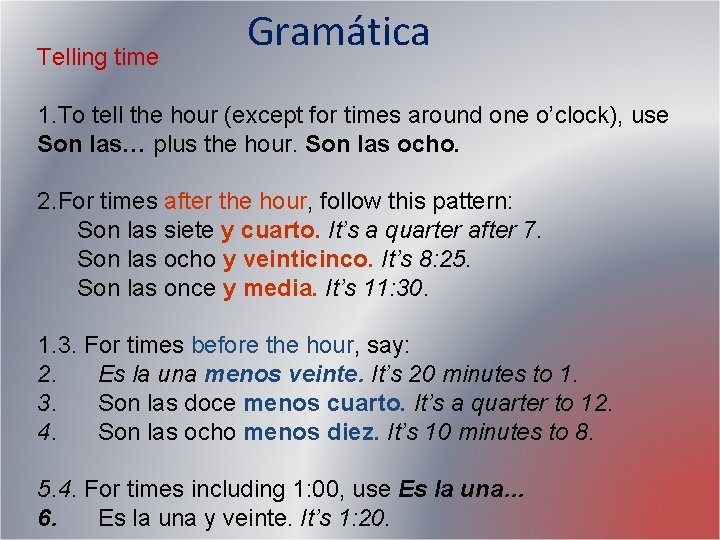
Telling time Gramática 1. To tell the hour (except for times around one o’clock), use Son las… plus the hour. Son las ocho. 2. For times after the hour, follow this pattern: Son las siete y cuarto. It’s a quarter after 7. Son las ocho y veinticinco. It’s 8: 25. Son las once y media. It’s 11: 30. 1. 3. For times before the hour, say: 2. Es la una menos veinte. It’s 20 minutes to 1. 3. Son las doce menos cuarto. It’s a quarter to 12. 4. Son las ocho menos diez. It’s 10 minutes to 8. 5. 4. For times including 1: 00, use Es la una… 6. Es la una y veinte. It’s 1: 20.
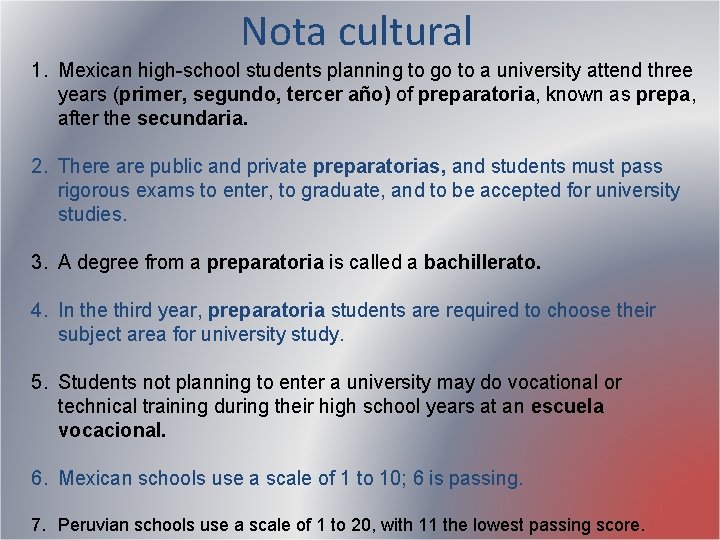
Nota cultural 1. Mexican high-school students planning to go to a university attend three years (primer, segundo, tercer año) of preparatoria, known as prepa, after the secundaria. 2. There are public and private preparatorias, and students must pass rigorous exams to enter, to graduate, and to be accepted for university studies. 3. A degree from a preparatoria is called a bachillerato. 4. In the third year, preparatoria students are required to choose their subject area for university study. 5. Students not planning to enter a university may do vocational or technical training during their high school years at an escuela vocacional. 6. Mexican schools use a scale of 1 to 10; 6 is passing. 7. Peruvian schools use a scale of 1 to 20, with 11 the lowest passing score.
Panorama cultural: Listening Comprehension 1. ¿De dónde es Natalie? ¿Lucía? ¿Mario? 2. ¿Quién tiene dos horarios? 3. ¿A qué hora va Mario al colegio por la tarde? 4. ¿Quiénes tienen clase a las siete de la mañana? 5. ¿A Lucía le gusta el colegio?
Segundo paso Objectives: 1. telling at what time something happens 2. talking about being late or in a hurry
Vocabulario de la mañana in the morning (A. M. ) de la tarde in the afternoon (P. M. ) de la noche in the evening (P. M. )
Telling at what time something happens To find out at what time something happens, ask: ¿A qué hora es la clase? At what time is … ? To answer, say: (Es) a las tres de la tarde. (It’s) at three in the afternoon. ¿A qué hora es el almuerzo? ¡Es ahora! Son las doce en punto. It’s now! … on the dot. (o’clock)
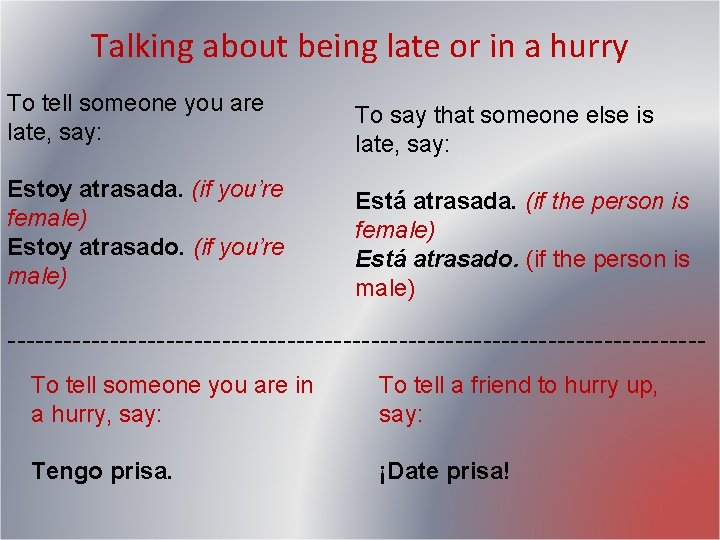
Talking about being late or in a hurry To tell someone you are late, say: To say that someone else is late, say: Estoy atrasada. (if you’re female) Estoy atrasado. (if you’re male) Está atrasada. (if the person is female) Está atrasado. (if the person is male) -------------------------------------To tell someone you are in a hurry, say: To tell a friend to hurry up, say: Tengo prisa. ¡Date prisa!
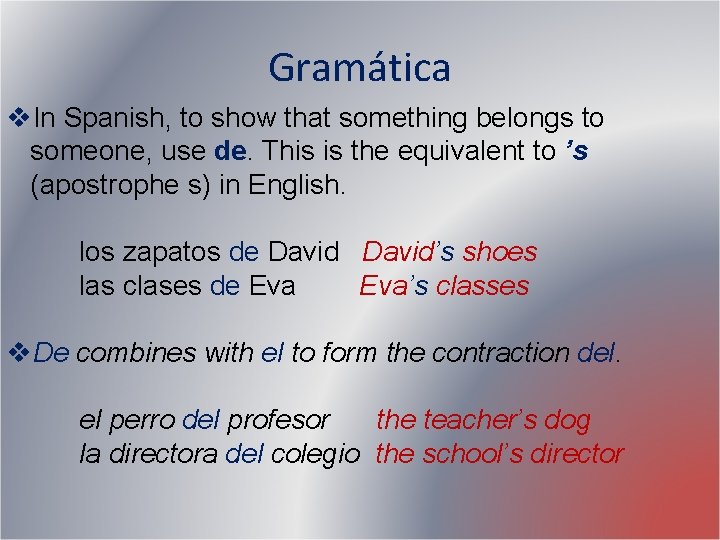
Gramática v. In Spanish, to show that something belongs to someone, use de. This is the equivalent to ’s (apostrophe s) in English. los zapatos de David’s shoes las clases de Eva’s classes v. De combines with el to form the contraction del. el perro del profesor the teacher’s dog la directora del colegio the school’s director
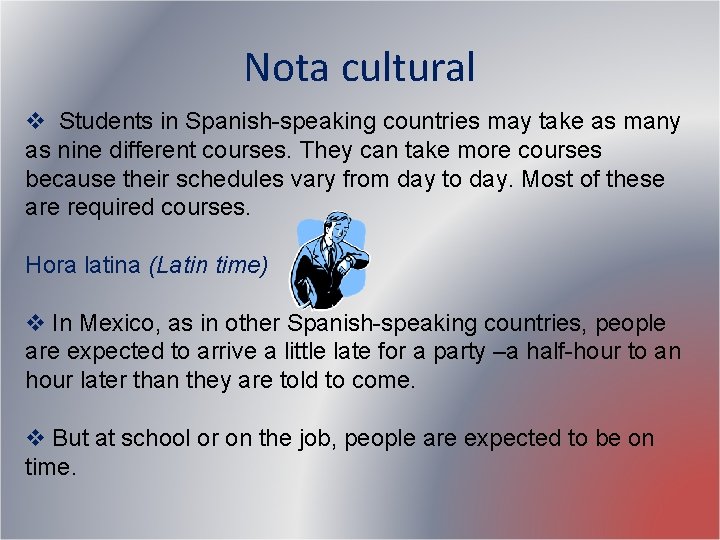
Nota cultural v Students in Spanish-speaking countries may take as many as nine different courses. They can take more courses because their schedules vary from day to day. Most of these are required courses. Hora latina (Latin time) v In Mexico, as in other Spanish-speaking countries, people are expected to arrive a little late for a party –a half-hour to an hour later than they are told to come. v But at school or on the job, people are expected to be on time.
Tercer paso Objectives: 1. describing people and things 2. talking about things you like and explaining why
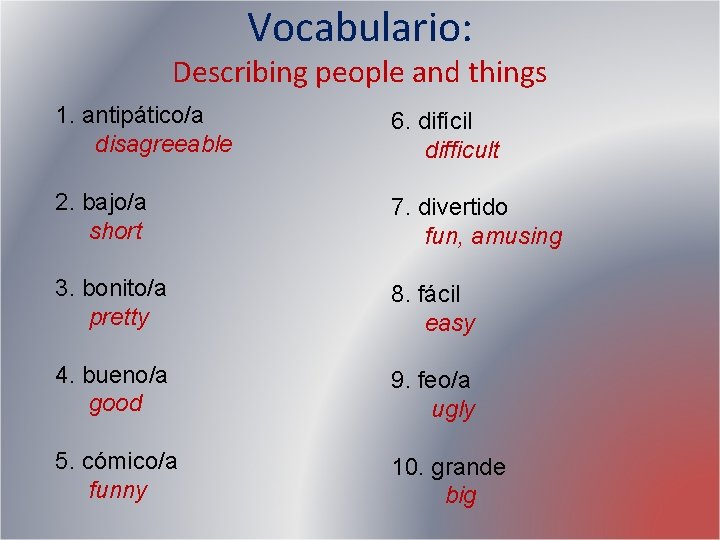
Vocabulario: Describing people and things 1. antipático/a disagreeable 6. difícil difficult 2. bajo/a short 7. divertido fun, amusing 3. bonito/a pretty 8. fácil easy 4. bueno/a good 9. feo/a ugly 5. cómico/a funny 10. grande big
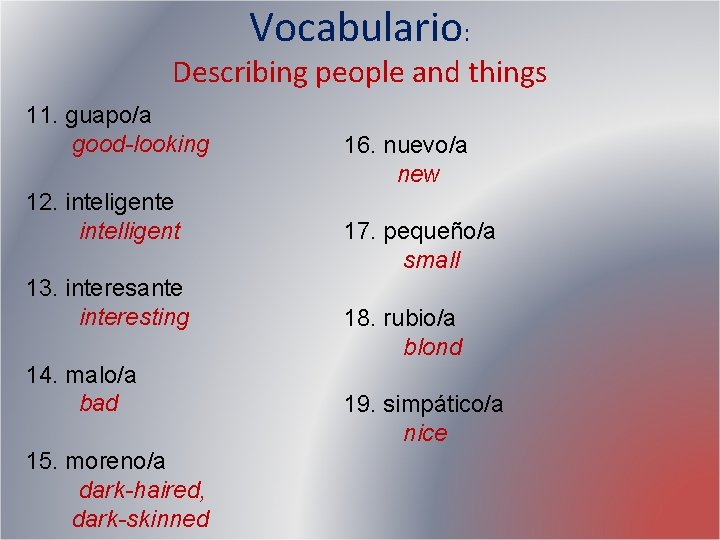
Vocabulario: Describing people and things 11. guapo/a good-looking 12. inteligente intelligent 13. interesante interesting 14. malo/a bad 15. moreno/a dark-haired, dark-skinned 16. nuevo/a new 17. pequeño/a small 18. rubio/a blond 19. simpático/a nice
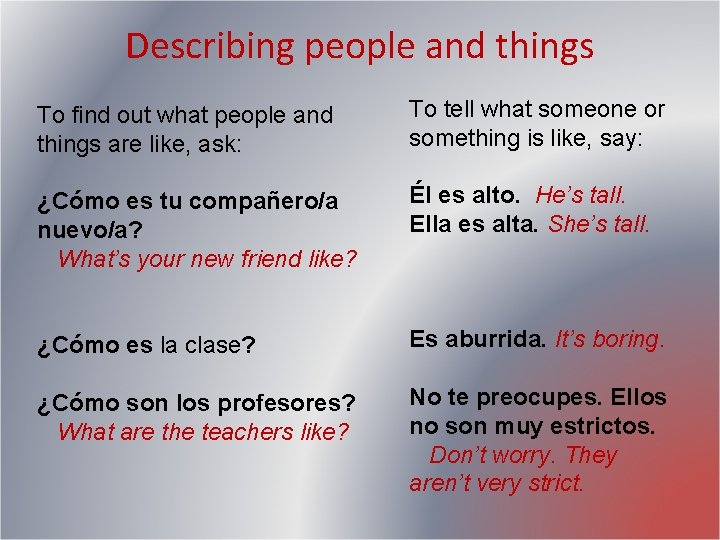
Describing people and things To find out what people and things are like, ask: To tell what someone or something is like, say: ¿Cómo es tu compañero/a nuevo/a? What’s your new friend like? Él es alto. He’s tall. Ella es alta. She’s tall. ¿Cómo es la clase? Es aburrida. It’s boring. ¿Cómo son los profesores? What are the teachers like? No te preocupes. Ellos no son muy estrictos. Don’t worry. They aren’t very strict.
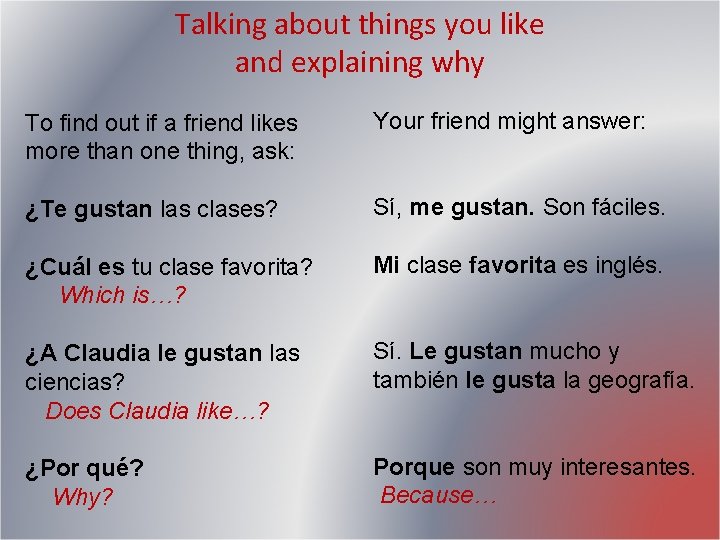
Talking about things you like and explaining why To find out if a friend likes more than one thing, ask: Your friend might answer: ¿Te gustan las clases? Sí, me gustan. Son fáciles. ¿Cuál es tu clase favorita? Which is…? Mi clase favorita es inglés. ¿A Claudia le gustan las ciencias? Does Claudia like…? Sí. Le gustan mucho y también le gusta la geografía. ¿Por qué? Why? Porque son muy interesantes. Because…
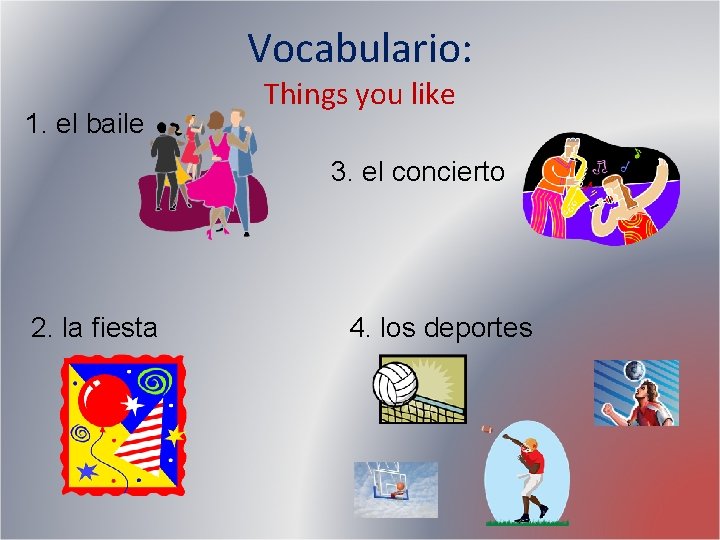
Vocabulario: 1. el baile Things you like 3. el concierto 2. la fiesta 4. los deportes
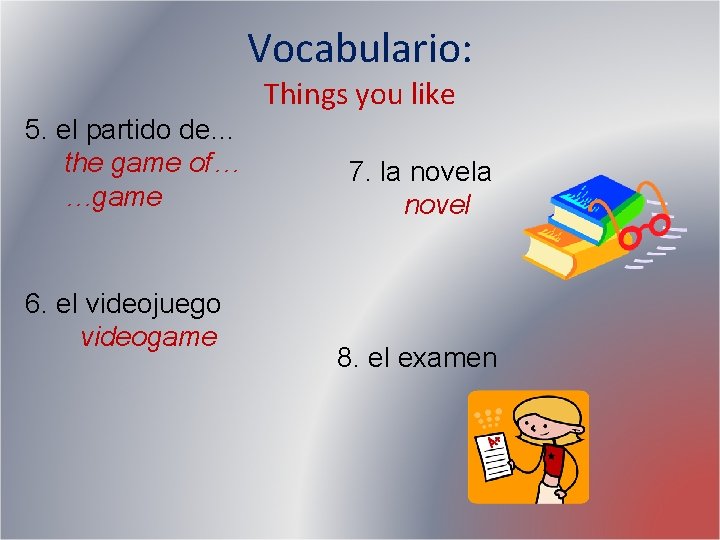
Vocabulario: Things you like 5. el partido de… the game of… …game 6. el videojuego videogame 7. la novel 8. el examen
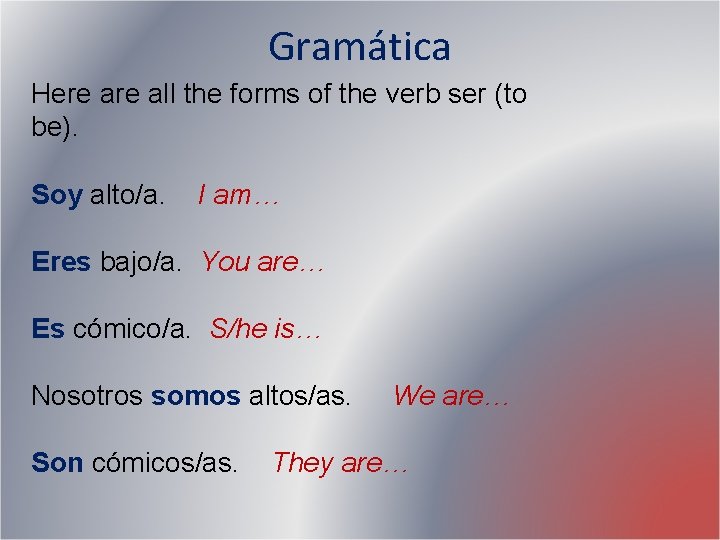
Gramática Here all the forms of the verb ser (to be). Soy alto/a. I am… Eres bajo/a. You are… Es cómico/a. S/he is… Nosotros somos altos/as. Son cómicos/as. We are… They are…
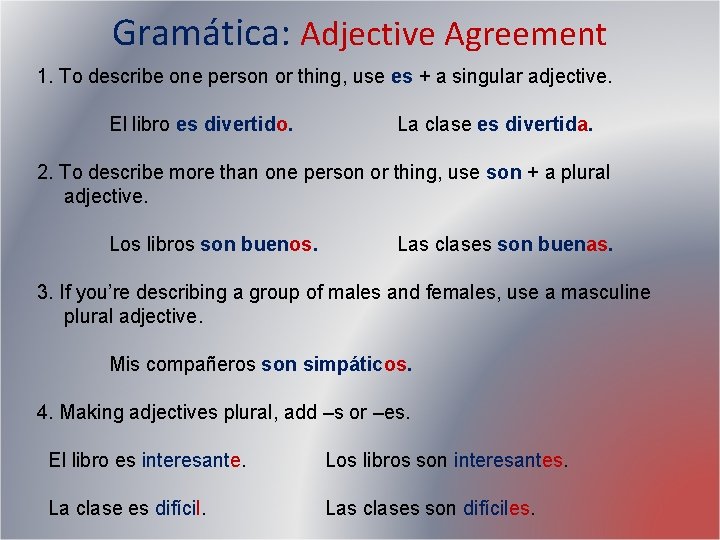
Gramática: Adjective Agreement 1. To describe one person or thing, use es + a singular adjective. El libro es divertido. La clase es divertida. 2. To describe more than one person or thing, use son + a plural adjective. Los libros son buenos. Las clases son buenas. 3. If you’re describing a group of males and females, use a masculine plural adjective. Mis compañeros son simpáticos. 4. Making adjectives plural, add –s or –es. El libro es interesante. Los libros son interesantes. La clase es difícil. Las clases son difíciles.
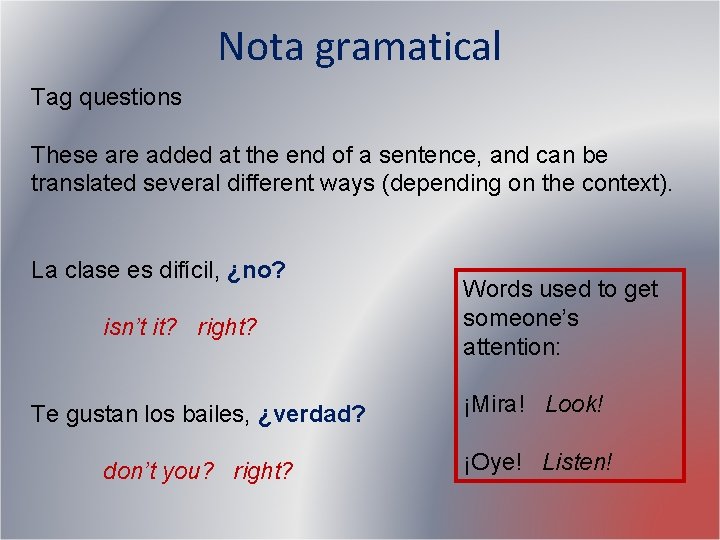
Nota gramatical Tag questions These are added at the end of a sentence, and can be translated several different ways (depending on the context). La clase es difícil, ¿no? isn’t it? right? Words used to get someone’s attention: Te gustan los bailes, ¿verdad? ¡Mira! Look! don’t you? right? ¡Oye! Listen!
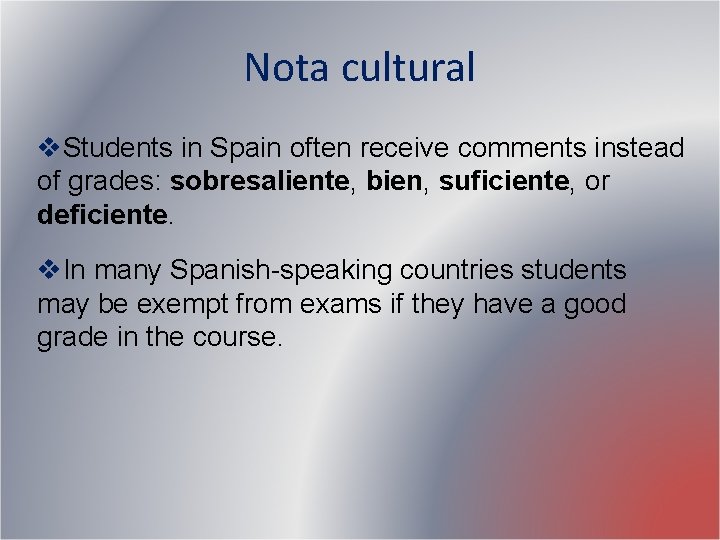
Nota cultural v. Students in Spain often receive comments instead of grades: sobresaliente, bien, suficiente, or deficiente. v. In many Spanish-speaking countries students may be exempt from exams if they have a good grade in the course.