
VelocityTime Graphs www assignmentpoint com Velocitytime Graphs Uniform

- Slides: 16
Velocity-Time Graphs www. assignmentpoint. com
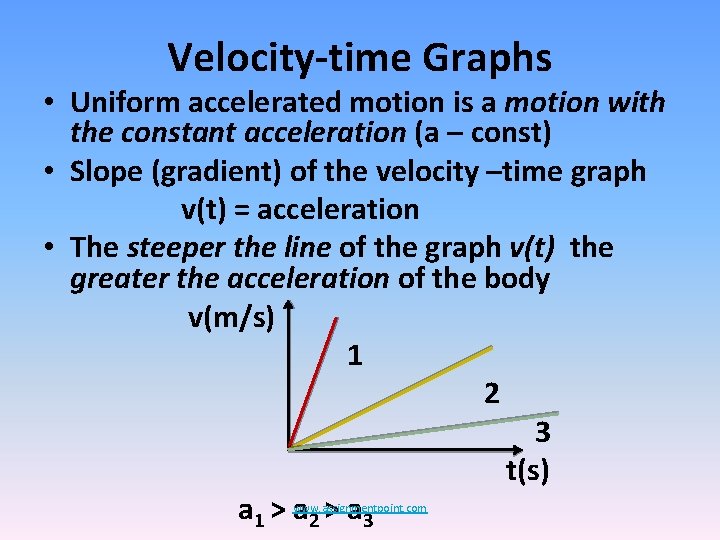
Velocity-time Graphs • Uniform accelerated motion is a motion with the constant acceleration (a – const) • Slope (gradient) of the velocity –time graph v(t) = acceleration • The steeper the line of the graph v(t) the greater the acceleration of the body v(m/s) 1 2 3 t(s) a 1 > a 2 > a 3 www. assignmentpoint. com
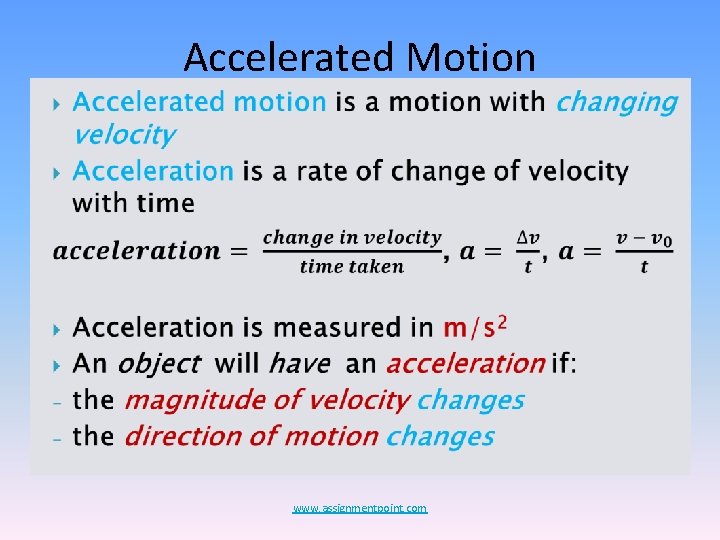
Accelerated Motion • www. assignmentpoint. com
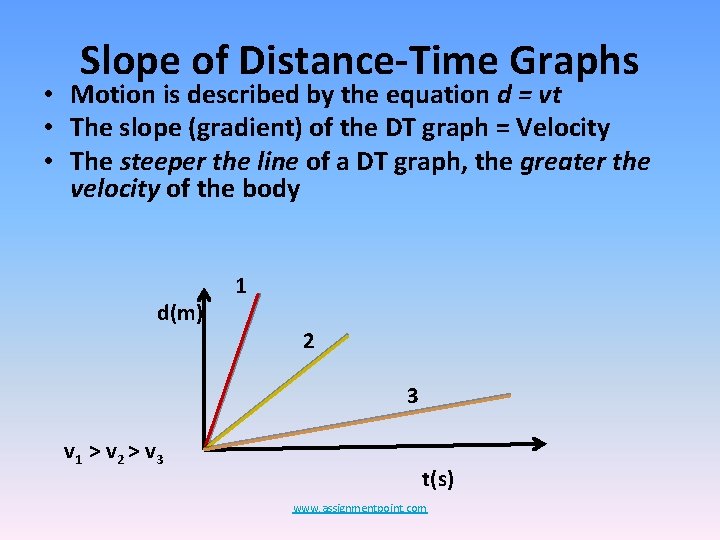
Slope of Distance-Time Graphs • Motion is described by the equation d = vt • The slope (gradient) of the DT graph = Velocity • The steeper the line of a DT graph, the greater the velocity of the body d(m) 1 2 3 v 1 > v 2 > v 3 t(s) www. assignmentpoint. com
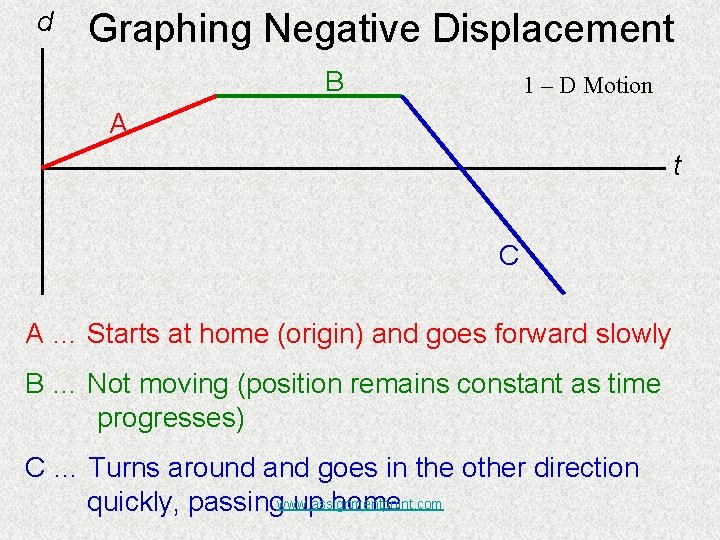
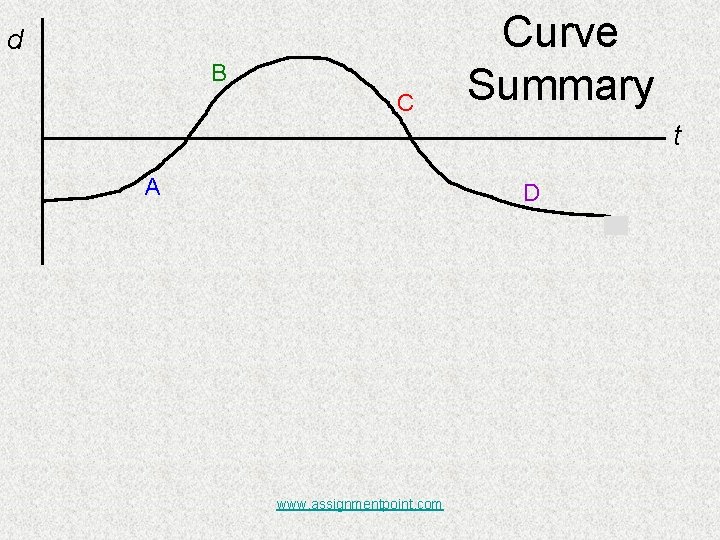
d Graphing Negative Displacement B 1 – D Motion A t C A … Starts at home (origin) and goes forward slowly B … Not moving (position remains constant as time progresses) C … Turns around and goes in the other direction quickly, passingwww. assignmentpoint. com up home
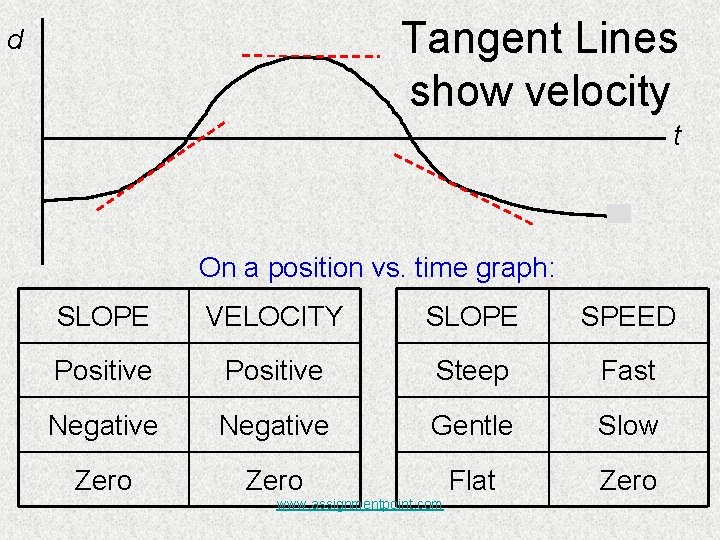
Tangent Lines show velocity d t On a position vs. time graph: SLOPE VELOCITY SLOPE SPEED Positive Steep Fast Negative Gentle Slow Zero Flat Zero www. assignmentpoint. com
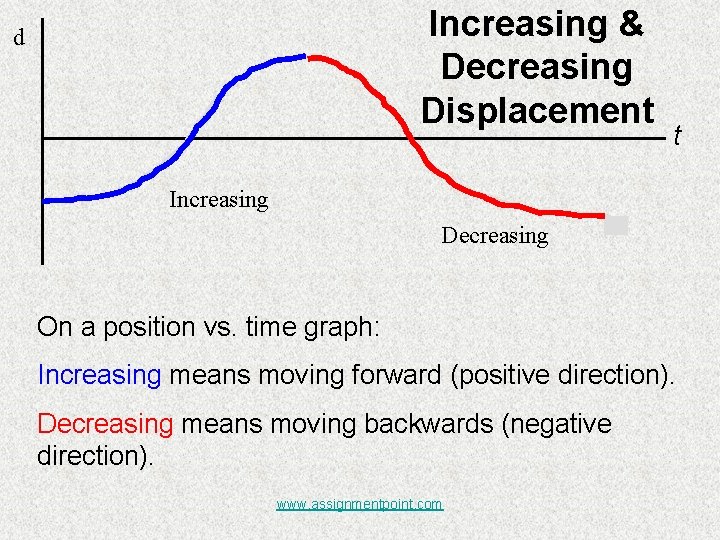
Increasing & Decreasing Displacement d t Increasing Decreasing On a position vs. time graph: Increasing means moving forward (positive direction). Decreasing means moving backwards (negative direction). www. assignmentpoint. com
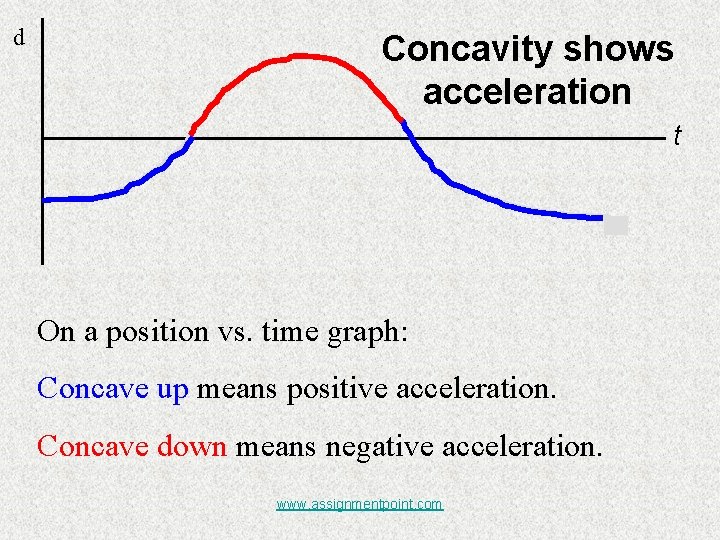
d Concavity shows acceleration t On a position vs. time graph: Concave up means positive acceleration. Concave down means negative acceleration. www. assignmentpoint. com
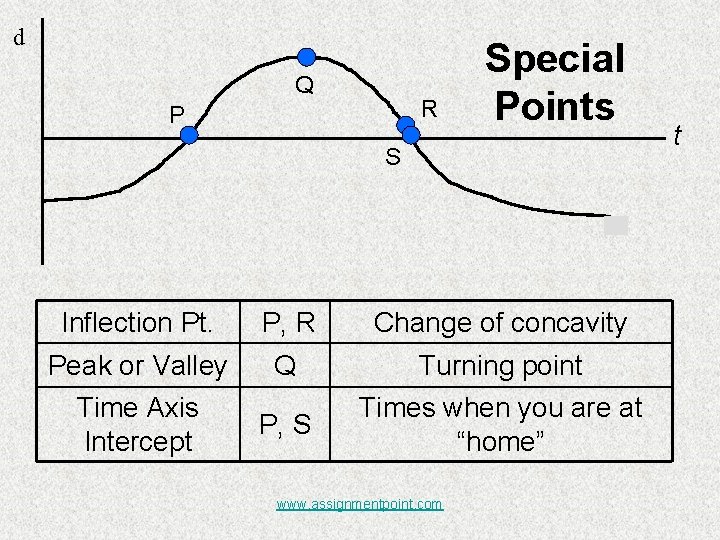
d Q R P Special Points S Inflection Pt. P, R Change of concavity Peak or Valley Q Turning point P, S Times when you are at “home” Time Axis Intercept www. assignmentpoint. com t
d B C Curve Summary t A D www. assignmentpoint. com
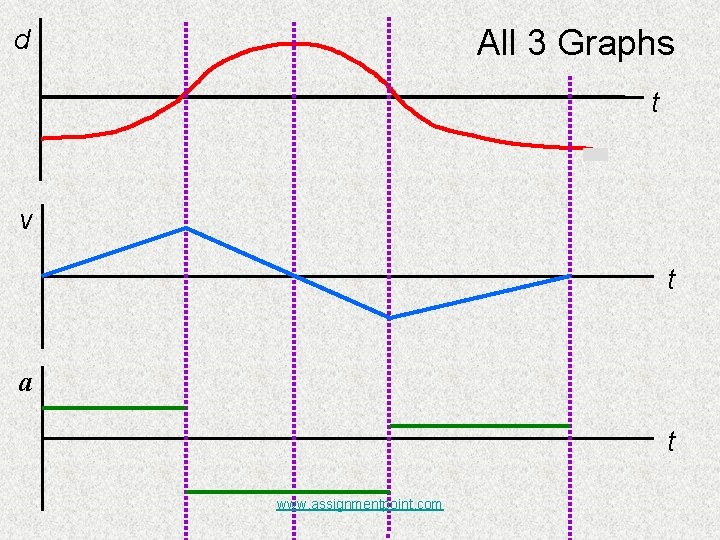
All 3 Graphs d t v t a t www. assignmentpoint. com
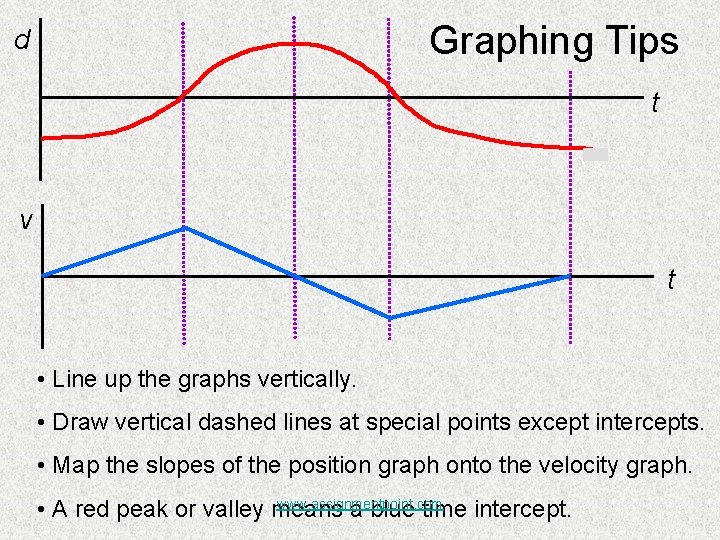
Graphing Tips d t v t • Line up the graphs vertically. • Draw vertical dashed lines at special points except intercepts. • Map the slopes of the position graph onto the velocity graph. www. assignmentpoint. com • A red peak or valley means a blue time intercept.
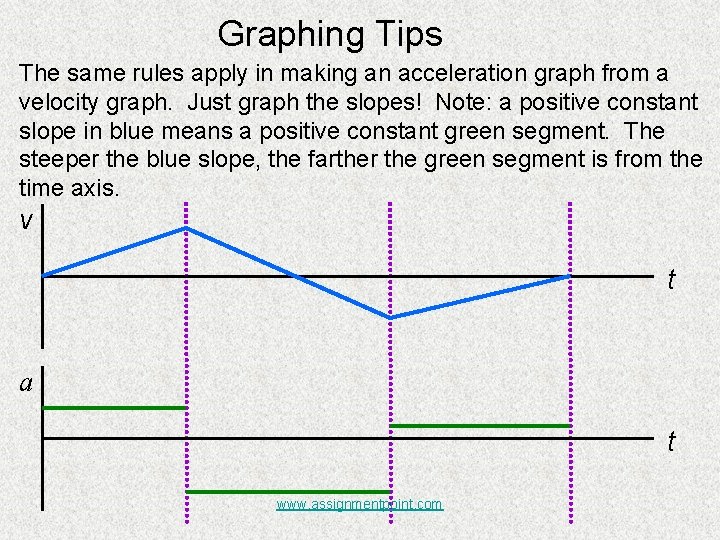
Graphing Tips The same rules apply in making an acceleration graph from a velocity graph. Just graph the slopes! Note: a positive constant slope in blue means a positive constant green segment. The steeper the blue slope, the farther the green segment is from the time axis. v t a t www. assignmentpoint. com
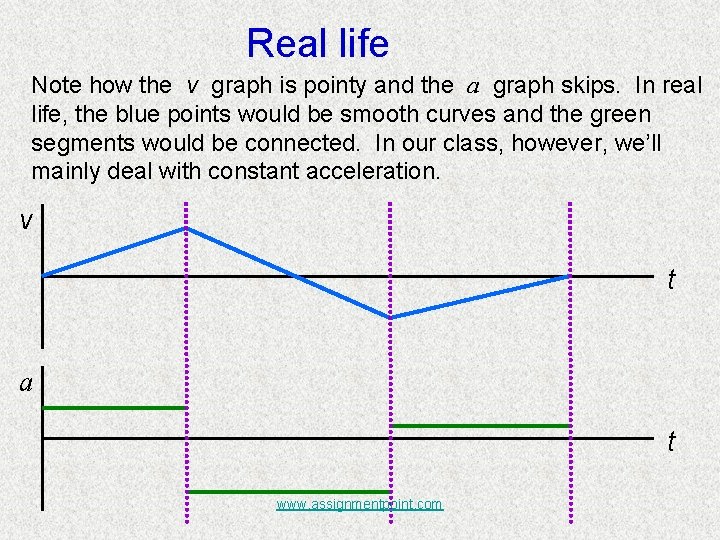
Real life Note how the v graph is pointy and the a graph skips. In real life, the blue points would be smooth curves and the green segments would be connected. In our class, however, we’ll mainly deal with constant acceleration. v t a t www. assignmentpoint. com
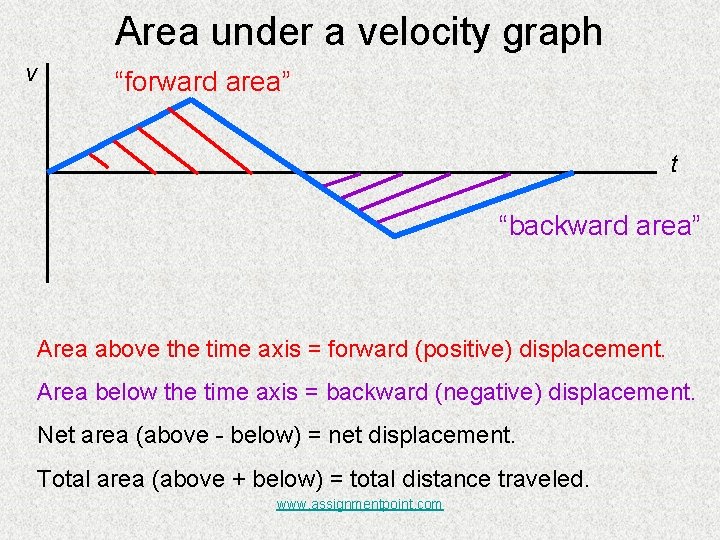
Area under a velocity graph v “forward area” t “backward area” Area above the time axis = forward (positive) displacement. Area below the time axis = backward (negative) displacement. Net area (above - below) = net displacement. Total area (above + below) = total distance traveled. www. assignmentpoint. com
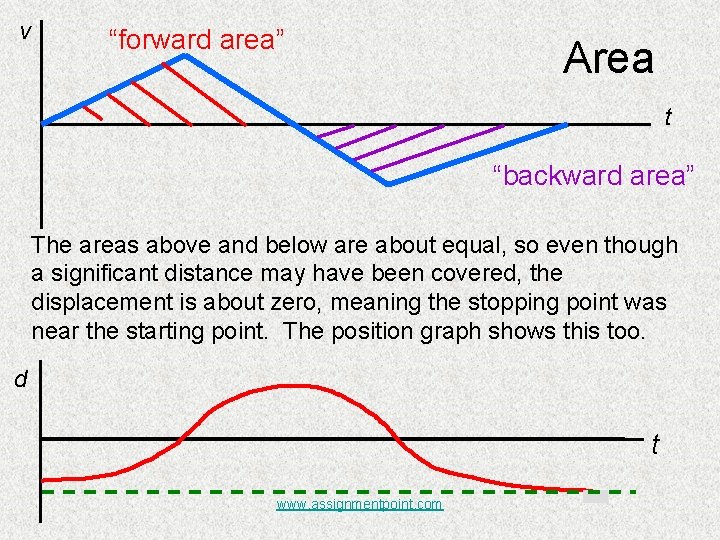
v “forward area” Area t “backward area” The areas above and below are about equal, so even though a significant distance may have been covered, the displacement is about zero, meaning the stopping point was near the starting point. The position graph shows this too. d t www. assignmentpoint. com