
Velocity and Momentu m 2 2 How do



- Slides: 19
Velocity and Momentu m 2. 2
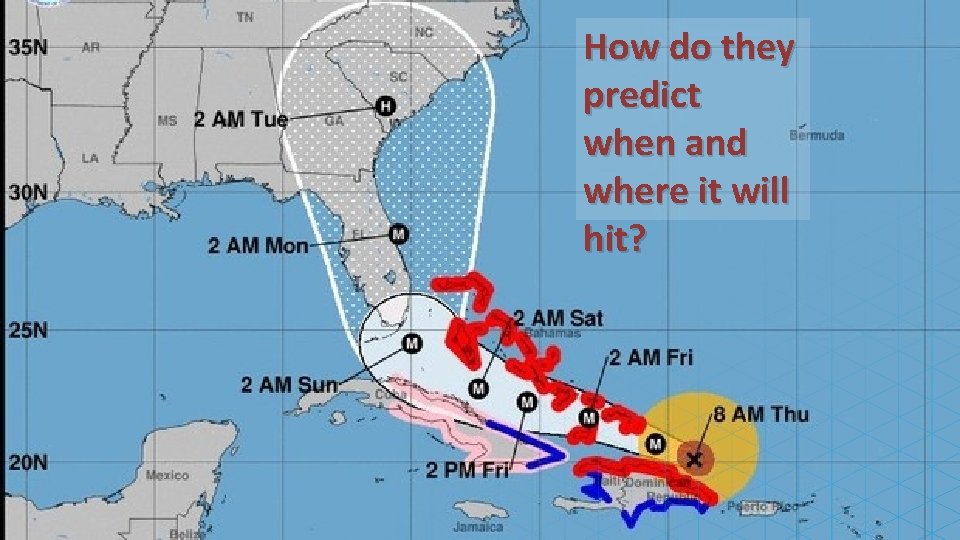
How do they predict when and where it will hit?
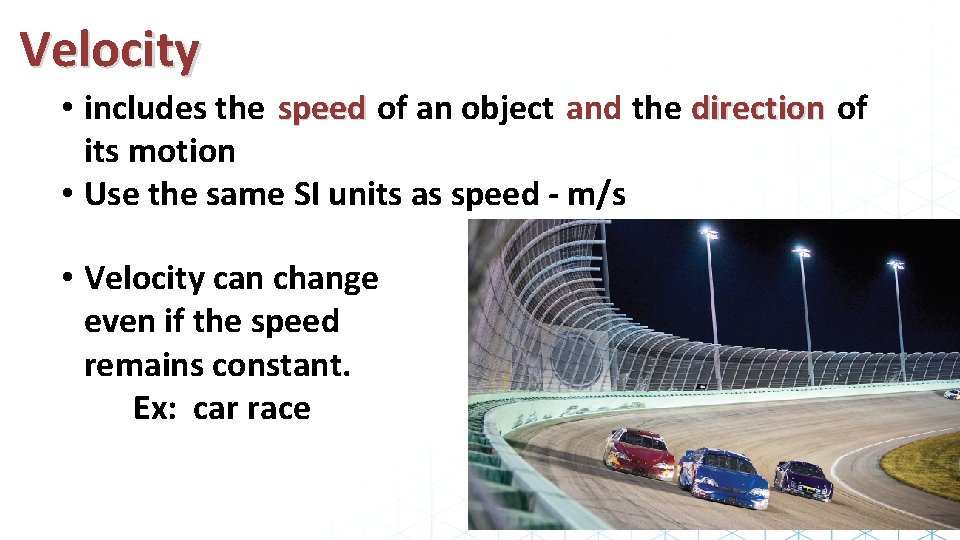
Velocity • includes the speed of an object and the direction of its motion • Use the same SI units as speed - m/s • Velocity can change even if the speed remains constant. Ex: car race
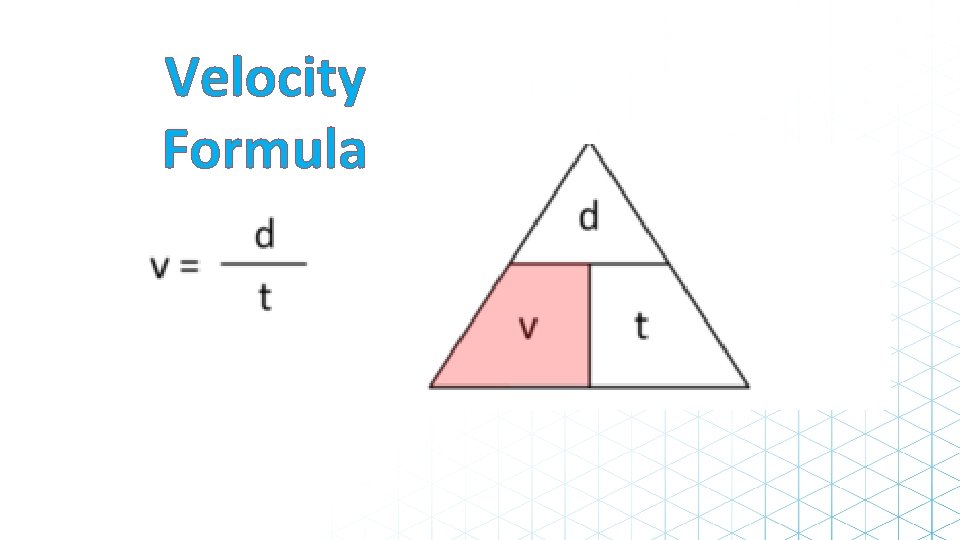
Velocity Formula
• Can have the same speed but a different velocity Ex: escalators
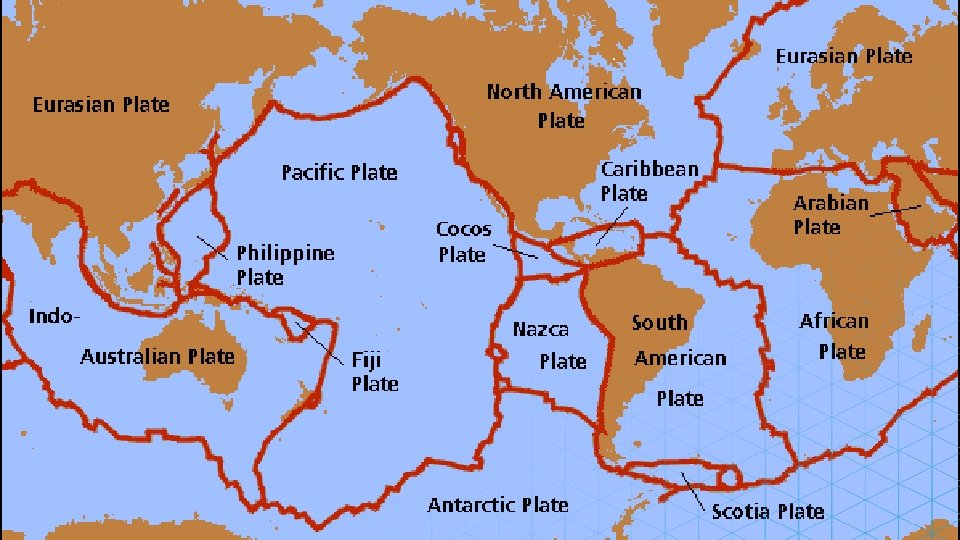
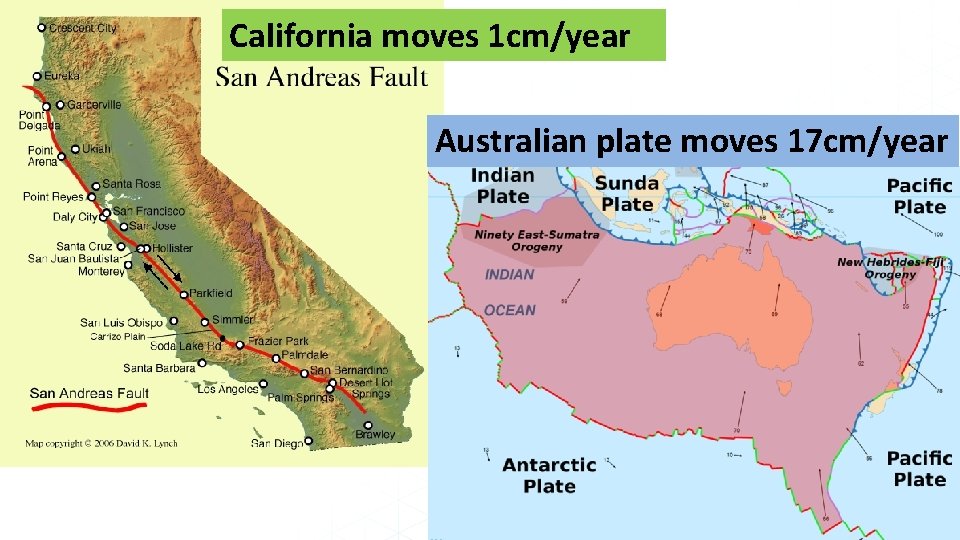
California moves 1 cm/year Australian plate moves 17 cm/year
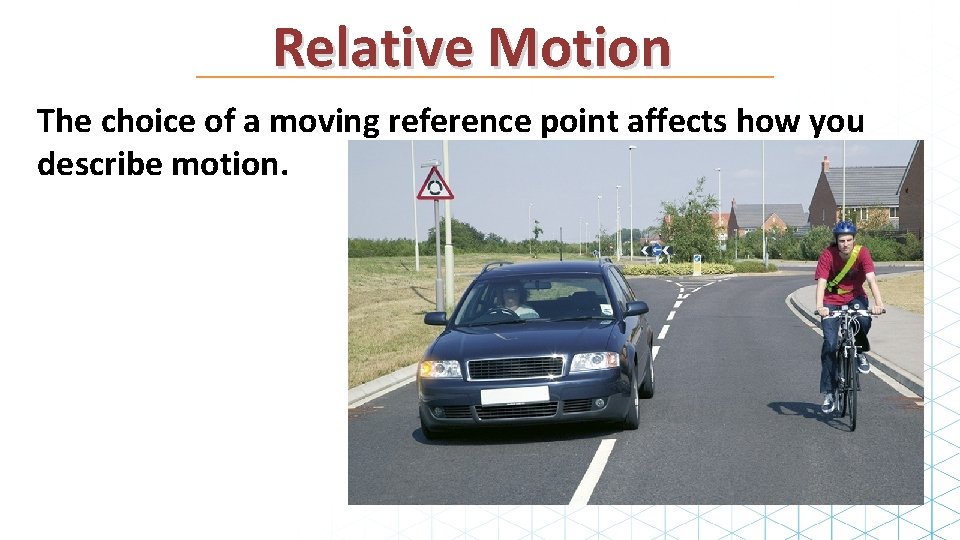
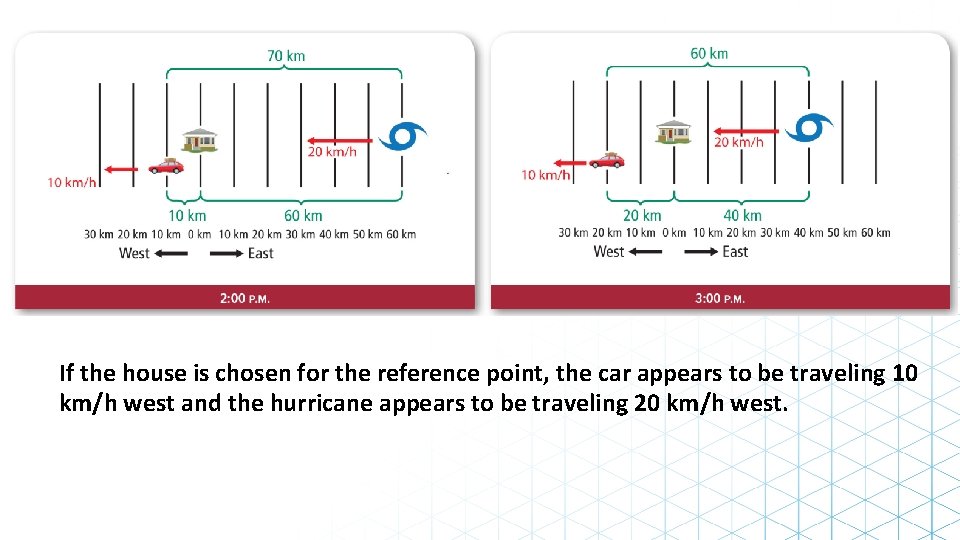
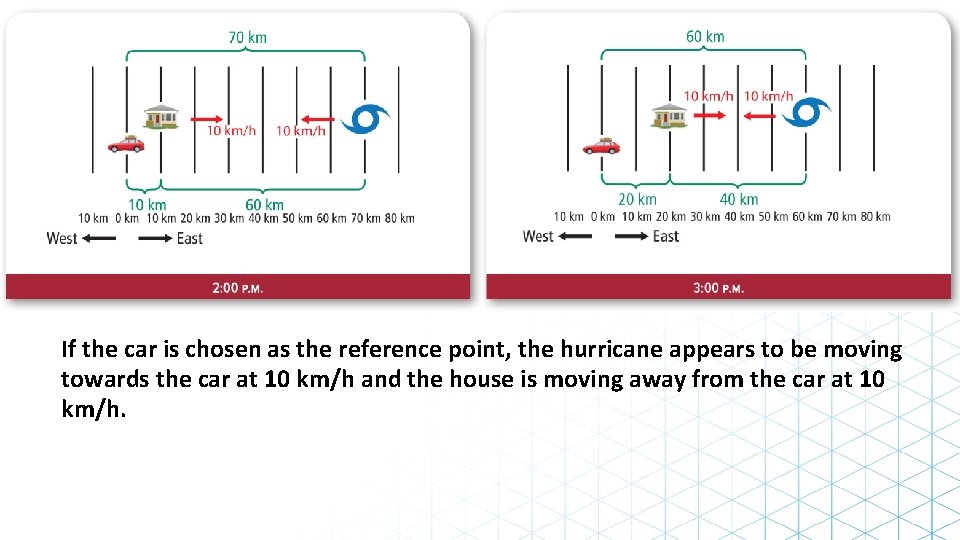
Relative Motion The choice of a moving reference point affects how you describe motion.
If the house is chosen for the reference point, the car appears to be traveling 10 km/h west and the hurricane appears to be traveling 20 km/h west.
If the car is chosen as the reference point, the hurricane appears to be moving towards the car at 10 km/h and the house is moving away from the car at 10 km/h.
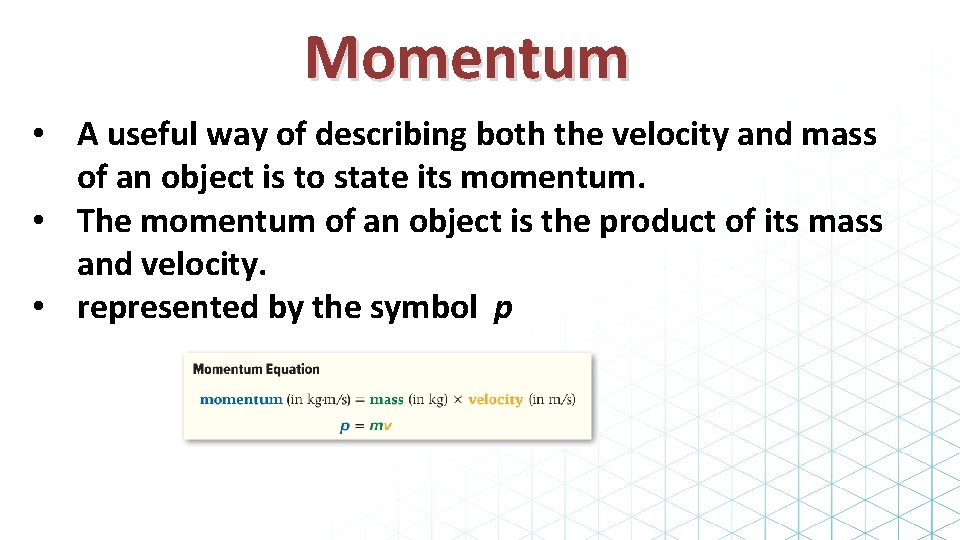
Momentum • A useful way of describing both the velocity and mass of an object is to state its momentum. • The momentum of an object is the product of its mass and velocity. • represented by the symbol p
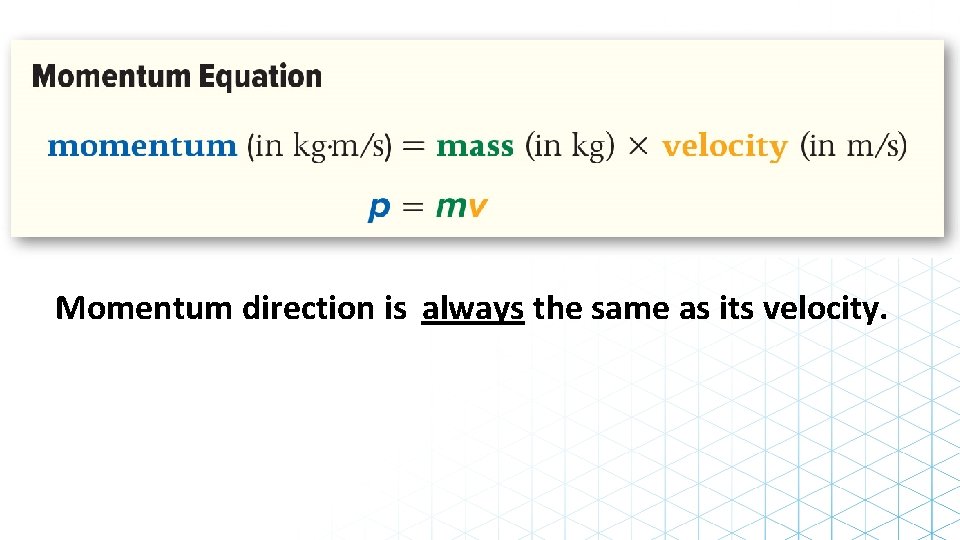
Momentum direction is always the same as its velocity.
At the end of a race, a sprinter with a mass of 80. 0 kg has a velocity of 10. 0 m/s east. What is the sprinter’s momentum?
Work problems 12 – 14, on page 54. You must have the following 4 steps for each problem: 1. 2. 3. 4. What is given in the problem? The knowns. What is it asking for? The unknown Which formula will you use? Work the problem showing all steps. Give the SI unit for your final answer.
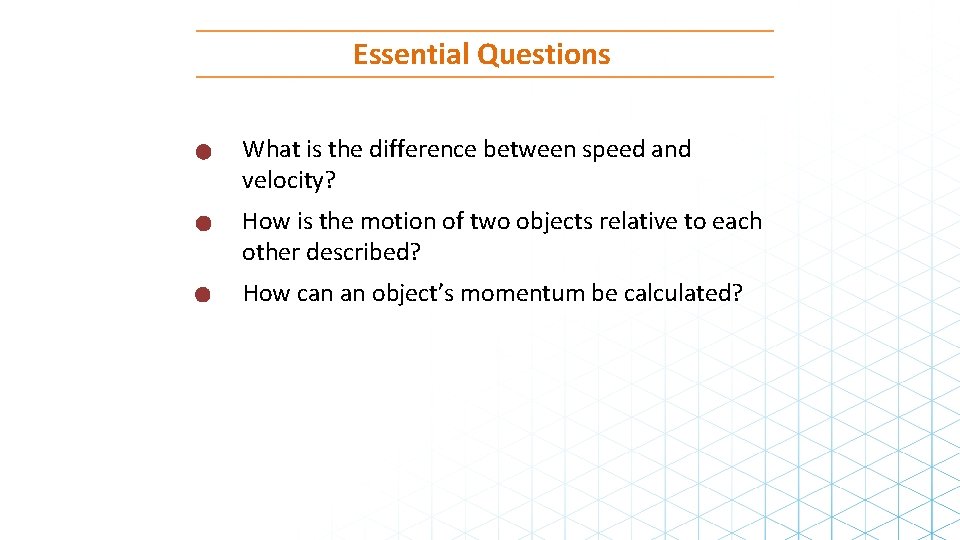
Essential Questions What is the difference between speed and velocity? How is the motion of two objects relative to each other described? How can an object’s momentum be calculated?
Review Vocabulary speed: rate of change of position
New Vocabulary velocity momentum
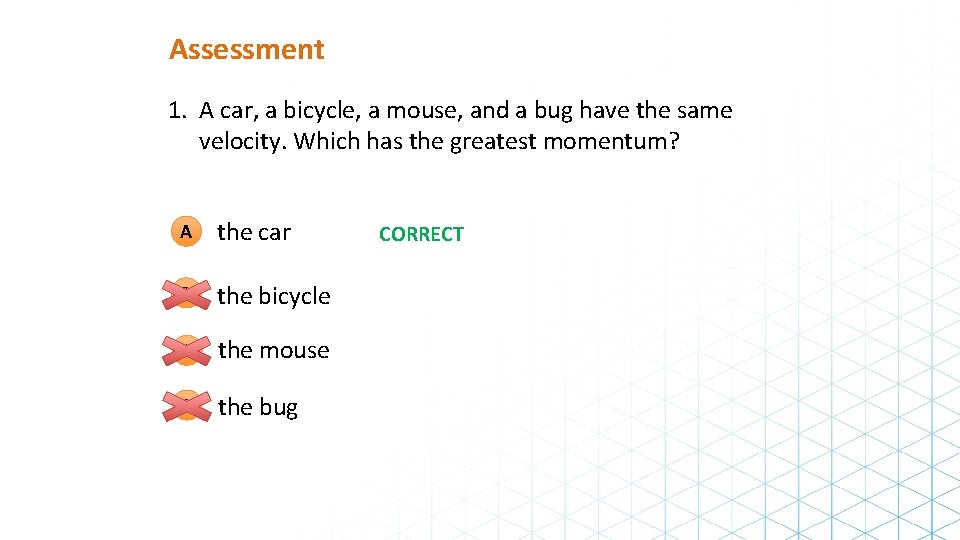
Assessment 1. A car, a bicycle, a mouse, and a bug have the same velocity. Which has the greatest momentum? A the car B the bicycle C the mouse D the bug CORRECT
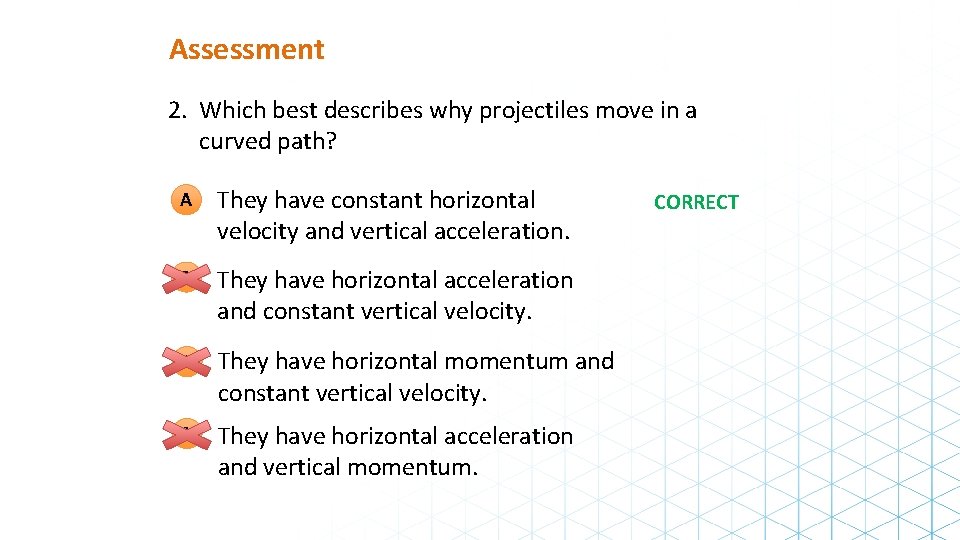
Assessment 2. Which best describes why projectiles move in a curved path? A They have constant horizontal velocity and vertical acceleration. B They have horizontal acceleration and constant vertical velocity. C They have horizontal momentum and constant vertical velocity. D They have horizontal acceleration and vertical momentum. CORRECT