
Velocity and Acceleration Velocity speed in a direction
- Slides: 14
Velocity and Acceleration
Velocity = speed in a direction! Examples: 5 m/s up 12 mph north 1, 425 k/h southwest
Velocity To compute first figure average speed. S= d/t Then add the direction!
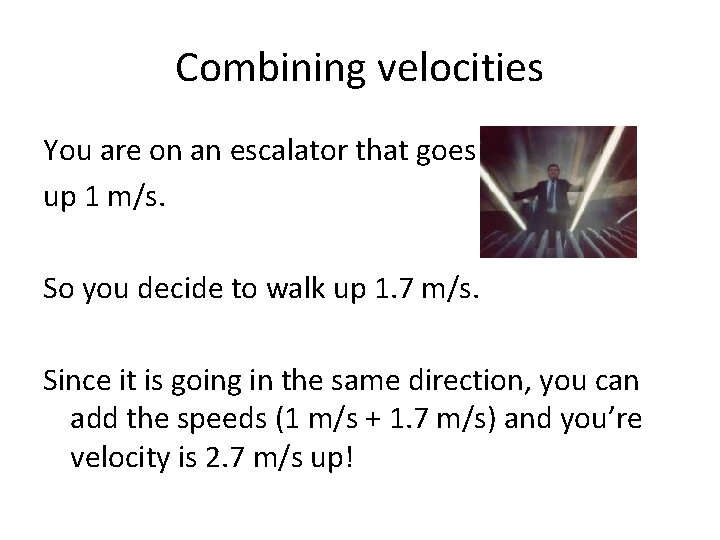
Combining velocities You are on an escalator that goes up 1 m/s. So you decide to walk up 1. 7 m/s. Since it is going in the same direction, you can add the speeds (1 m/s + 1. 7 m/s) and you’re velocity is 2. 7 m/s up!
? ? ? Think and Share When else might you combine velocities going in the same direction? Hint: Ever been to the Atlanta airport?
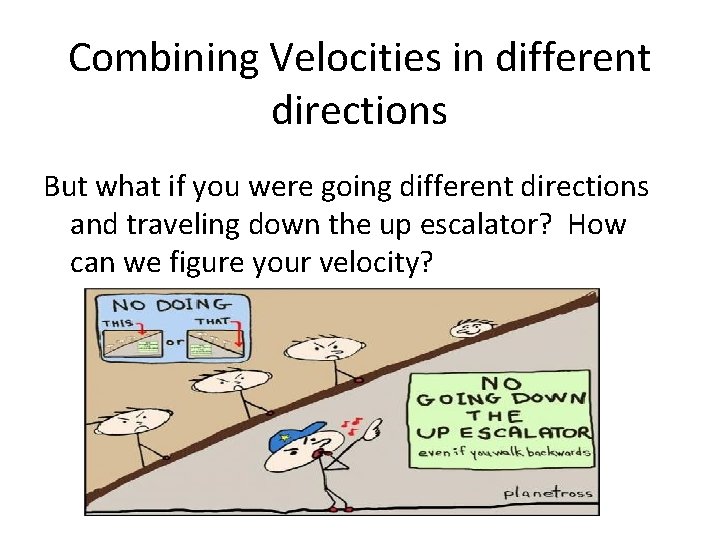
Combining Velocities in different directions But what if you were going different directions and traveling down the up escalator? How can we figure your velocity?
Combining conflicting (different direction) velocities If the escalator moves 1 m/s up but you’re moving 1. 7 m/s down, what’s your velocity?
Combining velocities Easy! If you’re combining opposite velocities you subtract! 1. 7 m/s down – 1. 0 m/s up =. 7 m/s down It just makes sense!
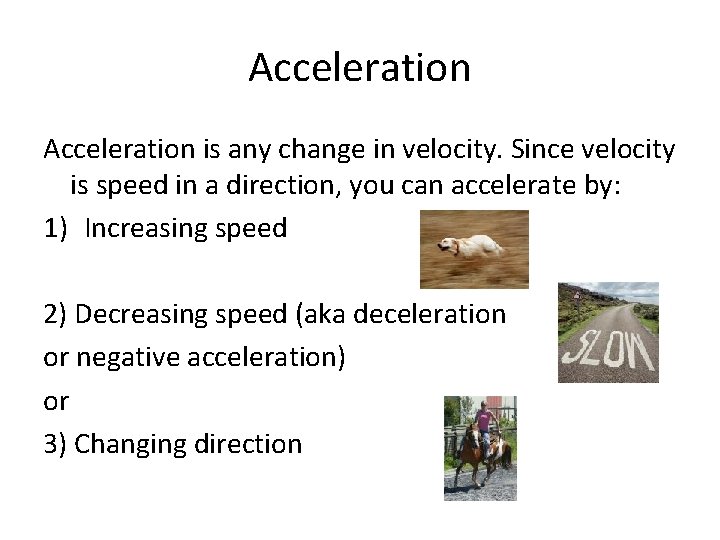
Acceleration is any change in velocity. Since velocity is speed in a direction, you can accelerate by: 1) Increasing speed 2) Decreasing speed (aka deceleration or negative acceleration) or 3) Changing direction
Acceleration Let’s all accelerate!
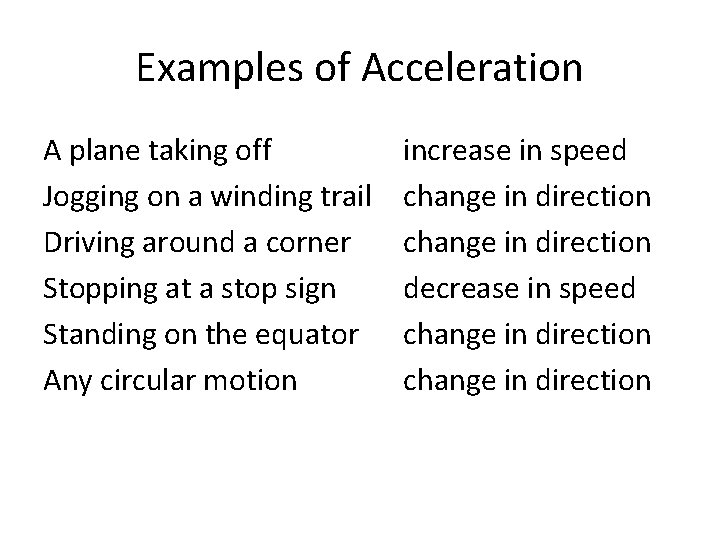
Examples of Acceleration A plane taking off Jogging on a winding trail Driving around a corner Stopping at a stop sign Standing on the equator Any circular motion increase in speed change in direction decrease in speed change in direction
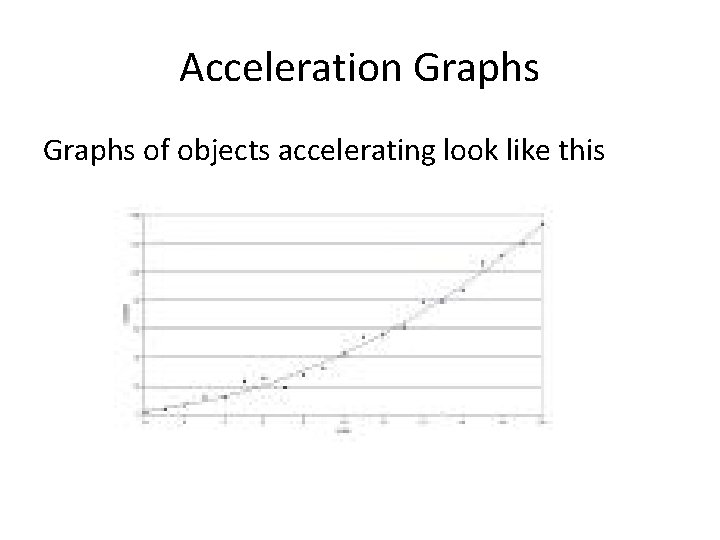
Acceleration Graphs of objects accelerating look like this
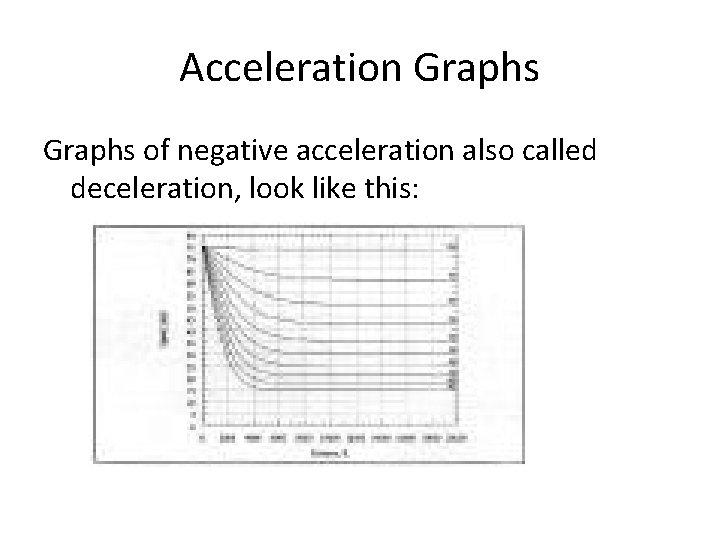
Acceleration Graphs of negative acceleration also called deceleration, look like this:
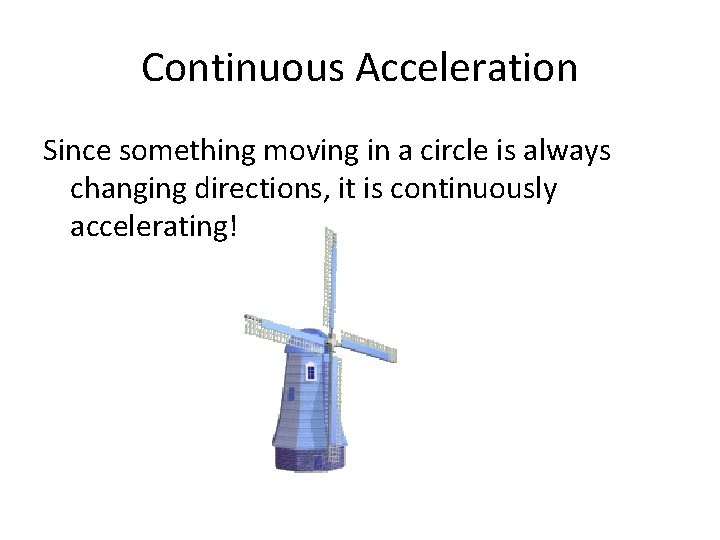
Continuous Acceleration Since something moving in a circle is always changing directions, it is continuously accelerating!