
Velocity Analysis CIP Tomography Organization CIP tomography method





- Slides: 58
Velocity Analysis: CIP Tomography
Organization • • • CIP tomography method Examples: no salt Salt strategy (layer stripping) Examples: salt Recent developments – pore pressure prediction & converted waves – simultaneous VSP tomography – anisotropy 2 DAPD: IS 1/26/2022
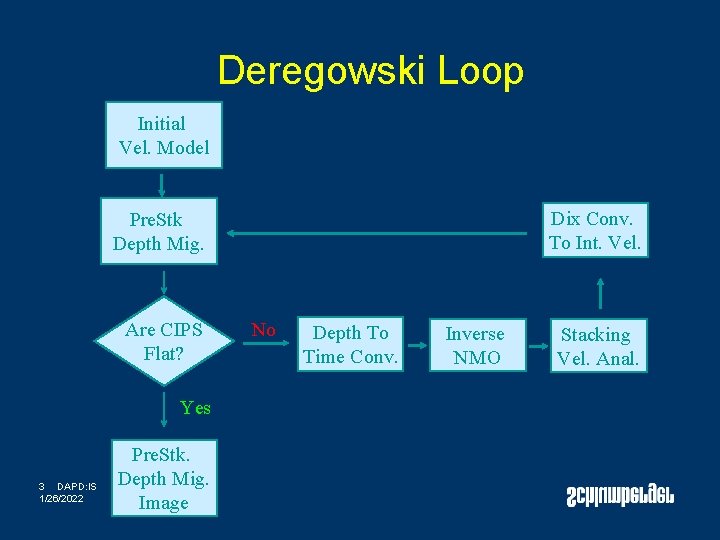
Deregowski Loop Initial Vel. Model Dix Conv. To Int. Vel. Pre. Stk Depth Mig. Are CIPS Flat? Yes 3 DAPD: IS 1/26/2022 Pre. Stk. Depth Mig. Image No Depth To Time Conv. Inverse NMO Stacking Vel. Anal.
CIP Tomography Initial Vel. Model Pre. Stk Depth Mig. Are CIPS Flat? Yes 4 DAPD: IS 1/26/2022 Pre. Stk. Depth Mig. Image No Auto. Pick Residual Moveout Solve For Updates To Int. Vel.
Pick CIP Gathers
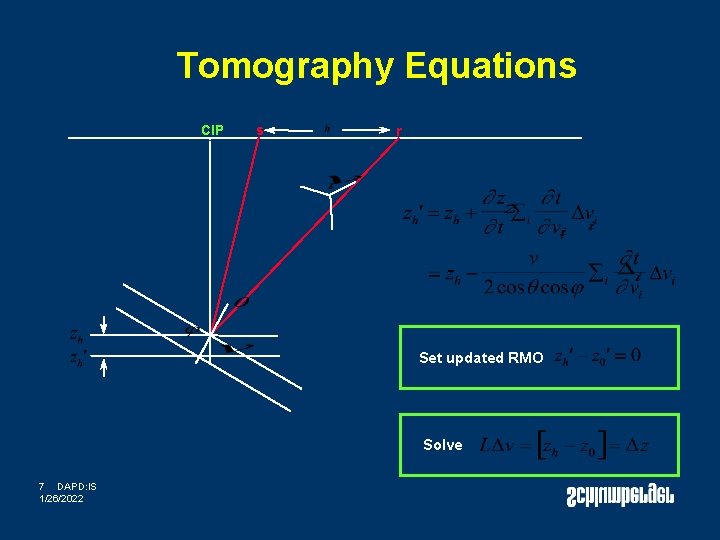
Tomography Equations • The tomography equations give the change in depth of an event on one offset as a function of changes in velocity, assuming fixed raypaths and traveltimes. 6 DAPD: IS 1/26/2022
Tomography Equations CIP s r Set updated RMO Solve 7 DAPD: IS 1/26/2022
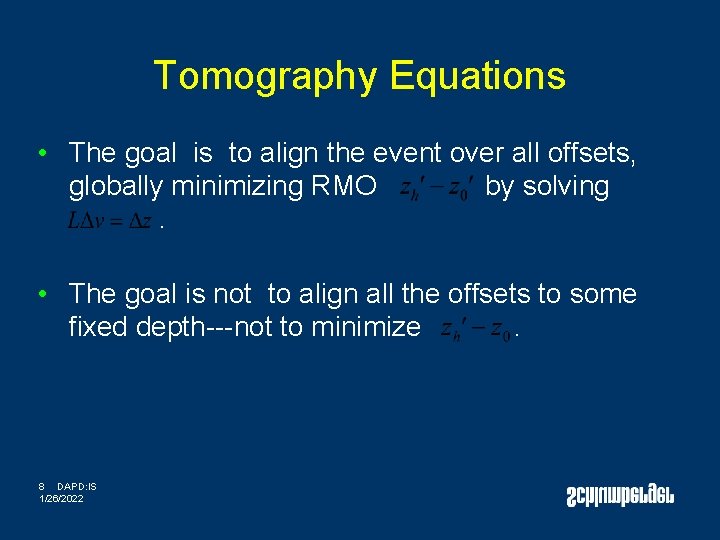
Tomography Equations • The goal is to align the event over all offsets, globally minimizing RMO by solving …. …. • The goal is not to align all the offsets to some fixed depth---not to minimize ………. 8 DAPD: IS 1/26/2022
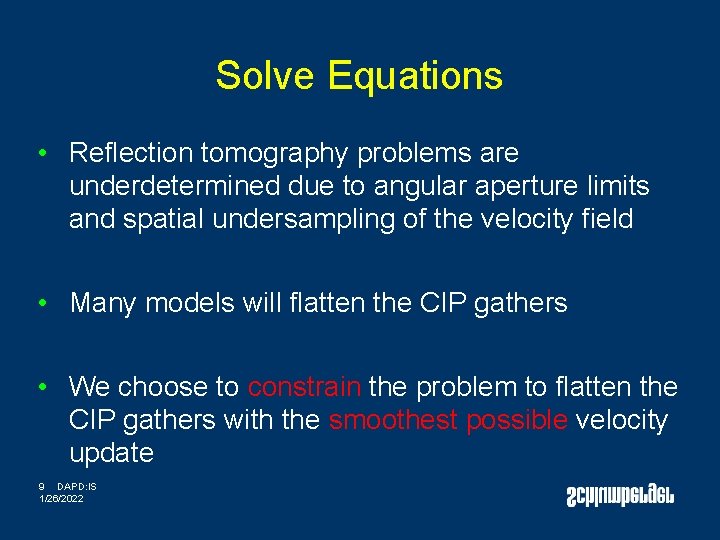
Solve Equations • Reflection tomography problems are underdetermined due to angular aperture limits and spatial undersampling of the velocity field • Many models will flatten the CIP gathers • We choose to constrain the problem to flatten the CIP gathers with the smoothest possible velocity update 9 DAPD: IS 1/26/2022
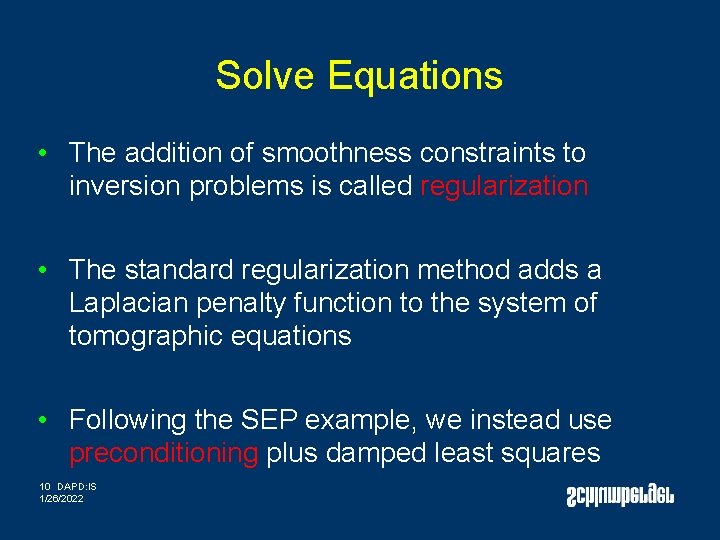
Solve Equations • The addition of smoothness constraints to inversion problems is called regularization • The standard regularization method adds a Laplacian penalty function to the system of tomographic equations • Following the SEP example, we instead use preconditioning plus damped least squares 10 DAPD: IS 1/26/2022
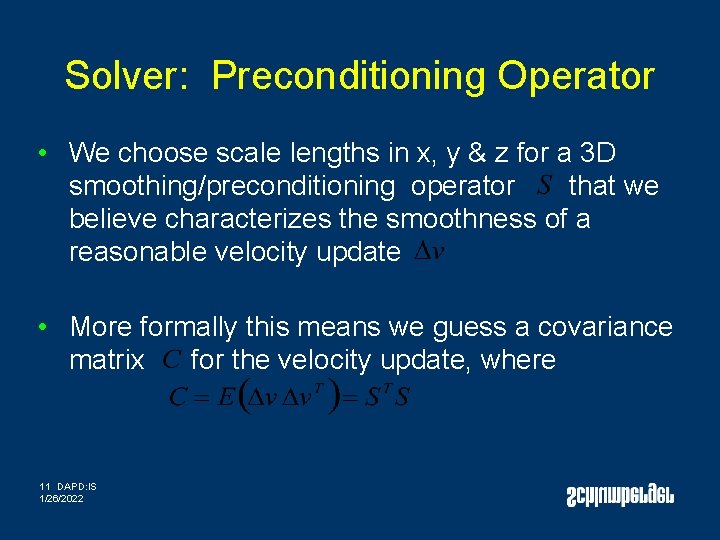
Solver: Preconditioning Operator • We choose scale lengths in x, y & z for a 3 D smoothing/preconditioning operator that we believe characterizes the smoothness of a reasonable velocity update • More formally this means we guess a covariance matrix for the velocity update, where 11 DAPD: IS 1/26/2022
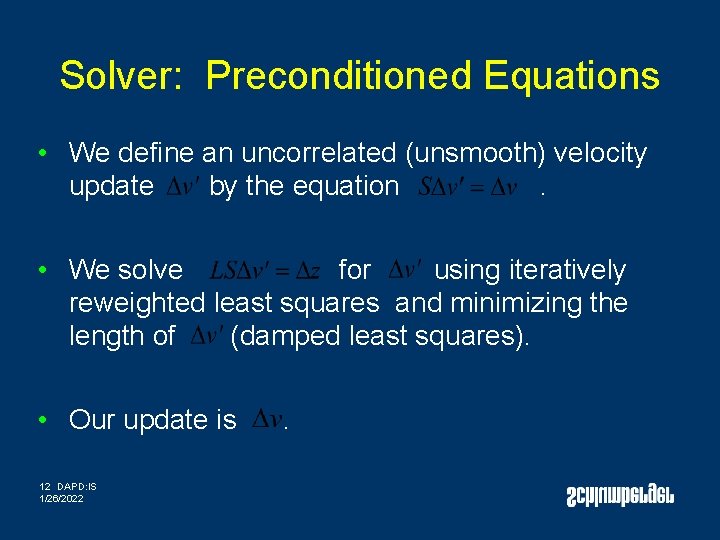
Solver: Preconditioned Equations • We define an uncorrelated (unsmooth) velocity update by the equation. • We solve for using iteratively reweighted least squares and minimizing the length of (damped least squares). • Our update is 12 DAPD: IS 1/26/2022 .
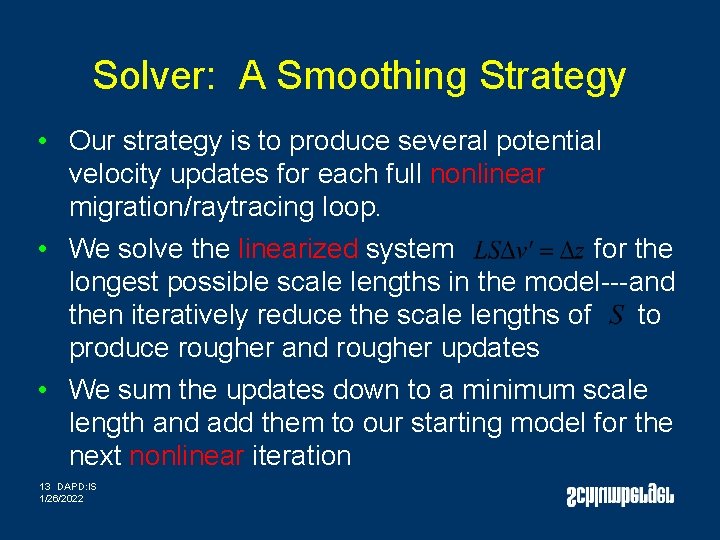
Solver: A Smoothing Strategy • Our strategy is to produce several potential velocity updates for each full nonlinear migration/raytracing loop. • We solve the linearized system for the longest possible scale lengths in the model---and then iteratively reduce the scale lengths of to produce rougher and rougher updates • We sum the updates down to a minimum scale length and add them to our starting model for the next nonlinear iteration 13 DAPD: IS 1/26/2022
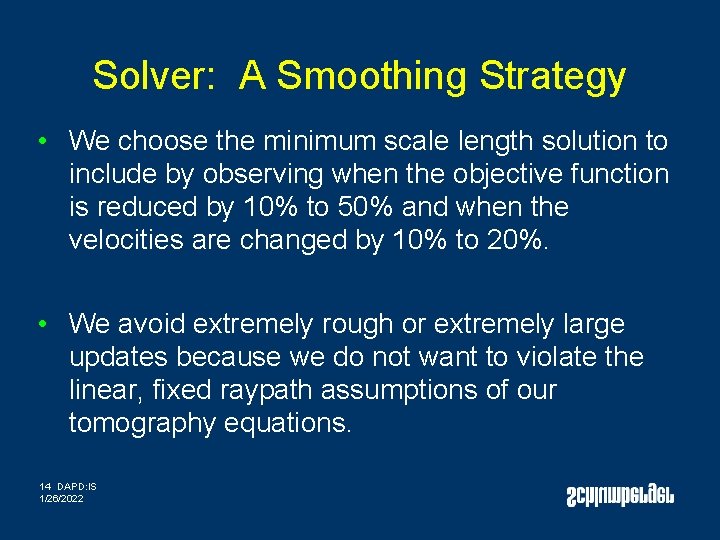
Solver: A Smoothing Strategy • We choose the minimum scale length solution to include by observing when the objective function is reduced by 10% to 50% and when the velocities are changed by 10% to 20%. • We avoid extremely rough or extremely large updates because we do not want to violate the linear, fixed raypath assumptions of our tomography equations. 14 DAPD: IS 1/26/2022
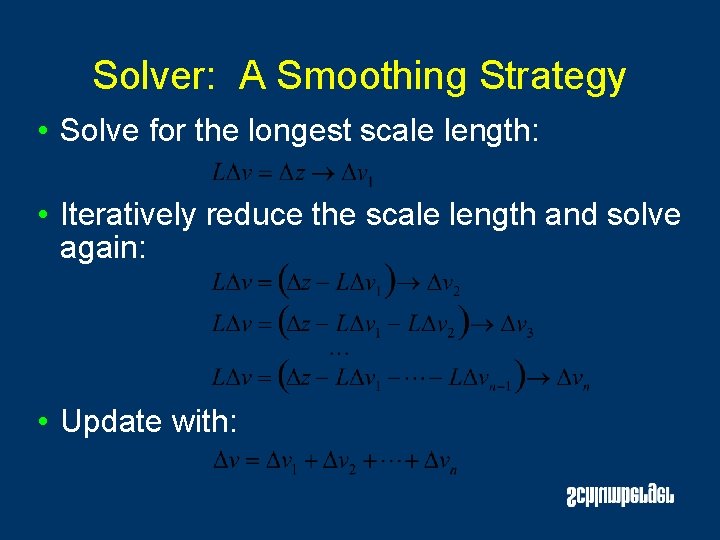
Solver: A Smoothing Strategy • Solve for the longest scale length: • Iteratively reduce the scale length and solve again: • Update with:
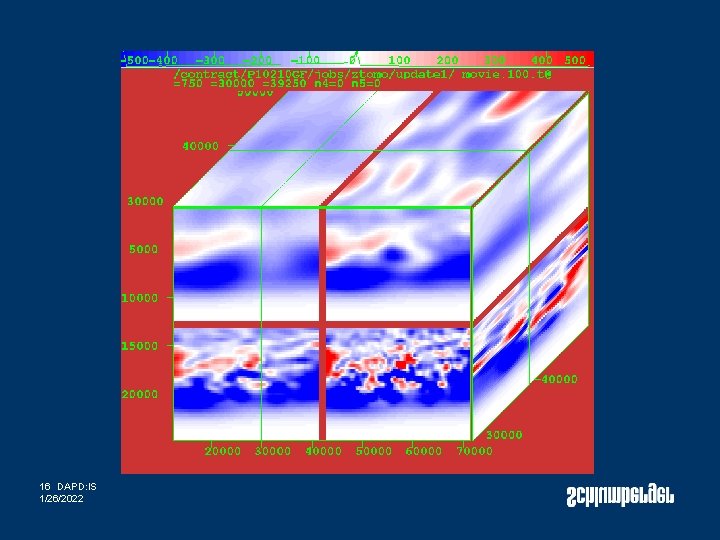
16 DAPD: IS 1/26/2022
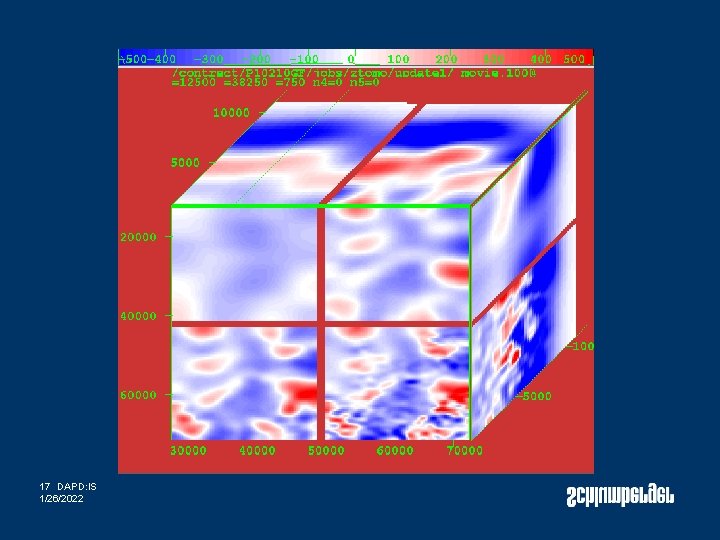
17 DAPD: IS 1/26/2022
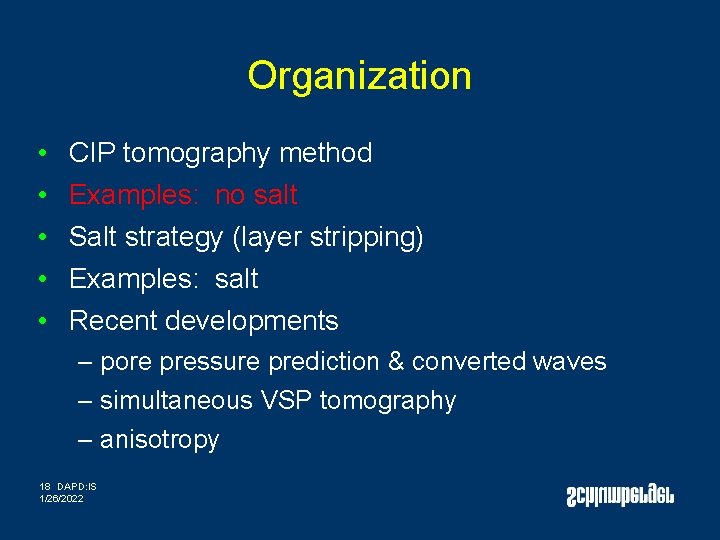
Organization • • • CIP tomography method Examples: no salt Salt strategy (layer stripping) Examples: salt Recent developments – pore pressure prediction & converted waves – simultaneous VSP tomography – anisotropy 18 DAPD: IS 1/26/2022
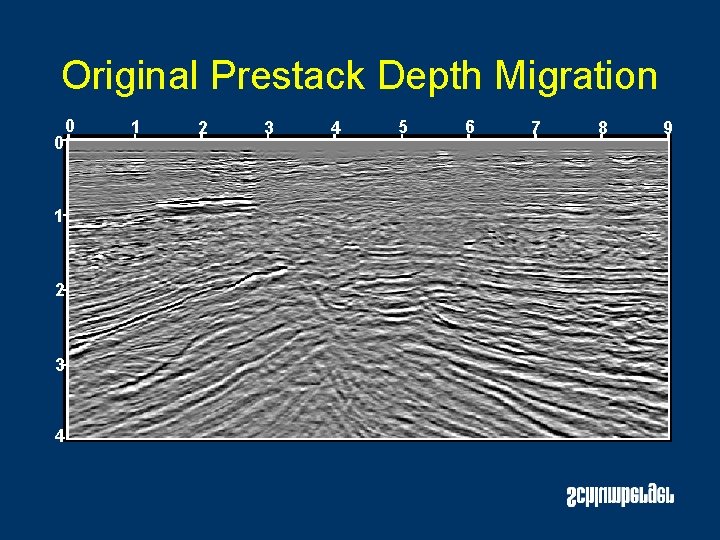
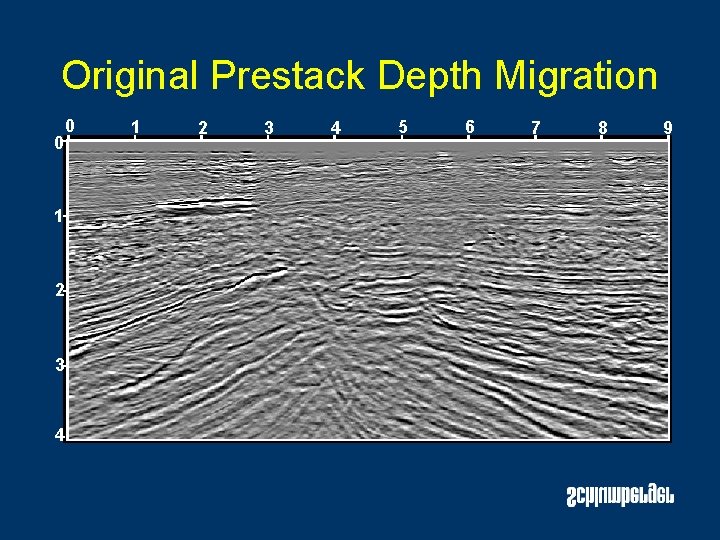
Original Prestack Depth Migration 0 1 2 3 4 5 6 7 8 9
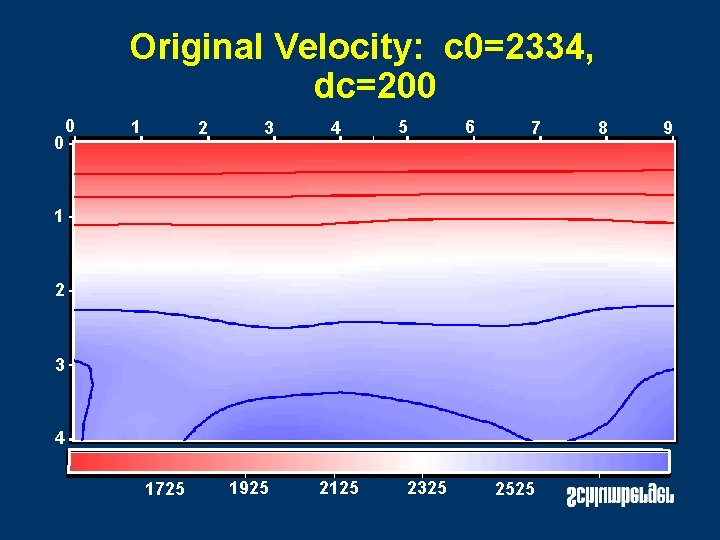
Original Velocity: c 0=2334, dc=200 0 0 1 2 3 4 5 6 7 1 2 3 4 1725 1925 2125 2325 2525 8 9
1 st Velocity Update: Dx=4 km, Dz=1 km 0 0 1 2 3 4 5 6 7 1 2 3 4 -117 -77 -37 3 8 9
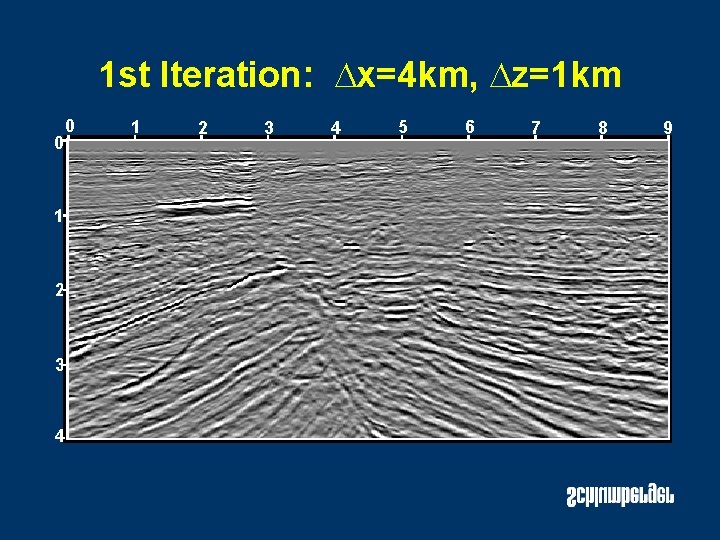
1 st Iteration: Dx=4 km, Dz=1 km 0 0 1 2 3 4 5 6 7 8 9
Original Prestack Depth Migration 0 1 2 3 4 5 6 7 8 9
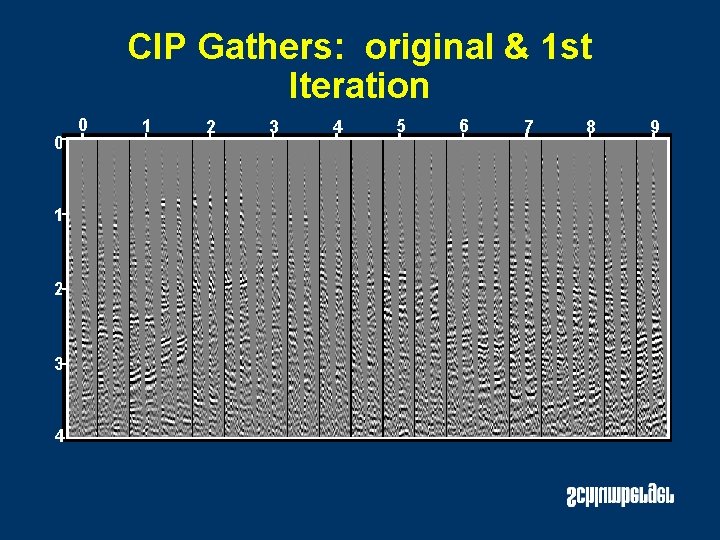
CIP Gathers: original & 1 st Iteration 0 1 2 3 4 5 6 7 8 9
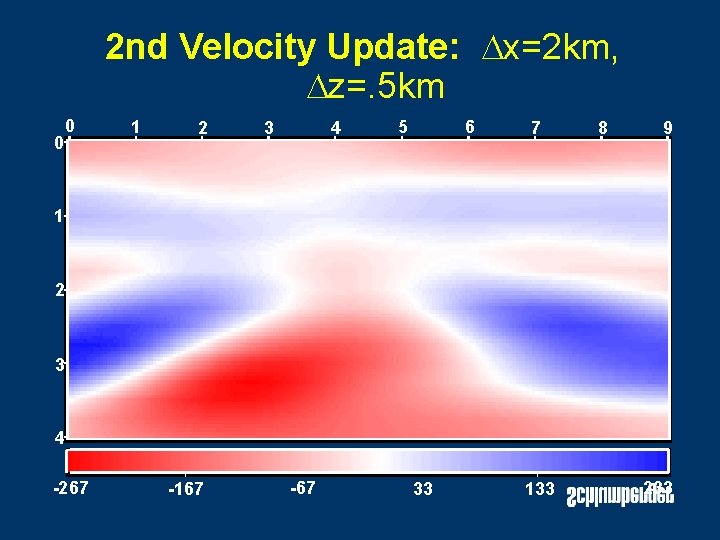
2 nd Velocity Update: Dx=2 km, Dz=. 5 km 0 0 1 2 3 4 5 6 7 8 9 1 2 3 4 -267 -167 -67 33 133 233
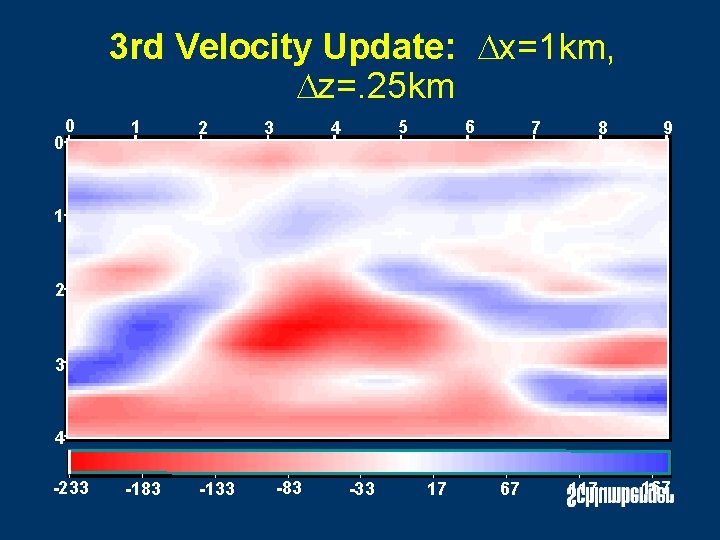
3 rd Velocity Update: Dx=1 km, Dz=. 25 km 0 0 1 2 3 5 4 6 7 8 9 1 2 3 4 -233 -183 -133 -83 -33 17 67 117 167
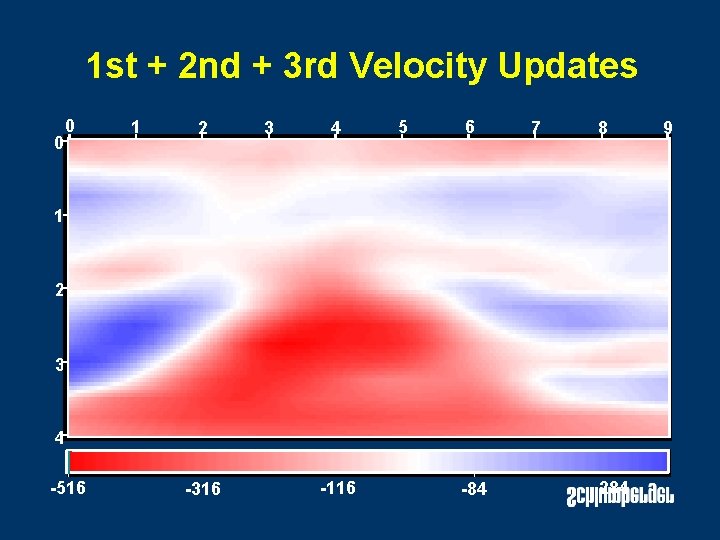
1 st + 2 nd + 3 rd Velocity Updates 0 0 1 2 3 4 5 6 7 8 1 2 3 4 -516 -316 -116 -84 284 9
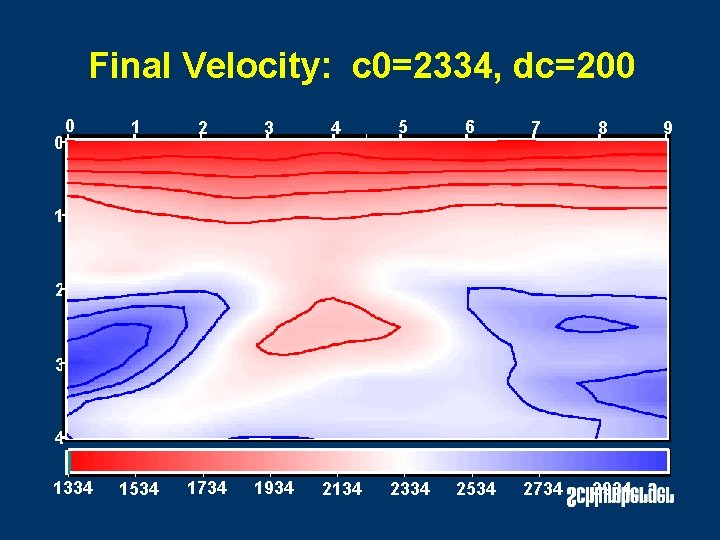
Final Velocity: c 0=2334, dc=200 0 1 2 3 1334 1534 1734 1934 0 4 5 6 7 8 1 2 3 4 2134 2334 2534 2734 2934 9
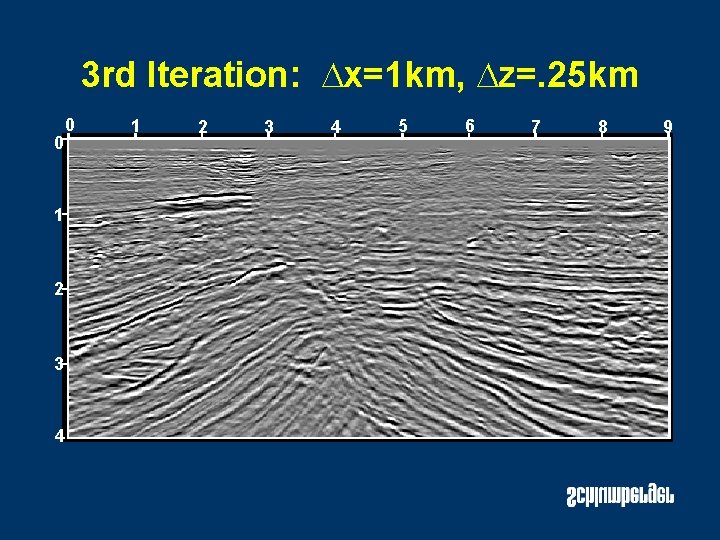
3 rd Iteration: Dx=1 km, Dz=. 25 km 0 0 1 2 3 4 5 6 7 8 9
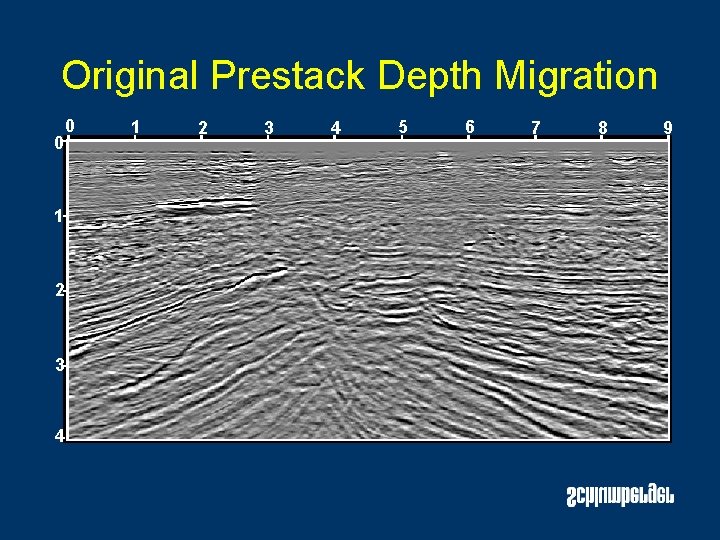
Original Prestack Depth Migration 0 0 1 2 3 4 5 6 7 8 9
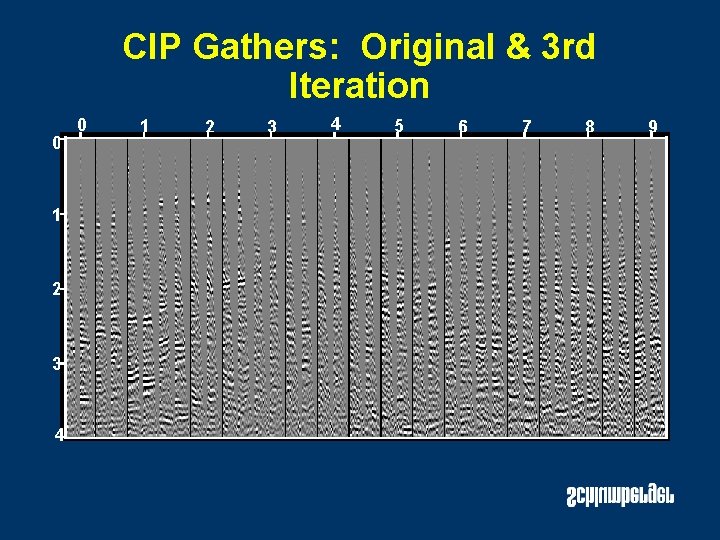
CIP Gathers: Original & 3 rd Iteration 0 1 2 3 4 5 6 7 8 9
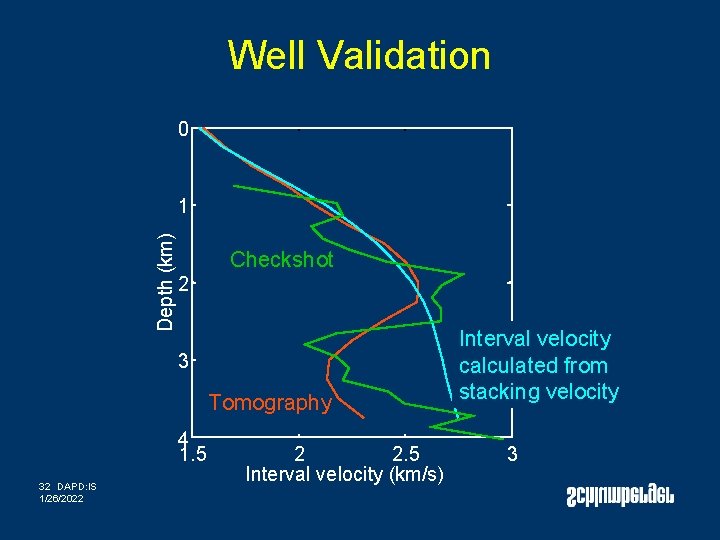
Well Validation 0 Depth (km) 1 Checkshot 2 3 Tomography 4 1. 5 32 DAPD: IS 1/26/2022 2 2. 5 Interval velocity (km/s) Interval velocity calculated from stacking velocity 3
Organization • • • CIP tomography method Examples: no salt Salt strategy (layer stripping) Examples: salt Recent developments – pore pressure prediction & converted waves – simultaneous VSP tomography – anisotropy 33 DAPD: IS 1/26/2022
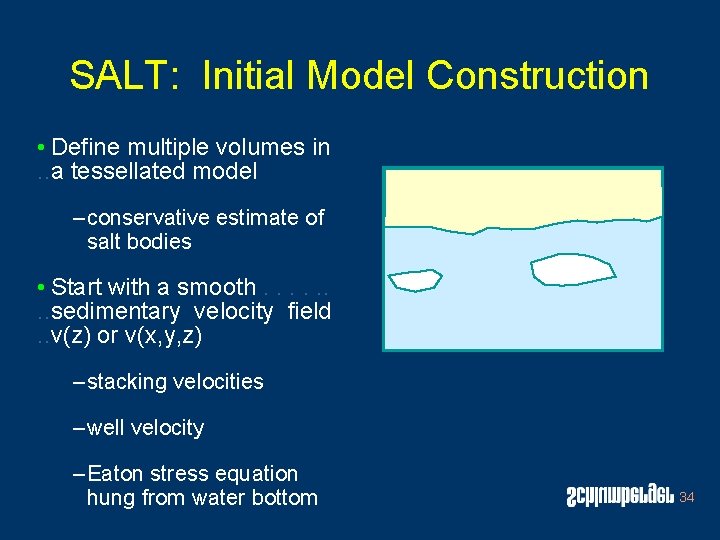
SALT: Initial Model Construction • Define multiple volumes in. . a tessellated model – conservative estimate of salt bodies • Start with a smooth. . . . sedimentary velocity field. . v(z) or v(x, y, z) – stacking velocities – well velocity – Eaton stress equation hung from water bottom 34
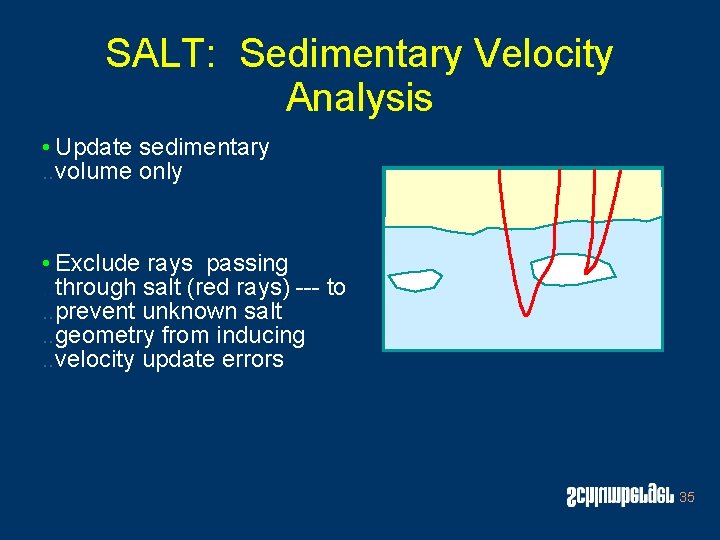
SALT: Sedimentary Velocity Analysis • Update sedimentary. . volume only • Exclude rays passing. . through salt (red rays) --- to. . prevent unknown salt. . geometry from. inducing. . velocity update errors 35
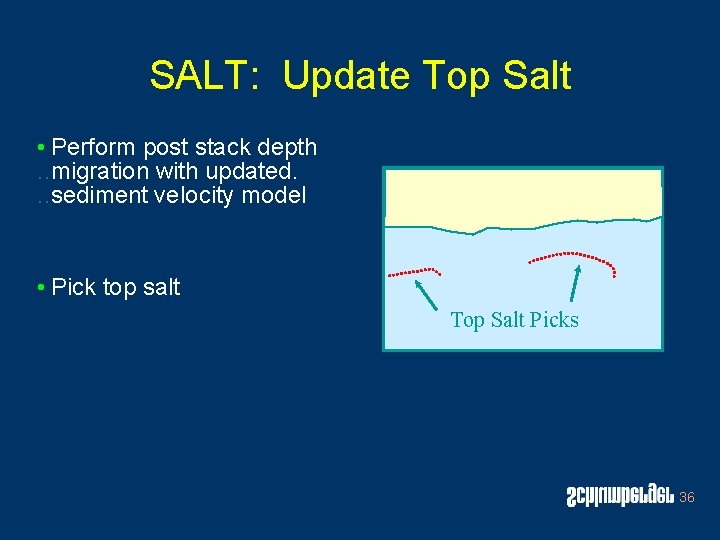
SALT: Update Top Salt • Perform post stack depth. . migration with updated. . . sediment velocity model • Pick top salt Top Salt Picks 36
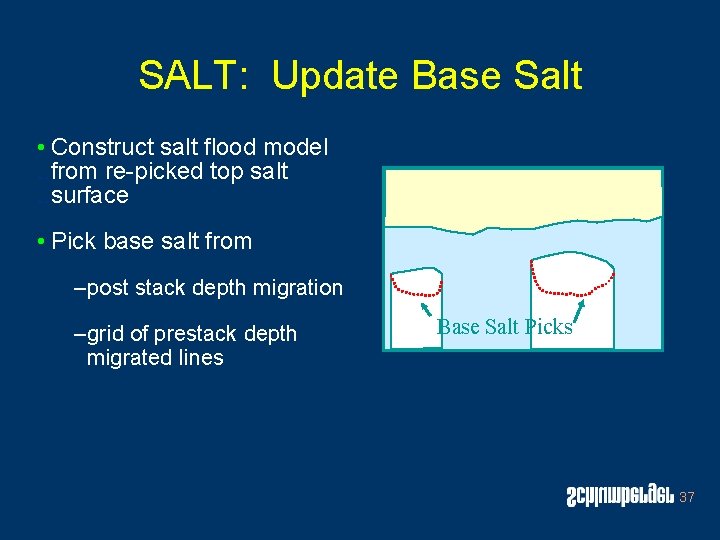
SALT: Update Base Salt • Construct salt flood model. . from re-picked top salt. . surface • Pick base salt from – post stack depth migration – grid of prestack depth migrated lines Base Salt Picks 37
SALT: Subsalt Velocities • Build new tessellated. . model with accurate salt. . volumes • Update sedimentary. . velocity, including rays that. . pass through salt (orange. . rays). – perhaps freeze suprasalt – pick updates that are very smooth • Model building stops 38
Organization • • • CIP tomography method Examples: no salt Salt strategy (layer stripping) Examples: salt Recent developments – pore pressure prediction & converted waves – simultaneous VSP tomography – anisotropy 39 DAPD: IS 1/26/2022
Gulf 2: Alaminos Canyon A 6 40 DAPD: IS 1/26/2022
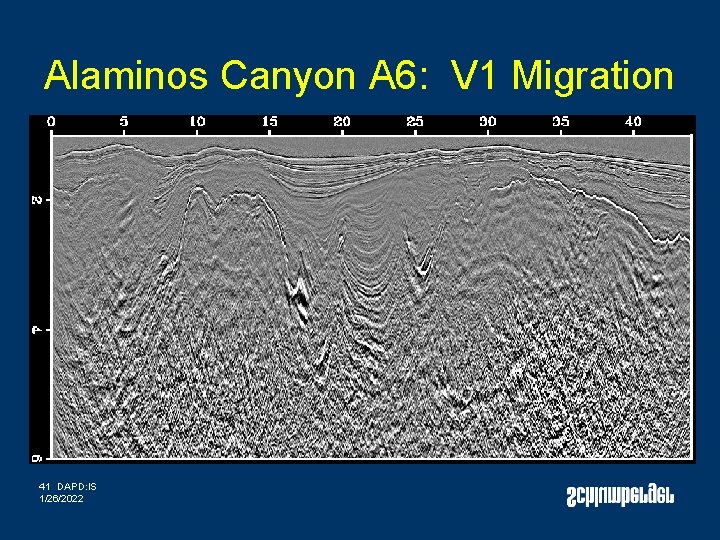
Alaminos Canyon A 6: V 1 Migration 41 DAPD: IS 1/26/2022
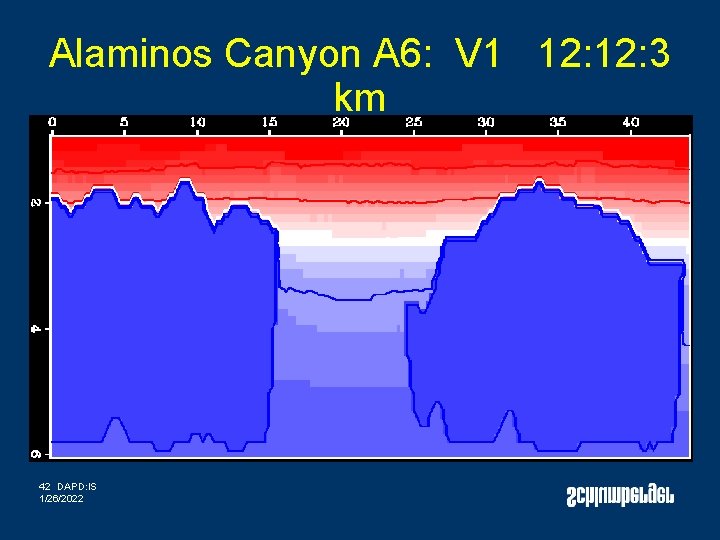
Alaminos Canyon A 6: V 1 12: 3 km 42 DAPD: IS 1/26/2022
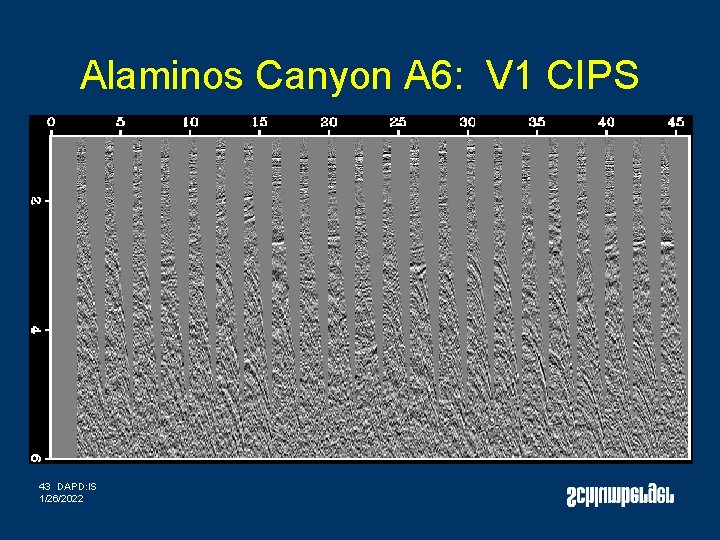
Alaminos Canyon A 6: V 1 CIPS 43 DAPD: IS 1/26/2022
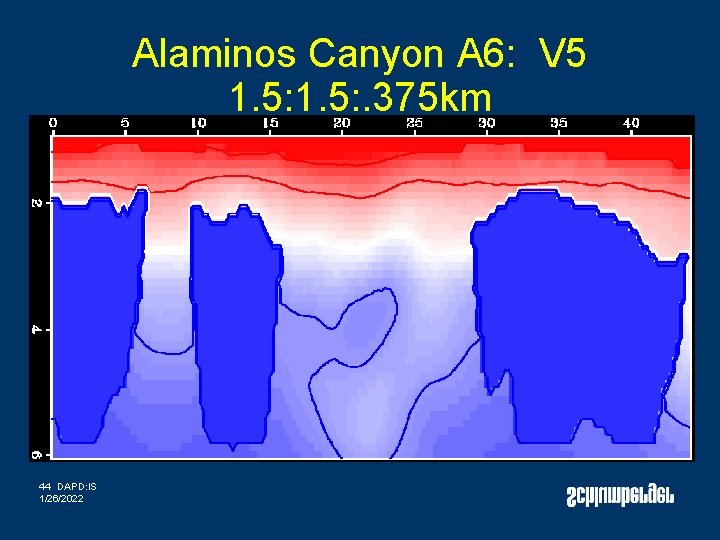
Alaminos Canyon A 6: V 5 1. 5: . 375 km 44 DAPD: IS 1/26/2022
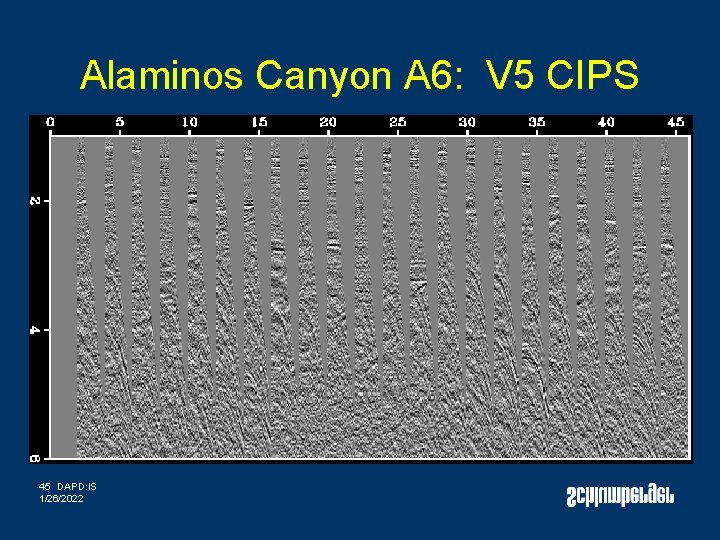
Alaminos Canyon A 6: V 5 CIPS 45 DAPD: IS 1/26/2022
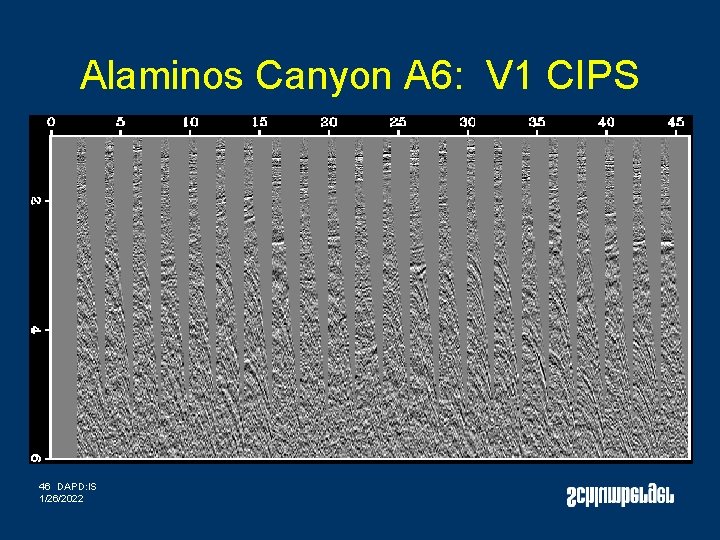
Alaminos Canyon A 6: V 1 CIPS 46 DAPD: IS 1/26/2022
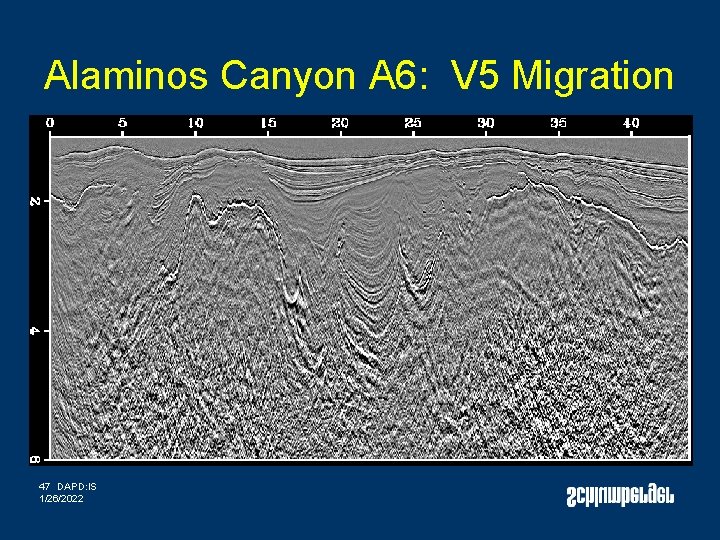
Alaminos Canyon A 6: V 5 Migration 47 DAPD: IS 1/26/2022
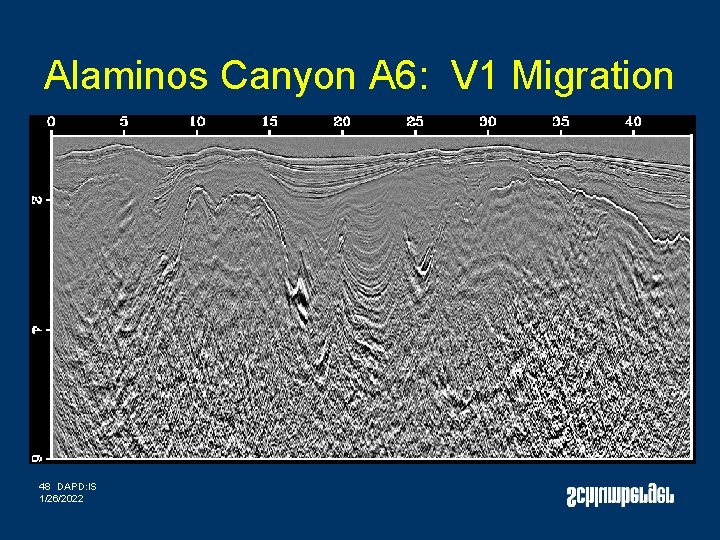
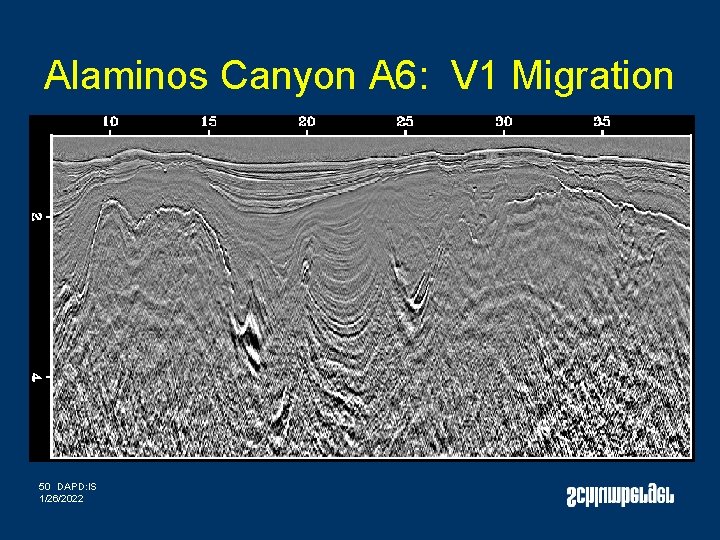
Alaminos Canyon A 6: V 1 Migration 48 DAPD: IS 1/26/2022
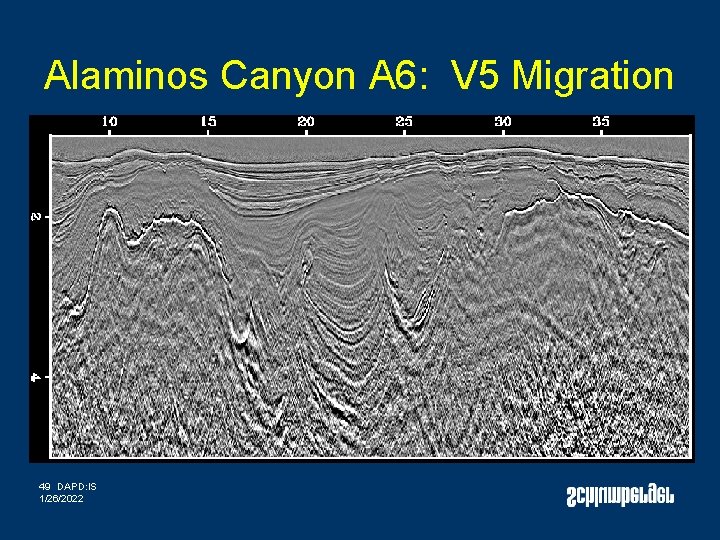
Alaminos Canyon A 6: V 5 Migration 49 DAPD: IS 1/26/2022
Alaminos Canyon A 6: V 1 Migration 50 DAPD: IS 1/26/2022
Gulf 3 51 DAPD: IS 1/26/2022
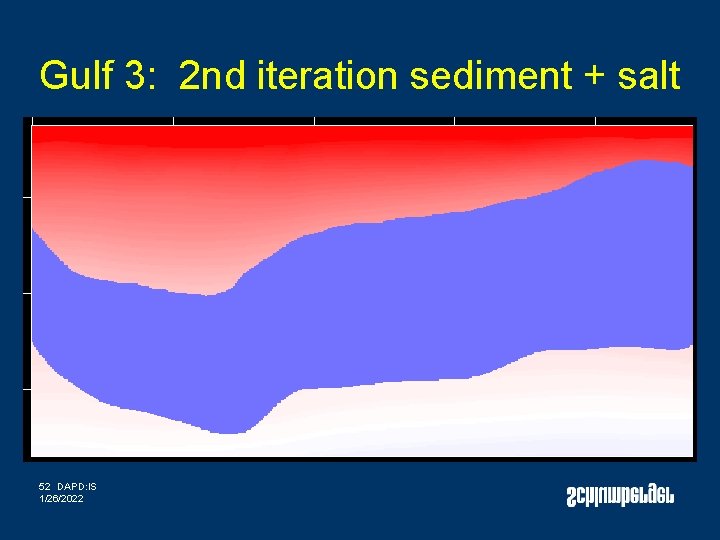
Gulf 3: 2 nd iteration sediment + salt 52 DAPD: IS 1/26/2022
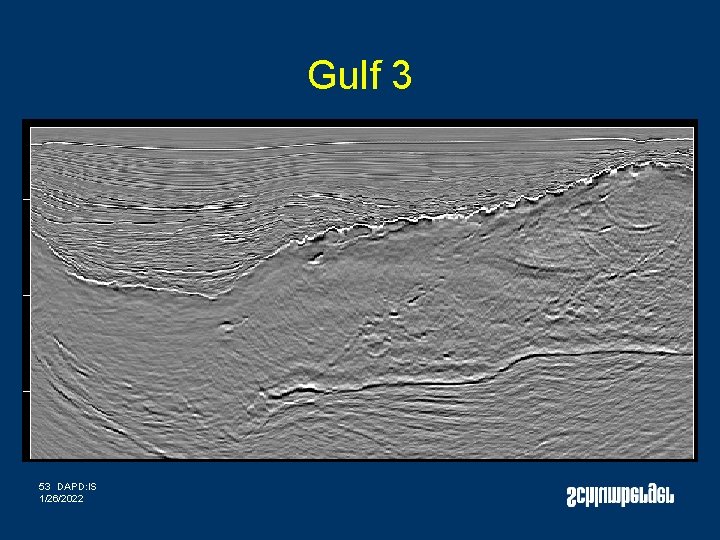
Gulf 3 53 DAPD: IS 1/26/2022
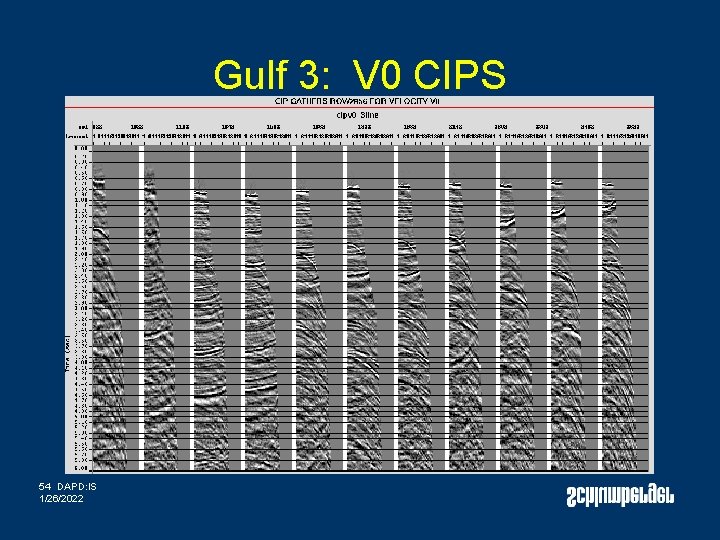
Gulf 3: V 0 CIPS 54 DAPD: IS 1/26/2022
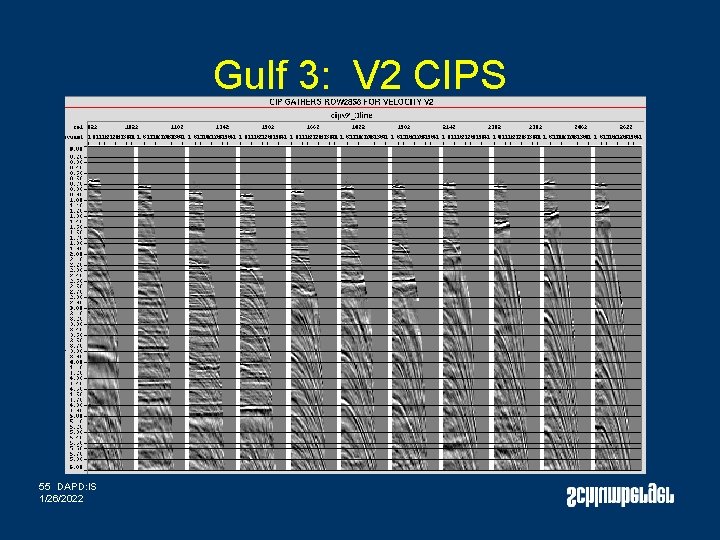
Gulf 3: V 2 CIPS 55 DAPD: IS 1/26/2022
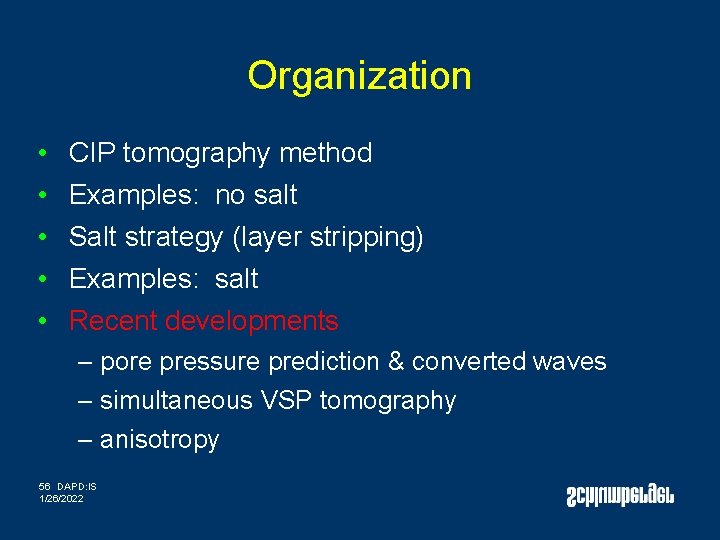
Organization • • • CIP tomography method Examples: no salt Salt strategy (layer stripping) Examples: salt Recent developments – pore pressure prediction & converted waves – simultaneous VSP tomography – anisotropy 56 DAPD: IS 1/26/2022
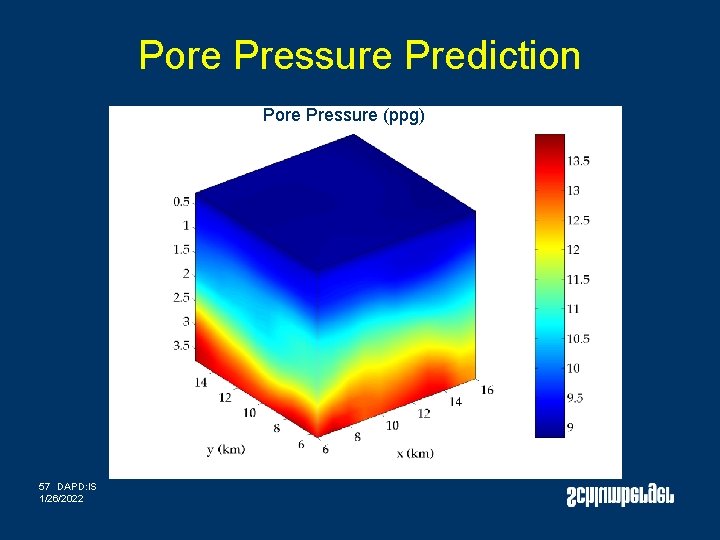
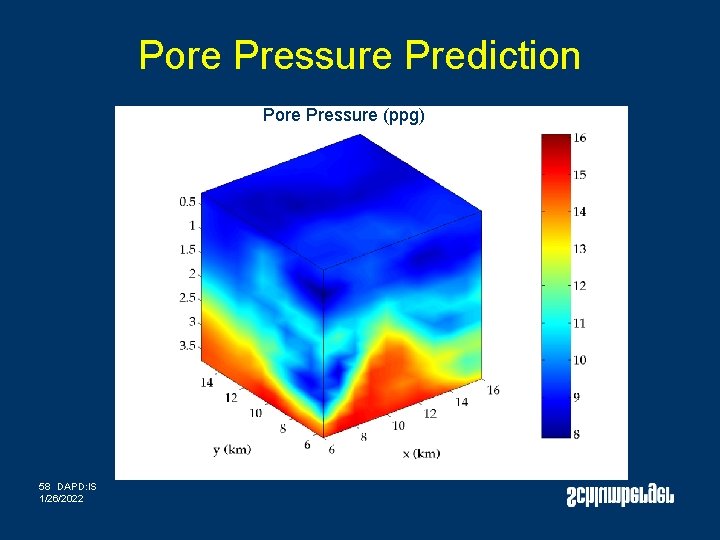
Pore Pressure Prediction Pore Pressure (ppg) 57 DAPD: IS 1/26/2022
Pore Pressure Prediction Pore Pressure (ppg) 58 DAPD: IS 1/26/2022