
Vegetative Propagation Cuttings an overview Hardwood Cuttings Deciduous
- Slides: 30
Vegetative Propagation - Cuttings (an overview) • • Hardwood Cuttings (Deciduous) Hardwood Cuttings (Evergreen) Semi-Hardwood Cuttings Softwood Cuttings Herbaceous Cuttings Leaf-Bud Cuttings Root Cuttings
The Basic Types of Cuttings • Stem Cuttings Hardwood Deciduous Narrow-leaved evergreen Semi-Hardwood Softwood Herbaceous • Leaf Cuttings • Leaf bud Cuttings • Root Cuttings
Advantages of Propagating by Cuttings • The clonal reproduction of desired varieties can offset higher cost of greenhouse space. • Can reproduce many from a few stock plants in limited space • It is a rapid and simple process compared to other non-seedling propagation methods • Doesn’t require specialized techniques like grafting or tissue culture
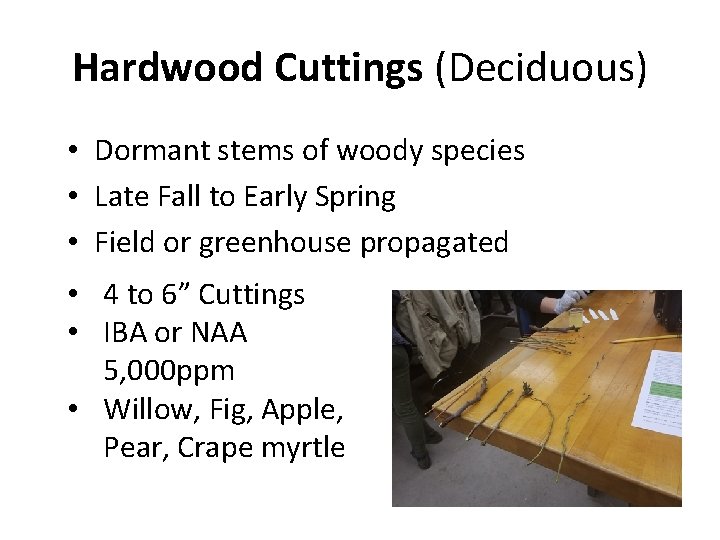
Hardwood Cuttings (Deciduous) • Dormant stems of woody species • Late Fall to Early Spring • Field or greenhouse propagated • 4 to 6” Cuttings • IBA or NAA 5, 000 ppm • Willow, Fig, Apple, Pear, Crape myrtle
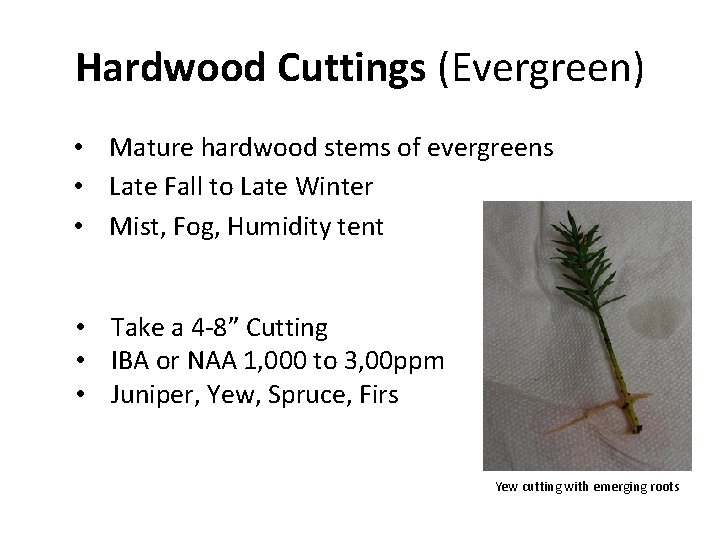
Hardwood Cuttings (Evergreen) • Mature hardwood stems of evergreens • Late Fall to Late Winter • Mist, Fog, Humidity tent • Take a 4 -8” Cutting • IBA or NAA 1, 000 to 3, 00 ppm • Juniper, Yew, Spruce, Firs Yew cutting with emerging roots
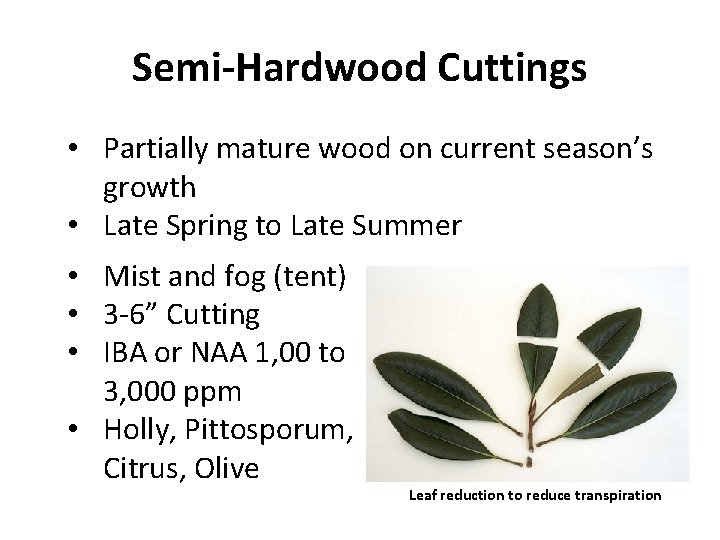
Semi-Hardwood Cuttings • Partially mature wood on current season’s growth • Late Spring to Late Summer • Mist and fog (tent) • 3 -6” Cutting • IBA or NAA 1, 00 to 3, 000 ppm • Holly, Pittosporum, Citrus, Olive Leaf reduction to reduce transpiration
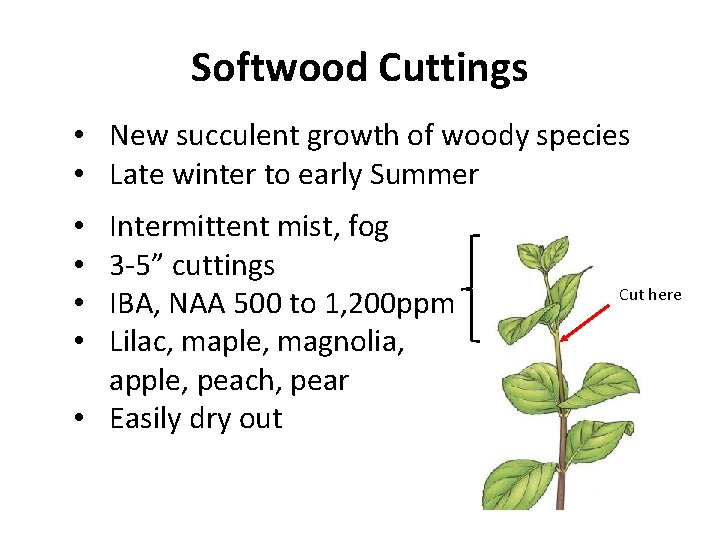
Softwood Cuttings • New succulent growth of woody species • Late winter to early Summer Intermittent mist, fog 3 -5” cuttings IBA, NAA 500 to 1, 200 ppm Lilac, maple, magnolia, apple, peach, pear • Easily dry out • • Cut here
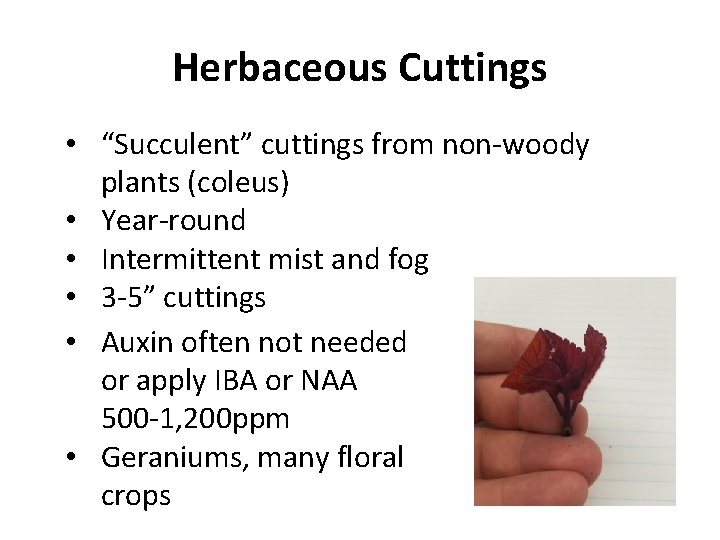
Herbaceous Cuttings • “Succulent” cuttings from non-woody plants (coleus) • Year-round • Intermittent mist and fog • 3 -5” cuttings • Auxin often not needed or apply IBA or NAA 500 -1, 200 ppm • Geraniums, many floral crops
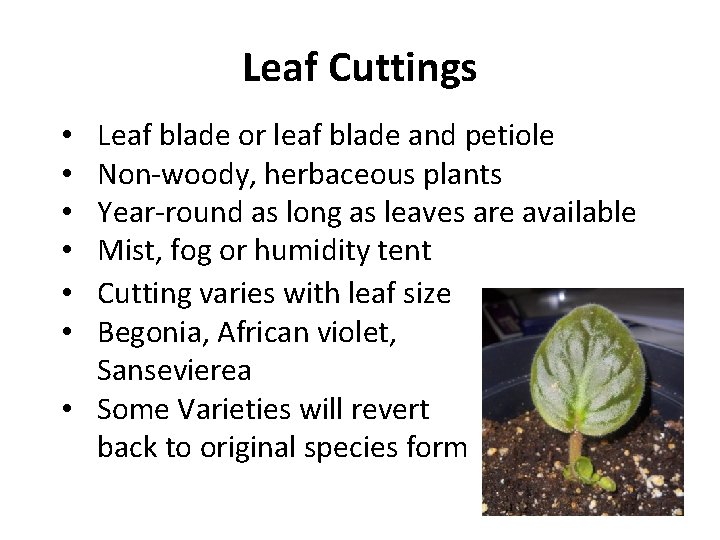
Leaf Cuttings Leaf blade or leaf blade and petiole Non-woody, herbaceous plants Year-round as long as leaves are available Mist, fog or humidity tent Cutting varies with leaf size Begonia, African violet, Sansevierea • Some Varieties will revert back to original species form • • •
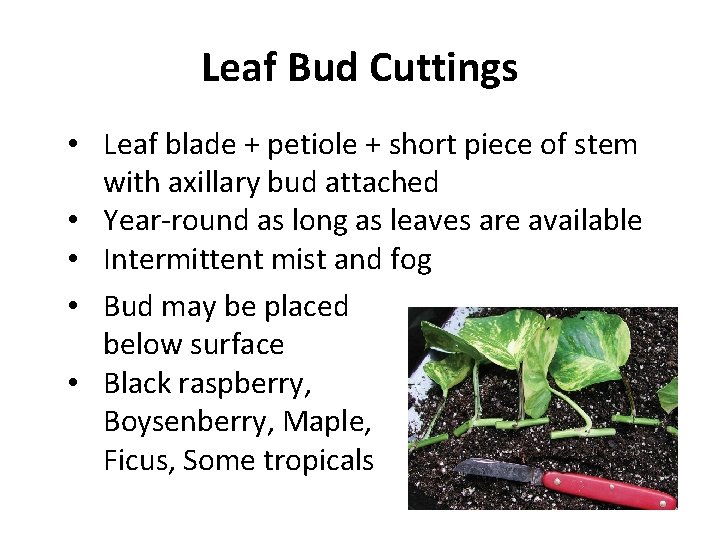
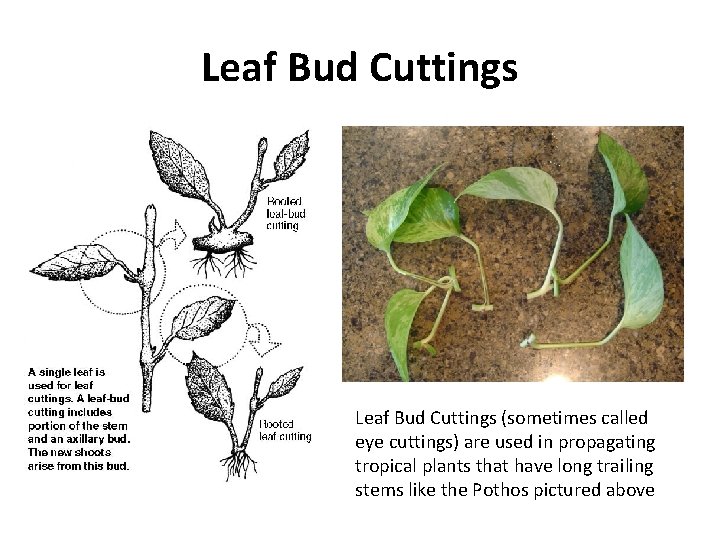
Leaf Bud Cuttings • Leaf blade + petiole + short piece of stem with axillary bud attached • Year-round as long as leaves are available • Intermittent mist and fog • Bud may be placed below surface • Black raspberry, Boysenberry, Maple, Ficus, Some tropicals
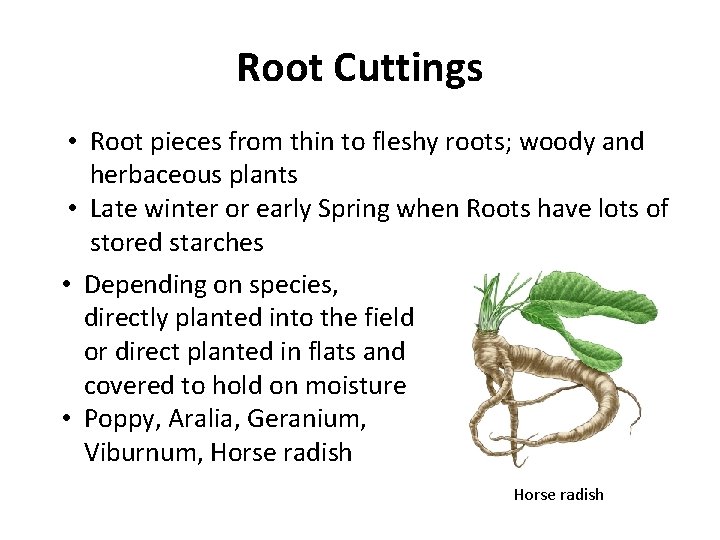
Root Cuttings • Root pieces from thin to fleshy roots; woody and herbaceous plants • Late winter or early Spring when Roots have lots of stored starches • Depending on species, directly planted into the field or direct planted in flats and covered to hold on moisture • Poppy, Aralia, Geranium, Viburnum, Horse radish
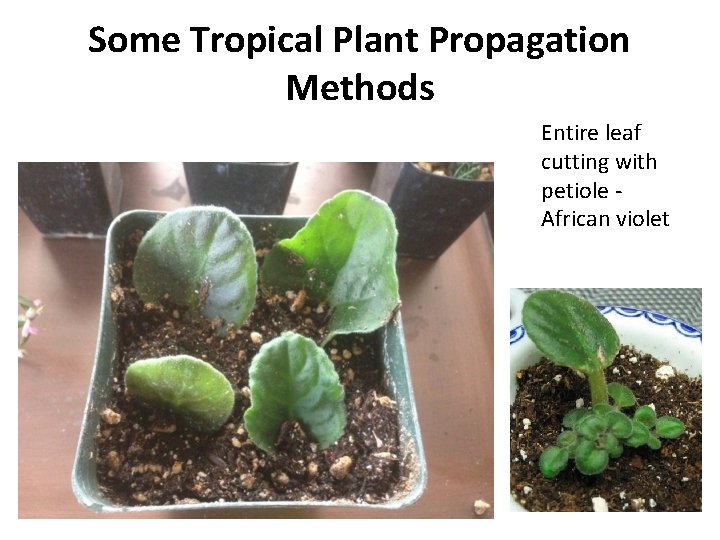
Some Tropical Plant Propagation Methods Entire leaf cutting with petiole African violet
Some Types of Tropical Plant Cuttings • • • Entire leaf Leaf Cuttings (entire leaf with petiole) Partial leaf cuttings (Leaf vein cuttings) Split vein cuttings Leaf Bud cuttings Tip Cuttings
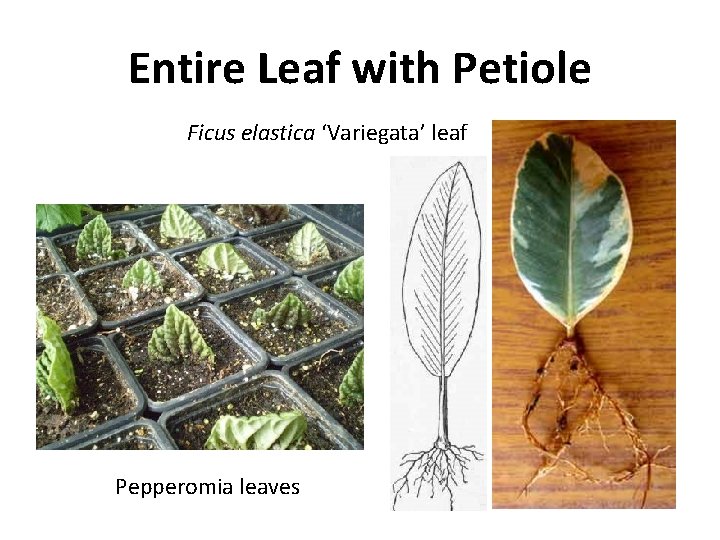
Entire Leaf with Petiole Ficus elastica ‘Variegata’ leaf Pepperomia leaves
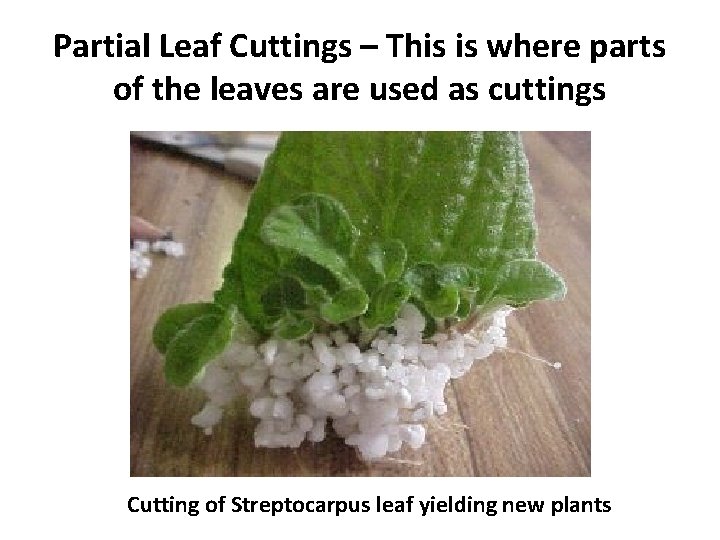
Partial Leaf Cuttings – This is where parts of the leaves are used as cuttings Cutting of Streptocarpus leaf yielding new plants
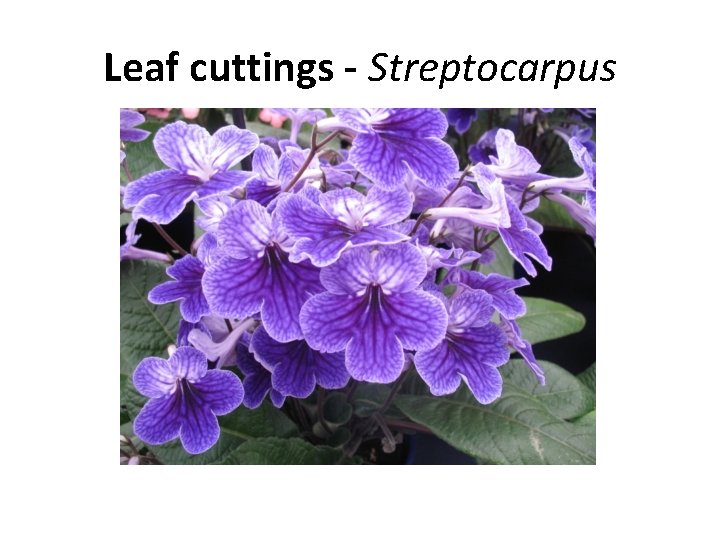
Leaf cuttings - Streptocarpus
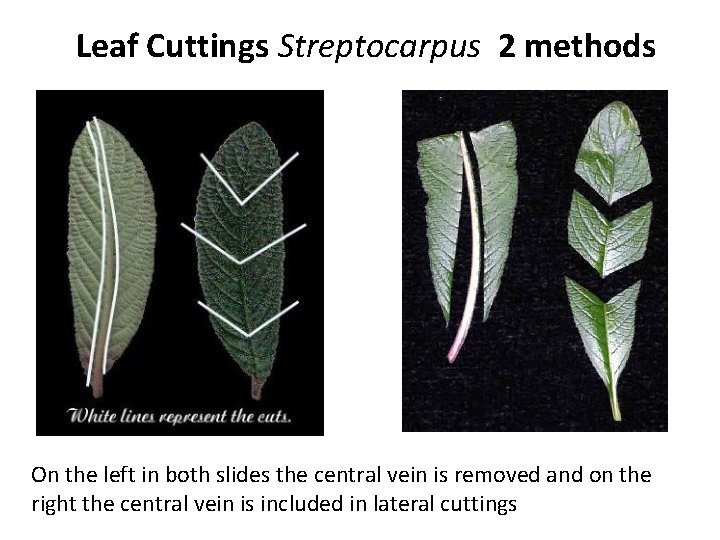
Leaf Cuttings Streptocarpus 2 methods On the left in both slides the central vein is removed and on the right the central vein is included in lateral cuttings
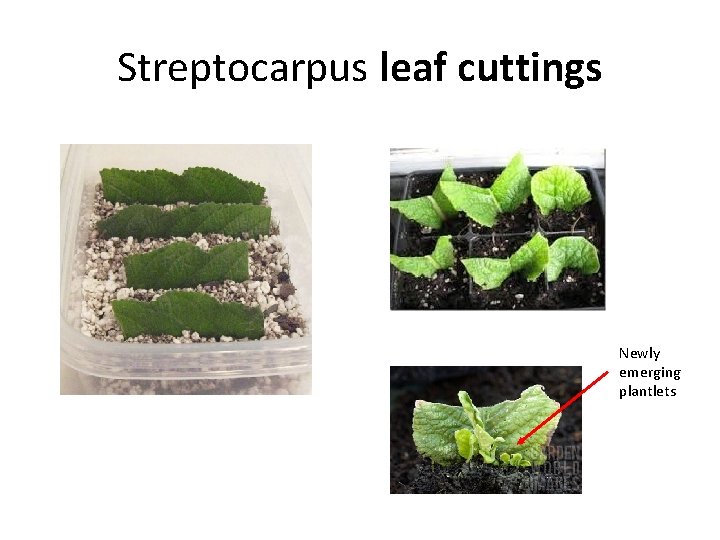
Streptocarpus leaf cuttings Newly emerging plantlets
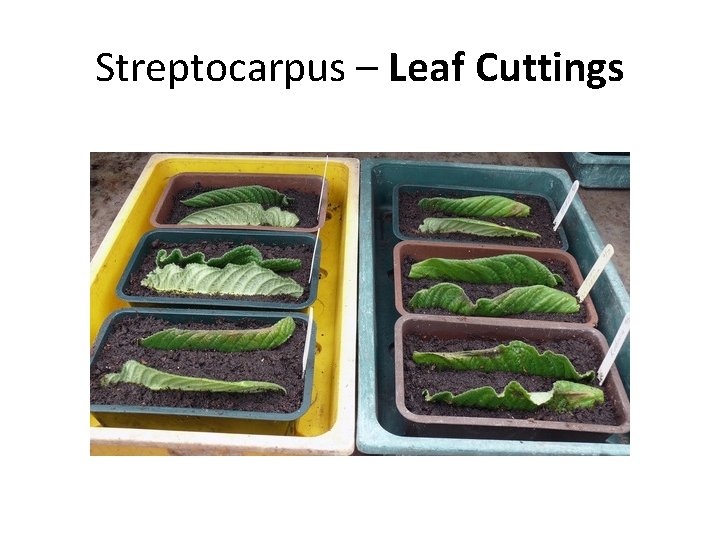
Streptocarpus – Leaf Cuttings
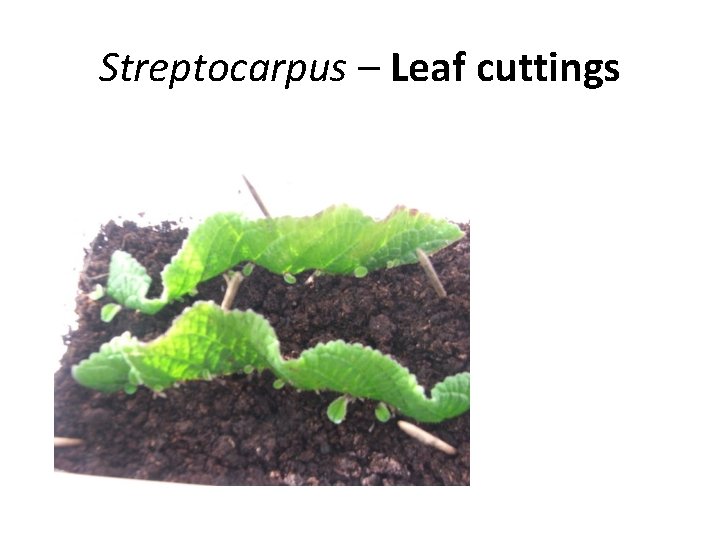
Streptocarpus – Leaf cuttings
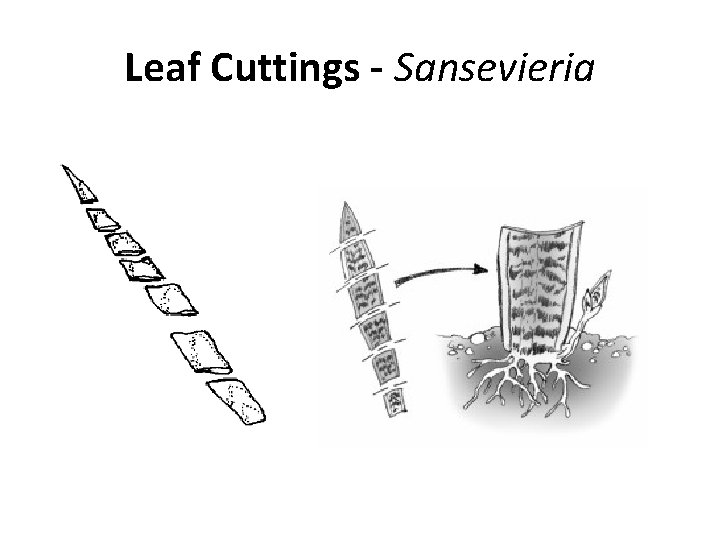
Leaf Cuttings - Sansevieria
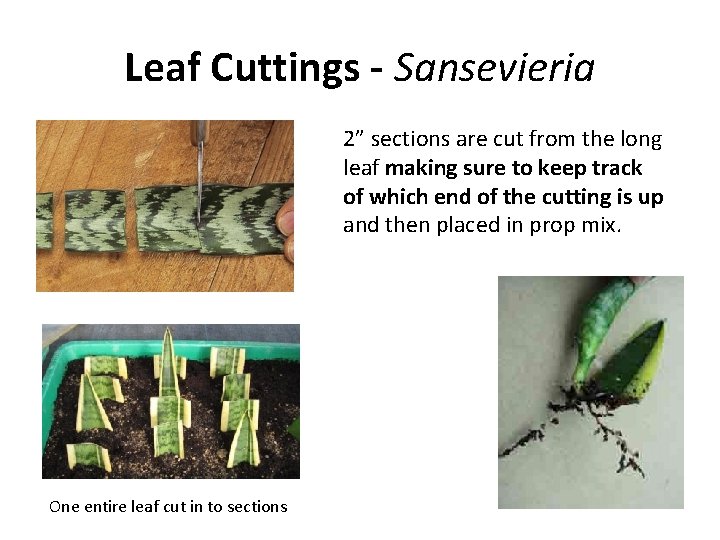
Leaf Cuttings - Sansevieria 2” sections are cut from the long leaf making sure to keep track of which end of the cutting is up and then placed in prop mix. One entire leaf cut in to sections
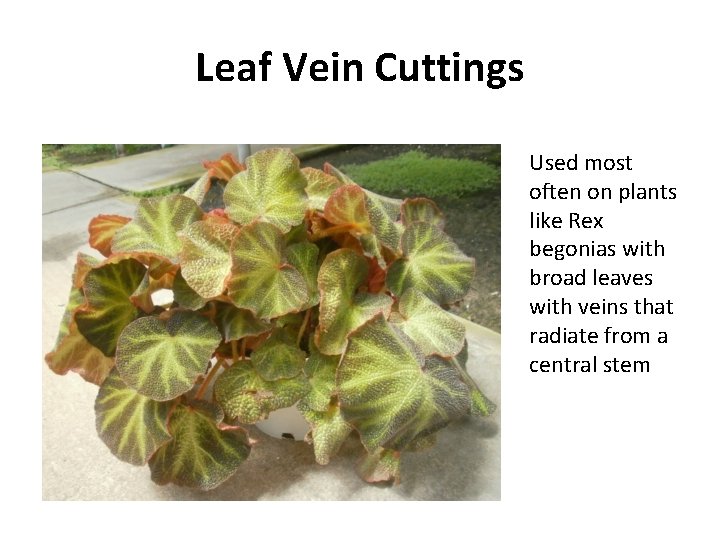
Leaf Vein Cuttings Used most often on plants like Rex begonias with broad leaves with veins that radiate from a central stem
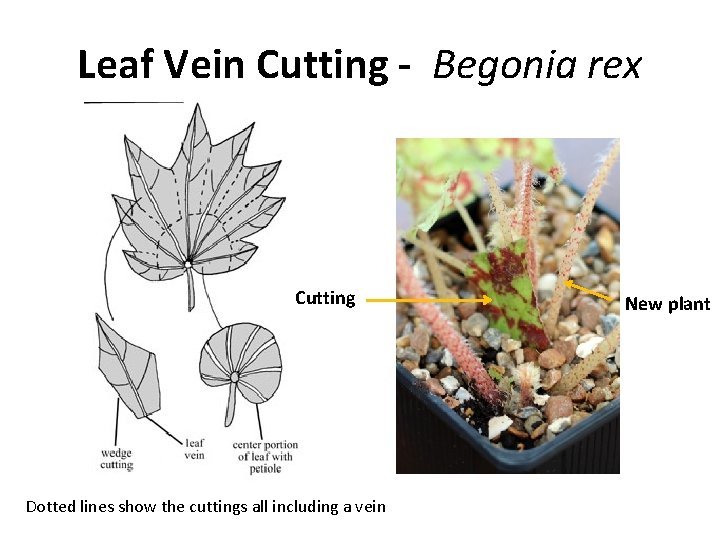
Leaf Vein Cutting - Begonia rex Cutting Dotted lines show the cuttings all including a vein New plant
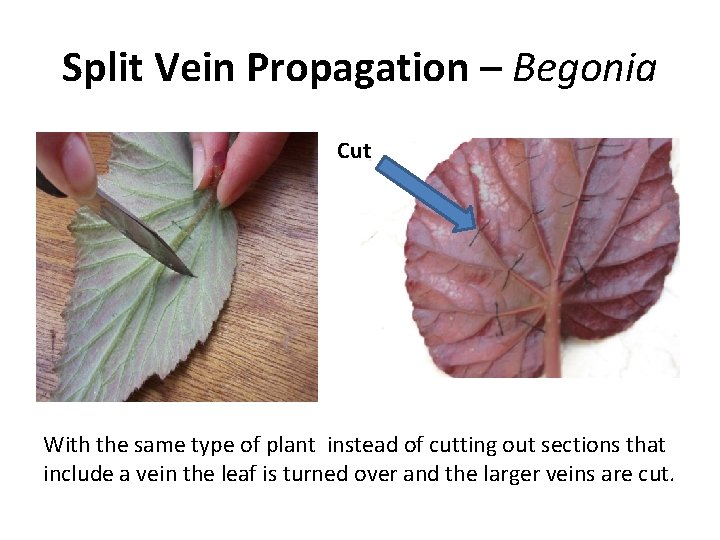
Split Vein Propagation – Begonia Cut With the same type of plant instead of cutting out sections that include a vein the leaf is turned over and the larger veins are cut.
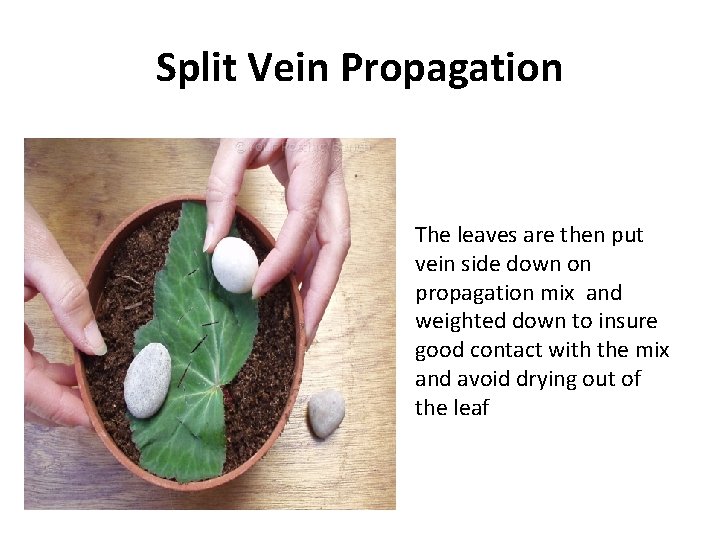
Split Vein Propagation The leaves are then put vein side down on propagation mix and weighted down to insure good contact with the mix and avoid drying out of the leaf
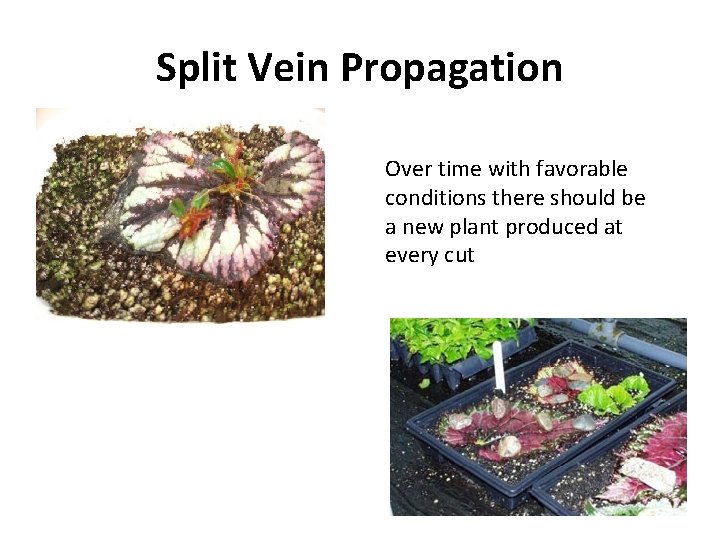
Split Vein Propagation Over time with favorable conditions there should be a new plant produced at every cut
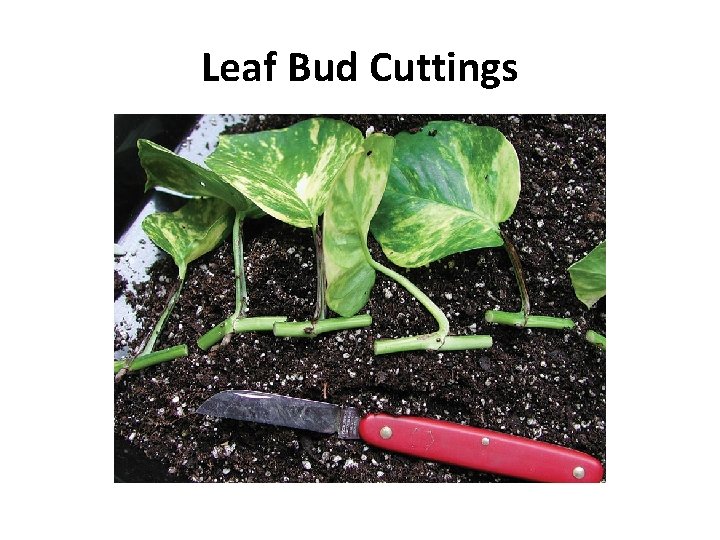
Leaf Bud Cuttings
Leaf Bud Cuttings (sometimes called eye cuttings) are used in propagating tropical plants that have long trailing stems like the Pothos pictured above
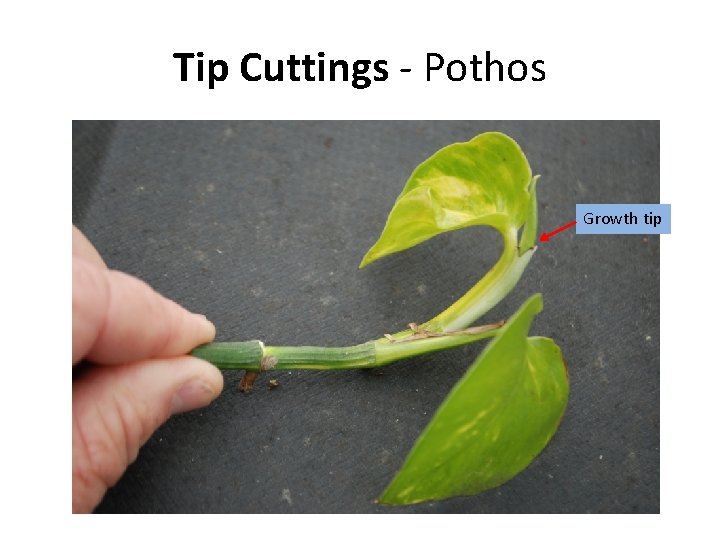
Tip Cuttings - Pothos Growth tip