
Vegetation Inventory Focus on Forestry Practices NRCS Pacific
- Slides: 21
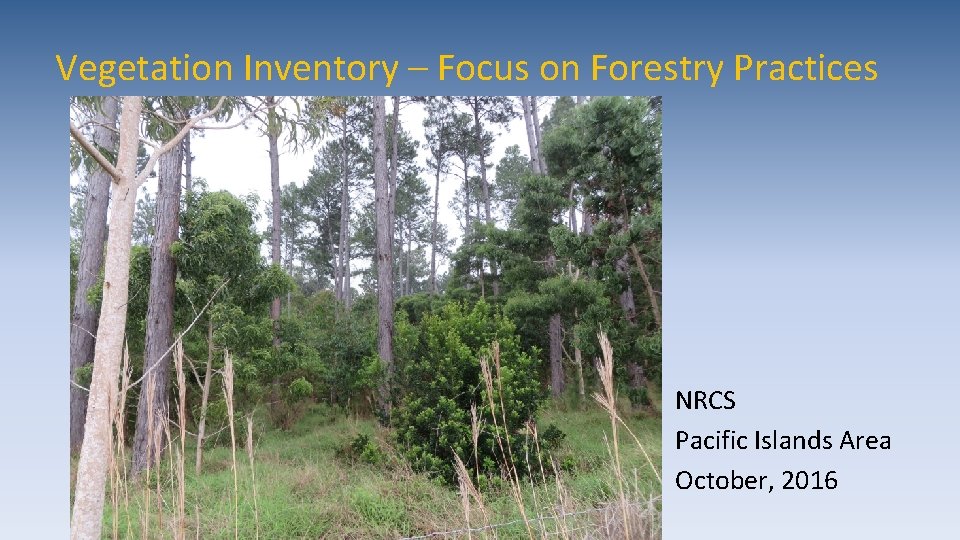
Vegetation Inventory – Focus on Forestry Practices NRCS Pacific Islands Area October, 2016
Vegetation Inventory – key part of I&E Ø Quantitative base line for what is currently on the site ü Species ü Size ü Density ü Support certification Ø Do one or more species cause or contribute to a Resource Concern that warrants treatment? ü Conservation practices ü Treatments or methods ü Practice payment scenarios Ø Will one or more species be retained?
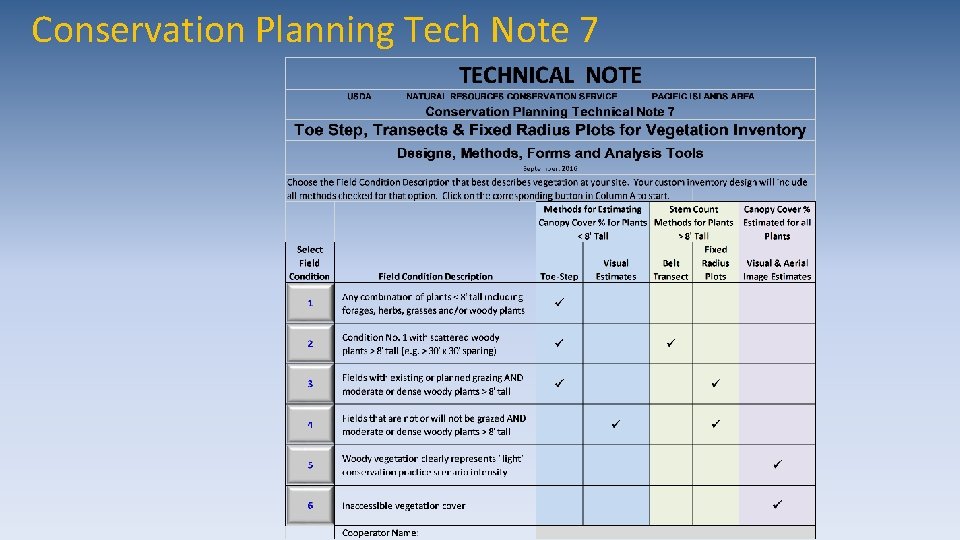
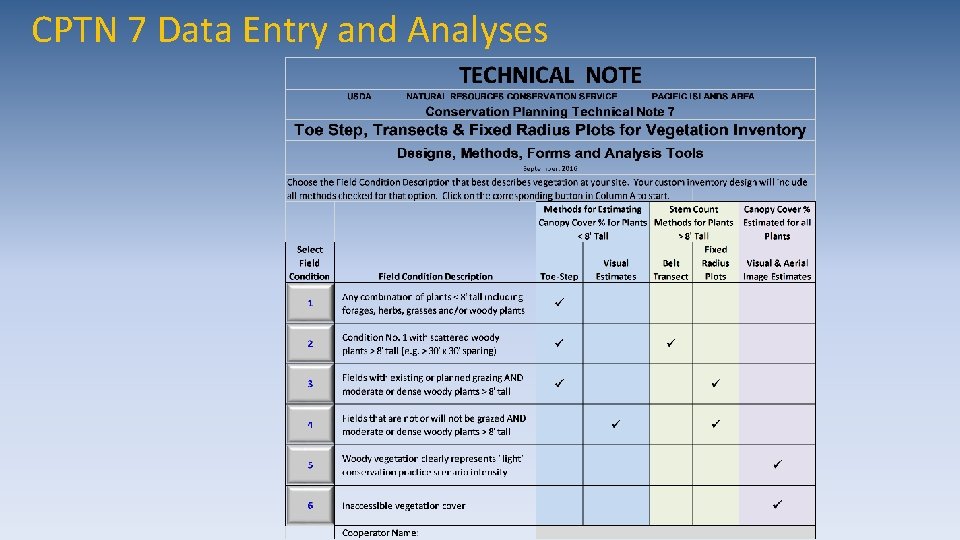
Conservation Planning Tech Note 7
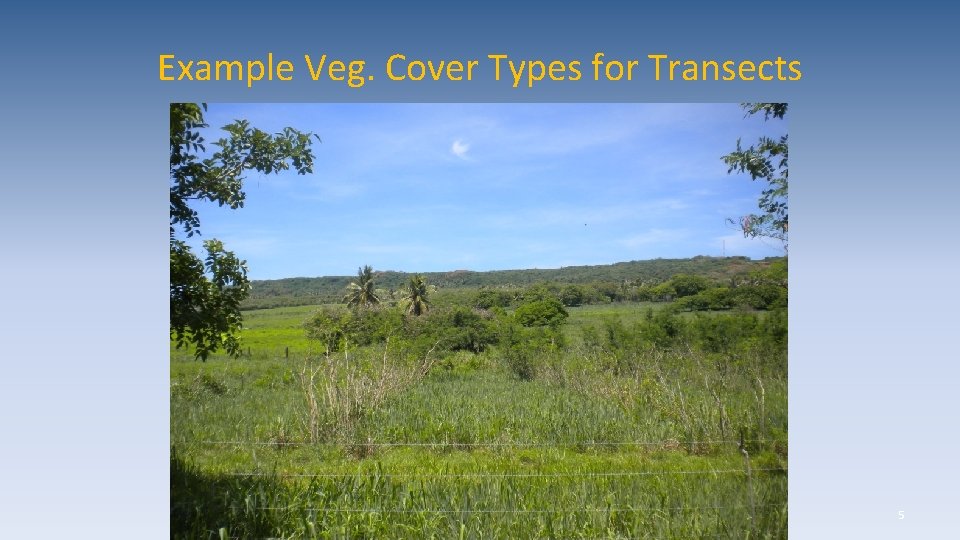
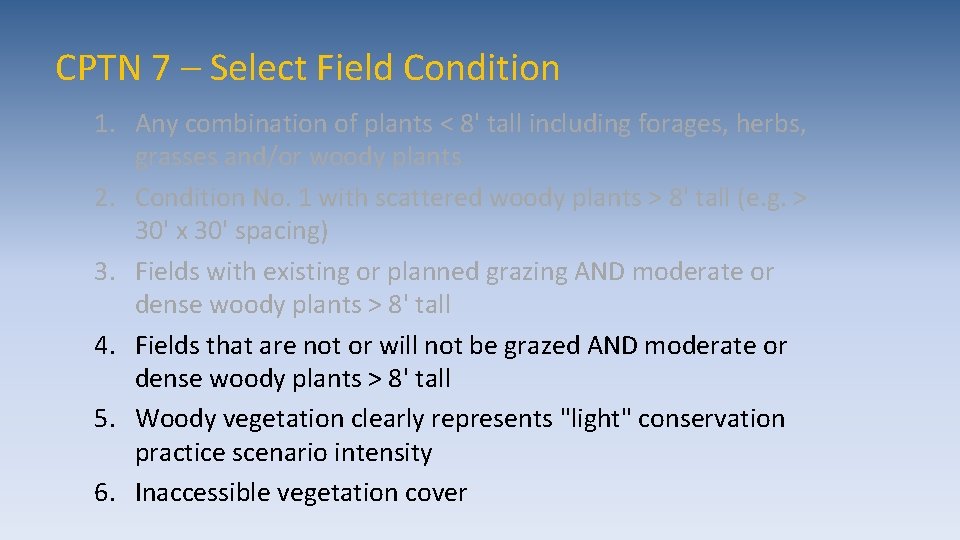
Determine Field Condition of Vegetation Cover 1. Any combination of plants < 8' tall including forages, herbs, grasses and/or woody plants 2. Condition No. 1 with scattered woody plants > 8' tall (e. g. > 30' x 30' spacing) 3. Fields with existing or planned grazing AND moderate or dense woody plants > 8' tall 4. Fields that are not or will not be grazed AND moderate or dense woody plants > 8' tall 5. Woody vegetation clearly represents "light" conservation practice scenario intensity 6. Inaccessible vegetation cover
Example Veg. Cover Types for Transects 5
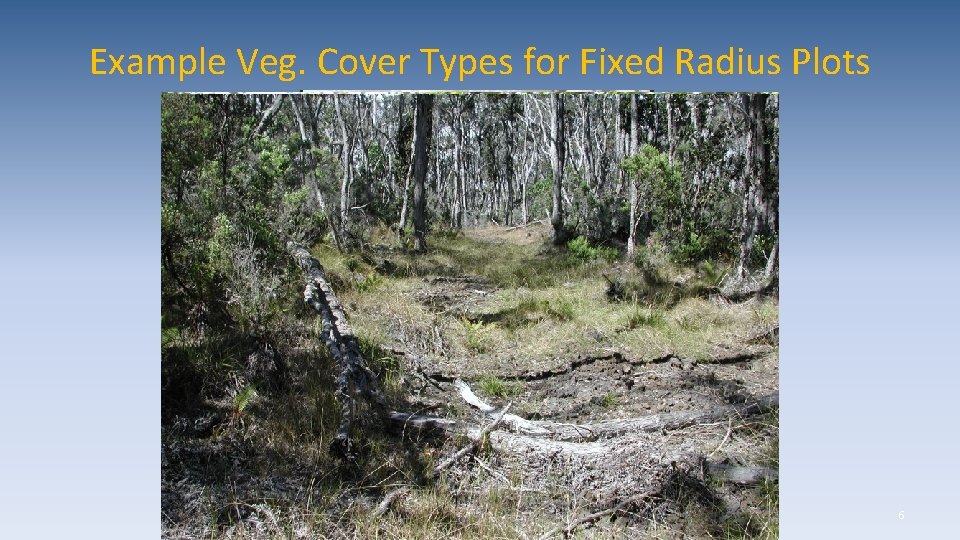
Example Veg. Cover Types for Fixed Radius Plots 6
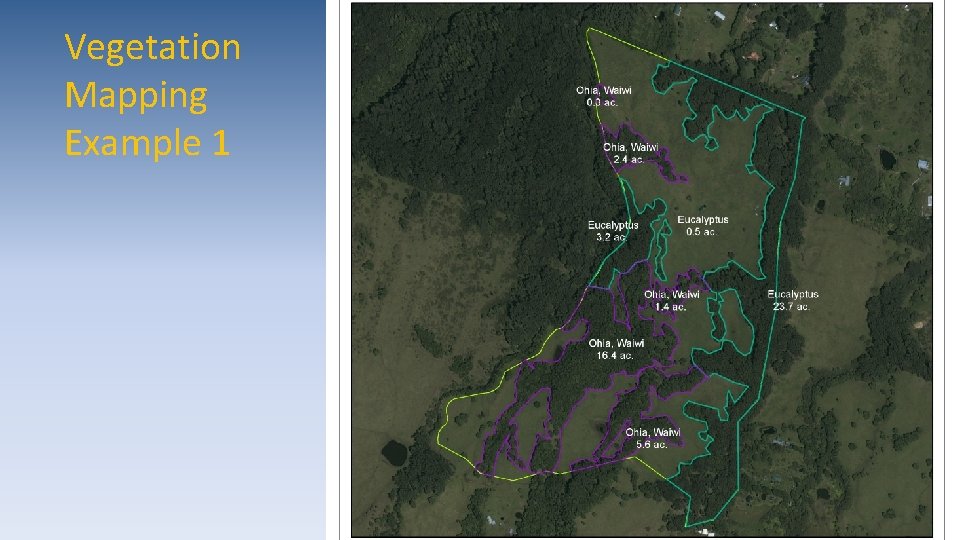
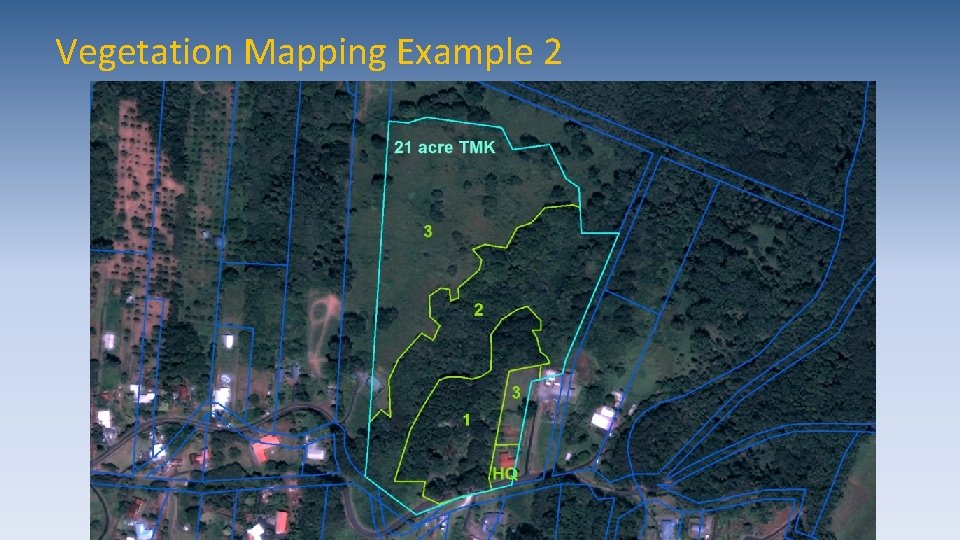
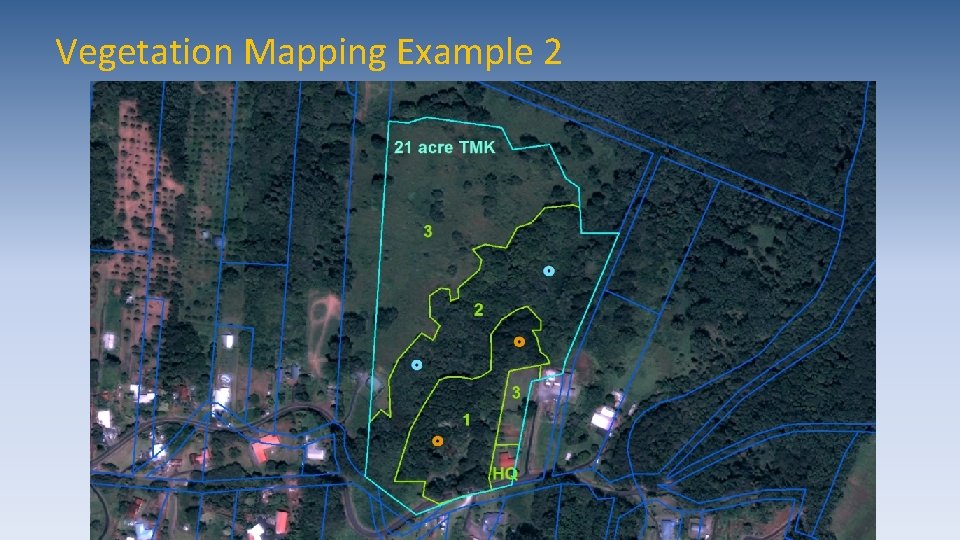
What is currently on the site? Map your vegetation! Ø Develop an inventory map by dividing tracts or fields into unique vegetation cover types Ø Where Possible keep vegetation cover types > 1. 0 acre Ø Separate cover types into map units that have clear boundaries and contain > 75% (area) of vegetation cover that is similar or homogenous
Vegetation Mapping Example 1
Vegetation Mapping Example 2
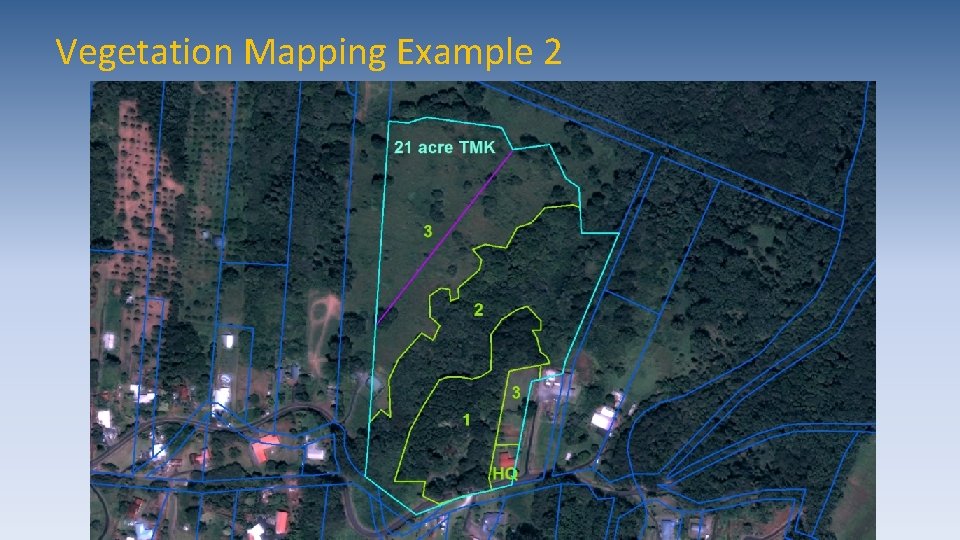
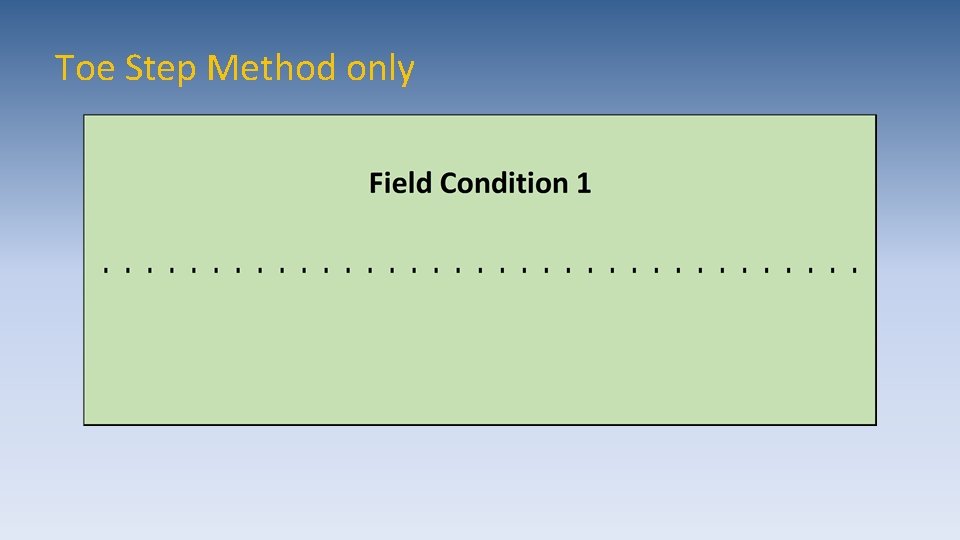
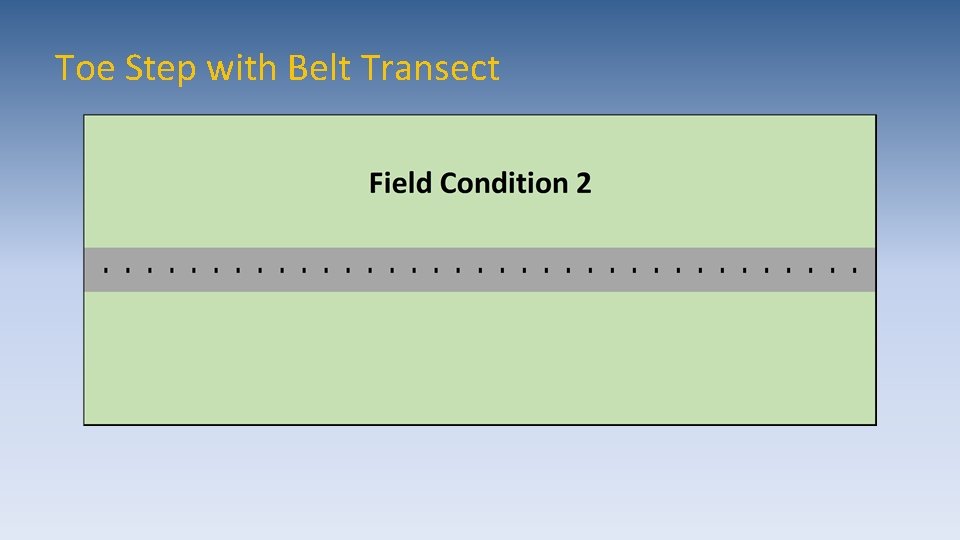
Methods and Layout – Transects Ø Lay out one or more transect lines across each target veg. cover type ü Representative of entire mapped unit ü Estimate cumulative length of all transects Ø Use calculator tools in CPTN 7 to help determine transect widths for belt transects
Vegetation Mapping Example 2
CPTN 7 – Select Field Condition 1. Any combination of plants < 8' tall including forages, herbs, grasses and/or woody plants 2. Condition No. 1 with scattered woody plants > 8' tall (e. g. > 30' x 30' spacing) 3. Fields with existing or planned grazing AND moderate or dense woody plants > 8' tall 4. Fields that are not or will not be grazed AND moderate or dense woody plants > 8' tall 5. Woody vegetation clearly represents "light" conservation practice scenario intensity 6. Inaccessible vegetation cover
Toe Step Method only
Toe Step with Belt Transect
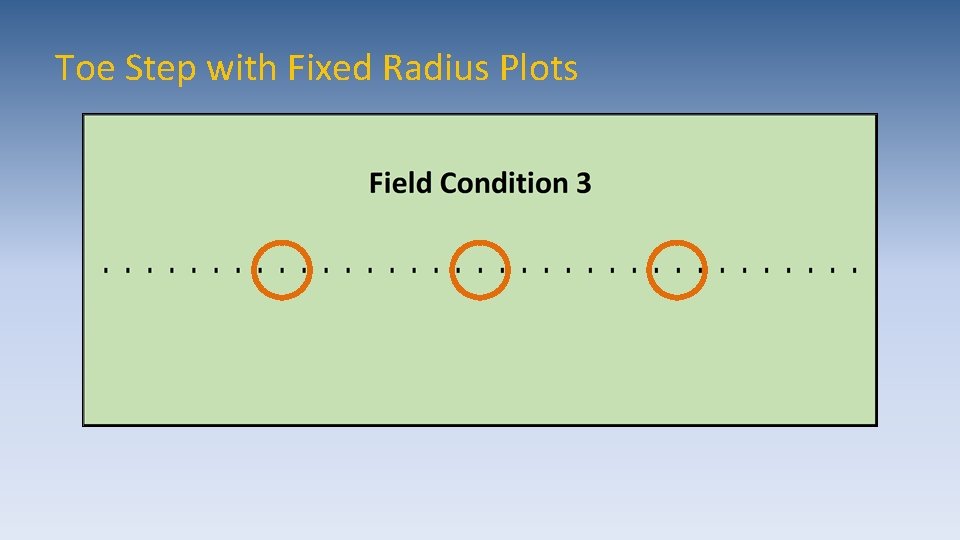
Toe Step with Fixed Radius Plots
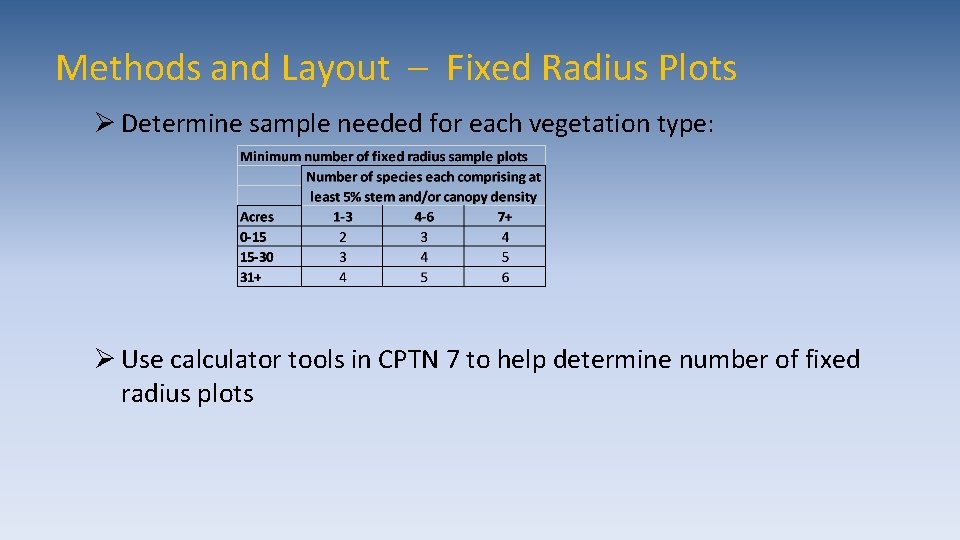
Methods and Layout – Fixed Radius Plots Ø Determine sample needed for each vegetation type: Ø Use calculator tools in CPTN 7 to help determine number of fixed radius plots
Vegetation Mapping Example 2
CPTN 7 – Select Field Condition 1. Any combination of plants < 8' tall including forages, herbs, grasses and/or woody plants 2. Condition No. 1 with scattered woody plants > 8' tall (e. g. > 30' x 30' spacing) 3. Fields with existing or planned grazing AND moderate or dense woody plants > 8' tall 4. Fields that are not or will not be grazed AND moderate or dense woody plants > 8' tall 5. Woody vegetation clearly represents "light" conservation practice scenario intensity 6. Inaccessible vegetation cover
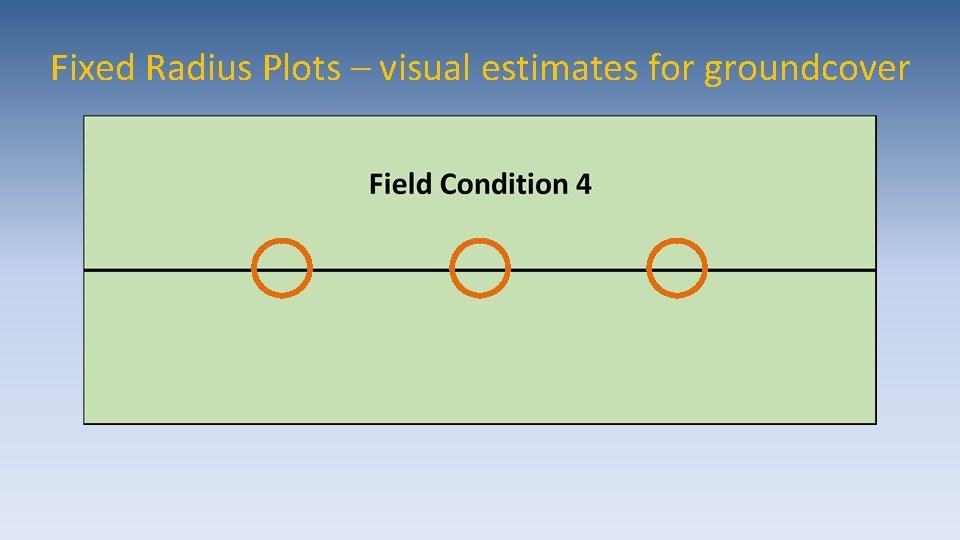
Fixed Radius Plots – visual estimates for groundcover
Vegetation Categories or Classes Ø Forage Plants: ü Species ü Canopy cover (%) Ø Herbaceous and Woody plants <8’ tall: ü Species ü Canopy cover (%) Ø Herbaceous and Woody plants >8’ tall: ü Species ü Diameter Class at DBH ü Stem counts per acre
CPTN 7 Data Entry and Analyses