
Vegetables Dr Fatimah Yousef Vegetables n Water 80
+ Vegetables Dr. Fatimah Yousef
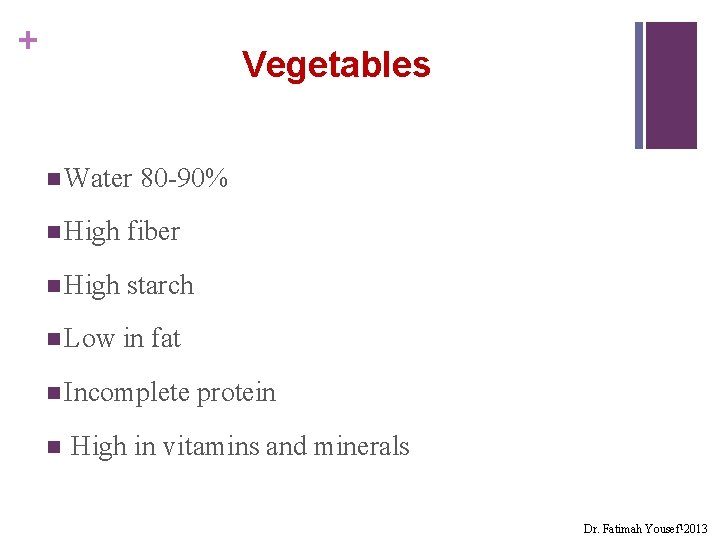
+ Vegetables n Water 80 -90% n High fiber n High starch n Low in fat n Incomplete n protein High in vitamins and minerals Dr. Fatimah Yousef 12013
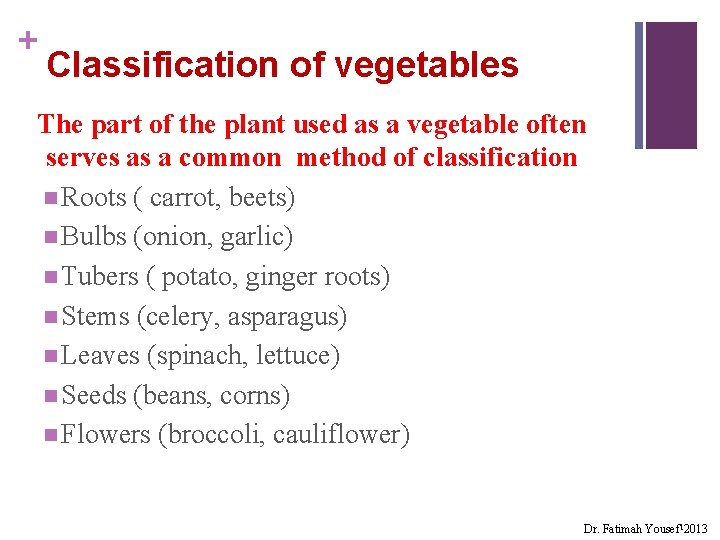
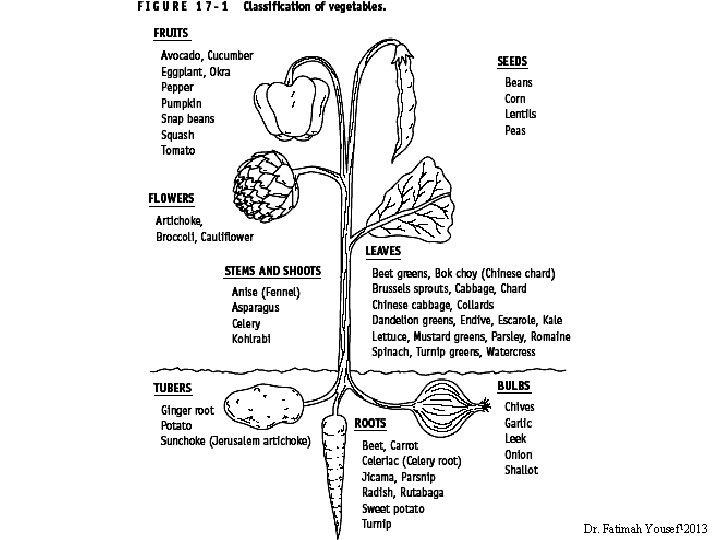
+ Classification of vegetables The part of the plant used as a vegetable often serves as a common method of classification n Roots ( carrot, beets) n Bulbs (onion, garlic) n Tubers ( potato, ginger roots) n Stems (celery, asparagus) n Leaves (spinach, lettuce) n Seeds (beans, corns) n Flowers (broccoli, cauliflower) Dr. Fatimah Yousef 12013
Dr. Fatimah Yousef 12013
+ Composition of vegetables n Structure of plant cells n Cell wall n parenchyma cells n Plant pigments n Carotenoids n Chlorophylls n Flavonoids n Photochemical
+ I-Cell wall: n Cells are the building blocks of both plants and animal organisms. n Each vegetables cell gain its structural support by being surrounded by a sturdy wall n Contributing to the strength of these cell wall are several fibrous compounds which are indigestible by humans (cellulose, pectic compounds, hemicellulose, lignin, and gums. n pectic compounds and hemicellulose found within and between cells giving firmness and elasticity to the tissues Dr. Fatimah Yousef 12013
+ Cell wall cont’d n The outer layer of the skin, peel or rind has a higher proportion of cellulose and hemicellulose the surface cells of these protective layers secrete a waxy cutin, a waterimpermeable coat that protects the plant n lignin is another type of fiber but non carbohydrate compounds. as vegetable mature, their lignin concentrations increase. this is why spinach stems and the inner cores of carrots, asparagus spears, and broccoli become tougher with age and do not soften when heated.
+ parenchyma cells n The most common type of cell in vegetables and fruits n Within the jelly –like cytoplasm of these cells are the compounds responsible for the plant strach content, color, water volume, and flavor compounds such as (saccharides, salts, and organic acids) several of these substances are stored in plastids that accurse in three types : leucoplasts, chloroplasts, and chromoplasts. n The understanding of the structure of a
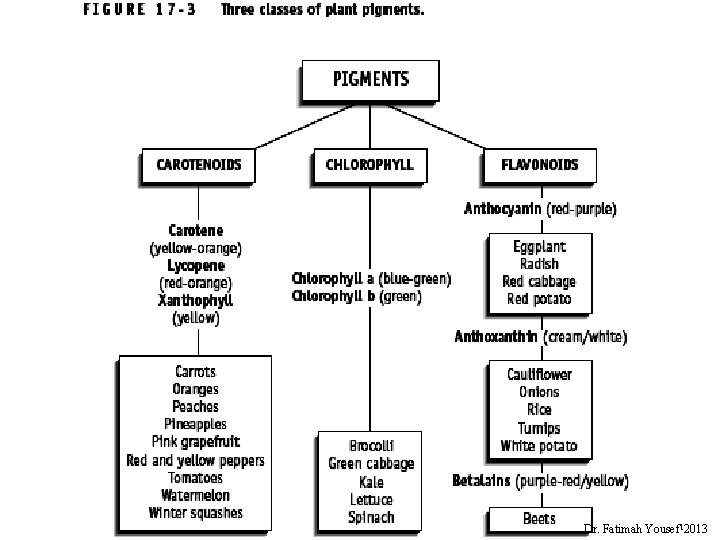
+ II-Plant pigments It fall into three major groups: n 1 -Carotenoids. n 2 -Chlorophylls. n 3 - Flavonoids. Dr. Fatimah Yousef 12013
+ n 1 -Carotenoids: n A group of yellow to red pigments occurring widely in plants. Carotenoids are found in plastids and are fat soluble. n (Xanthophylls) account for most of the yellow color of fruits and vegetables ex. Corn and pinapple n (carotene) Lend orange color to carrots and winter squashs. n (lycopene) which are deeper red provide the bright color of tomatoes. Dr. Fatimah Yousef 12013
n 2 -Chlorophyll + n Chlorophylls are found in plastids and are fat soluble. n Green coloring matter of all plant materials, by the aid of which plants manufacture foodstuffs from simple salts and carbon dioxide with energy derived from sunlight, i. e. photosynthesis. n Chlorophyll turns bright green when it first starts cooking due to loss of oxygen. n Color is markedly affected by the acidity and alkalinity of substances: n Dull green at low p. H n Bright green at higher p. H n alkali also increased nutrient loss and created an undesirable texture. Dr. Fatimah Yousef 12013
+ n Flavonoids pigments include 1 - anthocyanin ( red to blue) it is found in red cabbage, egg plant, radish, and red potato. 2 - Anthoxanthins (creamy to white) thy are the reason for the cream or whit color of qualiflower, onions, potato 3 - betalains (purplish-red) n Flavonoids are water-soluble pigments n markedly affected by the acidity and alkalinity of substances: n Red at low p. H n Blue at higher p. H Dr. Fatimah Yousef 2013 n Flavonoid pigments , water soluble, have a tendency to be 1
Dr. Fatimah Yousef 12013
+ Preparation of vegetables n General guidelines Regardless of the cooking method or serving style selected, some general principles governing the handling and preparation of vegetables should be followed: n 1 -Buying. n 2 -Storage. n 3 -Washing. n 4 -coocking liquid n 5 -timing. Dr. Fatimah Yousef 12013
+ Preparation of vegetables cont’d 1 -selecting § The most important consideration when selecting vegetables is § season of the year. Thus selecting an out-of season affects the quality of the results meal. § Color is a good indication of nutrient content: Choose brighter colors for more nutrients. § only the amount that will be used within a few days.
+ Preparation of vegetables cont’d 1 -selecting cont’d § The amount to buy depends on the type of vegetables, leafy ones contain more water than others ex. Lettuce has more water than carrots
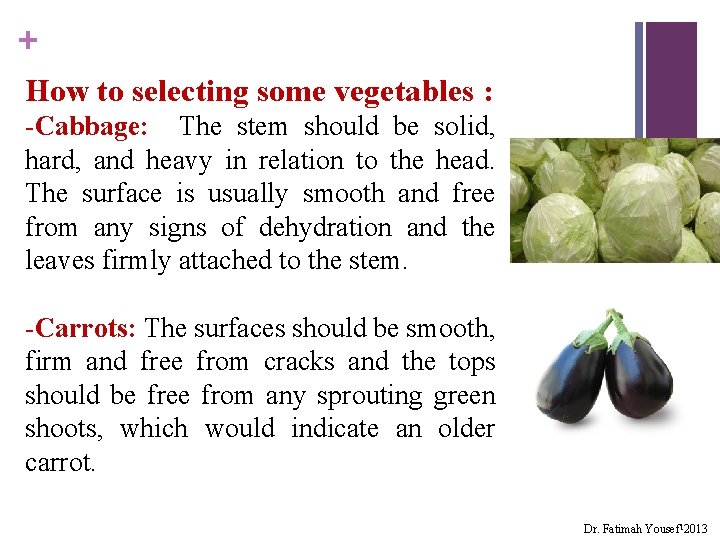
+ How to selecting some vegetables : -Cabbage: The stem should be solid, hard, and heavy in relation to the head. The surface is usually smooth and free from any signs of dehydration and the leaves firmly attached to the stem. -Carrots: The surfaces should be smooth, firm and free from cracks and the tops should be free from any sprouting green shoots, which would indicate an older carrot. Dr. Fatimah Yousef 12013
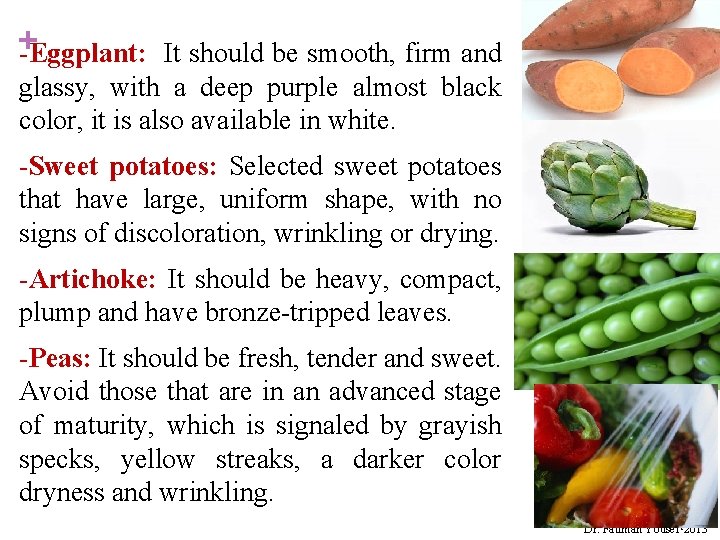
+ -Eggplant: It should be smooth, firm and glassy, with a deep purple almost black color, it is also available in white. -Sweet potatoes: Selected sweet potatoes that have large, uniform shape, with no signs of discoloration, wrinkling or drying. -Artichoke: It should be heavy, compact, plump and have bronze-tripped leaves. -Peas: It should be fresh, tender and sweet. Avoid those that are in an advanced stage of maturity, which is signaled by grayish specks, yellow streaks, a darker color dryness and wrinkling. Dr. Fatimah Yousef 12013
+ Preparation of vegetables cont’d n 2 -Storage n Storage times for various vegetables are ultimately based on their water content (vegetables with a high percentage of water, such as lettuce have shorter storage times than vegetables with less water content such as potatoes. Dr. Fatimah Yousef 12013
+ n Store vegetables immediately at the appropriate temperature, and do not leave them out of storage for any length of time unless they are being prepared. n Leftovers should be refrigerated immediately and used within three days. n Dry Storage: Proper storage does not automatically imply refrigeration. For instance: **Tomatoes (unripe). **Tubers (potatoes). **Dried legumes. **Most bulbs (onions). …Should never be stored in a refrigerator. Dr. Fatimah Yousef 12013
+Preparation of vegetables n 3 -Washing cont’d : All vegetables must be thoroughly washed (with a vegetable brush when appropriate) to remove soil, microorganisms, pesticides and herbicides. n Washing should be quick, because most vegetables absorb excess water when soaked. n Many roots vegetables, except beets and baked potatoes are peeled of the outer layer that is normally washed. Dr. Fatimah Yousef 12013
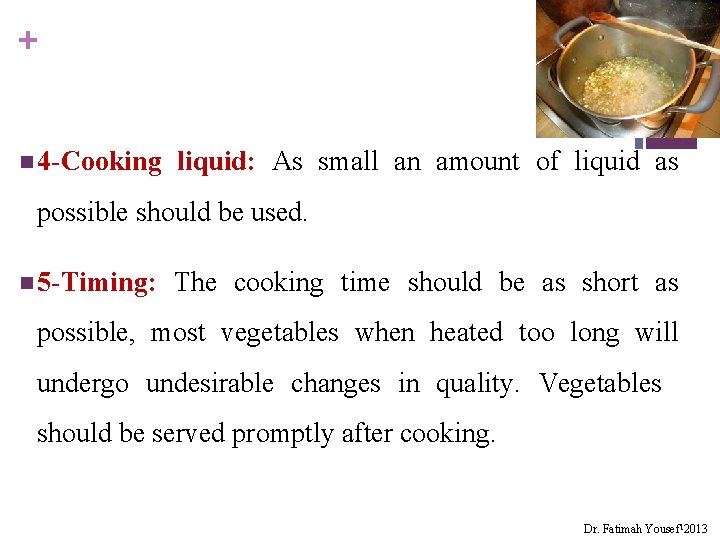
+ n 4 -Cooking liquid: As small an amount of liquid as possible should be used. n 5 -Timing: The cooking time should be as short as possible, most vegetables when heated too long will undergo undesirable changes in quality. Vegetables should be served promptly after cooking. Dr. Fatimah Yousef 12013
+ Preparation of vegetables cont’d n. Changes during heating n heating, vegetables let them undergo several changes : n Texture n Flavor n Odor n Color n Nutrient retention. n Understanding these phenomena can help to retain as much of their quality as possible during preparation. Dr. Fatimah Yousef 12013
+ Changes during heating: 1 -Texture: n High temperature gelatinize starch ex. , potatoes, decrease bulk by softening cellulose, and cause a reduction in turgor due to water loss. This is desirable when baking potatoes or cooking legumes, it is not recommended for most other vegetables they should be heated until barely cooked. Dr. Fatimah Yousef 12013
+ n Acids: or acidic foods ex. , vinegar or tomatoes, should be added toward the end of cooking time, because they make vegetables more resistant to softening and by precipitating vegetable pectins, increase required heating time. n Salts: calcium salts added to vegetables make them firmer as pickles and canned vegetables n Alkaline: such as baking soda break down cellulose and produce a very mushy texture and decreases cooking time) Dr. Fatimah Yousef 12013
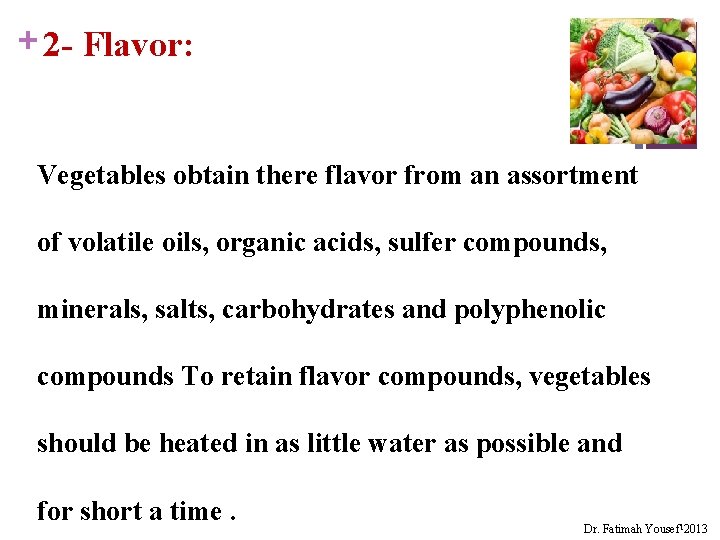
+ 2 - Flavor: Vegetables obtain there flavor from an assortment of volatile oils, organic acids, sulfer compounds, minerals, salts, carbohydrates and polyphenolic compounds To retain flavor compounds, vegetables should be heated in as little water as possible and for short a time. Dr. Fatimah Yousef 12013
+ 3 -Odor : n Vegetables get it's odor from the same compounds as flavor. n There are some vegetables that it's odor appear with heat such as cabbage, while in onion and garlic the odor is reduce by cooking heat. Dr. Fatimah Yousef 12013
+ n Garlic, onions are odorless until they are cut or bruised , thus allows an enzyme to contact with a particular substrate to create a smelling-sulfur compound. The sulfur compounds released causing tears to form in the eyes or the nose to run. n The strong odor of cooked cabbage can be reduced by shortening the heating time, adding a little vinegar to the cooking water, and/or by removing the lid during cooking to let volatile organic acids escape. Dr. Fatimah Yousef 12013
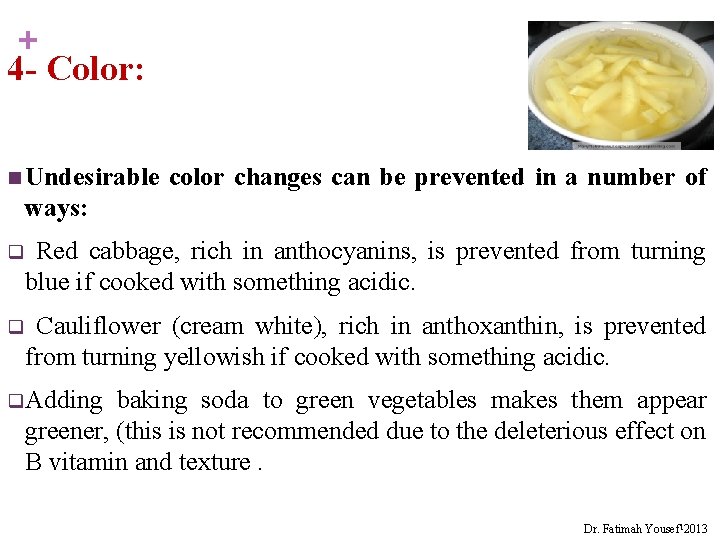
+ 4 - Color: n Undesirable color changes can be prevented in a number of ways: q Red cabbage, rich in anthocyanins, is prevented from turning blue if cooked with something acidic. q Cauliflower (cream white), rich in anthoxanthin, is prevented from turning yellowish if cooked with something acidic. q. Adding baking soda to green vegetables makes them appear greener, (this is not recommended due to the deleterious effect on B vitamin and texture. Dr. Fatimah Yousef 12013
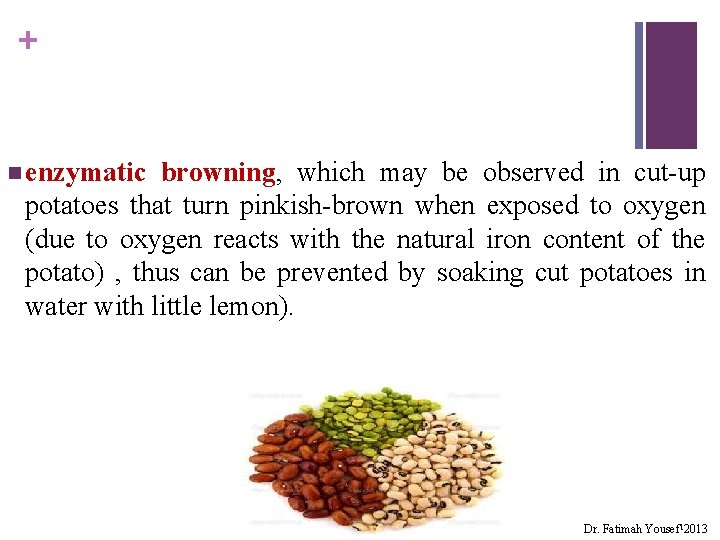
+ n enzymatic browning, which may be observed in cut-up potatoes that turn pinkish-brown when exposed to oxygen (due to oxygen reacts with the natural iron content of the potato) , thus can be prevented by soaking cut potatoes in water with little lemon). Dr. Fatimah Yousef 12013
+ 5 - Nutrient retention: n Careful n It preparation of vegetables conserves important nutrients. is important to cook vegetables using little water as possible. n It is better to avoid immersing them in water and instead revert to steaming or baking. n Leave the skin on whenever possible, cut them to large pieces rather than smaller. n Cook just to the point of doneness and no further. n Some nutrients may actually increase during heating, ex. , heating increases the amount of protein available from legumes (due to destroying the protease inhibitors enzymes). Dr. Fatimah Yousef 12013
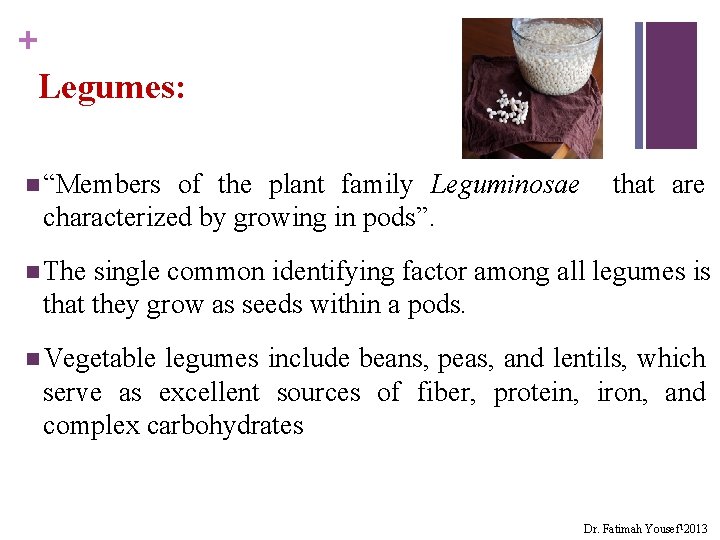
+ Legumes: n “Members of the plant family Leguminosae characterized by growing in pods”. that are n The single common identifying factor among all legumes is that they grow as seeds within a pods. n Vegetable legumes include beans, peas, and lentils, which serve as excellent sources of fiber, protein, iron, and complex carbohydrates Dr. Fatimah Yousef 12013
+ Preparation of legumes n Legumes are best prepared by simmering rather than boiling. n There are three methods for preparing dried beans: n Overnight soak: Beans are sorted and thoroughly rinsed and then immersed in water amounting to three or four times their quantity for approximately 10 hrs. n Short soak: Sorted and rinsed beans are brought to a full boil for 2 min. , removed from the heat and allowed to soak in the same hot water for one hours. They are then cook (simmered ) as in the above method. Dr. Fatimah Yousef 12013
+ Preparation of legumes n No soak: Beans can be prepared without soaking, but they take twice the amount of water and double the heating time. They also lose their skins more easily. The no soak methods is used for lentils because their smaller size results in shorter cooking times. n When cooking legumes , it is important not to add salt or acid until they well cooked, because these substances inhibit the softening of pectic compounds. Dr. Fatimah Yousef 12013
+ Preparation of vegetables cont’d n Both fat and water-soluble coloring pigments are contained in fruits and vegetables and are affected by the: n p. H n Heating n The presence of metals Dr. Fatimah Yousef 12013
- Slides: 35