
Vegetable Crops PLSC 451551 Lesson 3 Domestication Classification
Vegetable Crops – PLSC 451/551 Lesson 3, Domestication, Classification. Instructor: Stephen L. Love Aberdeen R & E Center 1693 S 2700 W Aberdeen, ID 83210 Phone: 397 -4181 Fax: 397 -4311 Email: slove@uidaho. edu
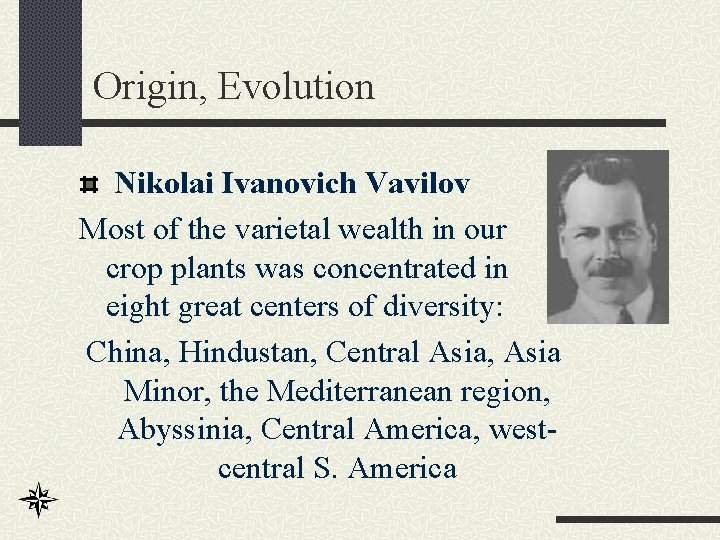
Origin, Evolution Nikolai Ivanovich Vavilov Most of the varietal wealth in our crop plants was concentrated in eight great centers of diversity: China, Hindustan, Central Asia, Asia Minor, the Mediterranean region, Abyssinia, Central America, westcentral S. America
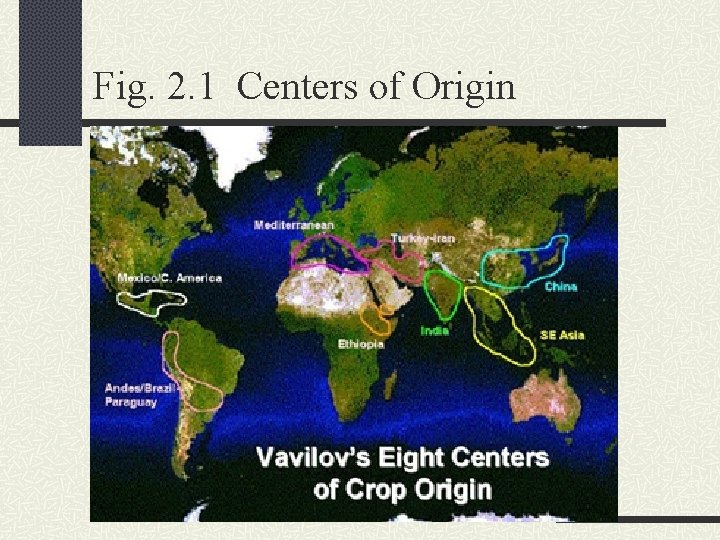
Fig. 2. 1 Centers of Origin
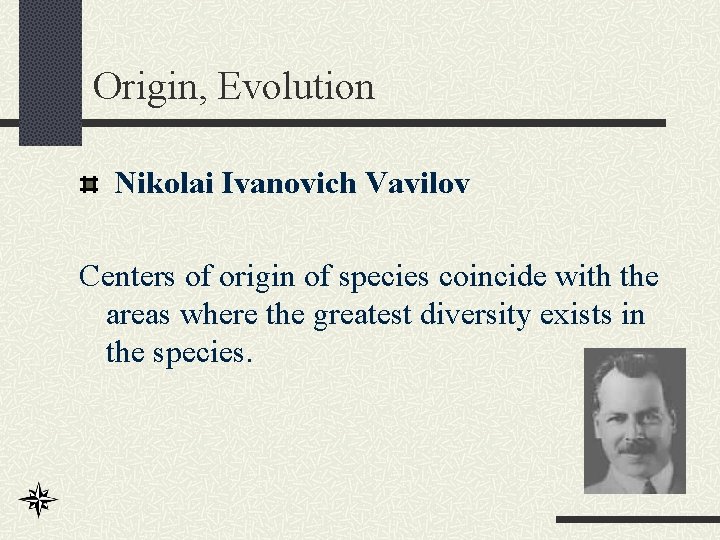
Origin, Evolution Nikolai Ivanovich Vavilov Centers of origin of species coincide with the areas where the greatest diversity exists in the species.
Origin, Evolution Nikolai Ivanovich Vavilov Secondary centers of origin (centers of diversity) may be found far removed from the primary center of origin. These may be associated with domestication and human movement
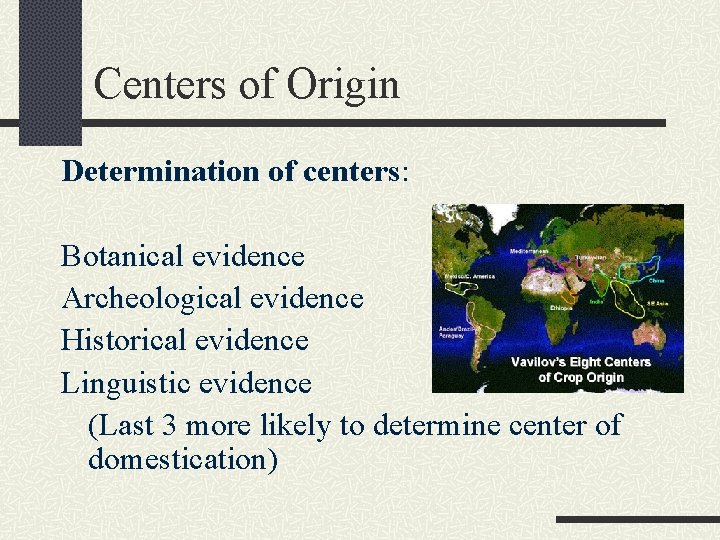
Centers of Origin Determination of centers: Botanical evidence Archeological evidence Historical evidence Linguistic evidence (Last 3 more likely to determine center of domestication)
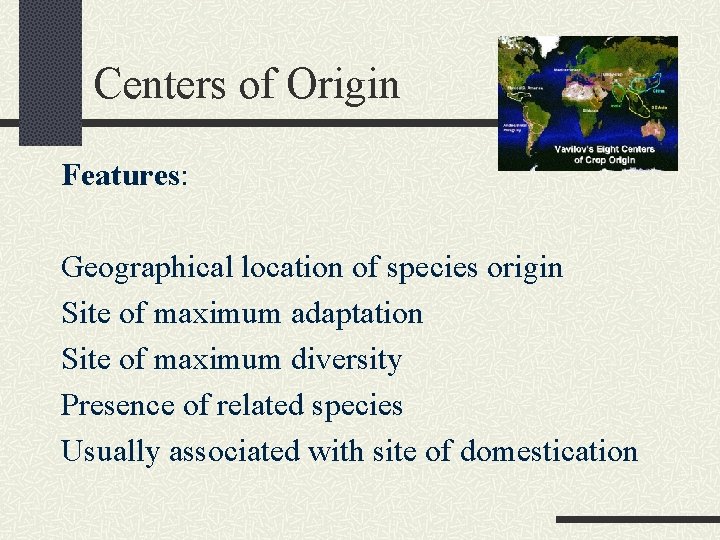
Centers of Origin Features: Geographical location of species origin Site of maximum adaptation Site of maximum diversity Presence of related species Usually associated with site of domestication
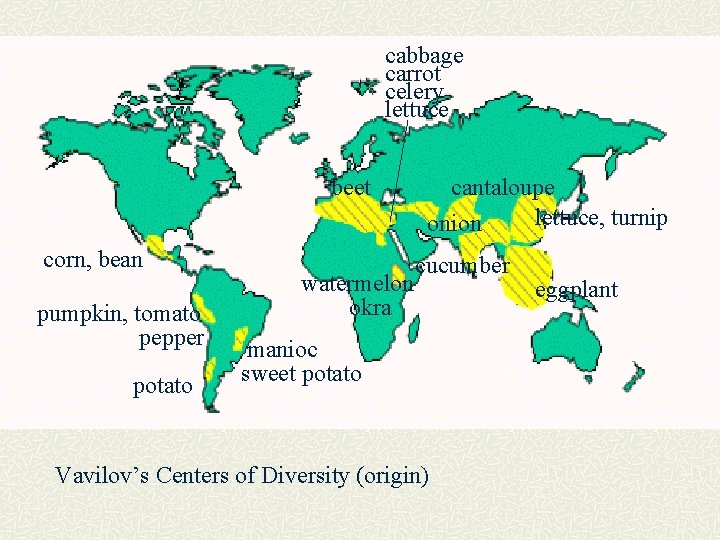
cabbage carrot celery lettuce beet corn, bean pumpkin, tomato pepper potato watermelon okra cantaloupe lettuce, turnip onion cucumber manioc sweet potato Vavilov’s Centers of Diversity (origin) eggplant
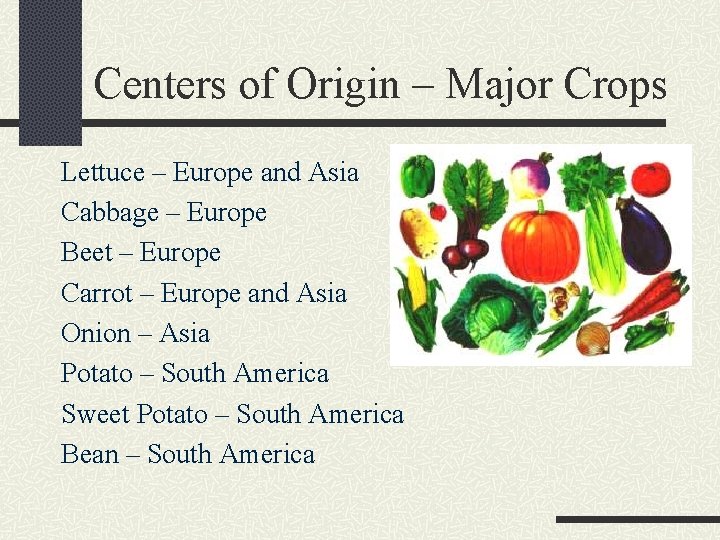
Centers of Origin – Major Crops Lettuce – Europe and Asia Cabbage – Europe Beet – Europe Carrot – Europe and Asia Onion – Asia Potato – South America Sweet Potato – South America Bean – South America
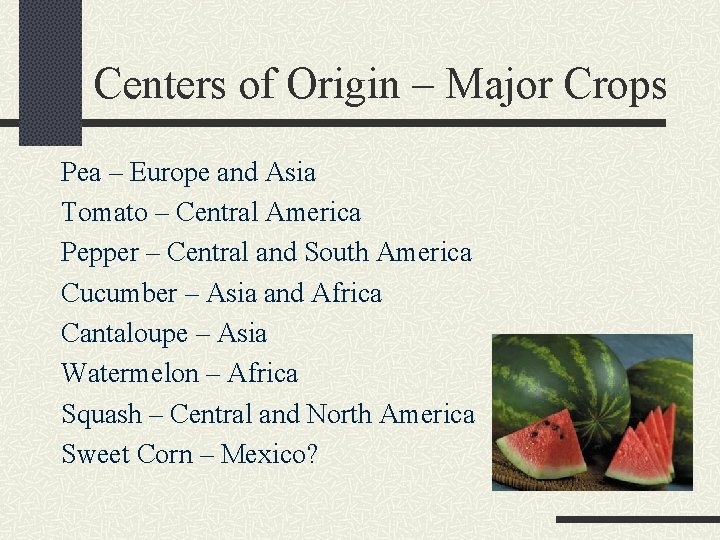
Centers of Origin – Major Crops Pea – Europe and Asia Tomato – Central America Pepper – Central and South America Cucumber – Asia and Africa Cantaloupe – Asia Watermelon – Africa Squash – Central and North America Sweet Corn – Mexico?
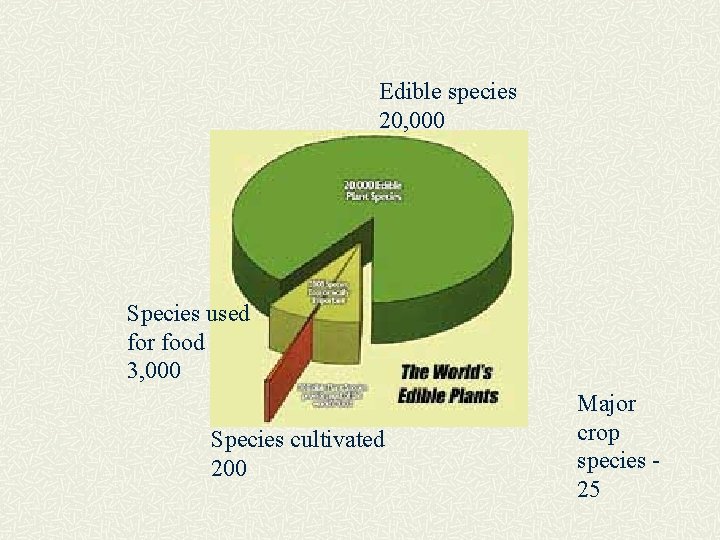
Edible species 20, 000 Species used for food 3, 000 Species cultivated 200 Major crop species 25
Crop Species Domestication Began 8 -10, 000 years ago Process Foraging and unintentional selection Early cultivation Domestication Intensified and large scale production
Foraging Impact of foraging and plant management Selection of best food types – seed distribution Selection of best adapted types in habitat region Unintentional altering of habitat to promote growth of certain plants (i. e. burning)
Early Cultivation Began as man approached food production systematically v. Started as unintentional habitat alteration to favor desired species v. Led to more intense cultivation; form depended on geographical constraints
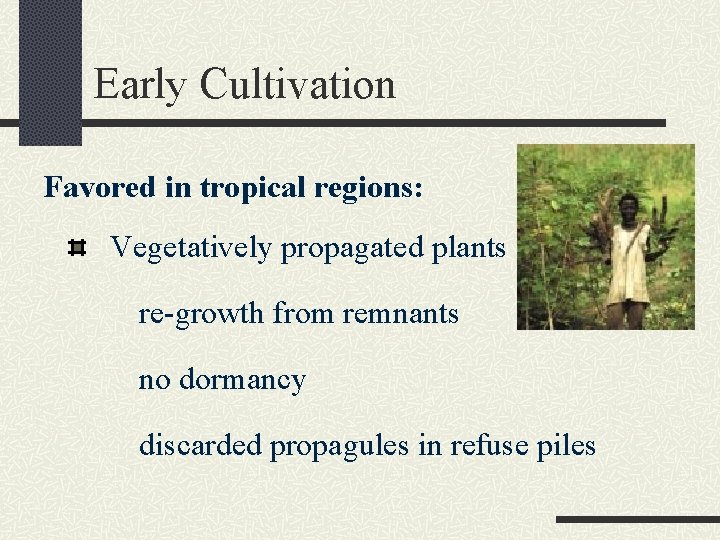
Early Cultivation Favored in tropical regions: Vegetatively propagated plants re-growth from remnants no dormancy discarded propagules in refuse piles
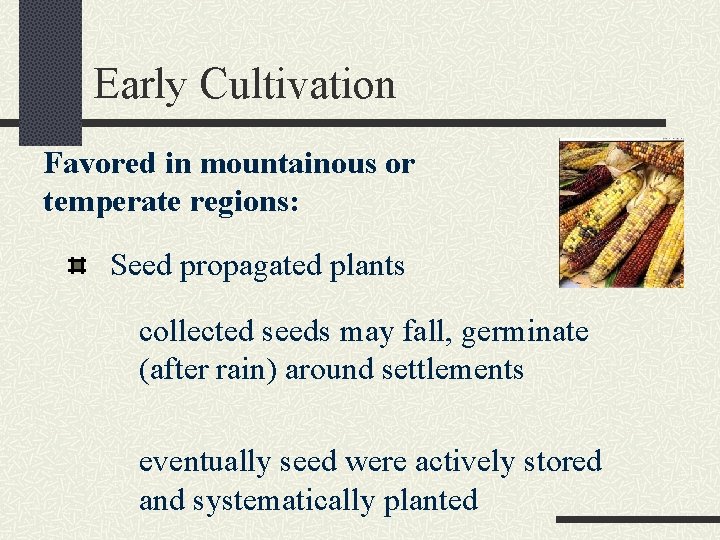
Early Cultivation Favored in mountainous or temperate regions: Seed propagated plants collected seeds may fall, germinate (after rain) around settlements eventually seed were actively stored and systematically planted
Early Cultivation Impact of early cultivation on crop species Deliberate care of preferred plants Preferential survival of edible crop plants Distribution to new areas of habitat Increased population of humans and thus populations of crop species
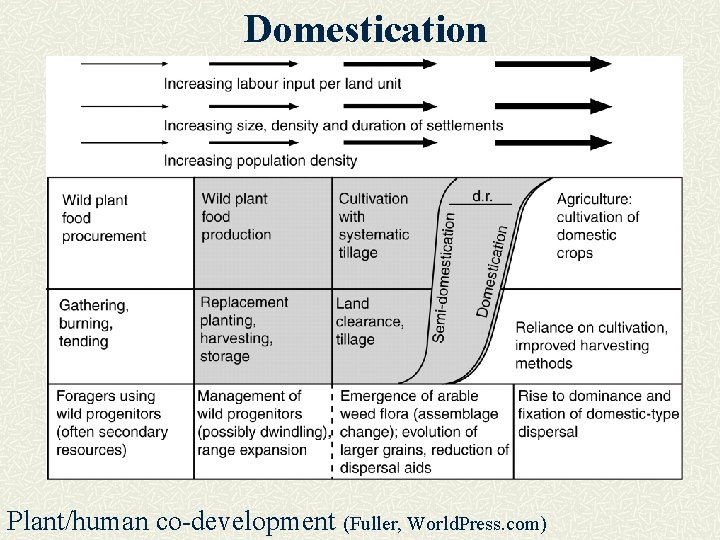
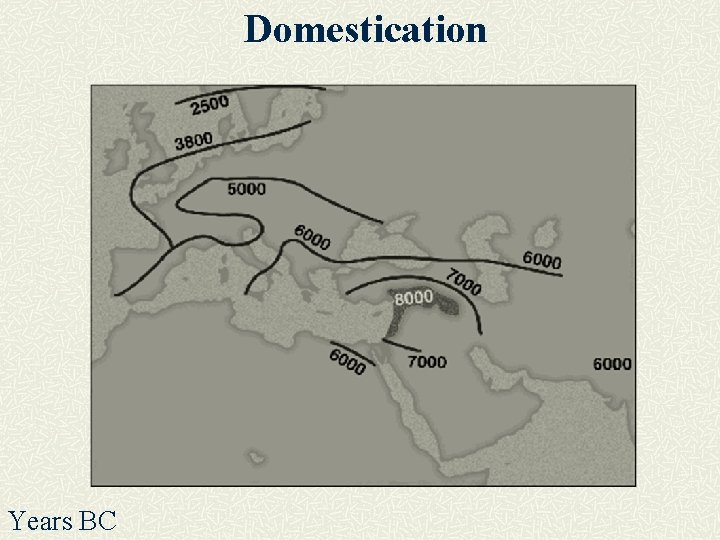
Domestication Plant/human co-development (Fuller, World. Press. com)
Domestication Years BC
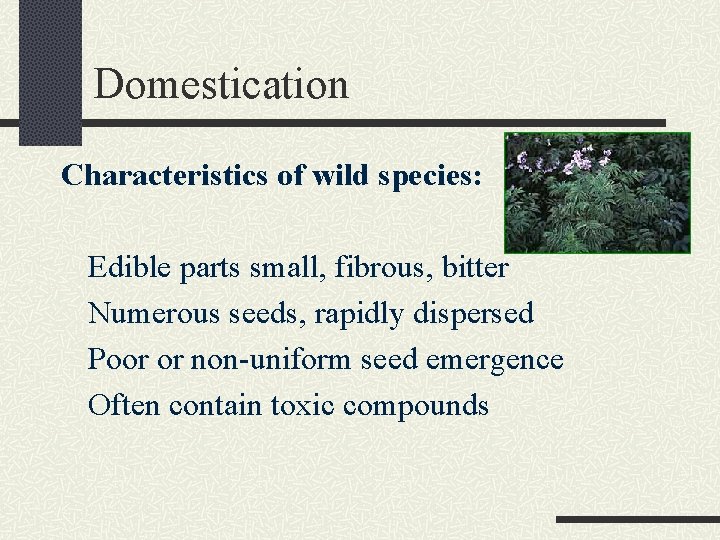
Domestication Characteristics of wild species: Edible parts small, fibrous, bitter Numerous seeds, rapidly dispersed Poor or non-uniform seed emergence Often contain toxic compounds
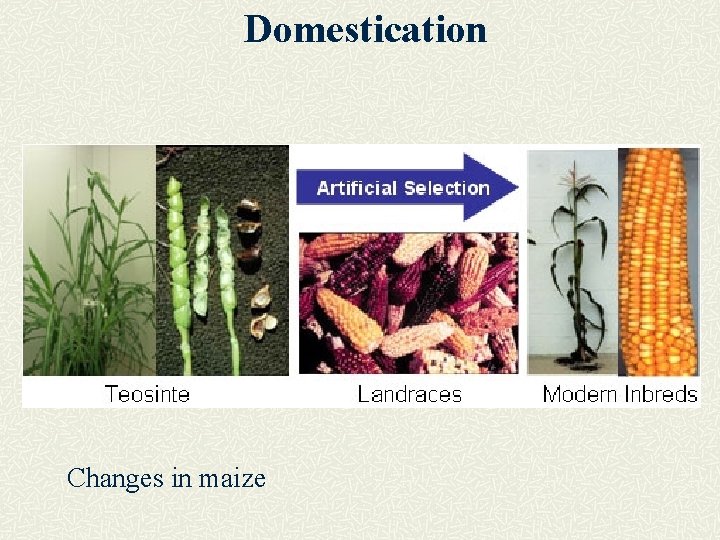
Domestication Changes in maize
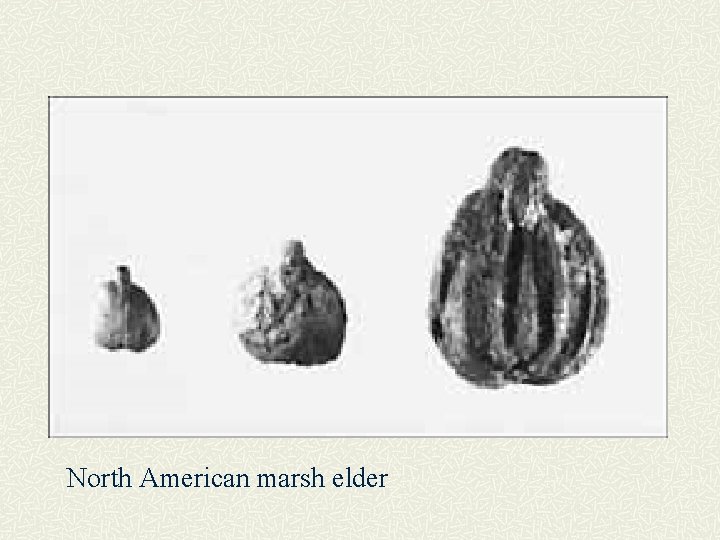
North American marsh elder
Domestication Changes in plants as a result of selection: Gigantism often a result of changes in PLOIDY Where PLOIDY reflects the number of chromosomes in a SOMATIC cell (somatic versus gametic)
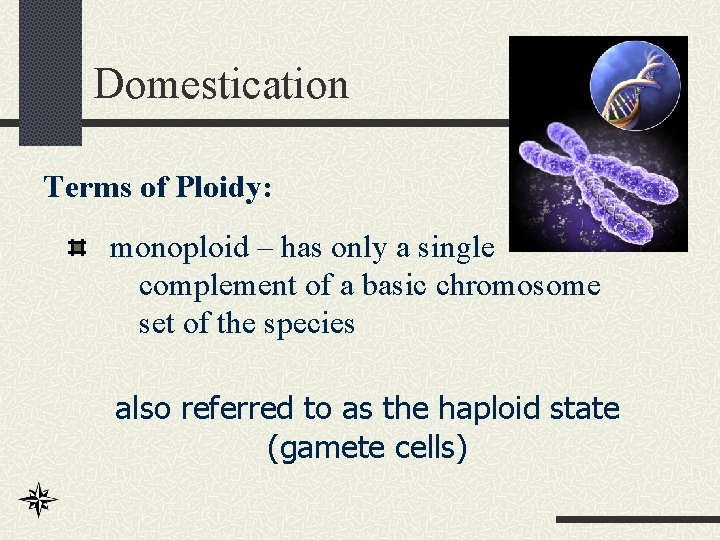
Domestication Terms of Ploidy: monoploid – has only a single complement of a basic chromosome set of the species also referred to as the haploid state (gamete cells)
Domestication Terms of Ploidy: diploid – has two complete sets of the basic chromosome number of the species
Domestication Terms of Ploidy: diploid – has two complete sets of the basic chromosome number of the species triploid tetrapoid pentaploid hexaploid
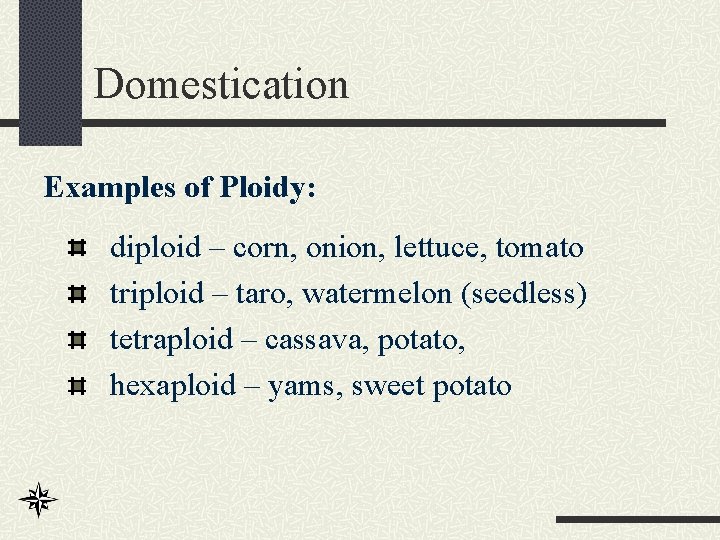
Domestication Examples of Ploidy: diploid – corn, onion, lettuce, tomato triploid – taro, watermelon (seedless) tetraploid – cassava, potato, hexaploid – yams, sweet potato
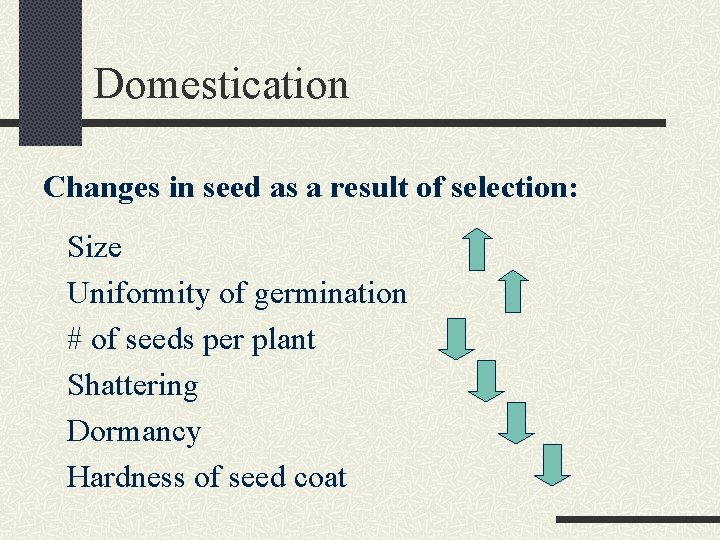
Domestication Changes in seed as a result of selection: Size Uniformity of germination # of seeds per plant Shattering Dormancy Hardness of seed coat
Domestication Other morphological and physiological changes resulting from selection Loss of survival traits Loss of photoperiod response (potato) Emergence of mutant types (brassica) Absence of toxic substances (tomato)

Domestication – Bean Example Trait Wild Seed dispersal present Pod wall fibers present Seed dormancy 70% germ. Growth habit indeterminate Number of pods 43. 2 Pod length 5. 7 cm Seed weight (100) 3. 5 g Days to flower 69 Harvest index 0. 42 Flower delay (16 hr) >60 days Domesticated absent 100% germ determinate 7. 5 9. 3 cm 19. 5 g 46 0. 62 0 days
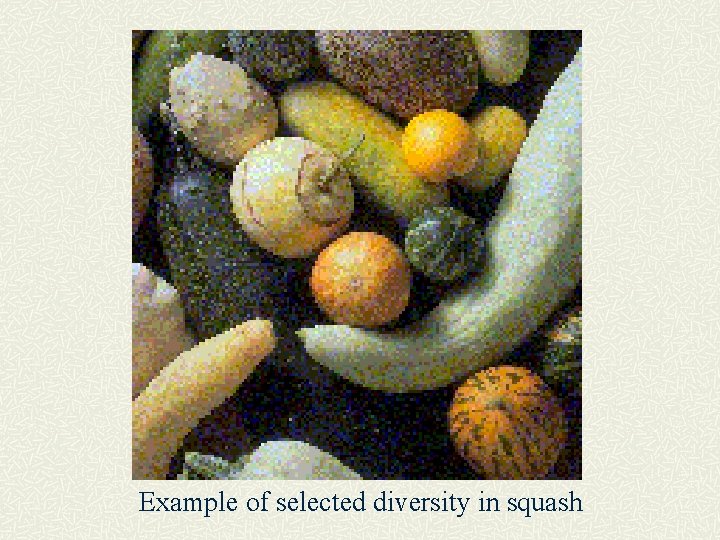
Example of selected diversity in squash

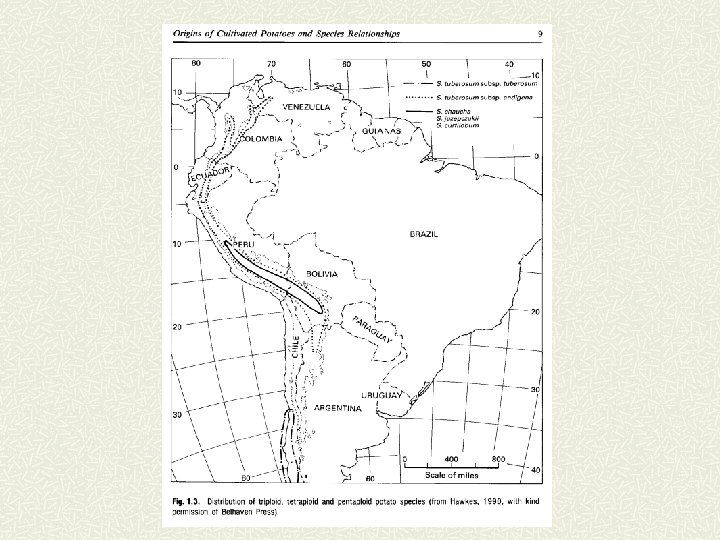
Example of wild species in potatoes
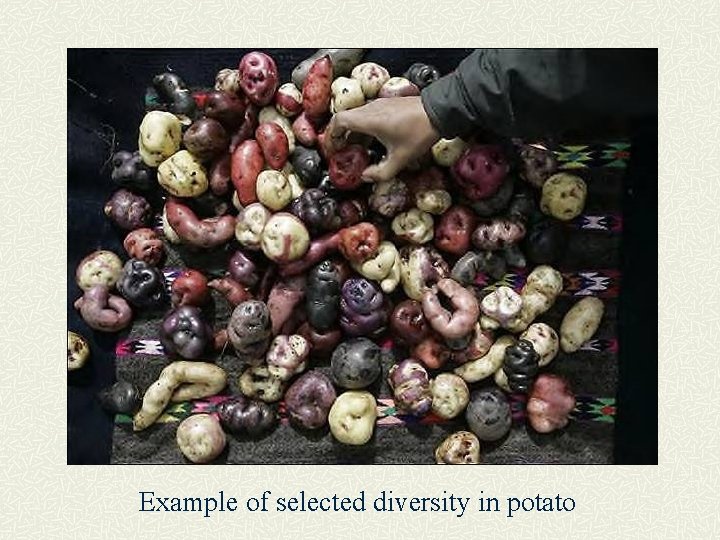
Example of selected diversity in potato
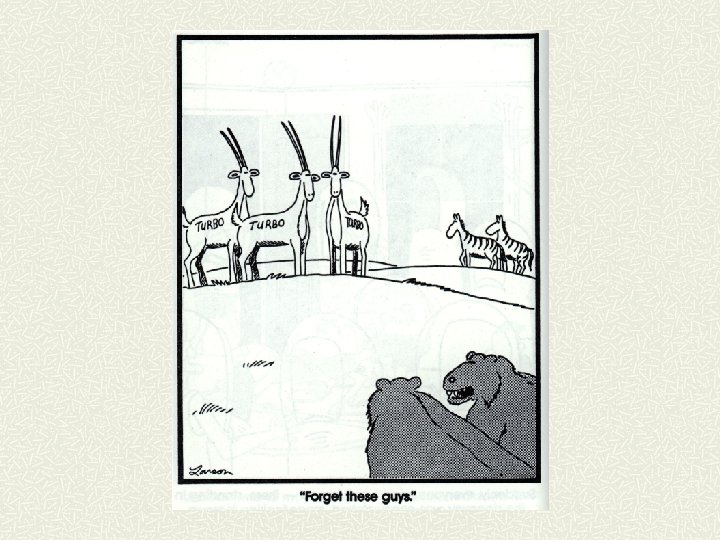
Domestication Impact of Domestication on crop species Selection of useful traits within crop species Elimination of survival traits resulting in dependence on human culture Wider distribution and adaptation
Intense Cultivation Defined as controlled crop production: Includes: tillage planting and transplanting weed and pest control harvest and sometimes storage
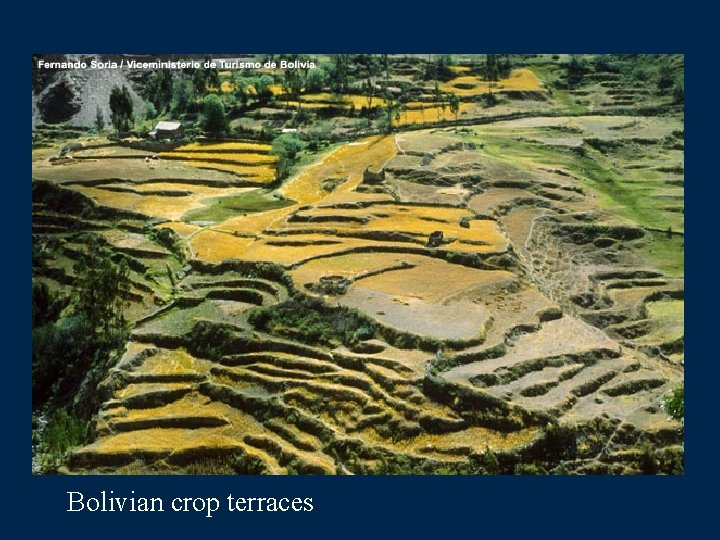
Bolivian crop terraces
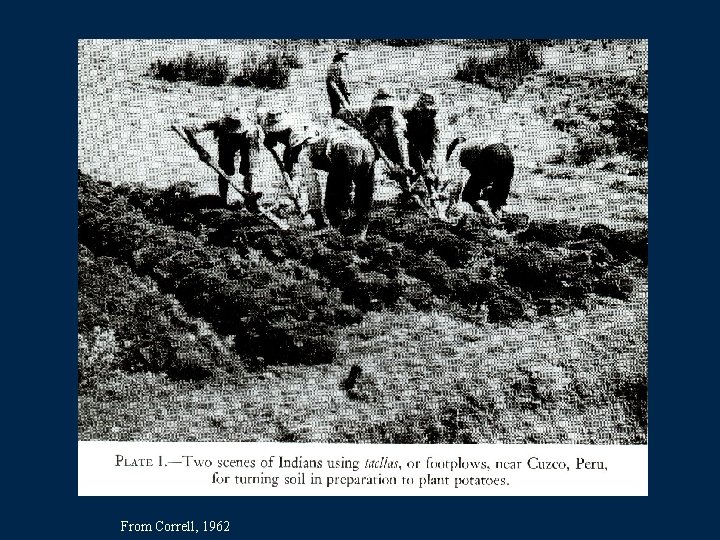
From Correll, 1962
Intense Cultivation Result of intensified cultivation Selection for traits resulting in economic benefit to the producer – directed breeding Ease of management Storability Shipability Market specific quality traits
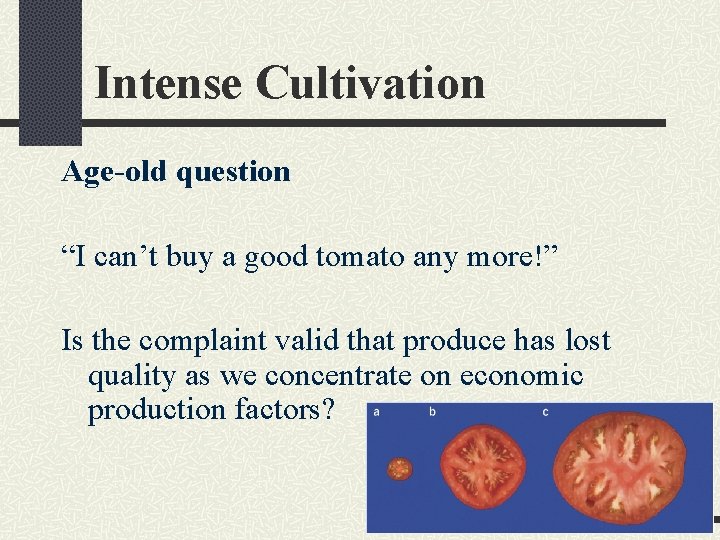
Intense Cultivation Age-old question “I can’t buy a good tomato any more!” Is the complaint valid that produce has lost quality as we concentrate on economic production factors?
Classification Process of lumping numerous crop species into useful categories
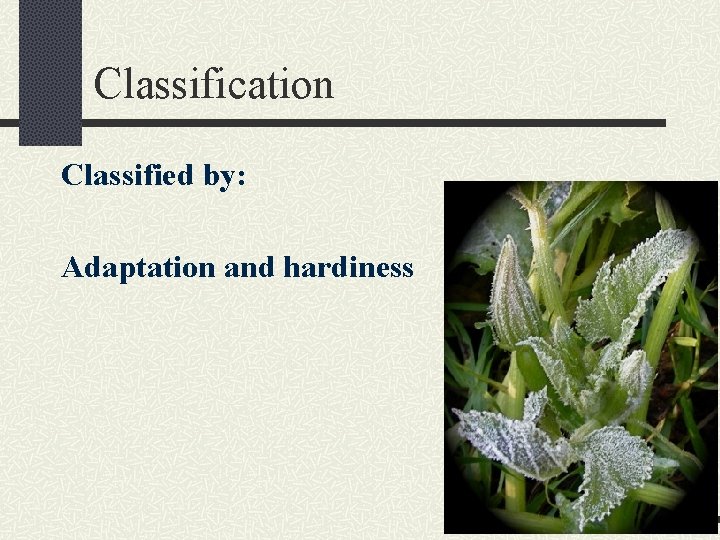
Classification Classified by: Adaptation and hardiness
Classification Classified by environmental adaptation: Warm-season (very tender) Cucumber Eggplant Lima bean Muskmelon Okra Pepper Pumpkin Squash Sweet potato Watermelon
Classification Classified by environmental adaptation: Warm-season (tender) Cowpea Snap bean Soybean Sweet corn Tomato
Classification Classified by environmental adaptation: Cool-season (semi-hardy) Beet Carrot Cauliflower Celery Swiss chard Lettuce Parsnip Potato
Classification Classified by environmental adaptation: Cool-season (hardy) Cabbage Broccoli Brussel sprouts Califlower Onions Leeks Pea Radish Garlic Asparagus
Classification Classified by: Adaptation and hardiness Life Cycle
Classification Classified by life cycle Perennial Asparagus, rhubarb, sweet potato Biennial Beet, broccoli, carrot, onion, parsley Annual Cucumber, tomato, spinach, sweet corn
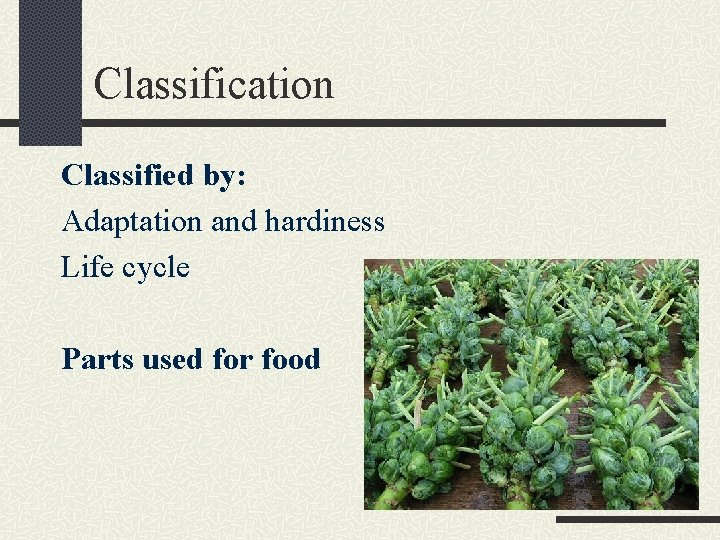
Classification Classified by: Adaptation and hardiness Life cycle Parts used for food
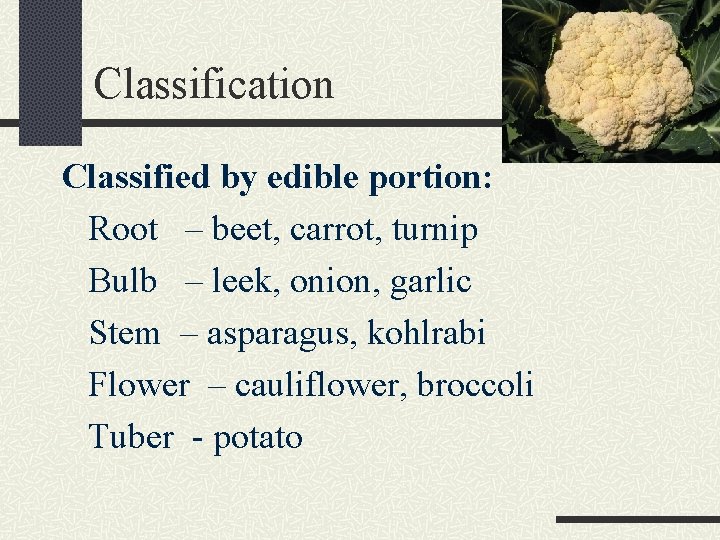
Classification Classified by edible portion: Root – beet, carrot, turnip Bulb – leek, onion, garlic Stem – asparagus, kohlrabi Flower – cauliflower, broccoli Tuber - potato

Classification Classified by edible portion: Immature fruit – cucumber, sweet corn Mature fruit – watermelon, tomato, squash Leaf – cabbage, lettuce, spinach Petiole – celery Seed – beans, pumpkin seed
Classification Classified by: Adaptation and hardiness Method of culture Parts used for food Taxonomic grouping (next lecture)
- Slides: 54