
Vector Algebra Course Content I II IV Introduction
Vector Algebra
Course Content I. II. IV. Introduction to the Course Biomechanical Concepts Related to Human Movement Anatomical Concepts Related to Human Movement Applications in Human Movement
Biomechanical Concepts A. B. C. Basic Kinematic Concepts Vector Algebra Basic Kinetic Concepts

Vector Algebra 1. 2. 3. Introductory Concepts Vector Composition Vector Resolution

Vector Algebra 1. 2. 3. Introductory Concepts Vector Composition Vector Resolution
Vector Algebra: Introductory Concepts a. b. c. Definitions Vector representation Muscle force vectors

Definitions n n n What is vector algebra? What is a scalar quantity? What is a vector quantity?
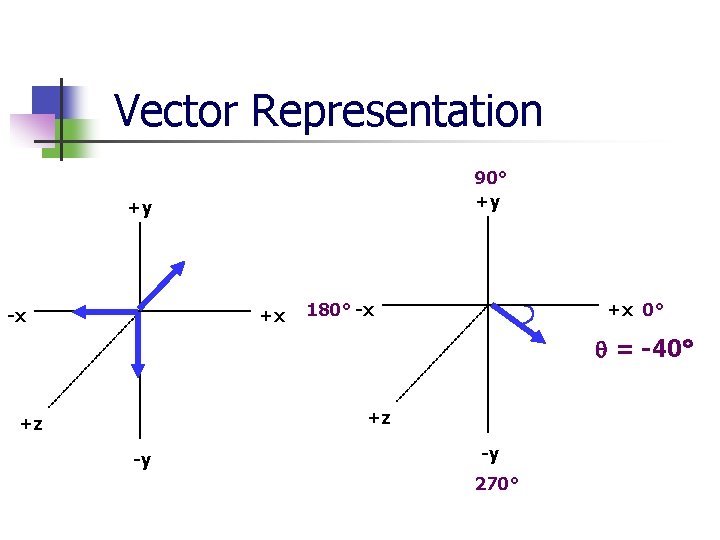
Vector Representation 90° +y +y -x +x 180° -x +x 0° = -40° +z +z -y -y 270°
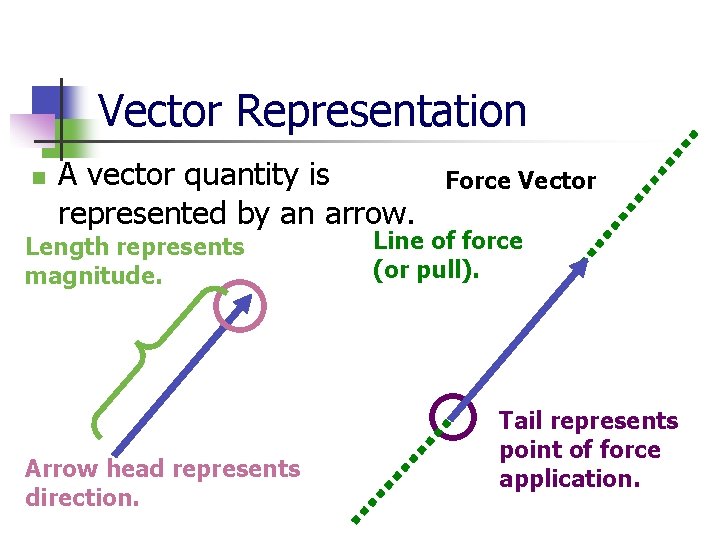
Vector Representation n A vector quantity is represented by an arrow. Length represents magnitude. Arrow head represents direction. Force Vector Line of force (or pull). Tail represents point of force application.
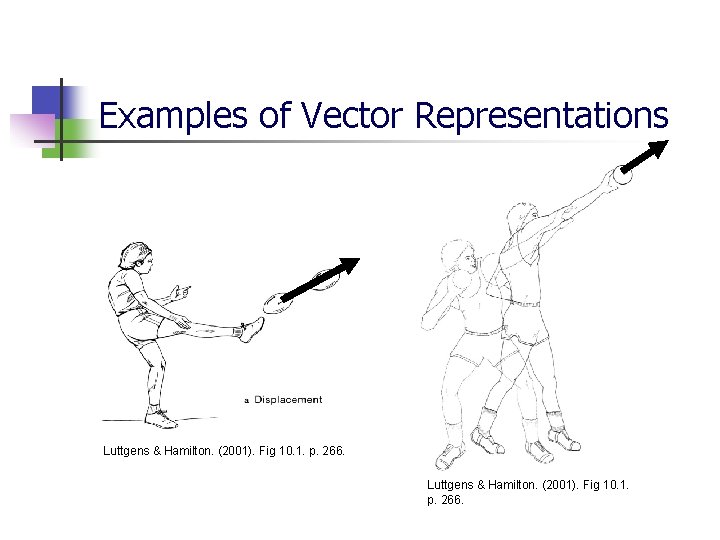
Examples of Vector Representations Luttgens & Hamilton. (2001). Fig 10. 1. p. 266.
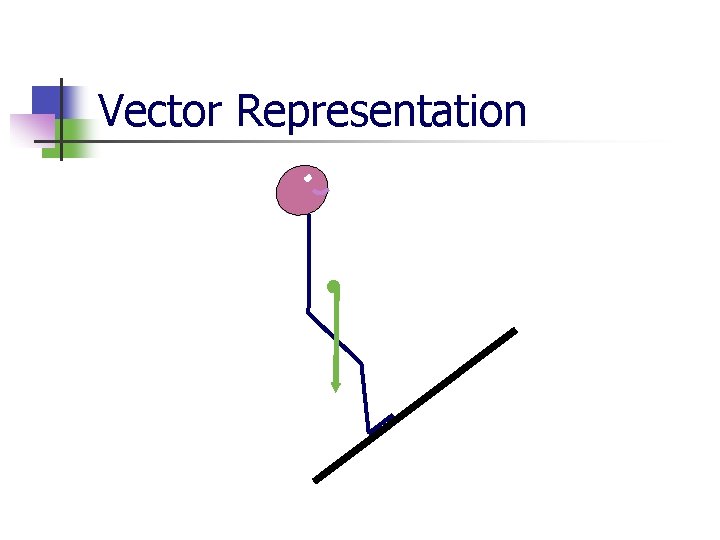
Vector Representation

Muscle Force Vectors n n Point of application Direction Magnitude Line of force Source: Mediclip. (1995). Baltimore: Williams & Wilkins.
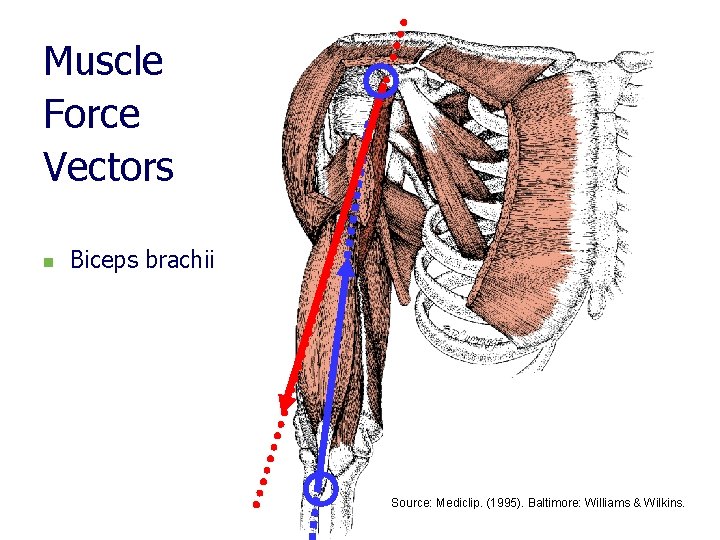
Muscle Force Vectors n Biceps brachii Source: Mediclip. (1995). Baltimore: Williams & Wilkins.
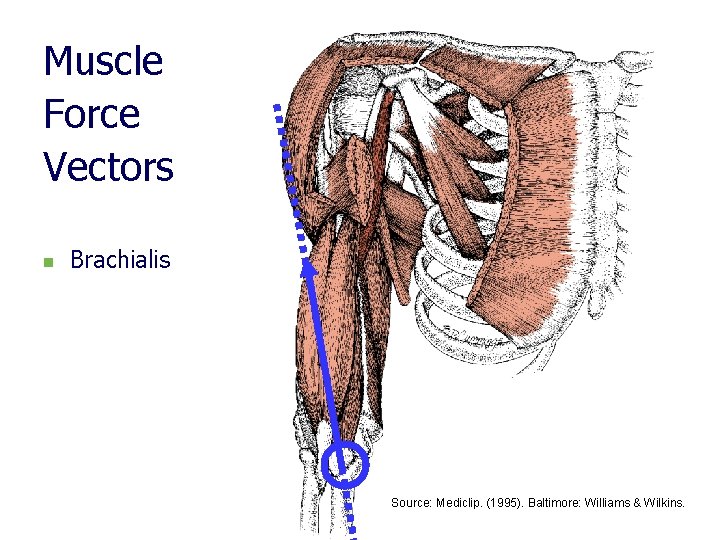
Muscle Force Vectors n Brachialis Source: Mediclip. (1995). Baltimore: Williams & Wilkins.
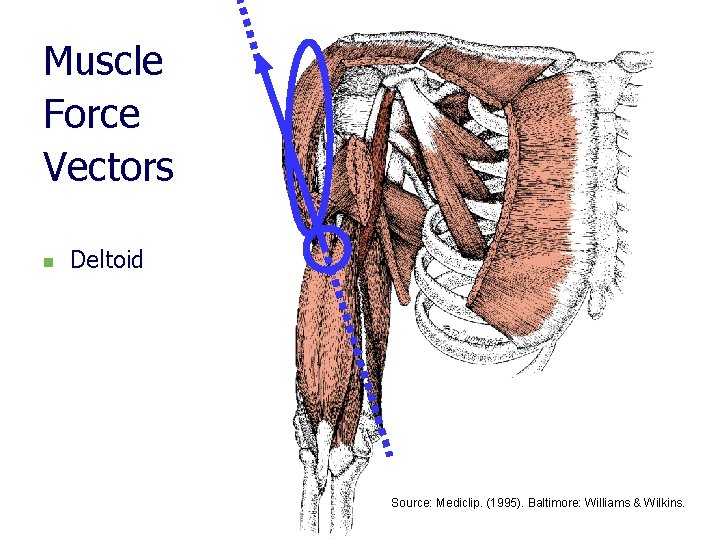
Muscle Force Vectors n Deltoid Source: Mediclip. (1995). Baltimore: Williams & Wilkins.
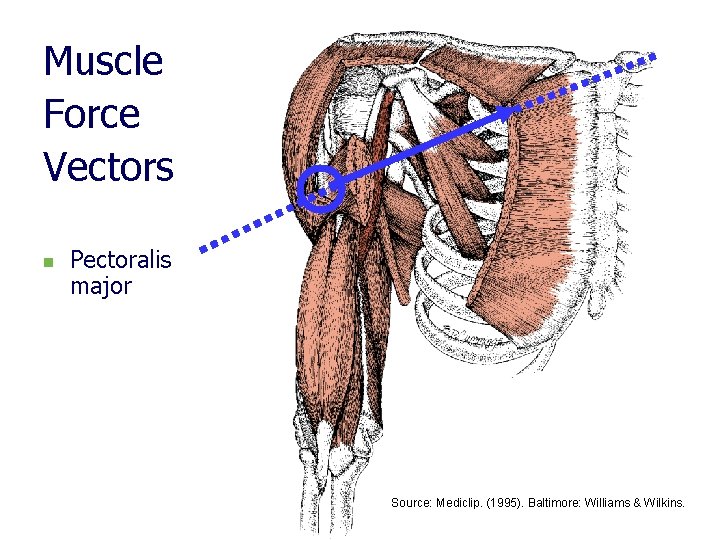
Muscle Force Vectors n Pectoralis major Source: Mediclip. (1995). Baltimore: Williams & Wilkins.
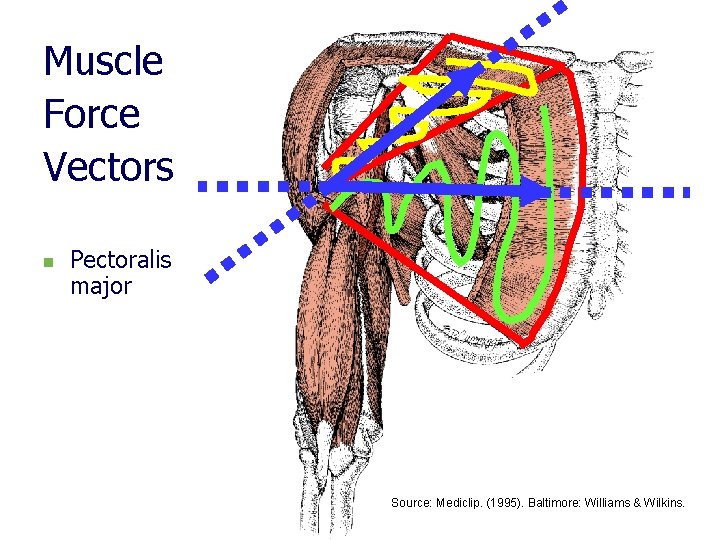
Muscle Force Vectors n Pectoralis major Source: Mediclip. (1995). Baltimore: Williams & Wilkins.

Muscle Force Vectors n Pectoralis minor Source: Mediclip. (1995). Baltimore: Williams & Wilkins.

Vector Algebra 1. 2. 3. Introductory Concepts Vector Composition Vector Resolution
Vector Composition n n Process of determining a resultant vector from two or more vectors New vector called the resultant (R)
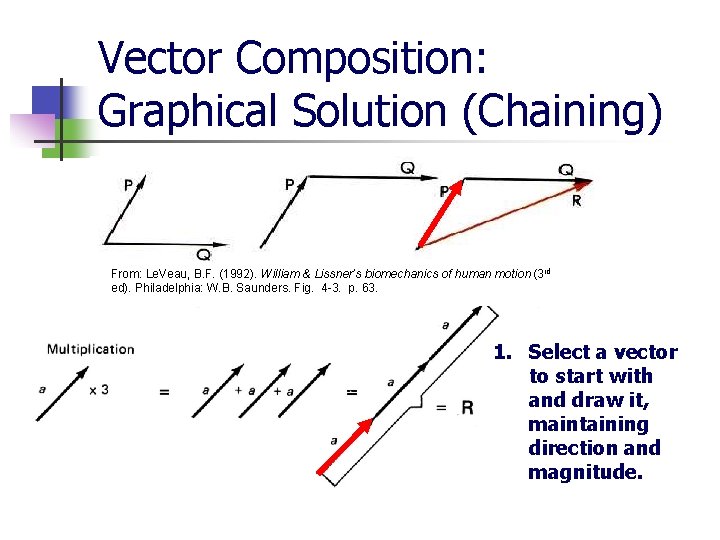
Vector Composition: Graphical Solution (Chaining) From: Le. Veau, B. F. (1992). William & Lissner’s biomechanics of human motion (3 rd ed). Philadelphia: W. B. Saunders. Fig. 4 -3. p. 63. 1. Select a vector to start with and draw it, maintaining direction and magnitude.
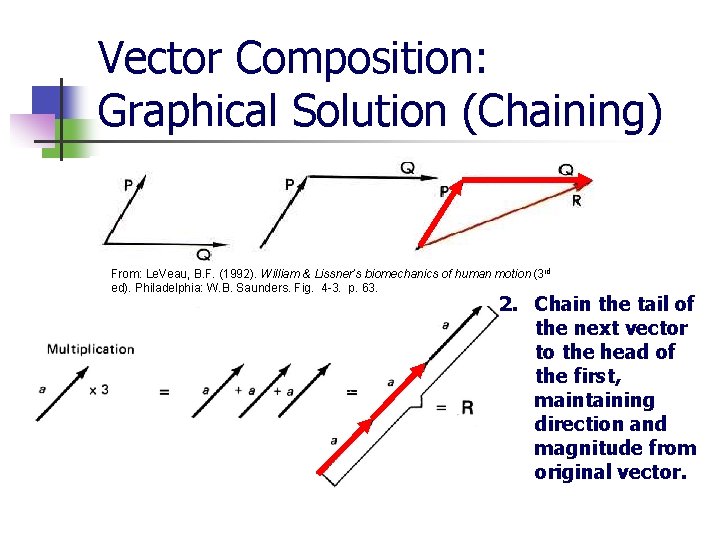
Vector Composition: Graphical Solution (Chaining) From: Le. Veau, B. F. (1992). William & Lissner’s biomechanics of human motion (3 rd ed). Philadelphia: W. B. Saunders. Fig. 4 -3. p. 63. 2. Chain the tail of the next vector to the head of the first, maintaining direction and magnitude from original vector.

Vector Composition: Graphical Solution (Chaining) From: Le. Veau, B. F. (1992). William & Lissner’s biomechanics of human motion (3 rd ed). Philadelphia: W. B. Saunders. Fig. 4 -3. p. 63. 3. Continue to chain vectors in this manner until they are all chained.
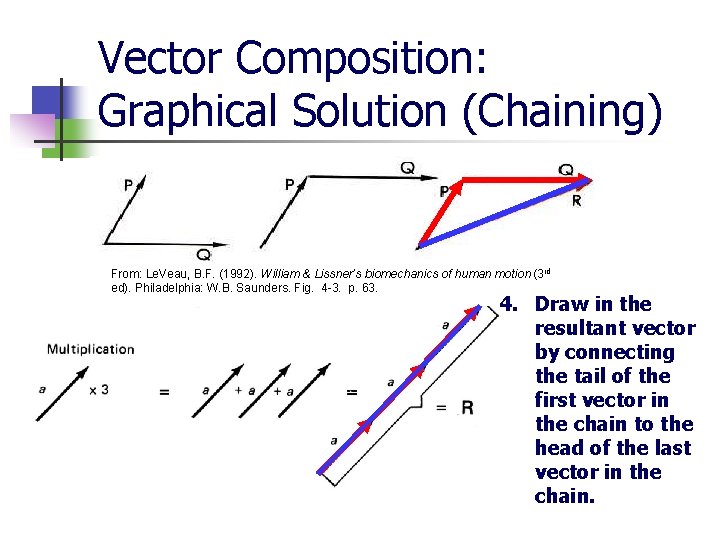
Vector Composition: Graphical Solution (Chaining) From: Le. Veau, B. F. (1992). William & Lissner’s biomechanics of human motion (3 rd ed). Philadelphia: W. B. Saunders. Fig. 4 -3. p. 63. 4. Draw in the resultant vector by connecting the tail of the first vector in the chain to the head of the last vector in the chain.
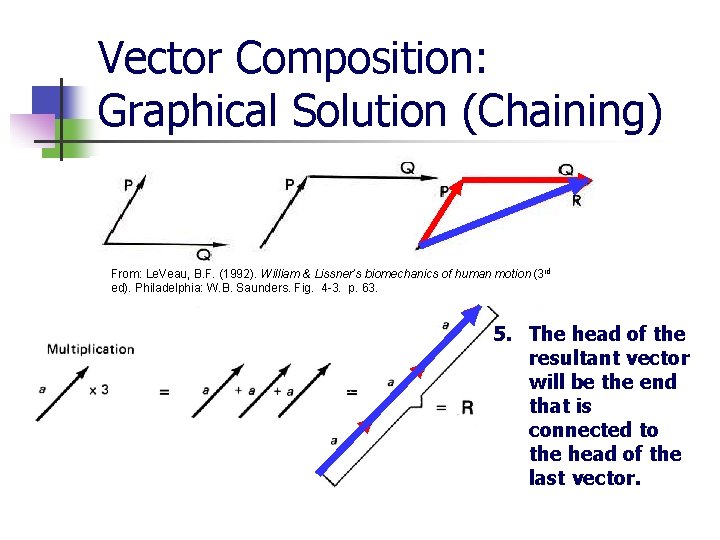
Vector Composition: Graphical Solution (Chaining) From: Le. Veau, B. F. (1992). William & Lissner’s biomechanics of human motion (3 rd ed). Philadelphia: W. B. Saunders. Fig. 4 -3. p. 63. 5. The head of the resultant vector will be the end that is connected to the head of the last vector.
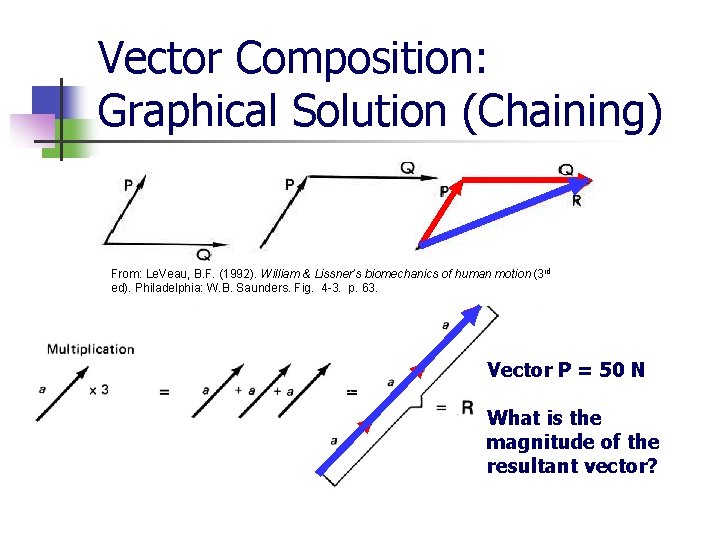
Vector Composition: Graphical Solution (Chaining) From: Le. Veau, B. F. (1992). William & Lissner’s biomechanics of human motion (3 rd ed). Philadelphia: W. B. Saunders. Fig. 4 -3. p. 63. Vector P = 50 N What is the magnitude of the resultant vector?
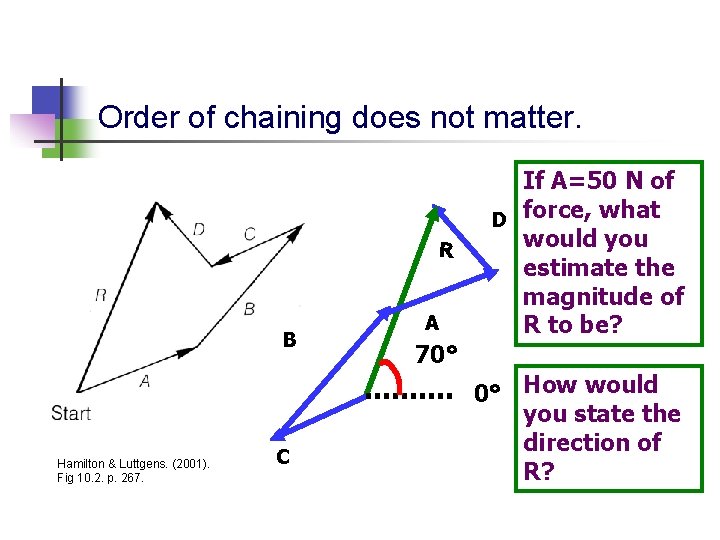
Order of chaining does not matter. R B Hamilton & Luttgens. (2001). Fig 10. 2. p. 267. C A If A=50 N of D force, what would you estimate the magnitude of R to be? 70° 0° How would you state the direction of R?
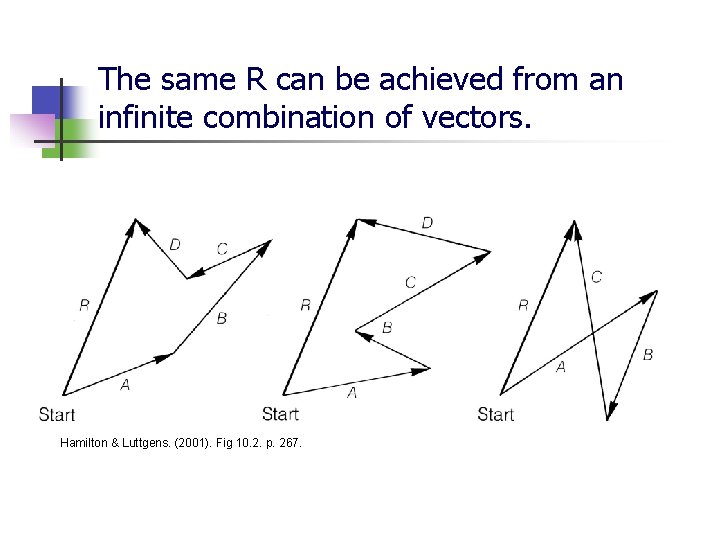
The same R can be achieved from an infinite combination of vectors. Hamilton & Luttgens. (2001). Fig 10. 2. p. 267.
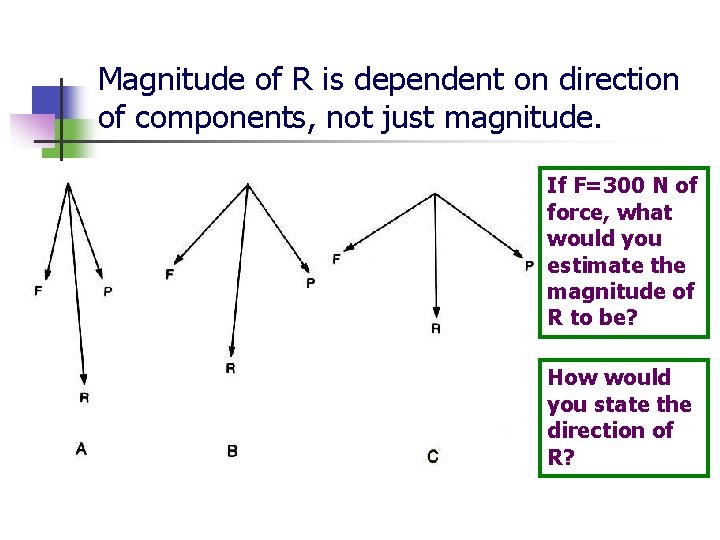
Magnitude of R is dependent on direction of components, not just magnitude. If F=300 N of force, what would you estimate the magnitude of R to be? How would you state the direction of R?
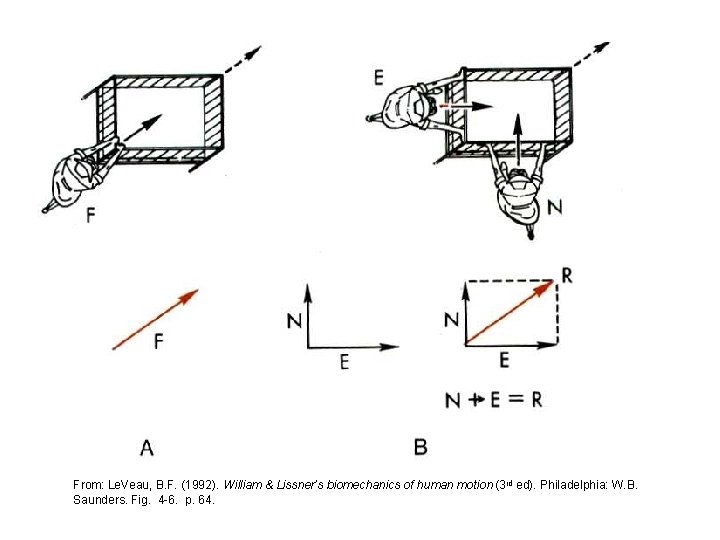
From: Le. Veau, B. F. (1992). William & Lissner’s biomechanics of human motion (3 rd ed). Philadelphia: W. B. Saunders. Fig. 4 -6. p. 64.
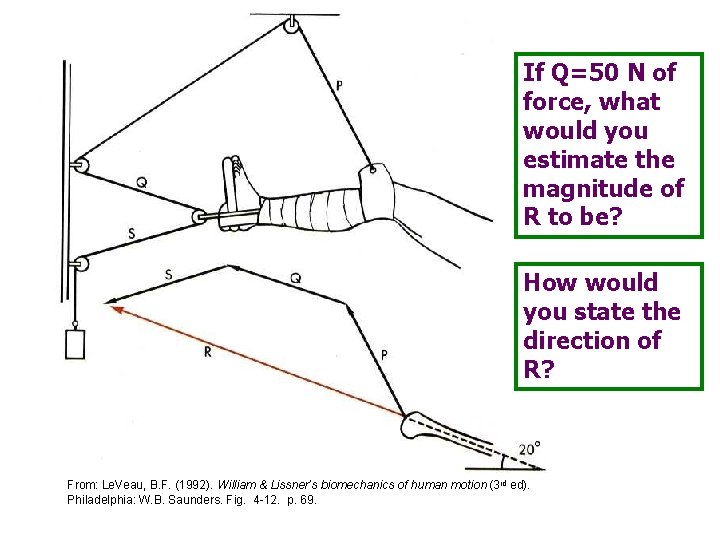
If Q=50 N of force, what would you estimate the magnitude of R to be? How would you state the direction of R? From: Le. Veau, B. F. (1992). William & Lissner’s biomechanics of human motion (3 rd ed). Philadelphia: W. B. Saunders. Fig. 4 -12. p. 69.
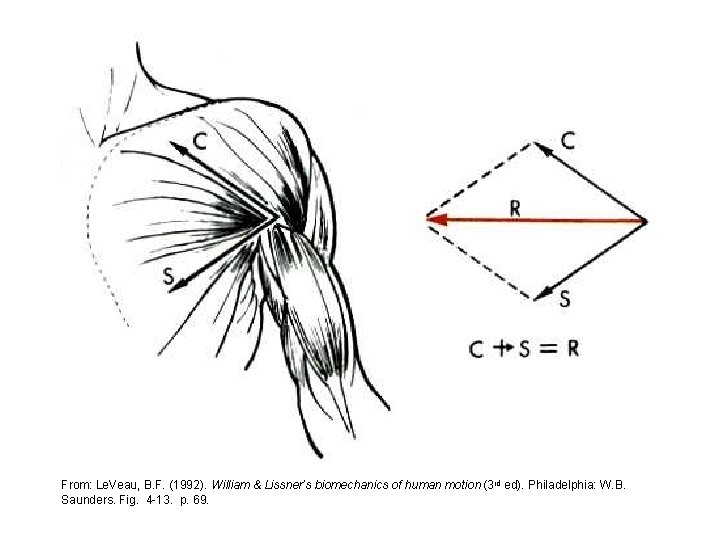
From: Le. Veau, B. F. (1992). William & Lissner’s biomechanics of human motion (3 rd ed). Philadelphia: W. B. Saunders. Fig. 4 -13. p. 69.

Vector Algebra 1. 2. 3. Introductory Concepts Vector Composition Vector Resolution
Vector Resolution n Taking a resultant vector and breaking it down into 2 or more component vectors
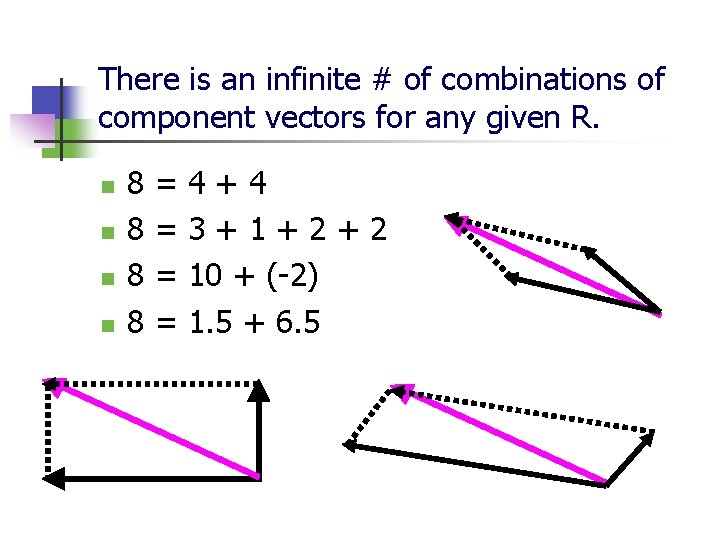
There is an infinite # of combinations of component vectors for any given R. n n 8 8 = = 4+4 3+1+2+2 10 + (-2) 1. 5 + 6. 5
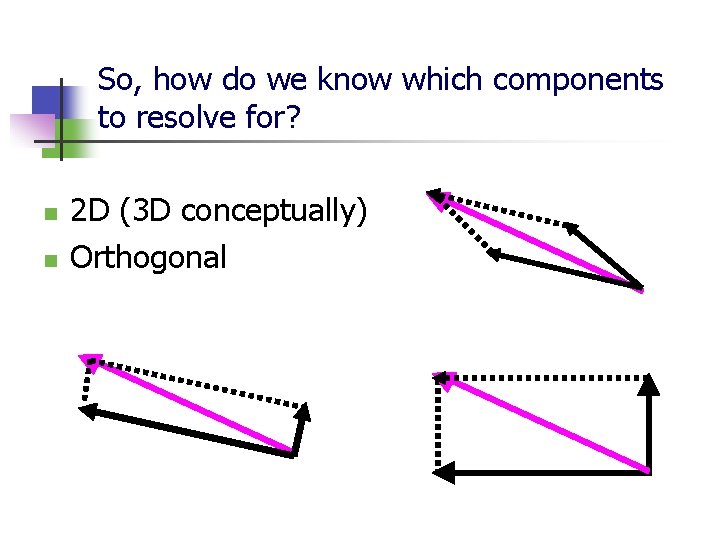
So, how do we know which components to resolve for? n n 2 D (3 D conceptually) Orthogonal
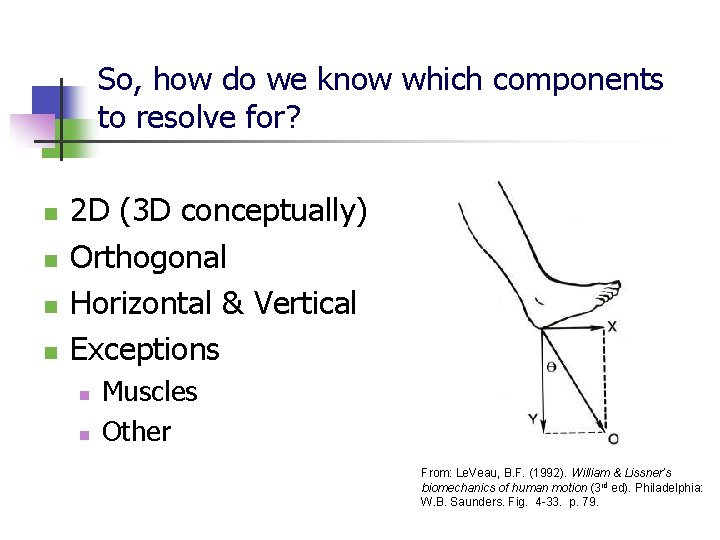
So, how do we know which components to resolve for? n n 2 D (3 D conceptually) Orthogonal Horizontal & Vertical Exceptions n n Muscles Other From: Le. Veau, B. F. (1992). William & Lissner’s biomechanics of human motion (3 rd ed). Philadelphia: W. B. Saunders. Fig. 4 -33. p. 79.
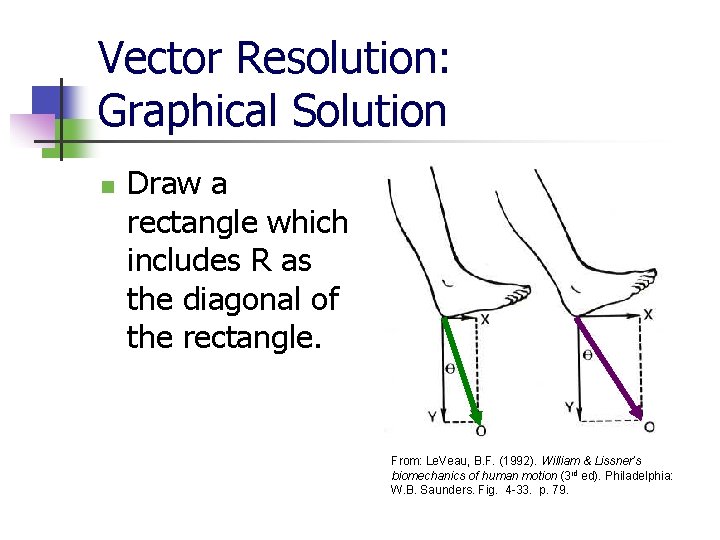
Vector Resolution: Graphical Solution n Draw a rectangle which includes R as the diagonal of the rectangle. From: Le. Veau, B. F. (1992). William & Lissner’s biomechanics of human motion (3 rd ed). Philadelphia: W. B. Saunders. Fig. 4 -33. p. 79.
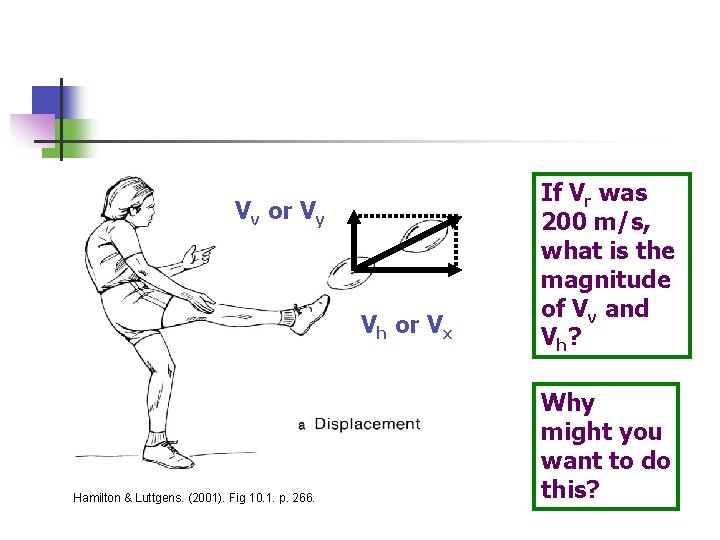
Vv or Vy Vh or Vx Hamilton & Luttgens. (2001). Fig 10. 1. p. 266. If Vr was 200 m/s, what is the magnitude of Vv and V h? Why might you want to do this?
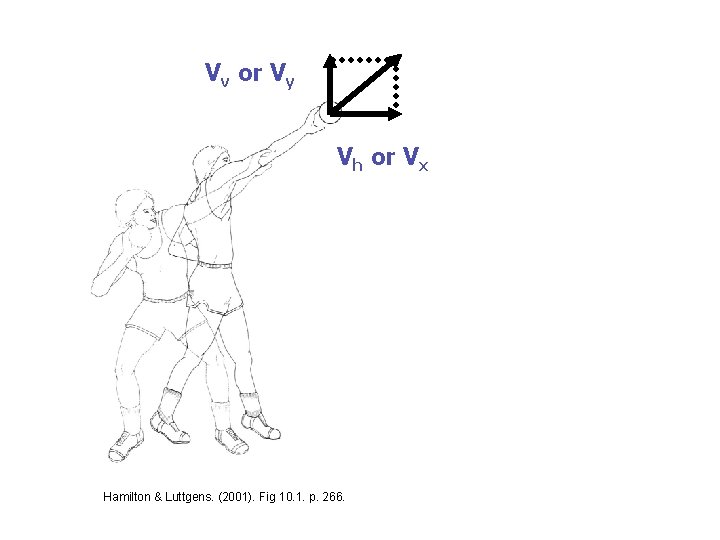
Vv or Vy Vh or Vx Hamilton & Luttgens. (2001). Fig 10. 1. p. 266.
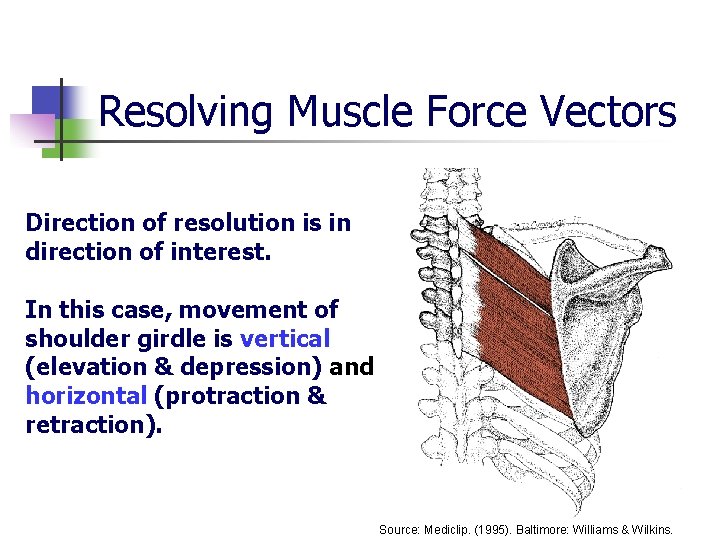
Resolving Muscle Force Vectors Direction of resolution is in direction of interest. In this case, movement of shoulder girdle is vertical (elevation & depression) and horizontal (protraction & retraction). Source: Mediclip. (1995). Baltimore: Williams & Wilkins.
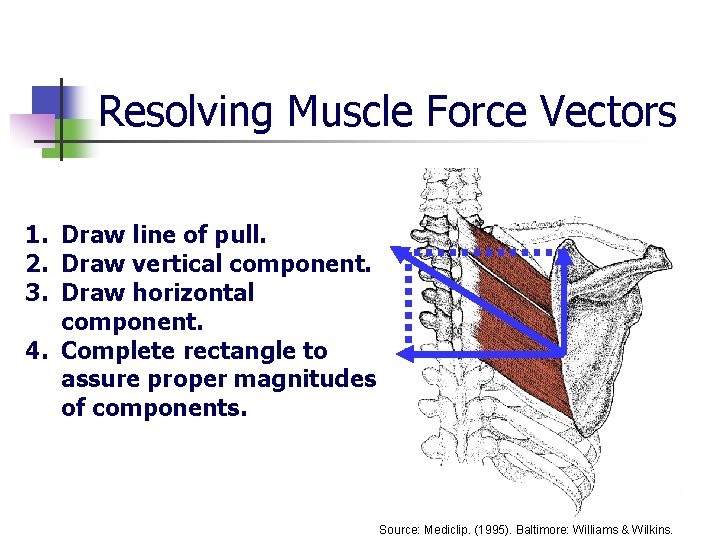
Resolving Muscle Force Vectors 1. Draw line of pull. 2. Draw vertical component. 3. Draw horizontal component. 4. Complete rectangle to assure proper magnitudes of components. Source: Mediclip. (1995). Baltimore: Williams & Wilkins.
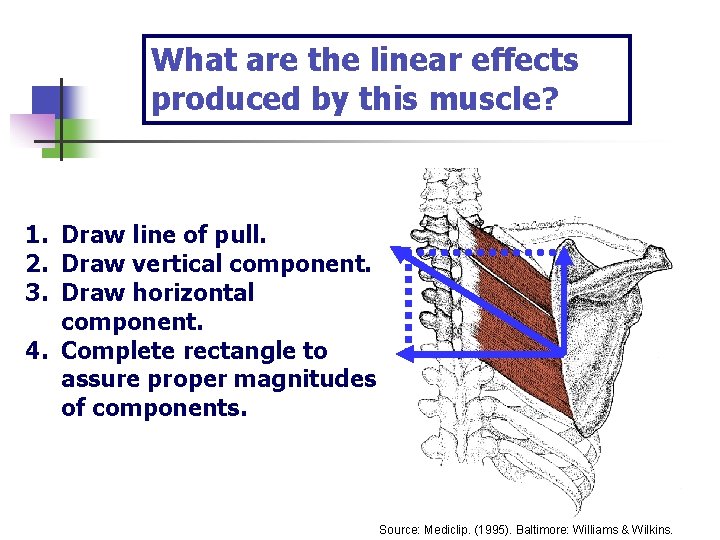
What are the linear effects produced by this muscle? 1. Draw line of pull. 2. Draw vertical component. 3. Draw horizontal component. 4. Complete rectangle to assure proper magnitudes of components. Source: Mediclip. (1995). Baltimore: Williams & Wilkins.
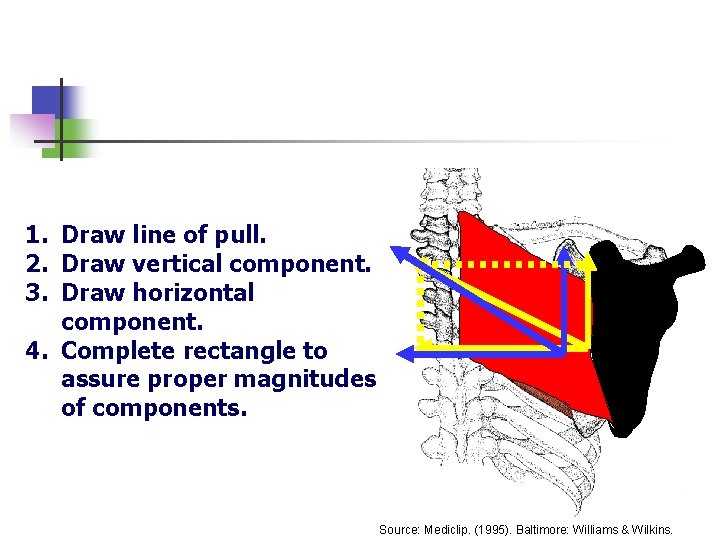
1. Draw line of pull. 2. Draw vertical component. 3. Draw horizontal component. 4. Complete rectangle to assure proper magnitudes of components. Source: Mediclip. (1995). Baltimore: Williams & Wilkins.
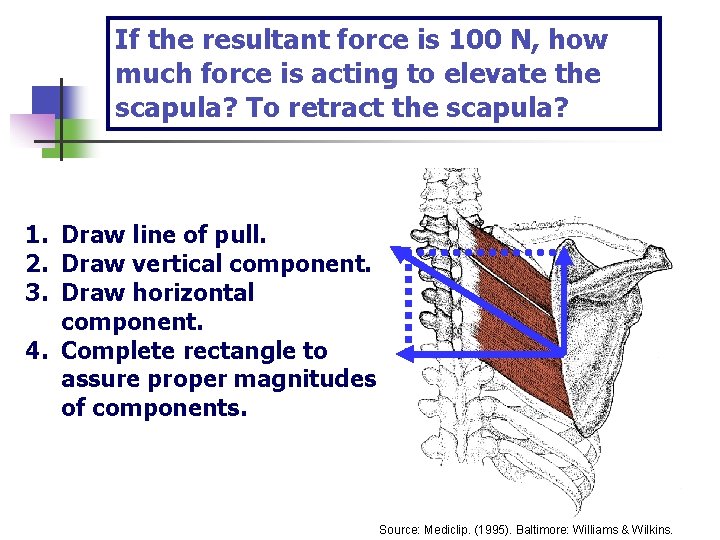
If the resultant force is 100 N, how much force is acting to elevate the scapula? To retract the scapula? 1. Draw line of pull. 2. Draw vertical component. 3. Draw horizontal component. 4. Complete rectangle to assure proper magnitudes of components. Source: Mediclip. (1995). Baltimore: Williams & Wilkins.
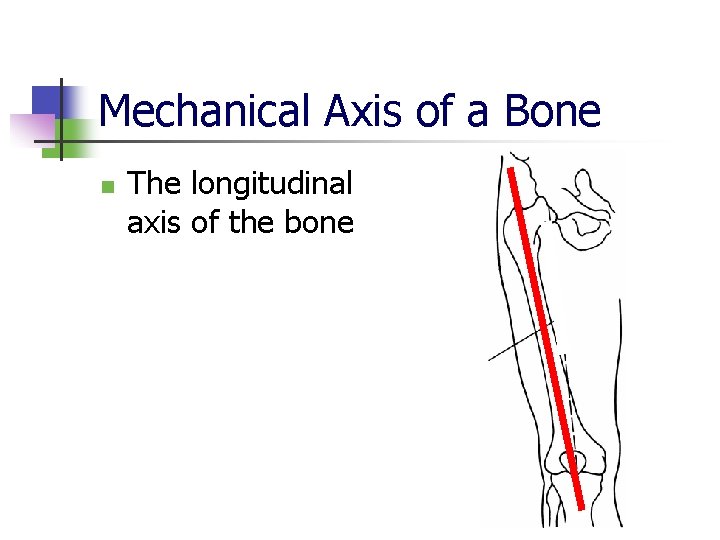
Mechanical Axis of a Bone n The longitudinal axis of the bone
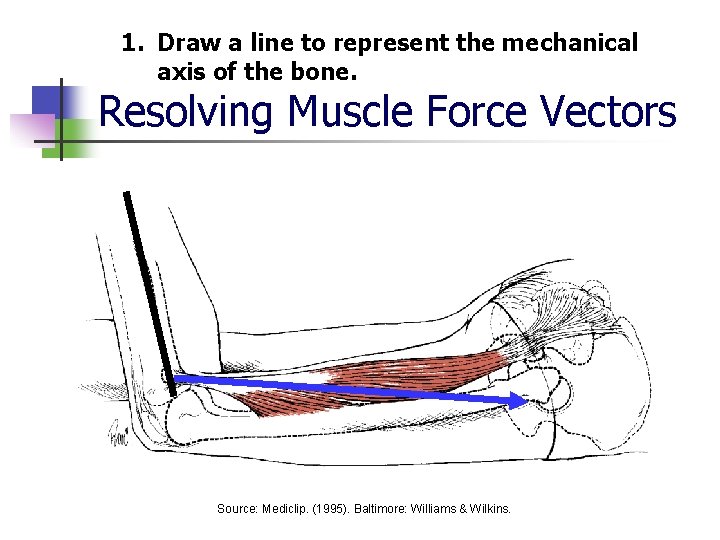
1. Draw a line to represent the mechanical axis of the bone. Resolving Muscle Force Vectors Source: Mediclip. (1995). Baltimore: Williams & Wilkins.
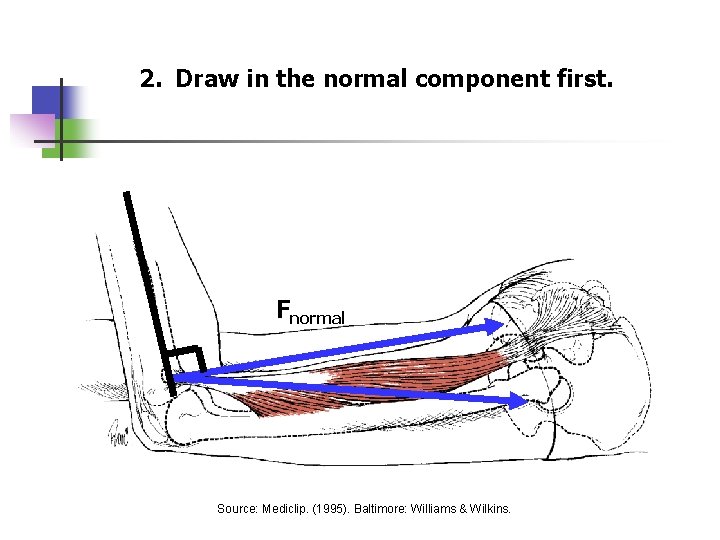
2. Draw in the normal component first. Fnormal Source: Mediclip. (1995). Baltimore: Williams & Wilkins.
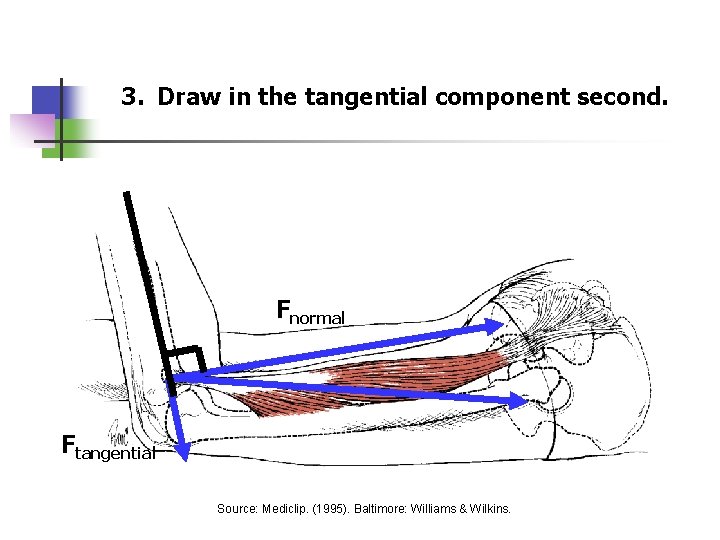
3. Draw in the tangential component second. Fnormal Ftangential Source: Mediclip. (1995). Baltimore: Williams & Wilkins.
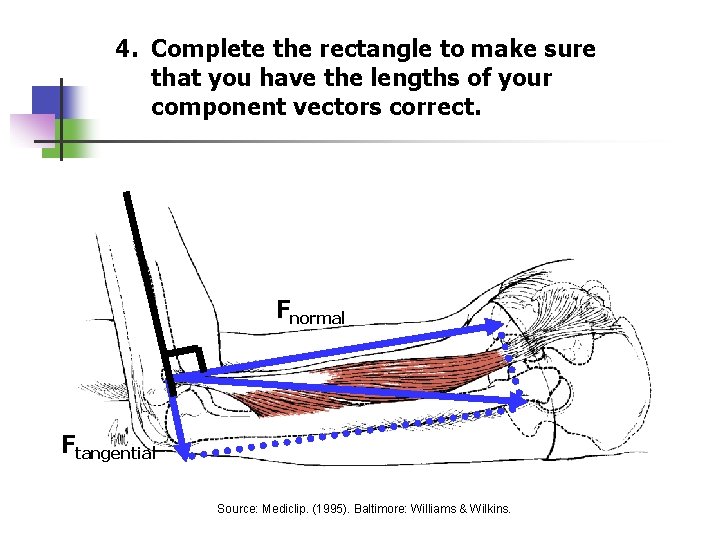
4. Complete the rectangle to make sure that you have the lengths of your component vectors correct. Fnormal Ftangential Source: Mediclip. (1995). Baltimore: Williams & Wilkins.
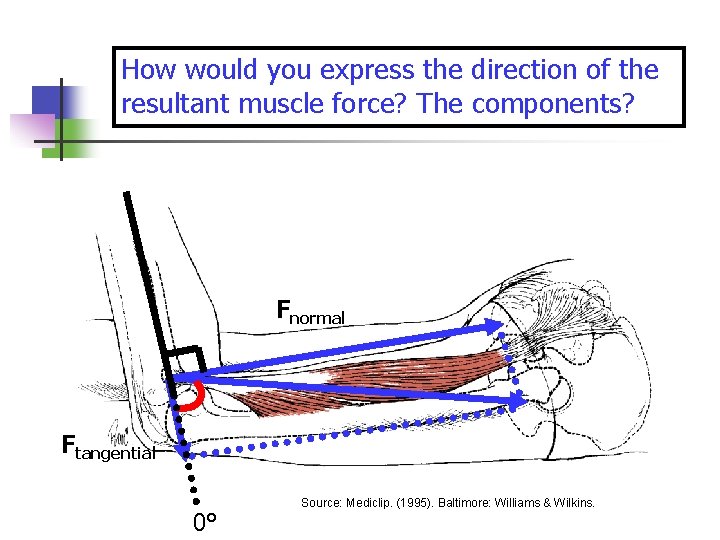
How would you express the direction of the resultant muscle force? The components? Fnormal Ftangential 0° Source: Mediclip. (1995). Baltimore: Williams & Wilkins.
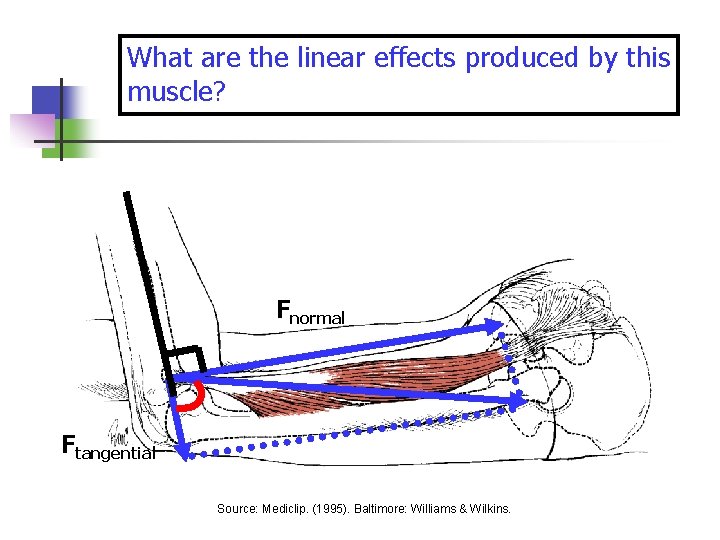
What are the linear effects produced by this muscle? Fnormal Ftangential Source: Mediclip. (1995). Baltimore: Williams & Wilkins.
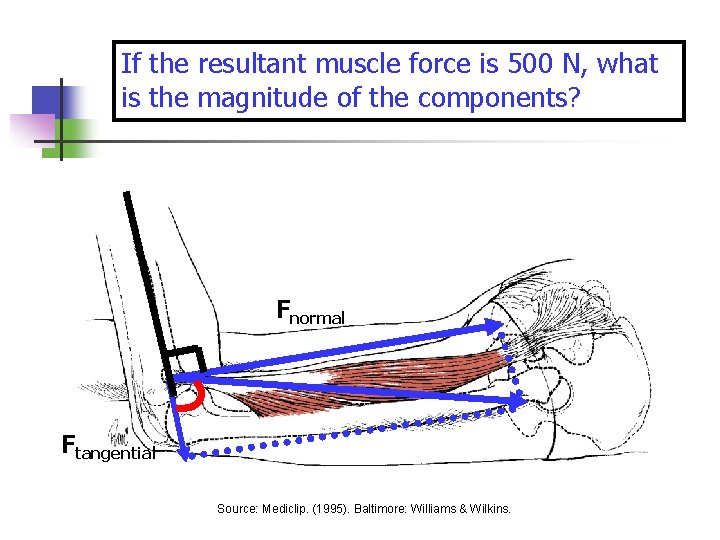
If the resultant muscle force is 500 N, what is the magnitude of the components? Fnormal Ftangential Source: Mediclip. (1995). Baltimore: Williams & Wilkins.
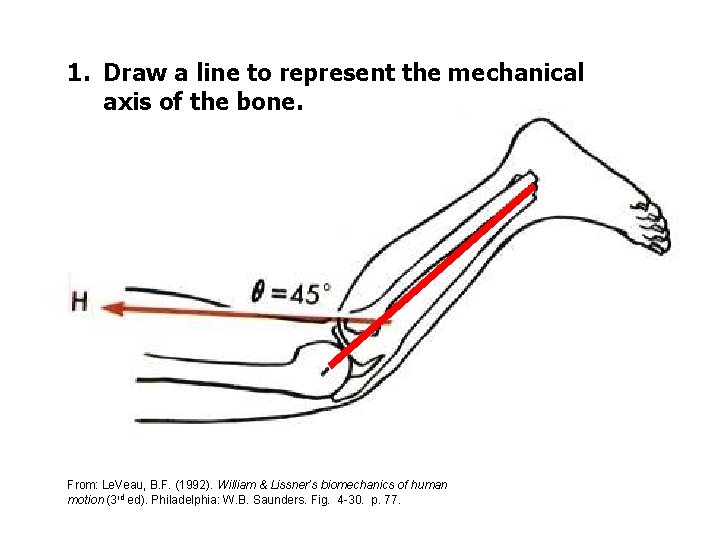
1. Draw a line to represent the mechanical axis of the bone. From: Le. Veau, B. F. (1992). William & Lissner’s biomechanics of human motion (3 rd ed). Philadelphia: W. B. Saunders. Fig. 4 -30. p. 77.
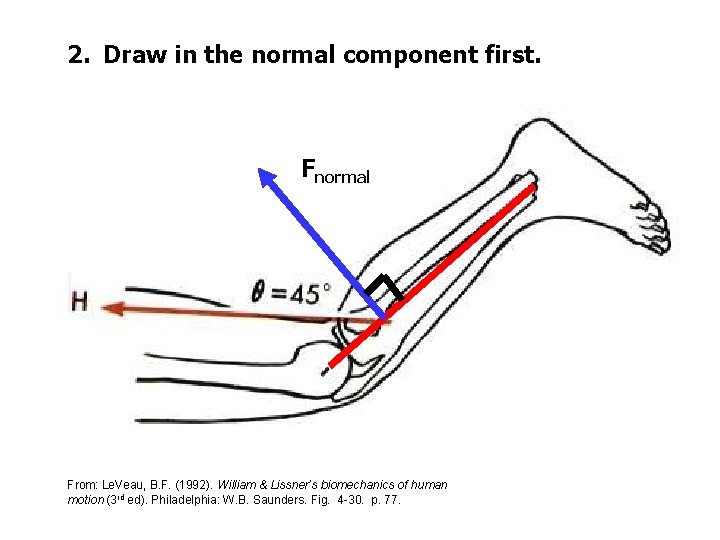
2. Draw in the normal component first. Fnormal From: Le. Veau, B. F. (1992). William & Lissner’s biomechanics of human motion (3 rd ed). Philadelphia: W. B. Saunders. Fig. 4 -30. p. 77.
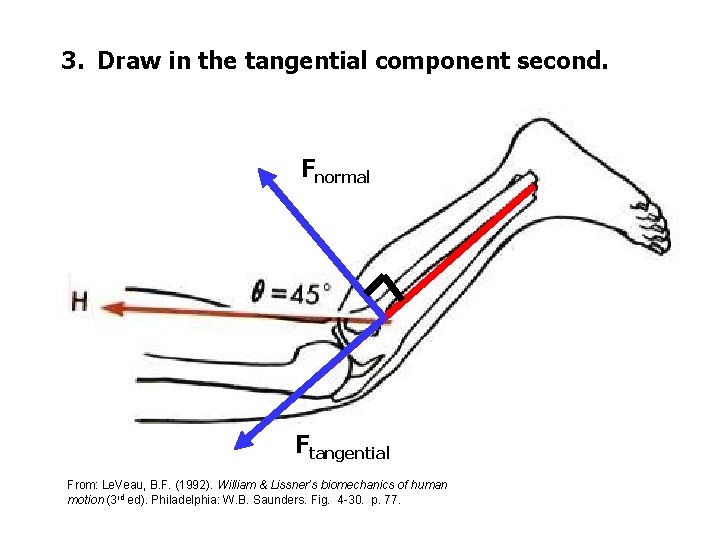
3. Draw in the tangential component second. Fnormal Ftangential From: Le. Veau, B. F. (1992). William & Lissner’s biomechanics of human motion (3 rd ed). Philadelphia: W. B. Saunders. Fig. 4 -30. p. 77.

4. Complete the rectangle to make sure that you have the lengths of your vectors correct. Fnormal Ftangential From: Le. Veau, B. F. (1992). William & Lissner’s biomechanics of human motion (3 rd ed). Philadelphia: W. B. Saunders. Fig. 4 -30. p. 77.
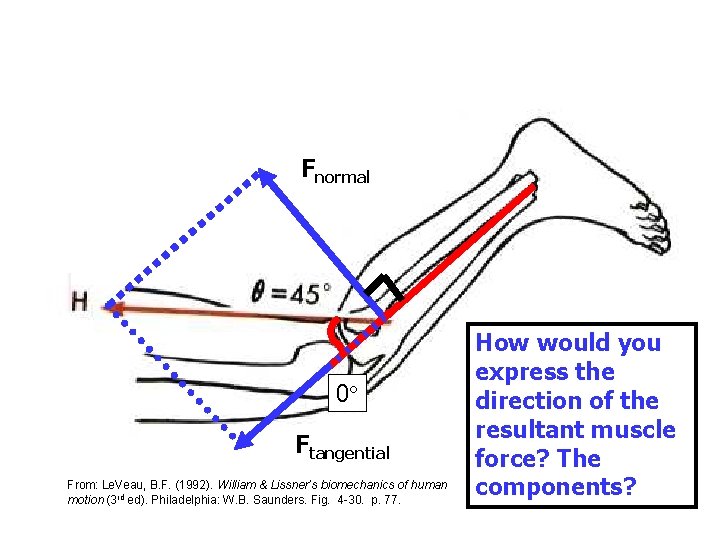
Fnormal 0 Ftangential From: Le. Veau, B. F. (1992). William & Lissner’s biomechanics of human motion (3 rd ed). Philadelphia: W. B. Saunders. Fig. 4 -30. p. 77. How would you express the direction of the resultant muscle force? The components?
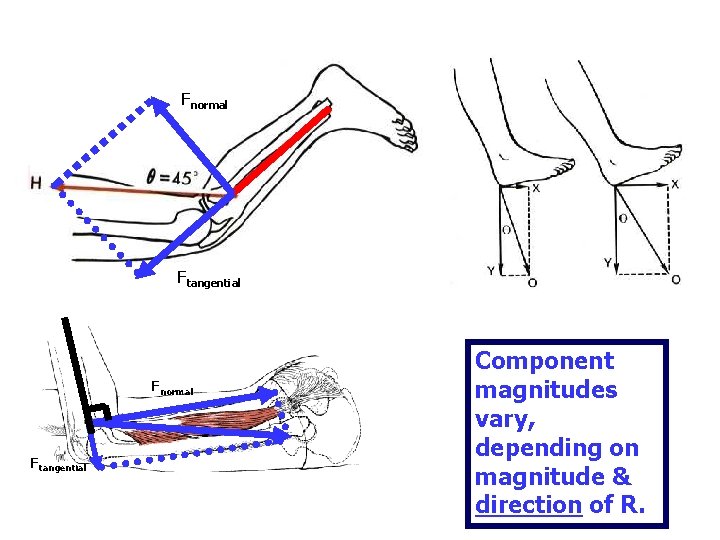
Fnormal Ftangential Component magnitudes vary, depending on magnitude & direction of R.
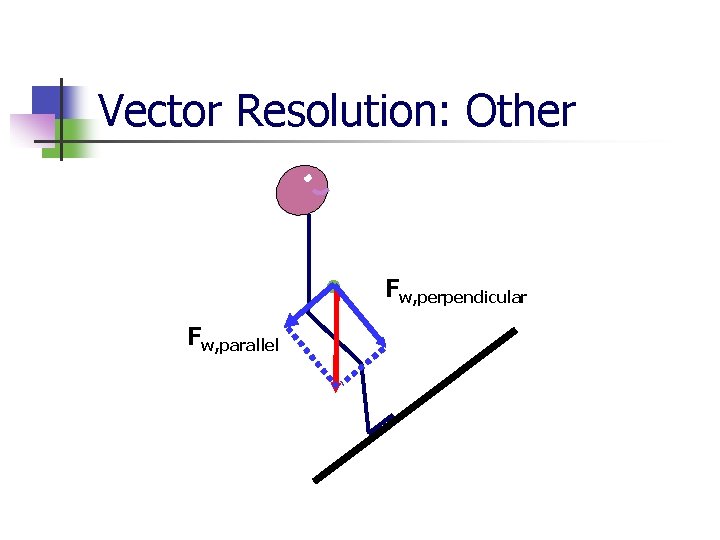
Vector Resolution: Other Fw, perpendicular Fw, parallel
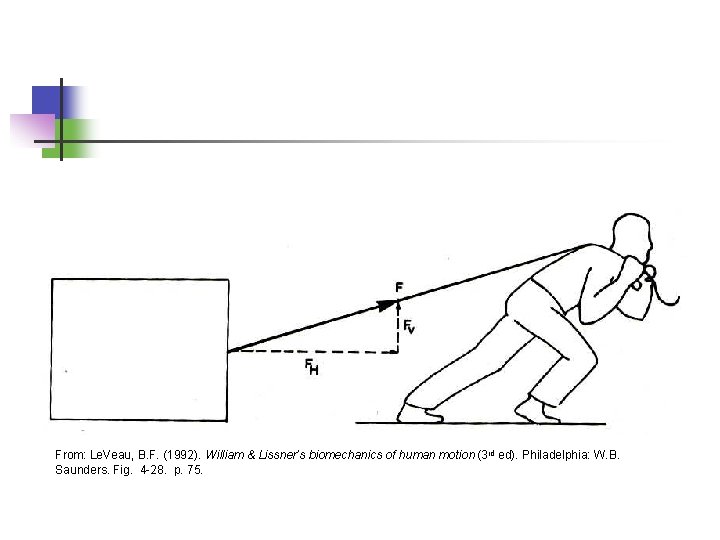
Fv From: Le. Veau, B. F. (1992). William & Lissner’s biomechanics of human motion (3 rd ed). Philadelphia: W. B. Saunders. Fig. 4 -28. p. 75.
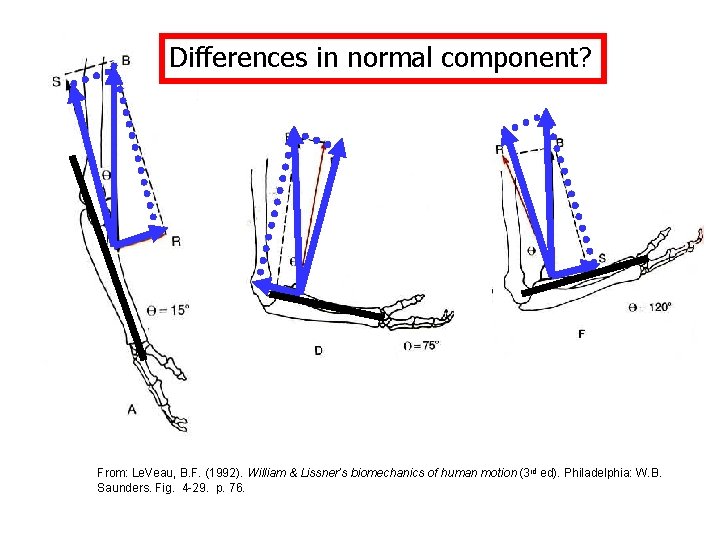
Differences in normal component? From: Le. Veau, B. F. (1992). William & Lissner’s biomechanics of human motion (3 rd ed). Philadelphia: W. B. Saunders. Fig. 4 -29. p. 76.
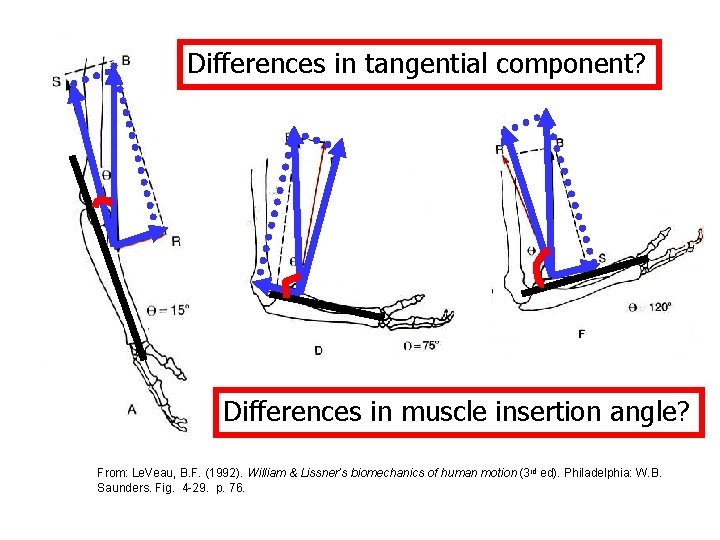
Differences in tangential component? Differences in muscle insertion angle? From: Le. Veau, B. F. (1992). William & Lissner’s biomechanics of human motion (3 rd ed). Philadelphia: W. B. Saunders. Fig. 4 -29. p. 76.
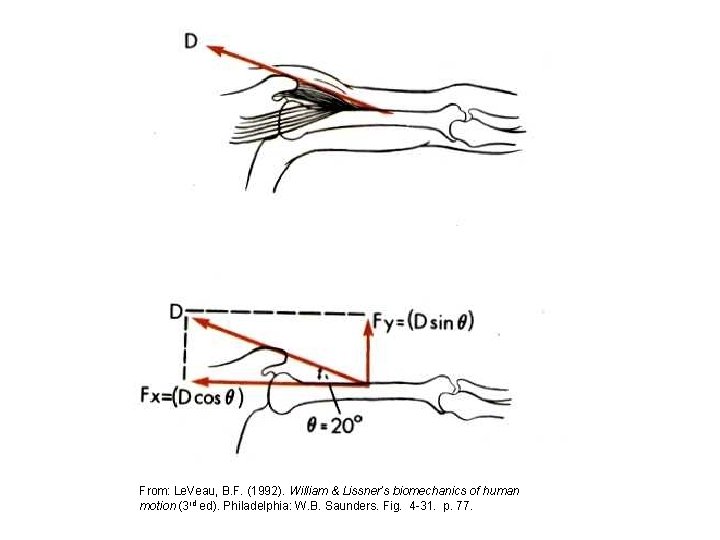
From: Le. Veau, B. F. (1992). William & Lissner’s biomechanics of human motion (3 rd ed). Philadelphia: W. B. Saunders. Fig. 4 -31. p. 77.
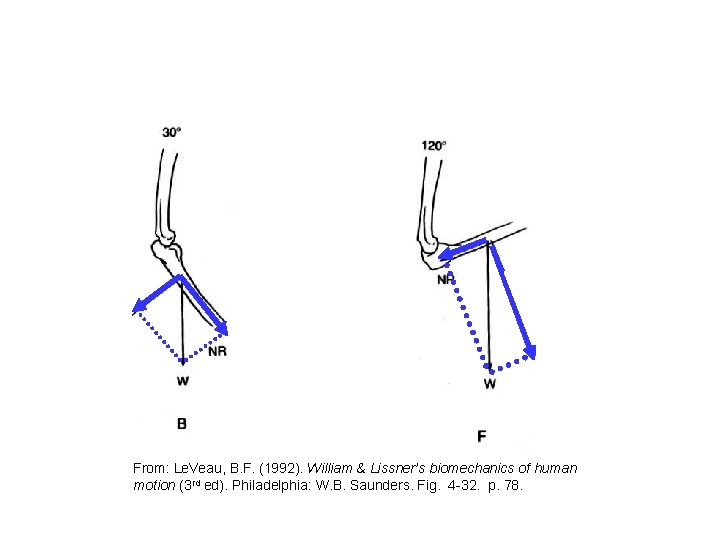
From: Le. Veau, B. F. (1992). William & Lissner’s biomechanics of human motion (3 rd ed). Philadelphia: W. B. Saunders. Fig. 4 -32. p. 78.
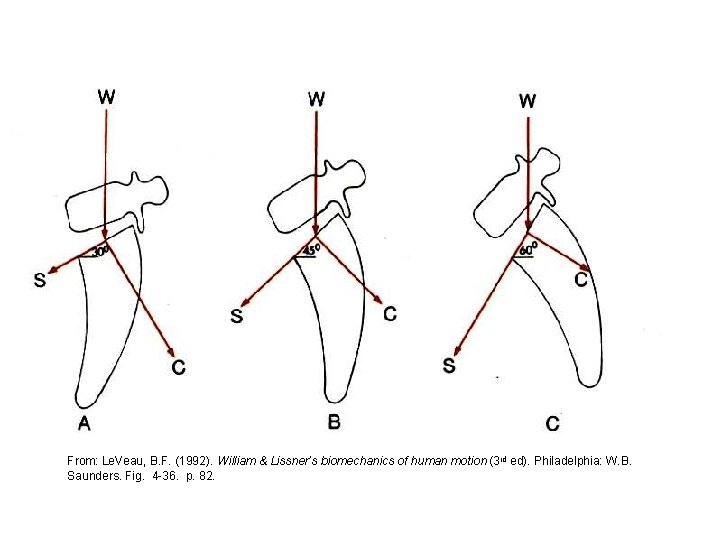
From: Le. Veau, B. F. (1992). William & Lissner’s biomechanics of human motion (3 rd ed). Philadelphia: W. B. Saunders. Fig. 4 -36. p. 82.
Value of Vector Analysis n Helps us understand forces and their effects!

For the next lecture day: n Lecture Topic #2 n Subtopic C – Basic Kinetic Concepts
- Slides: 68