
VBP 035 Perform Microbiological Procedures in the Food
VBP 035 Perform Microbiological Procedures in the Food Industry CRICOS Provider Code: 01505 M RTO Number: 3045 DHS V 1. 2 2011
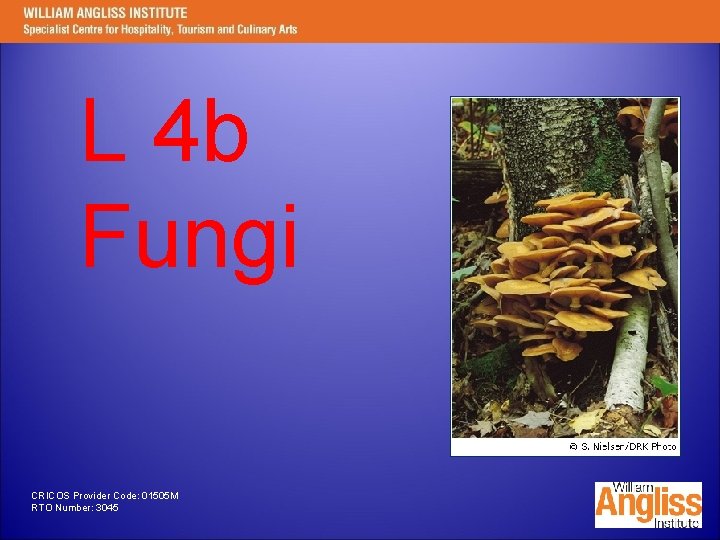
L 4 b Fungi CRICOS Provider Code: 01505 M RTO Number: 3045
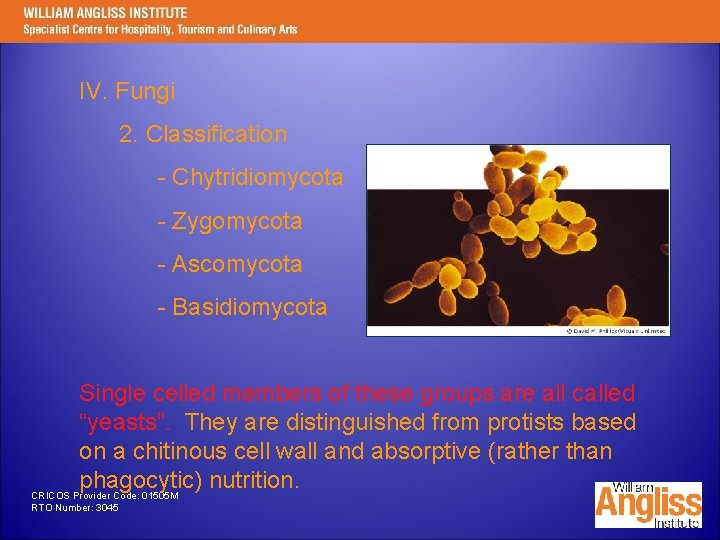
IV. Fungi 2. Classification - Chytridiomycota - Zygomycota - Ascomycota - Basidiomycota Single celled members of these groups are all called “yeasts”. They are distinguished from protists based on a chitinous cell wall and absorptive (rather than phagocytic) nutrition. CRICOS Provider Code: 01505 M RTO Number: 3045
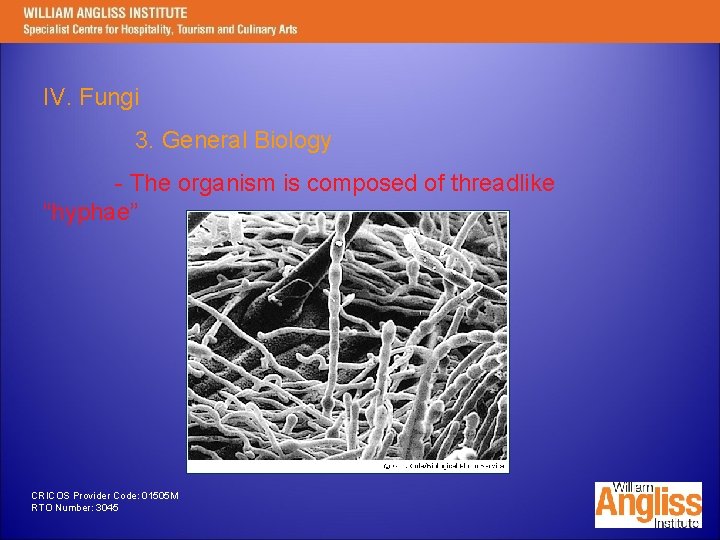
IV. Fungi 3. General Biology - The organism is composed of threadlike “hyphae” CRICOS Provider Code: 01505 M RTO Number: 3045
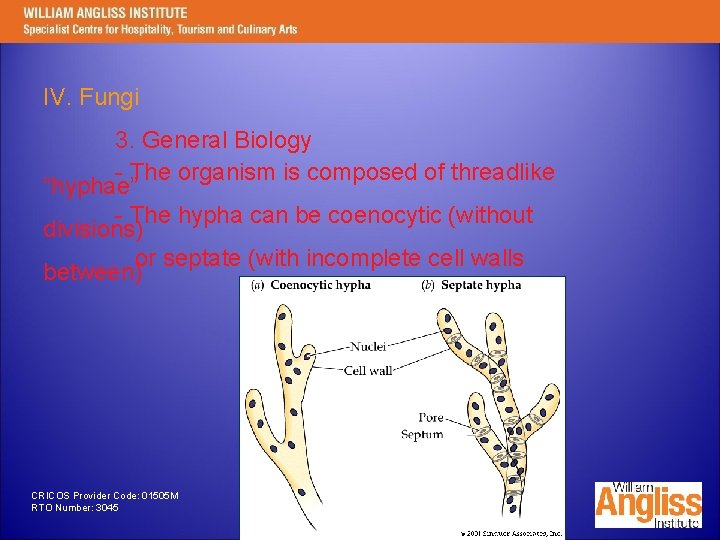
IV. Fungi 3. General Biology - The organism is composed of threadlike “hyphae” - The hypha can be coenocytic (without divisions) or septate (with incomplete cell walls between) CRICOS Provider Code: 01505 M RTO Number: 3045
IV. Fungi 3. General Biology - The organism is composed of threadlike “hyphae” - The hypha can be coenocytic (without divisions) or septate (with incomplete cell walls between) - These have a huge surface area/volume ratio for absorption. - The largest organisms known… 37 acres. CRICOS Provider Code: 01505 M RTO Number: 3045
Fungal reproduction v. Asexually, by forming conidia v. Sexually (three steps): • Plasmogami (dikaryon) • Karyogami (zygote forms) • Meiosis (sexual spore forms): CRICOS Provider Code: 01505 M RTO Number: 3045 • Zygospore • Ascospore • Basidiospore
Zygomycota CRICOS Provider Code: 01505 M RTO Number: 3045
IV. Fungi 4. Ecological Roles - decomposers: Fungi decompose lignin and cellulose, which most free-living bacteria can’t digest. CRICOS Provider Code: 01505 M RTO Number: 3045
IV. Fungi 4. Ecological Roles - decomposers: Fungi decompose lignin and cellulose, which most free-living bacteria can’t digest. * antibiotics CRICOS Provider Code: 01505 M RTO Number: 3045
IV. Fungi 4. Ecological Roles - decomposers: Fungi decompose liginin and cellulose, which most free-living bacteria can’t digest. * antibiotics - mycorrhizae: fungal symbiotes of certain plants. The fungus increases the absorbance area of roots dramatically, and passes water and nutrients to the plant. The plant feeds the fungus with glucose. CRICOS Provider Code: 01505 M RTO Number: 3045
IV. Fungi 4. Ecological Roles - decomposers: Fungi decompose liginin and cellulose, which most free-living bacteria can’t digest. * antibiotics - mycorrhizae: fungal symbiotes of certain plants. The fungus increases the absorbance area of roots dramatically, and passes water and nutrients to the plant. The plant feeds the fungus with glucose. - lichens – symbiote with alga CRICOS Provider Code: 01505 M RTO Number: 3045
IV. Fungi 4. Ecological Roles - decomposers: Fungi decompose liginin and cellulose, which most free-living bacteria can’t digest. * antibiotics - mycorrhizae: fungal symbiotes of certain plants. The fungus increases the absorbance area of roots dramatically, and passes water and nutrients to the plant. The plant feeds the fungus with glucose. - lichens – symbiote with alga - pathogens – Athlete’s foot, ringworm, yeast infections - parasites – entomophagous fungi CRICOS Provider Code: 01505 M RTO Number: 3045
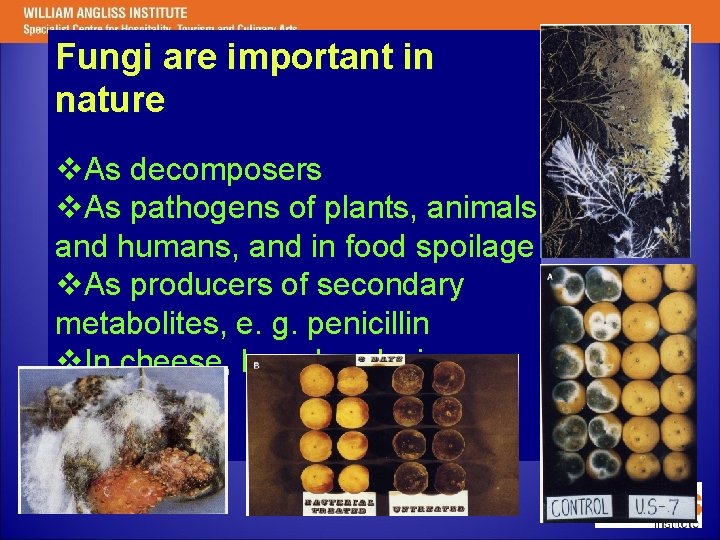
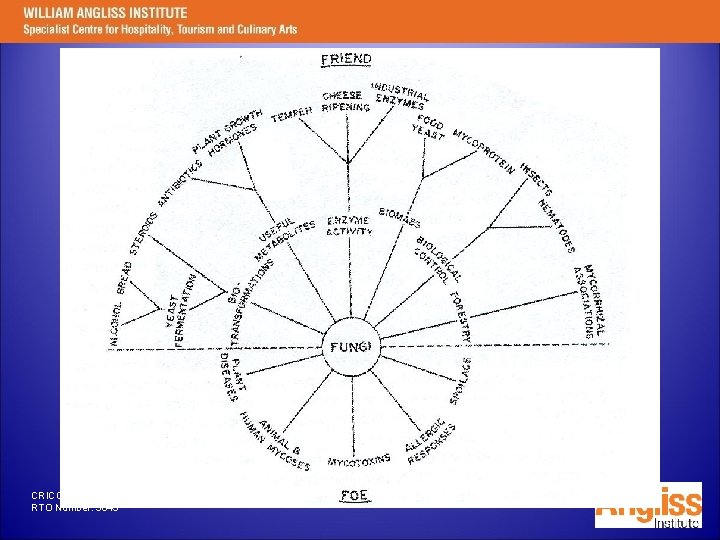
Fungi are important in nature v. As decomposers v. As pathogens of plants, animals and humans, and in food spoilage v. As producers of secondary metabolites, e. g. penicillin v. In cheese, bread and wine making CRICOS Provider Code: 01505 M RTO Number: 3045
CRICOS Provider Code: 01505 M RTO Number: 3045
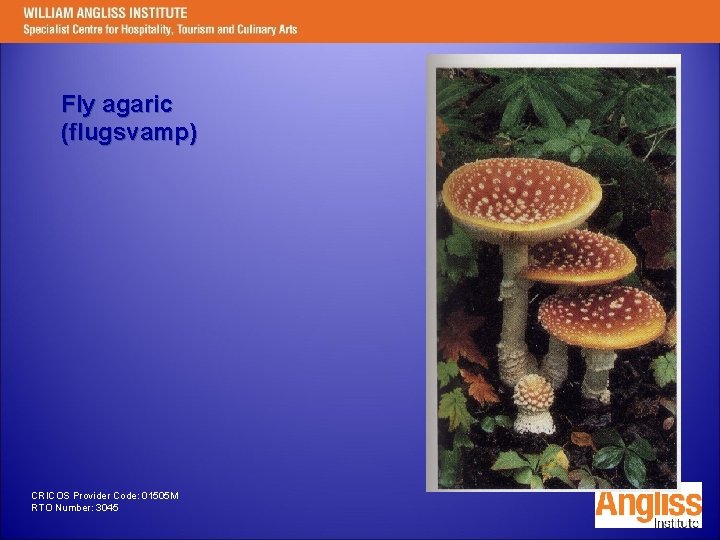
Fly agaric (flugsvamp) CRICOS Provider Code: 01505 M RTO Number: 3045
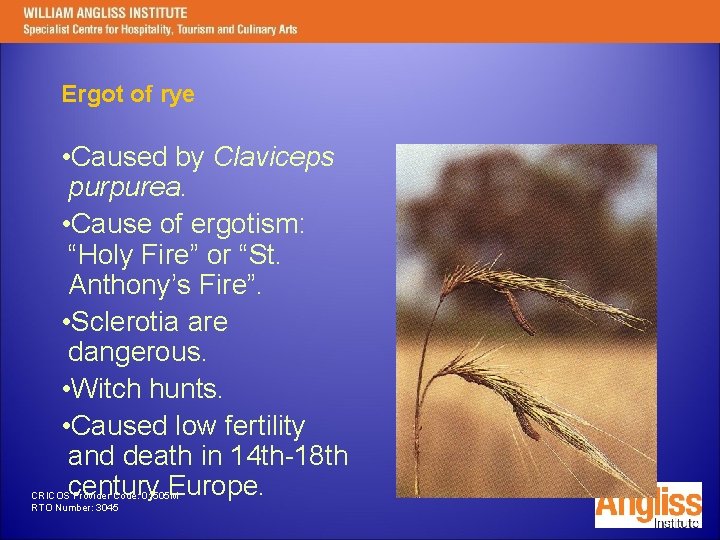
Ergot of rye • Caused by Claviceps purpurea. • Cause of ergotism: “Holy Fire” or “St. Anthony’s Fire”. • Sclerotia are dangerous. • Witch hunts. • Caused low fertility and death in 14 th-18 th century Europe. CRICOS Provider Code: 01505 M RTO Number: 3045
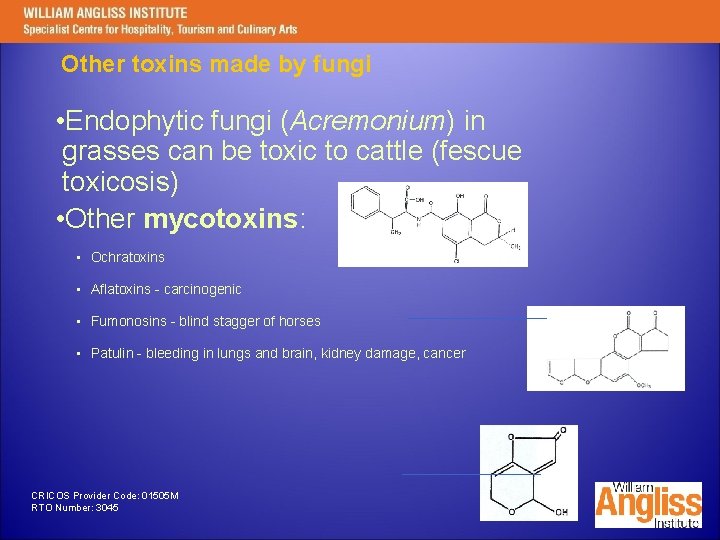
Other toxins made by fungi • Endophytic fungi (Acremonium) in grasses can be toxic to cattle (fescue toxicosis) • Other mycotoxins: • Ochratoxins • Aflatoxins - carcinogenic • Fumonosins - blind stagger of horses • Patulin - bleeding in lungs and brain, kidney damage, cancer CRICOS Provider Code: 01505 M RTO Number: 3045
Medicines that come from fungi • Penicillin. Penicillium chrysogenum. Alexander Fleming, 1928. • Cephalosporin • Cyclosporin CRICOS Provider Code: 01505 M RTO Number: 3045
Fungal diseases of humans - mycoses • Trichophyton rubrum. Causal agent of athlete’s foot. Came from tropics. • Candida albicans. Causes candidiasis = yeast infections. • Around genitalia. • Disease of mouth and throat. • Blastomycosis, Cryptococcosis, Histoplasmosis, Aspergillosis are other diseases. CRICOS Provider Code: 01505 M RTO Number: 3045
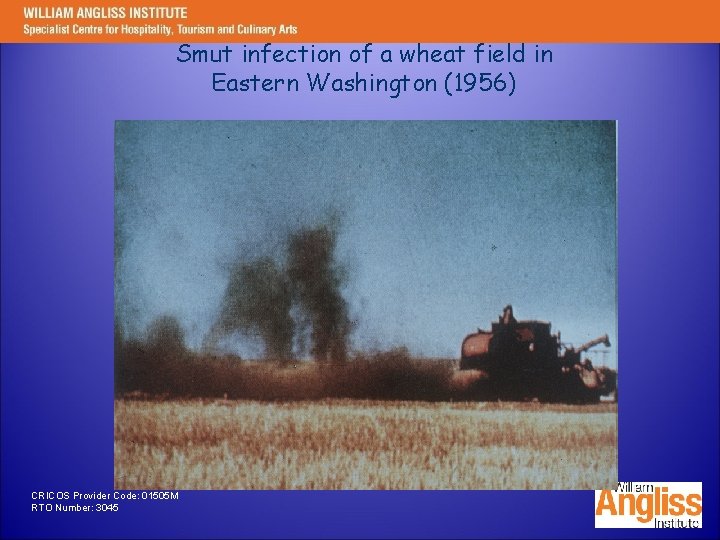
Smut infection of a wheat field in Eastern Washington (1956) CRICOS Provider Code: 01505 M RTO Number: 3045
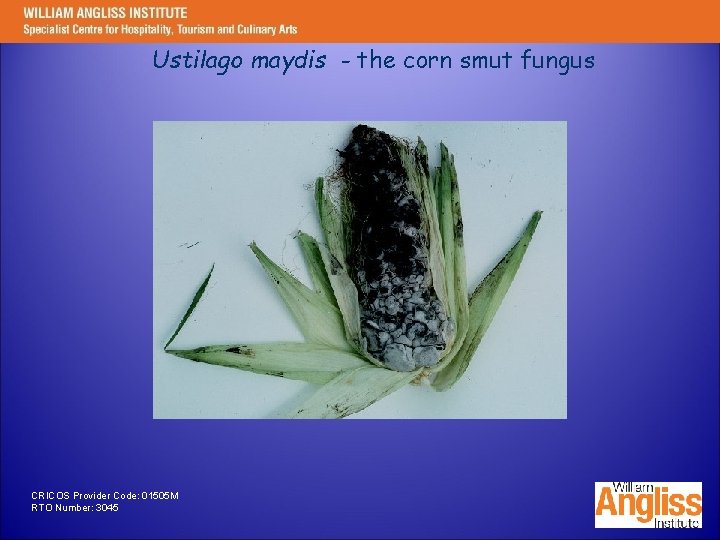
Ustilago maydis - the corn smut fungus CRICOS Provider Code: 01505 M RTO Number: 3045
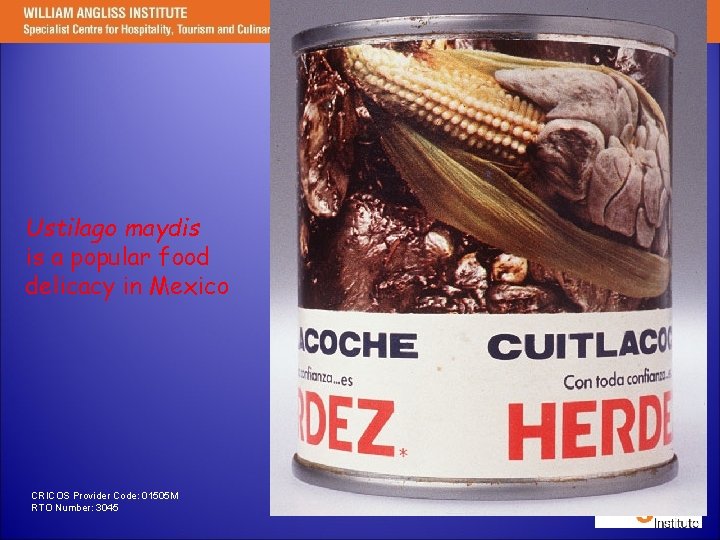
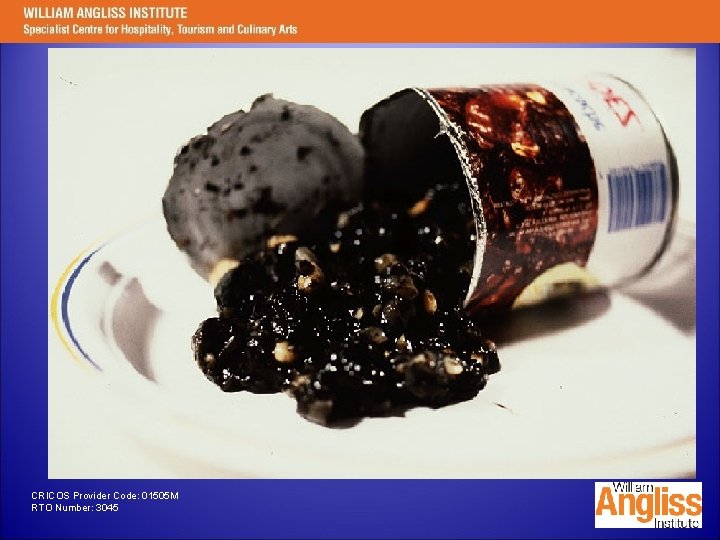
Ustilago maydis is a popular food delicacy in Mexico CRICOS Provider Code: 01505 M RTO Number: 3045
CRICOS Provider Code: 01505 M RTO Number: 3045
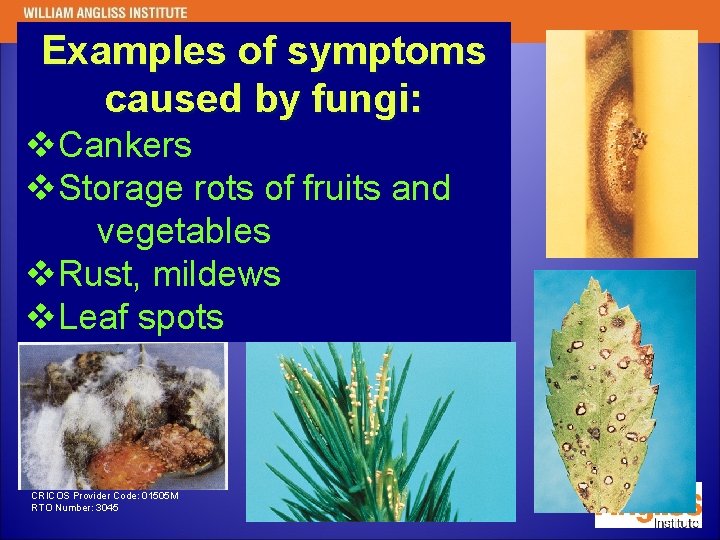
Examples of symptoms caused by fungi: v. Cankers v. Storage rots of fruits and vegetables v. Rust, mildews v. Leaf spots CRICOS Provider Code: 01505 M RTO Number: 3045
Pathogen life styles Necrotrophs - kill host cells with Biotrophs toxins and specialize on a hydrolytic living host. enzymes. Ex. Powdery Ex: Botrytis mildews and rusts. cinerea. Hemibiotrophs - start out biotrophic. Then, they kill the host cells. Ex. Phytophthora infestans. CRICOS Provider Code: 01505 M RTO Number: 3045
Four phyla of fungi o. Chytridiomycota - no sexual spore o. Zygomycota - zygospore o. Ascomycota - ascospore o. Basidiomycota - basidiospore CRICOS Provider Code: 01505 M RTO Number: 3045
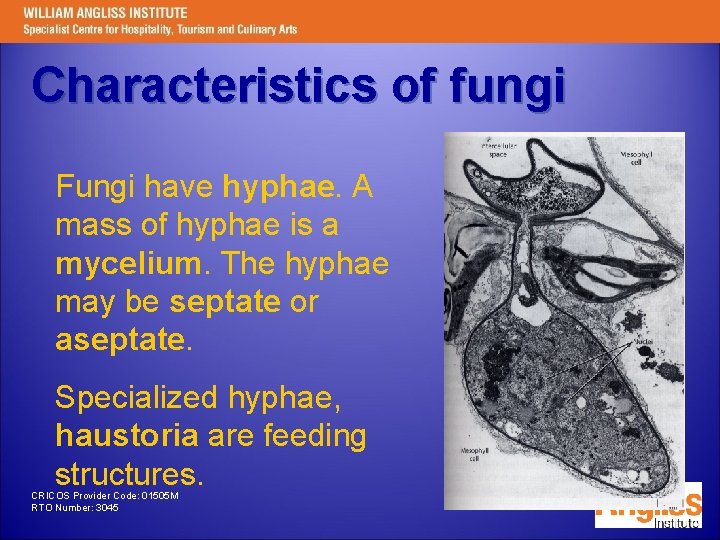
Characteristics of fungi Fungi have hyphae. A mass of hyphae is a mycelium. The hyphae may be septate or aseptate. Specialized hyphae, haustoria are feeding structures. CRICOS Provider Code: 01505 M RTO Number: 3045
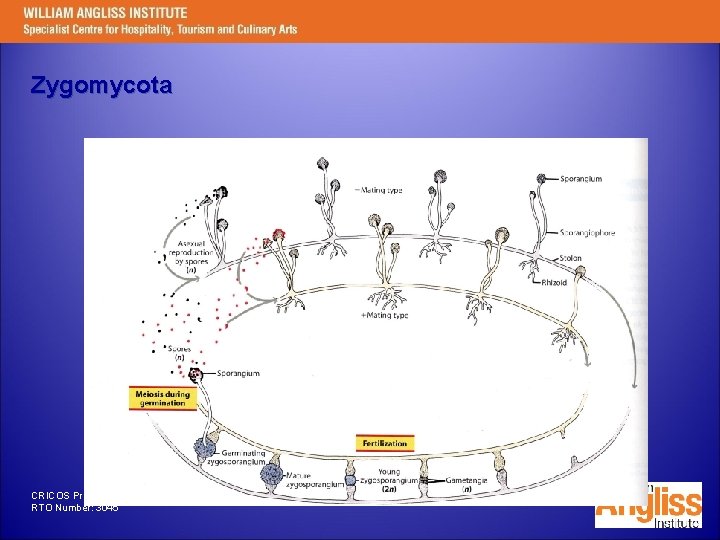
Zygomycota CRICOS Provider Code: 01505 M RTO Number: 3045
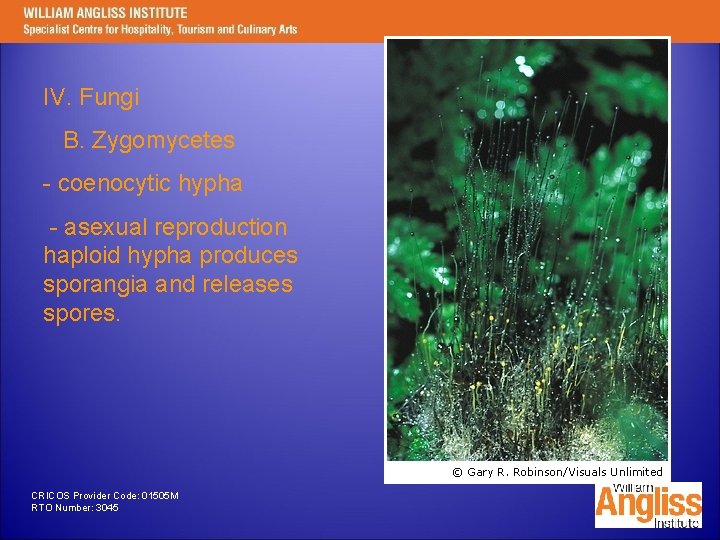
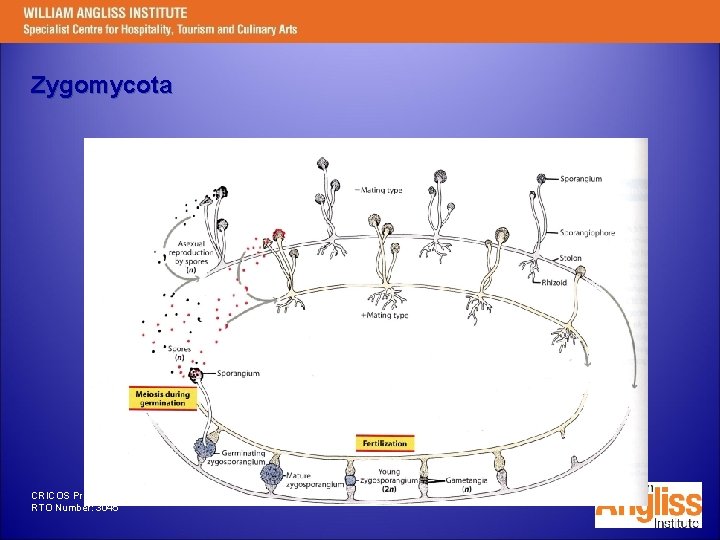
IV. Fungi B. Zygomycetes - coenocytic hypha - asexual reproduction haploid hypha produces sporangia and releases spores. CRICOS Provider Code: 01505 M RTO Number: 3045
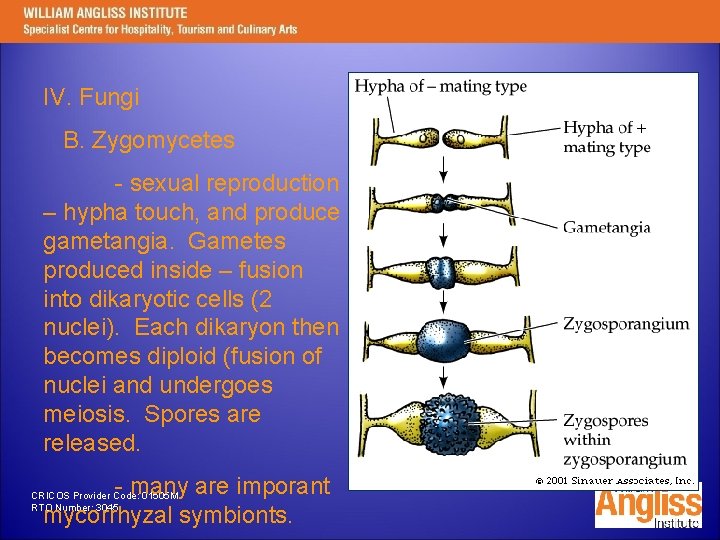
IV. Fungi B. Zygomycetes - sexual reproduction – hypha touch, and produce gametangia. Gametes produced inside – fusion into dikaryotic cells (2 nuclei). Each dikaryon then becomes diploid (fusion of nuclei and undergoes meiosis. Spores are released. - many are imporant mycorrhyzal symbionts. CRICOS Provider Code: 01505 M RTO Number: 3045
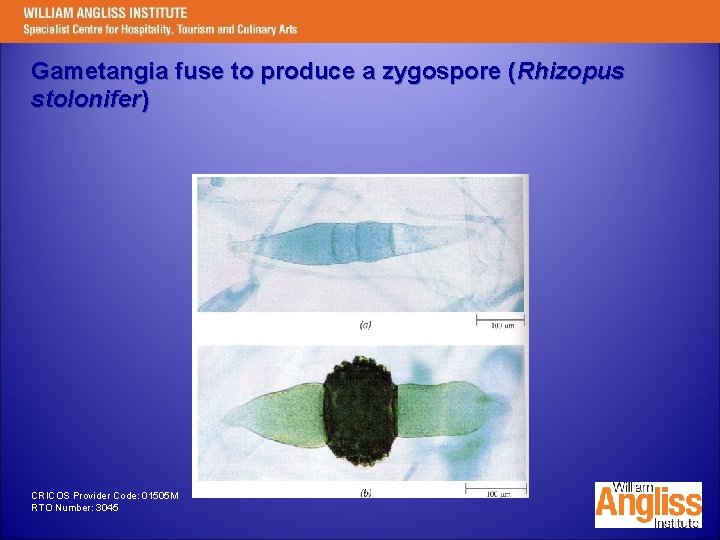
Gametangia fuse to produce a zygospore (Rhizopus stolonifer) CRICOS Provider Code: 01505 M RTO Number: 3045
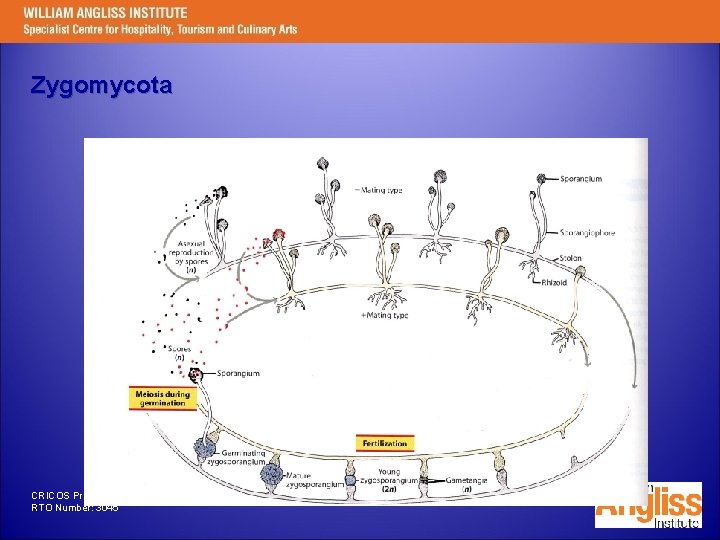
Zygomycota CRICOS Provider Code: 01505 M RTO Number: 3045
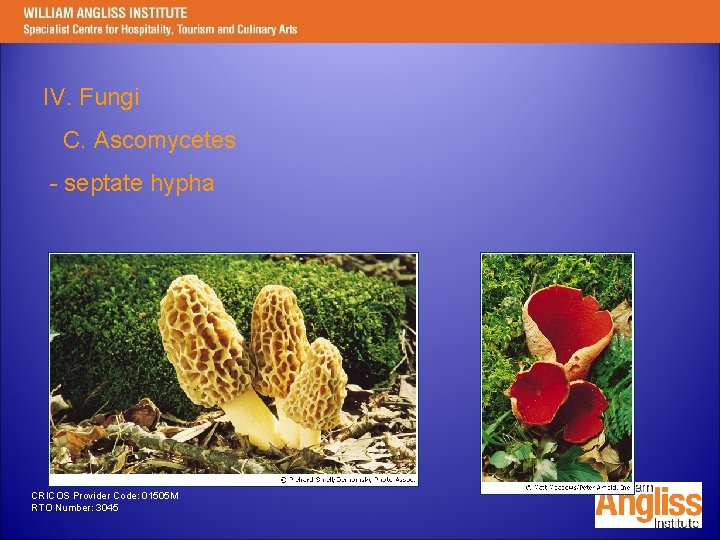
IV. Fungi C. Ascomycetes - septate hypha CRICOS Provider Code: 01505 M RTO Number: 3045
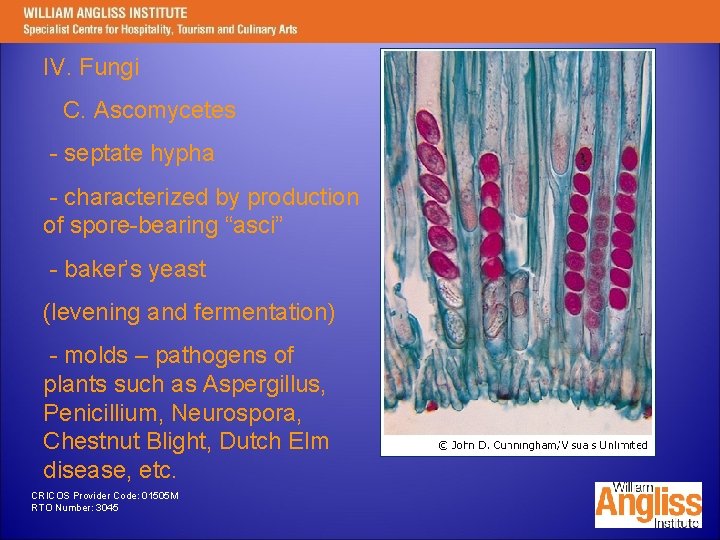
IV. Fungi C. Ascomycetes - septate hypha - characterized by production of spore-bearing “asci” - baker’s yeast (levening and fermentation) - molds – pathogens of plants such as Aspergillus, Penicillium, Neurospora, Chestnut Blight, Dutch Elm disease, etc. CRICOS Provider Code: 01505 M RTO Number: 3045
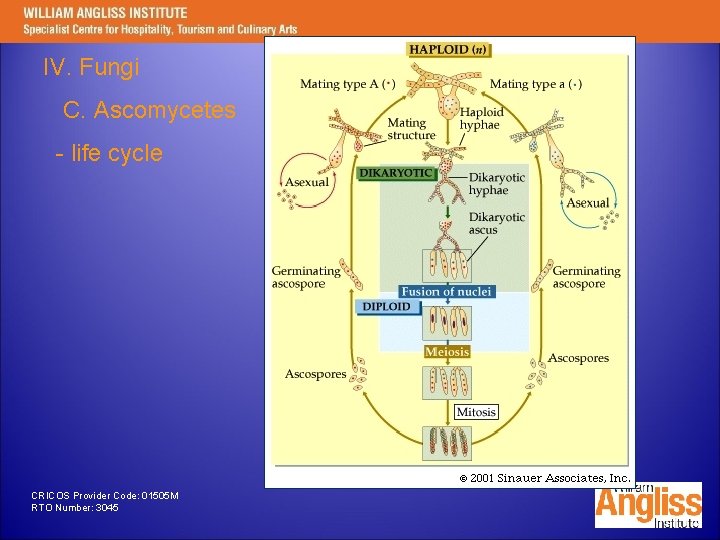
IV. Fungi C. Ascomycetes - life cycle CRICOS Provider Code: 01505 M RTO Number: 3045
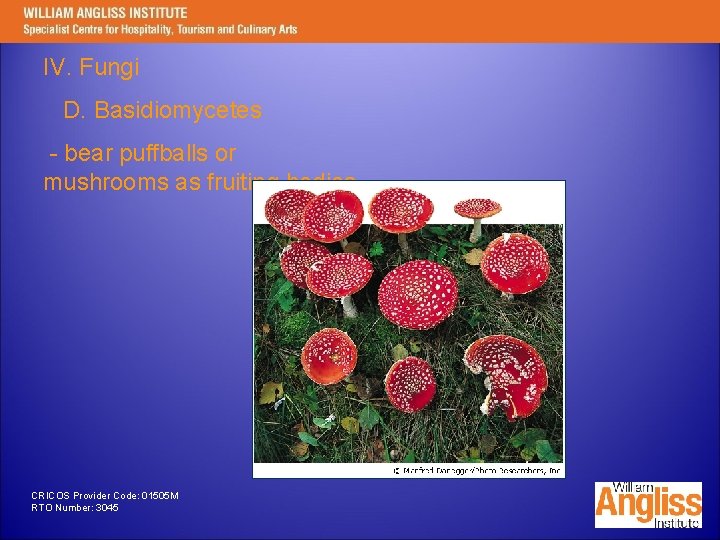
IV. Fungi D. Basidiomycetes - bear puffballs or mushrooms as fruiting bodies CRICOS Provider Code: 01505 M RTO Number: 3045
IV. Fungi D. Basidiomycetes - bear puffballs or mushrooms as fruiting bodies - haploid hyphae fuse in dikaryotic hyphae. - these dikaryotic hyphae form the fruiting structure. CRICOS Provider Code: 01505 M RTO Number: 3045
IV. Fungi D. Basidiomycetes - bear puffballs or mushrooms as fruiting bodies - haploid hyphae fuse in dikaryotic hyphae. - these dikaryotic hyphae form the fruiting structure. - at the tip of each hyphae, the basidium forms, in which meiosis occurs to produce new haploid spores. CRICOS Provider Code: 01505 M RTO Number: 3045
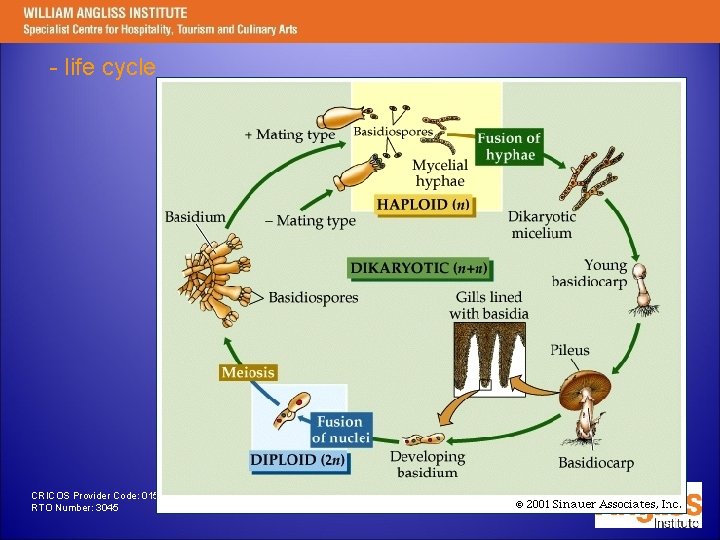
- life cycle CRICOS Provider Code: 01505 M RTO Number: 3045
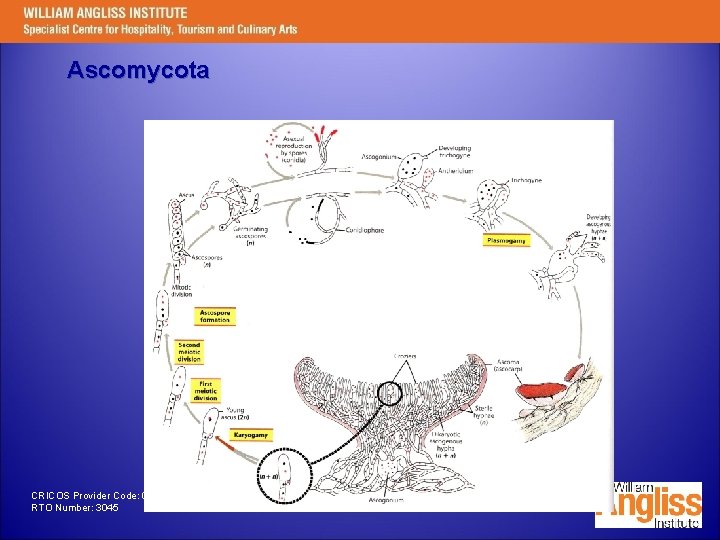
Ascomycota CRICOS Provider Code: 01505 M RTO Number: 3045
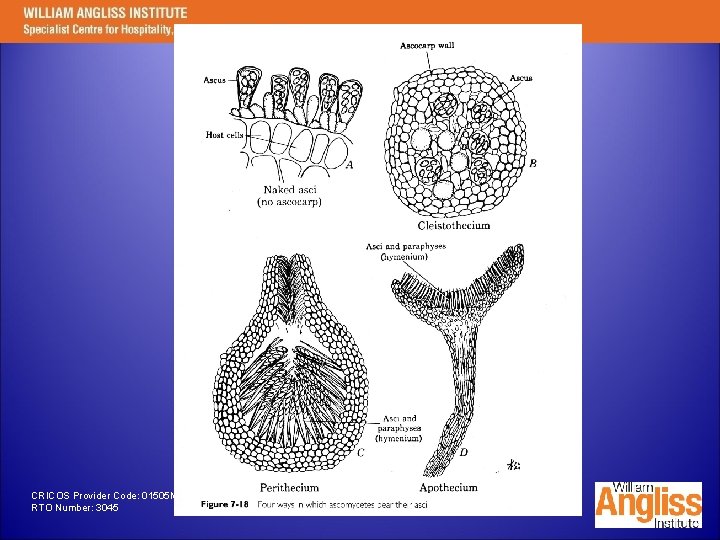
CRICOS Provider Code: 01505 M RTO Number: 3045
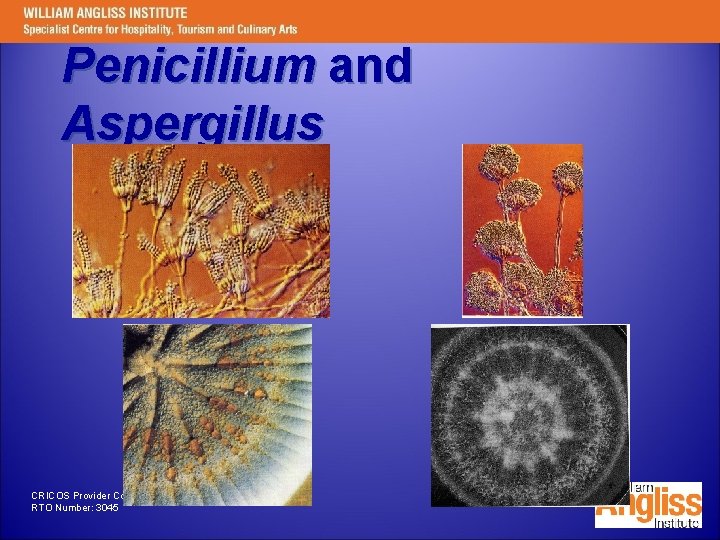
Penicillium and Aspergillus CRICOS Provider Code: 01505 M RTO Number: 3045
- Slides: 43