
Vascular vs Nonvascular Xylem vs Phloem Seeds vs




- Slides: 18
• Vascular vs. Nonvascular • Xylem vs. Phloem • Seeds vs. Spores • Root Types
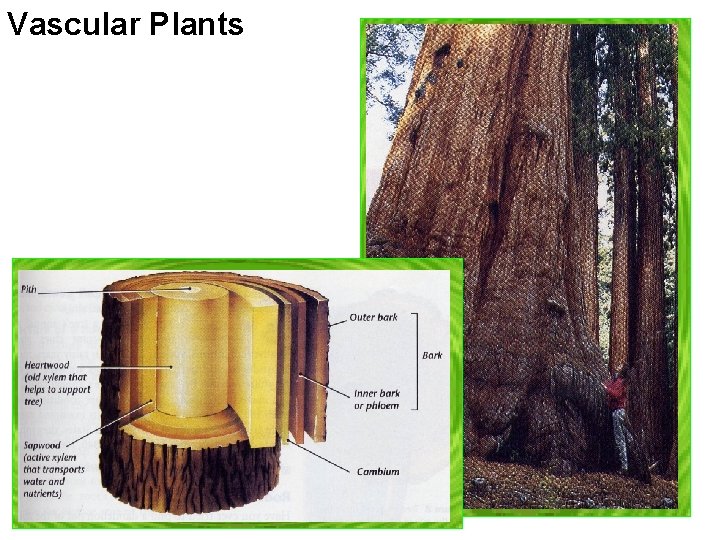
Vascular Plants • largest group • well-developed system for transporting water and food; they have true roots, stems, and leaves. • help circulate water and food throughout the plant. • Xylem transport water and minerals from the roots up to the rest of the plant. • Phloem transport food from the leaves down to the rest of the plant. • Examples: woody stems- trees & bushes herbaceous stems- grasses
Vascular Plants
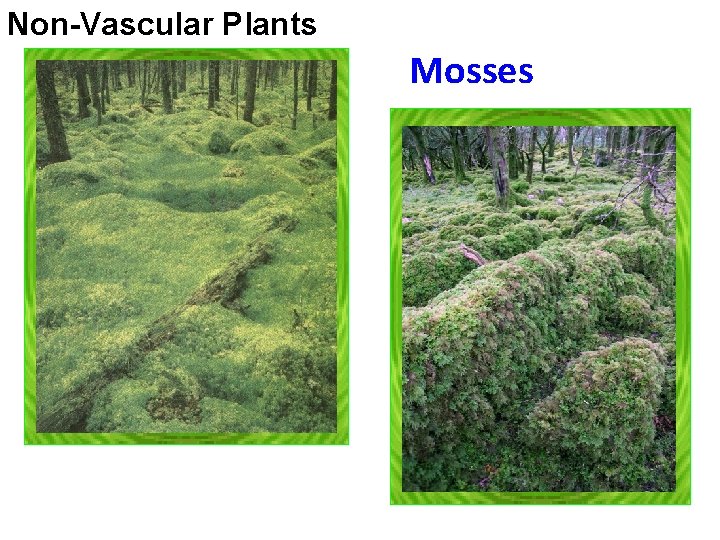
Non-Vascular Plants • Plants do not have a well-developed system for transporting water and food; do not have true roots, stems, or leaves. • They must obtain nutrients directly from the environment and distribute it from cell to cell throughout the plant. This usually results in these plants being very small in size. • Examples: mosses, liverworts, and hornworts.
Non-Vascular Plants Mosses
Non-Vascular Plants Liverworts
Non-Vascular Plants Hornworts
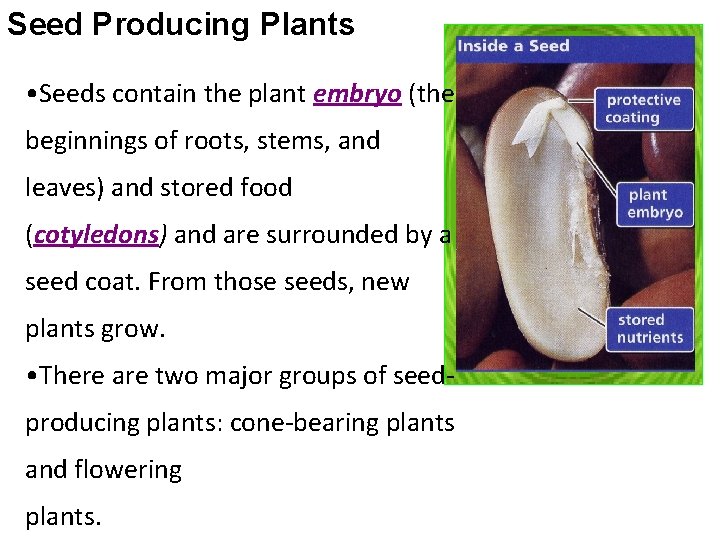
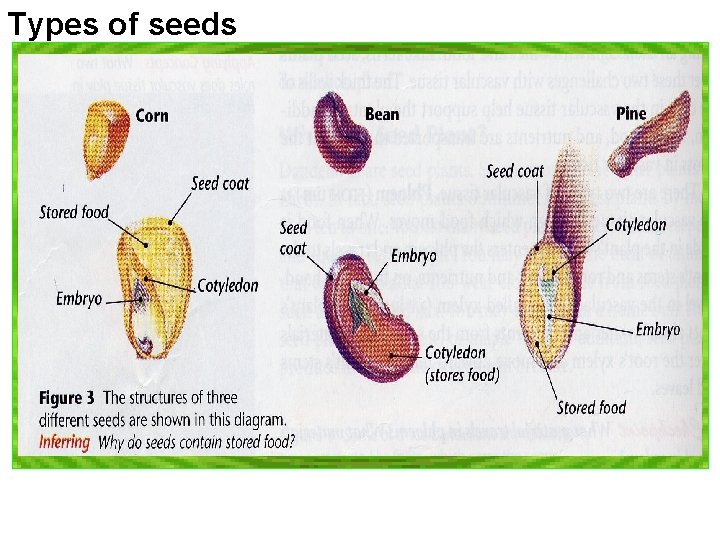
Seed Producing Plants • Seeds contain the plant embryo (the beginnings of roots, stems, and leaves) and stored food (cotyledons) and are surrounded by a seed coat. From those seeds, new plants grow. • There are two major groups of seedproducing plants: cone-bearing plants and flowering plants.
Types of seeds
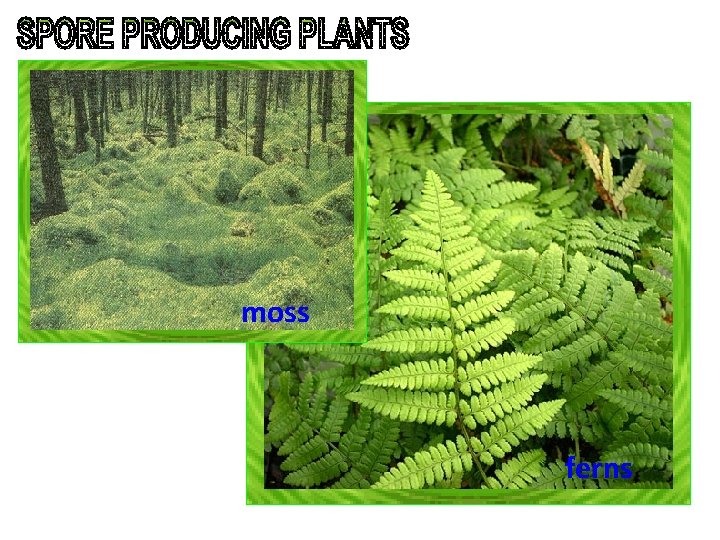
Spore Producing Plants • Spores are much smaller than seeds. • Almost all flowerless plants produce spores. • Examples- mosses and ferns Flowering Plants • Flowering plants differ from conifers because they grow their seeds inside an ovary, which is embedded in a flower. • The flower then becomes a fruit containing the seeds. • Examples include most trees, shrubs, vines, flowers, fruits, vegetables, and legumes.
moss ferns
Seeds vs. Spores
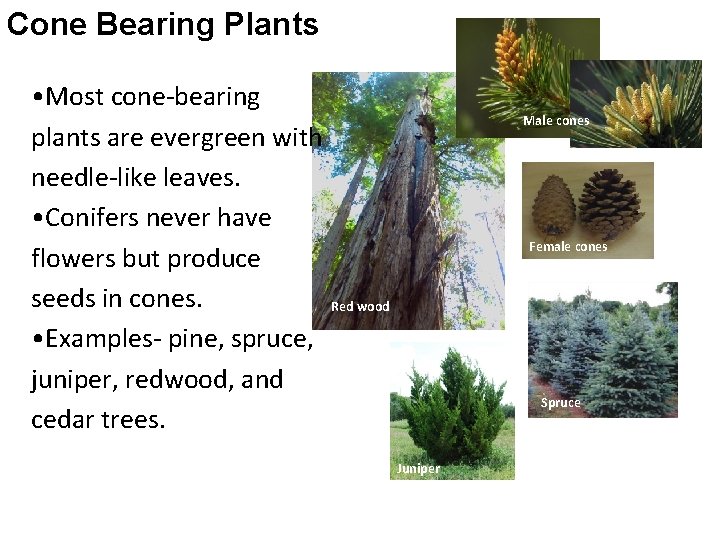
Cone Bearing Plants • Most cone-bearing plants are evergreen with needle-like leaves. • Conifers never have flowers but produce seeds in cones. Red wood • Examples- pine, spruce, juniper, redwood, and cedar trees. Male cones Female cones Spruce Juniper
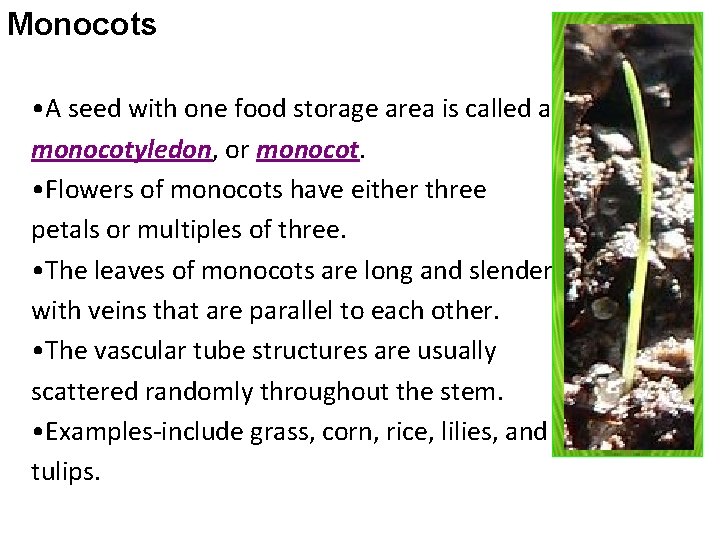
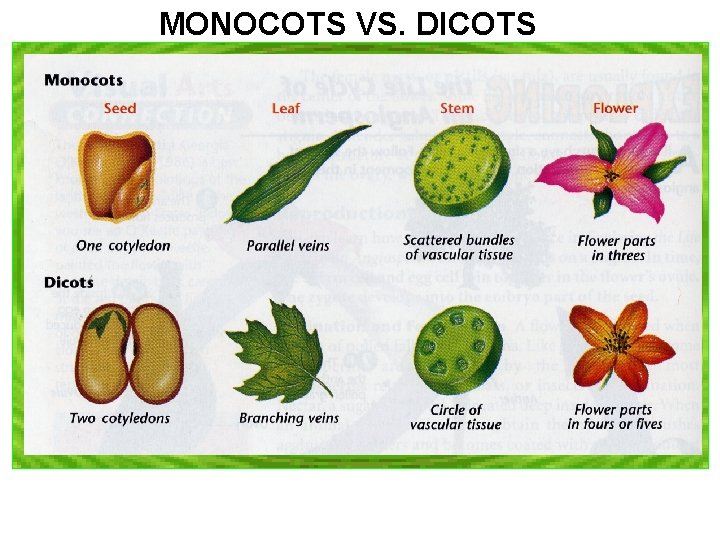
Monocots • A seed with one food storage area is called a monocotyledon, or monocot. • Flowers of monocots have either three petals or multiples of three. • The leaves of monocots are long and slender with veins that are parallel to each other. • The vascular tube structures are usually scattered randomly throughout the stem. • Examples-include grass, corn, rice, lilies, and tulips.
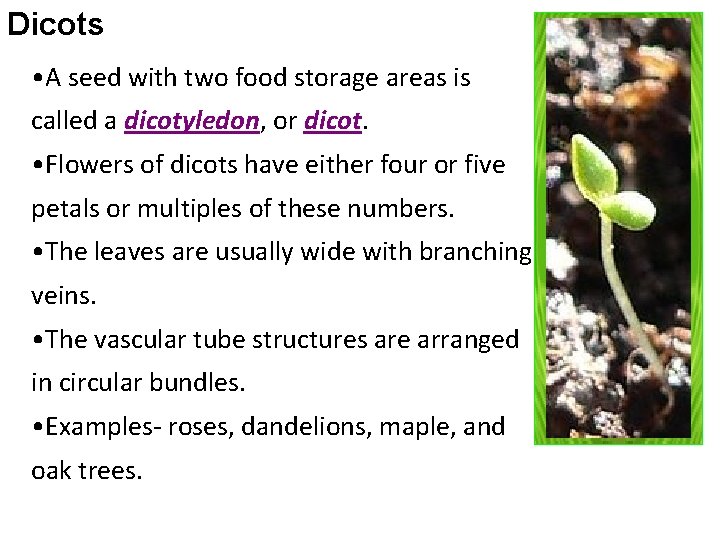
Dicots • A seed with two food storage areas is called a dicotyledon, or dicot. • Flowers of dicots have either four or five petals or multiples of these numbers. • The leaves are usually wide with branching veins. • The vascular tube structures are arranged in circular bundles. • Examples- roses, dandelions, maple, and oak trees.
MONOCOTS VS. DICOTS
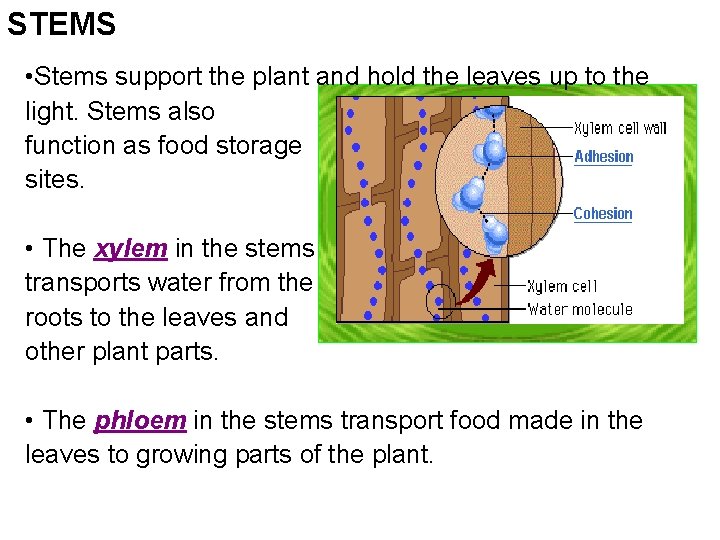
STEMS • Stems support the plant and hold the leaves up to the light. Stems also function as food storage sites. • The xylem in the stems transports water from the roots to the leaves and other plant parts. • The phloem in the stems transport food made in the leaves to growing parts of the plant.
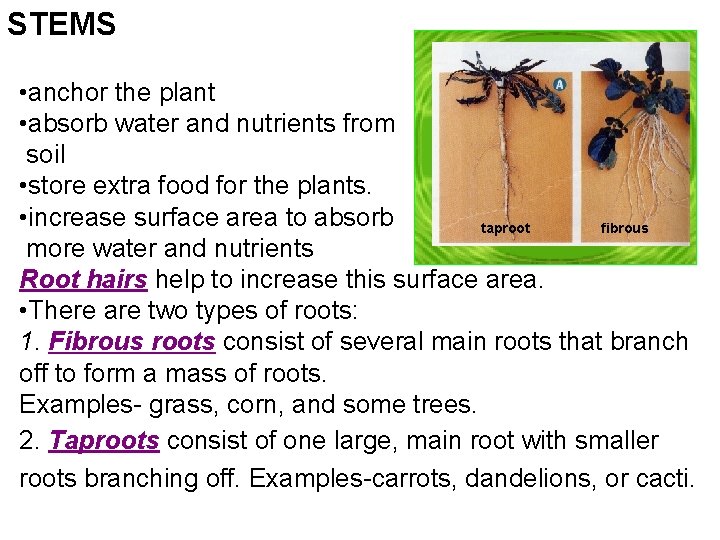
STEMS • anchor the plant • absorb water and nutrients from soil • store extra food for the plants. • increase surface area to absorb taproot fibrous more water and nutrients Root hairs help to increase this surface area. • There are two types of roots: 1. Fibrous roots consist of several main roots that branch off to form a mass of roots. Examples- grass, corn, and some trees. 2. Taproots consist of one large, main root with smaller roots branching off. Examples-carrots, dandelions, or cacti.