
Vascular Diseases Chronic elevation of blood glucose levels
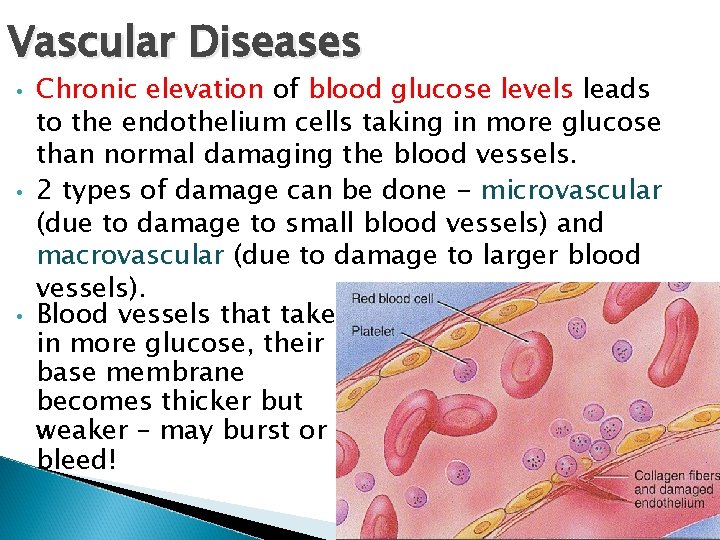
Vascular Diseases • • • Chronic elevation of blood glucose levels leads to the endothelium cells taking in more glucose than normal damaging the blood vessels. 2 types of damage can be done - microvascular (due to damage to small blood vessels) and macrovascular (due to damage to larger blood vessels). Blood vessels that take in more glucose, their base membrane becomes thicker but weaker – may burst or bleed!

Microvascular diabetic complications Microvascular complications include damage to eyes (retinopathy) leading to blindness, to kidneys (nephropathy) leading to renal failure and to nerves (neuropathy) leading to impotence and diabetic foot disorders (which include severe infections leading to amputation). Non-proliferative diabetic retinopathy: intraretinal microvascular abnormality (IRMA; green arrow), venous beading and segmentation (blue arrow), cluster haemorrhage (red circle),
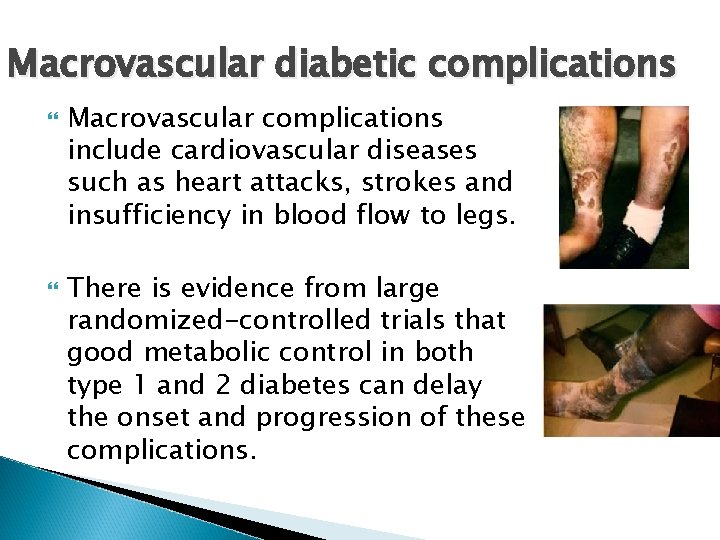
Macrovascular diabetic complications Macrovascular complications include cardiovascular diseases such as heart attacks, strokes and insufficiency in blood flow to legs. There is evidence from large randomized-controlled trials that good metabolic control in both type 1 and 2 diabetes can delay the onset and progression of these complications.
So if 85% are preventable – how can blood glucose be controlled?
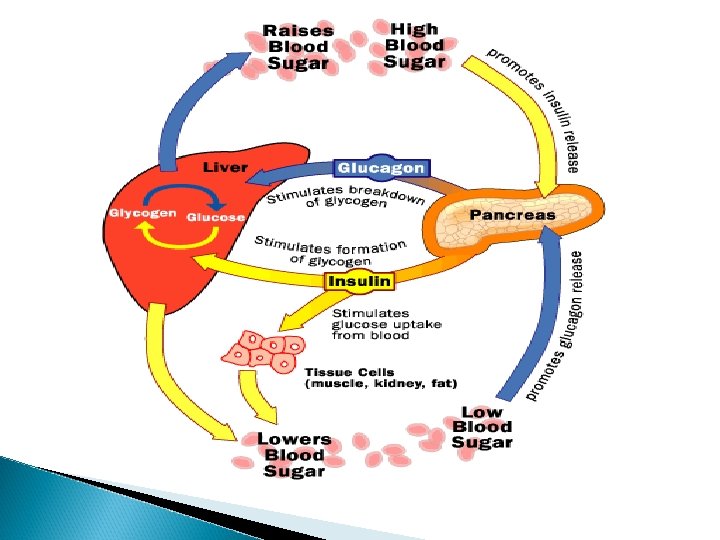
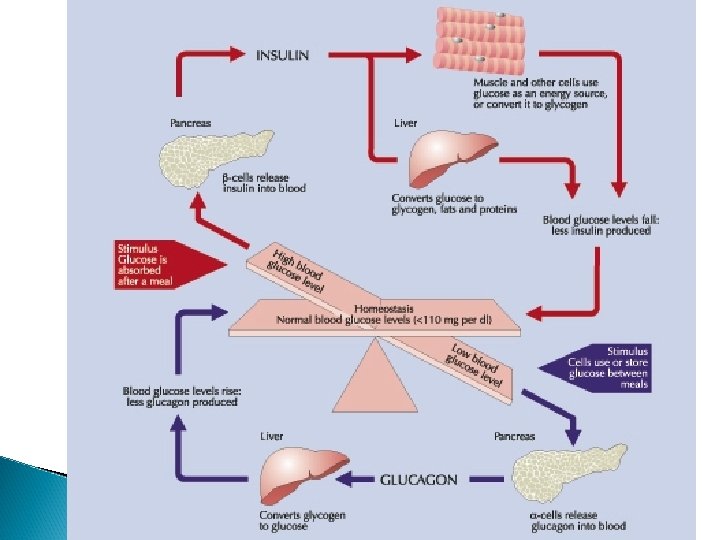
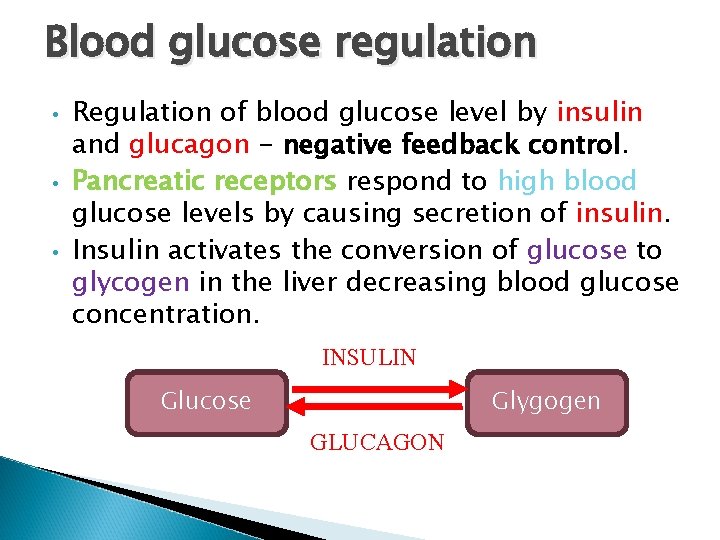
Blood glucose regulation • • • Regulation of blood glucose level by insulin and glucagon - negative feedback control. Pancreatic receptors respond to high blood glucose levels by causing secretion of insulin. Insulin activates the conversion of glucose to glycogen in the liver decreasing blood glucose concentration. INSULIN Glucose Glygogen GLUCAGON
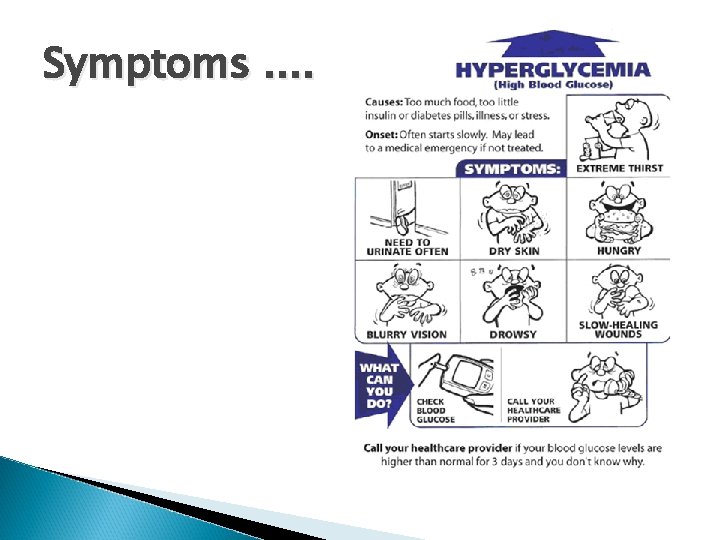
Symptoms. .
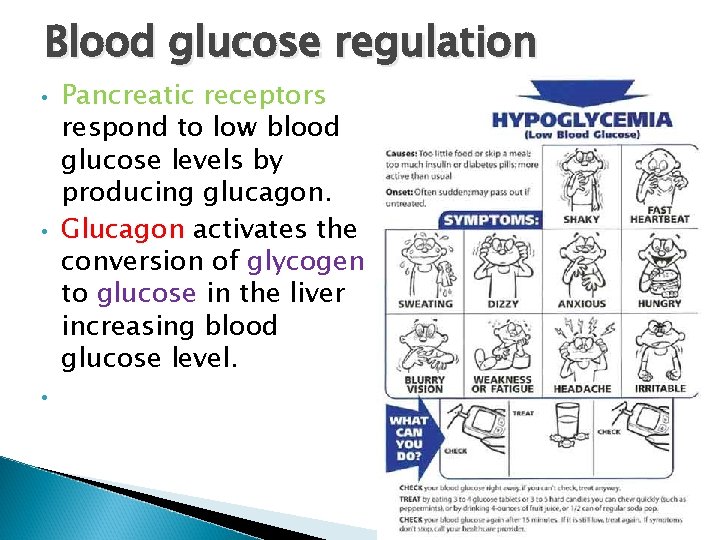
Blood glucose regulation • • • Pancreatic receptors respond to low blood glucose levels by producing glucagon. Glucagon activates the conversion of glycogen to glucose in the liver increasing blood glucose level.
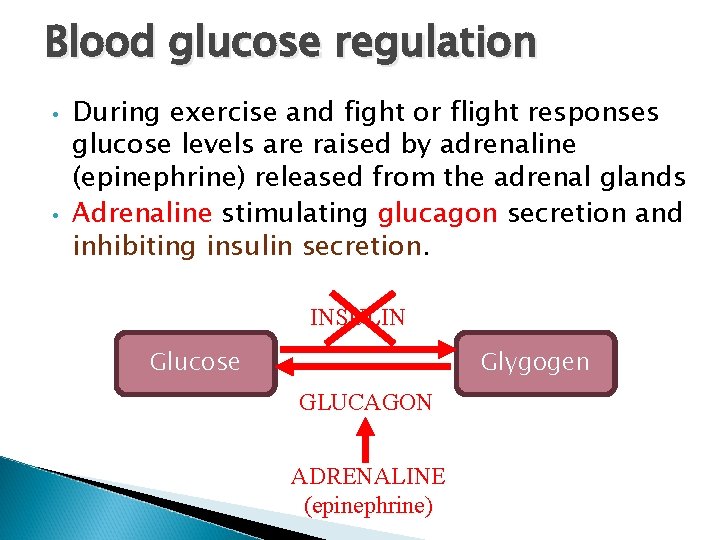
Blood glucose regulation • • During exercise and fight or flight responses glucose levels are raised by adrenaline (epinephrine) released from the adrenal glands Adrenaline stimulating glucagon secretion and inhibiting insulin secretion. INSULIN Glucose Glygogen GLUCAGON ADRENALINE (epinephrine)
Outta Control! If someone can not control their blood glucose level – can elevate between 10 -30 mmol/L (normal range has a concentration of 5 mmol/L), what is it called? Diabetes! From last lesson -Vascular disease can be a chronic complication of diabetes.
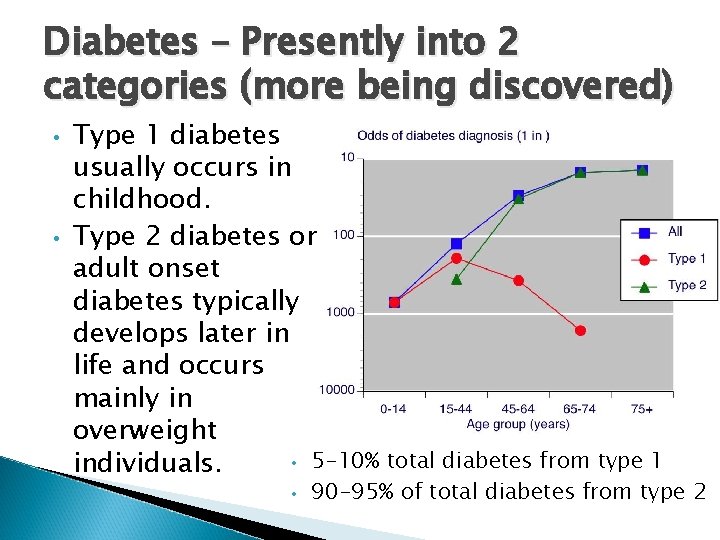
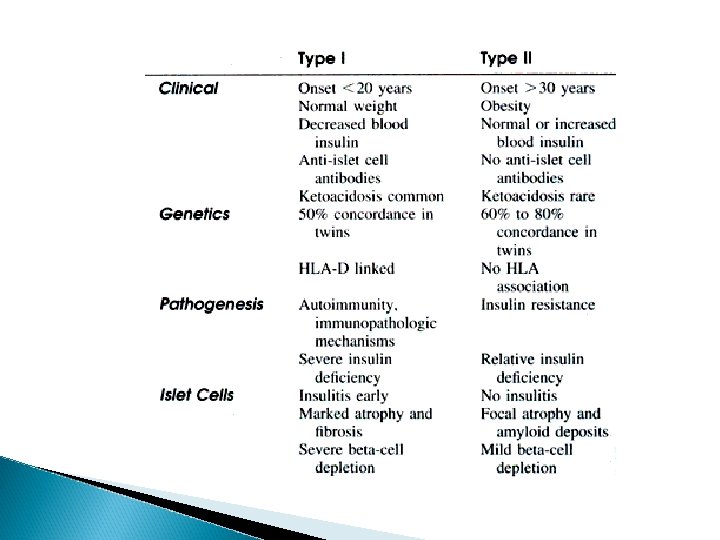
Diabetes – Presently into 2 categories (more being discovered) • • Type 1 diabetes usually occurs in childhood. Type 2 diabetes or adult onset diabetes typically develops later in life and occurs mainly in overweight • 5 -10% total diabetes from type 1 individuals. • 90 -95% of total diabetes from type 2
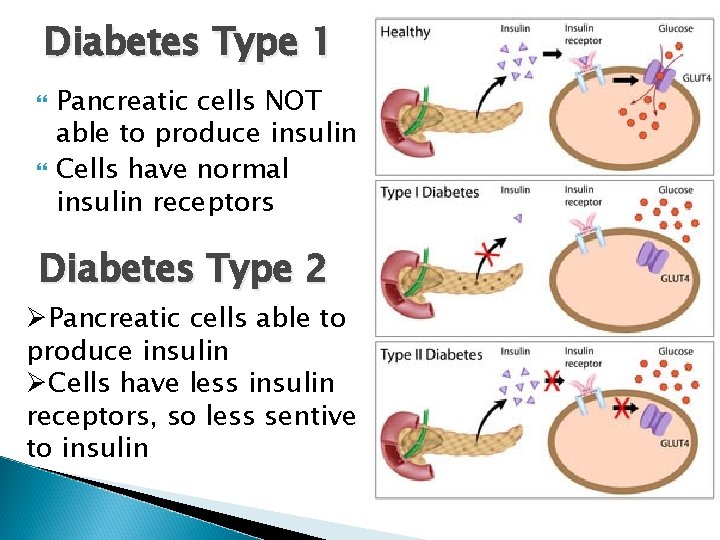
Diabetes Type 1 Pancreatic cells NOT able to produce insulin Cells have normal insulin receptors Diabetes Type 2 ØPancreatic cells able to produce insulin ØCells have less insulin receptors, so less sentive to insulin
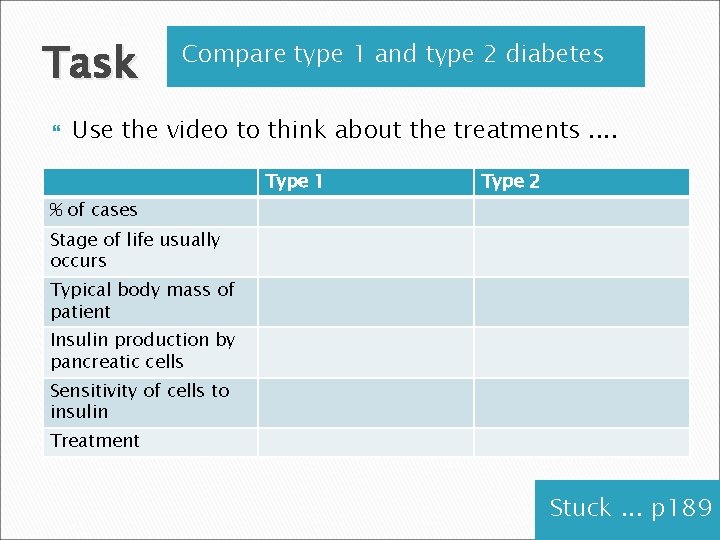
Task Compare type 1 and type 2 diabetes Use the video to think about the treatments. . Type 1 Type 2 % of cases Stage of life usually occurs Typical body mass of patient Insulin production by pancreatic cells Sensitivity of cells to insulin Treatment Stuck. . . p 189
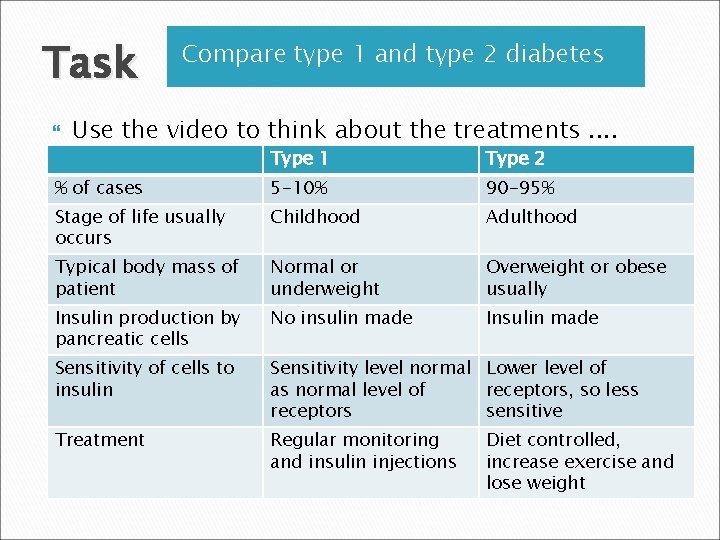
Task Compare type 1 and type 2 diabetes Use the video to think about the treatments. . Type 1 Type 2 % of cases 5 -10% 90 -95% Stage of life usually occurs Childhood Adulthood Typical body mass of patient Normal or underweight Overweight or obese usually Insulin production by pancreatic cells No insulin made Insulin made Sensitivity of cells to insulin Sensitivity level normal Lower level of as normal level of receptors, so less receptors sensitive Treatment Regular monitoring and insulin injections Diet controlled, increase exercise and lose weight
Activity What happens to the extra glucose? Now you have 4 patients; Diagnose them! This is only an INDICATOR of diabetes. . . Need a diagnostic test
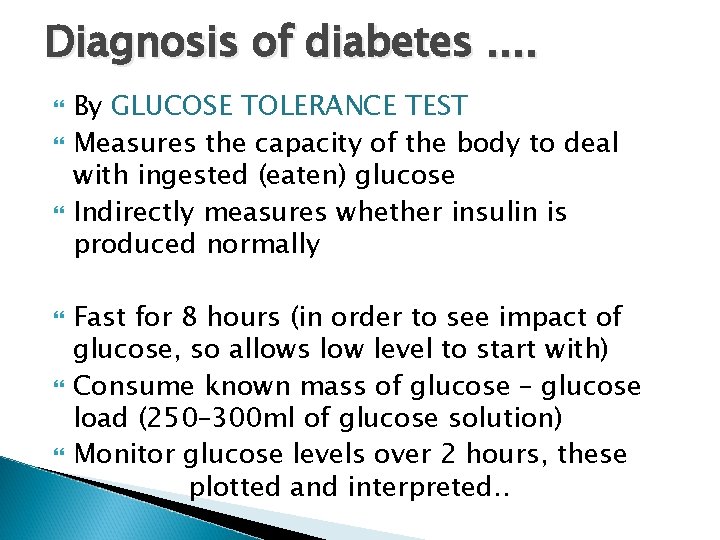
Diagnosis of diabetes. . By GLUCOSE TOLERANCE TEST Measures the capacity of the body to deal with ingested (eaten) glucose Indirectly measures whether insulin is produced normally Fast for 8 hours (in order to see impact of glucose, so allows low level to start with) Consume known mass of glucose – glucose load (250– 300 ml of glucose solution) Monitor glucose levels over 2 hours, these plotted and interpreted. .
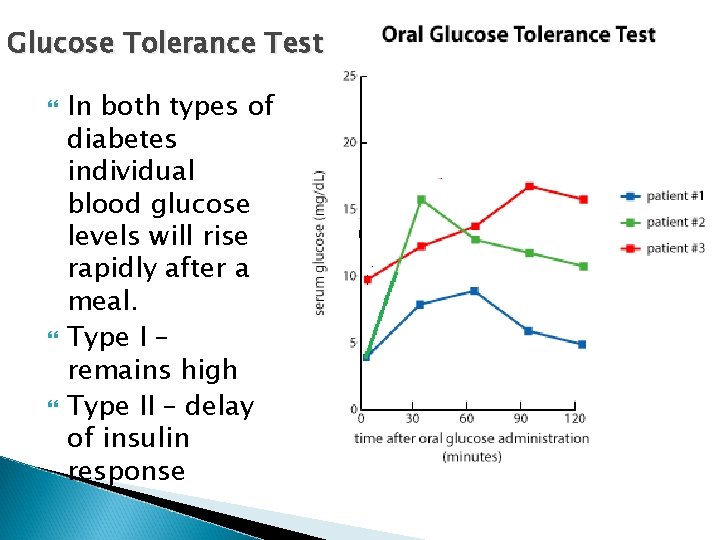
Glucose Tolerance Test In both types of diabetes individual blood glucose levels will rise rapidly after a meal. Type I – remains high Type II – delay of insulin response
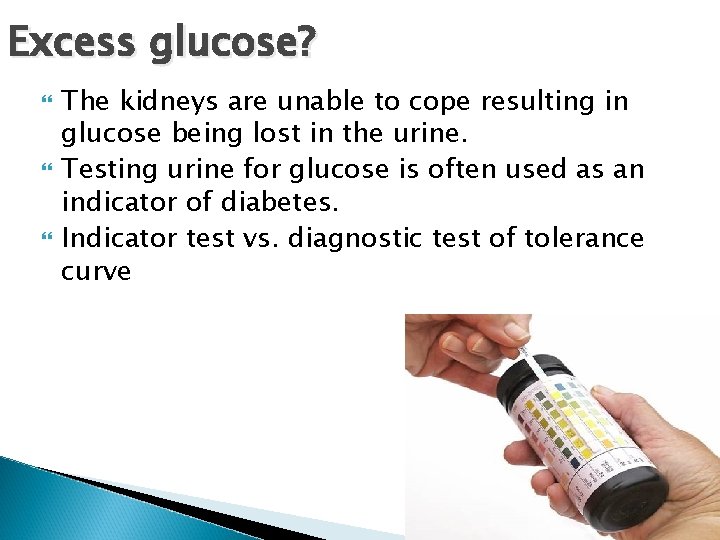
Excess glucose? The kidneys are unable to cope resulting in glucose being lost in the urine. Testing urine for glucose is often used as an indicator of diabetes. Indicator test vs. diagnostic test of tolerance curve
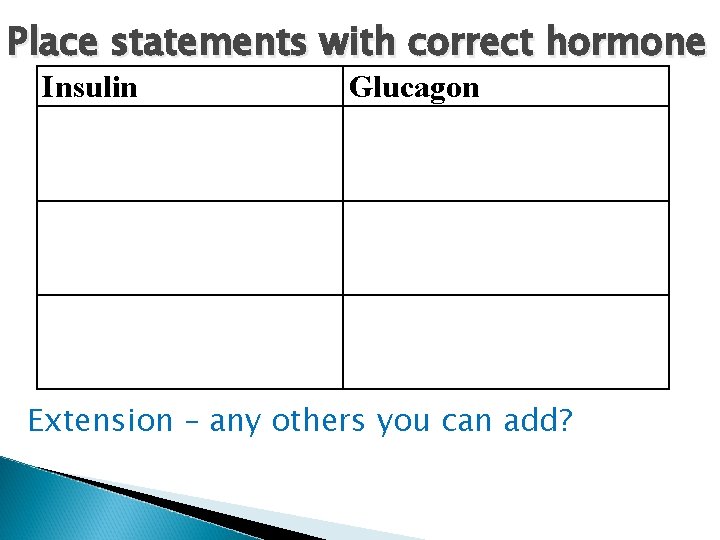
Place statements with correct hormone Insulin Glucagon Extension – any others you can add?
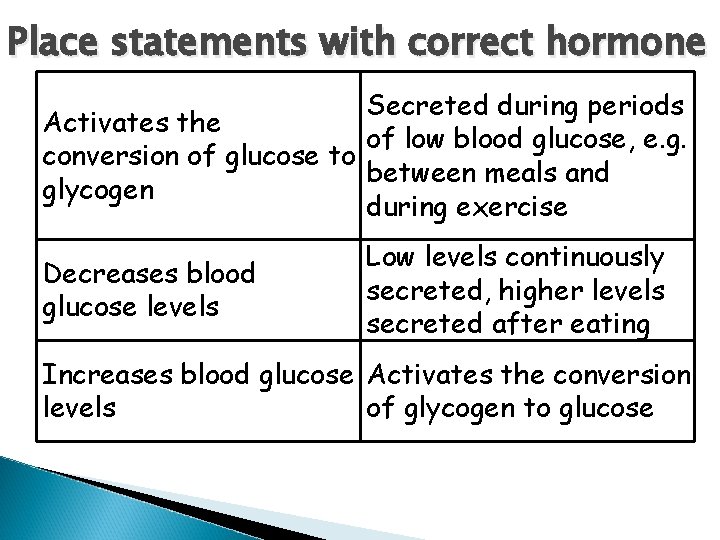
Place statements with correct hormone Secreted during periods Activates the of low blood glucose, e. g. conversion of glucose to between meals and glycogen during exercise Decreases blood glucose levels Low levels continuously secreted, higher levels secreted after eating Increases blood glucose Activates the conversion levels of glycogen to glucose
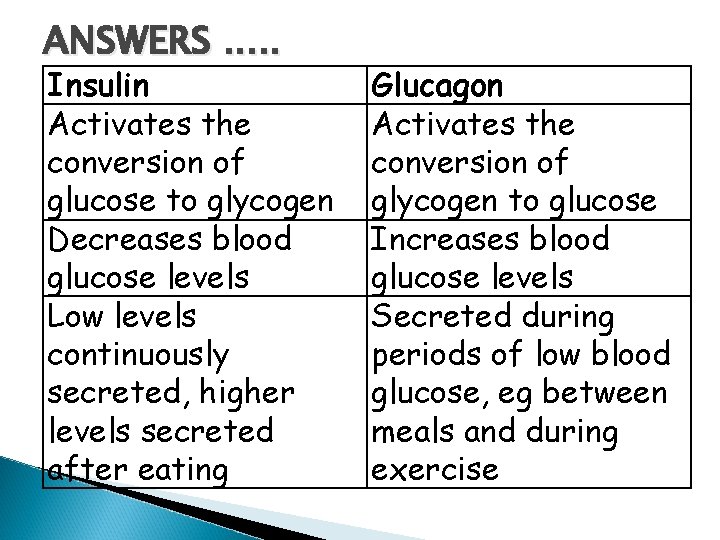
ANSWERS. . . Insulin Activates the conversion of glucose to glycogen Decreases blood glucose levels Low levels continuously secreted, higher levels secreted after eating Glucagon Activates the conversion of glycogen to glucose Increases blood glucose levels Secreted during periods of low blood glucose, eg between meals and during exercise
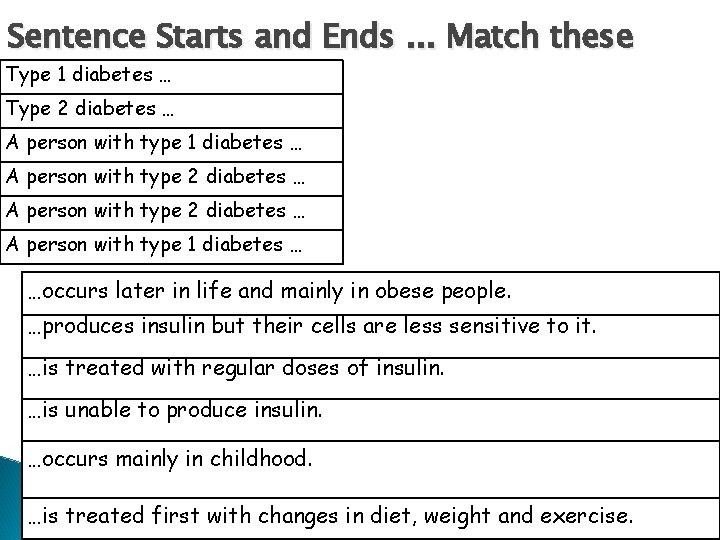
Sentence Starts and Ends. . . Match these Type 1 diabetes … Type 2 diabetes … A person with type 1 diabetes … A person with type 2 diabetes … A person with type 1 diabetes … …occurs later in life and mainly in obese people. …produces insulin but their cells are less sensitive to it. …is treated with regular doses of insulin. …is unable to produce insulin. …occurs mainly in childhood. …is treated first with changes in diet, weight and exercise.
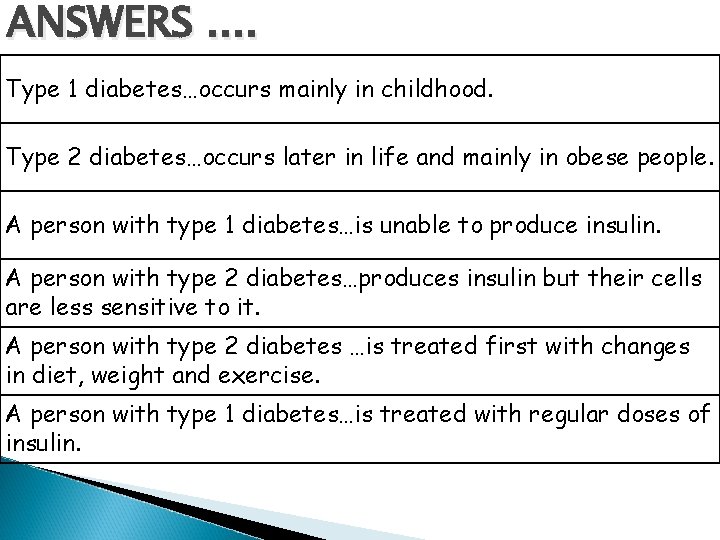
ANSWERS. . Type 1 diabetes…occurs mainly in childhood. Type 2 diabetes…occurs later in life and mainly in obese people. A person with type 1 diabetes…is unable to produce insulin. A person with type 2 diabetes…produces insulin but their cells are less sensitive to it. A person with type 2 diabetes …is treated first with changes in diet, weight and exercise. A person with type 1 diabetes…is treated with regular doses of insulin.
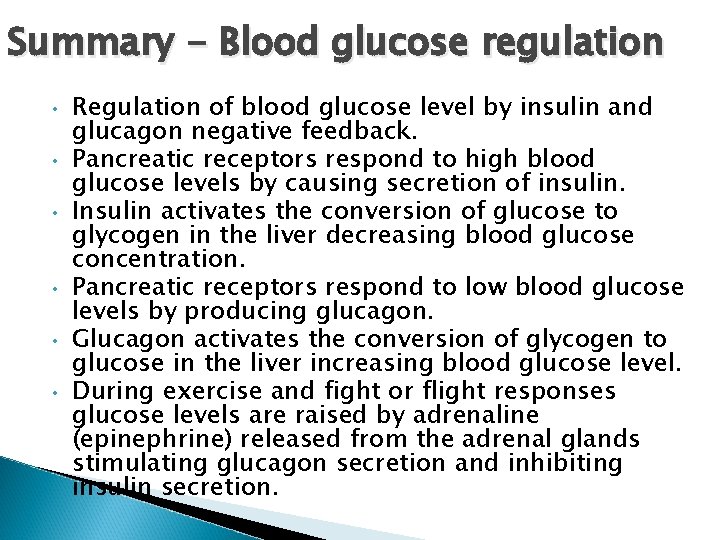
Summary - Blood glucose regulation • • • Regulation of blood glucose level by insulin and glucagon negative feedback. Pancreatic receptors respond to high blood glucose levels by causing secretion of insulin. Insulin activates the conversion of glucose to glycogen in the liver decreasing blood glucose concentration. Pancreatic receptors respond to low blood glucose levels by producing glucagon. Glucagon activates the conversion of glycogen to glucose in the liver increasing blood glucose level. During exercise and fight or flight responses glucose levels are raised by adrenaline (epinephrine) released from the adrenal glands stimulating glucagon secretion and inhibiting insulin secretion.
Summary - Diabetes • • • A diabetic is unable to control their glucose levels. Vascular disease can be a chronic complication of diabetes. Type 1 diabetes usually occurs in childhood. Type 2 diabetes or adult onset diabetes typically develops later in life and occurs mainly in overweight individuals. A person with Type 1 diabetes is unable to produce insulin and can be treated with regular doses of insulin. In type 2 diabetes individuals produce insulin but their cells are less sensitive to it.
Summary - Insulin • • • This insulin resistance is linked to a decrease in the number of insulin receptors in the liver leading to a failure to convert glucose to glycogen. Glucose tolerance curves of normal and diabetic subjects can be used to assist understanding/ diagnosis In both types of diabetes individual blood glucose levels will rise rapidly after a meal and the kidneys are unable to cope resulting in glucose being lost in the urine.
Summary - Blood Glucose Levels Testing urine for glucose is often used as an indicator of diabetes. The glucose tolerance test is used to diagnose diabetes. The blood glucose levels of the individual are measured after fasting (not eating) and two hours after drinking 250– 300 ml of glucose solution.
- Slides: 29