
Variations on strategic analysis and discourse Doctor of
- Slides: 29
Variations on strategic analysis and discourse Doctor of Business Administration London School of Commerce Adapted May 2017 PROFESSOR ROBIN MATTHEWS KINGSTON UNIVERSITY BUSINESS SCHOOL LONDON RANEPA MOSCOW MOSI YOSHKAR-OLA ECONOMIC STRATEGIES PRESIDENT OF THE LEAGUE OF CORPORATE STRATEGY AND ACCOUNTING http/www. robindcmatthews. com http: //www. tcib. org. uk/about. html http: //kpp-russia. ru 6/6/2021 robindcmatthews. com 1
Variations on strategic analysis and discourse • • Planning Diversification and portfolio planning Core businesses People oriented strategies
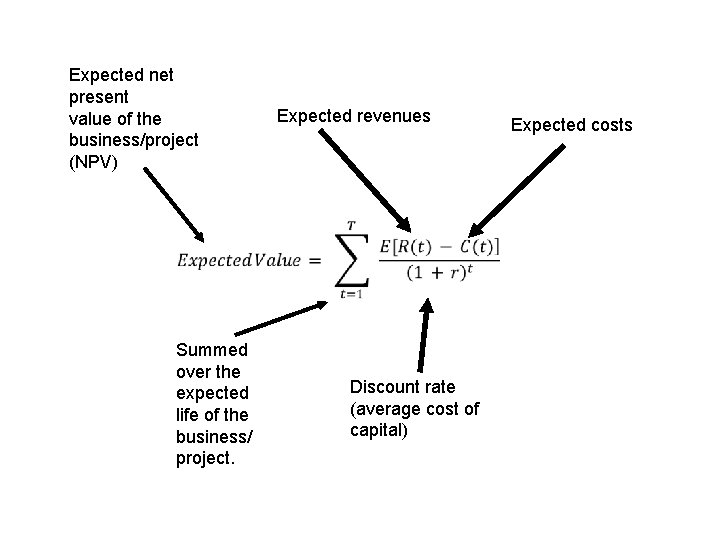
Expected net present value of the business/project (NPV) Summed over the expected life of the business/ project. Expected revenues Discount rate (average cost of capital) Expected costs
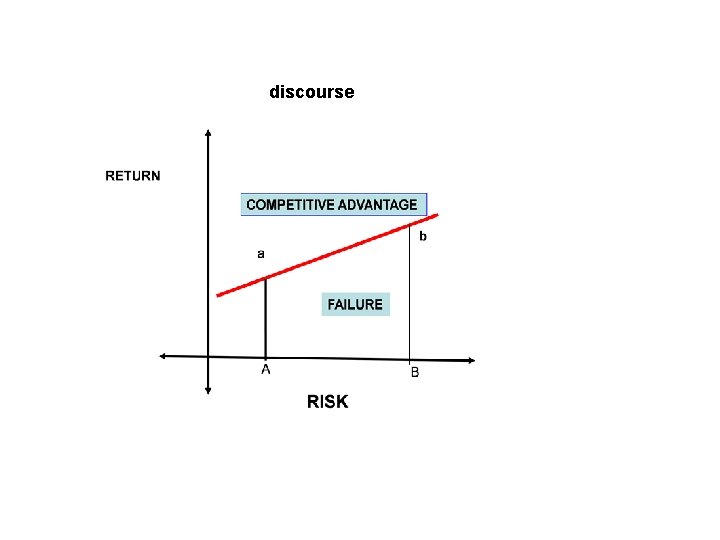
discourse
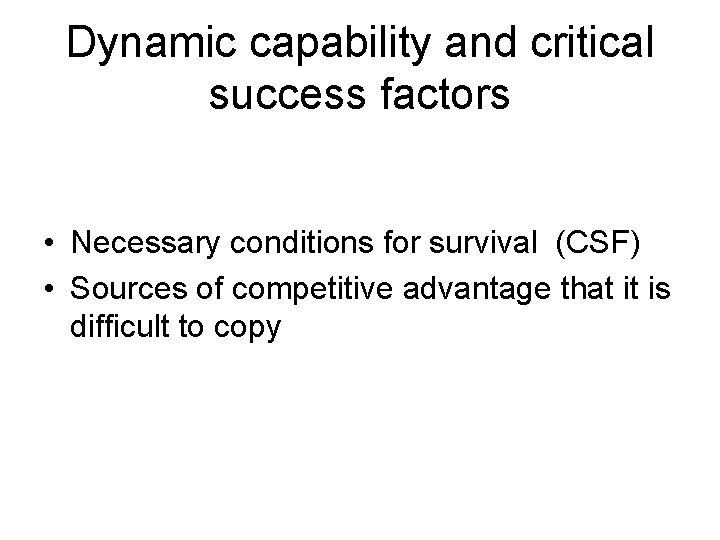
Dynamic capability and critical success factors • Necessary conditions for survival (CSF) • Sources of competitive advantage that it is difficult to copy
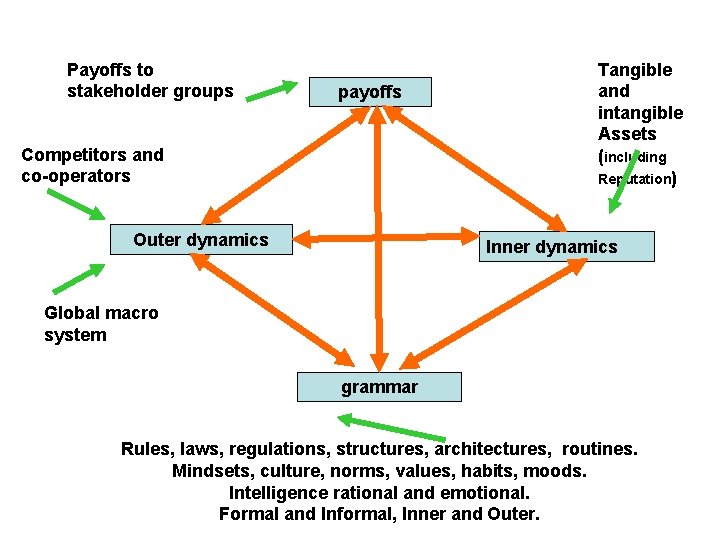
Payoffs to stakeholder groups payoffs Competitors and co-operators Outer dynamics Tangible and intangible Assets (including Reputation) Inner dynamics Global macro system grammar Rules, laws, regulations, structures, architectures, routines. Mindsets, culture, norms, values, habits, moods. Intelligence rational and emotional. Formal and Informal, Inner and Outer.
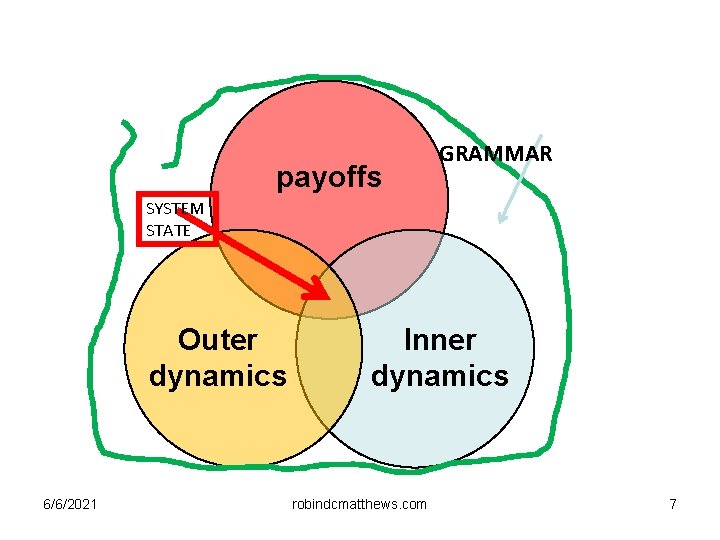
payoffs GRAMMAR SYSTEM STATE Outer dynamics 6/6/2021 Inner dynamics robindcmatthews. com 7
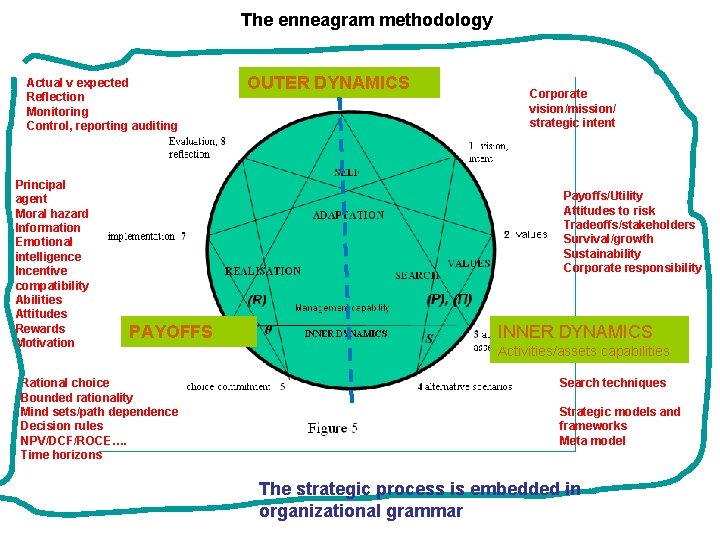
The enneagram methodology Actual v expected Reflection Monitoring Control, reporting auditing Principal agent Moral hazard Information Emotional intelligence Incentive compatibility Abilities Attitudes Rewards Motivation OUTER DYNAMICS Corporate vision/mission/ strategic intent Payoffs/Utility Attitudes to risk Tradeoffs/stakeholders Survival/growth Sustainability Corporate responsibility PAYOFFS Rational choice Bounded rationality Mind sets/path dependence Decision rules NPV/DCF/ROCE…. Time horizons INNER DYNAMICS Activities/assets capabilities Search techniques Strategic models and frameworks Meta model The strategic process is embedded in organizational grammar
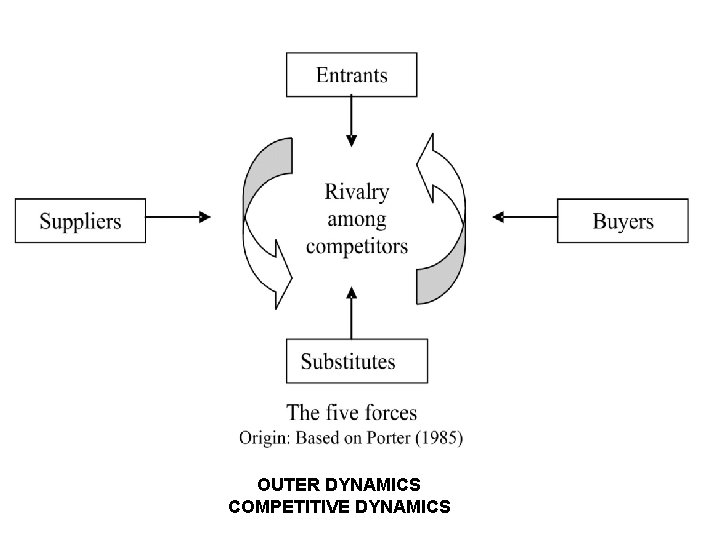
OUTER DYNAMICS COMPETITIVE DYNAMICS
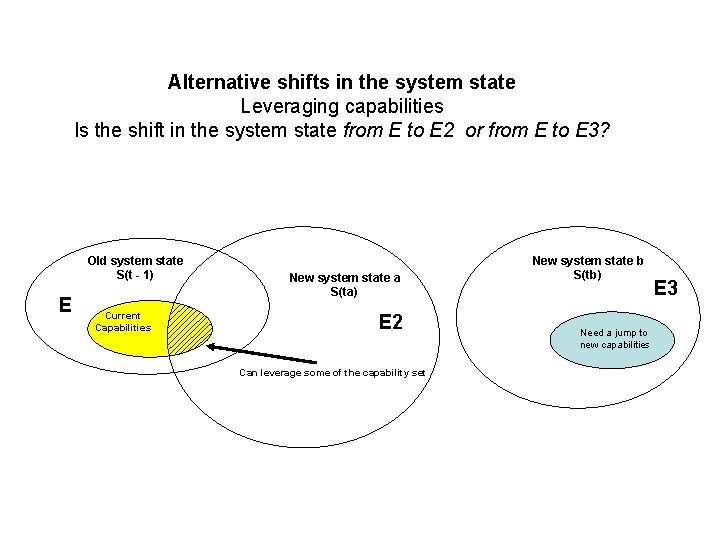
Alternative shifts in the system state Leveraging capabilities Is the shift in the system state from E to E 2 or from E to E 3? Old system state S(t - 1) E Current Capabilities New system state a S(ta) E 2 Can leverage some of the capability set New system state b S(tb) Need a jump to new capabilities E 3
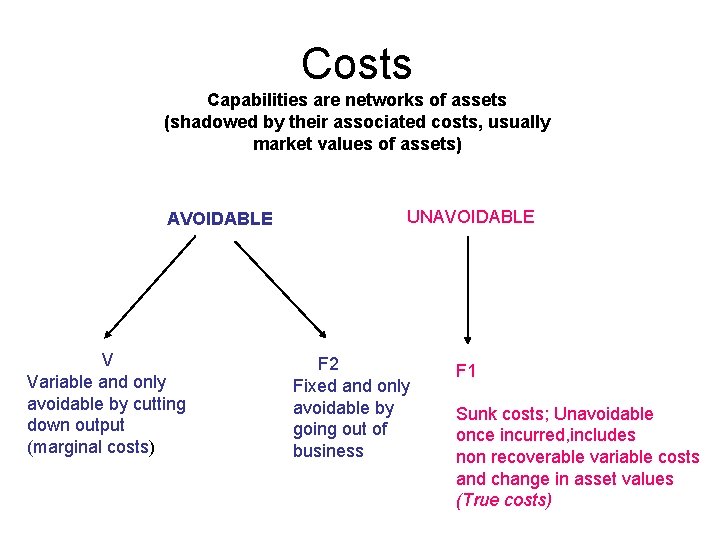
Costs Capabilities are networks of assets (shadowed by their associated costs, usually market values of assets) AVOIDABLE V Variable and only avoidable by cutting down output (marginal costs) UNAVOIDABLE F 2 Fixed and only avoidable by going out of business F 1 Sunk costs; Unavoidable once incurred, includes non recoverable variable costs and change in asset values (True costs)
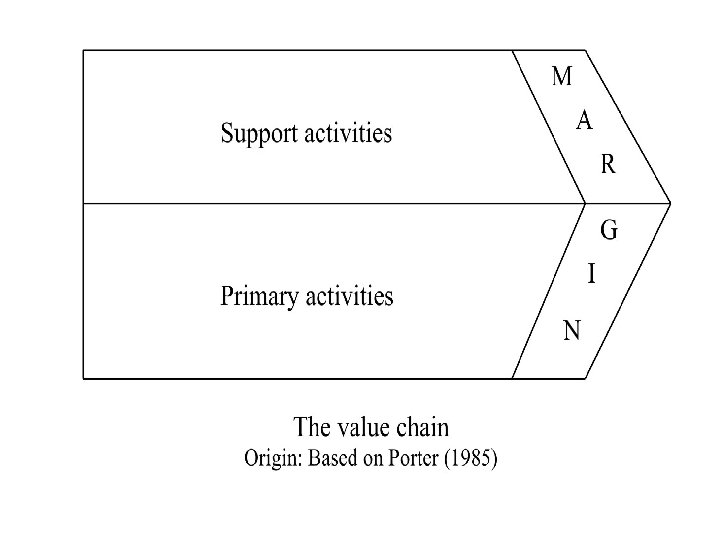
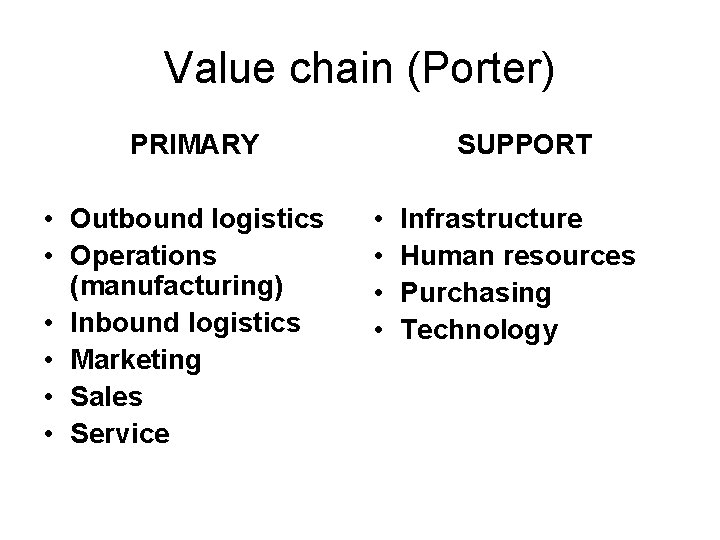
Value chain (Porter) PRIMARY • Outbound logistics • Operations (manufacturing) • Inbound logistics • Marketing • Sales • Service SUPPORT • • Infrastructure Human resources Purchasing Technology
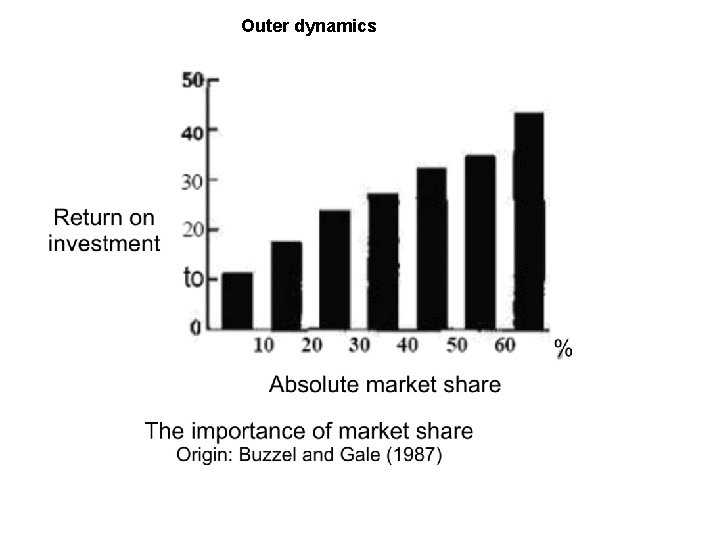
Outer dynamics
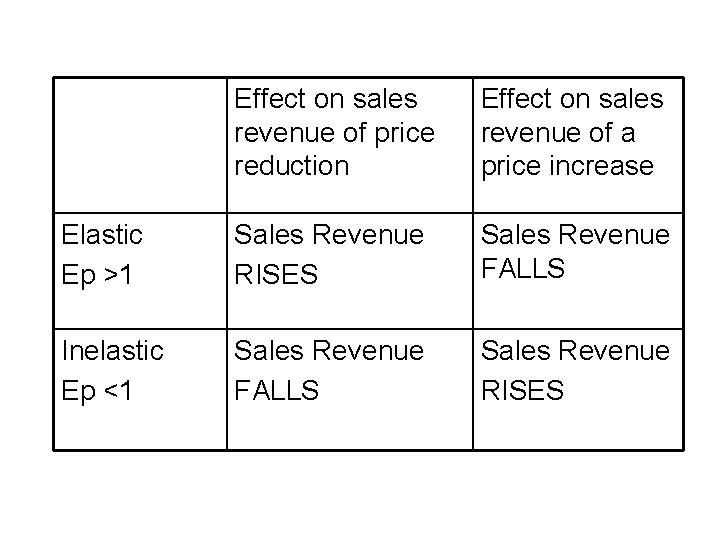
Effect on sales revenue of price reduction Effect on sales revenue of a price increase Elastic Ep >1 Sales Revenue RISES Sales Revenue FALLS Inelastic Ep <1 Sales Revenue FALLS Sales Revenue RISES
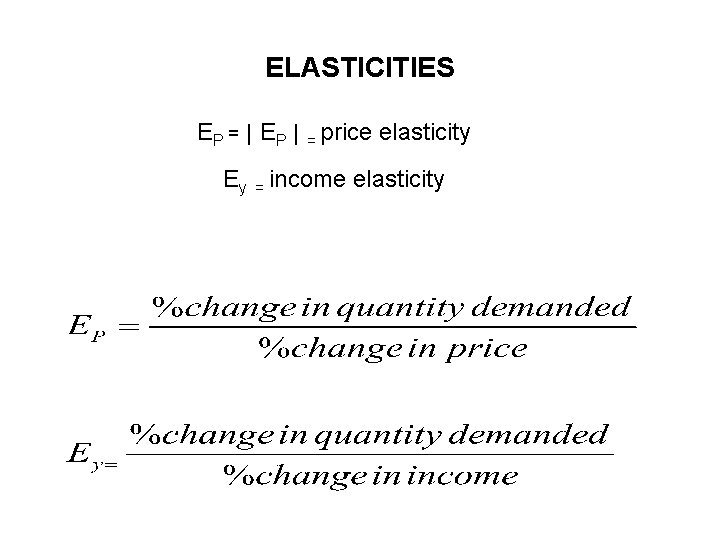
ELASTICITIES EP = │ EP │ = price elasticity Ey = income elasticity
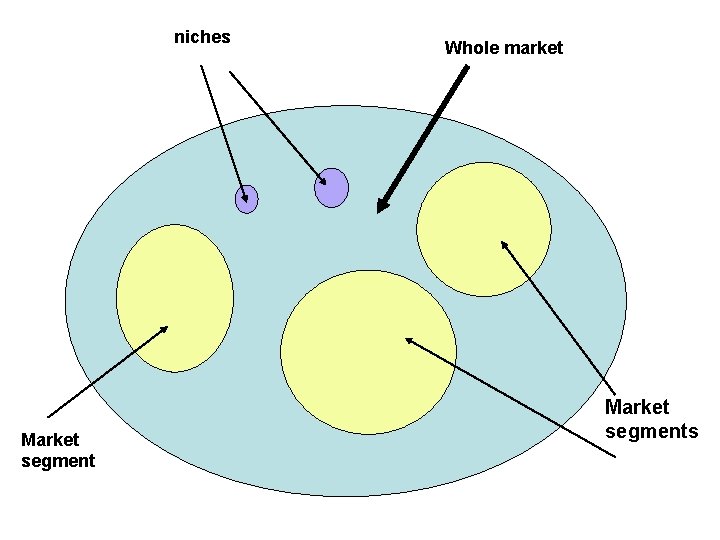
niches Market segment Whole market Market segments
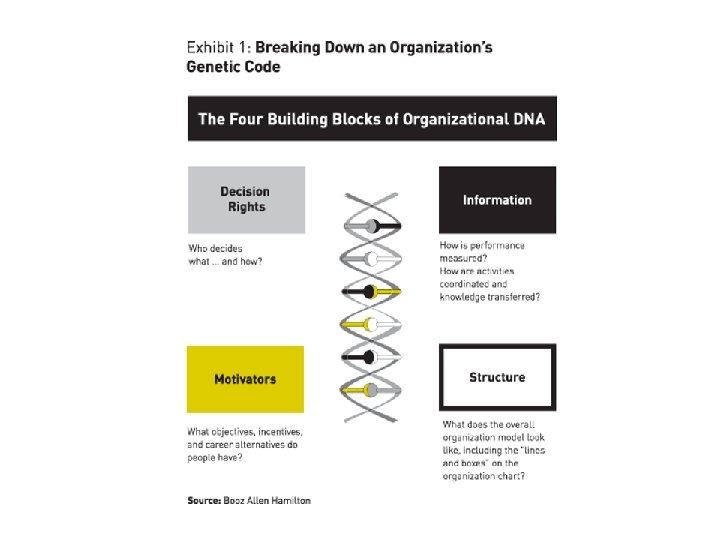
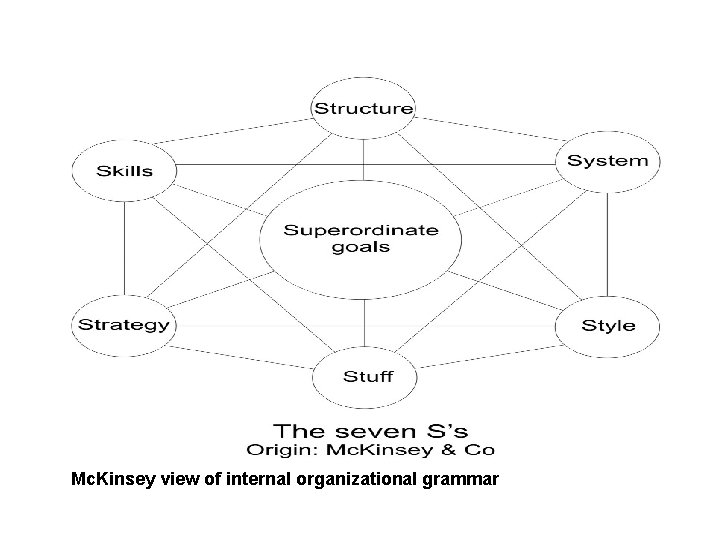
Mc. Kinsey view of internal organizational grammar