
VARIATIONS IN HEALTH STATUS Gender differences Male vs

- Slides: 10
VARIATIONS IN HEALTH STATUS: Gender differences: Male vs Female
Males vs Females � � � Women live longer than men Males feature more highly in death rates associated with almost every lifestyle disease except those which are gender specific Men continue to have higher rates of smoking, drink more alcohol, eat a poorer diet. Consume less fresh fruit and vegetables and higher rates of saturated fats Men are more likely to be obese. 42% of men are overweight compared to 30% of females Men are over represented in accidents and suicides and are more likely to be seriously injured by falls, drowning and violence and men undertake more risk related jobs
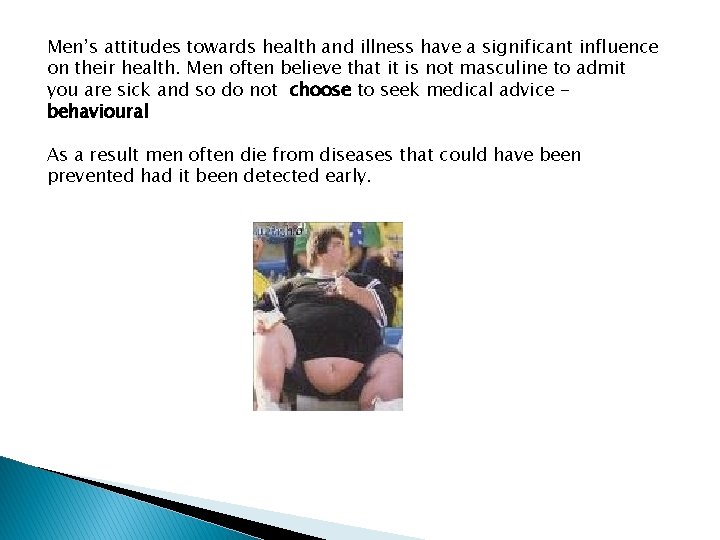
Men’s attitudes towards health and illness have a significant influence on their health. Men often believe that it is not masculine to admit you are sick and so do not choose to seek medical advice behavioural As a result men often die from diseases that could have been prevented had it been detected early.
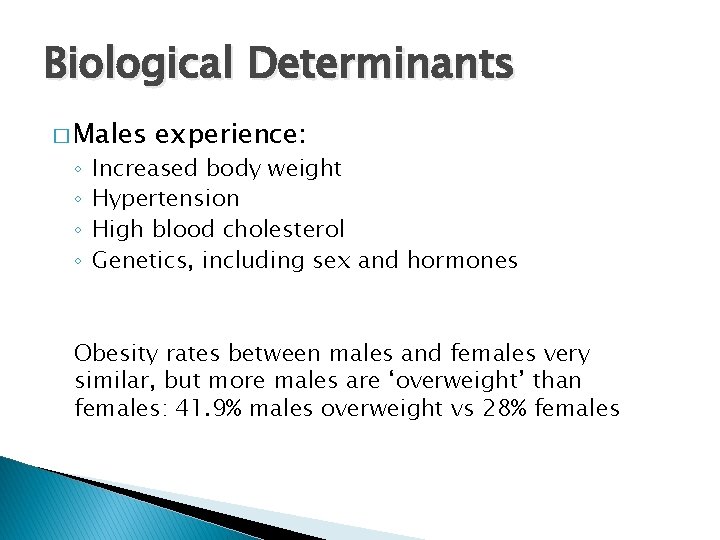
Biological Determinants � Males ◦ ◦ experience: Increased body weight Hypertension High blood cholesterol Genetics, including sex and hormones Obesity rates between males and females very similar, but more males are ‘overweight’ than females: 41. 9% males overweight vs 28% females
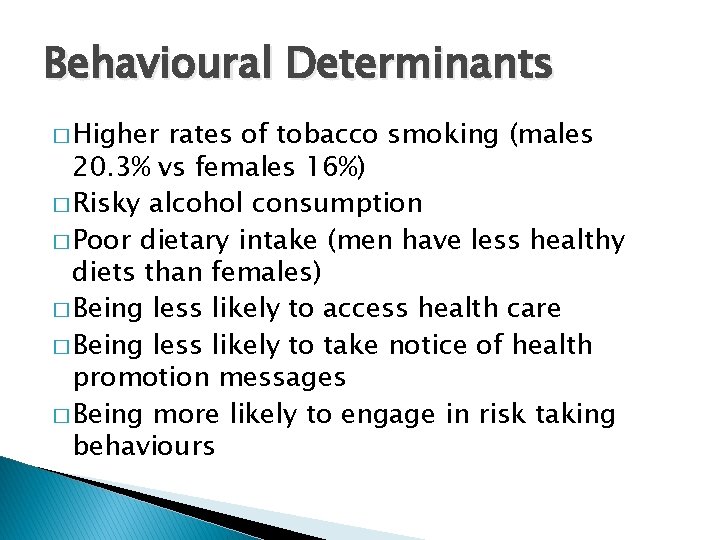
Behavioural Determinants � Higher rates of tobacco smoking (males 20. 3% vs females 16%) � Risky alcohol consumption � Poor dietary intake (men have less healthy diets than females) � Being less likely to access health care � Being less likely to take notice of health promotion messages � Being more likely to engage in risk taking behaviours
Physical Environment � Work environment ◦ Trades, farming, mining
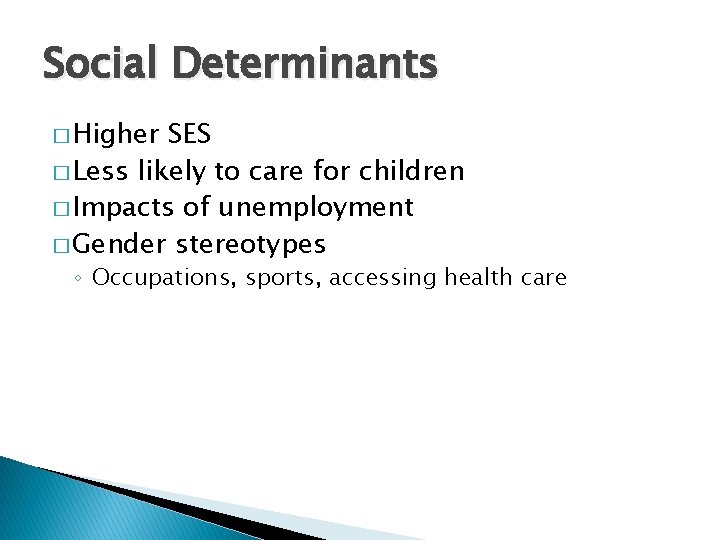
Social Determinants � Higher SES � Less likely to care for children � Impacts of unemployment � Gender stereotypes ◦ Occupations, sports, accessing health care
Complete Case Study pg 108