
Variation Within Species Individual Variation l This is
- Slides: 18
Variation Within Species
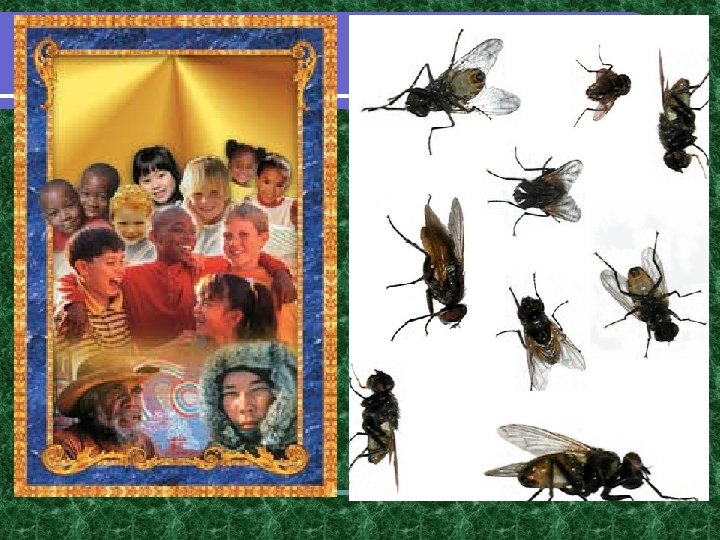
Individual Variation l This is more obvious in some species than is others. l E. g. in humans it is obvious, we are all unique, with different fingerprints etc, but if we looked at a jar of flies, it is doubtful if we could tell the difference between them. (although the flies probably could. )
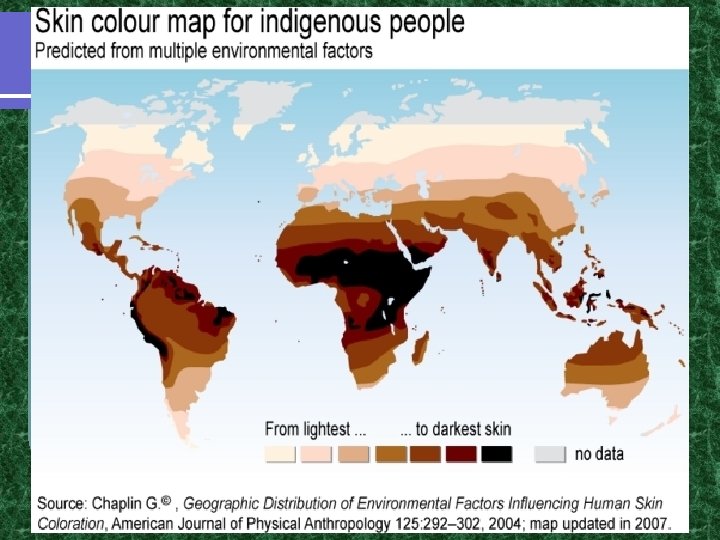
Geographic Variation l Generally this occurs on a larger scale than individual variation. l The different races of humans are mostly due to the geographical area in which each race evolved. l Dark skin is an advantage in regions of intense sunshine, e. g. the equatorial belt. (India, Africa, Northern Australia, Polynesia)
Geographic Variation Dark skin in high (cold) lattitudes prevents the formation of vitamin D in the skin, so in those areas pale skin has evolved. l Along with this is a loss of pigment in the hair and eyes, giving blonde hair and blue eyes. l
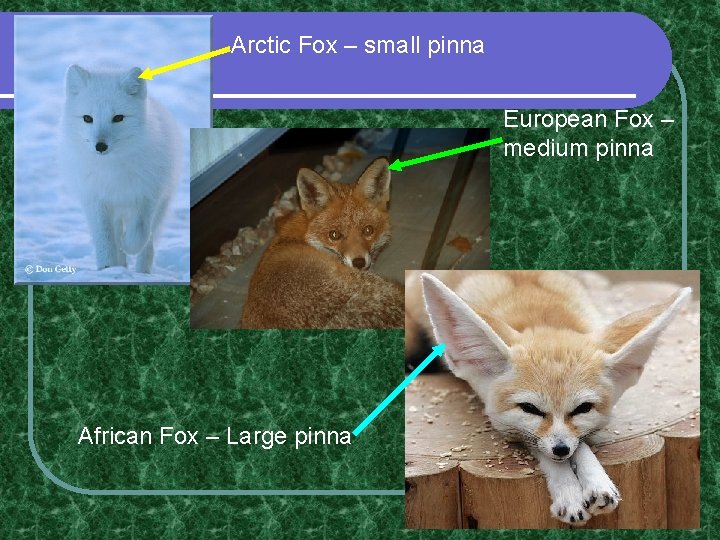
Geographic Variation l Among other animals the geographical variation is not so obvious, but birds and mammals living in high altitudes are generally larger, and have shorter ears, tails and limbs to reduce heat loss. l In hot areas, long extremities and small body size increase heat loss.
Arctic Fox – small pinna European Fox – medium pinna African Fox – Large pinna
A Cline l If we move in a particular direction through a range of a species, and find that there is a continuous increase or decrease in some characteristics between adjacent populations, this pattern is called a Cline.
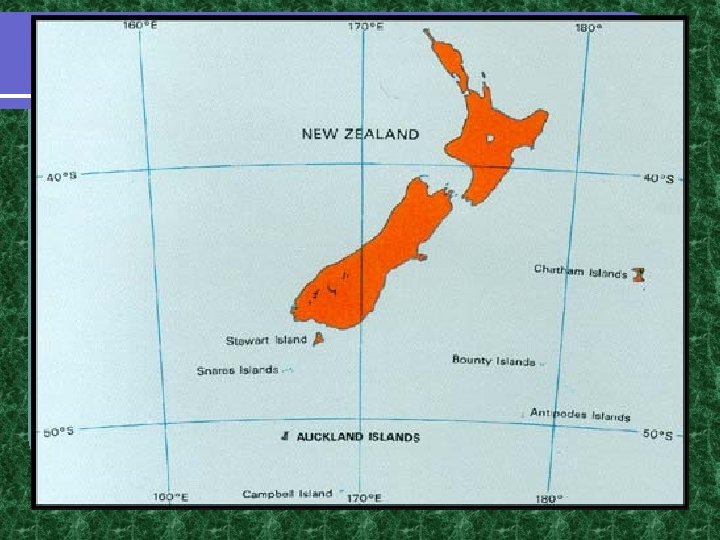
A Cline l The NZ Tomtit shows a clinal variation in the length of the tail and wing. l North Island tomtits have shorter tails and wings than their South Island counterparts, and this reaches all the way down to the Chathams, the Snares and the Aukland Islands.
A Cline l The Snares Island sub-species is actually an exception as it has a longer wing than the more southern Auckland Island sub-species. l This is probably due to random variation in the gene frequencies in a small population on the Snares.
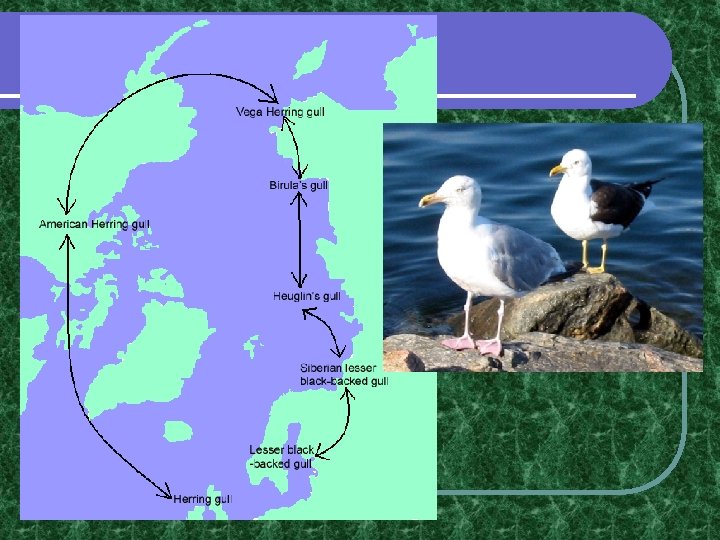
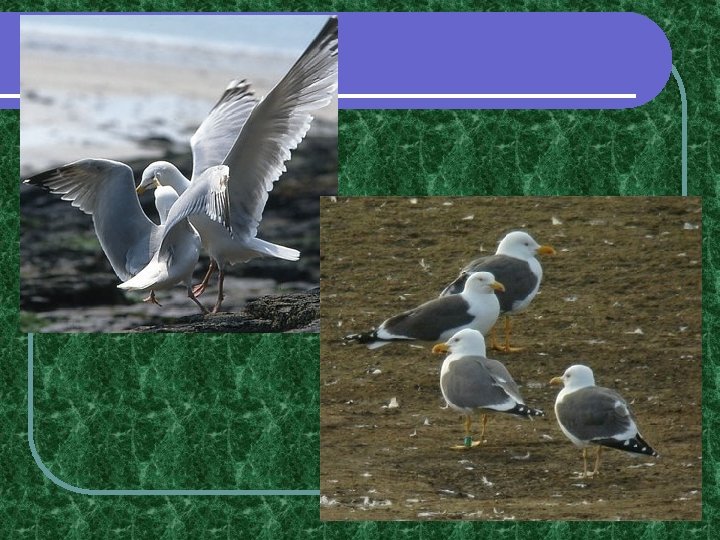
A Ring Species l When 2 apparently different species are joined by a series of geographical and structural intermediate types. l This is called a Ring Species. l E. g. in Britain and NW Europe – the herring gull and the black-backed gull. l These don’t interbreed in the wild, so they act as 2 species.
A Ring Species l If you go east, there are initially only black-backed gulls; the further east you go, the more herring gull traits start to appear. l If you go west, there are only herring gulls to start with; but as you continue west, the birds start to show some blackbacked gull characteristics.
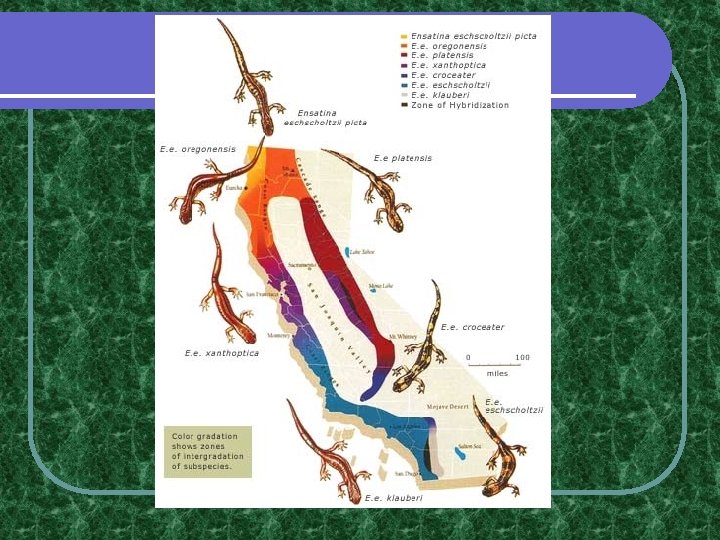
A Ring Species l So you can form a circle around the Arctic polar region with this ring of different birds, emerging into 2 distinct species.