
VARIABLES SCIENTIFIC METHOD Variables Unit 1 Intro to
VARIABLES & SCIENTIFIC METHOD

Variables Unit 1 – Intro to Science
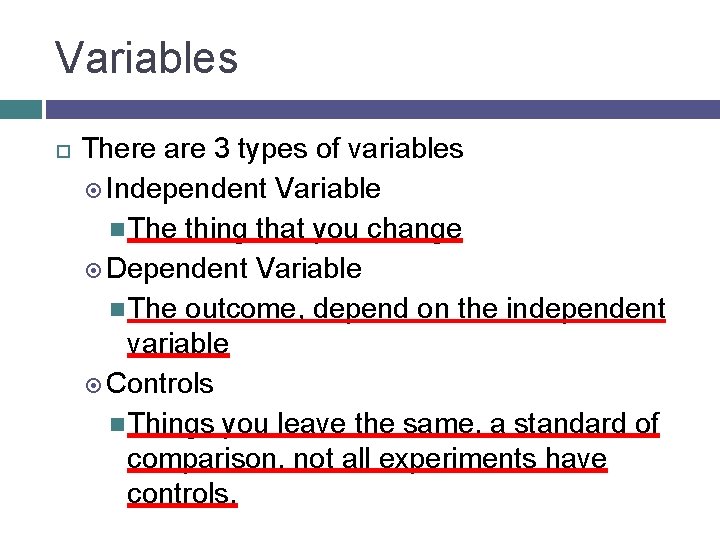
Variables There are 3 types of variables Independent Variable The thing that you change Dependent Variable The outcome, depend on the independent variable Controls Things you leave the same, a standard of comparison, not all experiments have controls.
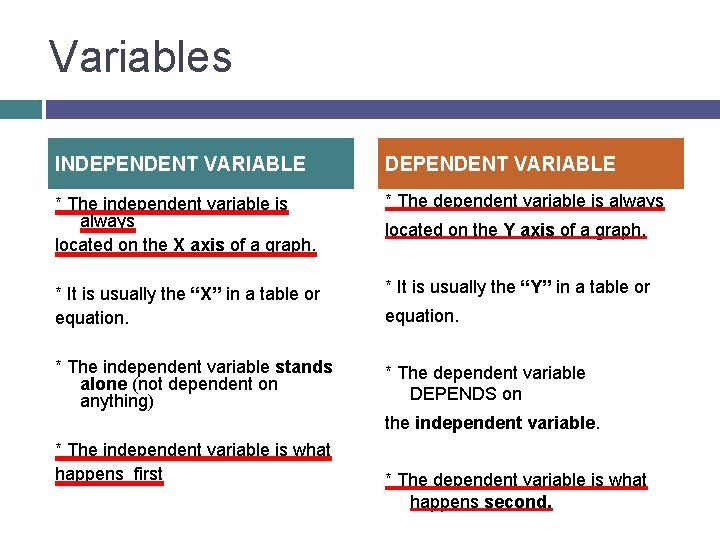
Variables INDEPENDENT VARIABLE * The independent variable is always located on the X axis of a graph. * The dependent variable is always * It is usually the “X” in a table or equation. * It is usually the “Y” in a table or * The independent variable stands alone (not dependent on anything) * The dependent variable DEPENDS on located on the Y axis of a graph. equation. the independent variable. * The independent variable is what happens first * The dependent variable is what happens second.

Constants Sometimes these are confused with CONTROLS. Constants are things that remain consistent throughout the entire experiment. Temperature, materials, location, etc…
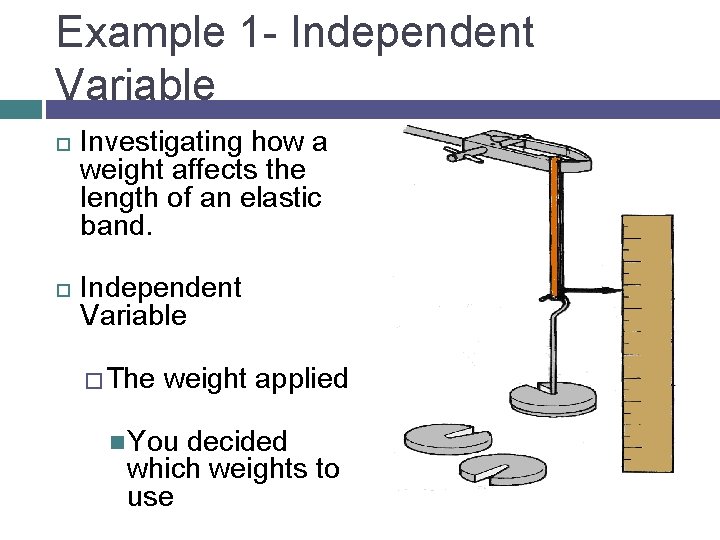
Example 1 - Independent Variable Investigating how a weight affects the length of an elastic band. Independent Variable � The weight applied You decided which weights to use
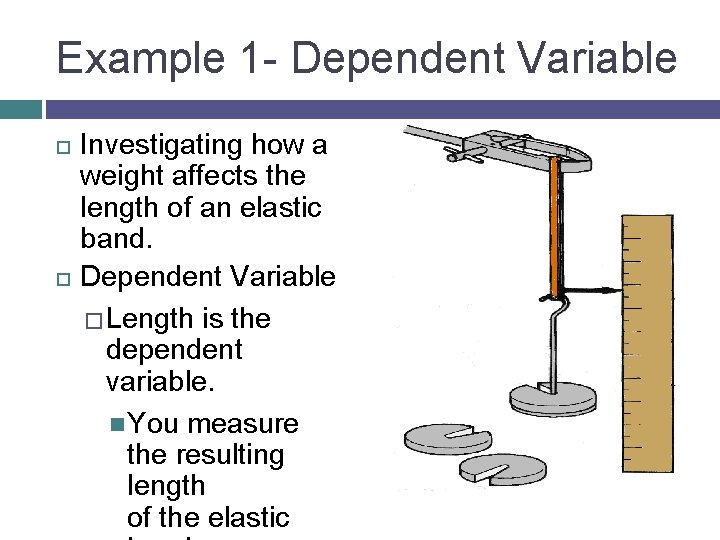
Example 1 - Dependent Variable Investigating how a weight affects the length of an elastic band. Dependent Variable � Length is the dependent variable. You measure the resulting length of the elastic
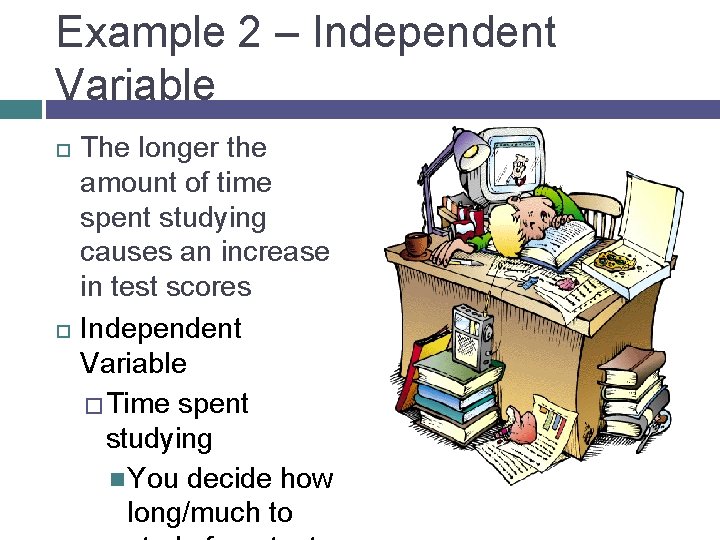
Example 2 – Independent Variable The longer the amount of time spent studying causes an increase in test scores Independent Variable � Time spent studying You decide how long/much to
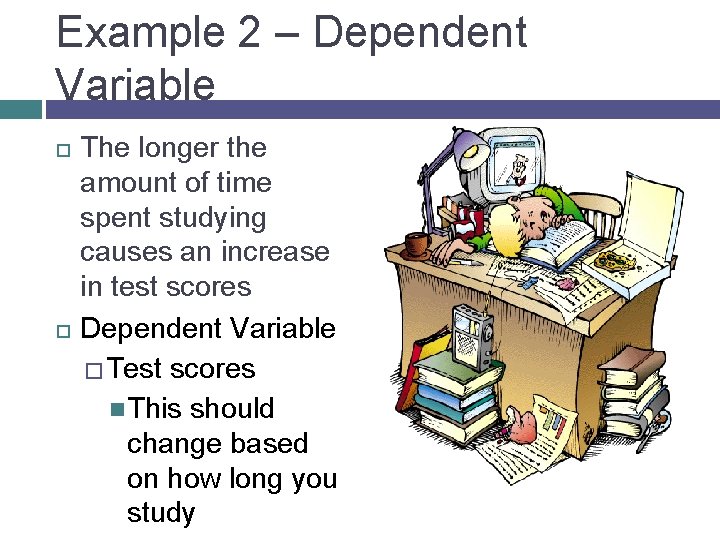
Example 2 – Dependent Variable The longer the amount of time spent studying causes an increase in test scores Dependent Variable � Test scores This should change based on how long you study
Scientific Method Unit 1 – Intro to Science
Science “Sci” means “to know” We know things from facts that can be proven through data and evidence We gather facts through the scientific method. The Scientific Method A pattern that scientist use to investigate or solve a specific problem.
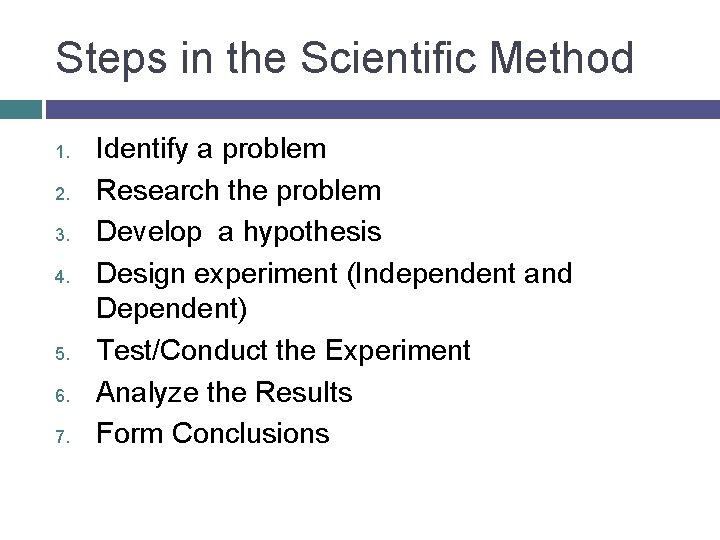
Steps in the Scientific Method 1. 2. 3. 4. 5. 6. 7. Identify a problem Research the problem Develop a hypothesis Design experiment (Independent and Dependent) Test/Conduct the Experiment Analyze the Results Form Conclusions
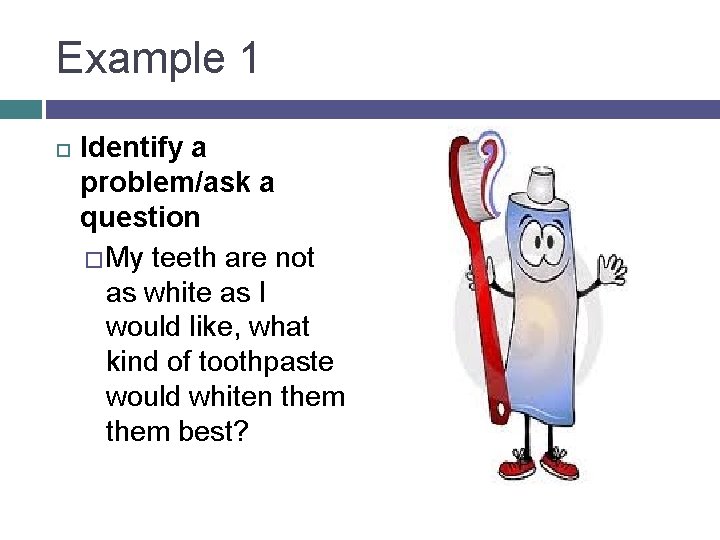
Example 1 Identify a problem/ask a question � My teeth are not as white as I would like, what kind of toothpaste would whiten them best?
Example 1 Research the Problem Go to library and research reputable journals. Research using internet but only trustworthy sources. Prior knowledge or experience
Example 1 Develop a Hypothesis A hypothesis is a possible explanation for a set of observations or answer to scientific question, predicts an outcome Should be written as “I think _______ because______. ”
Example 1 Design an Experiment Is a test made up of variables that can be tested or compared. Independent variable, and a control
Example 1 Carry out experiment Make observations during the experiment Types of observations/data Quantitative Using numbers Qualitative Using your 5 senses (touch, smell, etc.
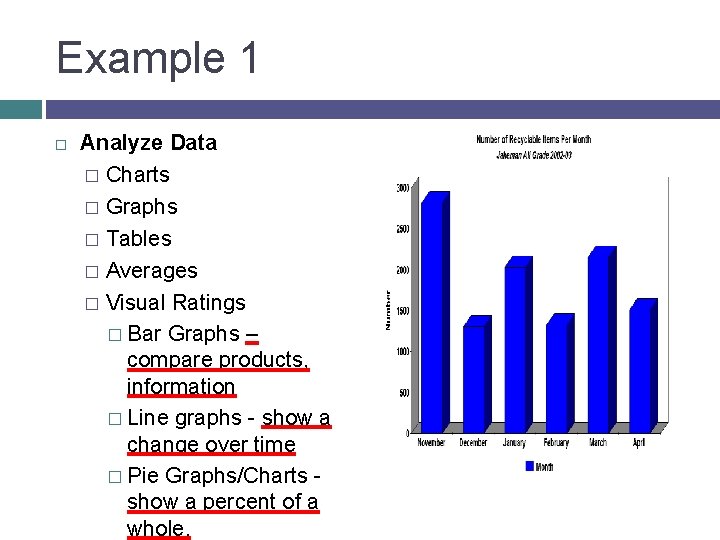
Example 1 Analyze Data � Charts � Graphs � Tables � Averages � Visual Ratings � Bar Graphs – compare products, information � Line graphs - show a change over time � Pie Graphs/Charts show a percent of a whole.
Example 1 Form a conclusion We summarize what the data (tables, charts and graphs) say. Always answer these three questions: What did I want to find out? Did I found out what I wanted to know? Was my hypothesis supported?
- Slides: 19