
Variable Star CCD Differential Photometry Photometry Is The
Variable Star CCD Differential Photometry

Photometry Is The Measurement Of A Stars Brightness Early Measurement Systems Originated with Either Hipparchus or Ptolemy, Greek Philosophers (circa 150 BC-150 AD) Assigned “ 1” to the Brightest Stars Assigned “ 2” to the Next Brightest, etc. , All the Way to “ 6”
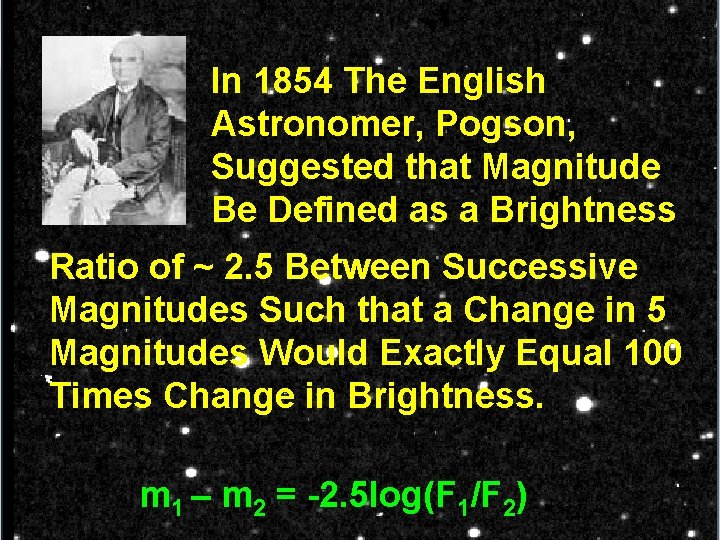
In 1854 The English Astronomer, Pogson, Suggested that Magnitude Be Defined as a Brightness Ratio of ~ 2. 5 Between Successive Magnitudes Such that a Change in 5 Magnitudes Would Exactly Equal 100 Times Change in Brightness. m 1 – m 2 = -2. 5 log(F 1/F 2)
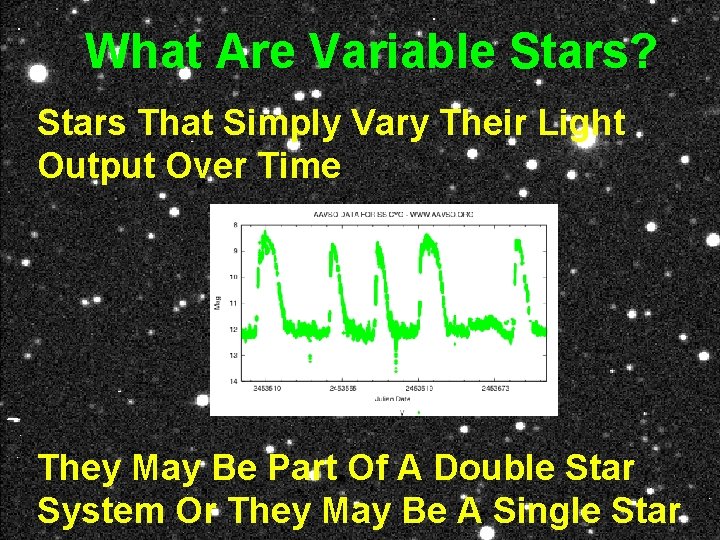
What Are Variable Stars? Stars That Simply Vary Their Light Output Over Time They May Be Part Of A Double Star System Or They May Be A Single Star
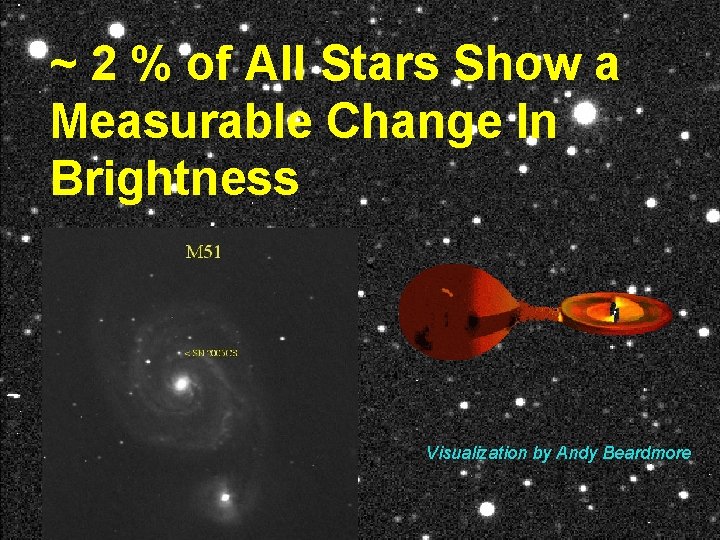
~ 2 % of All Stars Show a Measurable Change In Brightness Visualization by Andy Beardmore
There Are Various Classifications for Variable Stars. A Few Examples: Cepheids: Period ~ 1 - 70 Days, Vary ~. 1 -2. 0 Magnitudes RR Lyrae Stars: Period ~. 2 - 1 Day, Vary ~. 3 – 2. 0 Magnitudes Long Period Variables: Period ~ 801000 Days, Vary ~ 2. 5 – 5 Magnitudes
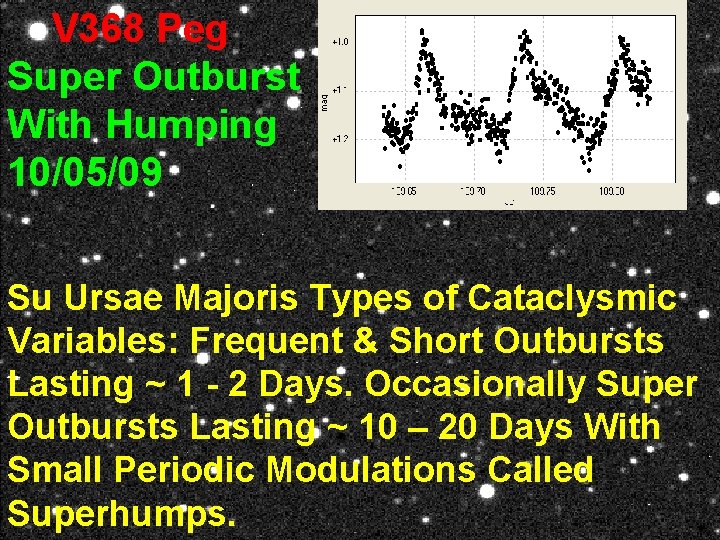
V 368 Peg Super Outburst With Humping 10/05/09 Su Ursae Majoris Types of Cataclysmic Variables: Frequent & Short Outbursts Lasting ~ 1 - 2 Days. Occasionally Super Outbursts Lasting ~ 10 – 20 Days With Small Periodic Modulations Called Superhumps.
Why Observe Variable Stars? The Data Is Very Important to Astronomers & Astrophysicists Variable Star Data, Dependent Upon Type, Can Be Used To Determine: Luminosity, Temperature, Radius, Mass Composition, Rotational Period & Distance
There Is Also a Critical Need For Us To Understand & Monitor The More Nasty High Energy Eruptive Variables Such As GRB’s (Gamma Ray Bursts), Supernovae & BL Lac Objects (Blazars). Our Survival May Depend On These Observations!
The American Association Of Variable Star Observers With It’s Paid Staff of ~12 Folks & Many Volunteers , Located In Cambridge, MA, is The Main Repository For Submitted Variable Star Data You Do Not Have to Be a Member To Submit Observations.
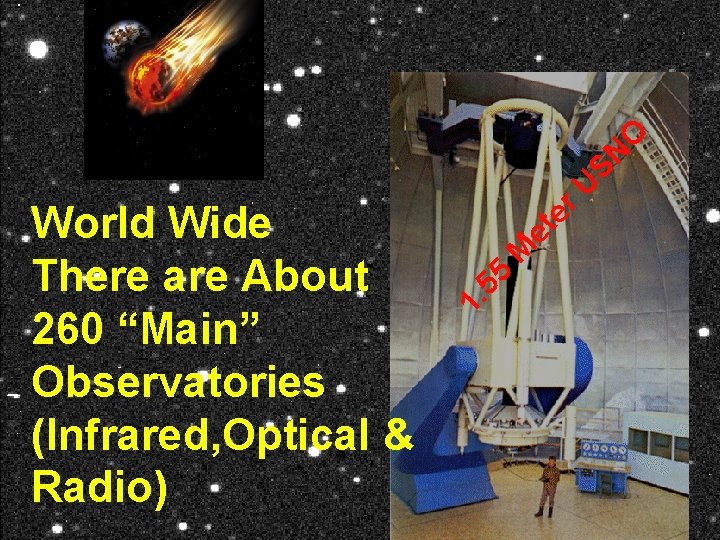
O SN U er et M 5 1. 5 World Wide There are About 260 “Main” Observatories (Infrared, Optical & Radio)
The ~ 260 Big “Scopes” Are Over Whelmed With Requests For Their Limited Time Then There Is The Humongous Size Of Our Universe With Zillions of Stars
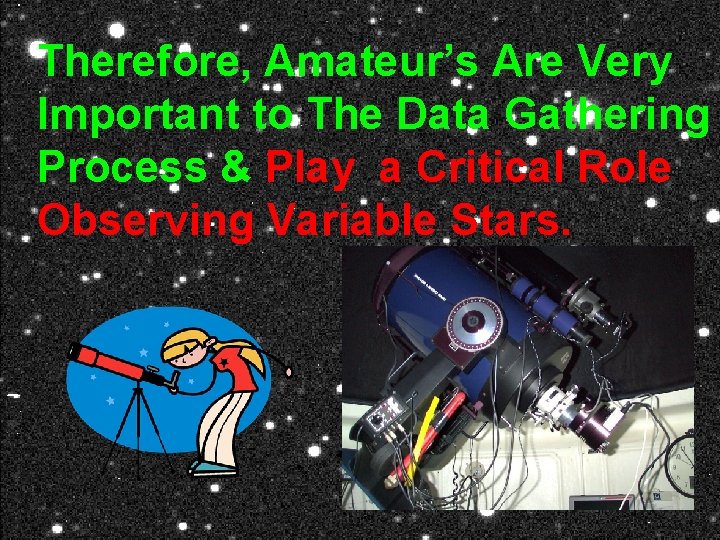
Therefore, Amateur’s Are Very Important to The Data Gathering Process & Play a Critical Role Observing Variable Stars.
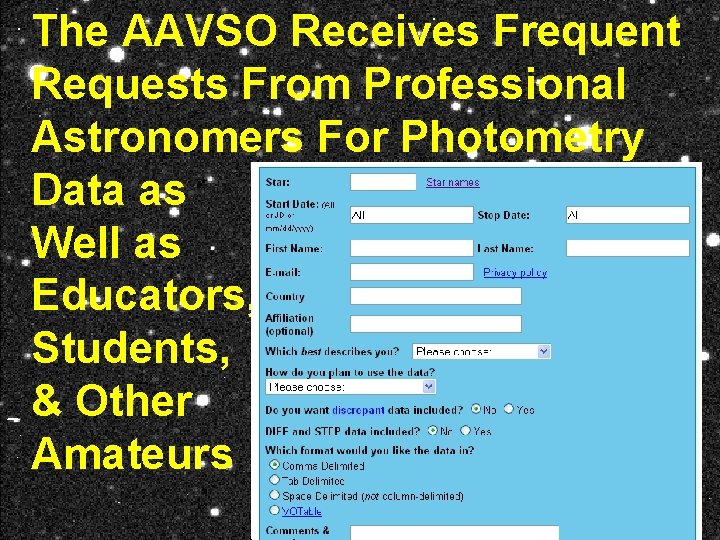
The AAVSO Receives Frequent Requests From Professional Astronomers For Photometry Data as Well as Educators, Students, & Other Amateurs

AAVSO Members & Observers Are Often Asked To Support Scientific Projects By Professional Astronomers, Whether Using Land or Space Based Equipment, To Make Observations Of Specific Targets
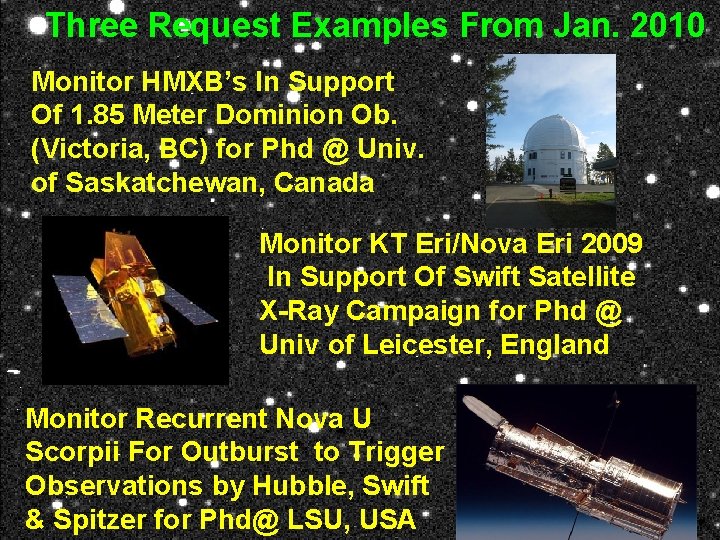
Three Request Examples From Jan. 2010 Monitor HMXB’s In Support Of 1. 85 Meter Dominion Ob. (Victoria, BC) for Phd @ Univ. of Saskatchewan, Canada Monitor KT Eri/Nova Eri 2009 In Support Of Swift Satellite X-Ray Campaign for Phd @ Univ of Leicester, England Monitor Recurrent Nova U Scorpii For Outburst to Trigger Observations by Hubble, Swift & Spitzer for Phd@ LSU, USA

Observing Requires A CCD Camera - Preferably One Designed For Photometry, i. e. NAB (non Anti-Blooming), Monochrome & Cooling Ability ST-402 ME ST-7/8/9/10 XME
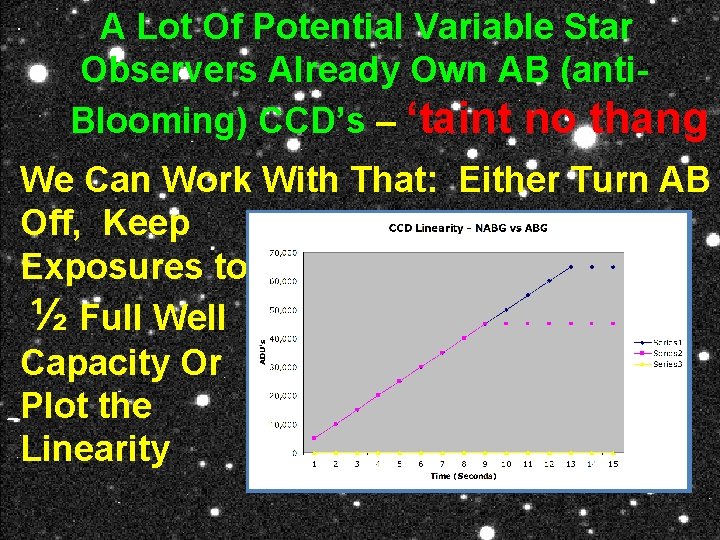
A Lot Of Potential Variable Star Observers Already Own AB (anti. Blooming) CCD’s – ‘taint no thang We Can Work With That: Either Turn AB Off, Keep Exposures to ½ Full Well Capacity Or Plot the Linearity A[pg
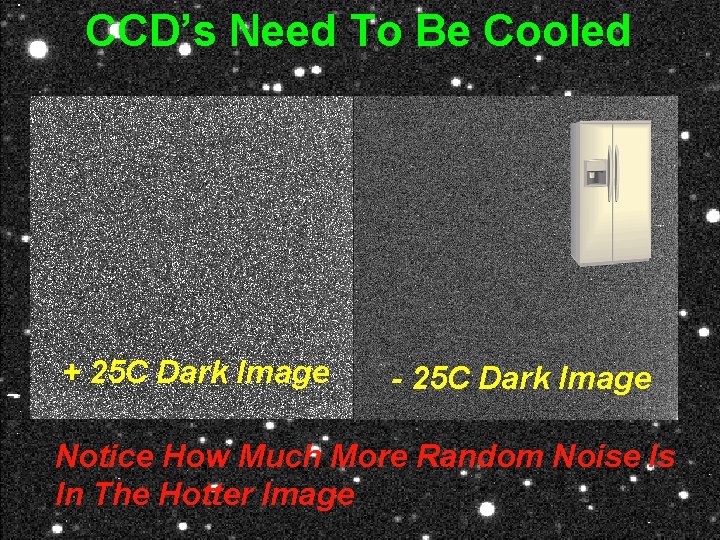
CCD’s Need To Be Cooled + 25 C Dark Image - 25 C Dark Image Notice How Much More Random Noise Is In The Hotter Image
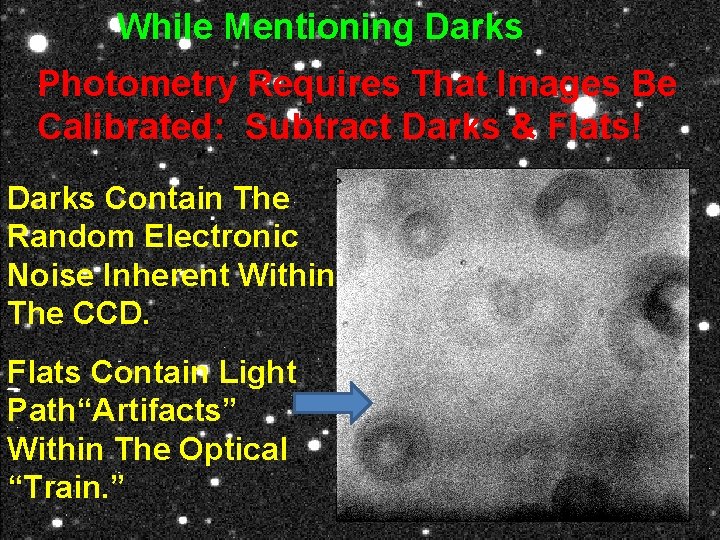
While Mentioning Darks Photometry Requires That Images Be Calibrated: Subtract Darks & Flats! Darks Contain The Random Electronic Noise Inherent Within The CCD. Flats Contain Light Path“Artifacts” Within The Optical “Train. ”
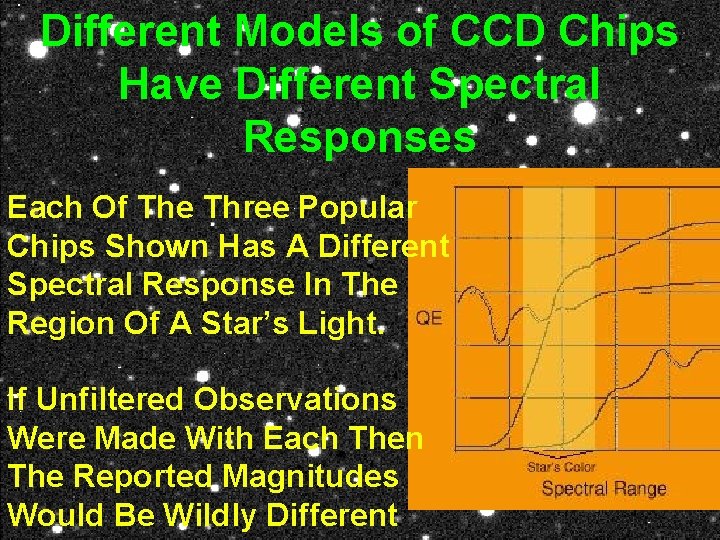
Different Models of CCD Chips Have Different Spectral Responses Each Of The Three Popular Chips Shown Has A Different Spectral Response In The Region Of A Star’s Light. If Unfiltered Observations Were Made With Each Then The Reported Magnitudes Would Be Wildly Different
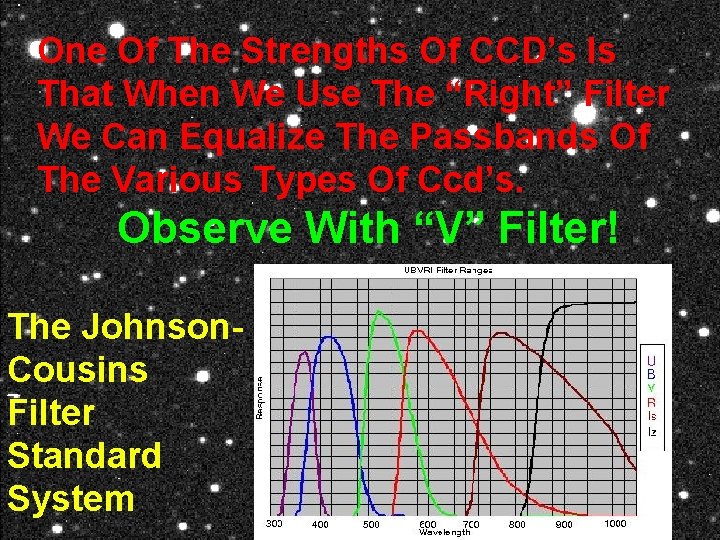
One Of The Strengths Of CCD’s Is That When We Use The “Right” Filter We Can Equalize The Passbands Of The Various Types Of Ccd’s. Observe With “V” Filter! The Johnson. Cousins Filter Standard System
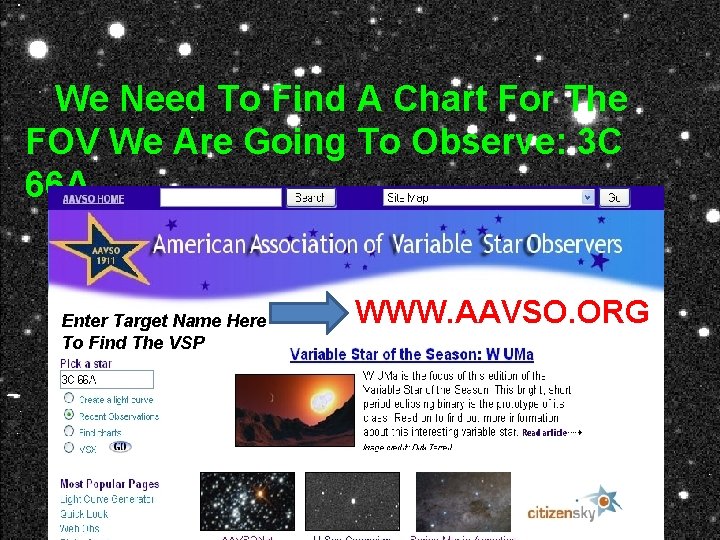
We Need To Find A Chart For The FOV We Are Going To Observe: 3 C 66 A Enter Target Name Here To Find The VSP WWW. AAVSO. ORG
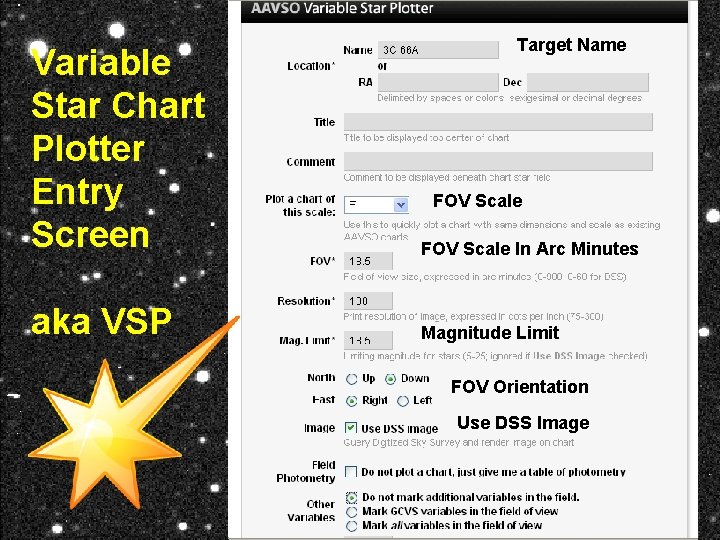
Target Name Variable Star Chart Plotter Entry Screen FOV Scale In Arc Minutes aka VSP Magnitude Limit FOV Scale FOV Orientation Use DSS Image
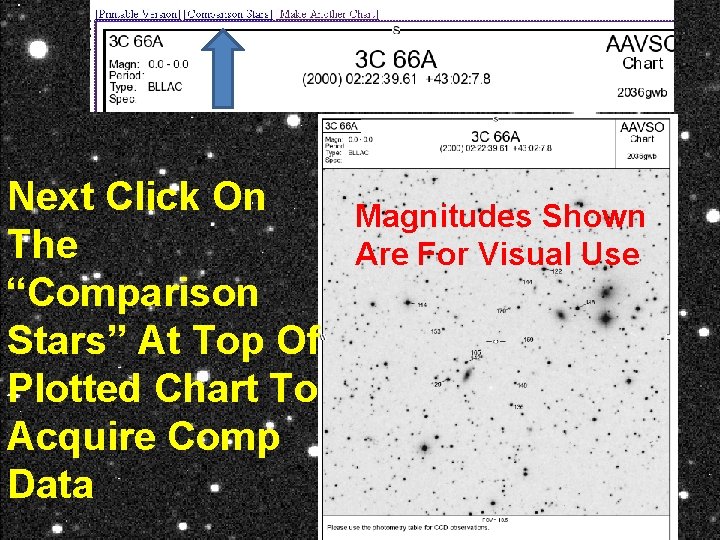
Next Click On The “Comparison Stars” At Top Of Plotted Chart To Acquire Comp Data Magnitudes Shown Are For Visual Use
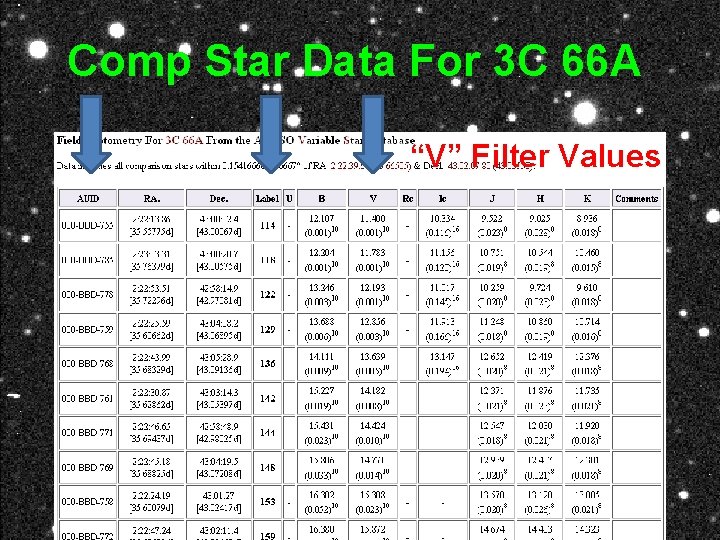
Comp Star Data For 3 C 66 A “V” Filter Values
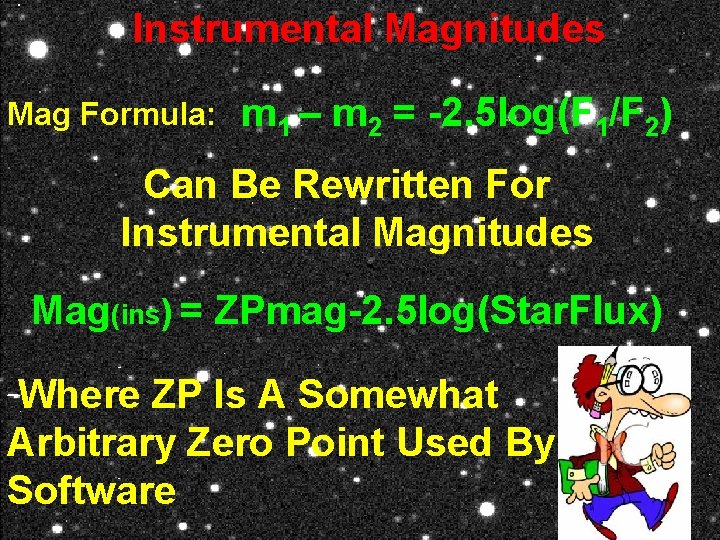
Instrumental Magnitudes Mag Formula: m 1 – m 2 = -2. 5 log(F 1/F 2) Can Be Rewritten For Instrumental Magnitudes Mag(ins) = ZPmag-2. 5 log(Star. Flux) Where ZP Is A Somewhat Arbitrary Zero Point Used By Software

Differential Photometry The Differential Magnitude (Vmag) Is Computed By Taking The (difference) Between The Variable (unknown) Stars Instrumental Magnitude And A Known Stars Instrumental Magnitude Such That: Vmag = (v-c) + Cmag Where v & c are instrumental magnitudes Cmag is the known Comp Star Magnitude
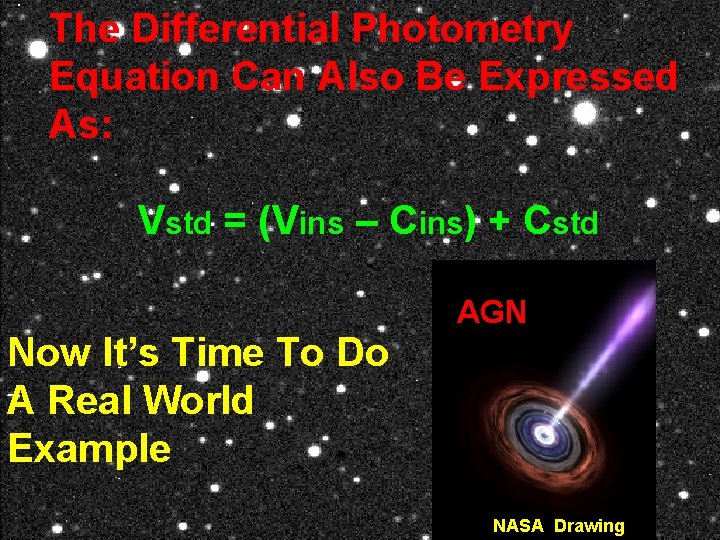
The Differential Photometry Equation Can Also Be Expressed As: Vstd = (Vins – Cins) + Cstd AGN Now It’s Time To Do A Real World Example NASA Drawing
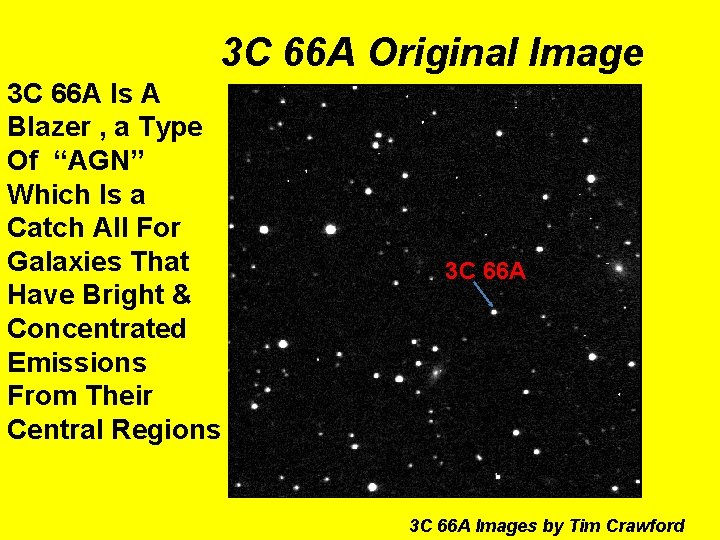
3 C 66 A Original Image 3 C 66 A Is A Blazer , a Type Of “AGN” Which Is a Catch All For Galaxies That Have Bright & Concentrated Emissions From Their Central Regions 3 C 66 A Images by Tim Crawford
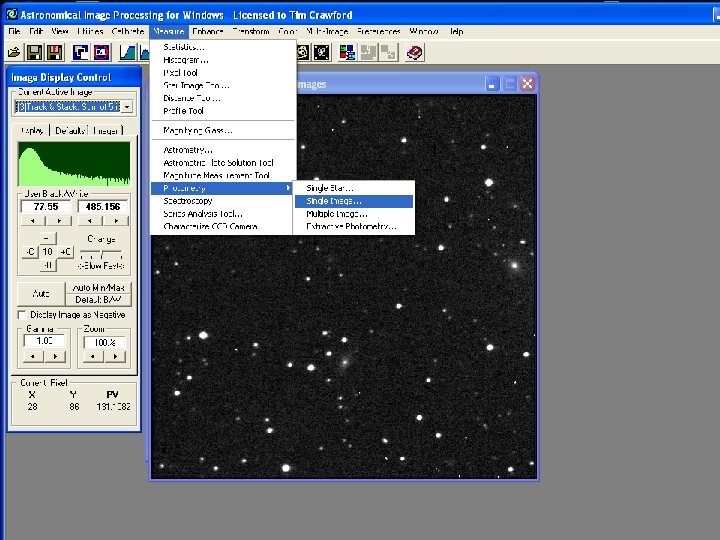
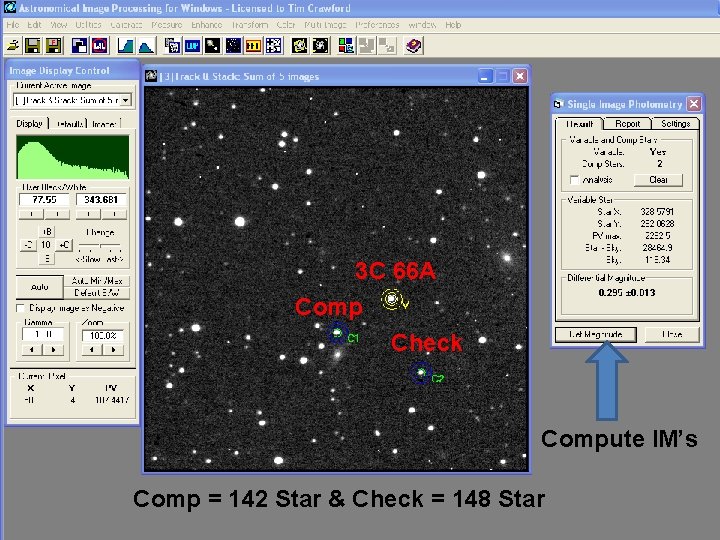
3 C 66 A Comp Check Compute IM’s Comp = 142 Star & Check = 148 Star
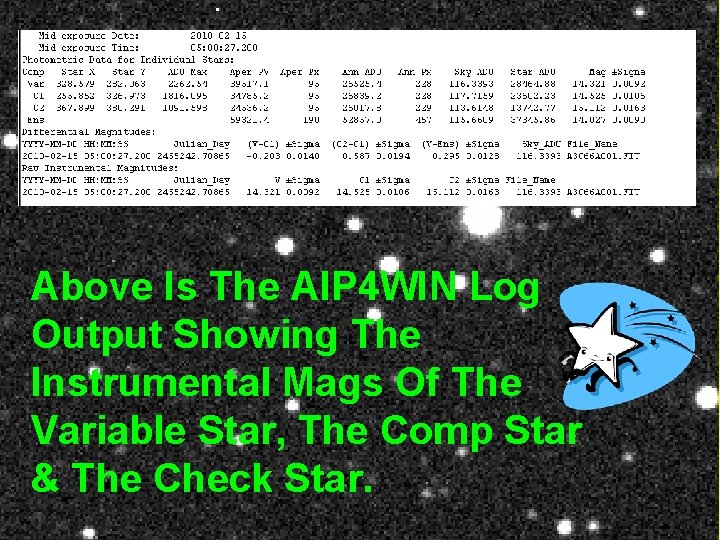
Above Is The AIP 4 WIN Log Output Showing The Instrumental Mags Of The Variable Star, The Comp Star & The Check Star.
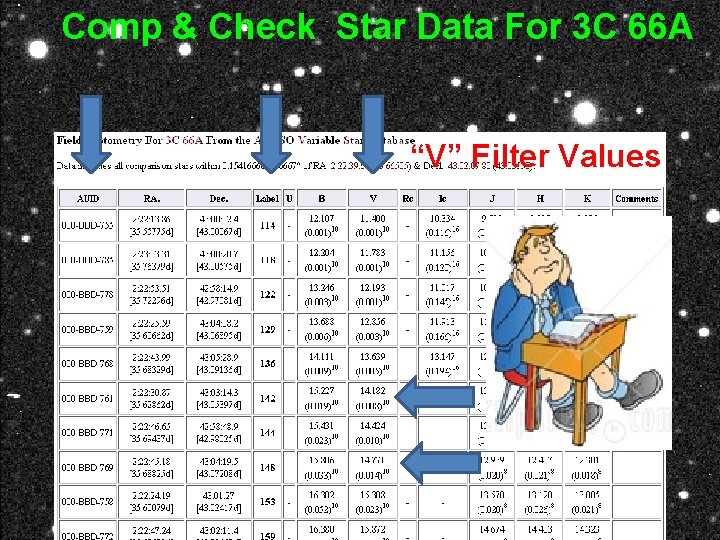
Comp & Check Star Data For 3 C 66 A “V” Filter Values
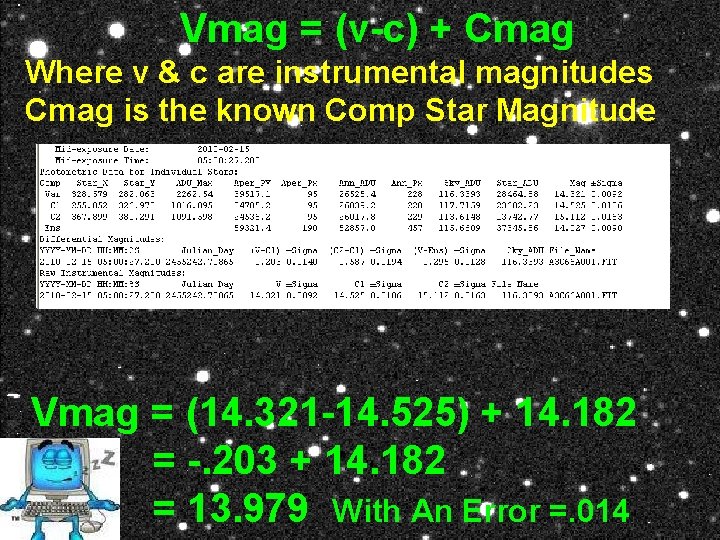
Vmag = (v-c) + Cmag Where v & c are instrumental magnitudes Cmag is the known Comp Star Magnitude Vmag = (14. 321 -14. 525) + 14. 182 = -. 203 + 14. 182 = 13. 979 With An Error =. 014
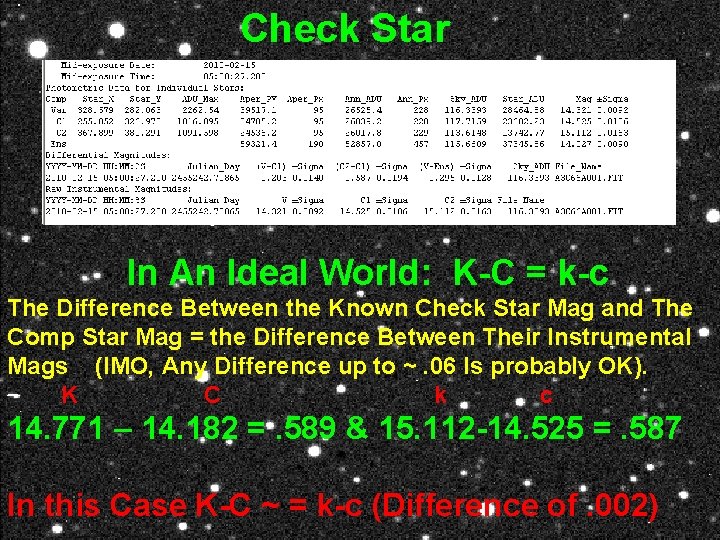
Check Star In An Ideal World: K-C = k-c The Difference Between the Known Check Star Mag and The Comp Star Mag = the Difference Between Their Instrumental Mags (IMO, Any Difference up to ~. 06 Is probably OK). K C k c 14. 771 – 14. 182 =. 589 & 15. 112 -14. 525 =. 587 In this Case K-C ~ = k-c (Difference of. 002)
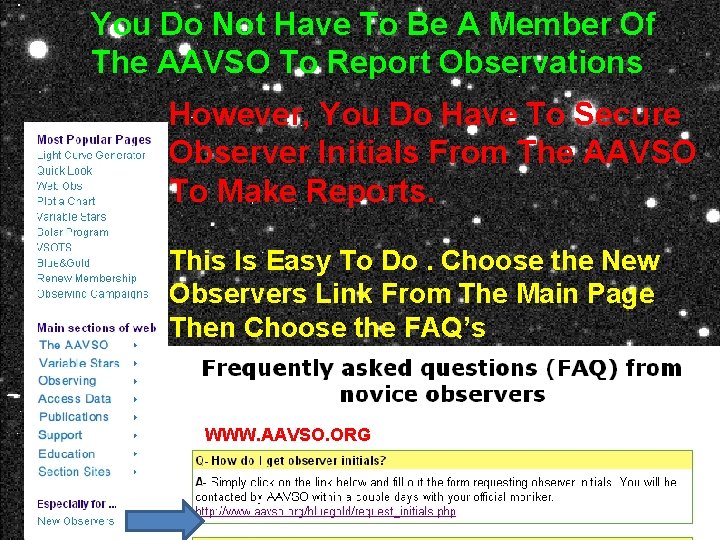
You Do Not Have To Be A Member Of The AAVSO To Report Observations However, You Do Have To Secure Observer Initials From The AAVSO To Make Reports. This Is Easy To Do. Choose the New Observers Link From The Main Page Then Choose the FAQ’s WWW. AAVSO. ORG
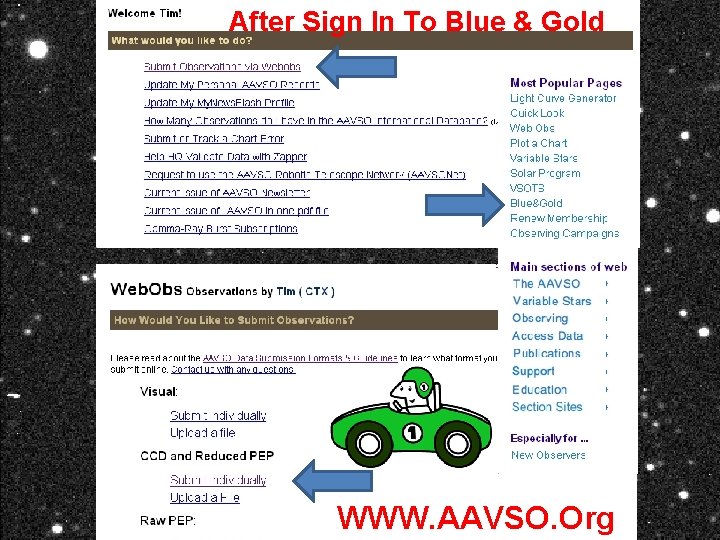
After Sign In To Blue & Gold WWW. AAVSO. Org
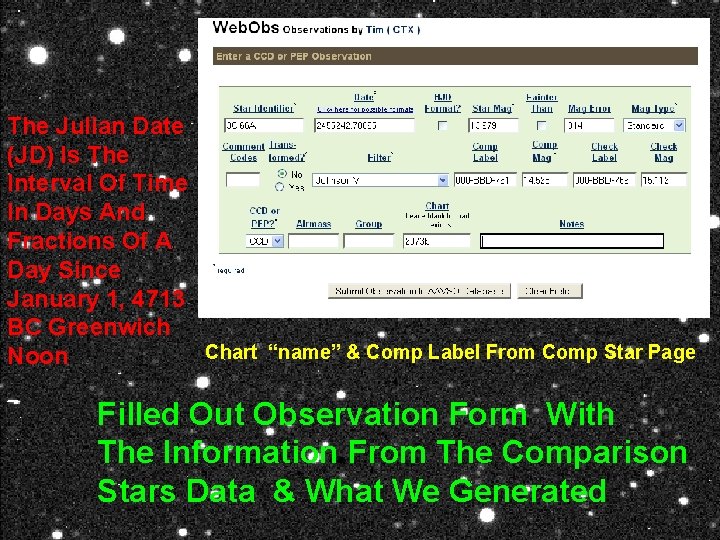
The Julian Date (JD) Is The Interval Of Time In Days And Fractions Of A Day Since January 1, 4713 BC Greenwich Chart “name” & Comp Label From Comp Star Page Noon Filled Out Observation Form With The Information From The Comparison Stars Data & What We Generated
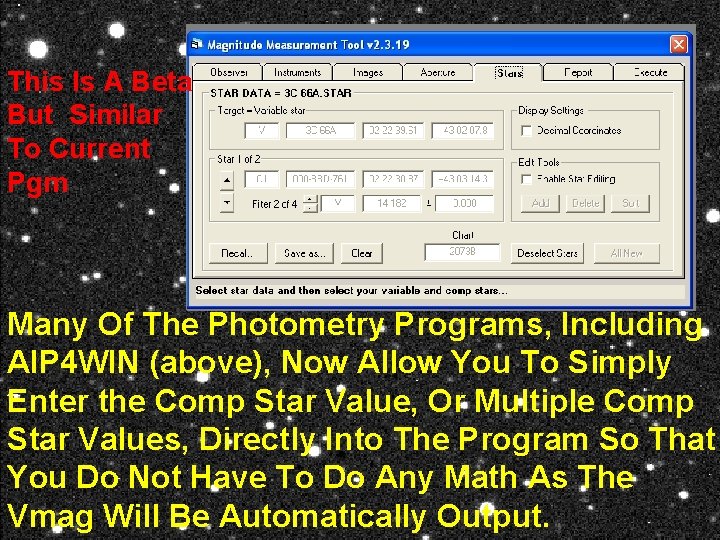
This Is A Beta But Similar To Current Pgm Many Of The Photometry Programs, Including AIP 4 WIN (above), Now Allow You To Simply Enter the Comp Star Value, Or Multiple Comp Star Values, Directly Into The Program So That You Do Not Have To Do Any Math As The Vmag Will Be Automatically Output.
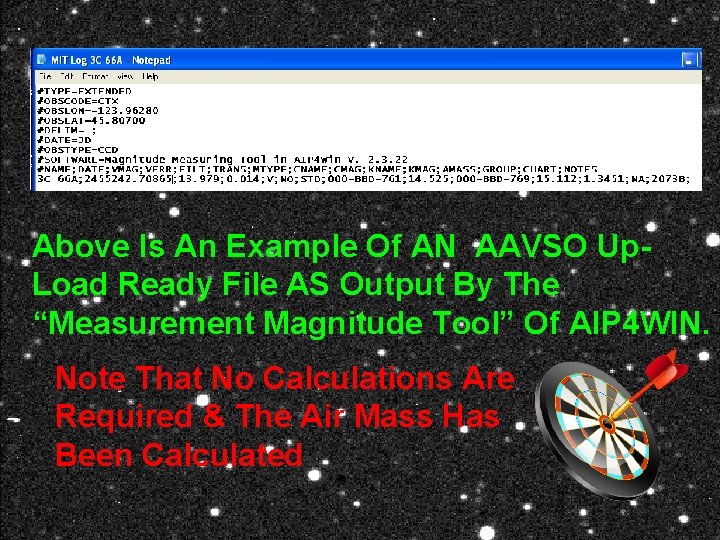
Above Is An Example Of AN AAVSO Up. Load Ready File AS Output By The “Measurement Magnitude Tool” Of AIP 4 WIN. Note That No Calculations Are Required & The Air Mass Has Been Calculated

Best Kept Secret OF Variable Star Observing You Can Do CCD Observing In Spite Of Mr. Moon!

Contribute To Science By Observing Variable Stars! Logo

Oregon Observatory Presentation Tim R Crawford - CTX tcarchcape@yahoo. com
- Slides: 44