
Variable Gases Atmospheric Pressure and Structure Video Another
Variable Gases + Atmospheric Pressure and Structure (Video)
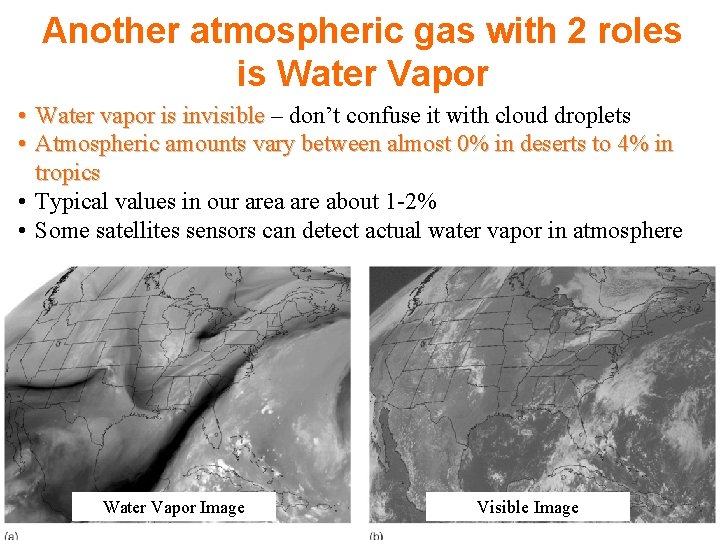
Another atmospheric gas with 2 roles is Water Vapor • Water vapor is invisible – don’t confuse it with cloud droplets • Atmospheric amounts vary between almost 0% in deserts to 4% in tropics • Typical values in our area are about 1 -2% • Some satellites sensors can detect actual water vapor in atmosphere Water Vapor Image Visible Image

Aside from providing us with precipitation, H 2 O Vapor…. . • …. stores a ton of heat!
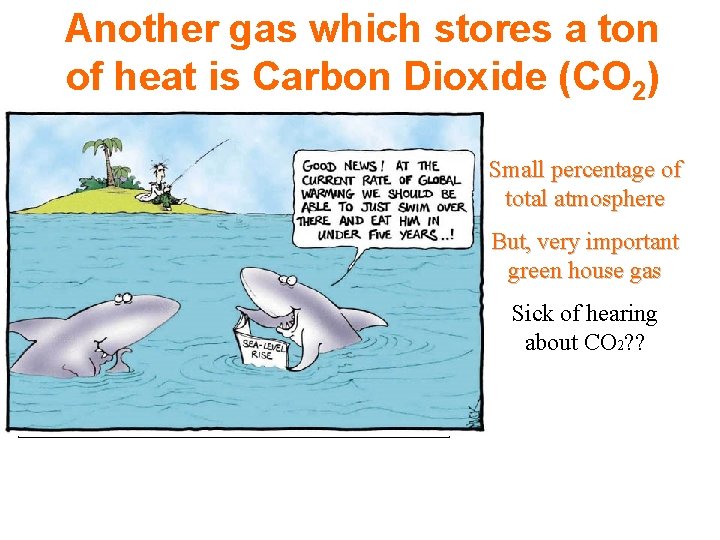
Another gas which stores a ton of heat is Carbon Dioxide (CO 2) Small percentage of total atmosphere But, very important green house gas Sick of hearing about CO 2? ? Mauna Loa Observatory

Aerosols are an important part of our atmosphere • Tiny, solid airborne particles • Aerosols can be manmade (smoke, ash) or naturally occurring (like sea salt or dust) • AKA Cloud Condensation Nuclei • Some aerosols are very beneficial and, in fact, are required for condensation to occur. • Video 1 • Video 2
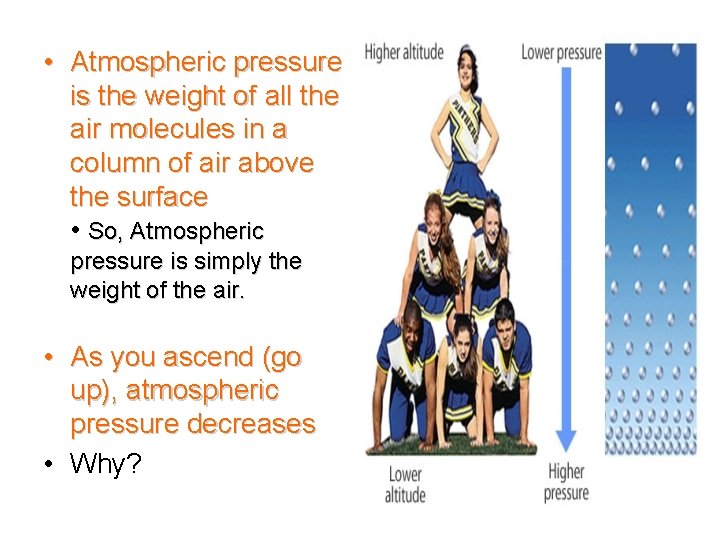
• Atmospheric pressure is the weight of all the air molecules in a column of air above the surface • So, Atmospheric pressure is simply the weight of the air. • As you ascend (go up), atmospheric pressure decreases • Why?

Because Air Density Decreases
Atmospheric pressure If more air molecules are packed into a column, the density increases and the atmospheric pressure ______ increases On the other hand, when there are fewer molecules in the less column, the air weighs _______and the surface pressure decreases _____.
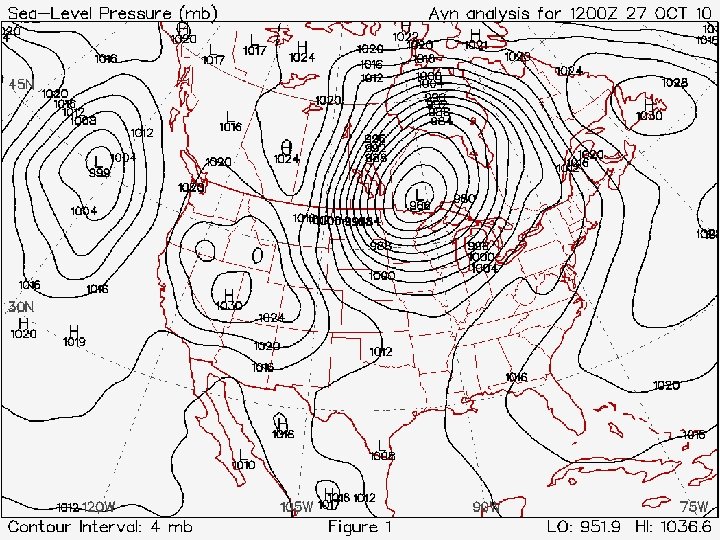
Most common units for atmospheric pressure are millibar (mb) and inches of mercury • Average sea-level pressure = 1013. 25 mb or 29. 92 in. – So, the numbers you see on Weather Maps should start meaning something to you right about now -------->
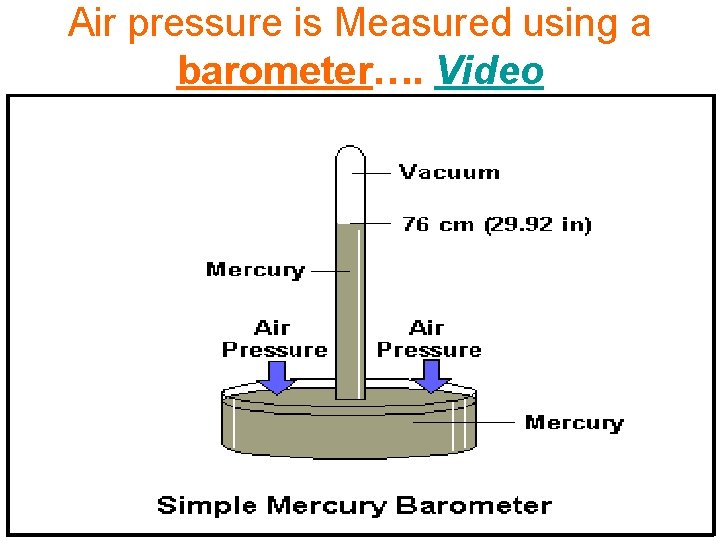
Air pressure is Measured using a barometer…. Video
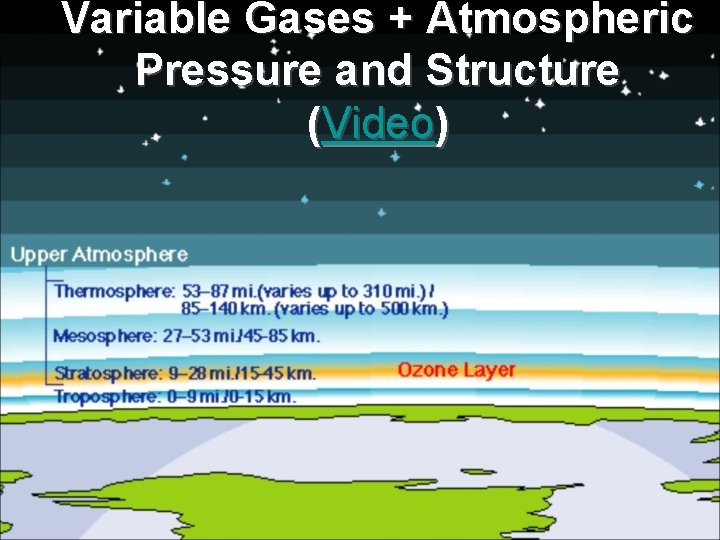
The vertical structure of the earth’s atmosphere is complex The atmosphere is composed of different layers
A View from Space. How deep is the atmosphere?
Draw this!
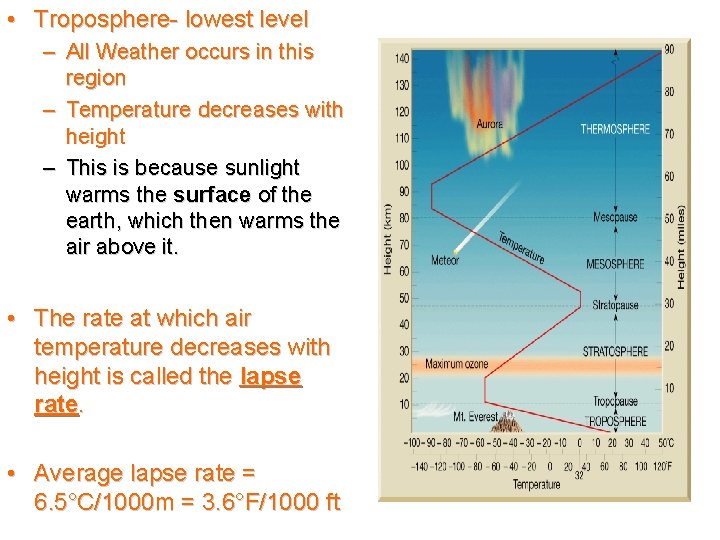
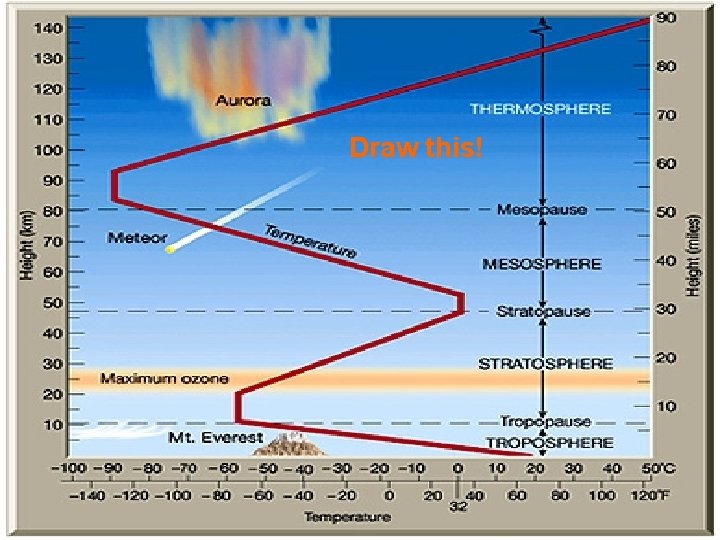
• Troposphere- lowest level – All Weather occurs in this region – Temperature decreases with height – This is because sunlight warms the surface of the earth, which then warms the air above it. • The rate at which air temperature decreases with height is called the lapse rate. • Average lapse rate = 6. 5°C/1000 m = 3. 6°F/1000 ft
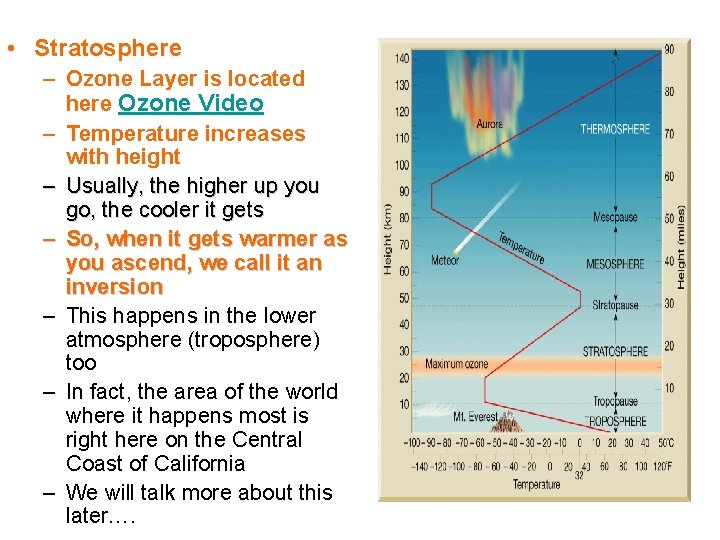
• Stratosphere – Ozone Layer is located here Ozone Video – Temperature increases with height – Usually, the higher up you go, the cooler it gets – So, when it gets warmer as you ascend, we call it an inversion – This happens in the lower atmosphere (troposphere) too – In fact, the area of the world where it happens most is right here on the Central Coast of California – We will talk more about this later….
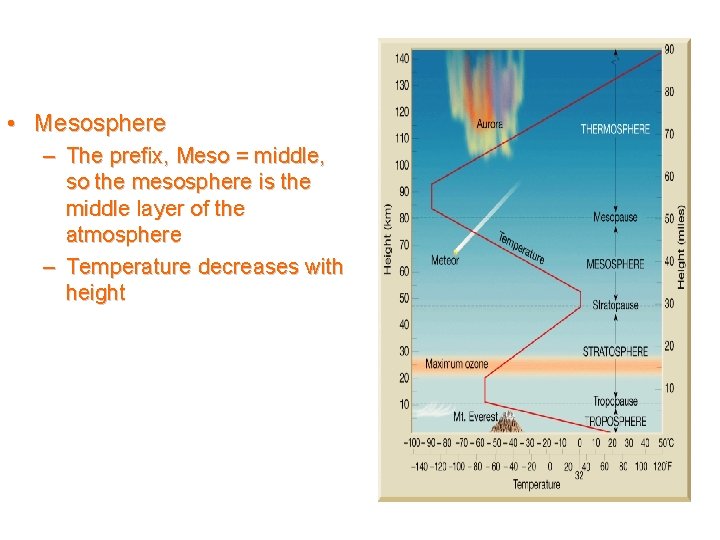
• Mesosphere – The prefix, Meso = middle, so the mesosphere is the middle layer of the atmosphere – Temperature decreases with height
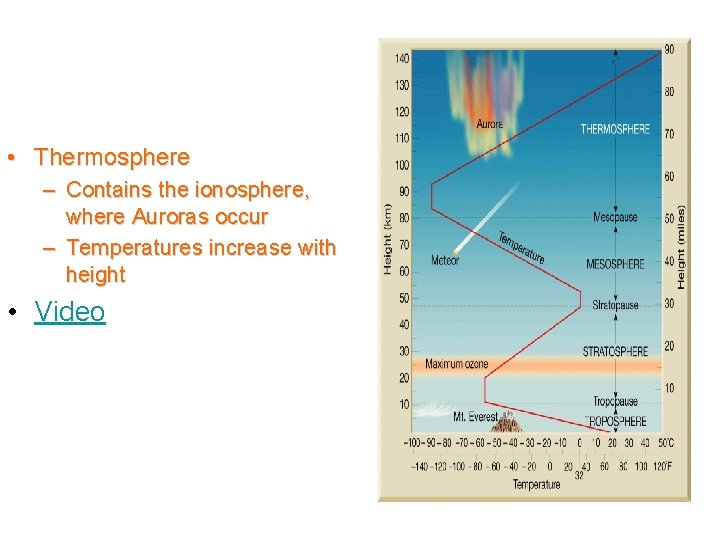
• Thermosphere – Contains the ionosphere, where Auroras occur – Temperatures increase with height • Video
- Slides: 18