
VALVULAR HEART DISEASE Evaluation CLINICAL symptoms physical findings


- Slides: 50
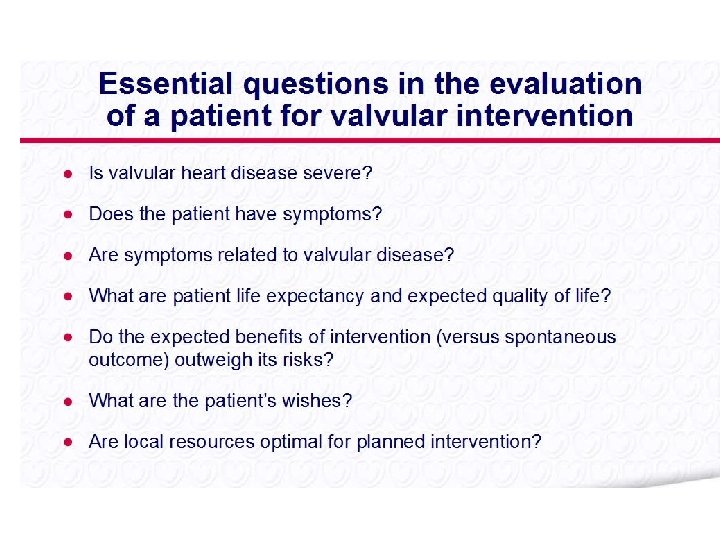
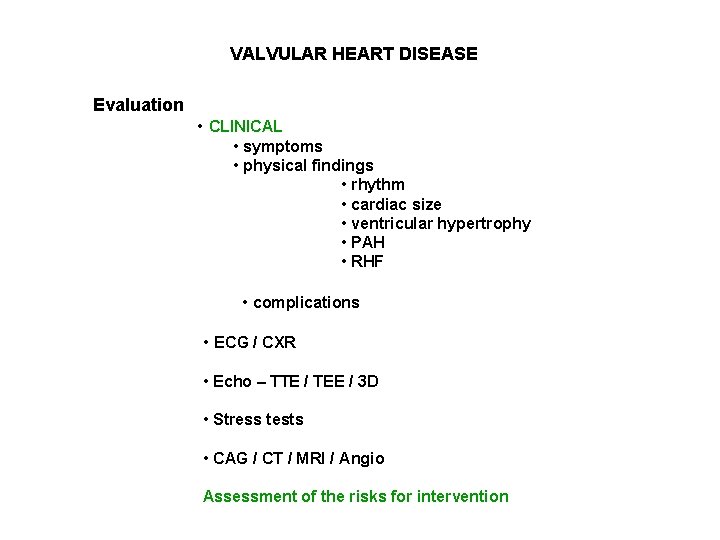
VALVULAR HEART DISEASE Evaluation • CLINICAL • symptoms • physical findings • rhythm • cardiac size • ventricular hypertrophy • PAH • RHF • complications • ECG / CXR • Echo – TTE / TEE / 3 D • Stress tests • CAG / CT / MRI / Angio Assessment of the risks for intervention
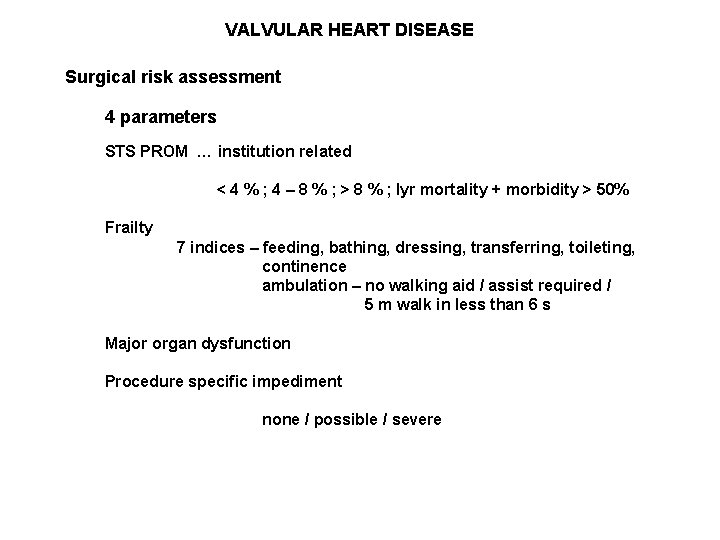
VALVULAR HEART DISEASE Surgical risk assessment 4 parameters STS PROM … institution related < 4 % ; 4 – 8 % ; > 8 % ; Iyr mortality + morbidity > 50% Frailty 7 indices – feeding, bathing, dressing, transferring, toileting, continence ambulation – no walking aid / assist required / 5 m walk in less than 6 s Major organ dysfunction Procedure specific impediment none / possible / severe
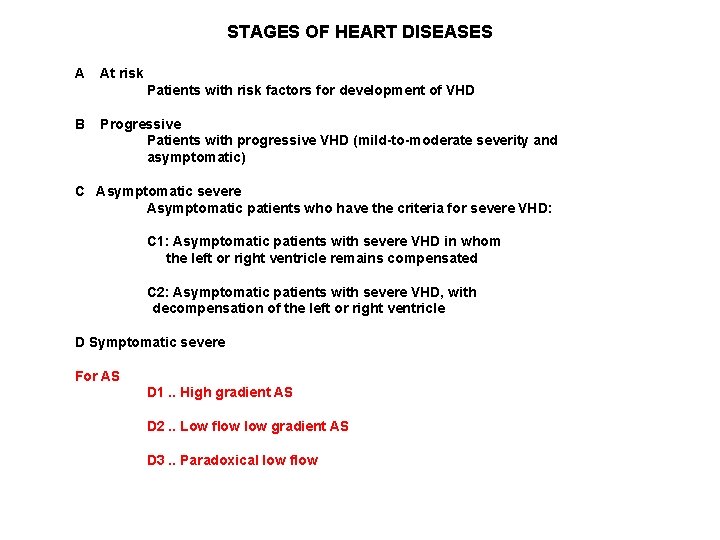
STAGES OF HEART DISEASES A At risk Patients with risk factors for development of VHD B Progressive Patients with progressive VHD (mild-to-moderate severity and asymptomatic) C Asymptomatic severe Asymptomatic patients who have the criteria for severe VHD: C 1: Asymptomatic patients with severe VHD in whom the left or right ventricle remains compensated C 2: Asymptomatic patients with severe VHD, with decompensation of the left or right ventricle D Symptomatic severe For AS D 1. . High gradient AS D 2. . Low flow gradient AS D 3. . Paradoxical low flow
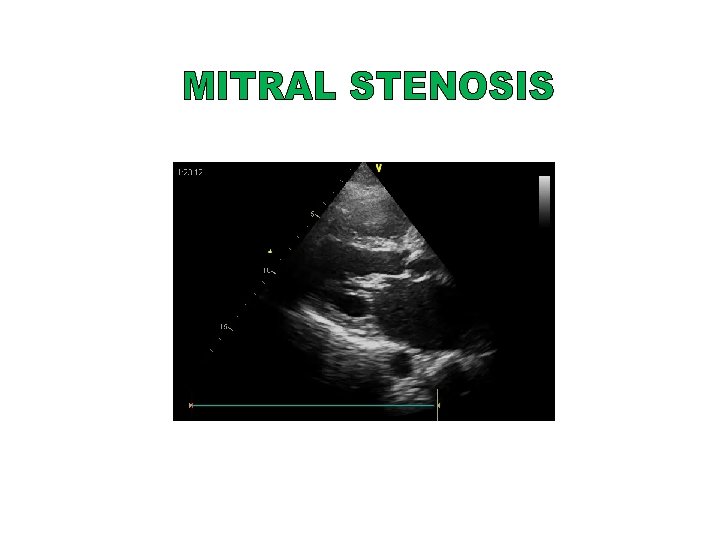
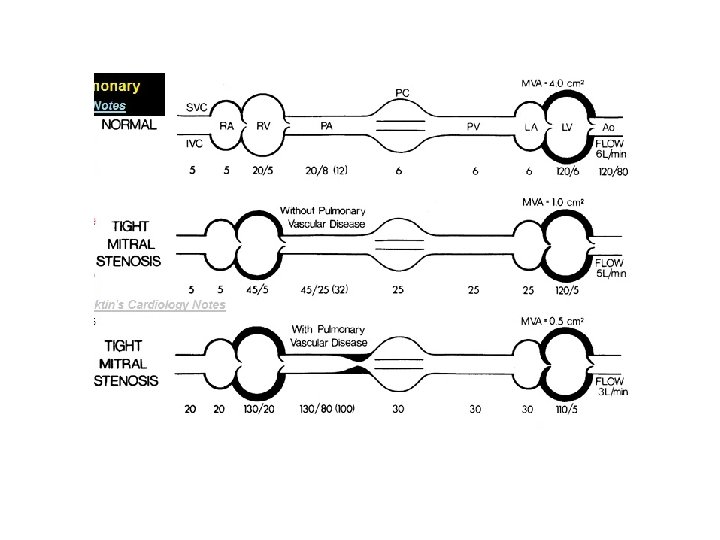
MITRAL STENOSIS
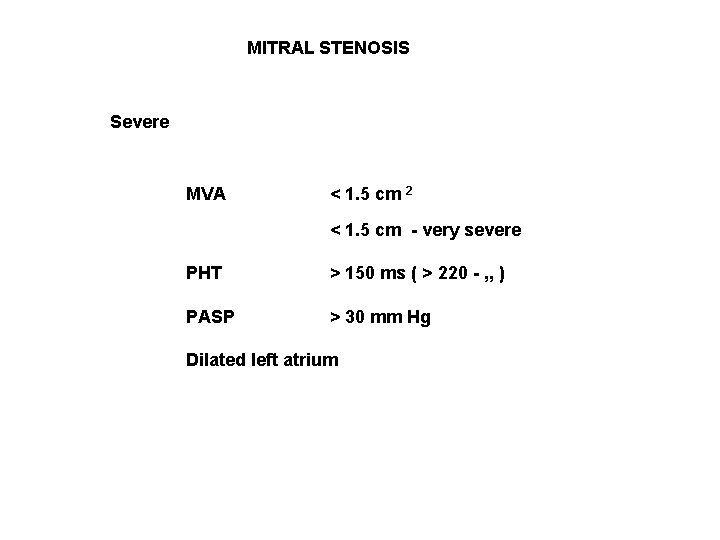
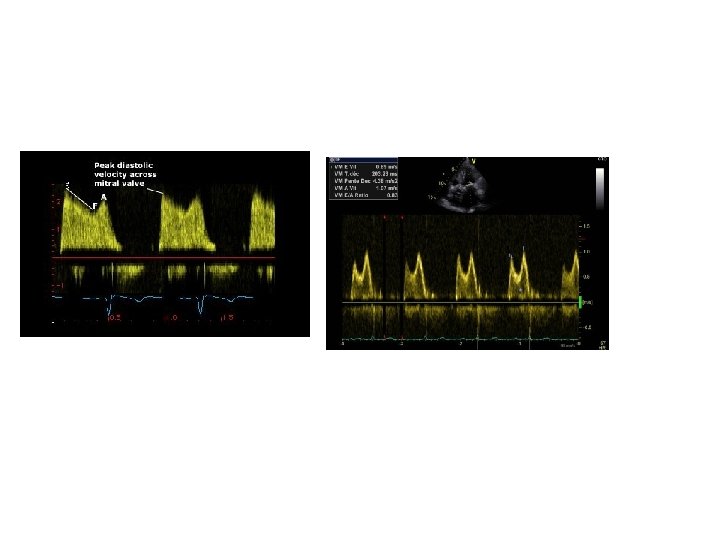
MITRAL STENOSIS Severe MVA < 1. 5 cm 2 < 1. 5 cm - very severe PHT > 150 ms ( > 220 - , , ) PASP > 30 mm Hg Dilated left atrium
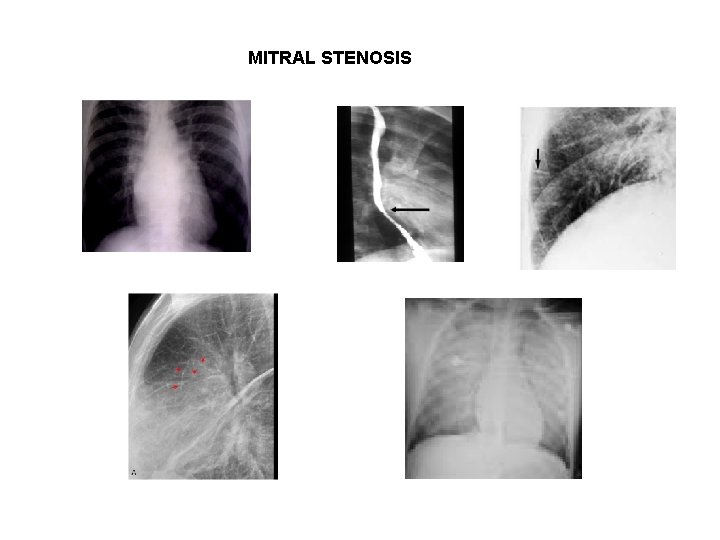
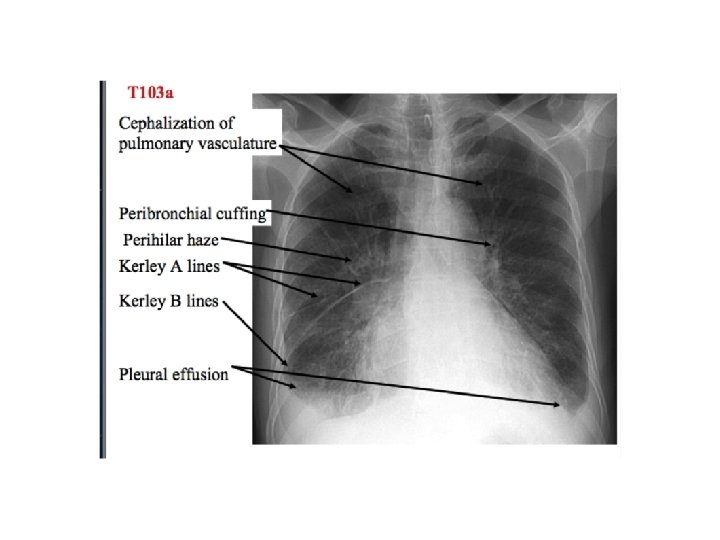
MITRAL STENOSIS
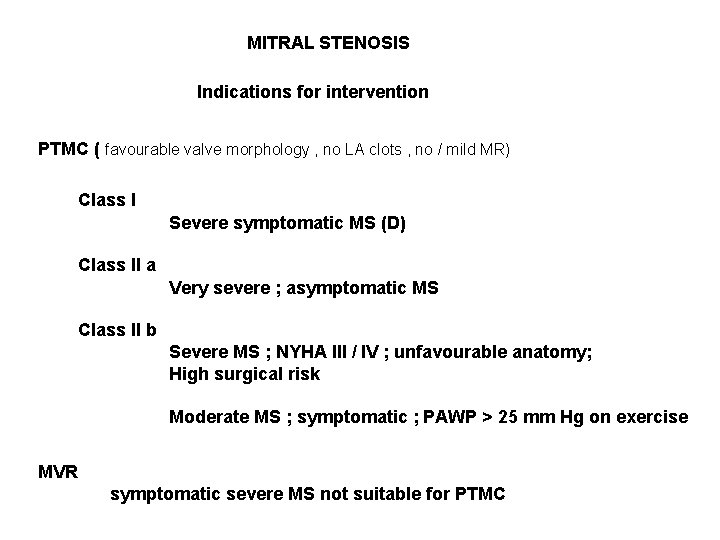
MITRAL STENOSIS Indications for intervention PTMC ( favourable valve morphology , no LA clots , no / mild MR) Class I Severe symptomatic MS (D) Class II a Very severe ; asymptomatic MS Class II b Severe MS ; NYHA III / IV ; unfavourable anatomy; High surgical risk Moderate MS ; symptomatic ; PAWP > 25 mm Hg on exercise MVR symptomatic severe MS not suitable for PTMC
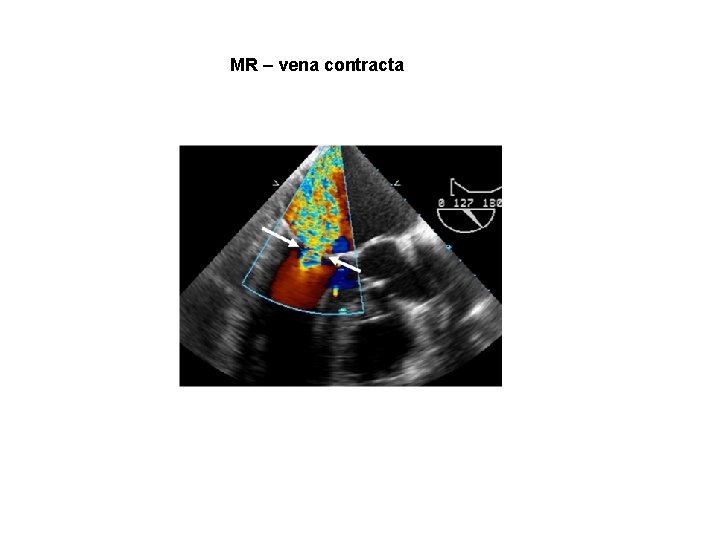
MR – vena contracta
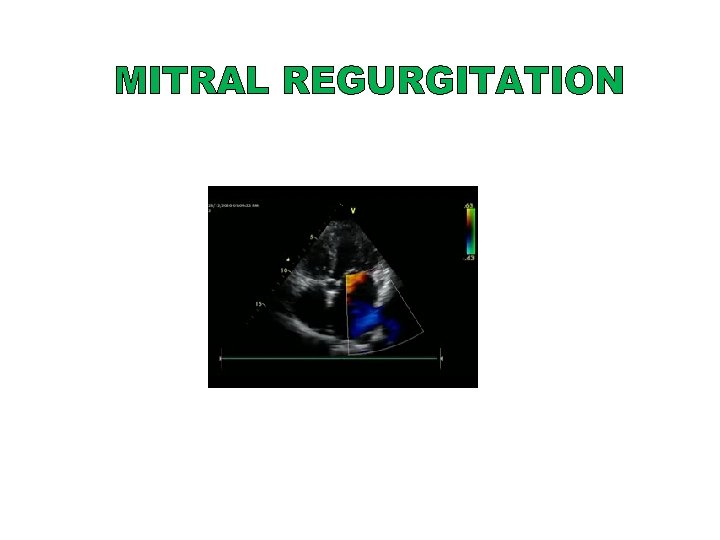
MITRAL REGURGITATION Severe MR • central jet MR > 40 % of LA • holosystolic eccentric MR • VC > 7 mm • RV > 60 ml ; RF > 50 % ; ERO > 0. 4 cm 2 • Angio grade 3 /4 • LV dilatation - ESD > 40 mm • PAH … PASP > 50 mm Hg • moderate to severe LA enlargement EF < 60 % -- LV dysfunction
MITRAL REGURGITATION Indications for intervention Class I stage D ; EF > 30 % stage C 2 ; EF 30 – 60 % stage C 1 + other cardiac surgery Class II a MV repair C 1 success rate > 95 % ; op. mortality < 1 % + new onset AF / SPAP > 50 mm Hg + other cardiac surgery
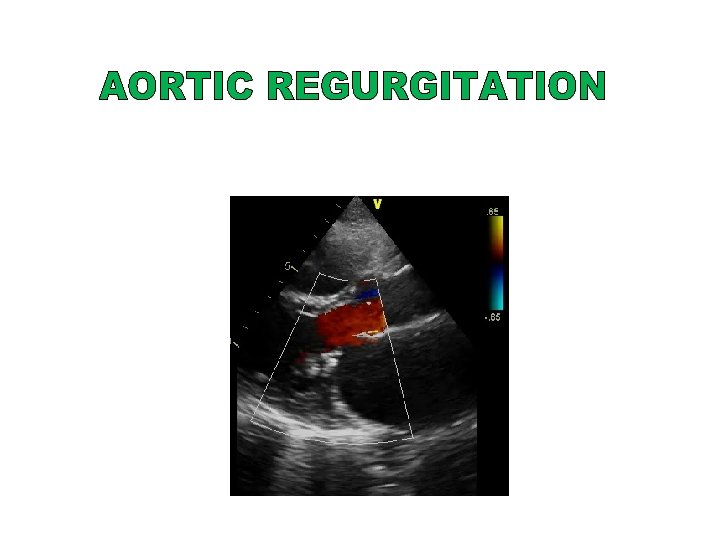
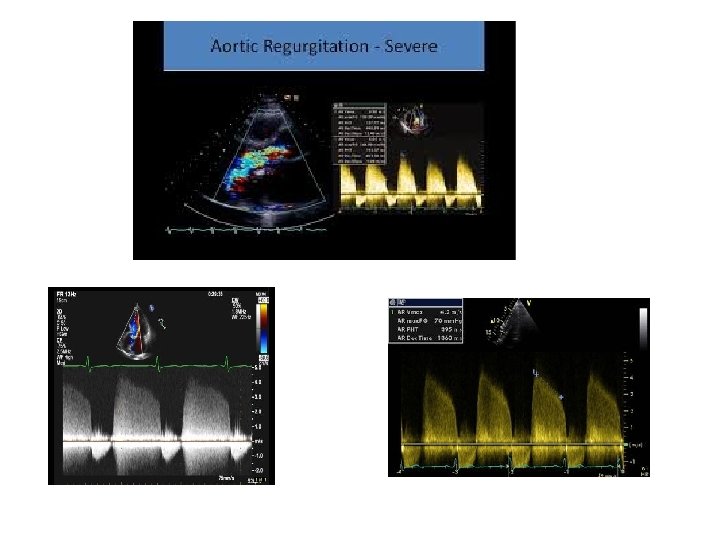
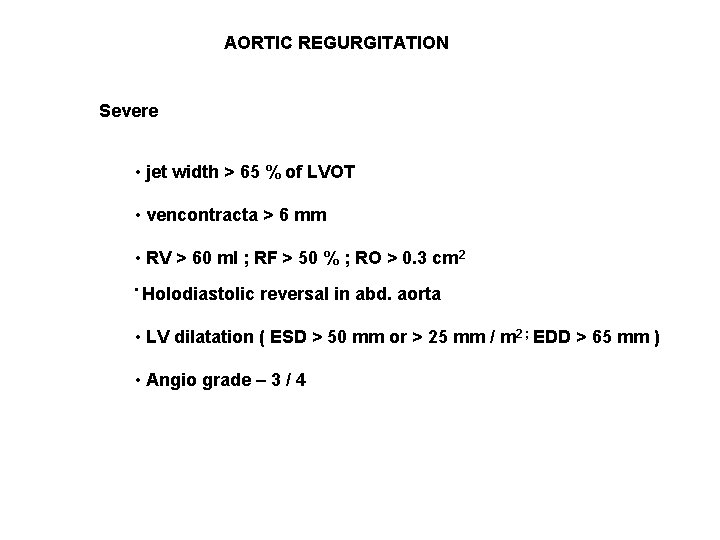
AORTIC REGURGITATION Severe • jet width > 65 % of LVOT • vencontracta > 6 mm • RV > 60 ml ; RF > 50 % ; RO > 0. 3 cm 2 • Holodiastolic reversal in abd. aorta • LV dilatation ( ESD > 50 mm or > 25 mm / m 2 ; EDD > 65 mm ) • Angio grade – 3 / 4
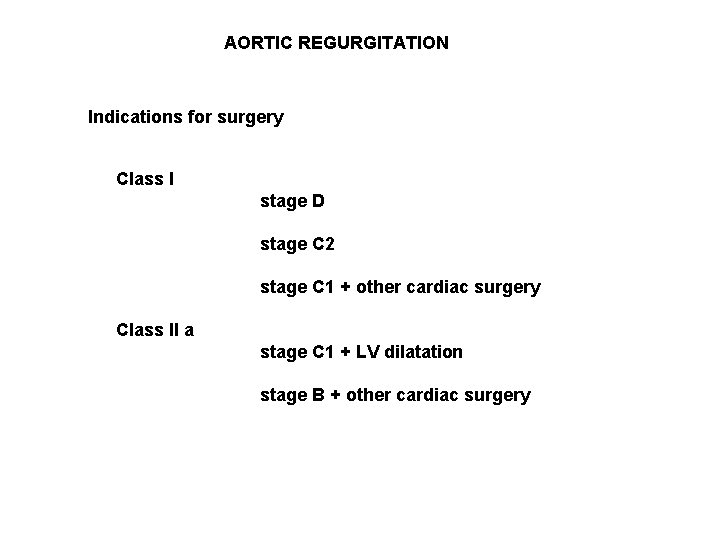
AORTIC REGURGITATION Indications for surgery Class I stage D stage C 2 stage C 1 + other cardiac surgery Class II a stage C 1 + LV dilatation stage B + other cardiac surgery
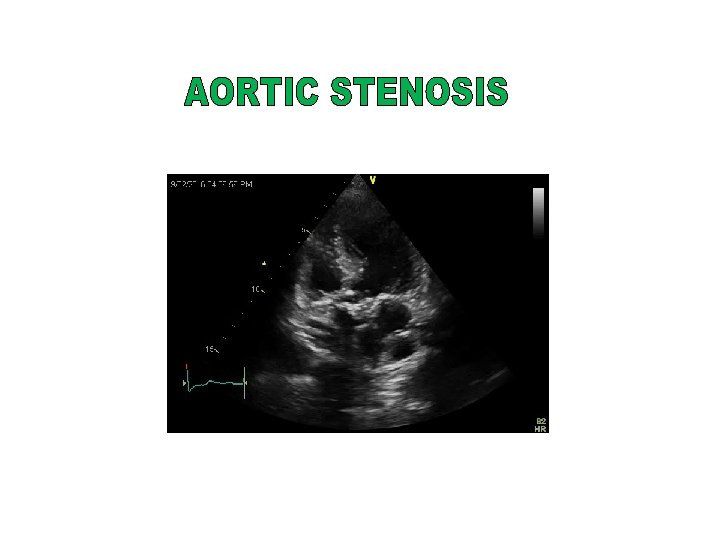
AORTIC STENOSIS
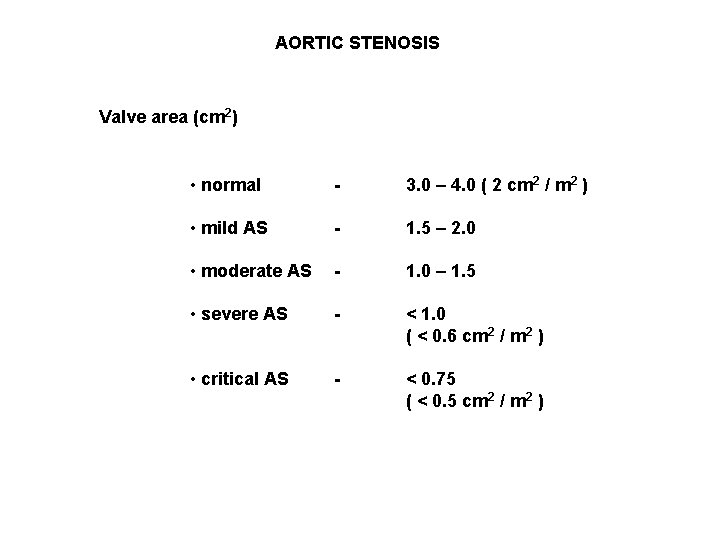
AORTIC STENOSIS Valve area (cm 2) • normal - 3. 0 – 4. 0 ( 2 cm 2 / m 2 ) • mild AS - 1. 5 – 2. 0 • moderate AS - 1. 0 – 1. 5 • severe AS - < 1. 0 ( < 0. 6 cm 2 / m 2 ) • critical AS - < 0. 75 ( < 0. 5 cm 2 / m 2 )
AORTIC STENOSIS
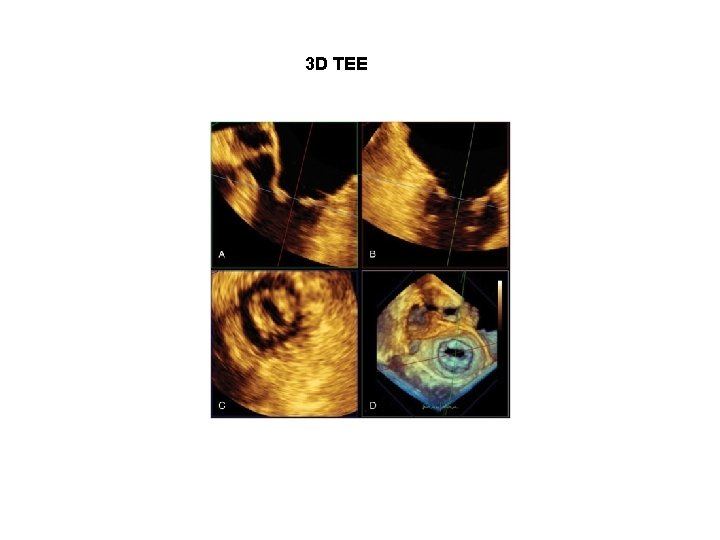
3 D TEE
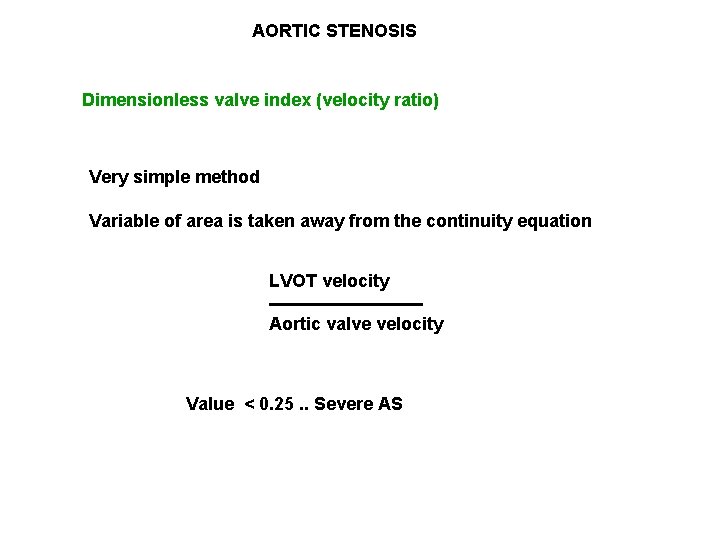
AORTIC STENOSIS Dimensionless valve index (velocity ratio) Very simple method Variable of area is taken away from the continuity equation LVOT velocity Aortic valve velocity Value < 0. 25. . Severe AS
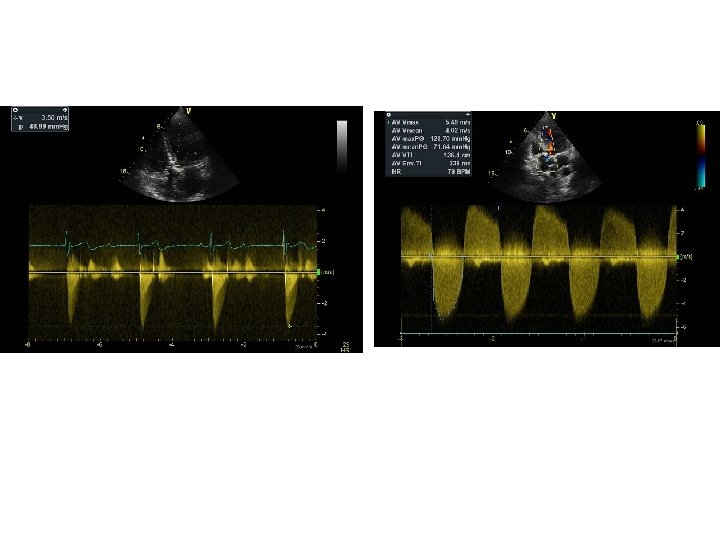
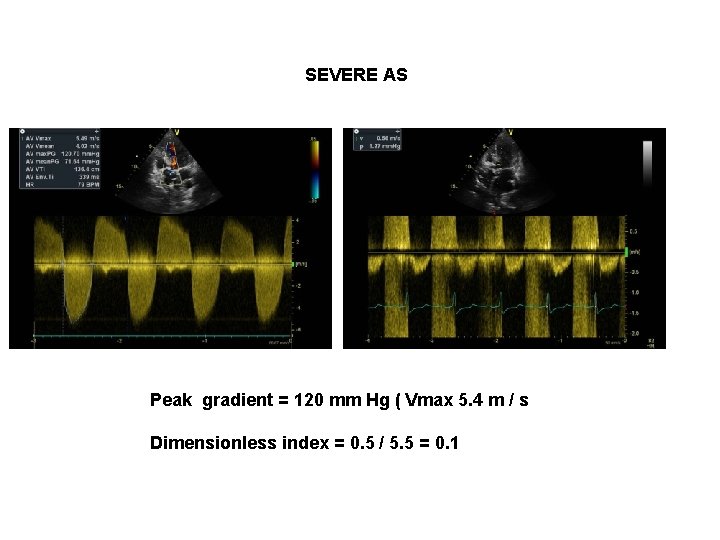
SEVERE AS Peak gradient = 120 mm Hg ( Vmax 5. 4 m / s Dimensionless index = 0. 5 / 5. 5 = 0. 1
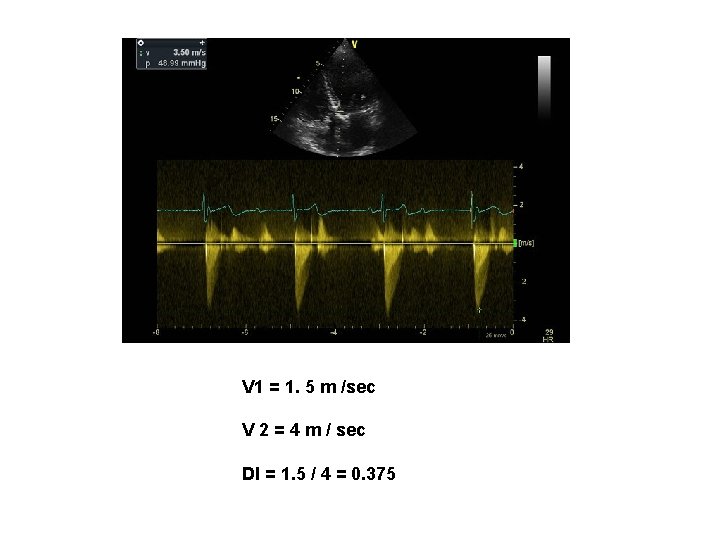
V 1 = 1. 5 m /sec V 2 = 4 m / sec DI = 1. 5 / 4 = 0. 375
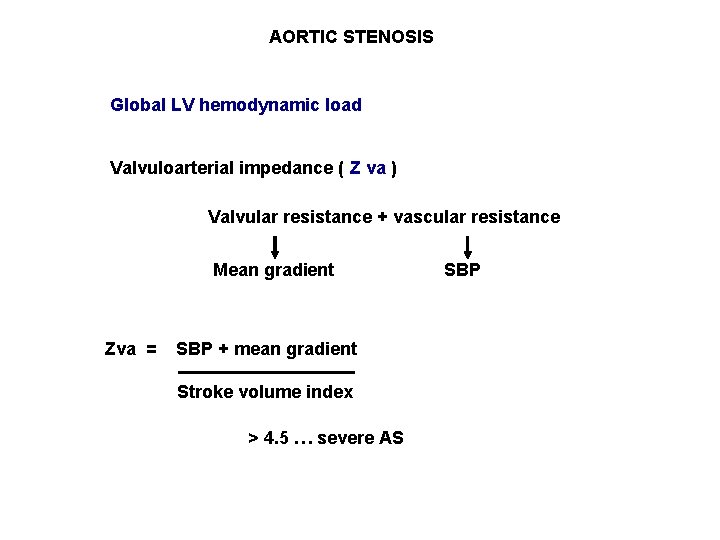
AORTIC STENOSIS Global LV hemodynamic load Valvuloarterial impedance ( Z va ) Valvular resistance + vascular resistance Mean gradient Zva = SBP + mean gradient Stroke volume index > 4. 5 … severe AS SBP
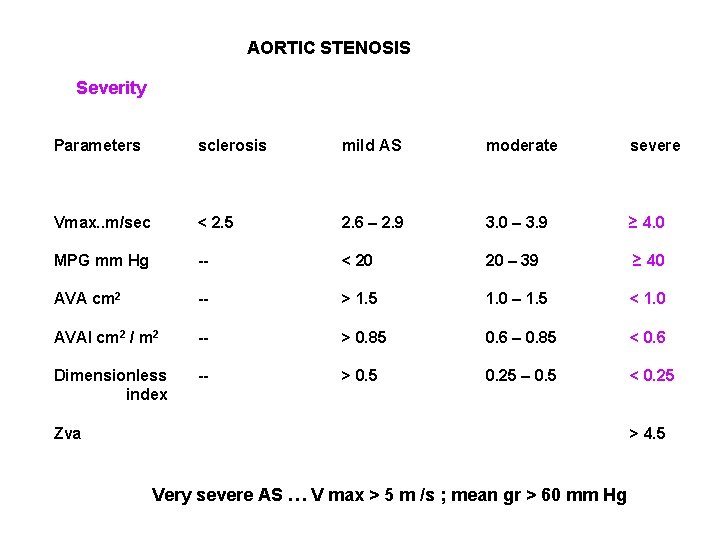
AORTIC STENOSIS Severity Parameters sclerosis mild AS moderate severe Vmax. . m/sec < 2. 5 2. 6 – 2. 9 3. 0 – 3. 9 ≥ 4. 0 MPG mm Hg -- < 20 20 – 39 ≥ 40 AVA cm 2 -- > 1. 5 1. 0 – 1. 5 < 1. 0 AVAI cm 2 / m 2 -- > 0. 85 0. 6 – 0. 85 < 0. 6 Dimensionless index -- > 0. 5 0. 25 – 0. 5 < 0. 25 Zva > 4. 5 Very severe AS … V max > 5 m /s ; mean gr > 60 mm Hg
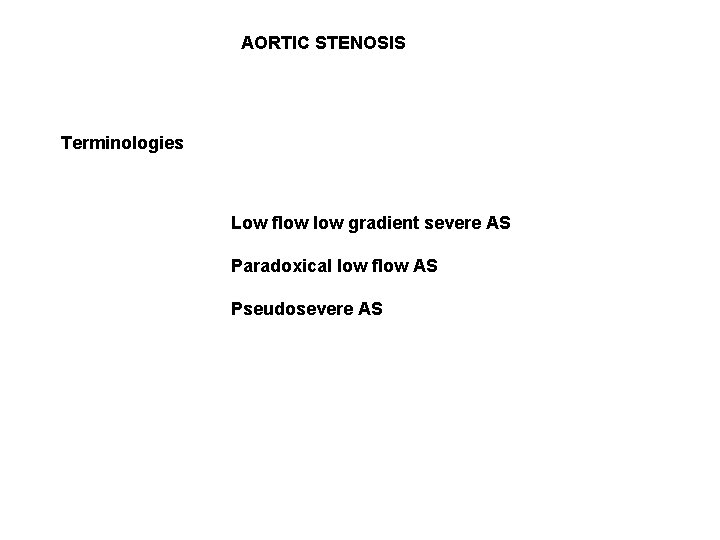
AORTIC STENOSIS Terminologies Low flow gradient severe AS Paradoxical low flow AS Pseudosevere AS
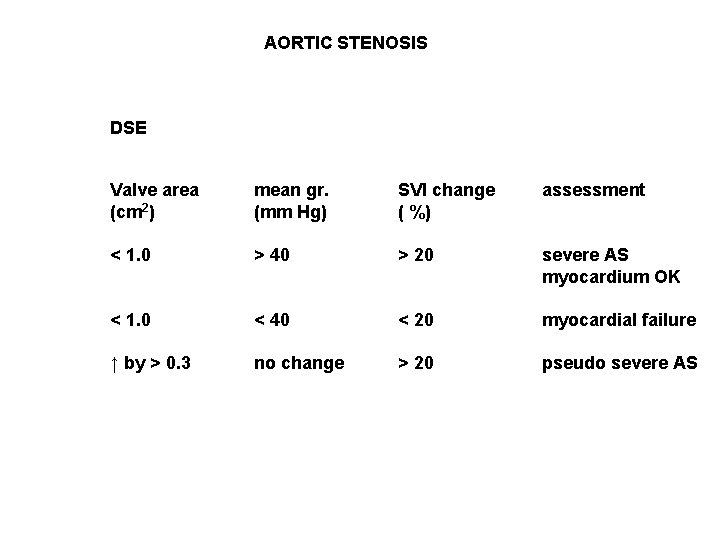
AORTIC STENOSIS DSE Valve area (cm 2) mean gr. (mm Hg) SVI change ( %) assessment < 1. 0 > 40 > 20 severe AS myocardium OK < 1. 0 < 40 < 20 myocardial failure ↑ by > 0. 3 no change > 20 pseudo severe AS
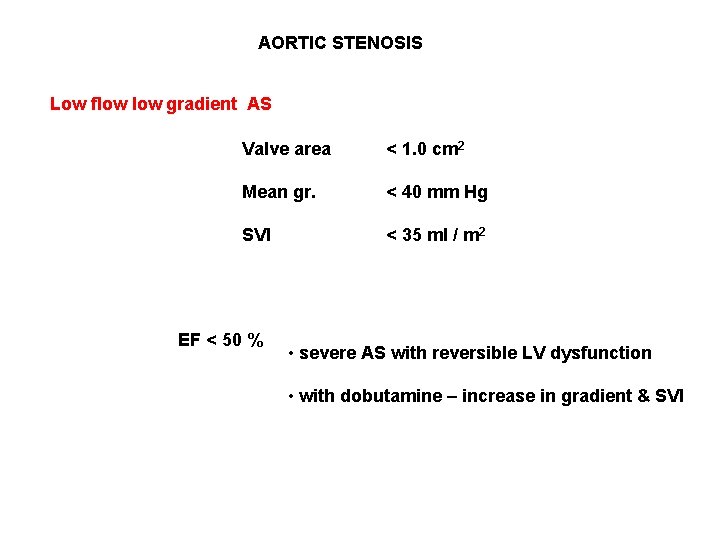
AORTIC STENOSIS Low flow gradient AS Valve area < 1. 0 cm 2 Mean gr. < 40 mm Hg SVI < 35 ml / m 2 EF < 50 % • severe AS with reversible LV dysfunction • with dobutamine – increase in gradient & SVI
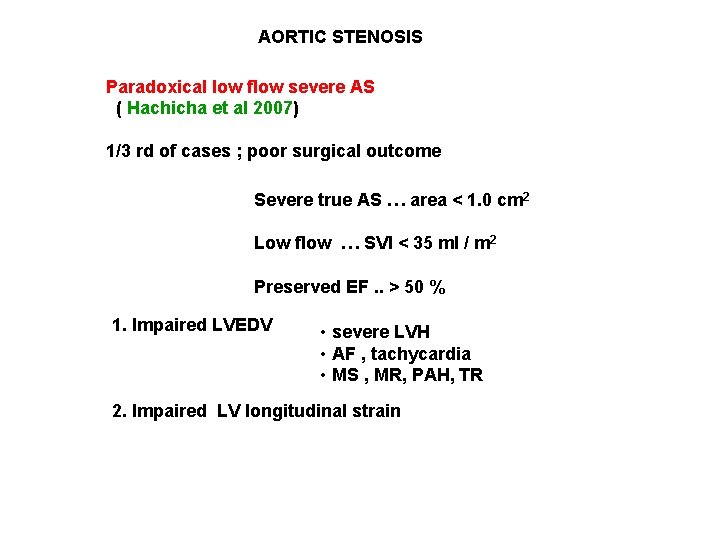
AORTIC STENOSIS Paradoxical low flow severe AS ( Hachicha et al 2007) 1/3 rd of cases ; poor surgical outcome Severe true AS … area < 1. 0 cm 2 Low flow … SVI < 35 ml / m 2 Preserved EF. . > 50 % 1. Impaired LVEDV • severe LVH • AF , tachycardia • MS , MR, PAH, TR 2. Impaired LV longitudinal strain
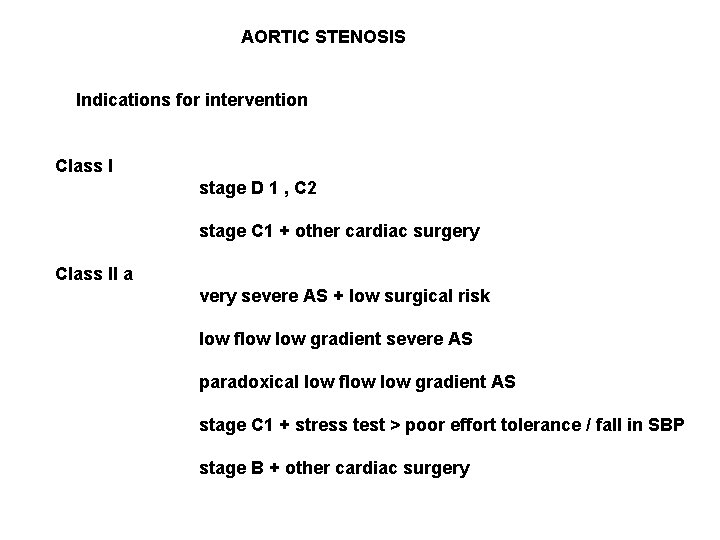
AORTIC STENOSIS Indications for intervention Class I stage D 1 , C 2 stage C 1 + other cardiac surgery Class II a very severe AS + low surgical risk low flow gradient severe AS paradoxical low flow gradient AS stage C 1 + stress test > poor effort tolerance / fall in SBP stage B + other cardiac surgery
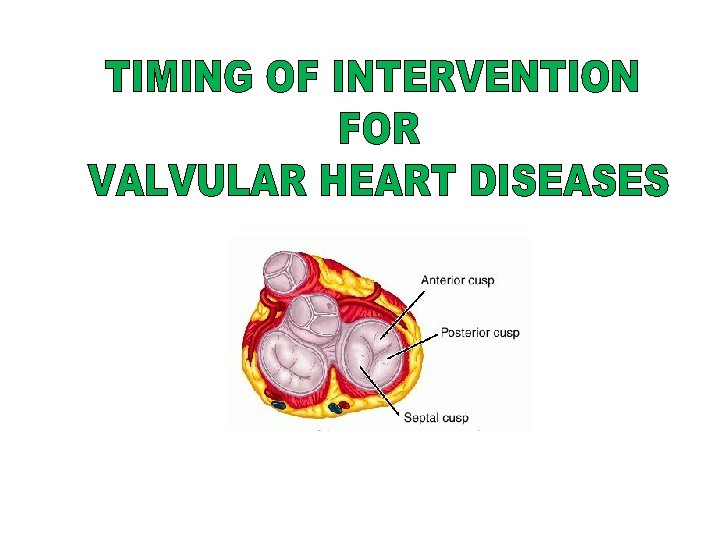
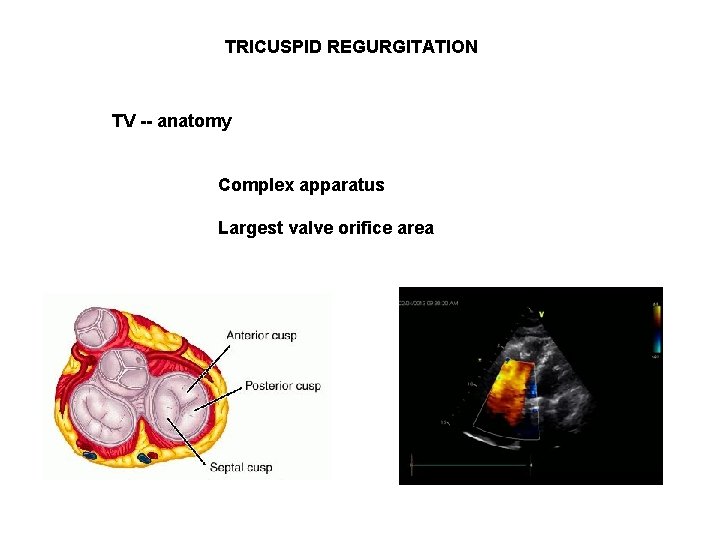
TRICUSPID REGURGITATION TV -- anatomy Complex apparatus Largest valve orifice area
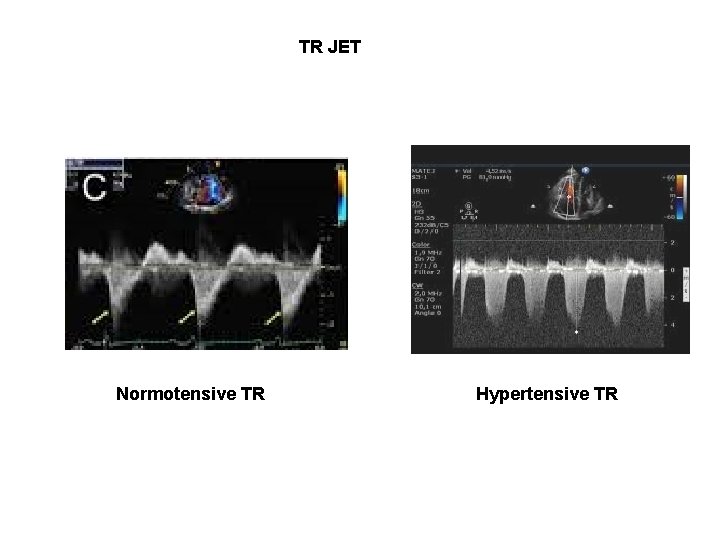
TR JET Normotensive TR Hypertensive TR
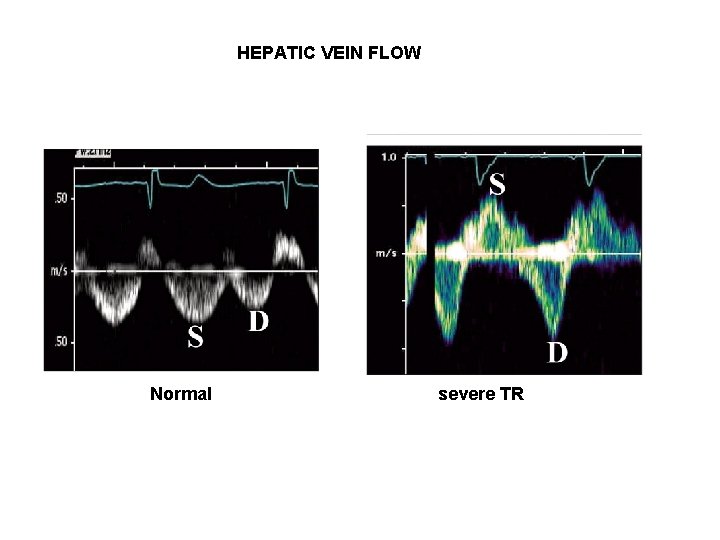
HEPATIC VEIN FLOW Normal severe TR
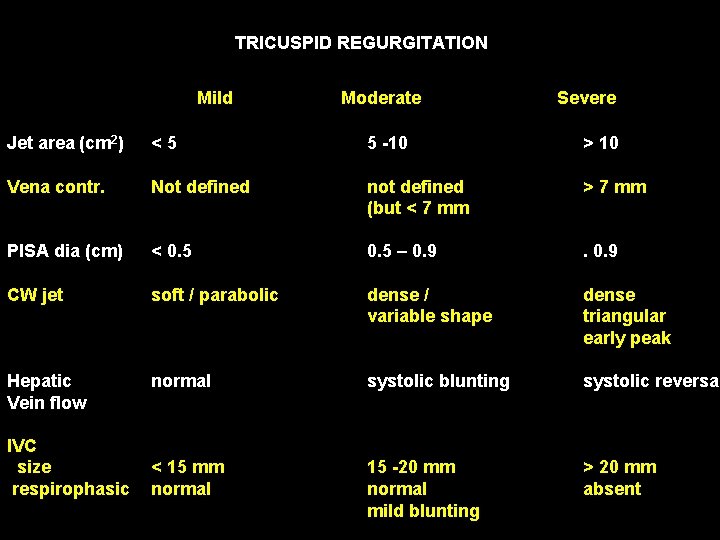
TRICUSPID REGURGITATION Mild Moderate Severe Jet area (cm 2) <5 5 -10 > 10 Vena contr. Not defined not defined (but < 7 mm > 7 mm PISA dia (cm) < 0. 5 – 0. 9 CW jet soft / parabolic dense / variable shape dense triangular early peak Hepatic Vein flow normal systolic blunting systolic reversal < 15 mm normal 15 -20 mm normal mild blunting > 20 mm absent IVC size respirophasic
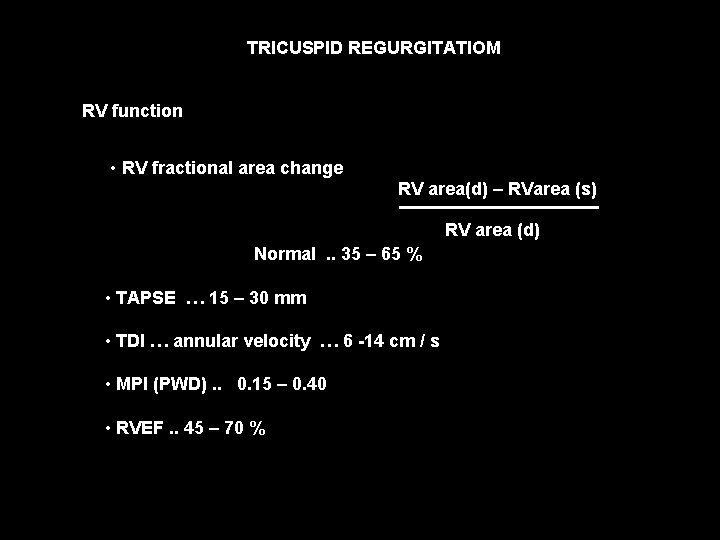
TRICUSPID REGURGITATIOM RV function • RV fractional area change RV area(d) – RVarea (s) RV area (d) Normal. . 35 – 65 % • TAPSE … 15 – 30 mm • TDI … annular velocity … 6 -14 cm / s • MPI (PWD). . 0. 15 – 0. 40 • RVEF. . 45 – 70 %
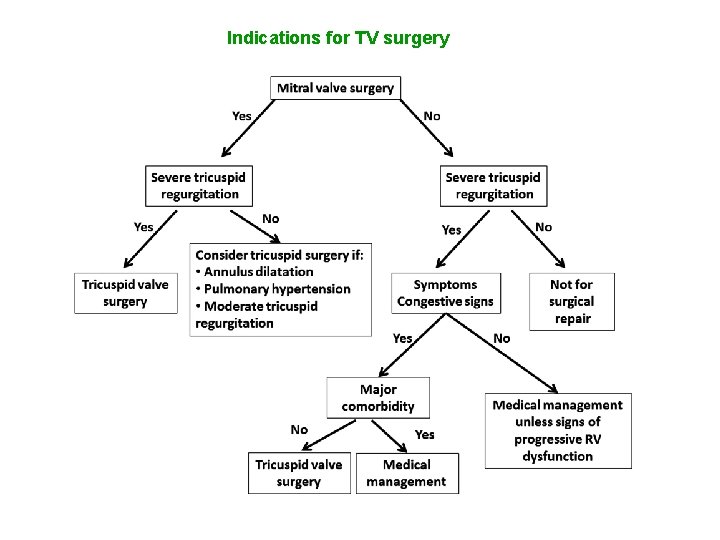
Indications for TV surgery
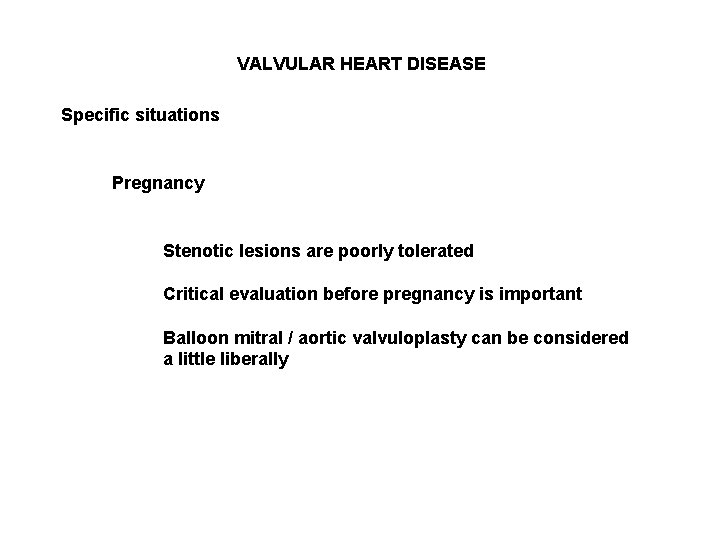
VALVULAR HEART DISEASE Specific situations Pregnancy Stenotic lesions are poorly tolerated Critical evaluation before pregnancy is important Balloon mitral / aortic valvuloplasty can be considered a little liberally