
Valuing Potential Through Performance Session One Introduction Overview


- Slides: 25
Valuing Potential – Through Performance
Session One: Introduction & Overview • Introduction • Experience of performance management • Hopes & fears Slide 2
Slide 3
Course overview • You will better understand yourself and your personality preferences and temperament. • You will learn to use your strengths and work on your challenges to be a better team leader. • You will become more adept at analysing problems and have a variety of techniques for solving these problems. • You will have a process for managing employee performance Slide 4
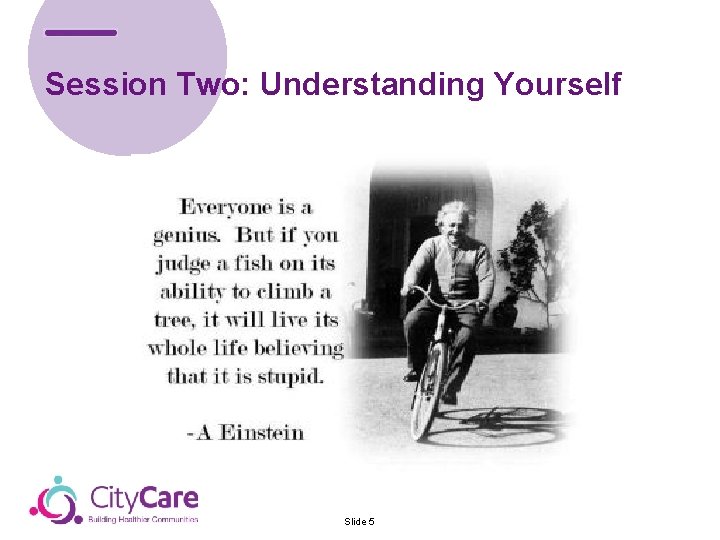
Session Two: Understanding Yourself Slide 5
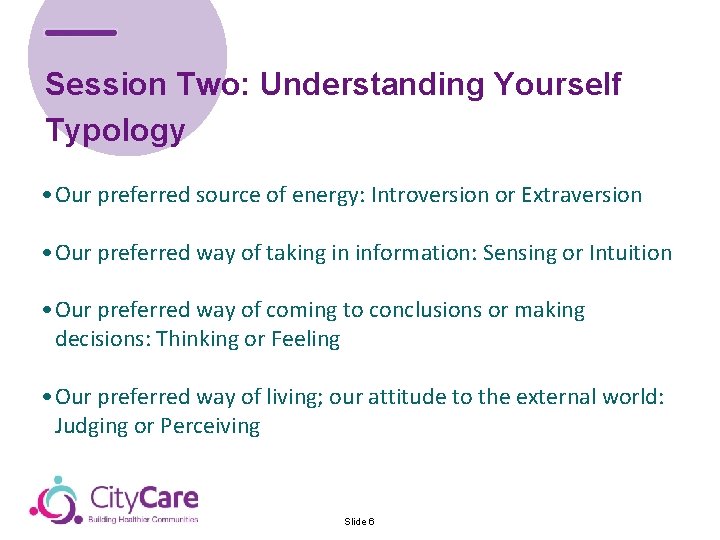
Session Two: Understanding Yourself Typology • Our preferred source of energy: Introversion or Extraversion • Our preferred way of taking in information: Sensing or Intuition • Our preferred way of coming to conclusions or making decisions: Thinking or Feeling • Our preferred way of living; our attitude to the external world: Judging or Perceiving Slide 6
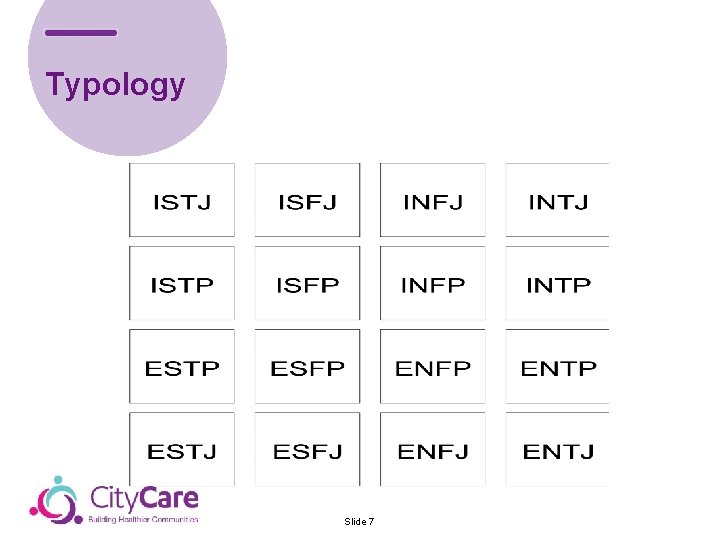
Typology Slide 7
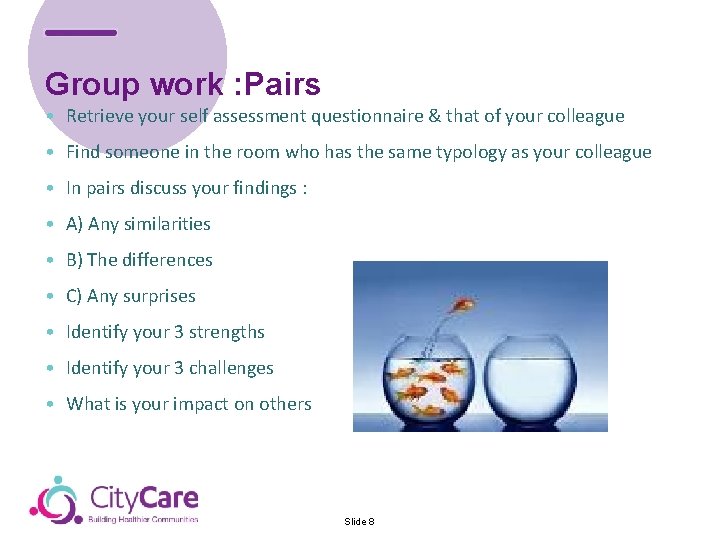
Group work : Pairs • Retrieve your self assessment questionnaire & that of your colleague • Find someone in the room who has the same typology as your colleague • In pairs discuss your findings : • A) Any similarities • B) The differences • C) Any surprises • Identify your 3 strengths • Identify your 3 challenges • What is your impact on others Slide 8
Session Three: Temperament & Leadership • Sensor-Judger (SJ) • Sensor-Perceiver (SP) • Intuitive-Feeler (IF) • Intuitive-Thinkers (NT) • What do each of these types appreciate at work? • What can annoy each of these types? Slide 9
Session Four: Talking to Other Types Ø Ø Ø Ø Extraverts Introverts Sensors Intuitives Thinkers Feelers Judgers Perceivers Ø How can you use these suggestions if you don’t know the other person’s type? Slide 10
Slide 11
Session Five: Leadership • Inspire a shared vision • Challenge the process • Enable others to act • Model the way • Encourage the heart Slide 12
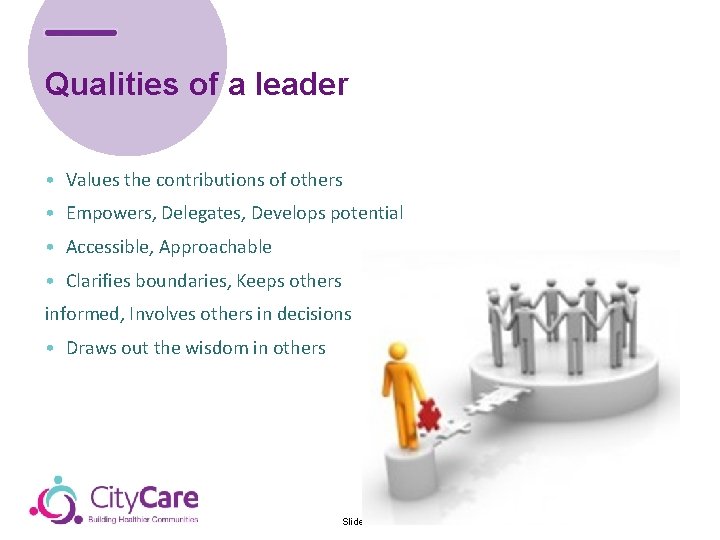
Qualities of a leader • Values the contributions of others • Empowers, Delegates, Develops potential • Accessible, Approachable • Clarifies boundaries, Keeps others informed, Involves others in decisions • Draws out the wisdom in others Slide 13
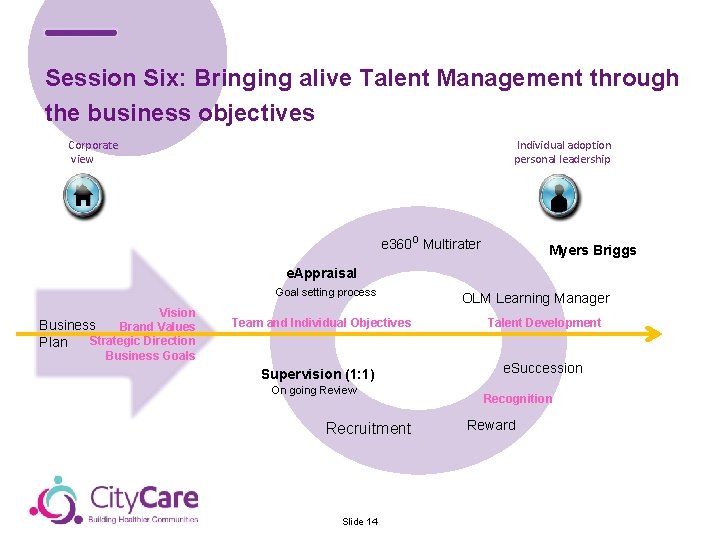
Session Six: Bringing alive Talent Management through the business objectives Corporate view Individual adoption personal leadership e 360 o Multirater Myers Briggs e. Appraisal Goal setting process Vision Business Brand Values Strategic Direction Plan Team and Individual Objectives Business Goals Supervision (1: 1) On going Review Recruitment Slide 14 OLM Learning Manager Talent Development e. Succession Recognition Reward
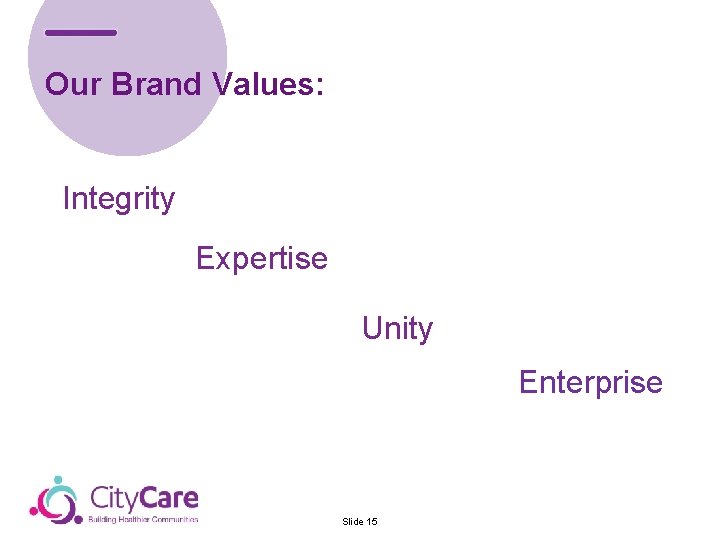
Our Brand Values: Integrity Expertise Unity Enterprise Slide 15
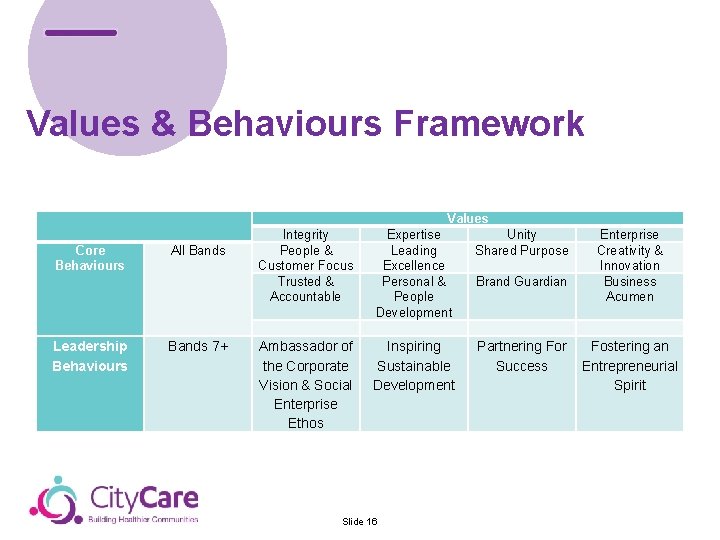
Values & Behaviours Framework Core Behaviours Values All Bands Integrity People & Customer Focus Trusted & Accountable Leadership Behaviours Bands 7+ Ambassador of the Corporate Vision & Social Enterprise Ethos Expertise Leading Excellence Personal & People Development Unity Shared Purpose Inspiring Sustainable Development Partnering For Fostering an Success Entrepreneurial Spirit Slide 16 Brand Guardian Enterprise Creativity & Innovation Business Acumen
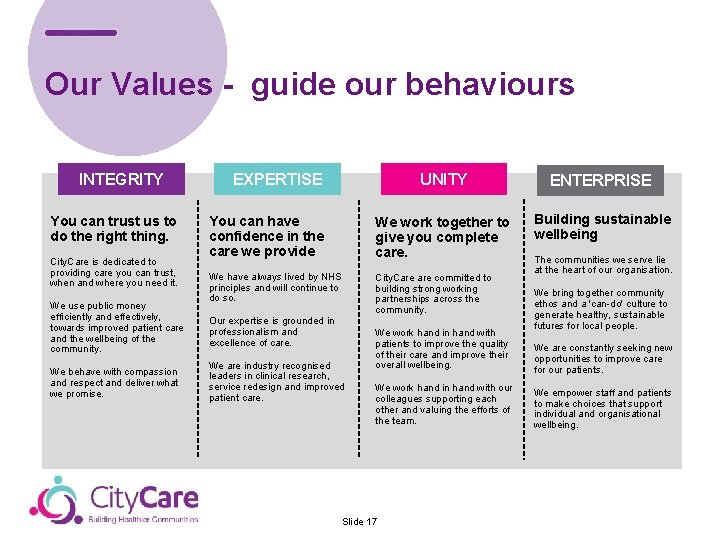
Our Values - guide our behaviours INTEGRITY You can trust us to do the right thing. City. Care is dedicated to providing care you can trust, when and where you need it. We use public money efficiently and effectively, towards improved patient care and the wellbeing of the community. We behave with compassion and respect and deliver what we promise. EXPERTISE UNITY ENTERPRISE You can have confidence in the care we provide We work together to give you complete care. Building sustainable wellbeing We have always lived by NHS principles and will continue to do so. City. Care committed to building strong working partnerships across the community. Our expertise is grounded in professionalism and excellence of care. We are industry recognised leaders in clinical research, service redesign and improved patient care. We work hand in hand with patients to improve the quality of their care and improve their overall wellbeing. We work hand in hand with our colleagues supporting each other and valuing the efforts of the team. Slide 17 The communities we serve lie at the heart of our organisation. We bring together community ethos and a 'can-do' culture to generate healthy, sustainable futures for local people. We are constantly seeking new opportunities to improve care for our patients. We empower staff and patients to make choices that support individual and organisational wellbeing.
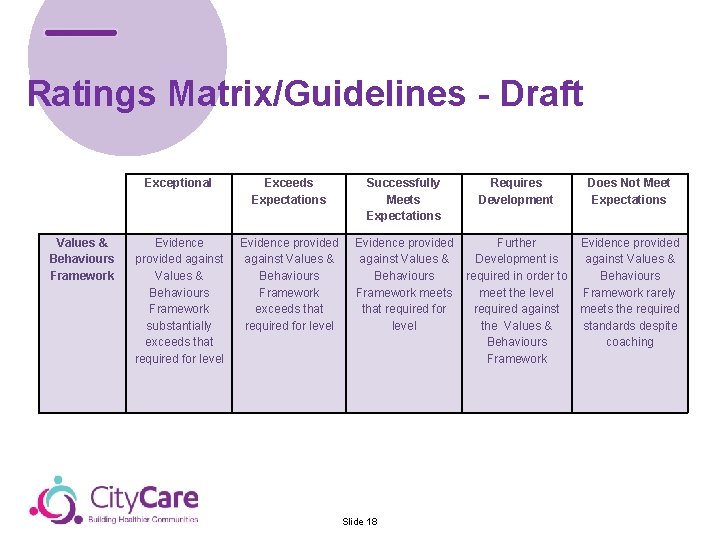
Ratings Matrix/Guidelines - Draft Exceptional Exceeds Expectations Successfully Meets Expectations Values & Behaviours Framework Evidence provided against Values & Behaviours Framework substantially exceeds that required for level Evidence provided against Values & Behaviours Framework exceeds that required for level Requires Development Does Not Meet Expectations Evidence provided Further Evidence provided against Values & Development is against Values & Behaviours required in order to Behaviours Framework meets meet the level Framework rarely that required for required against meets the required level the Values & standards despite Behaviours coaching Framework Slide 18
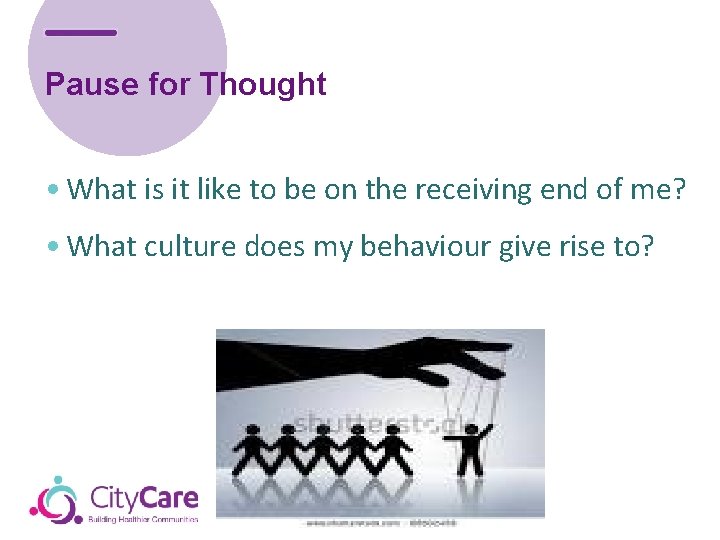
Pause for Thought • What is it like to be on the receiving end of me? • What culture does my behaviour give rise to? Slide 19
Feedback Slide 20
Why give Feedback ? Provision of important information to the staff member. A stimulus for further learning and training. Show staff the level of their performance. Address the weaknesses and deficiencies of the staff member. Decide the progress of the staff member. It is the lifeblood of improved performance Slide 21
Effective Feedback • Sincere praise • Feedback sandwich • Job related • Avoid general statements • Hearsay • Describe behaviour not person • Specific to individual Slide 22
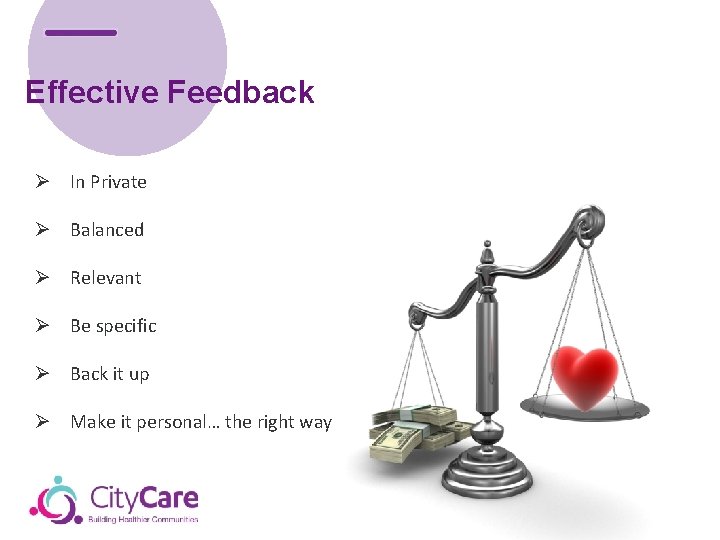
Effective Feedback Ø In Private Ø Balanced Ø Relevant Ø Be specific Ø Back it up Ø Make it personal… the right way Slide 23
Effective Feedback Ø If you were to perform a review today, on any of your employees, would there be any surprises for them? Ø Have you set a goal for yourself to informally, but regularly touch base with each of your employees to ask how things are going, ask whethere any problems, discuss any difficulties in the achievement of their performance? Ø Do you correct performance problems immediately? Ø Do you congratulate successes immediately? Ø Have you reviewed the employee's work plans and objectives at least once during the period? Ø Have you updated or modified those work plans and objectives that require revision? Have you done so with the employee's input and agreement? Slide 24
Supporting a Non - Blame Culture Making mistakes and learning from them is an important part of your growth and development Slide 25