
Values Based Appraisal Lets talk about potential Cardiff
Values Based Appraisal Let’s talk about potential Cardiff and Vale University Health Board
Session Outcomes • Learn more about the new appraisal process and how it impacts you

Vision Cardiff & Vale UHB want to develop and nurture engaged and motivated staff with the skills and confidence to live up to our values every day. The right people in the right roles with the right values Currently or for the future Access to opportunities, exposure, stretch & development to reach your potential
What’s new • Preparation • Focus of the conversation • Measurement against values and behaviours • Links with succession planning • Link with pay progression • Recording on ESR
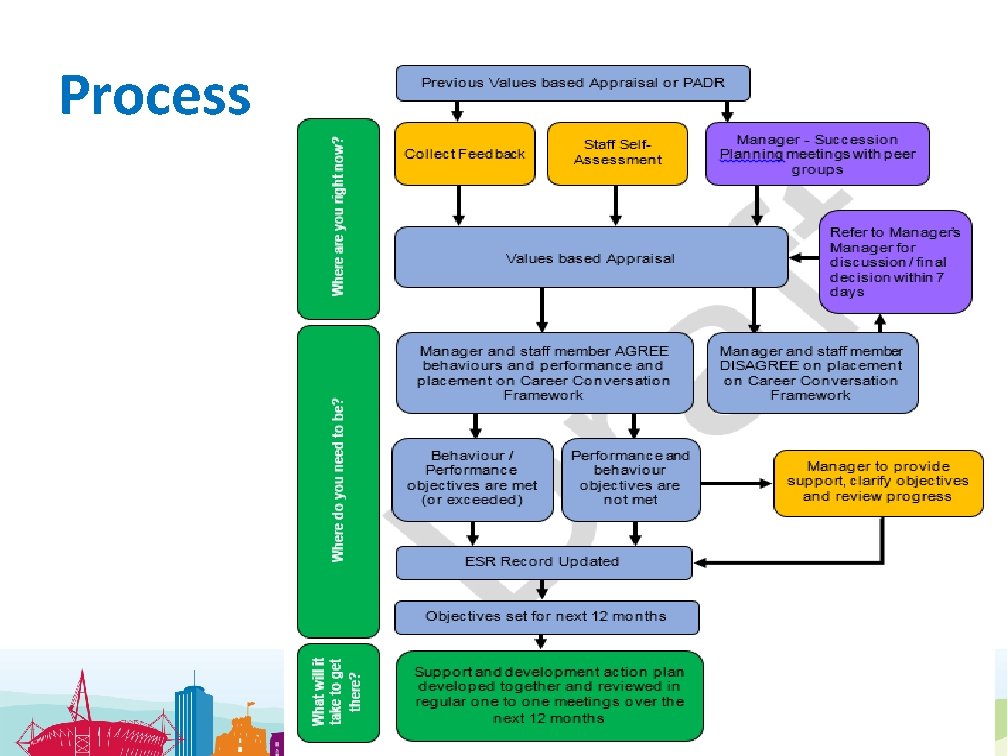
Process
What is Values Based Appraisal You and your manager are able to have open and constructive career conversation that includes where you are now, where you want to be, and how to be supported to get there.
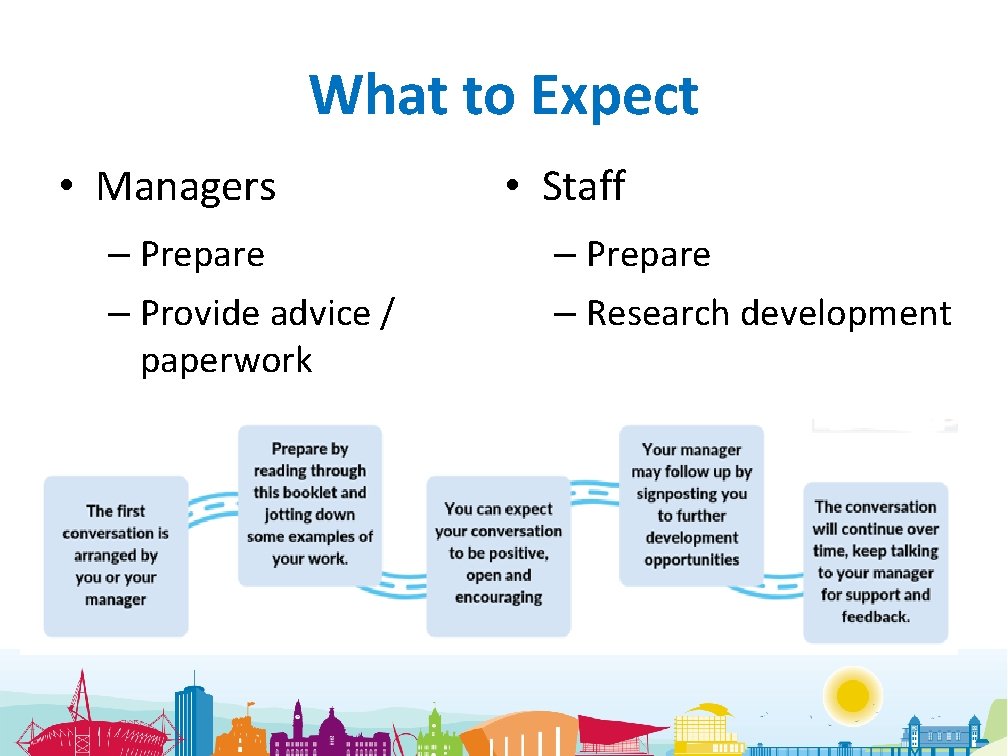
What to Expect • Managers – Prepare – Provide advice / paperwork • Staff – Prepare – Research development
Preparing for the Appraisal • We all need to feel that we are listened to, understood and valued in our roles to achieve our maximum potential. • Values Based Appraisal is about considering everyone as an individual and the development that is right for them. • The following preparation is best practice and will enable both you and your staff to get the most out of your conversation. 1. 2. 3. 4. 5. Self-assessment tool results page Feedback from a range of people Appraisal Guidelines Examples of work Any other documentation that may be useful; previous objectives, KSF outline, job description and person specification.
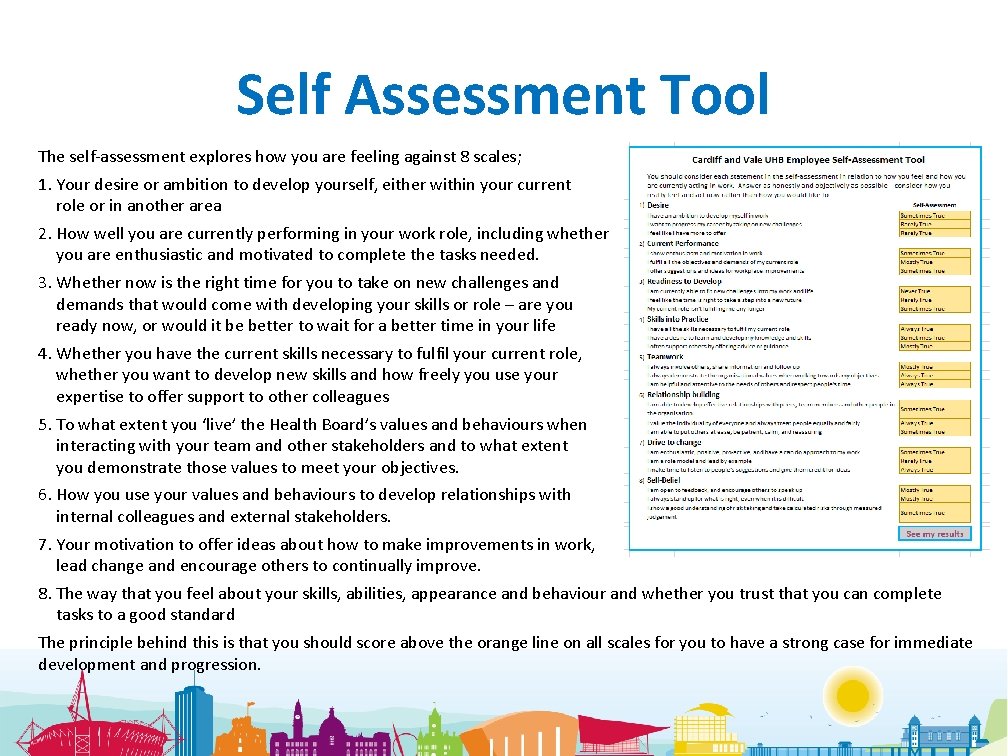
Self Assessment Tool The self-assessment explores how you are feeling against 8 scales; 1. Your desire or ambition to develop yourself, either within your current role or in another area 2. How well you are currently performing in your work role, including whether you are enthusiastic and motivated to complete the tasks needed. 3. Whether now is the right time for you to take on new challenges and demands that would come with developing your skills or role – are you ready now, or would it be better to wait for a better time in your life 4. Whether you have the current skills necessary to fulfil your current role, whether you want to develop new skills and how freely you use your expertise to offer support to other colleagues 5. To what extent you ‘live’ the Health Board’s values and behaviours when interacting with your team and other stakeholders and to what extent you demonstrate those values to meet your objectives. 6. How you use your values and behaviours to develop relationships with internal colleagues and external stakeholders. 7. Your motivation to offer ideas about how to make improvements in work, lead change and encourage others to continually improve. 8. The way that you feel about your skills, abilities, appearance and behaviour and whether you trust that you can complete tasks to a good standard The principle behind this is that you should score above the orange line on all scales for you to have a strong case for immediate development and progression.
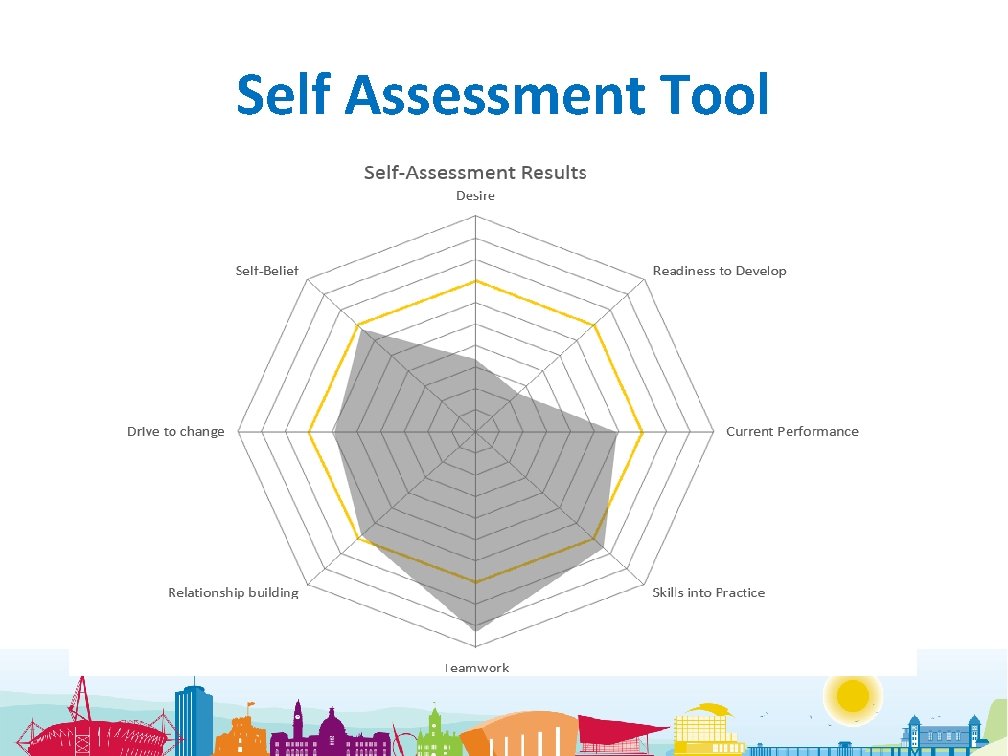
Self Assessment Tool
Getting Feedback from others • How would you know what other people think about your work? • Who would you ask? • What questions would you ask? • What would you worry about?
Getting Feedback from others • Ask colleagues • Ask straight away • Consider what’s been said • Take what you need to your appraisal

Career Conversation Framework • Designed to enable a conversation about your role in the NHS and plot your position and direction. • Agree together where they’re placed on the framework. • Many of the staff in our organisation will find themselves at the centre meeting performance outcomes using the right values and behaviours. • If they start to move away from the centre, it may mean they need a new challenge or are ready for a new stage in their career.
Using Evidence • As you write and talk about where they are now, there a number of different things that can help you evidence values and behaviours / performance; – – – Answers to the coaching questions Feedback from others self-assessment results previous objectives and how they were completed KSF outline, job description and person specification Examples of projects or work completed
Using Evidence • What do you consider are the most important aspects of your present job? • What do you believe you have accomplished in the past year? • How do you feel about your performance & behaviours over the last 12 months? • What do other people say about you and what you bring? • What motivates you and makes you feel valued at work? • What do you find most interesting in your job? • What gets in the way of you doing a good job? • What changes should be made so that you can achieve your objectives in the year ahead? • What ambitions do you have for the future? What do you see as your next move? Or are you happy what you are doing? • What do you suggest you need to learn or have experience of in the year ahead?
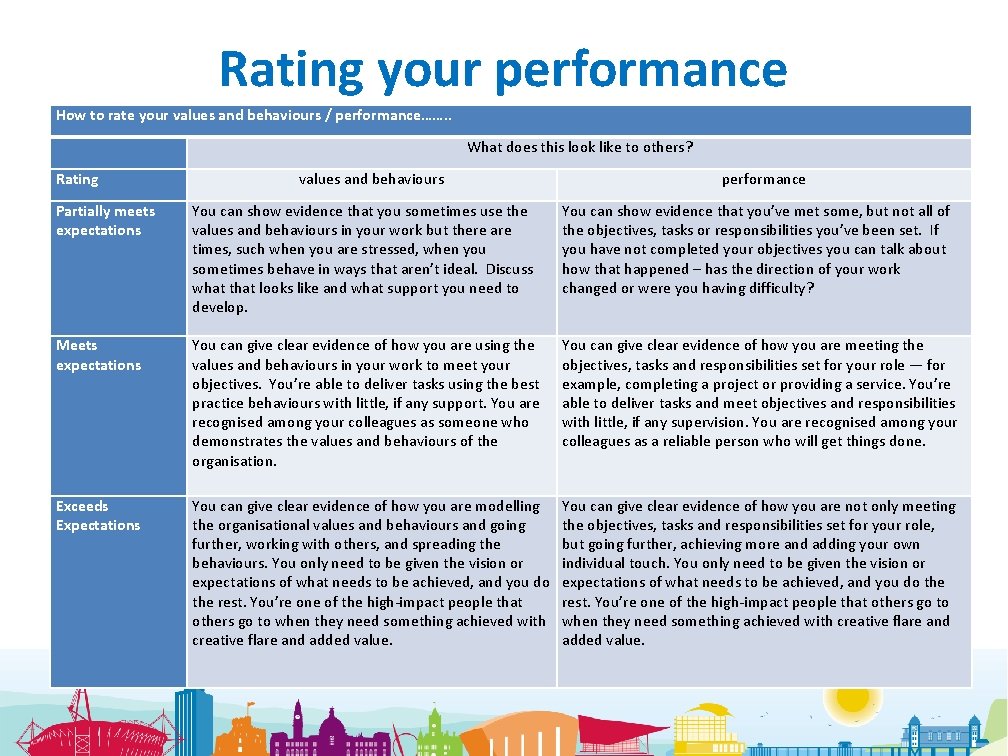
Rating your performance How to rate your values and behaviours / performance……. . What does this look like to others? Rating values and behaviours performance Partially meets expectations You can show evidence that you sometimes use the values and behaviours in your work but there are times, such when you are stressed, when you sometimes behave in ways that aren’t ideal. Discuss what that looks like and what support you need to develop. You can show evidence that you’ve met some, but not all of the objectives, tasks or responsibilities you’ve been set. If you have not completed your objectives you can talk about how that happened – has the direction of your work changed or were you having difficulty? Meets expectations You can give clear evidence of how you are using the values and behaviours in your work to meet your objectives. You’re able to deliver tasks using the best practice behaviours with little, if any support. You are recognised among your colleagues as someone who demonstrates the values and behaviours of the organisation. You can give clear evidence of how you are meeting the objectives, tasks and responsibilities set for your role — for example, completing a project or providing a service. You’re able to deliver tasks and meet objectives and responsibilities with little, if any supervision. You are recognised among your colleagues as a reliable person who will get things done. Exceeds Expectations You can give clear evidence of how you are modelling the organisational values and behaviours and going further, working with others, and spreading the behaviours. You only need to be given the vision or expectations of what needs to be achieved, and you do the rest. You’re one of the high-impact people that others go to when they need something achieved with creative flare and added value. You can give clear evidence of how you are not only meeting the objectives, tasks and responsibilities set for your role, but going further, achieving more and adding your own individual touch. You only need to be given the vision or expectations of what needs to be achieved, and you do the rest. You’re one of the high-impact people that others go to when they need something achieved with creative flare and added value.
Documenting and Following up • Following your Appraisal, your manager will record where you are on the Career Conversation Framework now. • This information focuses on developing you, whether maintaining your development to continue doing the good job you are currently doing, addressing specific development needs identified within your current role, or tapping into potential strengths and talents to prepare you for your next role.
Setting Future Objectives • Once you have agreed where you are right now, you are now ready to plan for the next 12 months. • Your objectives should clearly set out what is to be done, and how well. • You should be clear how you will know if you are doing a good job.
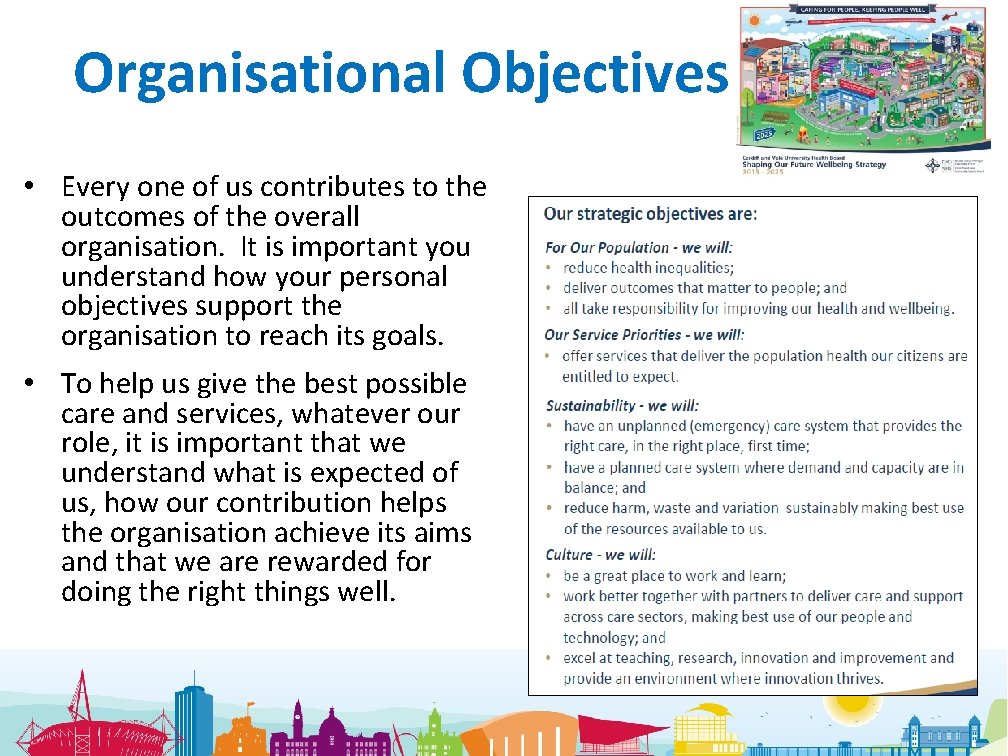
Organisational Objectives • Every one of us contributes to the outcomes of the overall organisation. It is important you understand how your personal objectives support the organisation to reach its goals. • To help us give the best possible care and services, whatever our role, it is important that we understand what is expected of us, how our contribution helps the organisation achieve its aims and that we are rewarded for doing the right things well.
Setting Future Objectives Checklist for objectives – do you know…. . • What is expected • What it will look like if it is complete • When it should be complete • what the end results should be • if you have the skills to do it well • how you will know if you have done it well

Setting Future Objectives
Development and Training When you consider what it will take to allow you to meet your new objectives, you can gain support, learning and development in a number of ways; – 70% job-related experiences – 20% interactions with others – 10% formal educational events When you have considered what support you need to meet your objectives you can start to complete the Development Action Plan which will record the support, learning and development you need to be able to do your job well. Each development opportunity should be clearly linked with a specific objective.
Recording on ESR There are some core pieces of information that your manager must record on ESR. • Date of your Appraisal • Placement of the Career Conversation Matrix • Development Action Plan • Pay progression
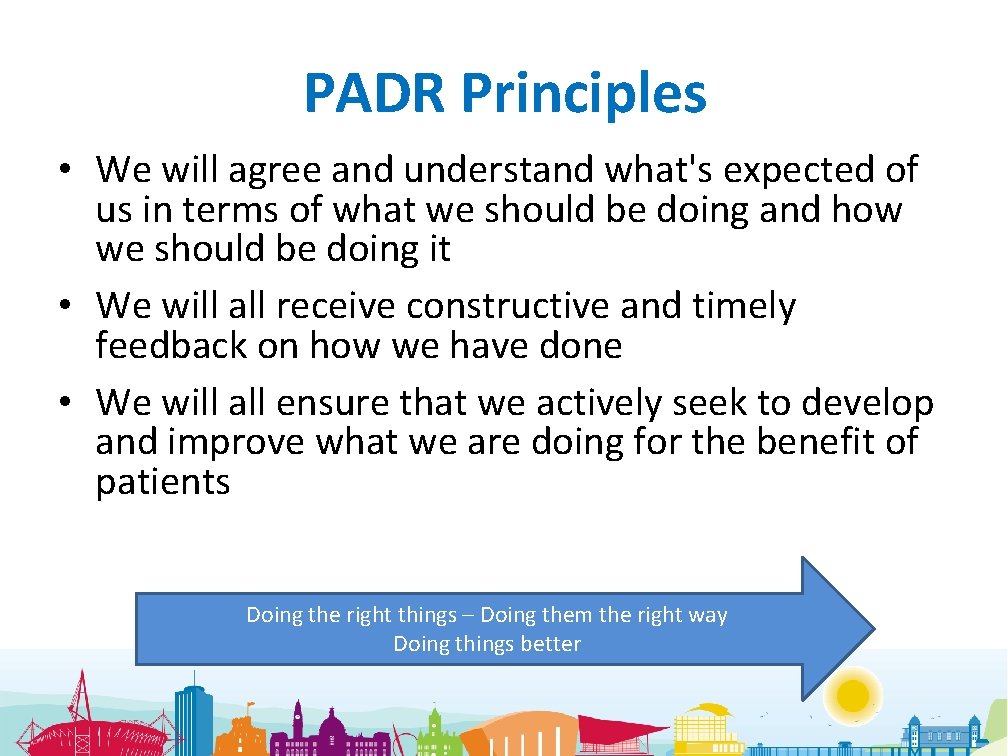
PADR Principles • We will agree and understand what's expected of us in terms of what we should be doing and how we should be doing it • We will all receive constructive and timely feedback on how we have done • We will all ensure that we actively seek to develop and improve what we are doing for the benefit of patients Doing the right things – Doing them the right way Doing things better
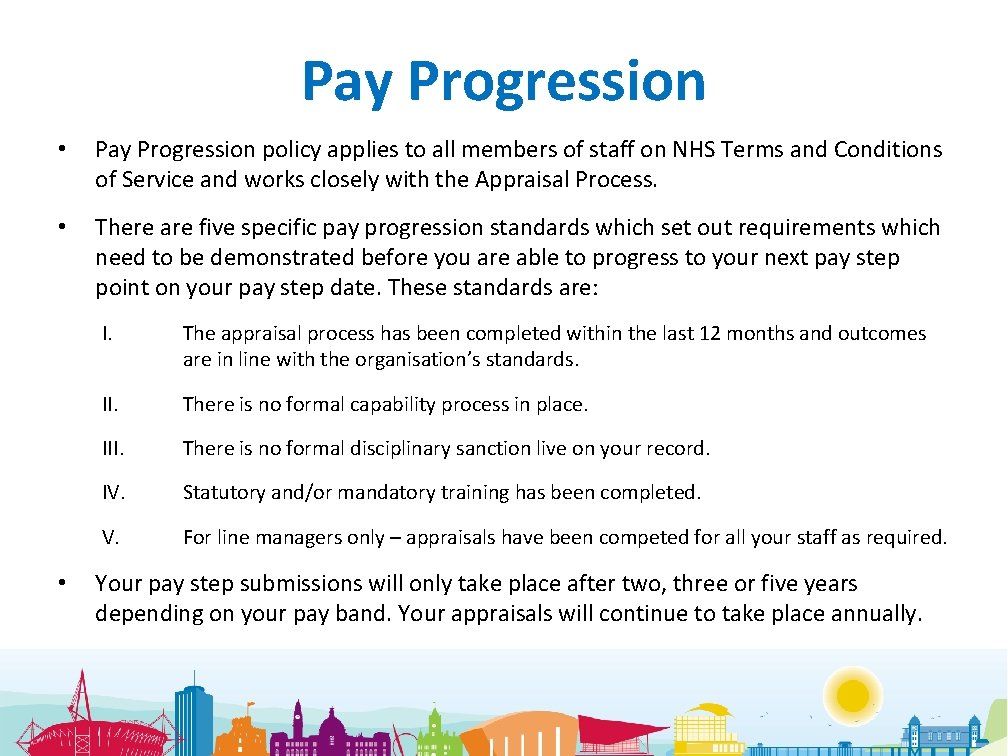
Pay Progression • Pay Progression policy applies to all members of staff on NHS Terms and Conditions of Service and works closely with the Appraisal Process. • There are five specific pay progression standards which set out requirements which need to be demonstrated before you are able to progress to your next pay step point on your pay step date. These standards are: • I. The appraisal process has been completed within the last 12 months and outcomes are in line with the organisation’s standards. II. There is no formal capability process in place. III. There is no formal disciplinary sanction live on your record. IV. Statutory and/or mandatory training has been completed. V. For line managers only – appraisals have been competed for all your staff as required. Your pay step submissions will only take place after two, three or five years depending on your pay band. Your appraisals will continue to take place annually.
Pay Progression Policy • This Pay Progression Policy does not replace or change Appraisal policies but does set out three principles that will be embedded into local appraisal processes. They are: – We will agree and understand what’s expected of us in terms of what we should be doing and how we should be doing it – We will all receive constructive and timely feedback on how we have done – We will all ensure that we actively seek to develop and improve what we are doing for the benefit of patients

Summary
- Slides: 27