
Value Proposition and the Scope of Service System

- Slides: 55
Value Proposition and the Scope of Service System 1
Topics • VP and Statement of work • Service System's boundaries – Co-operative Service Systems – Dual Service Systems • Service Breakdown Structure • Value Proposition for Interim Project – Semestral work 2 2
Service Systems Review 3
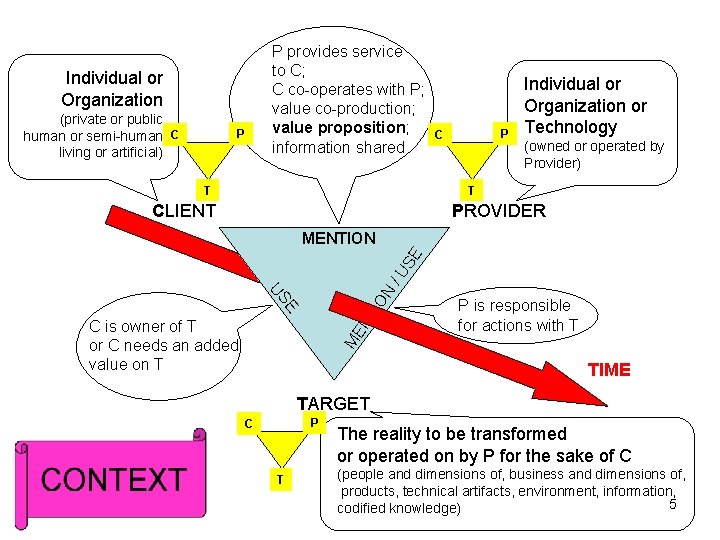
Individual or Organization (private or public, human or semi-human C living or artificial) P P provides service to C; C co-operates with P; value co-production; value proposition; information shared T P C Individual or Organization or Technology (owned or operated by Provider) T CLIENT PROVIDER /U SE MENTION ME NT IO N E US C is owner of T or C needs an added value on T P is responsible for actions with T TIME TARGET P C T The reality to be transformed or operated on by P for the sake of C (people and dimensions of, business and dimensions of, products, technical artifacts, environment, information, 4 codified knowledge)
Individual or Organization (private or public, human or semi-human C living or artificial) P P provides service to C; C co-operates with P; value co-production; value proposition; information shared T P C Individual or Organization or Technology (owned or operated by Provider) T CLIENT PROVIDER /U SE MENTION ME NT IO N E US C is owner of T or C needs an added value on T P is responsible for actions with T TIME TARGET P C T The reality to be transformed or operated on by P for the sake of C (people and dimensions of, business and dimensions of, products, technical artifacts, environment, information, 5 codified knowledge)
PA 179 PMSLC Nov-2008 6
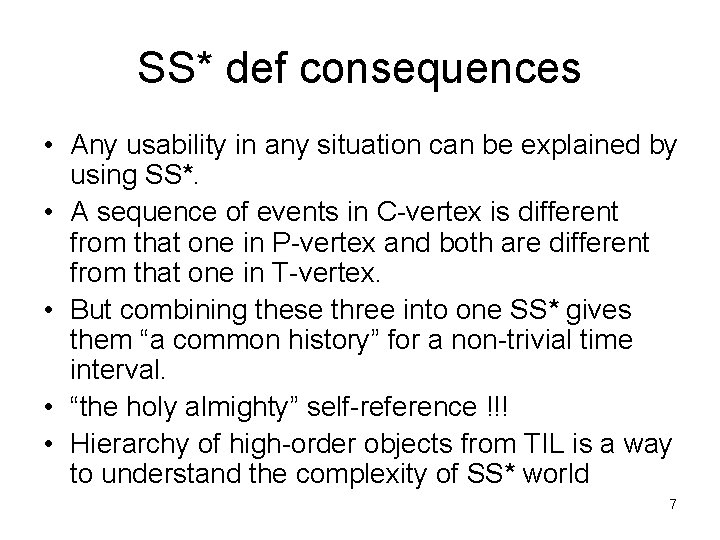
SS* def consequences • Any usability in any situation can be explained by using SS*. • A sequence of events in C-vertex is different from that one in P-vertex and both are different from that one in T-vertex. • But combining these three into one SS* gives them “a common history” for a non-trivial time interval. • “the holy almighty” self-reference !!! • Hierarchy of high-order objects from TIL is a way to understand the complexity of SS* world 7
Comments to consequences … • An ‘object’ itself has no value without evaluation the cost invested into it; the value arises when the object is pushed to action—when a service occurs • Thinking on C-P-T and on benefits for the ‘C’ help us understand situations better and help us not to be bumpkins in many states of affairs. 8
Value Proposition What Why How 9
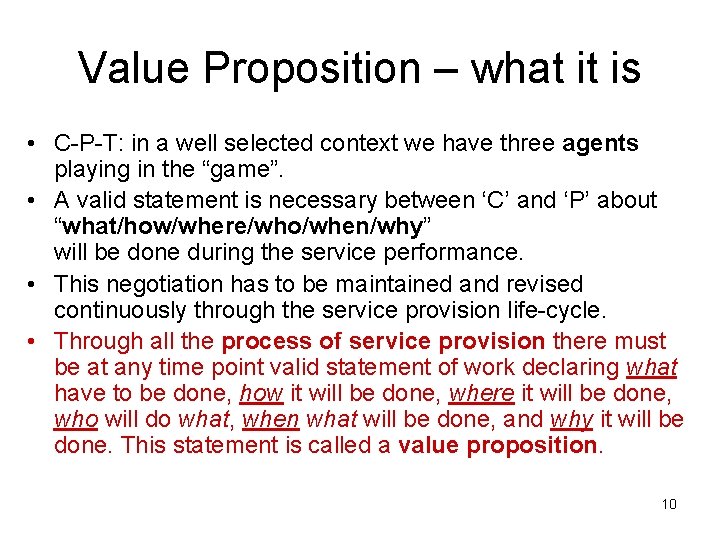
Value Proposition – what it is • C-P-T: in a well selected context we have three agents playing in the “game”. • A valid statement is necessary between ‘C’ and ‘P’ about “what/how/where/who/when/why” will be done during the service performance. • This negotiation has to be maintained and revised continuously through the service provision life-cycle. • Through all the process of service provision there must be at any time point valid statement of work declaring what have to be done, how it will be done, where it will be done, who will do what, when what will be done, and why it will be done. This statement is called a value proposition. 10
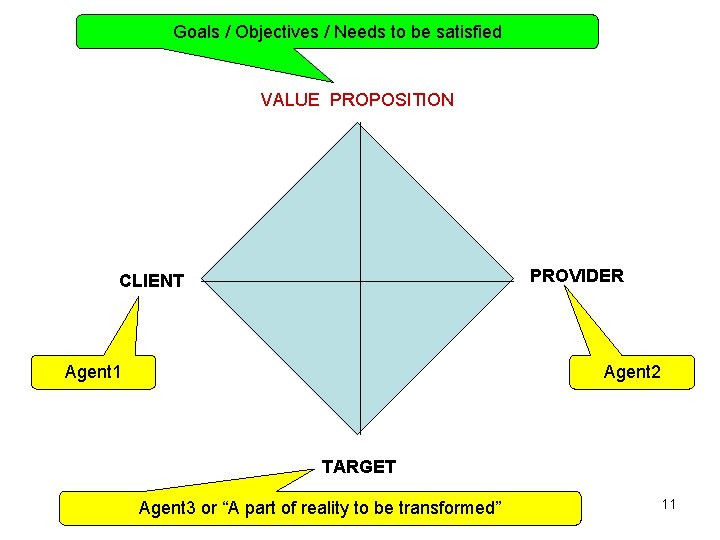
Goals / Objectives / Needs to be satisfied VALUE PROPOSITION PROVIDER CLIENT Agent 1 Agent 2 TARGET Agent 3 or “A part of reality to be transformed” 11
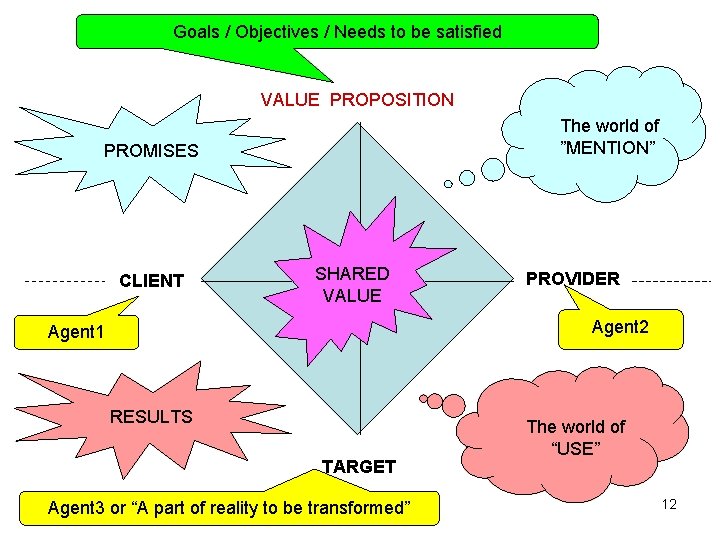
Goals / Objectives / Needs to be satisfied VALUE PROPOSITION The world of ”MENTION” PROMISES CLIENT SHARED VALUE PROVIDER Agent 2 Agent 1 RESULTS TARGET Agent 3 or “A part of reality to be transformed” The world of “USE” 12
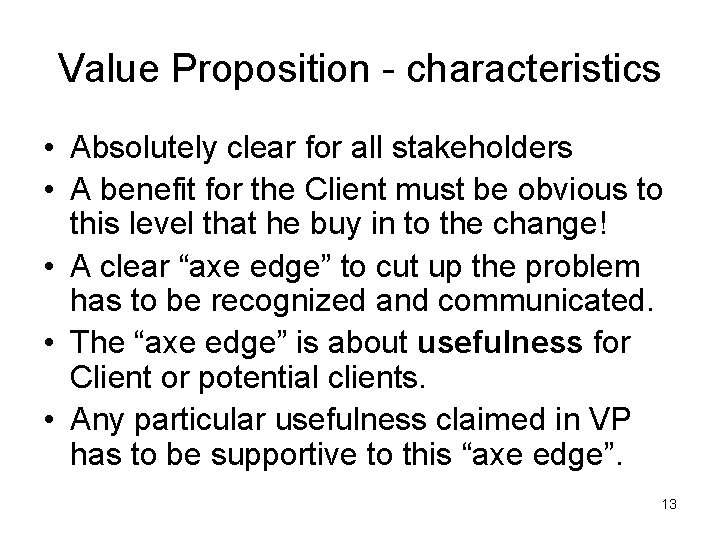
Value Proposition - characteristics • Absolutely clear for all stakeholders • A benefit for the Client must be obvious to this level that he buy in to the change! • A clear “axe edge” to cut up the problem has to be recognized and communicated. • The “axe edge” is about usefulness for Client or potential clients. • Any particular usefulness claimed in VP has to be supportive to this “axe edge”. 13
Value Proposition – why it is important • A service provision is about change. • Everybody has his/her/its own filter, set of filters precisely, by which filters the whole stream of data when perceives. • There is lot of contexts from which each particular situation could be understood and evaluated. • Law of inertia works in society as well as in nature. • Thus to convey clear “what/why/how to change” is necessary to put ideas to action. 14
Value Proposition – useful recommendation • Two kinds of change exist according to the Gerald Bradley’s book ‘Benefit Realisation Management’, GOVER, 2006: – Change acquiring and/or implementing capability (enabler) – Change embedding this capability into the working practice (business change) • Namely the VP for ‘business change’ is the issue, as Clients live in the working practice. • And moreover, Clients’ contexts are entirely different from the context of a Provider who understands well the ‘enabler’. 15
Value Proposition – how to formulate it (check list which can help us) • • Key stakeholders identification and classification Target (“T” from C-P-T) clear definition Benefits for C recognition “Enablers” and “Business change” specification (see “BRM”) Deliverables description “Axe edge”-like formulation Revision of all points Workshop (forming seminar) with key stakeholders at the start and/or end of the process 16
Possible Structure of VP • Executive Summary “Axe edge”-like formulation + annotation (breef explanation); • Brief story ‘Use-case main scenario’-like description; key stakeholders understanding reached; • C-P-T Definitions start with Target clear definition; then define the Client and the Provider – or vice versa; be aware of the Client’s benefits and of the Providers deliverables; • Benefits what will be the benefits for the Client; be very clear of it! This is the “Mission-Vision-Strategy approach” application 17
Possible Structure of VP (2) • Deliverables by what deliverables the benefits will be delivered to the Client; in what the value co-creation between Client and Provider lies; • Enablers and Business change Change acquiring and/or implementing capability (enabler) and Change embedding this capability into the working practice (business change) description; if applicable; • Business Model describe precisely costs and benefits of each active participant of the game; use Alex. Osterwalder Business Model Ontology; 18
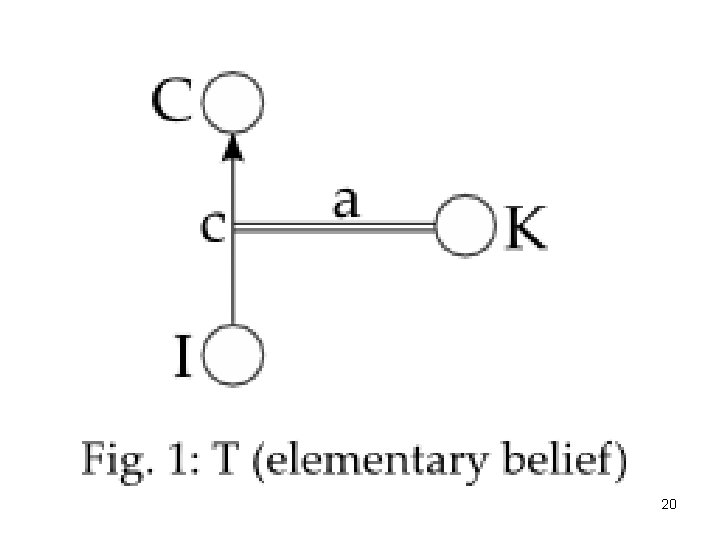
Possible Structure of VP (3) • Amendments (if necessary); may be much more longer than the basic VP text; – technical proofs if necessary; – other arguments; – project and program management elements that can help the VP better understanding and that can help the VP is believable; – anything which can help to obtain better score in the ‘elementary beliefs’ sense and the “context” understanding ( – see the following explication) 19
20
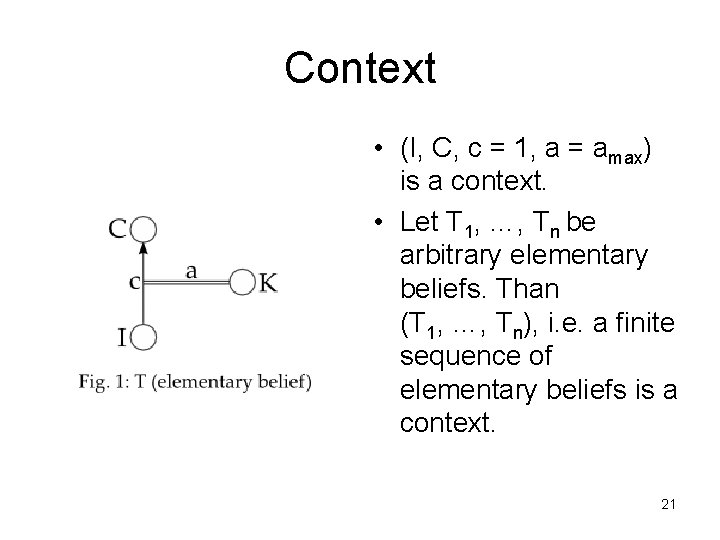
Context • (I, C, c = 1, a = amax) is a context. • Let T 1, …, Tn be arbitrary elementary beliefs. Than (T 1, …, Tn), i. e. a finite sequence of elementary beliefs is a context. 21
Service System boundaries Is it better to see the scene as one Service System with many contexts? or Is it better to see it as a set of Service Systems … ? In a way co-operating … 22
Questions • what is better to describe as one service system? • what is better to describe as two or more service systems in some way connected or co-operated? • are there any criteria according to which we can decide whether a situation is better to describe as one SS* or as a set of cooperating Service Systems? 23
Prime Service System A service system is called prime service system if the following conditions hold: • there is only one context involved in which the roles of Client, Provider, and Target are spread on Agents • all the time the Service System is alive the role assignment does not change • This is a natural point of view and it is widely used. 24
Boundaries • There are no boundaries in our 3 -d+time space: all boundaries are artificial one !!! We create these boundaries ourselves !!! • There are many boundaries created by ourselves in the cyber-space !!! • Thus boundaries of a Service System are artificially created in accordance with pragmatic reasons. 25
Thinking on boundaries … • The biggest enemy of cognition are boundaries • The biggest enemy of Project/Program/Portfolio management is – absence of boundaries and – absence of cognition • That is why they both, cognition and PPPM have to go together ! • … so as we are going using our two legs … • This I call a manifestation of “Two Legs Principle” • The “TLP” has more manifestations, e. g. academic and business world; I call it “way A” and “way B”. • … again boundaries between them are artificial, only. 26
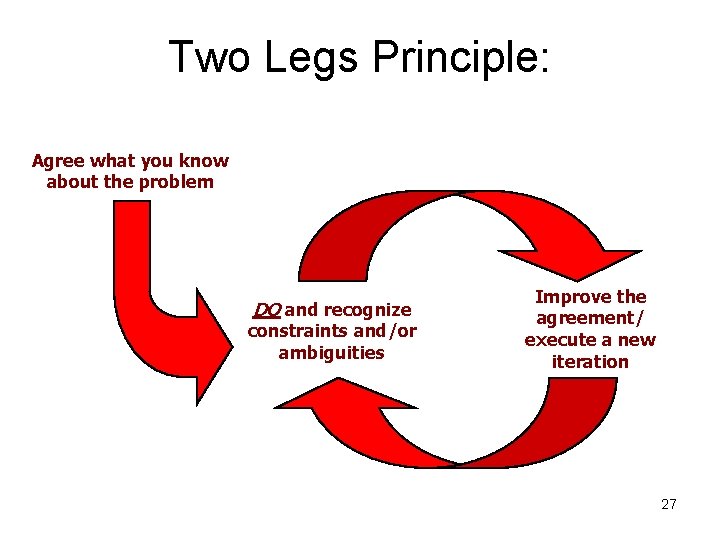
Two Legs Principle: Agree what you know about the problem DO and recognize constraints and/or ambiguities Improve the agreement/ execute a new iteration 27
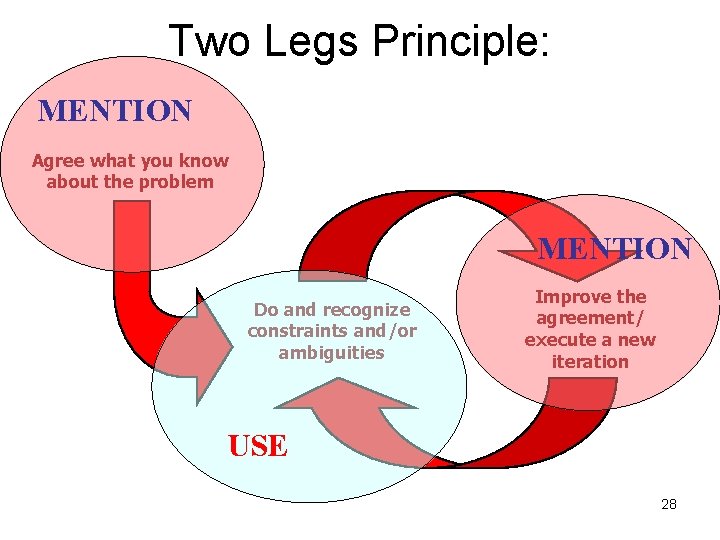
Two Legs Principle: MENTION Agree what you know about the problem MENTION Do and recognize constraints and/or ambiguities Improve the agreement/ execute a new iteration USE 28
Co-operative Service Systems What the co-operation is about ? How to balance a service with the price for it ? 29
Service Systems Co-operation We will say that two prime service systems S 1=(C 1, P 1, T 1) and S 2=(C 2, P 2, T 2) are Co-operative Service Systems , if the following conditions hold: – C 1 = P 2 – P 1 = C 2 – a benefit of C 1 (C 2) depends in a way on the benefit of C 2 (C 1) • Note, that no constraint is done on targets of those systems. 30
Example • • • IBM, Integrated Service Delivery Center, Brno Faculty of Informatics MU, Brno IBM interest: Outsourcing of services FIMU interest: Processes of study and research Let’s describe two SS*s: SS 1 as an IBM benefit SS* and SS 2 as a FIMU benefit SS* • What will be the T 1 and T 2 ? • Formulate such Value Propositions, that SS 1 and SS 2 are co-operative SS*s 31
Dual Service Systems A closer relationship than co-operation 32
Dual Service System Definition • Let us have a general service system such that two prime service systems could be identified in it using two main contexts. Let the first one is (C 1, P 1, T 1) and the second one is (C 2, P 2, T 2). If it holds that: – C 1 = P 2 and P 1 = C 2 – T 1 = T 2 – value proposition of (C 1, P 1, T 1), formulated within the first context, and value proposition of (C 2, P 2, T 2), formulated within the second context, are formulated such that their union creates a two-directional value proposition covering benefits for both C 1 and C 2 • than we deal with (C 1, P 1, T 1) and (C 2, P 2, T 2) as it is one SS* with two contexts and say that the service system is a dual service system. 33
Example … • • • IBM, Integrated Service Delivery Center, Brno Faculty of Informatics MU, Brno IBM interest: Outsourcing of services FIMU interest: Processes of study and research Let’s describe one dual SS*: as an IBM benefit SS* and a FIMU benefit SS* with one common Target • What will be the Target ? • Formulate such Value Proposition, that is bidirectional and benefit for both parties expressing 34
Breakdown Structures The essence of practical understanding and modeling of Viable Service Systems (together with their Value Propositions) 35
Why they are so important? • To construct a new complex service from several simpler services • To solve CEP = Complex Event Processing • To be able to understand deeply a VP • To be able to formulate VP based on deep understanding 36
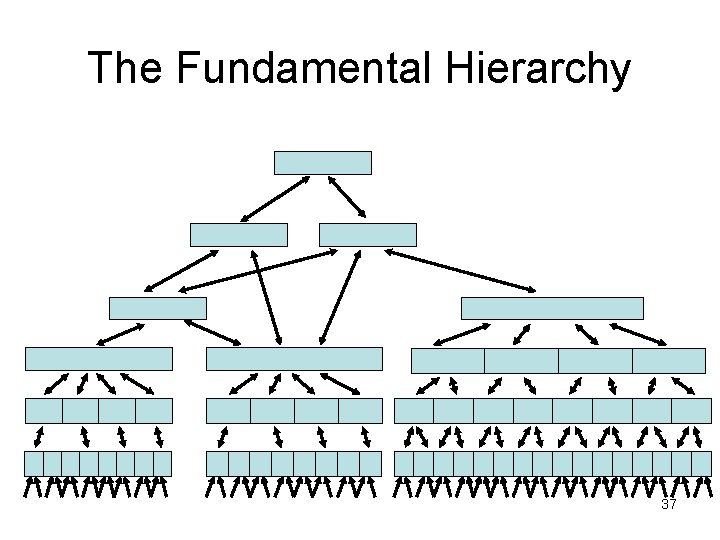
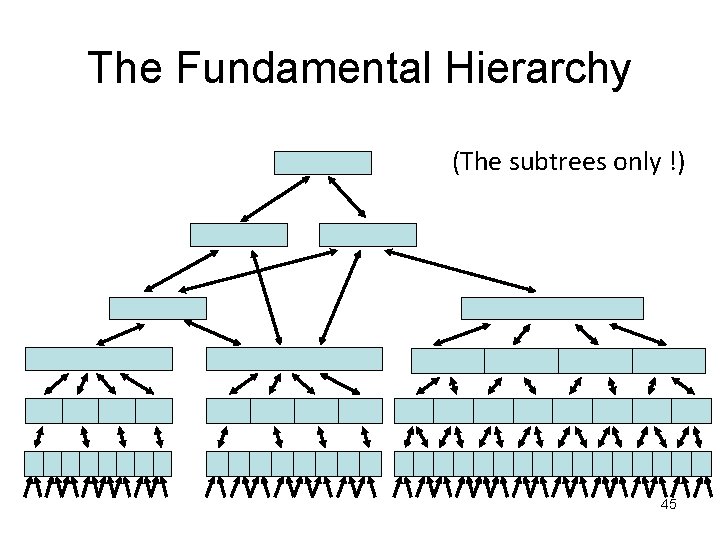
The Fundamental Hierarchy 37
Self-reference ! 38
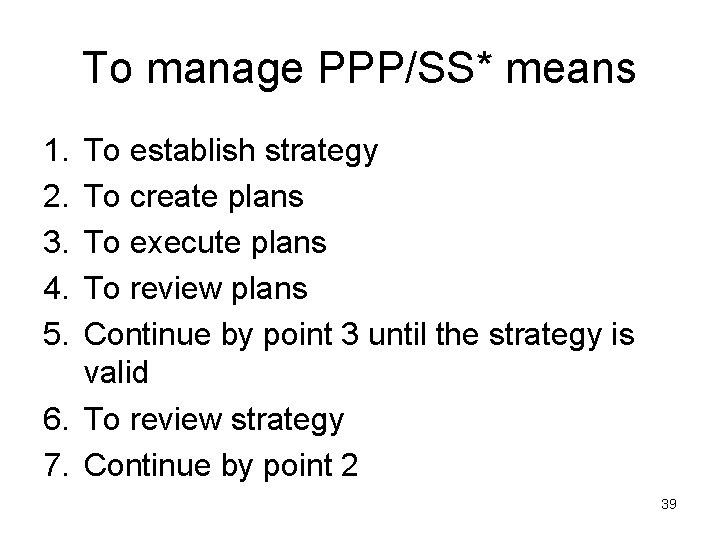
To manage PPP/SS* means 1. 2. 3. 4. 5. To establish strategy To create plans To execute plans To review plans Continue by point 3 until the strategy is valid 6. To review strategy 7. Continue by point 2 39
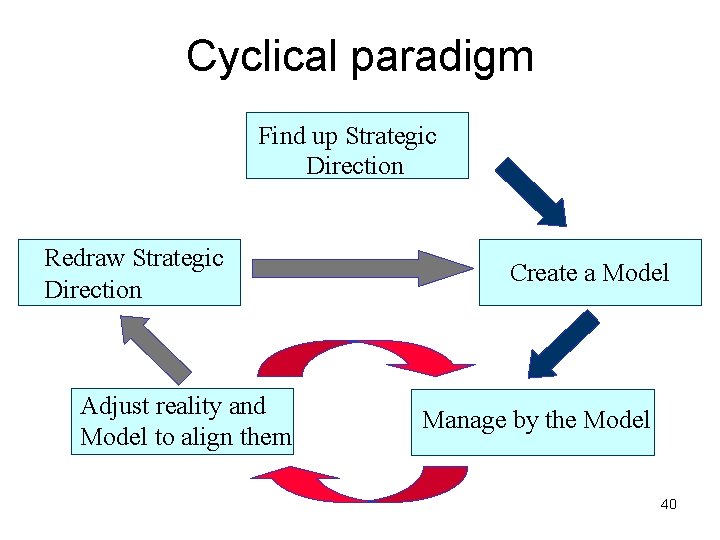
Cyclical paradigm Find up Strategic Direction Redraw Strategic Direction Adjust reality and Model to align them Create a Model Manage by the Model 40
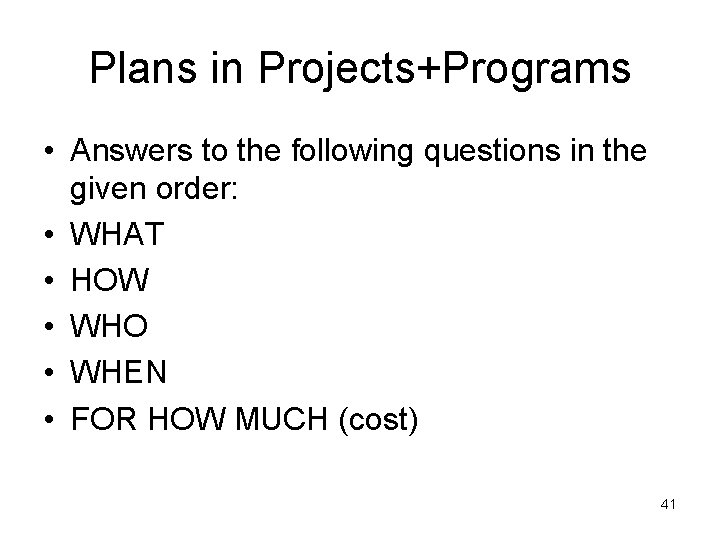
Plans in Projects+Programs • Answers to the following questions in the given order: • WHAT • HOW • WHO • WHEN • FOR HOW MUCH (cost) 41
Discussion • What is the most important of these plans / questions ? 42
Plans • • • WHAT HOW WHO WHEN FOR HOW MUCH (cost) 43
How to describe the WHAT plan ? • In general • While each project is unique • Is there any common possibility? 44
The Fundamental Hierarchy (The subtrees only !) 45
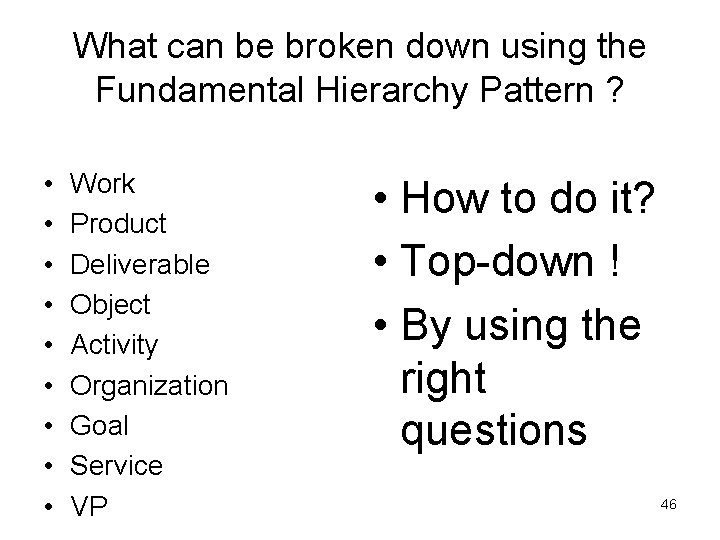
What can be broken down using the Fundamental Hierarchy Pattern ? • • • Work Product Deliverable Object Activity Organization Goal Service VP • How to do it? • Top-down ! • By using the right questions 46
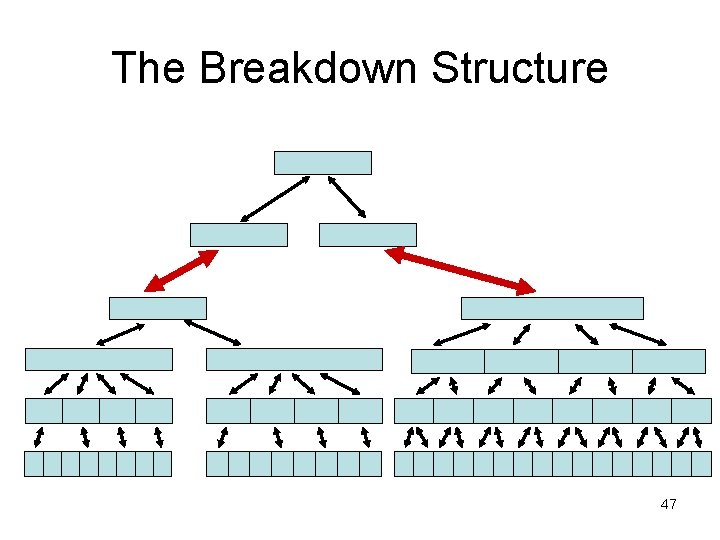
The Breakdown Structure 47
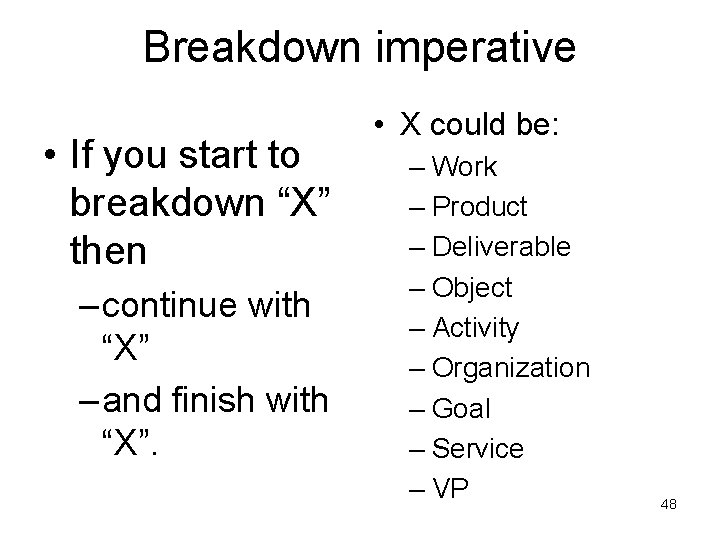
Breakdown imperative • If you start to breakdown “X” then – continue with “X” – and finish with “X”. • X could be: – Work – Product – Deliverable – Object – Activity – Organization – Goal – Service – VP 48
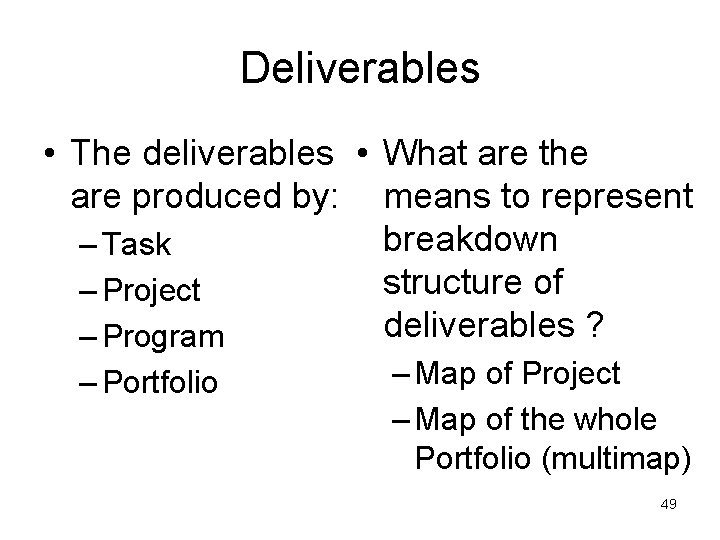
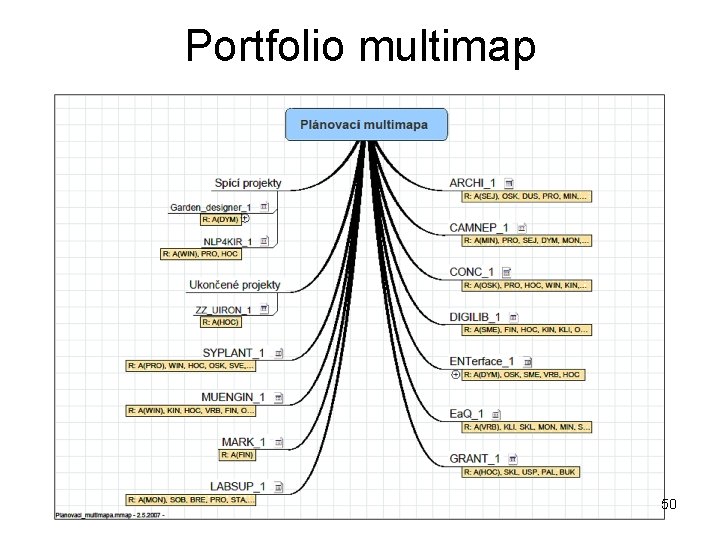
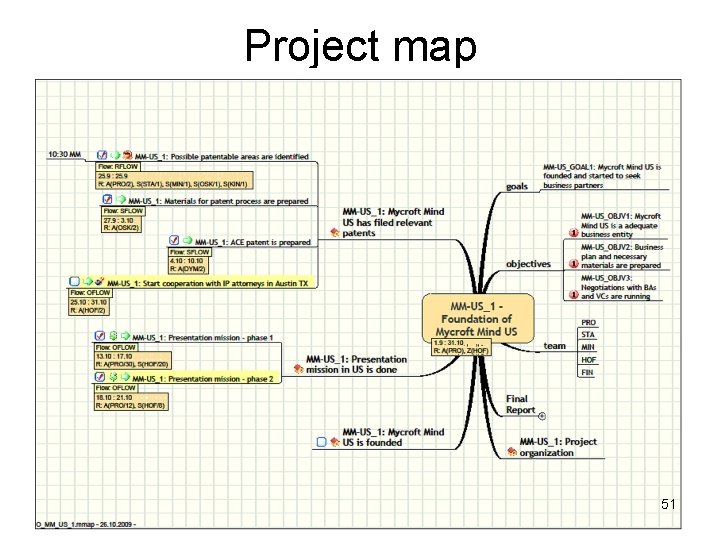
Deliverables • The deliverables • What are the are produced by: means to represent breakdown – Task structure of – Project deliverables ? – Program – Portfolio – Map of Project – Map of the whole Portfolio (multimap) 49
Portfolio multimap 50
Project map 51
Assignment 2 • Value proposition for PA 180 Interim Project • All information on the website • Agents = Actors: – FI MU, (SSME study branch) – Partner – Student 52
Assignment 2 – cont. • What Prime Service Systems can be recognized? • Who are Providers? Who are Clients? • Benefits? • Target(s)? • Try to set VP of co-operative service systems • Try to set VP of a dual service system 53
Assignment 2 – organization • Two to four members squads • Will be evaluated within exams • … so as examples of co-operating and dual Service Systems 54
Assignment 2 – strict recommendation • Use the Alex. Osterwalder Business Model Ontology • Search the Internet • Read literature 55