
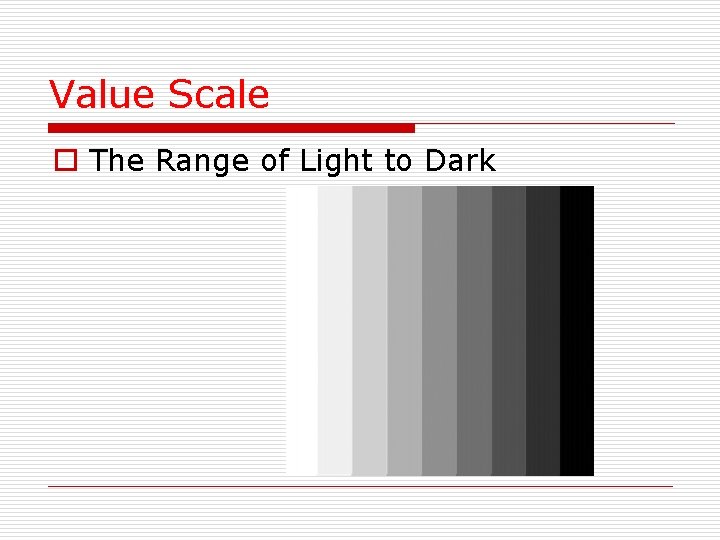
Value is the range of light to dark

- Slides: 29
Value is the range of light to dark.
Without Light You Would See Nothing o No matter how bright your whitest clothes are, You will not see them in absolute darkness.
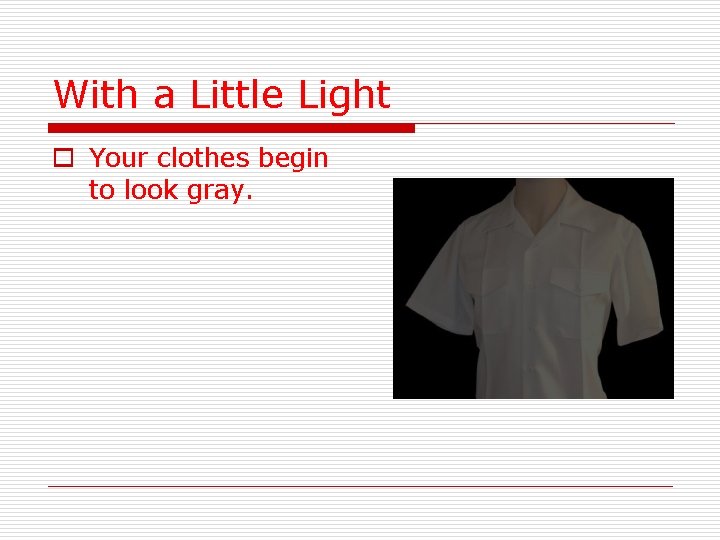
With a Little Light o Your clothes begin to look gray.
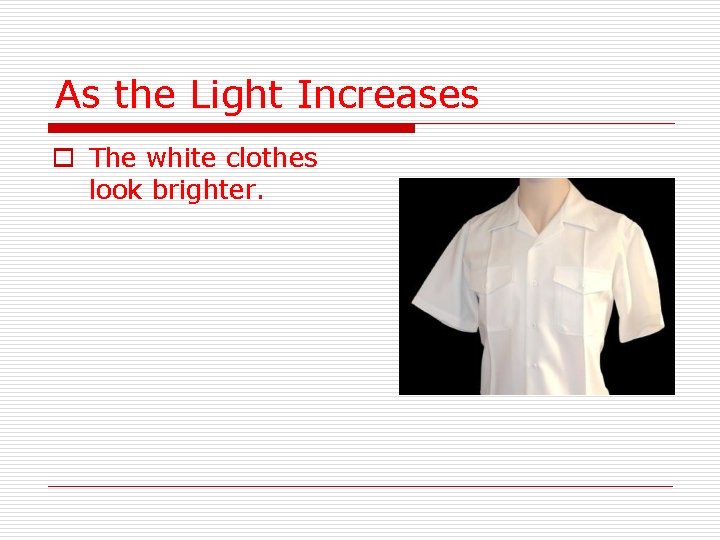
As the Light Increases o The white clothes look brighter.
Value Scale o The Range of Light to Dark
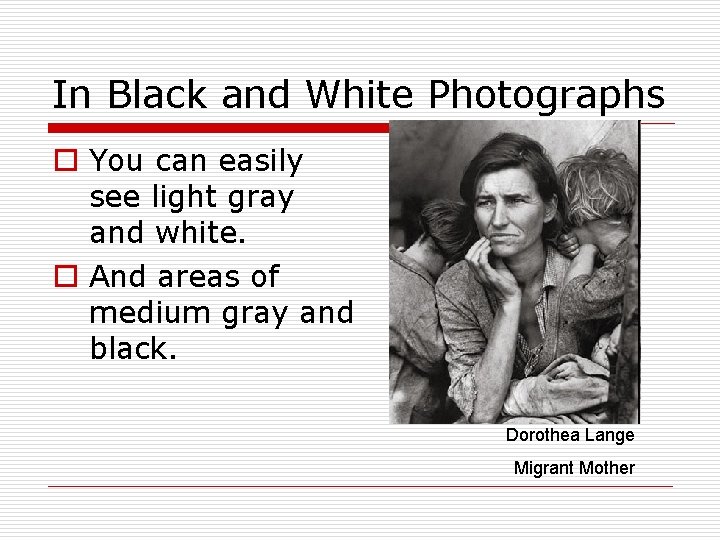
In Black and White Photographs o You can easily see light gray and white. o And areas of medium gray and black. Dorothea Lange Migrant Mother
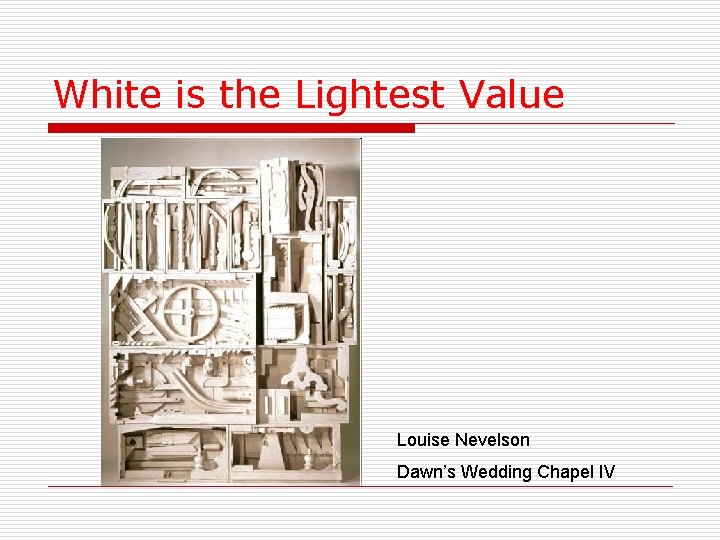
White is the Lightest Value Louise Nevelson Dawn’s Wedding Chapel IV
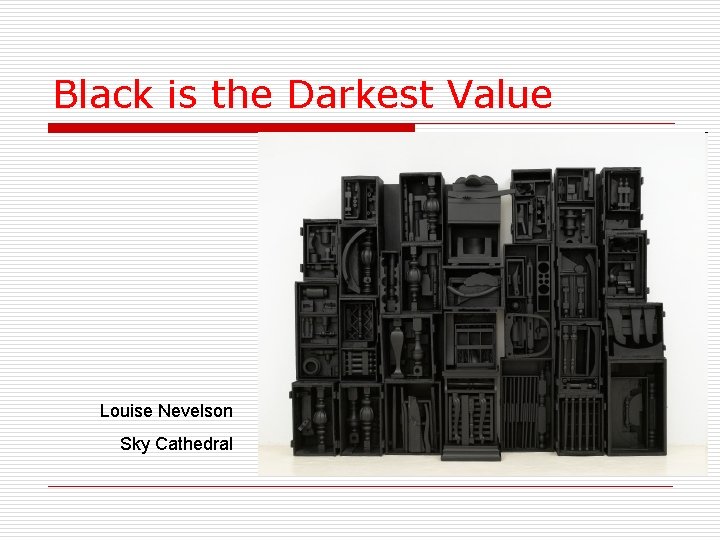
Black is the Darkest Value Louise Nevelson Sky Cathedral
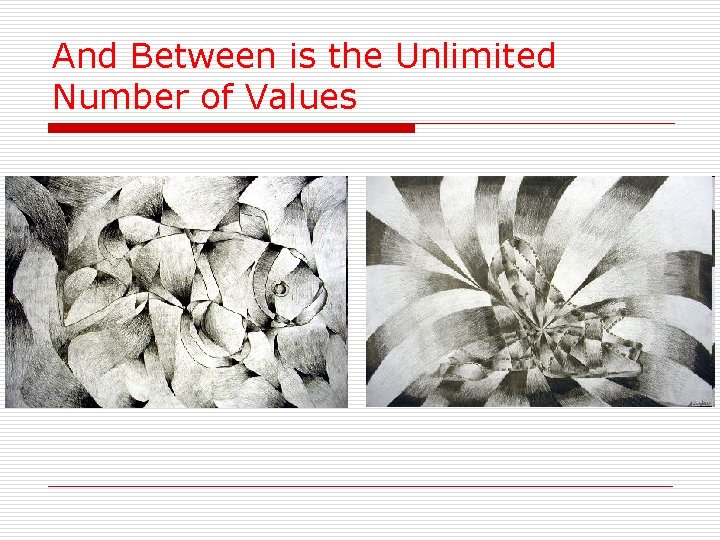
And Between is the Unlimited Number of Values
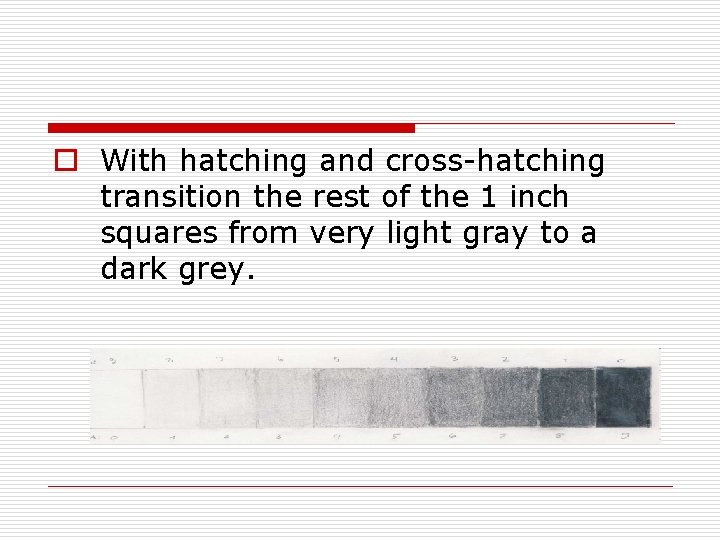
Your Assignment o Is to work with measurements. o Create an even transition from light to dark. o Working each square individually
Start With o A 8 1/2 inch by 11 inch paper. o With your paper horizontal, measure in and down ½ inch from left top corner. Make a mark ½ inch down from top to keep your lines strait. Then make 1 inch squares drawn across the paper. o Divide into 10 1 inch squares
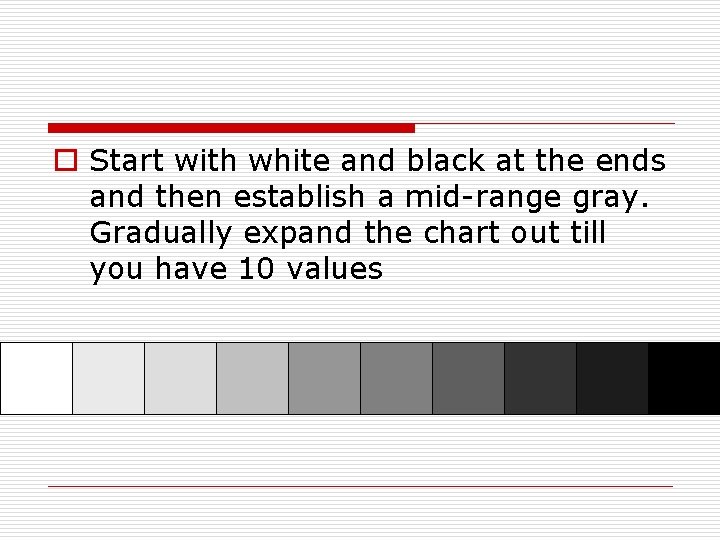
o Start with white and black at the ends and then establish a mid-range gray. Gradually expand the chart out till you have 10 values
o With hatching and cross-hatching transition the rest of the 1 inch squares from very light gray to a dark grey.
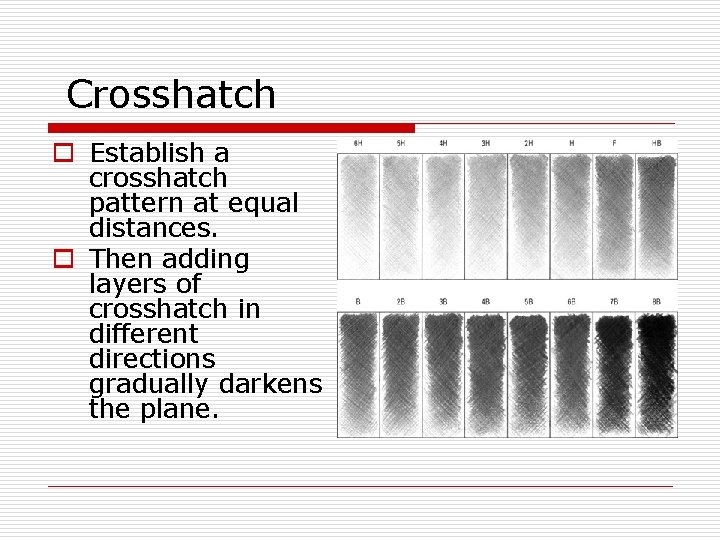
Crosshatch o Establish a crosshatch pattern at equal distances. o Then adding layers of crosshatch in different directions gradually darkens the plane.
o You should have a value chart that shows a range of ten steps from white to black. o Dark grays and blacks should not have a shiny surface. o Application of graphite should be evenly applied.
Review What would you see if there was no light?
No light = Black
With a little light, your white would look (fill in the blank).
Some light = Gray
What is value?
Value is = The Range of Light to Dark
What should you see in a black and white photograph?
Black and white photo You can easily see light gray and white as well as areas of medium gray and black.
The light value is called what?
Adding white = Increasing the tint.
The dark value is called what?
When adding black = You add shade.
What pencil technique should be used when creating your Pencil Value Scale?
Technique when shading = Hatching and crosshatching