
Value Chain Analysis Chapter 5 Strategic Management Value
- Slides: 15
Value Chain Analysis Chapter 5 Strategic Management: Value Creation, Sustainability, and Performance,
Learning Objectives 1. 2. 3. 4. 5. Differences between internal and external analysis. SWOT analysis – benefits & drawbacks. How value is created through internal sets of activities. How the value chain perspective provides insight on sources of competitive advantage. How to perform a value chain analysis.
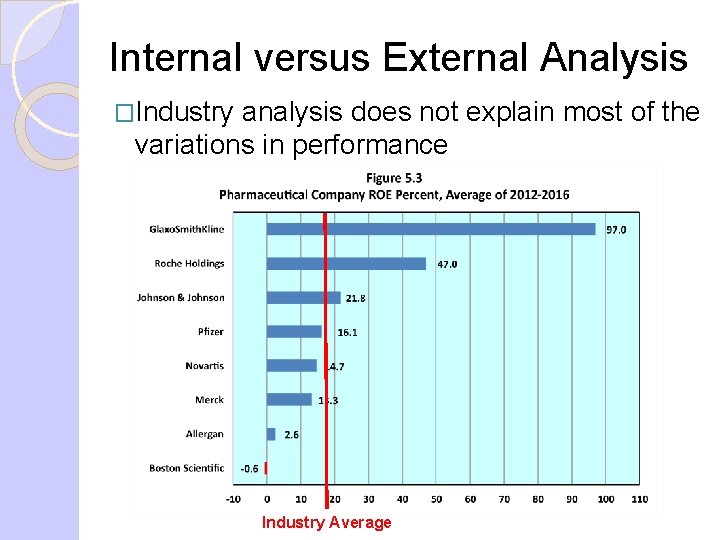
Internal versus External Analysis �Industry analysis does not explain most of the variations in performance Industry Average
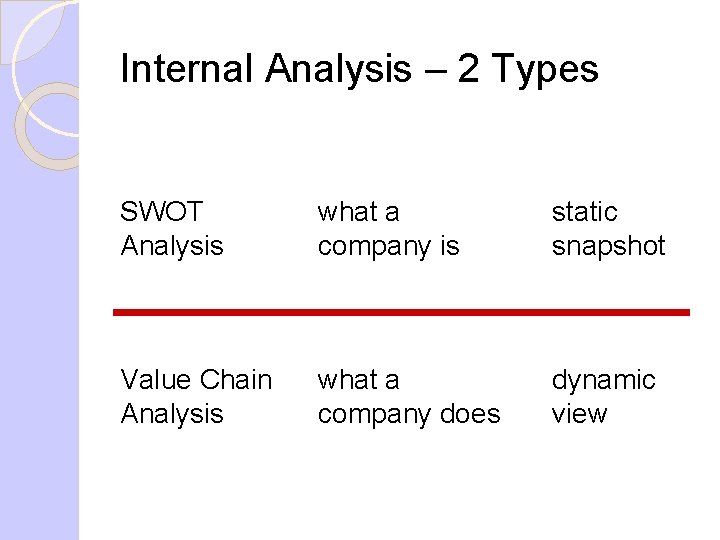
Internal Analysis – 2 Types SWOT Analysis what a company is static snapshot Value Chain Analysis what a company does dynamic view
SWOT Analysis �Very common strategic planning exercise �Easy to understand use �Helps to identify alignment or misalignment § Strengths with emerging Opportunities § Weaknesses with emerging Threats �Suggestive of overall direction �Enables competitive comparison on strength dimensions
SWOT Analysis – Drawbacks �Results in "laundry list" of items �Items descriptions can over-simplify �Definitions can vary in present / over time § Size can be strength, also an inhibitor § Strong CEO can be great, also a risk § New technology can threaten, also present platform for growth �Unclear if strengths are relevant to KSFs �Static view – at a point in time
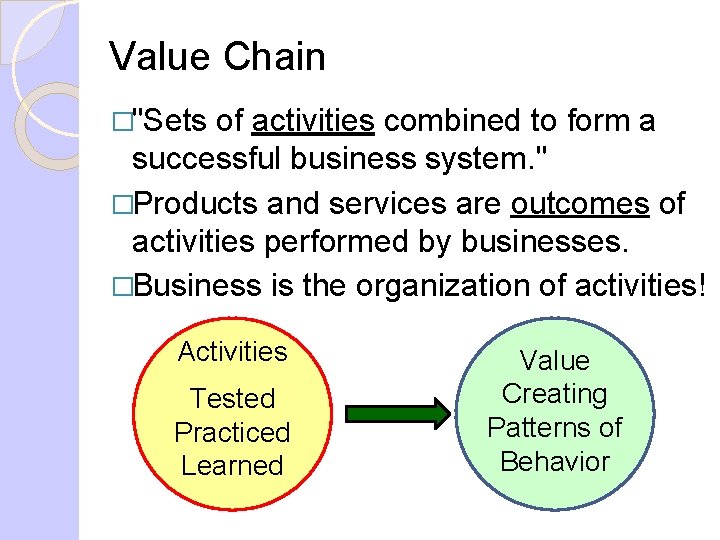
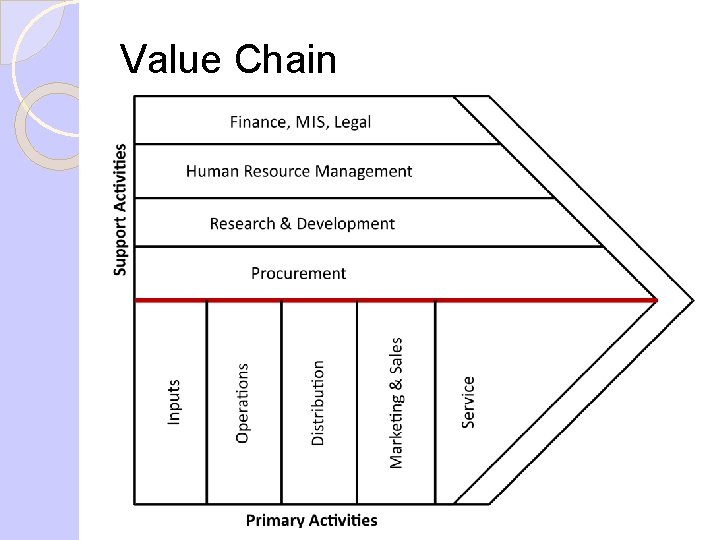
Value Chain �"Sets of activities combined to form a successful business system. " �Products and services are outcomes of activities performed by businesses. �Business is the organization of activities! Activities Tested Practiced Learned Value Creating Patterns of Behavior
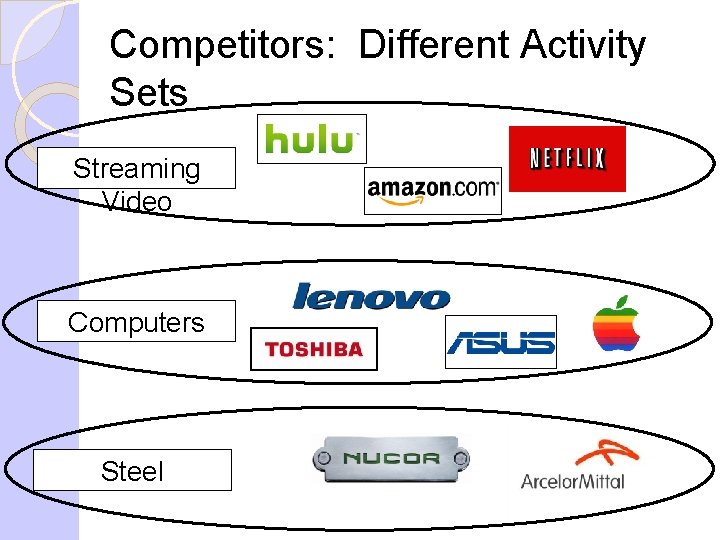
Competitors: Different Activity Sets Streaming Video Computers Steel
Value Chain
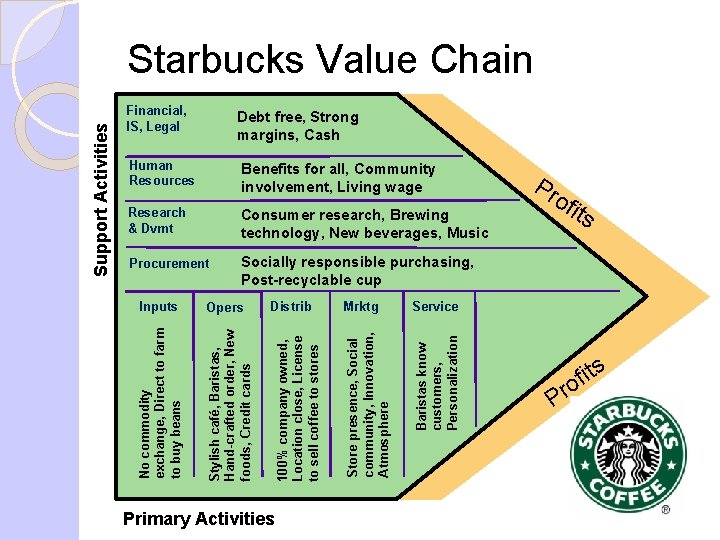
Financial, IS, Legal Debt free, Strong margins, Cash Consumer research, Brewing technology, New beverages, Music Procurement Socially responsible purchasing, Post-recyclable cup Opers Distrib 100% company owned, Location close, License to sell coffee to stores Inputs Primary Activities Mrktg Service Baristas know customers, Personalization Research & Dvmt Store presence, Social community, Innovation, Atmosphere Benefits for all, Community involvement, Living wage Stylish café, Baristas, Hand-crafted order, New foods, Credit cards Human Resources No commodity exchange, Direct to farm to buy beans Support Activities Starbucks Value Chain Pr ofi ts Pr ts i f o
Internal Value Chain Dimensions �Activities in every cell �Both primary and support activities �Identify specific activities, not general categories § "Brewing technology" versus "R&D" �Identify how coordination across value chain cells supports and amplifies activities �Identify how connections with suppliers and customers create value
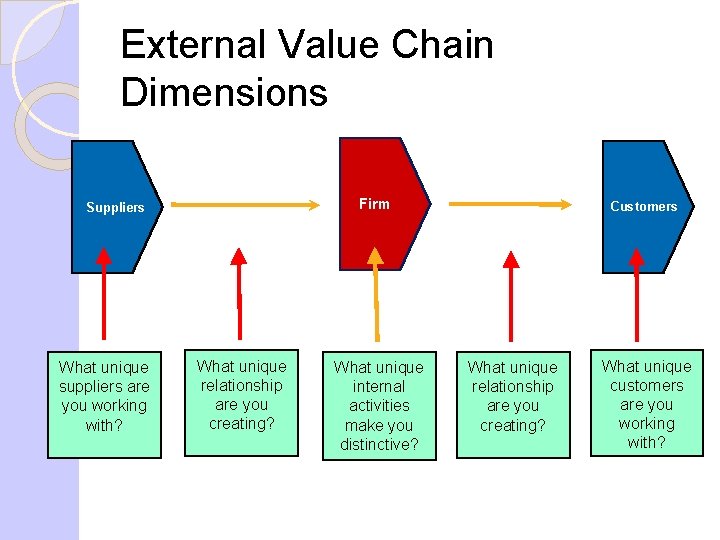
External Value Chain Dimensions Firm Suppliers What unique suppliers are you working with? What unique relationship are you creating? What unique internal activities make you distinctive? Customers What unique relationship are you creating? What unique customers are you working with?
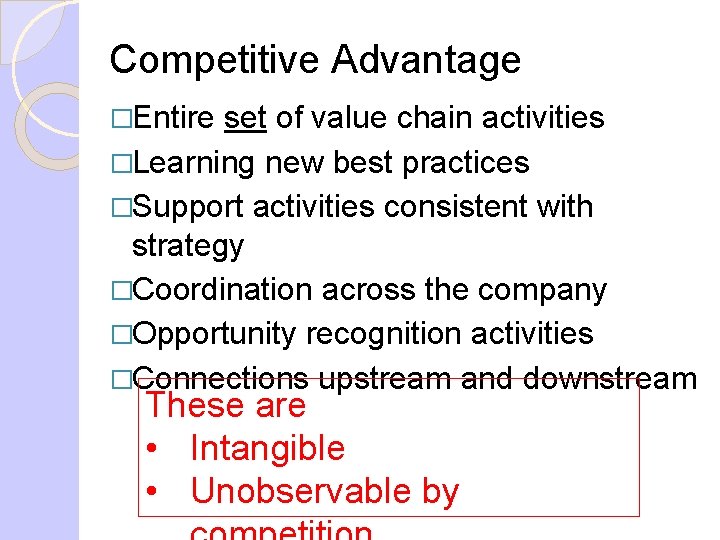
Competitive Advantage �Entire set of value chain activities �Learning new best practices �Support activities consistent with strategy �Coordination across the company �Opportunity recognition activities �Connections upstream and downstream These are • Intangible • Unobservable by
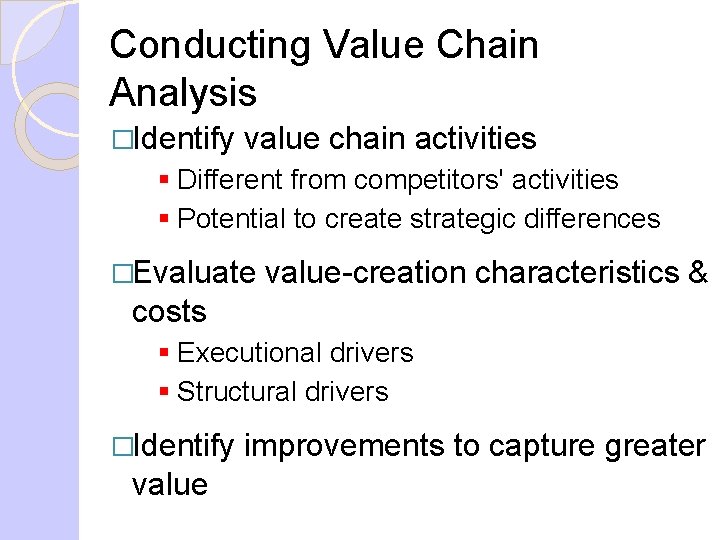
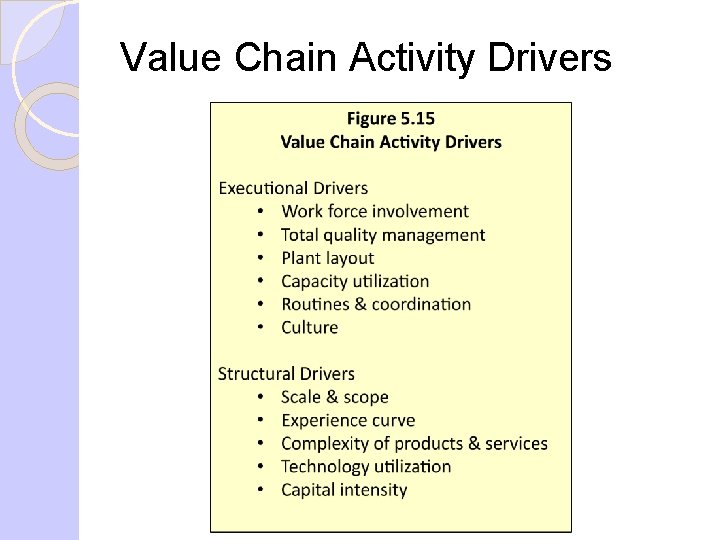
Conducting Value Chain Analysis �Identify value chain activities § Different from competitors' activities § Potential to create strategic differences �Evaluate value-creation characteristics & costs § Executional drivers § Structural drivers �Identify value improvements to capture greater
Value Chain Activity Drivers