
VALUE ASSESSMENT OF ORPHAN DRUGS FOR RARE DISEASES


- Slides: 29
VALUE ASSESSMENT OF ORPHAN DRUGS FOR RARE DISEASES Prof. dr. Steven Simoens
Value assessment frameworks: HTA
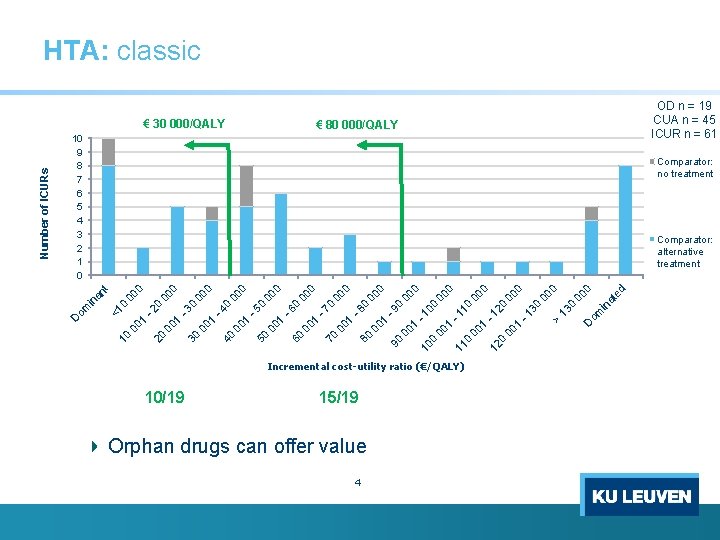
HTA: classic Because of high prices and difficulties in demonstrating effectiveness in small patient populations, orphan drugs are often perceived as not able to meet traditional cost-effectiveness threshold. A quantitative analysis was conducted of cost-utility analyses of orphan drugs included in the Tufts Medical Center Cost. Effectiveness Analysis Registry and Embase. 3 Picavet et al. What is known about the cost-effectiveness of orphan drugs? Evidence from cost-utility analyses. Journal of Clinical Pharmacy and Therapeutics 2015, vol. 40, no. 3, p. 304 -307.
<1 10 0 01 0 - 20 20 0 0 00 01 - 30 30 0 0 00 01 - 40 40 0 0 00 01 - 50 50 0 0 00 01 - 60 60 0 0 00 01 - 70 70 0 0 00 01 - 80 80 0 0 00 01 - 90 90 0 0 01 00 - 10 10 0 0 00 00 1 0 - 1 11 10 0 0 00 00 1 - 1 12 20 0 0 00 00 1 - 1 30 0 00 > 13 0 00 0 D om in at ed an t in om D Number of ICURs HTA: classic € 30 000/QALY 10 9 8 7 6 5 4 3 2 1 0 10/19 € 80 000/QALY Incremental cost-utility ratio (€/QALY) 15/19 Orphan drugs can offer value 4 OD n = 19 CUA n = 45 ICUR n = 61 Comparator: no treatment Comparator: alternative treatment
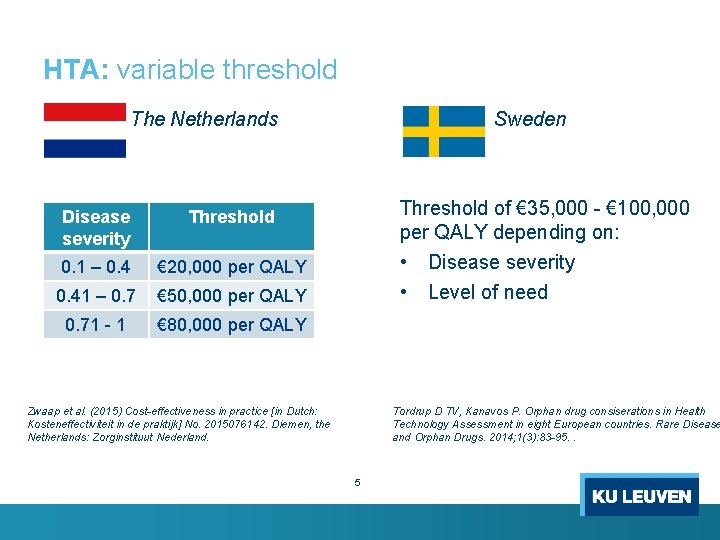
HTA: variable threshold The Netherlands Disease severity Threshold 0. 1 – 0. 4 € 20, 000 per QALY 0. 41 – 0. 7 € 50, 000 per QALY 0. 71 - 1 € 80, 000 per QALY Sweden Threshold of € 35, 000 - € 100, 000 per QALY depending on: • Disease severity • Level of need Zwaap et al. (2015) Cost-effectiveness in practice [in Dutch: Kosteneffectiviteit in de praktijk] No. 2015076142. Diemen, the Netherlands: Zorginstituut Nederland. Tordrup D TV, Kanavos P. Orphan drug consiserations in Health Technology Assessment in eight European countries. Rare Disease and Orphan Drugs. 2014; 1(3): 83 -95. . 5
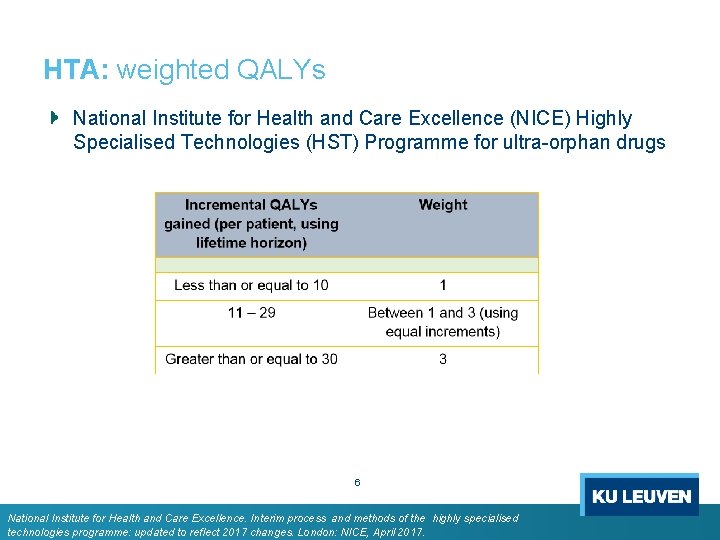
HTA: weighted QALYs National Institute for Health and Care Excellence (NICE) Highly Specialised Technologies (HST) Programme for ultra-orphan drugs 6 National Institute for Health and Care Excellence. Interim process and methods of the highly specialised technologies programme: updated to reflect 2017 changes. London: NICE, April 2017.
Value assessment frameworks: Multi-criteria decision analysis
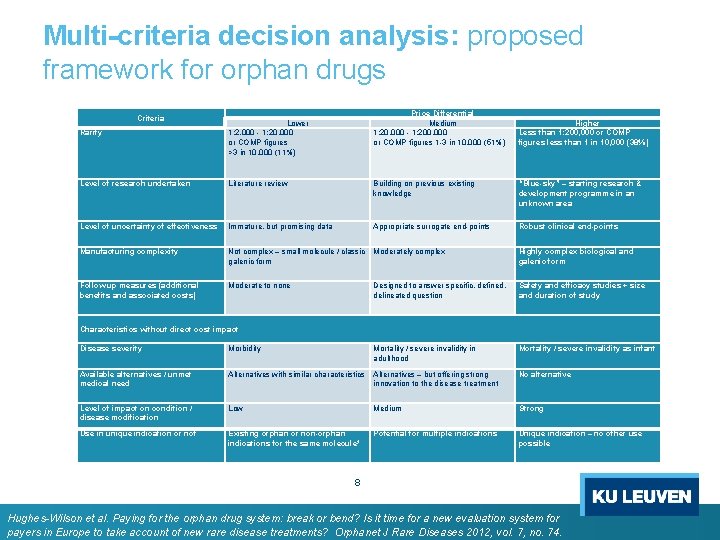
Multi-criteria decision analysis: proposed framework for orphan drugs Criteria Rarity Price Differential Medium 1: 20, 000 - 1: 200, 000 or COMP figures 1 -3 in 10, 000 (51%) Lower 1: 2, 000 - 1: 20, 000 or COMP figures >3 in 10, 000 (11%) Higher Less than 1: 200, 000 or COMP figures less than 1 in 10, 000 (38%) Level of research undertaken Literature review Building on previous existing knowledge “Blue-sky” – starting research & development programme in an unknown area Level of uncertainty of effectiveness Immature, but promising data Appropriate surrogate end-points Robust clinical end-points Manufacturing complexity Not complex – small molecule / classic Moderately complex galenic form Highly complex biological and galenic form Follow up measures (additional benefits and associated costs) Moderate to none Designed to answer specific, defined, delineated question Safety and efficacy studies + size and duration of study Mortality / severe invalidity in adulthood Mortality / severe invalidity as infant Characteristics without direct cost impact Disease severity Morbidity Available alternatives / unmet medical need Alternatives with similar characteristics Alternatives – but offering strong innovation to the disease treatment No alternative Level of impact on condition / disease modification Low Medium Strong Use in unique indication or not Existing orphan or non-orphan indications for the same molecule* Potential for multiple indications Unique indication – no other use possible 8 Hughes-Wilson et al. Paying for the orphan drug system: break or bend? Is it time for a new evaluation system for payers in Europe to take account of new rare disease treatments? Orphanet J Rare Diseases 2012, vol. 7, no. 74.
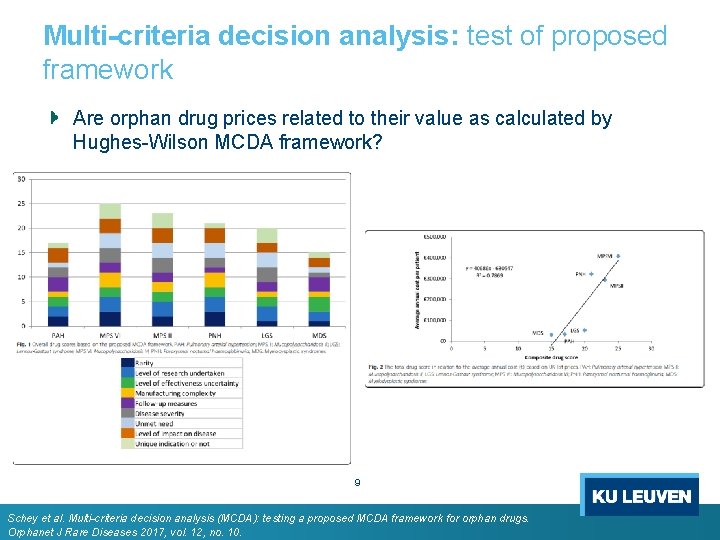
Multi-criteria decision analysis: test of proposed framework Are orphan drug prices related to their value as calculated by Hughes-Wilson MCDA framework? 9 Schey et al. Multi-criteria decision analysis (MCDA): testing a proposed MCDA framework for orphan drugs. Orphanet J Rare Diseases 2017, vol. 12, no. 10.
Multi-criteria decision analysis: discrete choice experiment Aims: To identify what patients affected by rare disease and their caregivers consider ‘of value’ in new orphan drugs and to quantify their benefit-risk preferences. Methods: Discrete choice experiment in sample of 721 patients and 152 informal caregivers, covering 52 rare diseases, in the UK. 10 Morel et al. Quantifying benefit-risk preferences for new medicines in rare disease patients and caregivers. Orphanet Journal of Rare Diseases 2016, vol. 11, no. 70.
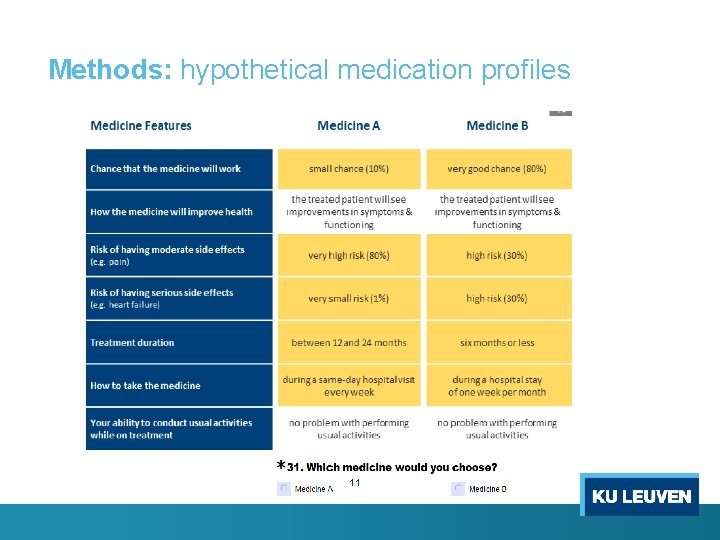
Methods: hypothetical medication profiles 11
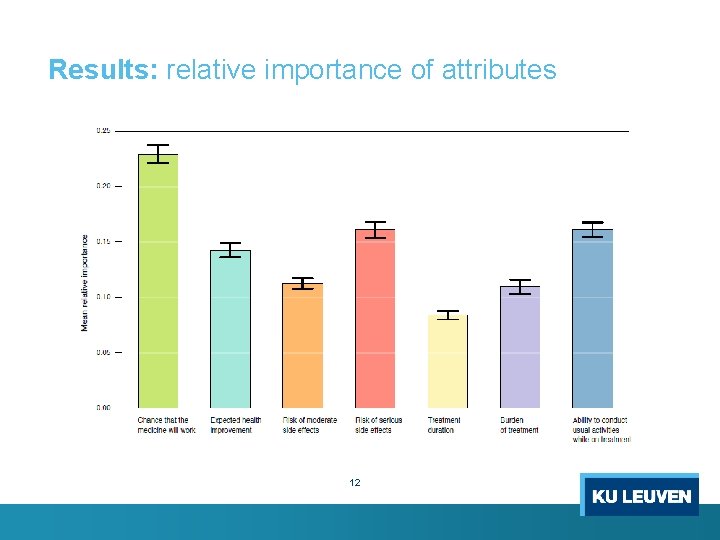
Results: relative importance of attributes 12
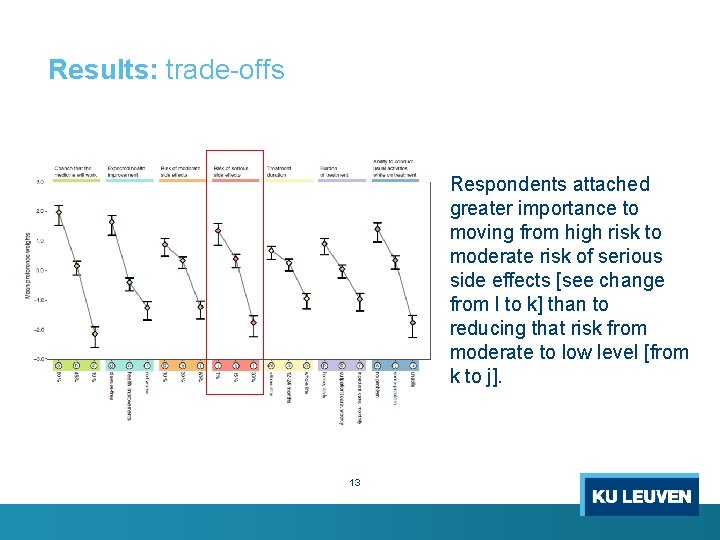
Results: trade-offs Respondents attached greater importance to moving from high risk to moderate risk of serious side effects [see change from l to k] than to reducing that risk from moderate to low level [from k to j]. 13
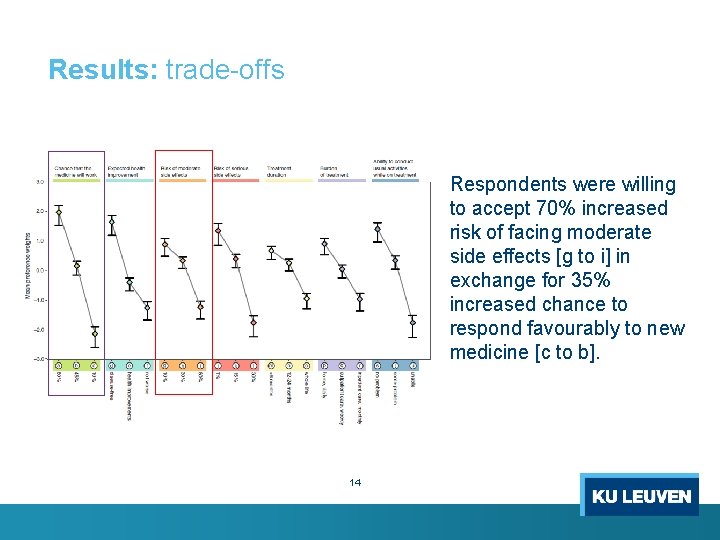
Results: trade-offs Respondents were willing to accept 70% increased risk of facing moderate side effects [g to i] in exchange for 35% increased chance to respond favourably to new medicine [c to b]. 14
Results Patients and caregivers gave most importance to: Drug response Risk of serious side effects Ability to conduct usual activities while on treatment Patients and caregivers were prepared to trade off significant amount of risk associated with new drug for higher chance of drug response, or greater health improvement potential. 15
Value assessment frameworks: Managed entry agreements
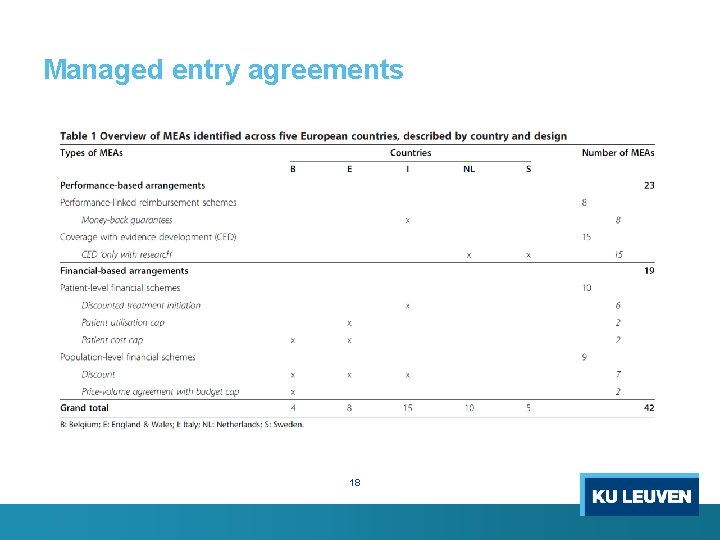
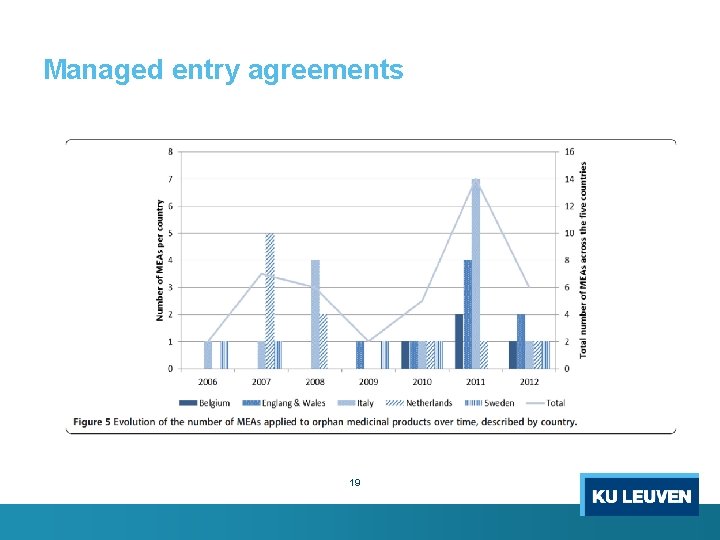
Managed entry agreements Background: Payers increasingly look into managed entry agreements to balance need to provide rapid access to potentially beneficial orphan drugs with requirements to circumscribe uncertainty, obtain best value for money or ensure affordability. This study analysed managed entry agreements applied to orphan drugs in selected countries. 17 Morel et al. Reconciling uncertainty of costs and outcomes with the need for access to orphan medicinal products: a comparative study of MEAs across seven European countries. Orphanet J Rare Diseases 2013, vol. 8, no. 198.
Managed entry agreements 18
Managed entry agreements 19
Value assessment frameworks: Practice
Value assessment of orphan drugs: England/Wales National Institute for Health and Care Excellence (NICE) Highly Specialised Technologies (HST) Programme for ultra-orphan drugs Cost-effectiveness threshold: £ 100, 000 per (weighted) QALY Annual budget impact ceiling: £ 20 million MCDA: Nature of condition Clinical effectiveness Cost-effectiveness Impact of technology beyond direct health benefits Managed entry agreement 21 National Institute for Health and Care Excellence. Interim process and methods of the highly specialised technologies programme: updated to reflect 2017 changes. London: NICE, April 2017.
Value assessment of orphan drugs: Scotland Scottish Medicines Consortium (SMC) assessment based on conventional economic evaluation Patient And Clinical Engagement (PACE) meeting Alternative market access instruments in case of SMC rejection Individual Patient Treatment Request (IPTR) application Peer Approved Clinical System (PACS) application Patient Access Scheme (PAS): scheme proposed by company to improve value for money of drug New Medicines Fund: to fund orphan drugs recommended by SMC or accessed via IPTR/PACS 22 Review of Access to New Medicines. Independent review by Dr Brian Montgomery. December 2016.
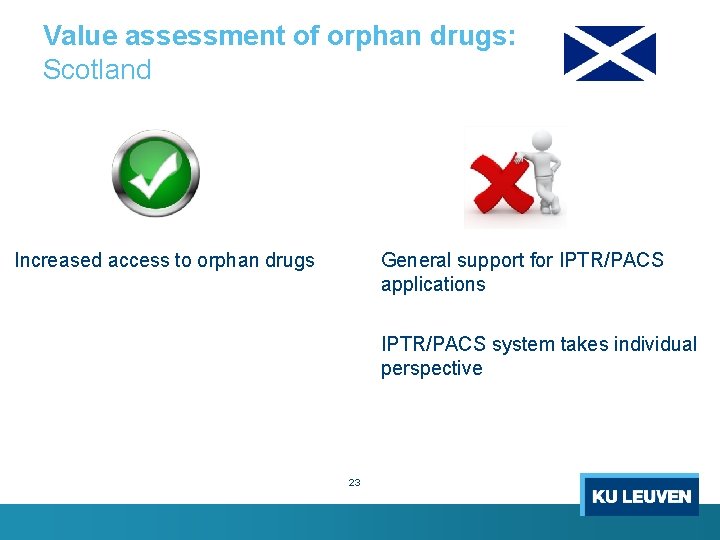
Value assessment of orphan drugs: Scotland Increased access to orphan drugs General support for IPTR/PACS applications IPTR/PACS system takes individual perspective 23
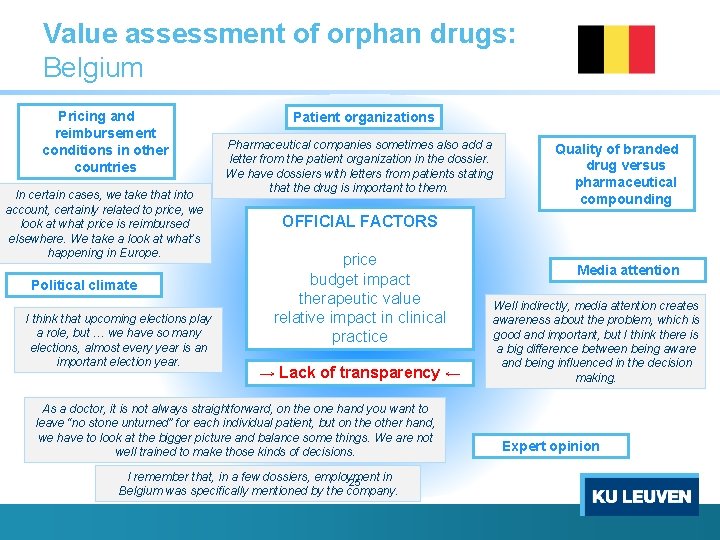
Value assessment of orphan drugs: Belgium Most orphan drugs do not meet classic HTA standards of value. Yet, most orphan drugs are reimbursed, which implies that other factors are taken into account at time of reimbursement. Potential factors were identified by means of interviews with Belgian Drug Reimbursement Committee and analysis of reimbursement dossiers of all orphan drugs (n = 64) submitted between 01/2002 and 07/2013. 24 Picavet et al. Reimbursement of orphan drugs in Belgium: what (else) matters? Orphanet Journal of Rare Diseases 2014, vol. 9, no. 139.
Value assessment of orphan drugs: Belgium Pricing and reimbursement conditions in other countries In certain cases, we take that into account, certainly related to price, we look at what price is reimbursed elsewhere. We take a look at what’s happening in Europe. Political climate I think that upcoming elections play a role, but … we have so many elections, almost every year is an Ethical arguments important election year. Patient organizations Pharmaceutical companies sometimes also add a letter from the patient organization in the dossier. We have dossiers with letters from patients stating that the drug is important to them. Quality of branded drug versus pharmaceutical compounding OFFICIAL FACTORS price budget impact therapeutic value relative impact in clinical practice → Lack of transparency ← As a doctor, it is not always straightforward, on the one hand you want to leave “no stone unturned” for each individual patient, but on the other hand, we have to look at the bigger picture and balance some things. We are not Economic importance well trained to make those kinds of decisions. I remember that, in a few dossiers, employment in 25 Belgium was specifically mentioned by the company. Media attention Well indirectly, media attention creates awareness about the problem, which is good and important, but I think there is a big difference between being aware Innovative character and being influenced in the decision making. Expert opinion
Value assessment frameworks: Conclusions
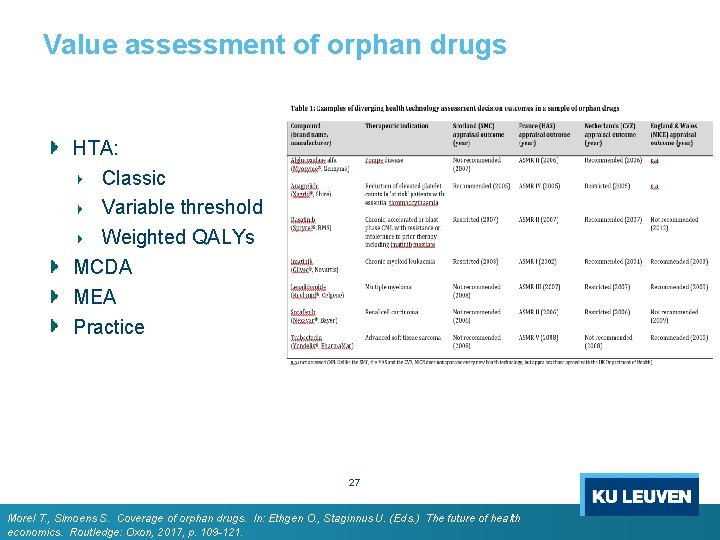
Value assessment of orphan drugs HTA: Classic Variable threshold Weighted QALYs MCDA MEA Practice 27 Morel T. , Simoens S. Coverage of orphan drugs. In: Ethgen O. , Staginnus U. (Eds. ) The future of health economics. Routledge: Oxon, 2017, p. 109 -121.
Contact Steven Simoens KU Leuven 016/32. 34. 65. steven. simoens@kuleuven. be 28
QUESTIONS