
Value added of regional and global indicator frameworks

Value added of regional and global indicator frameworks as compared to national frameworks in the context of violence, crime, access to justice, and corruption Angela Me Chief Research and Trend Analysis Branch UNODC
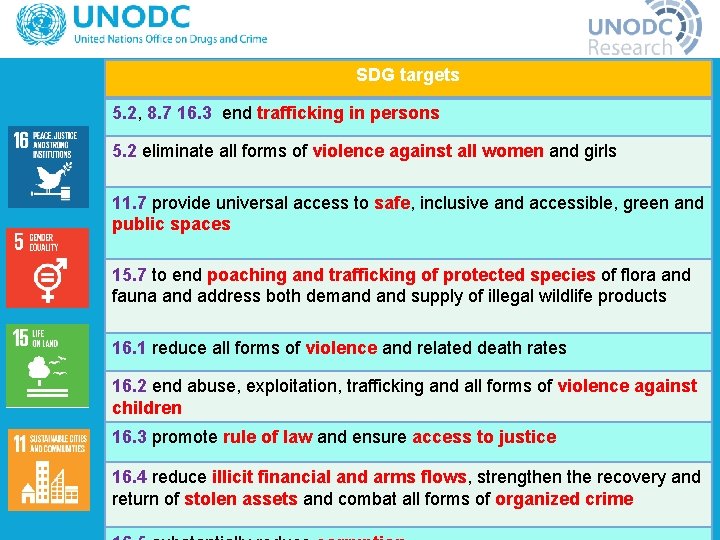
SDG targets 5. 2, 8. 7 16. 3 end trafficking in persons 5. 2 eliminate all forms of violence against all women and girls 11. 7 provide universal access to safe, inclusive and accessible, green and public spaces 15. 7 to end poaching and trafficking of protected species of flora and fauna and address both demand supply of illegal wildlife products 16. 1 reduce all forms of violence and related death rates 16. 2 end abuse, exploitation, trafficking and all forms of violence against children 16. 3 promote rule of law and ensure access to justice 16. 4 reduce illicit financial and arms flows, strengthen the recovery and return of stolen assets and combat all forms of organized crime

National indicator s Regiona l indicato rs Global indicator s to trigger national actions to trigger regional actions to trigger global actions Any value at national level?
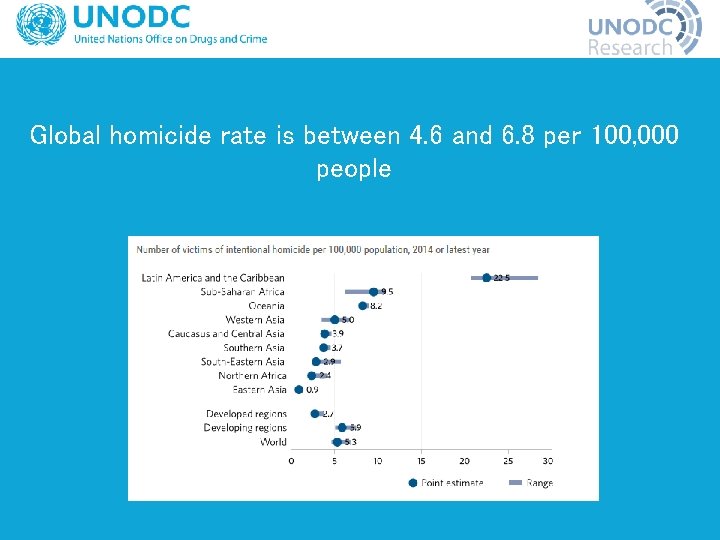
Global homicide rate is between 4. 6 and 6. 8 per 100, 000 people
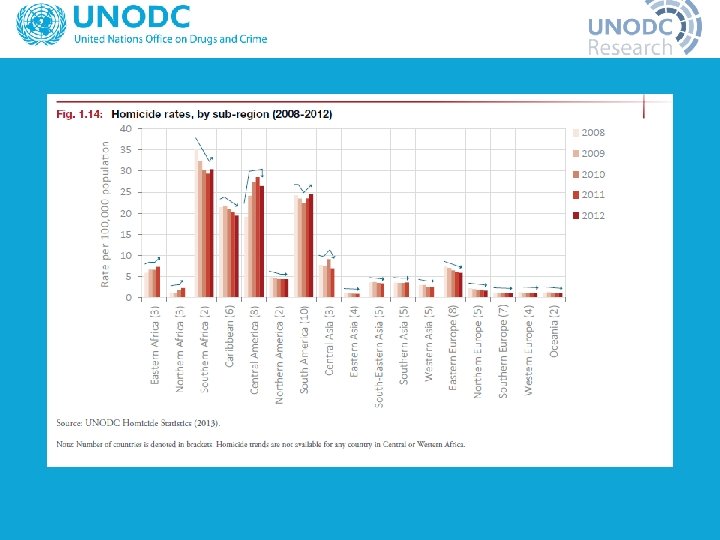
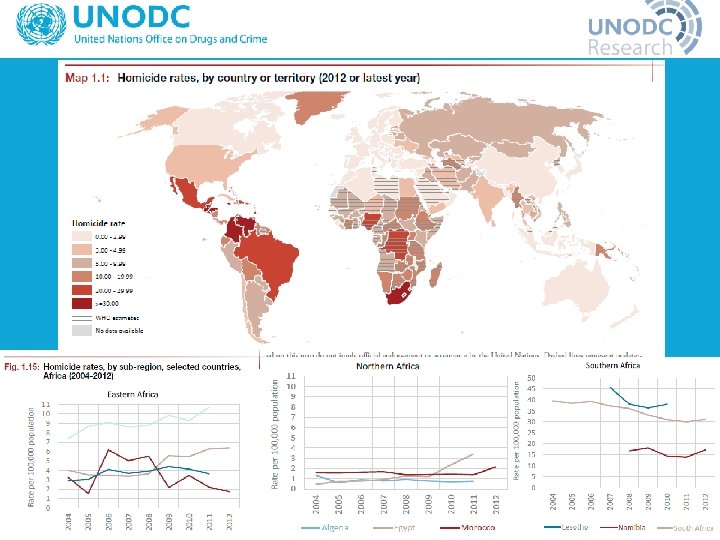
Global monitoring as aggregation of national data Useful if data can be compared across countries Requirements: comparability, quality, coverage Role of global monitoring is ONLY to add up national data ensuring that they are comparable and of good quality
This is true for violence, access to justice, corruption, phenomena that evolves at national level But more is needed for issues such as trafficking in persons, trafficking of firearms, wildlife trafficking, and illicit financial flows
Difficult to measure because they relate to hidden phenomena Transnational nature of the problem The problem evolves in different geographical areas The problem can not be understood in national isolation
In order to be properly understood, these problems require a global analysis, beyond just a collation of national data
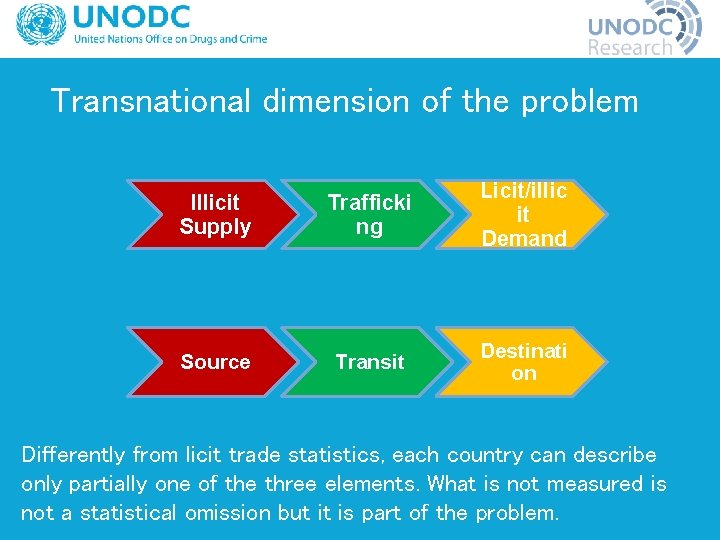
Transnational dimension of the problem Illicit Supply Trafficki ng Licit/illic it Demand Source Transit Destinati on Differently from licit trade statistics, each country can describe only partially one of the three elements. What is not measured is not a statistical omission but it is part of the problem.
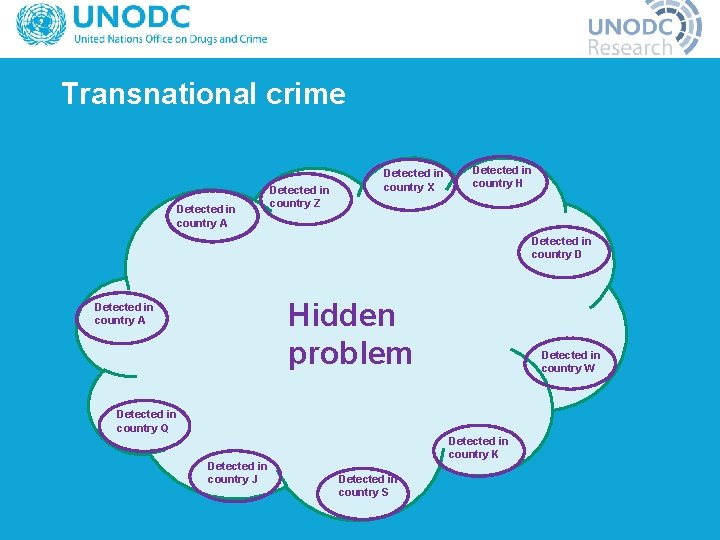
Transnational crime Detected in country A Detected in country Z Detected in country X Detected in country H Detected in country D Hidden problem Detected in country A Detected in country W Detected in country Q Detected in country J Detected in country K Detected in country S
Measuring the cloud • Connect the dots to describe everything that comes to surface (examples: wildlife, illicit financial flows, trafficking in persons) – Helps to partially overcome data gaps • Define statistical methodology to describe the hidden part (trafficking in persons)
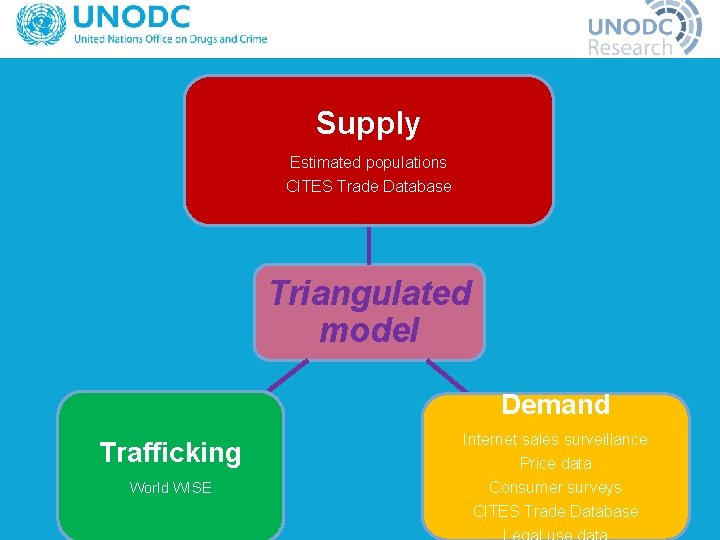
Supply Estimated populations CITES Trade Database Triangulated model Demand Trafficking World WISE Internet sales surveillance Price data Consumer surveys CITES Trade Database
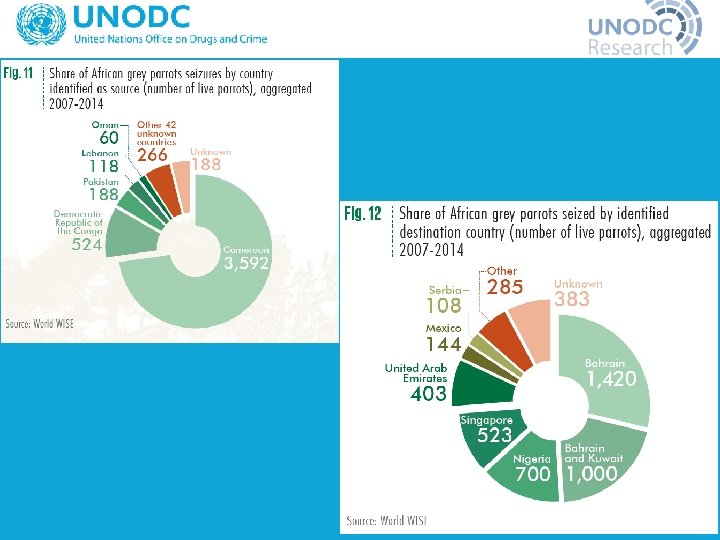
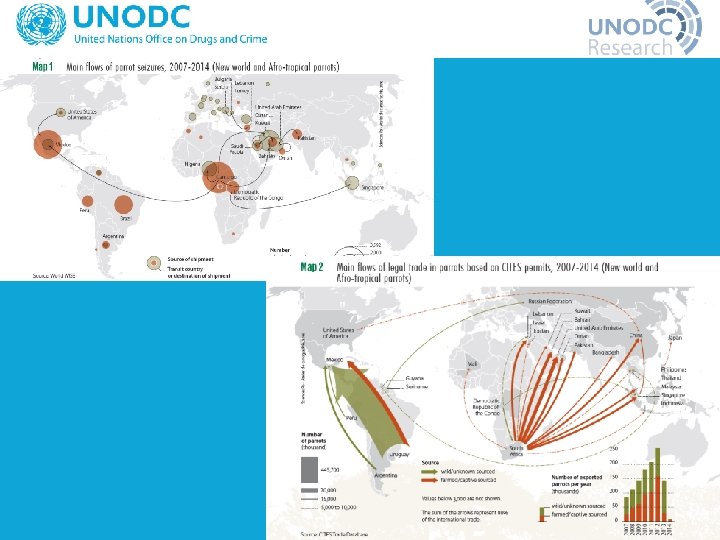
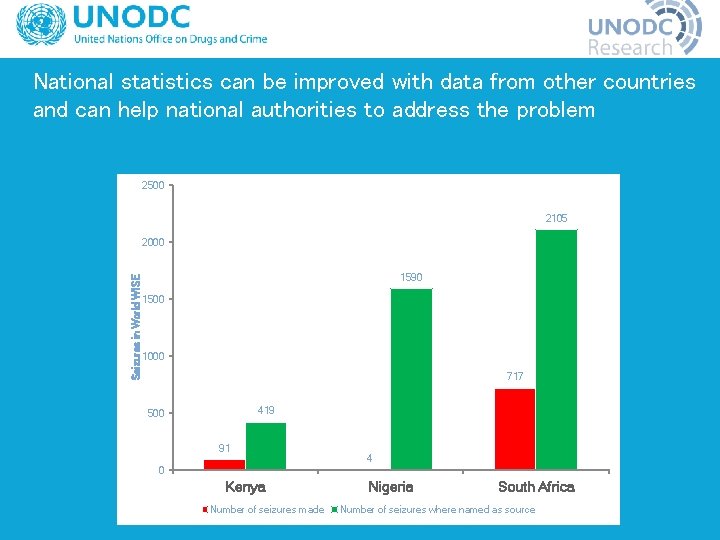
National statistics can be improved with data from other countries and can help national authorities to address the problem 2500 2105 Seizures in World WISE 2000 1590 1500 1000 717 419 500 91 4 0 Kenya Number of seizures made Nigeria South Africa Number of seizures where named as source
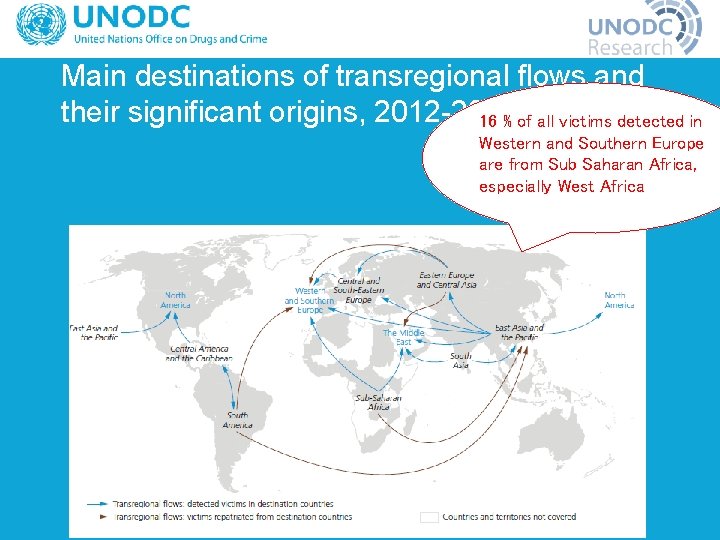
Main destinations of transregional flows and their significant origins, 2012 -2014 16 % of all victims detected in Western and Southern Europe are from Sub Saharan Africa, especially West Africa
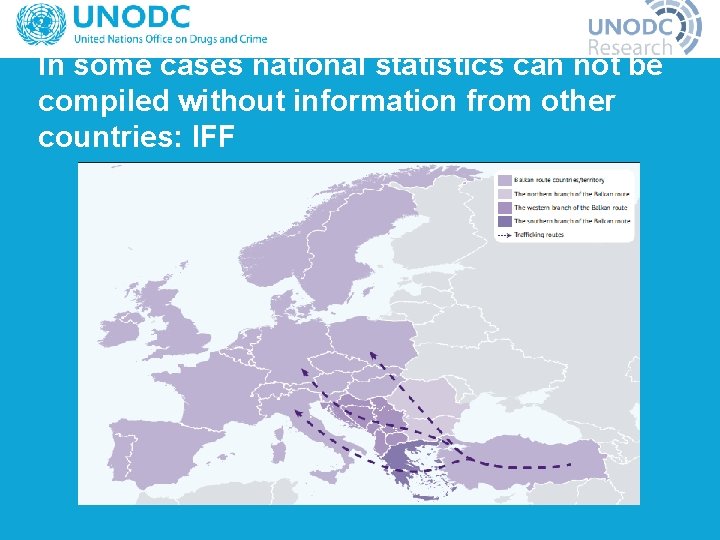
In some cases national statistics can not be compiled without information from other countries: IFF
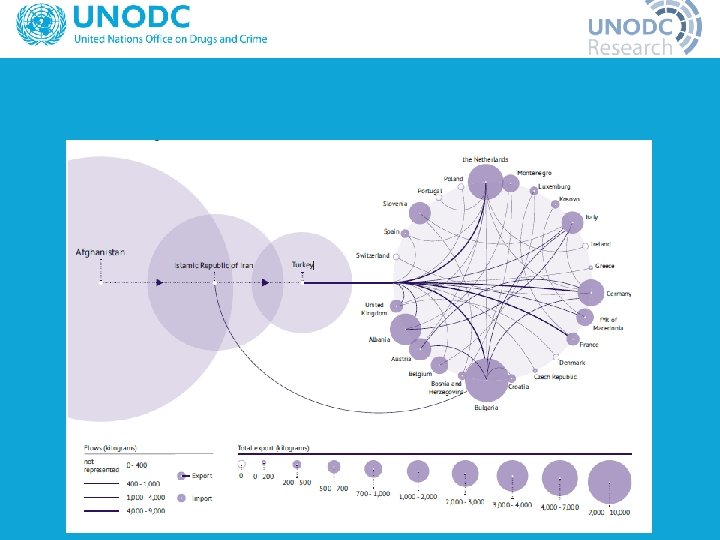
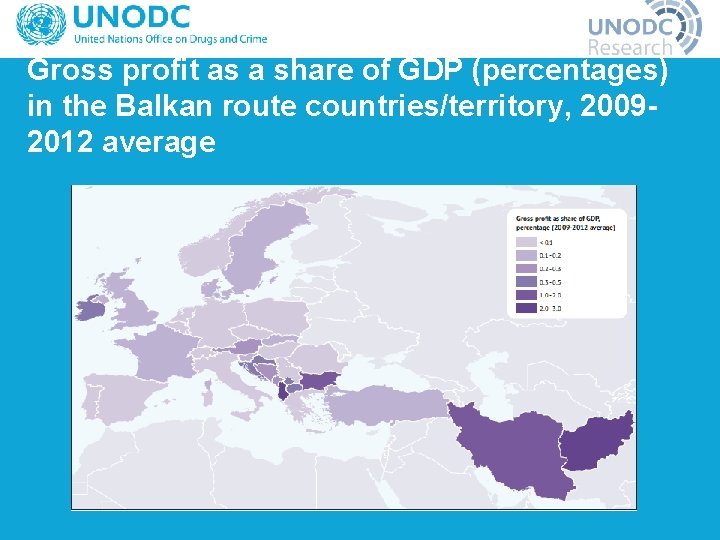
Gross profit as a share of GDP (percentages) in the Balkan route countries/territory, 20092012 average
Innovative ways to estimate the hidden number of human trafficking victims Multiple Systems Estimate (MSE) • Based on at least 2 -3 lists of detected and recorded victims • Kind of capture/recapture methodology • In the pilot phase: in the Netherlands ten times Network-scale approach • Population-based surveys • More suited for “origin” countries • In the design phase
Conclusions • Need for regional and global data exchange • From national data to regional and global analysis • The role of NSOs: – Ensure quality – Coordinate different data providers (police, ministries of justice, NGO (Ti. P victims), boarder control agencies) – Test new survey and other estimation methodods
Thank you for your attention
- Slides: 24