
Valuation of Shares 1 A company may issue
- Slides: 39
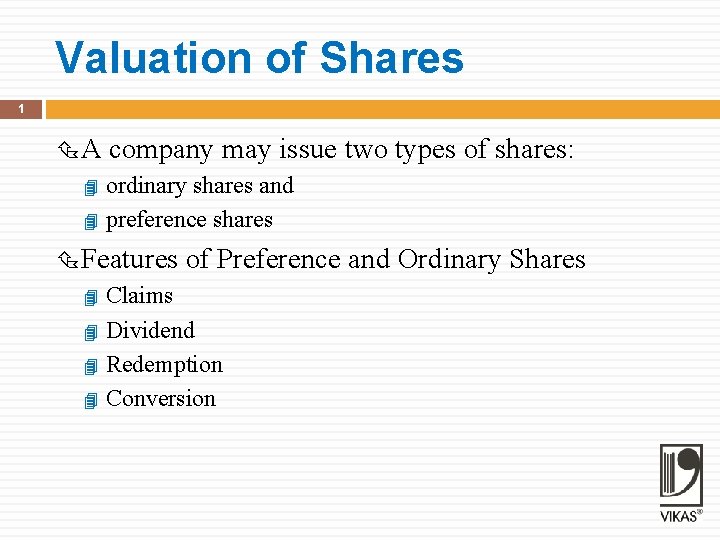
Valuation of Shares 1 A company may issue two types of shares: ordinary shares and preference shares Features of Preference Claims Dividend Redemption Conversion and Ordinary Shares
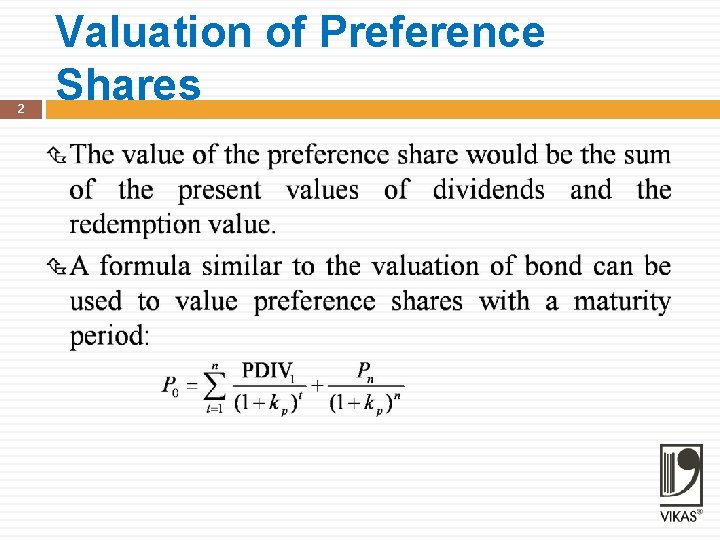
2 Valuation of Preference Shares
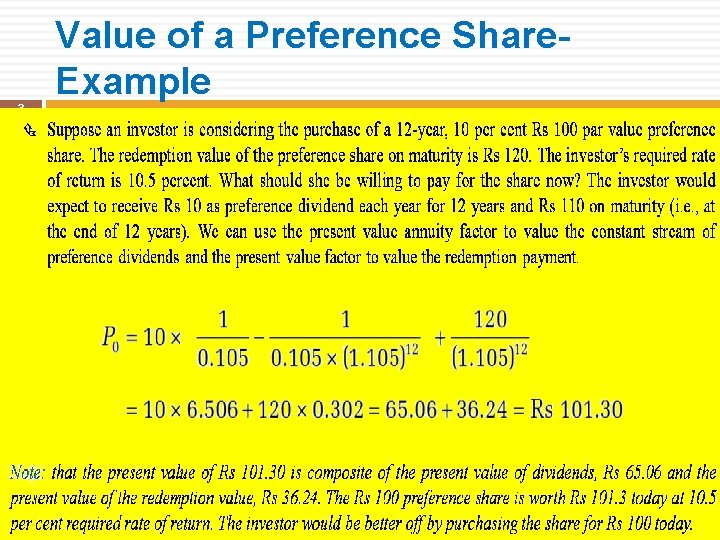
Value of a Preference Share. Example 3
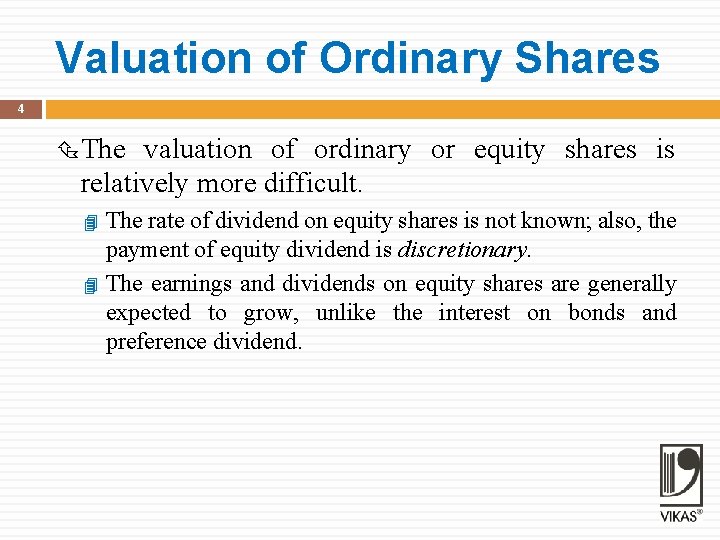
Valuation of Ordinary Shares 4 The valuation of ordinary or equity shares is relatively more difficult. The rate of dividend on equity shares is not known; also, the payment of equity dividend is discretionary. The earnings and dividends on equity shares are generally expected to grow, unlike the interest on bonds and preference dividend.
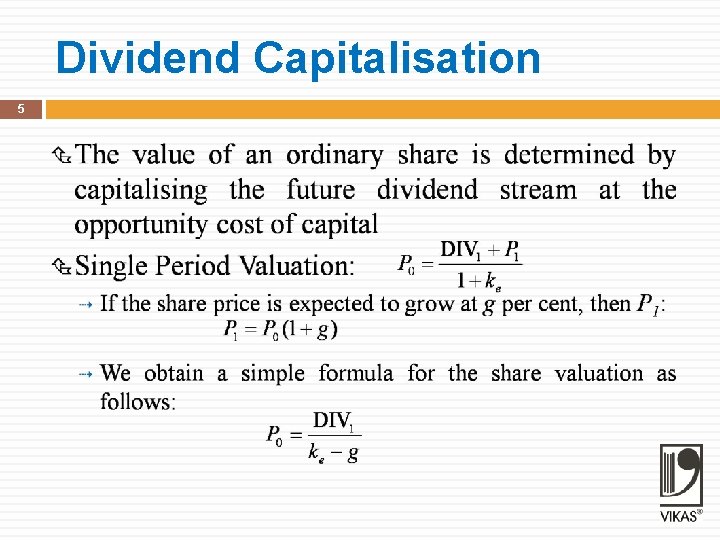
Dividend Capitalisation 5
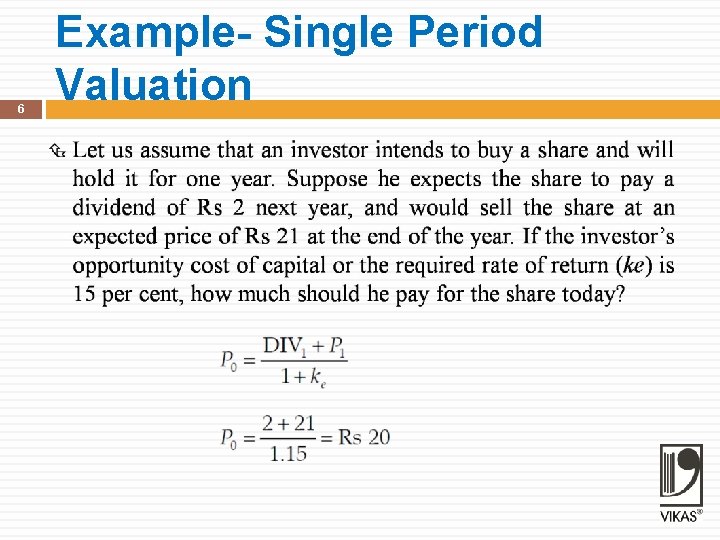
6 Example- Single Period Valuation
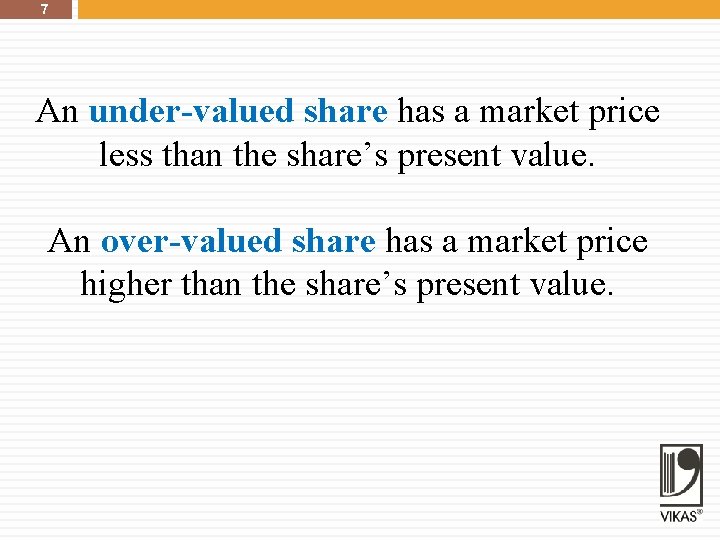
7 An under-valued share has a market price less than the share’s present value. An over-valued share has a market price higher than the share’s present value.
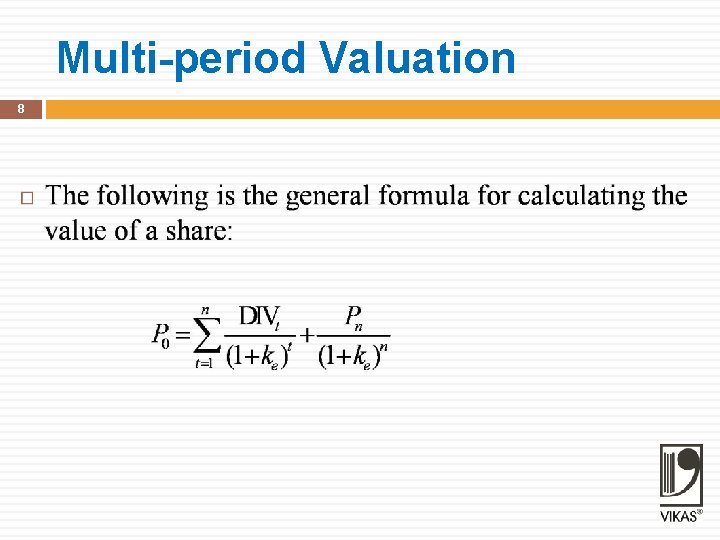
Multi-period Valuation 8
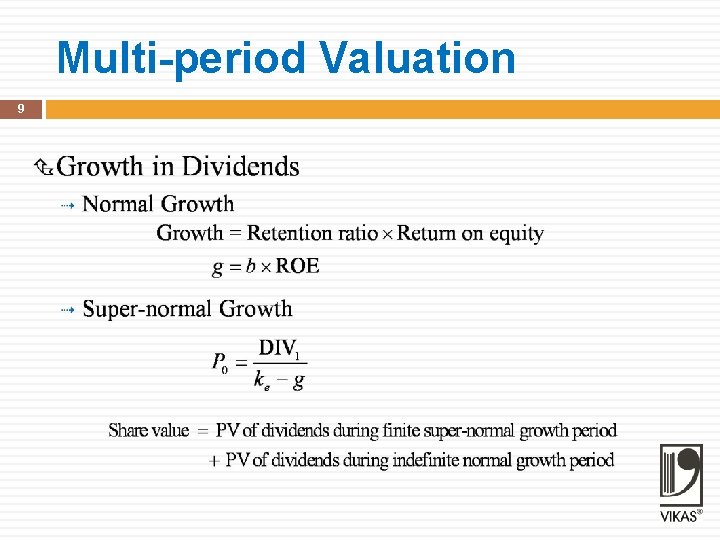
Multi-period Valuation 9
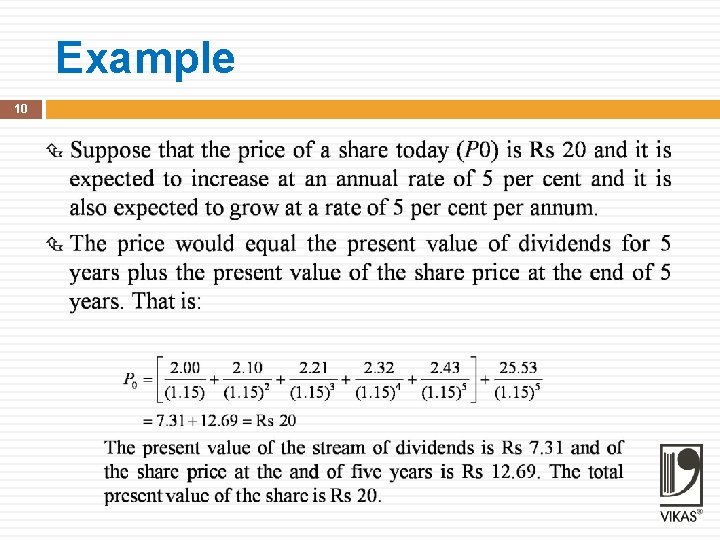
Example 10
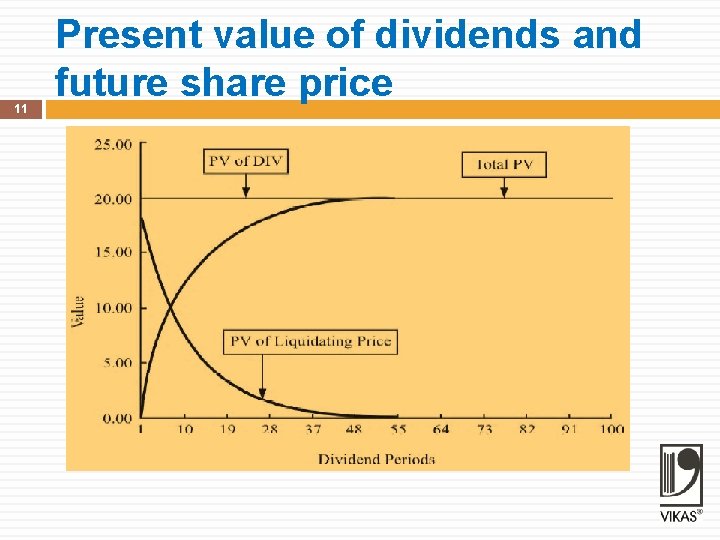
11 Present value of dividends and future share price
Growth in Dividends 12 Earnings and dividends of most companies grow over time, at least, because of their retention policies.
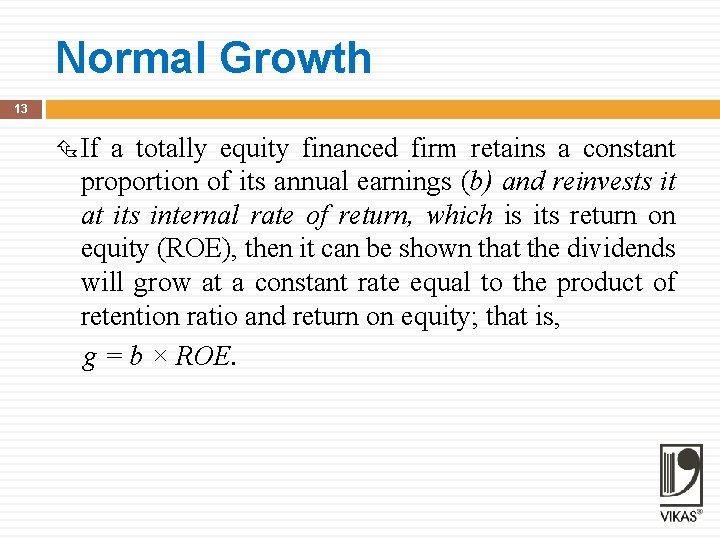
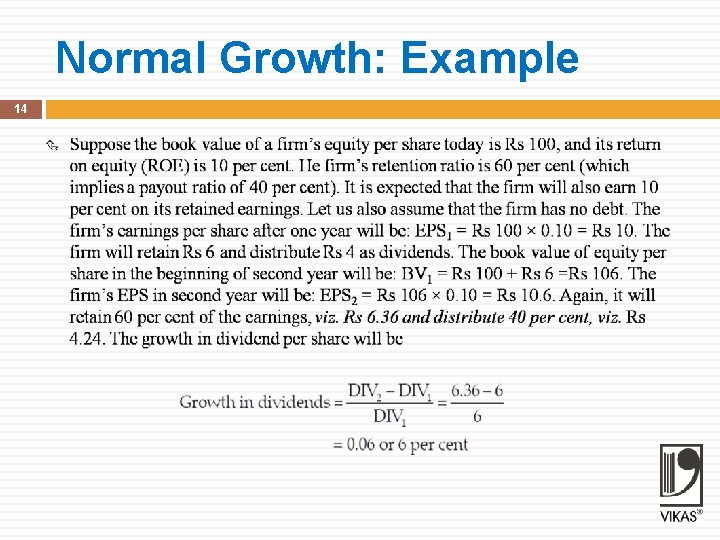
Normal Growth 13 If a totally equity financed firm retains a constant proportion of its annual earnings (b) and reinvests it at its internal rate of return, which is its return on equity (ROE), then it can be shown that the dividends will grow at a constant rate equal to the product of retention ratio and return on equity; that is, g = b × ROE.
Normal Growth: Example 14
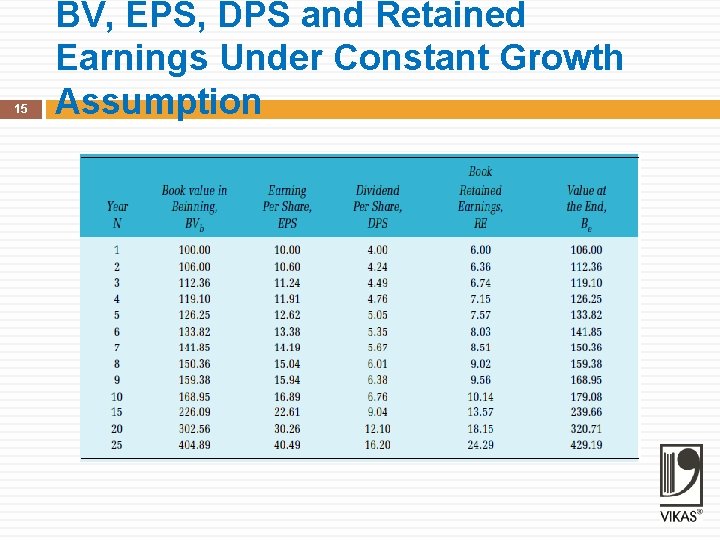
15 BV, EPS, DPS and Retained Earnings Under Constant Growth Assumption
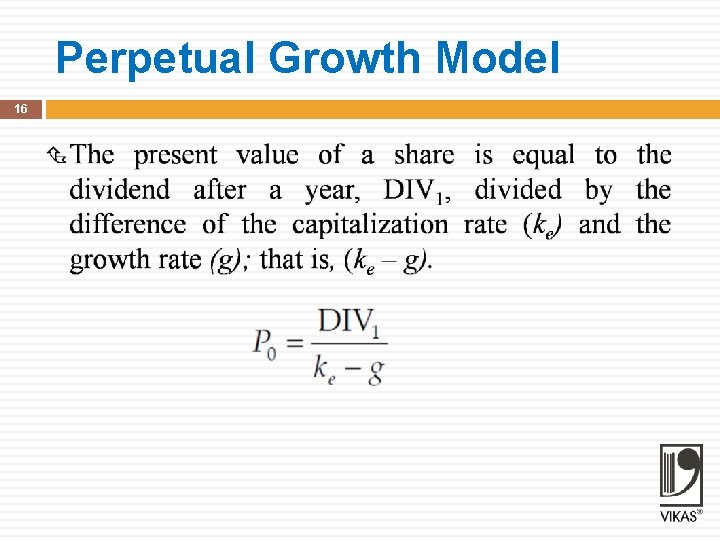
Perpetual Growth Model 16
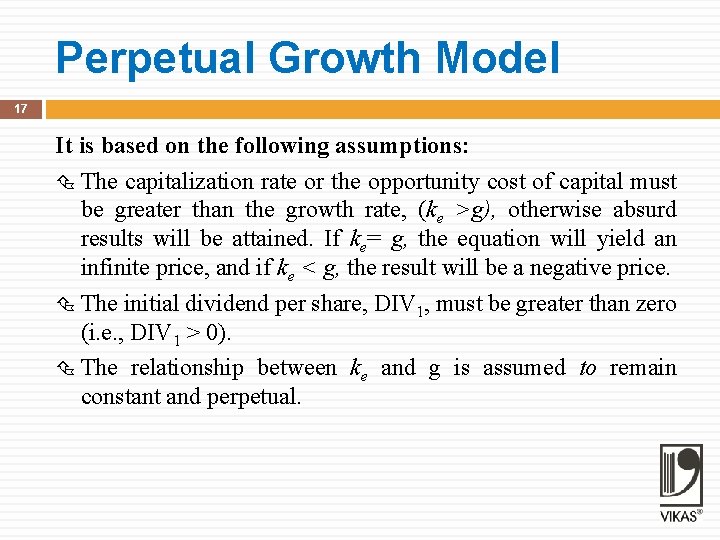
Perpetual Growth Model 17 It is based on the following assumptions: The capitalization rate or the opportunity cost of capital must be greater than the growth rate, (ke >g), otherwise absurd results will be attained. If ke= g, the equation will yield an infinite price, and if ke < g, the result will be a negative price. The initial dividend per share, DIV 1, must be greater than zero (i. e. , DIV 1 > 0). The relationship between ke and g is assumed to remain constant and perpetual.
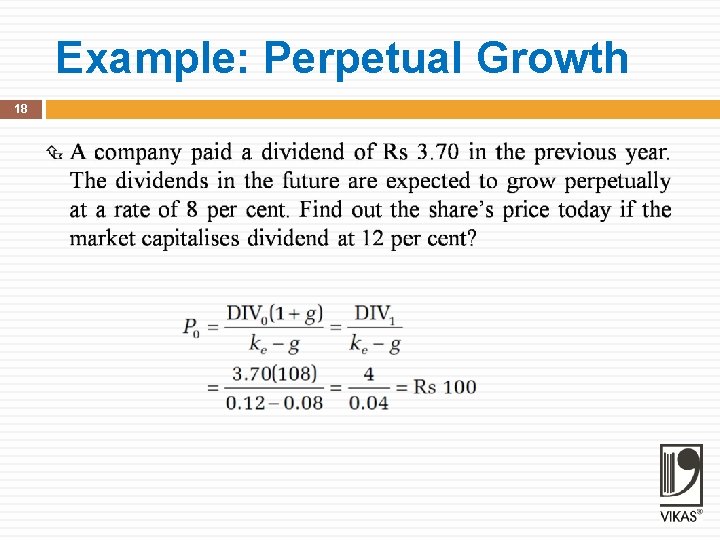
Example: Perpetual Growth 18
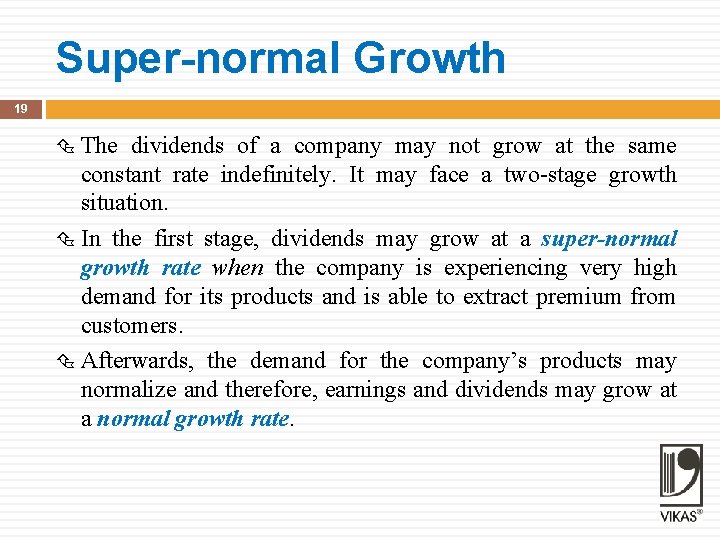
Super-normal Growth 19 The dividends of a company may not grow at the same constant rate indefinitely. It may face a two-stage growth situation. In the first stage, dividends may grow at a super-normal growth rate when the company is experiencing very high demand for its products and is able to extract premium from customers. Afterwards, the demand for the company’s products may normalize and therefore, earnings and dividends may grow at a normal growth rate.
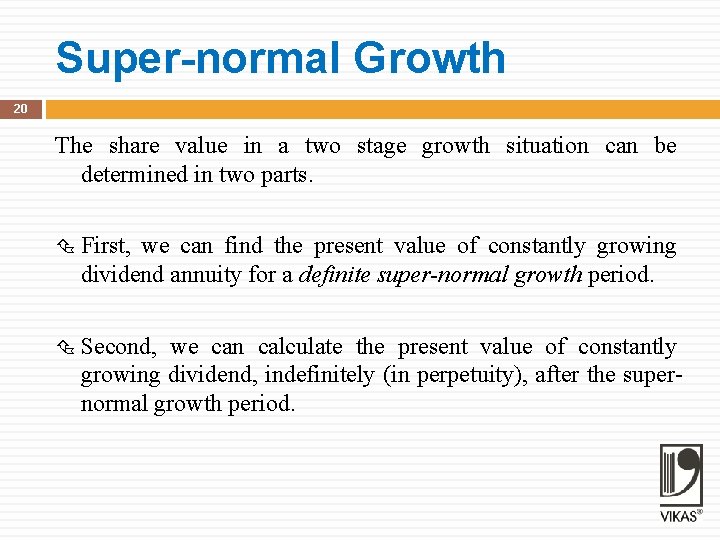
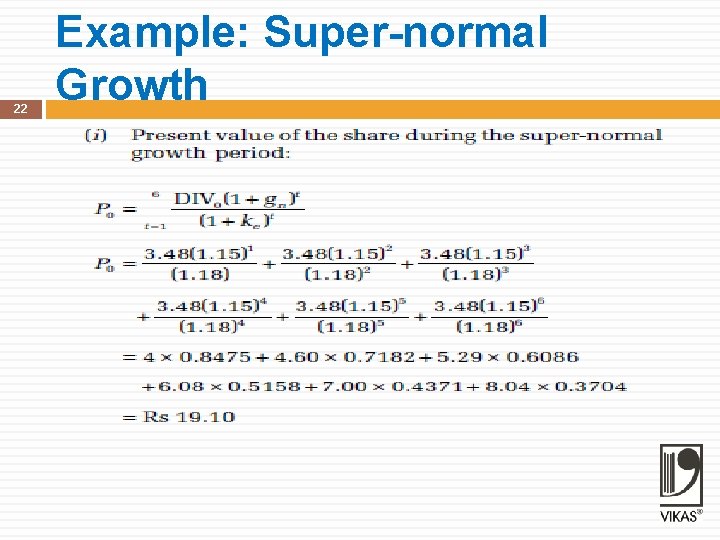
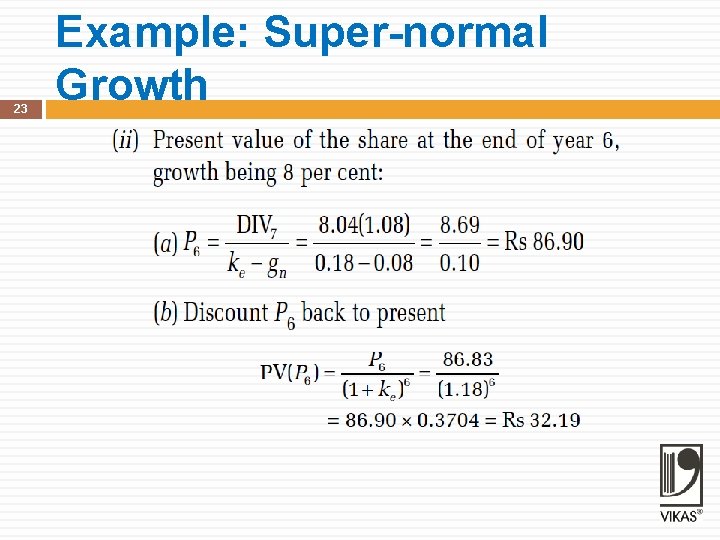
Super-normal Growth 20 The share value in a two stage growth situation can be determined in two parts. First, we can find the present value of constantly growing dividend annuity for a definite super-normal growth period. Second, we can calculate the present value of constantly growing dividend, indefinitely (in perpetuity), after the supernormal growth period.
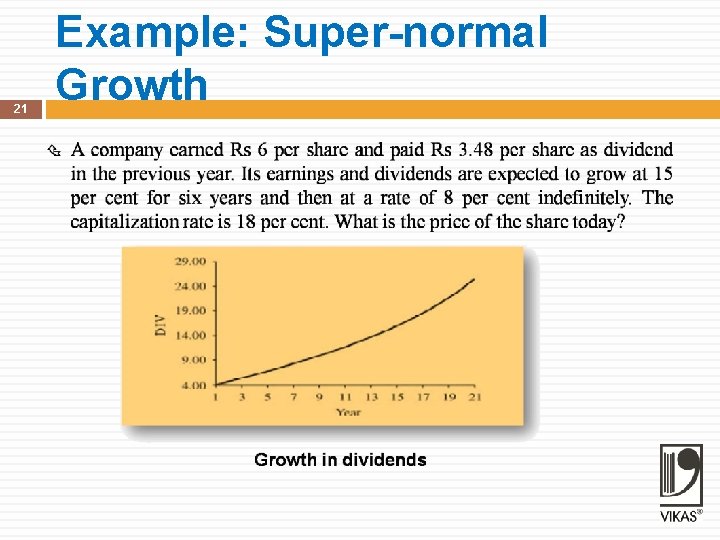
21 Example: Super-normal Growth
22 Example: Super-normal Growth
23 Example: Super-normal Growth
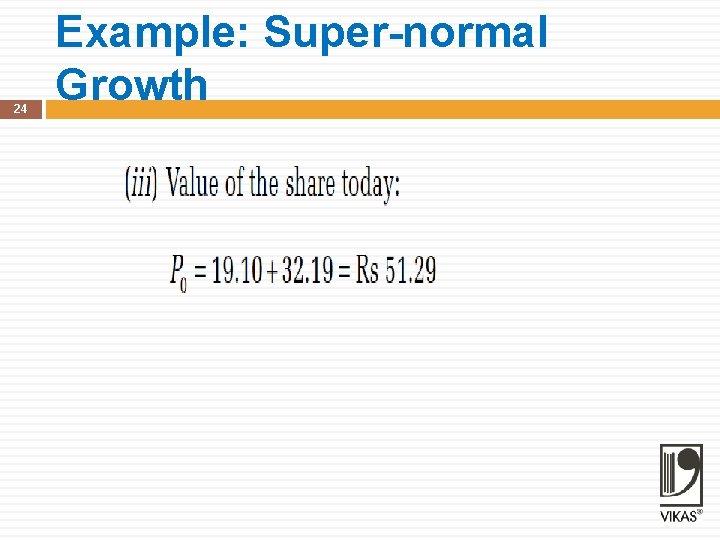
24 Example: Super-normal Growth
Firm Paying no Dividends 25 Companies paying no dividends do command positive market prices for their shares since the price today depends on the future expectation of dividends. The non-payment of dividends may not last forever. Shareholders hold shares of such companies because they expect that in the final analysis dividends will be paid, or they will be able to realize capital gains.
Earnings Capitalisation 26 Under two cases, the value of the share can be determined by capitalising the expected earnings: When the firm pays out 100 per cent dividends; that is, it does not retain any earnings. When the firm’s return on equity (ROE) is equal to its opportunity cost of capital.
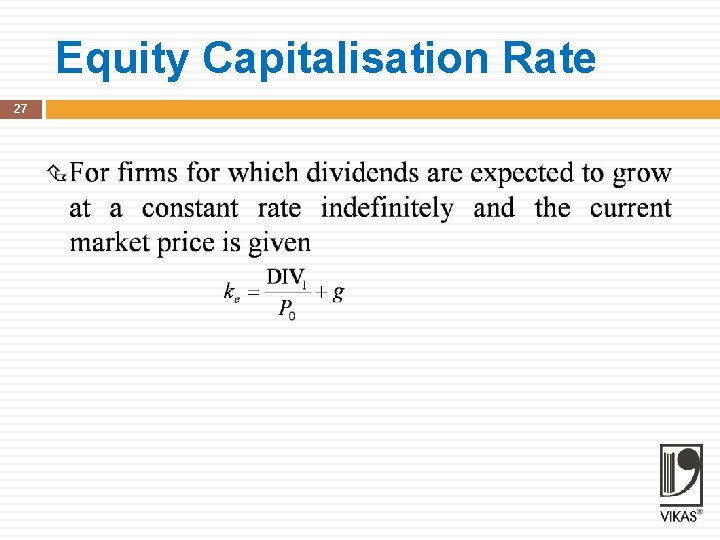
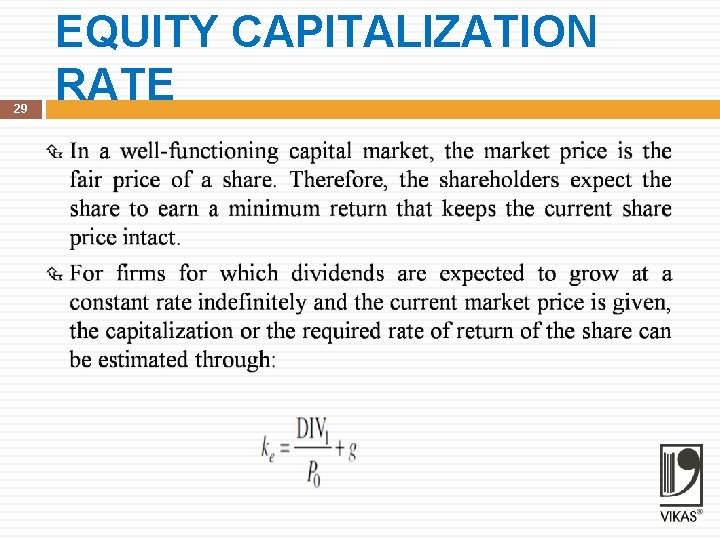
Equity Capitalisation Rate 27
28 Caution in Using Constant. Growth Formula Estimation errors Unsustainable high current growth Errors in forecasting dividends
29 EQUITY CAPITALIZATION RATE
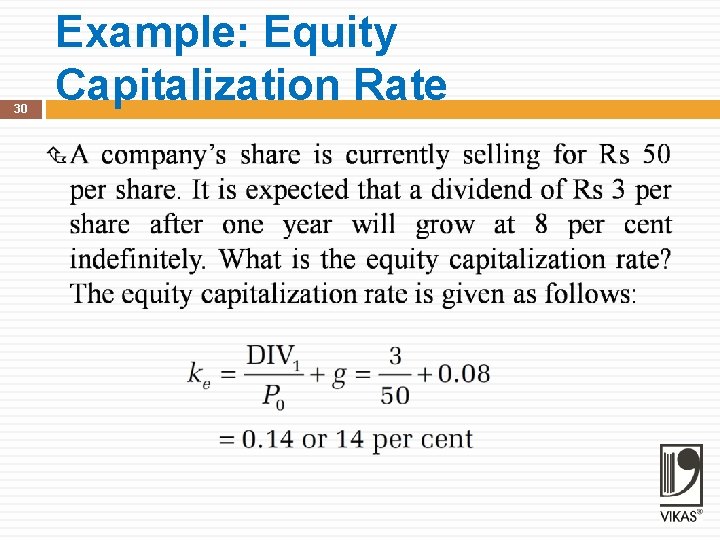
30 Example: Equity Capitalization Rate
Linkages Between Share Price, Earnings And Dividends 31 Investors may choose between growth shares or income shares. Growth shares are those, which offer greater opportunities for capital gains. Dividend yield (i. e. dividend per shares as a percentage of the market price of the share) on such shares would generally be low since companies would follow a high retention policy in order to have a high growth rate. Income shares are those that pay higher dividends, and offer low prospects for capital gains. Those investors who want regular income would prefer to buy income shares, which pay high dividends regularly. On the other hand, if investors desire to earn higher return via capital gains, they would prefer to buy growth shares. They would like a profitable company to retain its earnings in the expectation of higher market price of the share in the future.
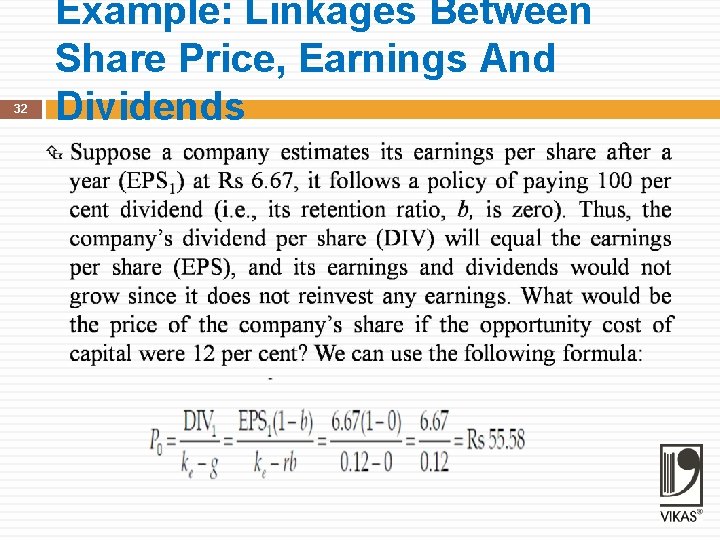
32 Example: Linkages Between Share Price, Earnings And Dividends
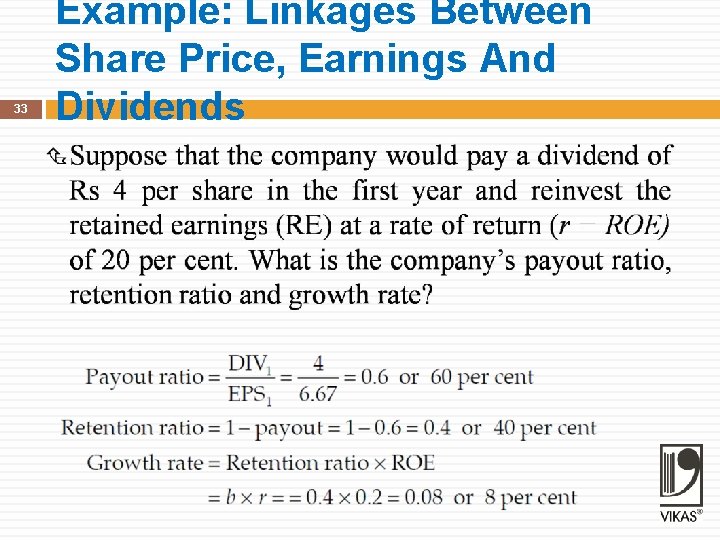
33 Example: Linkages Between Share Price, Earnings And Dividends
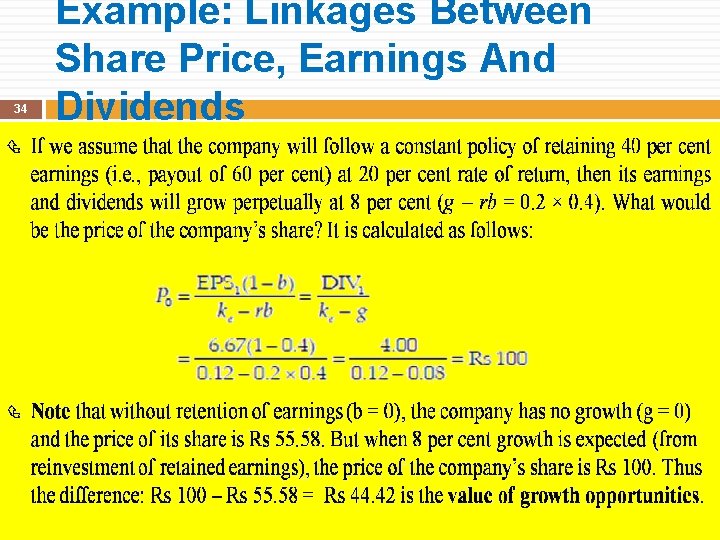
34 Example: Linkages Between Share Price, Earnings And Dividends
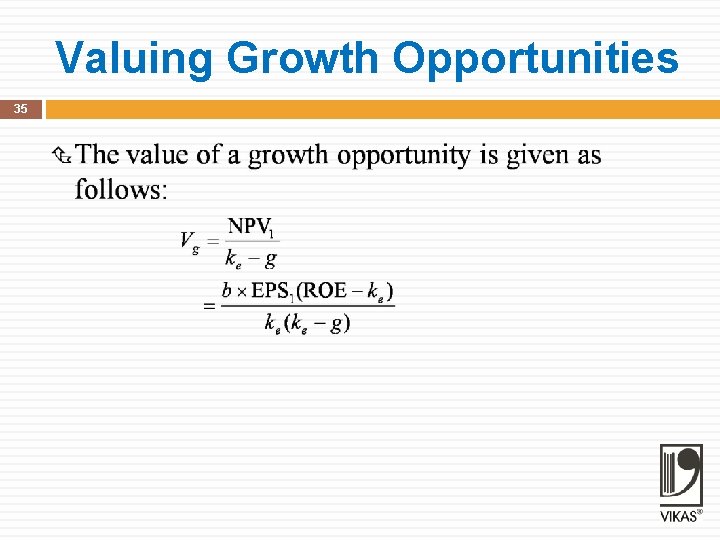
Valuing Growth Opportunities 35
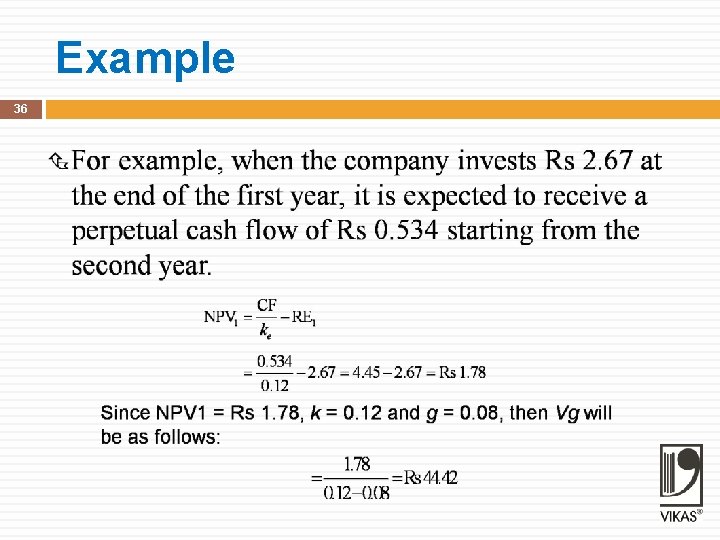
Example 36
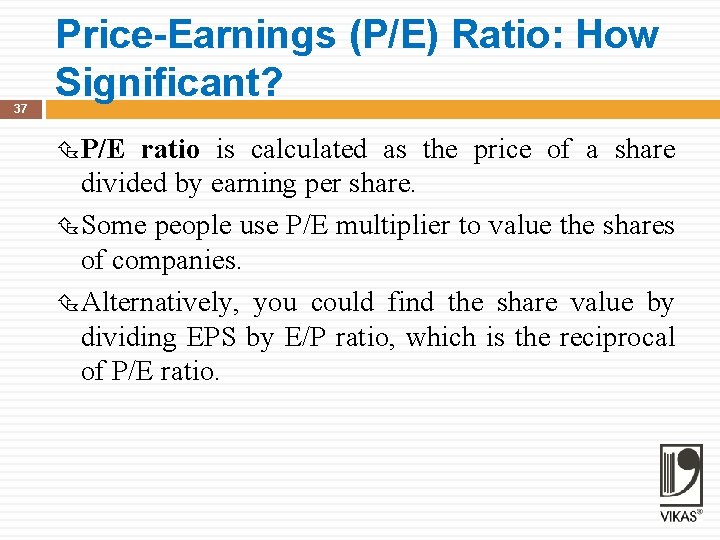
37 Price-Earnings (P/E) Ratio: How Significant? P/E ratio is calculated as the price of a share divided by earning per share. Some people use P/E multiplier to value the shares of companies. Alternatively, you could find the share value by dividing EPS by E/P ratio, which is the reciprocal of P/E ratio.
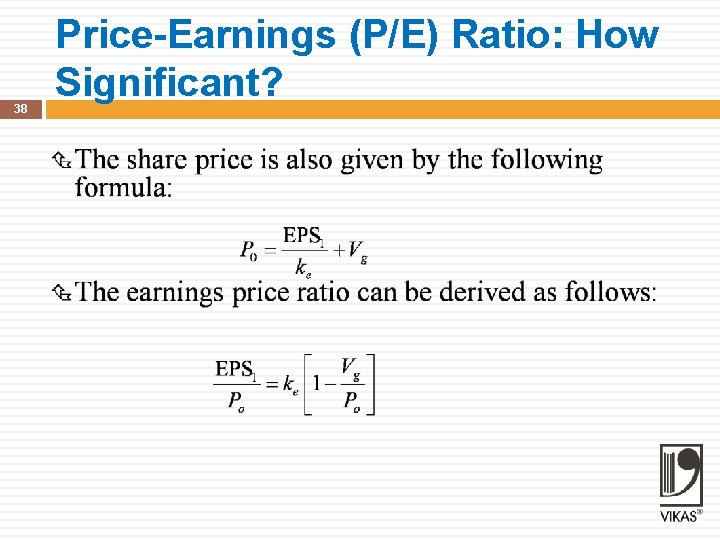
38 Price-Earnings (P/E) Ratio: How Significant?
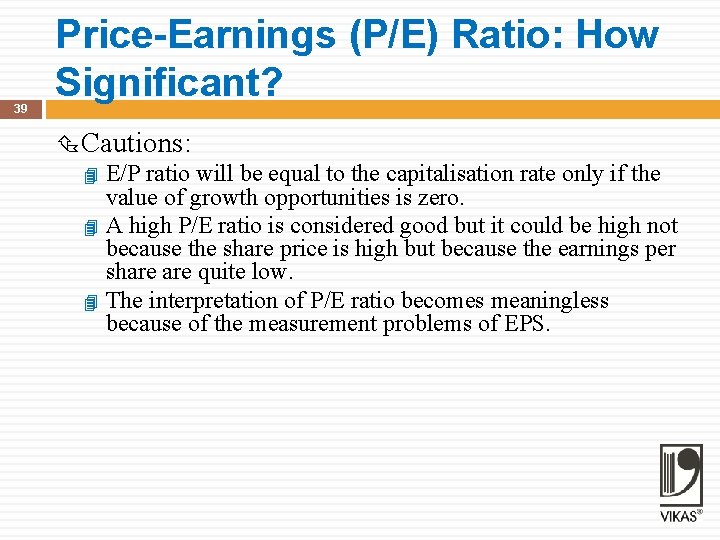
39 Price-Earnings (P/E) Ratio: How Significant? Cautions: E/P ratio will be equal to the capitalisation rate only if the value of growth opportunities is zero. A high P/E ratio is considered good but it could be high not because the share price is high but because the earnings per share quite low. The interpretation of P/E ratio becomes meaningless because of the measurement problems of EPS.