
Valence Shell Electron Pair Repulsion What is VSEPR
- Slides: 12
Valence. Shell. Electron. Pair. Repulsion
What is VSEPR? • VSEPR- Valence Shell Electron Pair Repulsion • Lewis Structures are 2 D Shapes, where as VSEPR Molecules are 3 D Shapes • VSEPR predicts the shape or “geometry” of the molecule • Lone pairs of electrons influence the shape by pushing other atoms as far apart from each other as possible
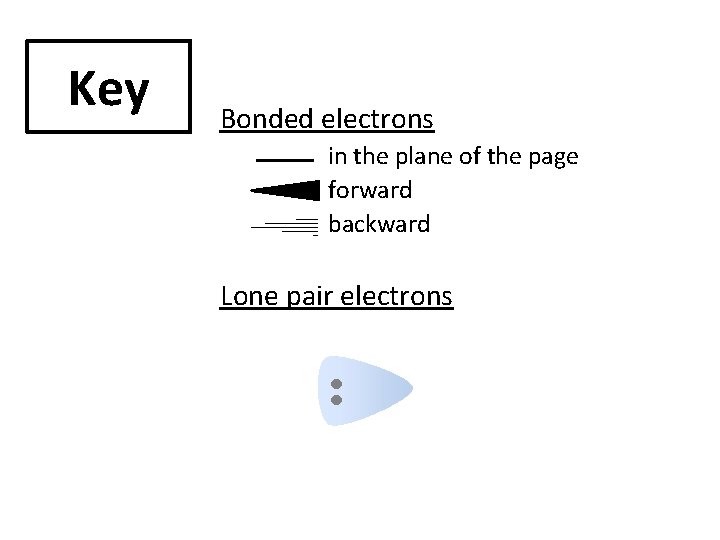
Bonded electrons in the plane of the page forward backward Lone pair electrons Key
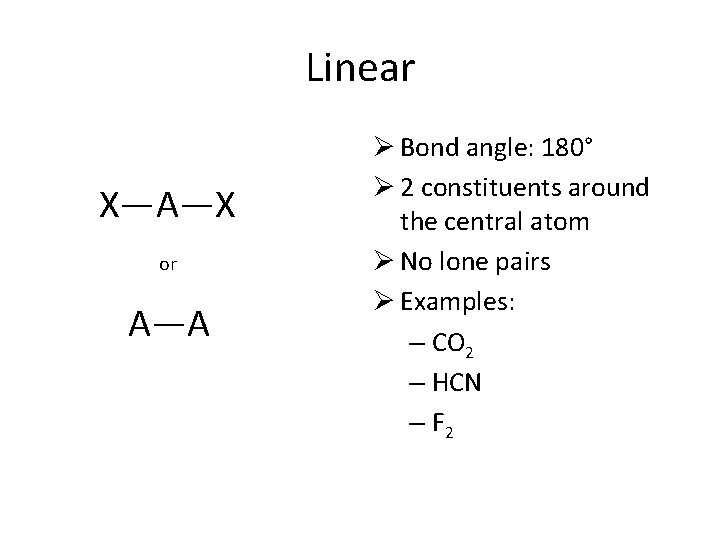
Linear X—A—X or A—A Ø Bond angle: 180° Ø 2 constituents around the central atom Ø No lone pairs Ø Examples: – CO 2 – HCN – F 2
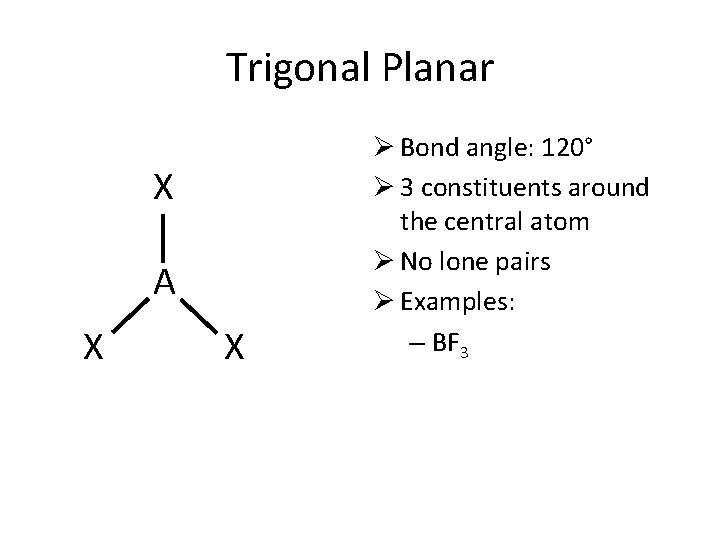
Trigonal Planar X A X X Ø Bond angle: 120° Ø 3 constituents around the central atom Ø No lone pairs Ø Examples: – BF 3
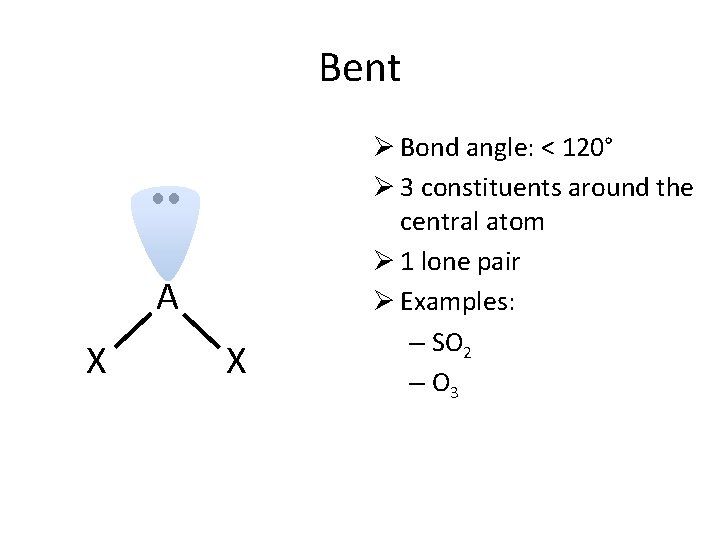
Bent A X X Ø Bond angle: < 120° Ø 3 constituents around the central atom Ø 1 lone pair Ø Examples: – SO 2 – O 3
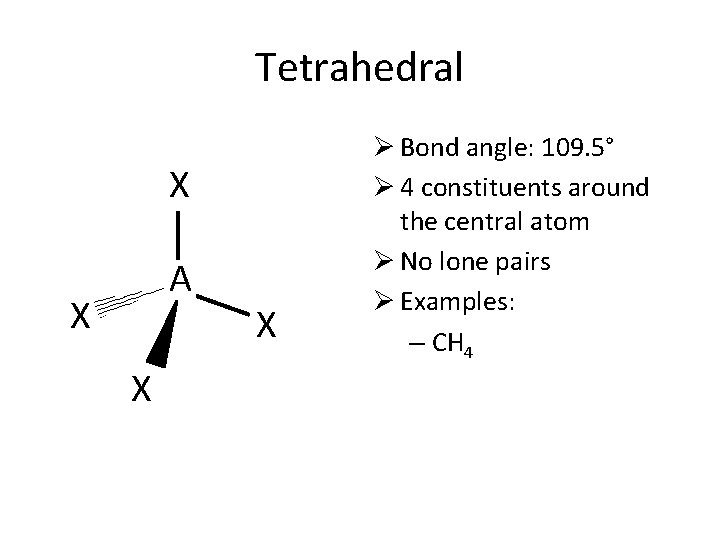
Tetrahedral X A X X X Ø Bond angle: 109. 5° Ø 4 constituents around the central atom Ø No lone pairs Ø Examples: – CH 4
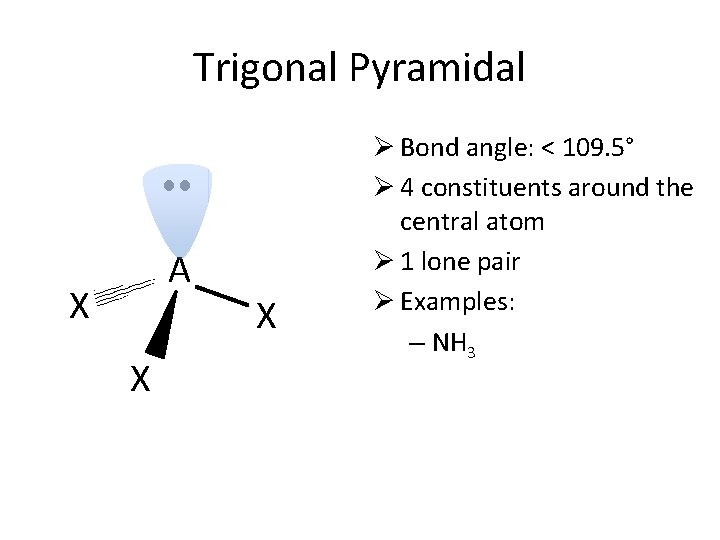
Trigonal Pyramidal A X X X Ø Bond angle: < 109. 5° Ø 4 constituents around the central atom Ø 1 lone pair Ø Examples: – NH 3
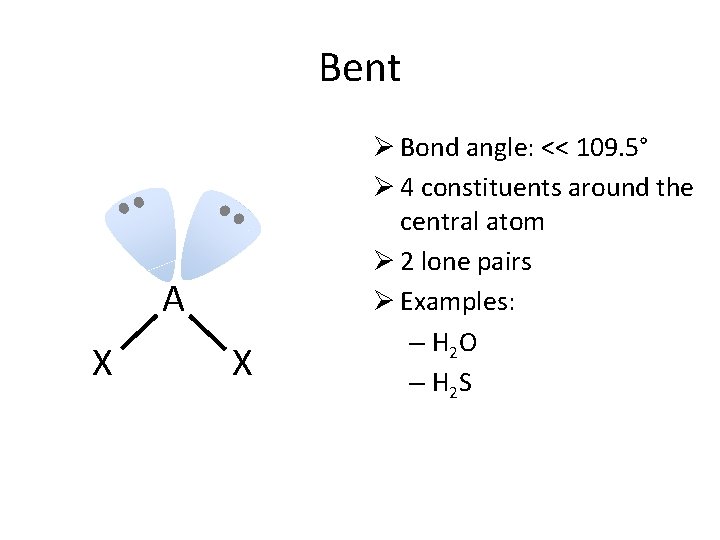
Bent A X X Ø Bond angle: << 109. 5° Ø 4 constituents around the central atom Ø 2 lone pairs Ø Examples: – H 2 O – H 2 S
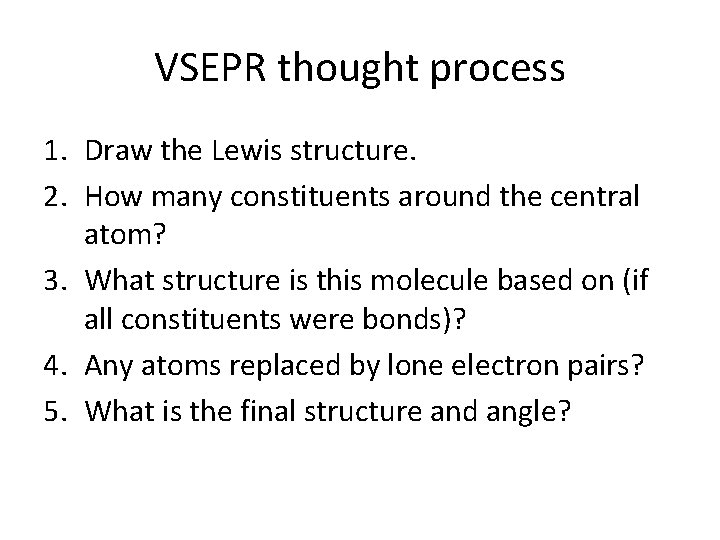
VSEPR thought process 1. Draw the Lewis structure. 2. How many constituents around the central atom? 3. What structure is this molecule based on (if all constituents were bonds)? 4. Any atoms replaced by lone electron pairs? 5. What is the final structure and angle?
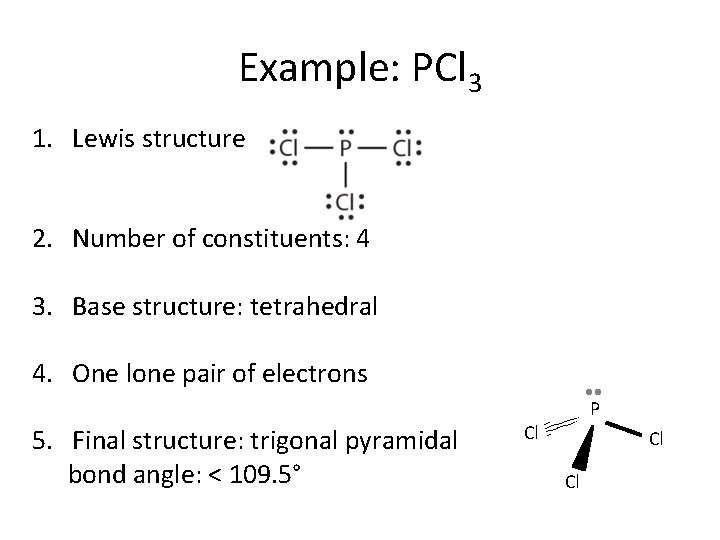
Example: PCl 3 1. Lewis structure 2. Number of constituents: 4 3. Base structure: tetrahedral 4. One lone pair of electrons 5. Final structure: trigonal pyramidal bond angle: < 109. 5° P Cl Cl Cl
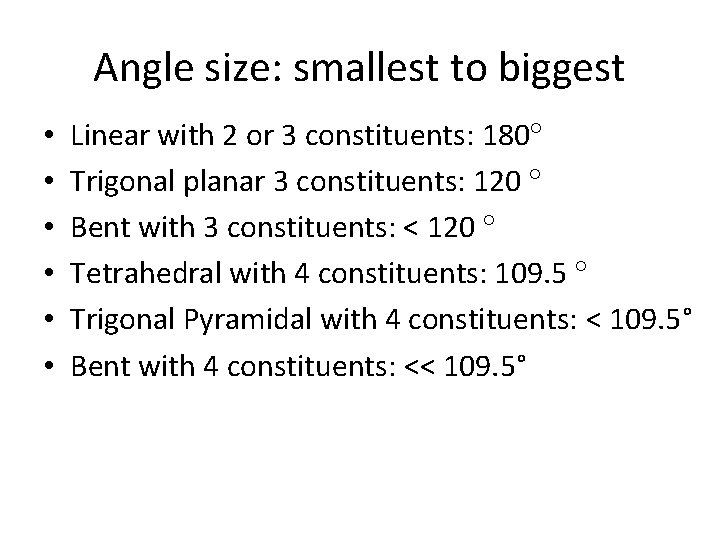
Angle size: smallest to biggest • • • Linear with 2 or 3 constituents: 180 Trigonal planar 3 constituents: 120 Bent with 3 constituents: < 120 Tetrahedral with 4 constituents: 109. 5 Trigonal Pyramidal with 4 constituents: < 109. 5° Bent with 4 constituents: << 109. 5°