
VAD Test Loop MidProject Review Sponsored by Dr
VAD Test Loop: Mid-Project Review Sponsored by Dr. Day Jon Klein ISE Project Manager Nguyen Vu ME Technical Lead Kyle Menges ME Technical Lead Christine Lowry ME Design Engineer Chris Stein ME Design Engineer Priya Narasimhan EE Electrical Engineer Julie Coggshall ISE Systems Engineer
Overview • Customer Needs • Top 10 Specifications • Blood Sub-System • Physiological Sub-System • LVAD Test Loop • System Architecture • Risks and Mitigation • Design Reviews Summary • Budget • Current State of Design • Senior Design II Schedule
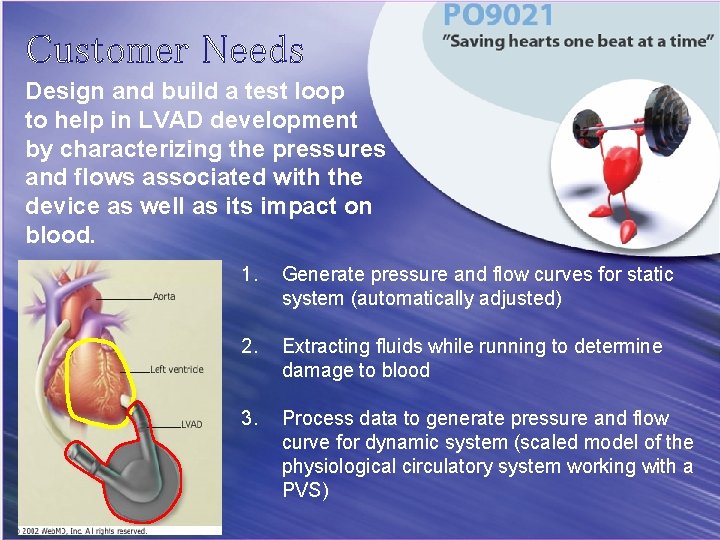
Customer Needs Design and build a test loop to help in LVAD development by characterizing the pressures and flows associated with the device as well as its impact on blood. 1. Generate pressure and flow curves for static system (automatically adjusted) 2. Extracting fluids while running to determine damage to blood 3. Process data to generate pressure and flow curve for dynamic system (scaled model of the physiological circulatory system working with a PVS)
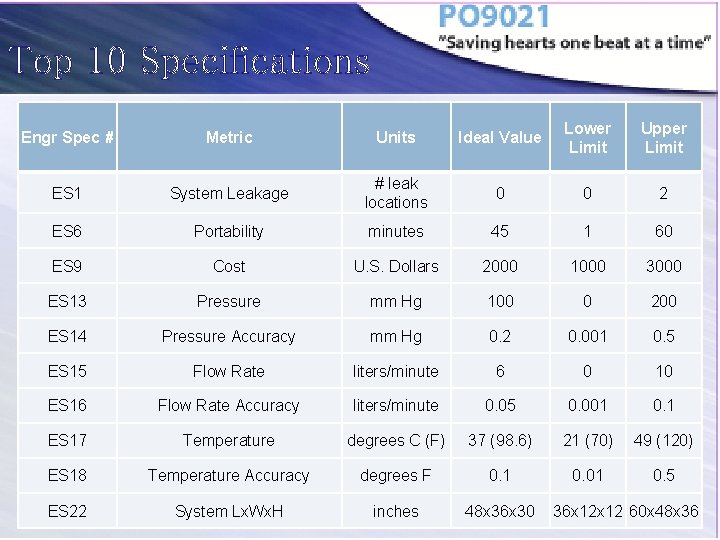
Top 10 Specifications Engr Spec # Metric Units Ideal Value Lower Limit Upper Limit ES 1 System Leakage # leak locations 0 0 2 ES 6 Portability minutes 45 1 60 ES 9 Cost U. S. Dollars 2000 1000 3000 ES 13 Pressure mm Hg 100 0 200 ES 14 Pressure Accuracy mm Hg 0. 2 0. 001 0. 5 ES 15 Flow Rate liters/minute 6 0 10 ES 16 Flow Rate Accuracy liters/minute 0. 05 0. 001 0. 1 ES 17 Temperature degrees C (F) 37 (98. 6) 21 (70) 49 (120) ES 18 Temperature Accuracy degrees F 0. 1 0. 01 0. 5 ES 22 System Lx. Wx. H inches 48 x 36 x 30 36 x 12 60 x 48 x 36
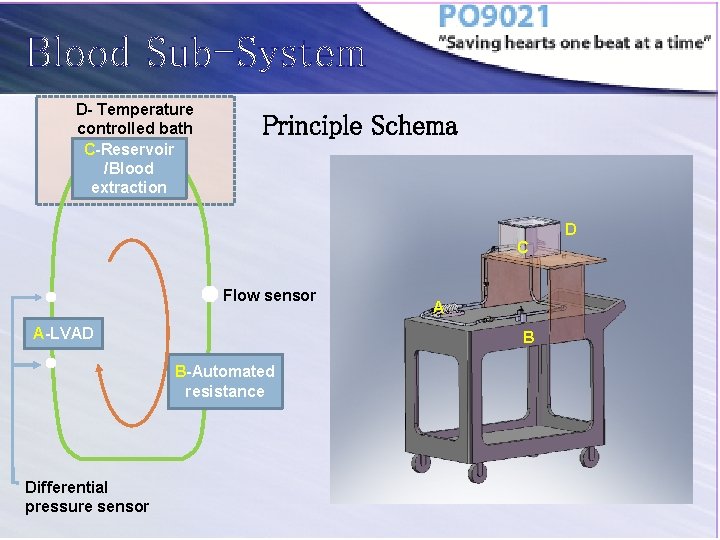
Blood Sub-System D- Temperature controlled bath C-Reservoir /Blood extraction Principle Schema D C Flow sensor A-LVAD B B-Automated resistance Differential pressure sensor A
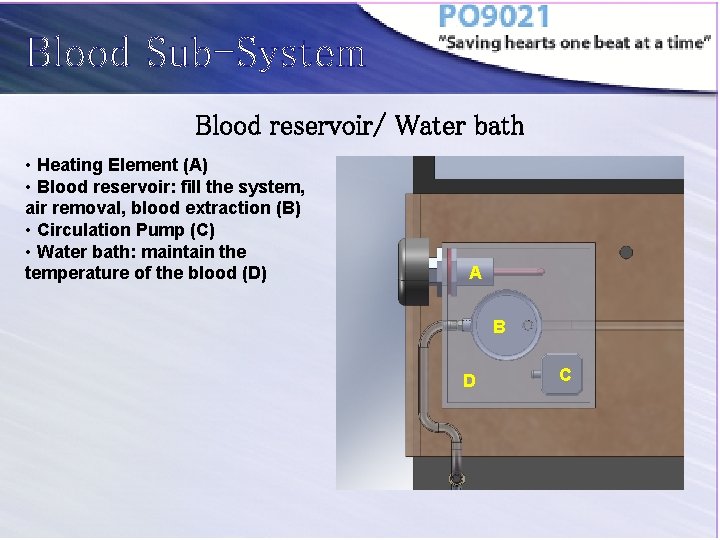
Blood Sub-System Blood reservoir/ Water bath • Heating Element (A) • Blood reservoir: fill the system, air removal, blood extraction (B) • Circulation Pump (C) • Water bath: maintain the temperature of the blood (D) A B D C
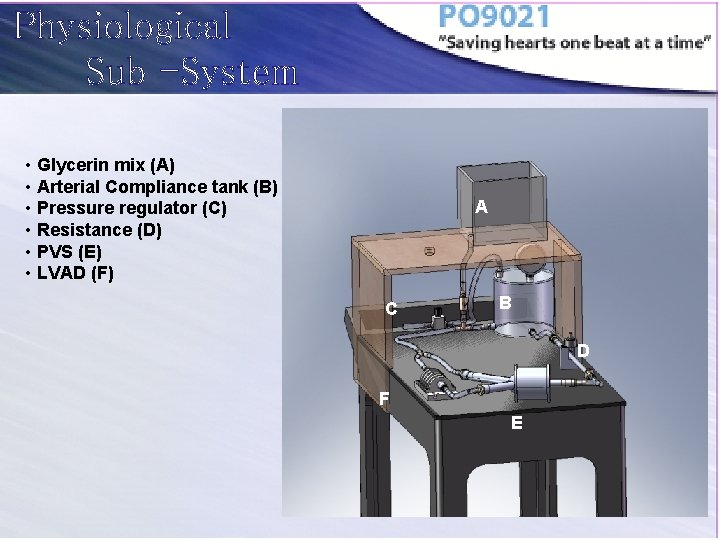
Physiological Sub -System • Glycerin mix (A) • Arterial Compliance tank (B) • Pressure regulator (C) • Resistance (D) • PVS (E) • LVAD (F) A C B D F E
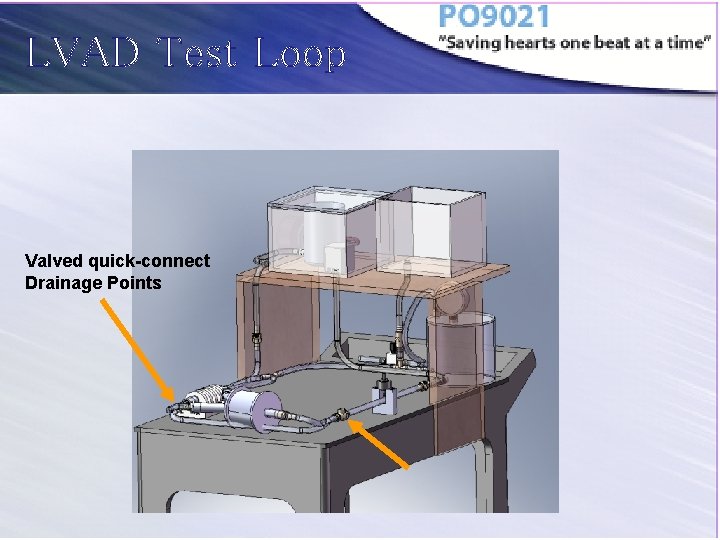
LVAD Test Loop Valved quick-connect Drainage Points

System Architecture Mechanical System Test loop with LVAD and PVS Variable resistance Pressure of liquid Flow rate of liquid Temperature of liquid Stepper motor DAQ Pressure sensor Flow sensor Thermocoupl e Computer: Labview used to monitor temperature and plot flow and pressure curves
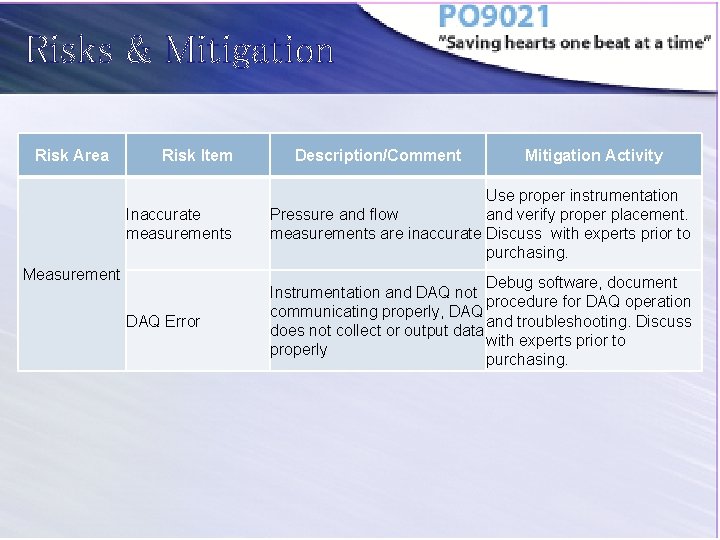
Risks & Mitigation Risk Area Risk Item Description/Comment Mitigation Activity Inaccurate measurements Use proper instrumentation and verify proper placement. Pressure and flow measurements are inaccurate Discuss with experts prior to purchasing. DAQ Error Debug software, document Instrumentation and DAQ not procedure for DAQ operation communicating properly, DAQ and troubleshooting. Discuss does not collect or output data with experts prior to properly purchasing. Measurement
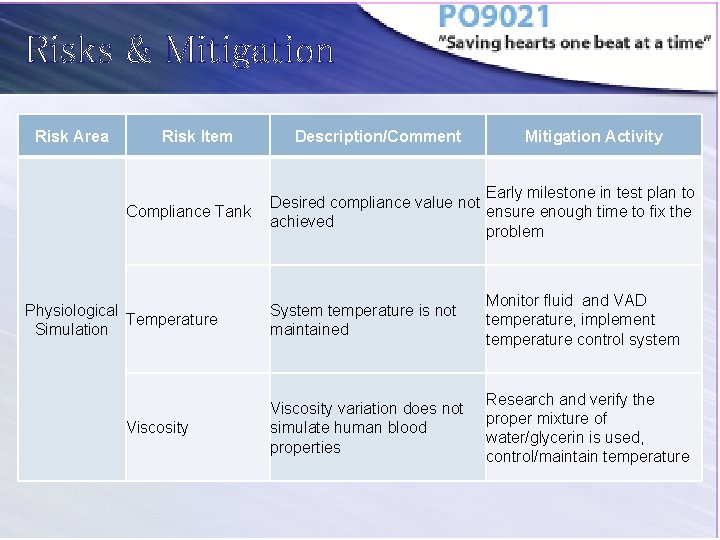
Risks & Mitigation Risk Area Risk Item Compliance Tank Physiological Temperature Simulation Viscosity Description/Comment Mitigation Activity Early milestone in test plan to Desired compliance value not ensure enough time to fix the achieved problem System temperature is not maintained Monitor fluid and VAD temperature, implement temperature control system Viscosity variation does not simulate human blood properties Research and verify the proper mixture of water/glycerin is used, control/maintain temperature
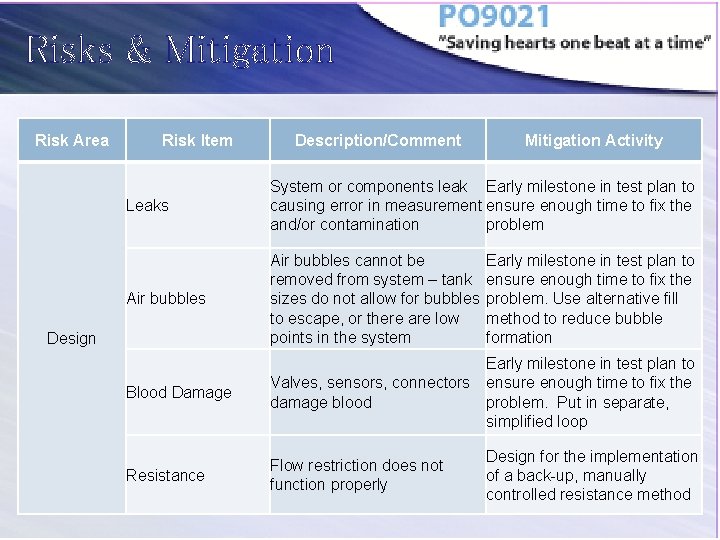
Risks & Mitigation Risk Area Risk Item Description/Comment Mitigation Activity Leaks System or components leak Early milestone in test plan to causing error in measurement ensure enough time to fix the and/or contamination problem Air bubbles cannot be removed from system – tank sizes do not allow for bubbles to escape, or there are low points in the system Early milestone in test plan to ensure enough time to fix the problem. Use alternative fill method to reduce bubble formation Blood Damage Valves, sensors, connectors damage blood Early milestone in test plan to ensure enough time to fix the problem. Put in separate, simplified loop Resistance Flow restriction does not function properly Design for the implementation of a back-up, manually controlled resistance method Design
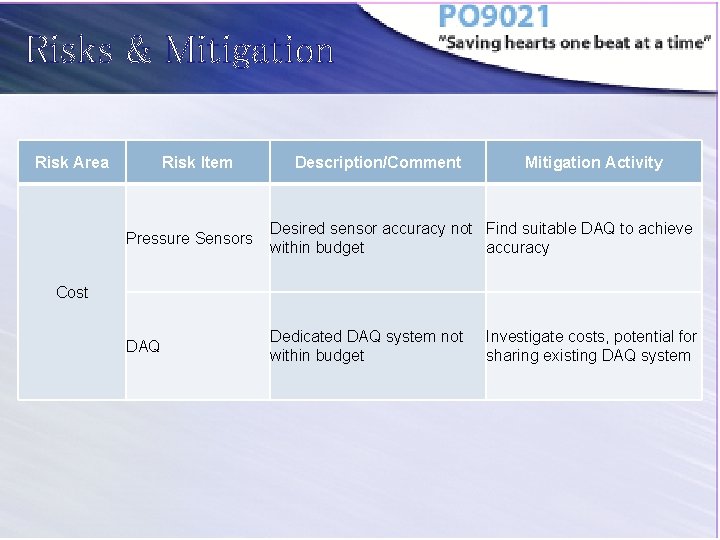
Risks & Mitigation Risk Area Risk Item Description/Comment Mitigation Activity Pressure Sensors Desired sensor accuracy not Find suitable DAQ to achieve within budget accuracy DAQ Dedicated DAQ system not within budget Cost Investigate costs, potential for sharing existing DAQ system
Design Reviews Summary DR 1 § Compliance: Developed electrical equivalent model § Sensors: Use existing flow sensors § System Architecture: Modular, quick-connect design DR 2 § Simplify Design: • Reduce system to a single tank that functions as both a compliance tank and reservoir • Use a pressure-cuff to pressurize compliance chamber in place of expensive gauge and regulator § Need to establish more refined electrical specifications
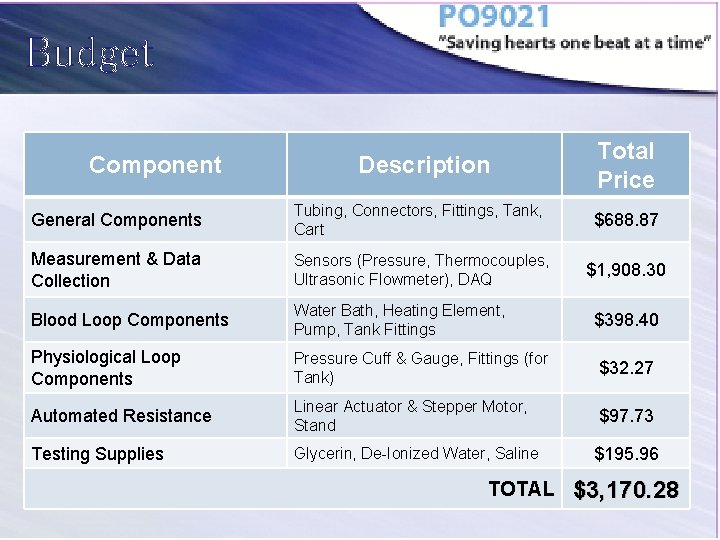
Budget Component Description Total Price General Components Tubing, Connectors, Fittings, Tank, Cart $688. 87 Measurement & Data Collection Sensors (Pressure, Thermocouples, Ultrasonic Flowmeter), DAQ $1, 908. 30 Blood Loop Components Water Bath, Heating Element, Pump, Tank Fittings Physiological Loop Components Pressure Cuff & Gauge, Fittings (for Tank) $32. 27 Automated Resistance Linear Actuator & Stepper Motor, Stand $97. 73 Testing Supplies Glycerin, De-Ionized Water, Saline TOTAL $398. 40 $195. 96 $3, 170. 28
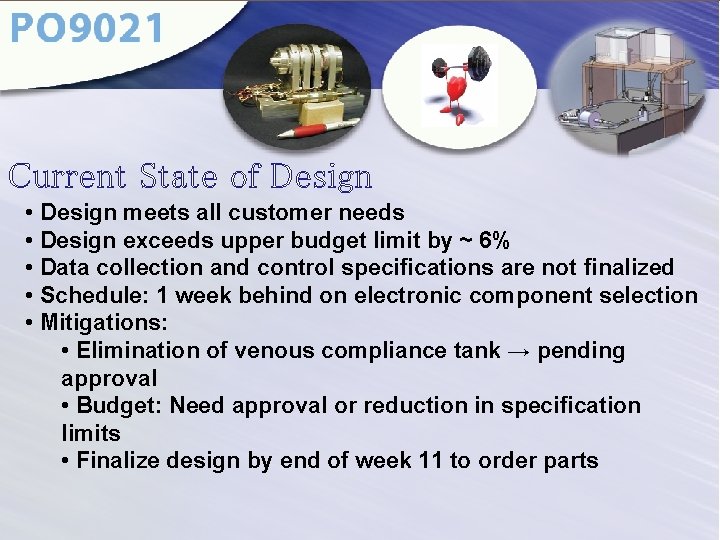
Current State of Design • Design meets all customer needs • Design exceeds upper budget limit by ~ 6% • Data collection and control specifications are not finalized • Schedule: 1 week behind on electronic component selection • Mitigations: • Elimination of venous compliance tank → pending approval • Budget: Need approval or reduction in specification limits • Finalize design by end of week 11 to order parts
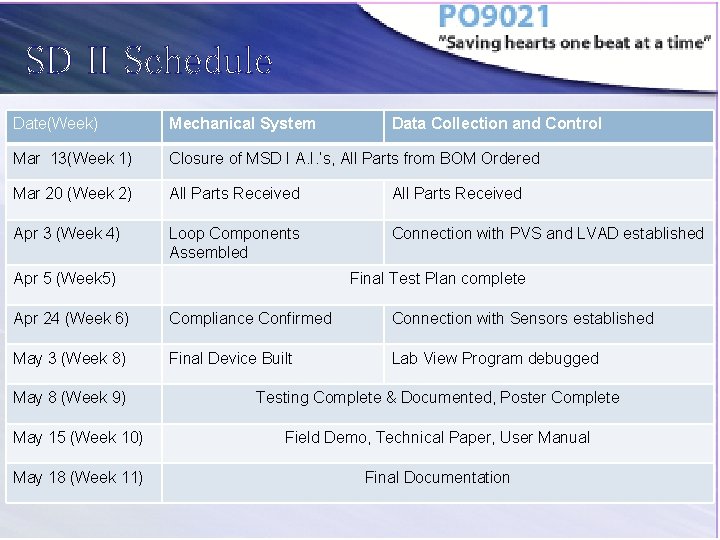
SD II Schedule Date(Week) Mechanical System Mar 13(Week 1) Closure of MSD I A. I. ’s, All Parts from BOM Ordered Mar 20 (Week 2) All Parts Received Apr 3 (Week 4) Loop Components Assembled Connection with PVS and LVAD established Apr 5 (Week 5) Data Collection and Control Final Test Plan complete Apr 24 (Week 6) Compliance Confirmed Connection with Sensors established May 3 (Week 8) Final Device Built Lab View Program debugged May 8 (Week 9) Testing Complete & Documented, Poster Complete May 15 (Week 10) Field Demo, Technical Paper, User Manual May 18 (Week 11) Final Documentation
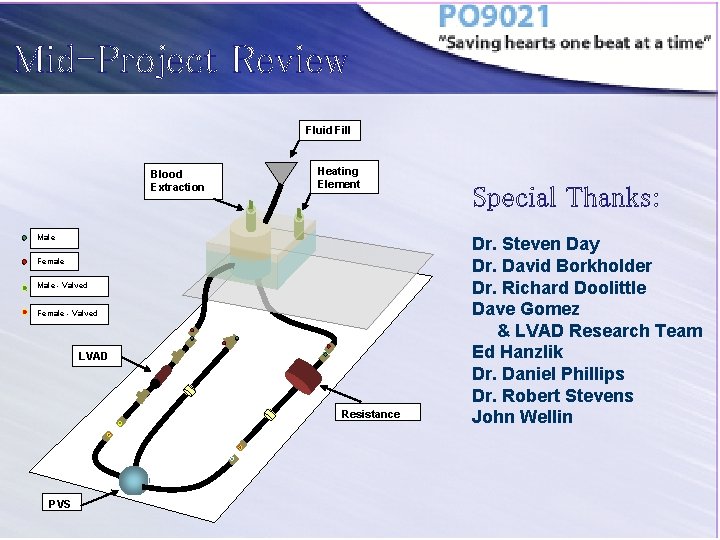
Mid-Project Review Fluid Fill Blood Extraction Heating Element Male Female Male - Valved Female - Valved LVAD Resistance PVS Special Thanks: Dr. Steven Day Dr. David Borkholder Dr. Richard Doolittle Dave Gomez & LVAD Research Team Ed Hanzlik Dr. Daniel Phillips Dr. Robert Stevens John Wellin
- Slides: 18