
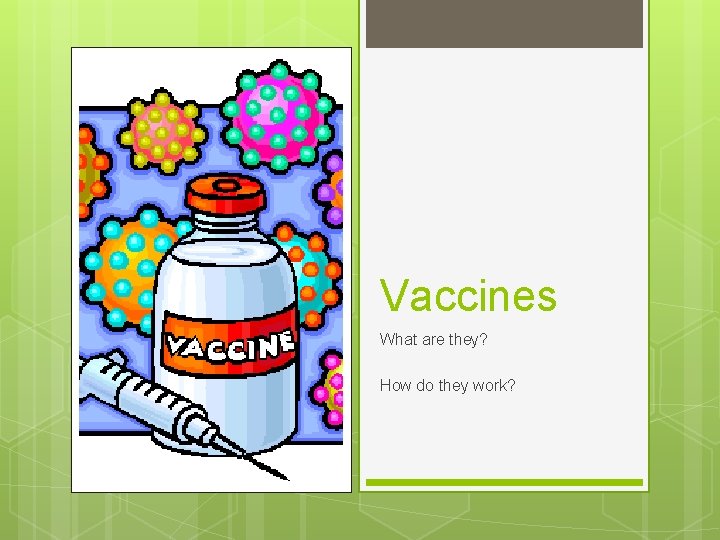
Vaccines What are they How do they work
- Slides: 11
Vaccines What are they? How do they work?
What is immunity? Capacity to resist a disease that you have been exposed to by being able to fight it off.
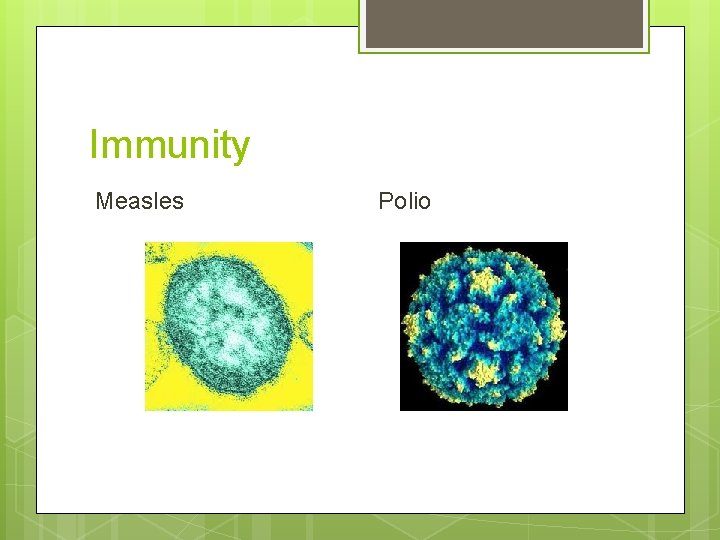
Immunity Measles Polio
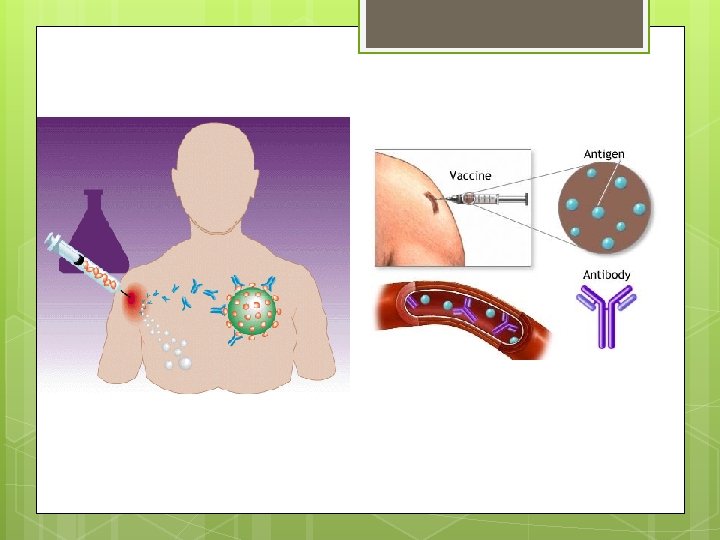
Immune Response Invaded 1 st time, production of antibodies to defeat it. (few days, or weeks) Immune system ”remembers” how to produce antibodies for infection Antibodies fight agent, destroyed quickly
What is a vaccine? Prepared substance that is able to immunize an organism against one or several diseases. Attenuated or weakened infectious agents, Not strong enough for full blown disease. Infectious agent defeated quickly because our immune substance “remembers”
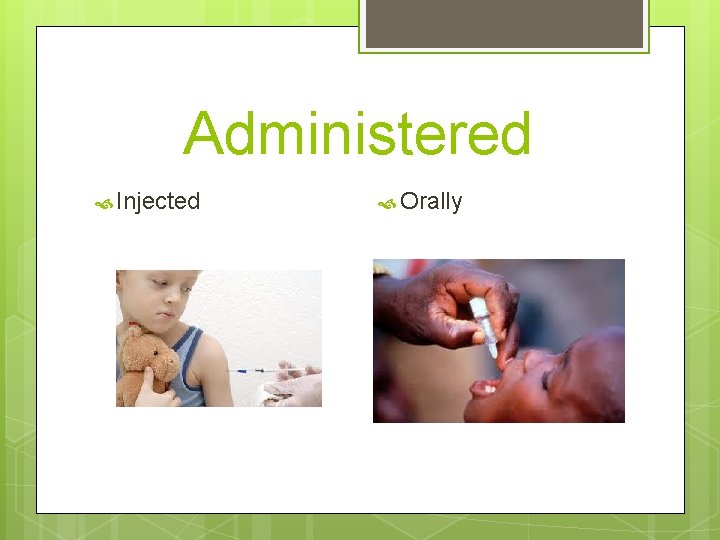
Administered Injected Orally
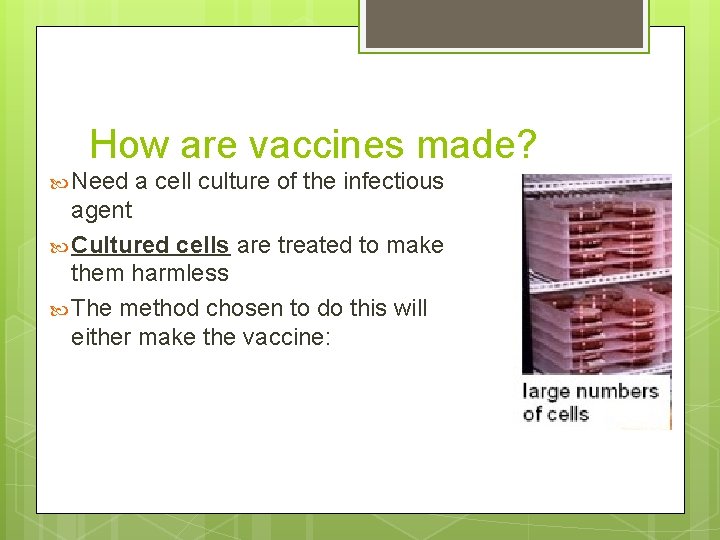
How are vaccines made? Need a cell culture of the infectious agent Cultured cells are treated to make them harmless The method chosen to do this will either make the vaccine:
1. Live vaccine has been chemically treated to make it lose its ability to cause disease. Infectious agent still alive, but lost ability to cause disease. New technology uses genetic transformation to make it harmless.
2. Inactive Vaccines Developed using only part of the infectious agent. These antigens are isolated, chemically treated, then mixed with chemicals to improve shelf life. Does not contain any live infectious agents. Transforming genome of bacteria, yeasts or animal cells can produce antigens in large quantities.
Which one is better? Live or inactive? Live vaccines cause a stronger immune response But, sometimes, the attenuated (weakened) infectious agent in the live vaccine can regain its virulence Virulence sometimes, = harmfulness live vaccines may cause the disease instead of immunizing against it