
Vaccine Administration Technique Presented by Date Disclosure Statements

Vaccine Administration Technique Presented by: Date:
Disclosure Statements • Neither the planners of this session nor I have any conflicts of interest or financial relationship with pharmaceutical companies, biomedical device manufacturers, or corporations whose products and services are related to the vaccines we discuss. • There is no commercial support being received for this event. • The mention of specific brands of vaccines in this presentation is for the purpose of providing education and does not constitute endorsement. • The GA Immunization Program utilizes ACIP recommendations as the basis for this presentation and for our guidelines, policies, and recommendations. • For certain vaccines this may represent a slight departure from or offlabel use of the vaccine package insert guidelines.
Disclosure Statement • To obtain nursing contact hours for this session, you must be present for the entire session and complete an evaluation. • Continuing education will be provided through the Georgia Department of Public Health • Georgia Department of Public Health is an approved provider of continuing nursing education by the Alabama State Nurses Association, an accredited approver by the American Nurses Credentialing Center’s Commission of Accreditation
Objectives • Discuss staff training needs and strategies for communication • List positioning, comforting and pain control techniques • Discuss vaccine preparation, administration routes, sites, and needle sizes • Explain vaccine administration special situations and documentation • Discuss avoiding vaccine administration errors and managing adverse events
Proper Vaccine Administration Key to ensuring vaccination is as safe and effective as possible, incorporate: • Professional standards for medication administration • Manufacturer’s vaccine-specific guidelines • Evidence-based safe injection practices
Staff Training and Education Before administering vaccines, all personnel who administer vaccines should: ü receive competency-based training ü validate knowledge and skills Integrate training into: ü new staff orientation ü annual education requirements ü when vaccine administration recommendations are updated ü when new vaccines are added to the inventory
Communication • Consider patient’s age and stage of development • Encourage participation of parent/guardian and patient • Use simple strategies to ease vaccination process Ø Ø Ø positive attitude soft, calm voice eye contact explain why the vaccine is needed honest about what to expect
Positioning and Comforting • Encourage parent/guardian to hold child • Sitting, rather than lying down • Be aware of syncope (fainting) Ø have patient seated or lying down during vaccination Ø be aware of symptoms that precede syncope Ø if patient faints, provide supportive care and protect patient from injury Ø observe patient (seated or lying down) for at least 15 minutes after vaccination
Test Your Knowledge! What is the term used to describe the fear of “needles”? a) b) c) d) Coulrophobia Ophidiophobia Trypanophobia Acrophobia
Test Your Knowledge! What is the term used to describe the fear of “needles”? c). Trypanophobia- is the fear of needles, blood draws, or injections, and is often simply called needle phobia
Pain Control Evidence-based strategies to ease pain: breastfeeding sweet tasting solutions injection technique (aspiration may increase pain) order of injections (administer most painful vaccine last) • tactile stimulation (rub/stroke near injection site prior to and during injection • distraction • topical anesthetic • •
Infection Control • Handwashing -Critical to prevent the spread of illness and disease • Gloves -OSHA regulations do not require gloves to be worn when administering • Equipment Disposal -Used needles should not be recapped, cut or detached from the syringes before disposal -Filled sharps containers should be disposed of properly DHR Rule 290 -5 -60, ”Sharps Injury Prevention
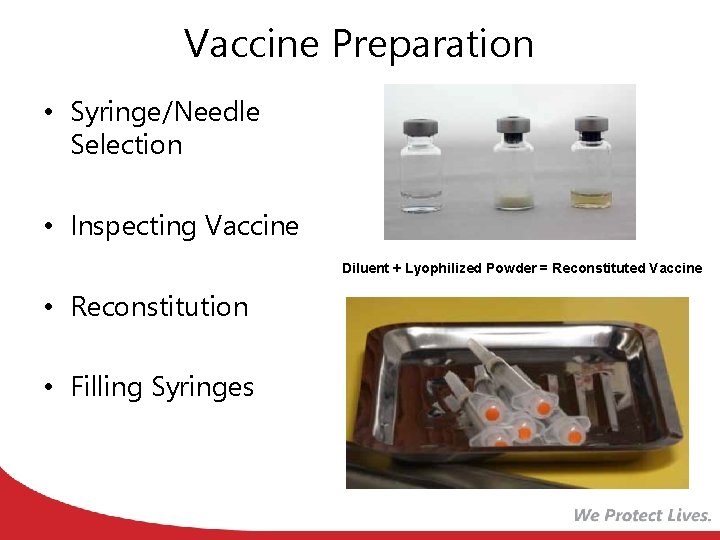
Vaccine Preparation • Syringe/Needle Selection • Inspecting Vaccine Diluent + Lyophilized Powder = Reconstituted Vaccine • Reconstitution • Filling Syringes
Test Your Knowledge! The manufacturer does not specify when IPV expires after opening the multi-dose vial. Is it okay to use the vaccine until the expiration date on the vial if properly handled and not contaminated?
Test Your Knowledge! The manufacturer does not specify when IPV expires after opening the multi-dose vial. Is it okay to use the vaccine until the expiration date on the vial if properly handled and not contaminated? Yes. Since there is not a Beyond Use Date (BUD) noted in the package insert, if the vaccine is stored and handled properly and is normal in appearance, it can be used until the expiration date on the vial.
Route and Site Vaccine Preparation “Nevers” • Never combine vaccines into a single syringe except when specifically approved by the FDA and packaged for that specific purpose • Never transfer vaccine from one syringe to another • Never draw partial doses of vaccine from separate vials to obtain a full dose
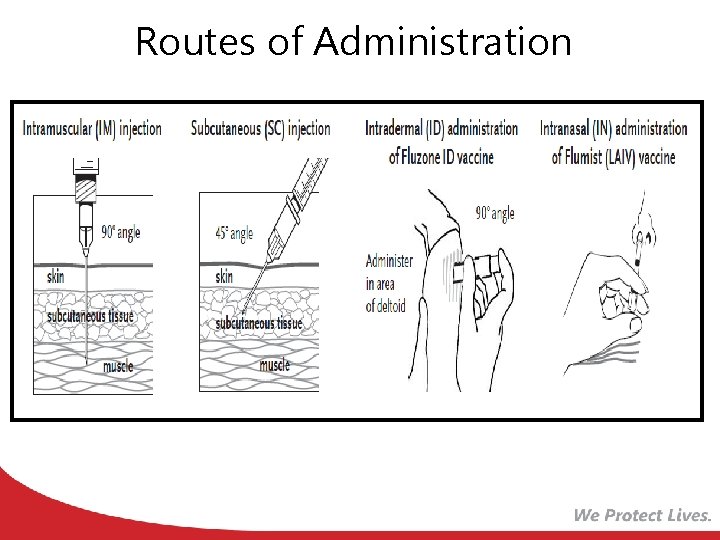
Routes of Administration
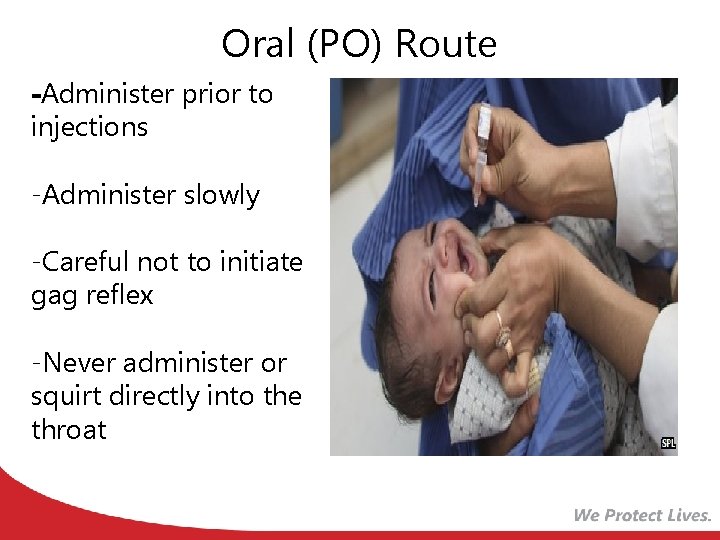
Oral (PO) Route -Administer prior to injections -Administer slowly -Careful not to initiate gag reflex -Never administer or squirt directly into the throat
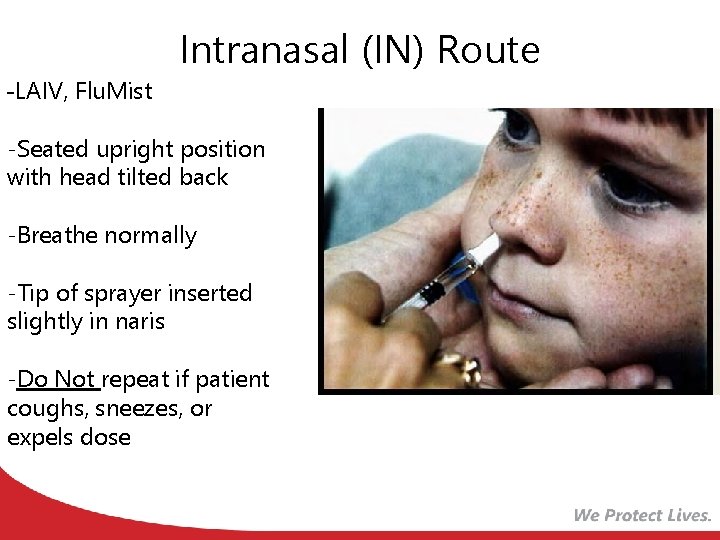
Intranasal (IN) Route -LAIV, Flu. Mist -Seated upright position with head tilted back -Breathe normally -Tip of sprayer inserted slightly in naris -Do Not repeat if patient coughs, sneezes, or expels dose
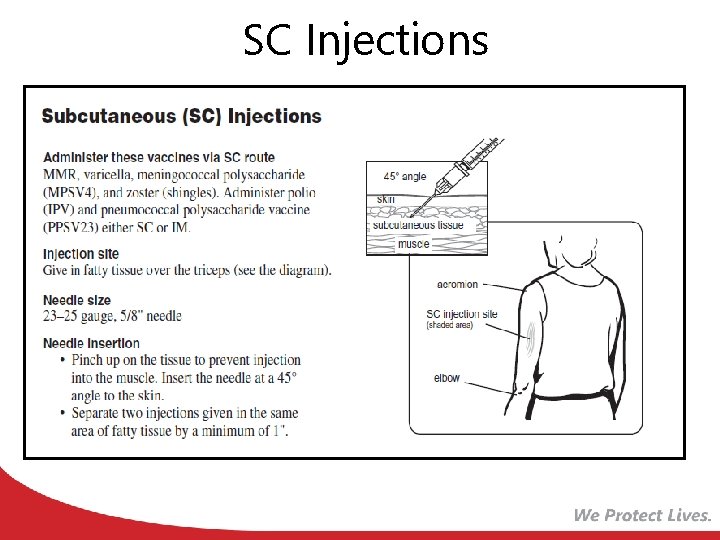
SC Injections
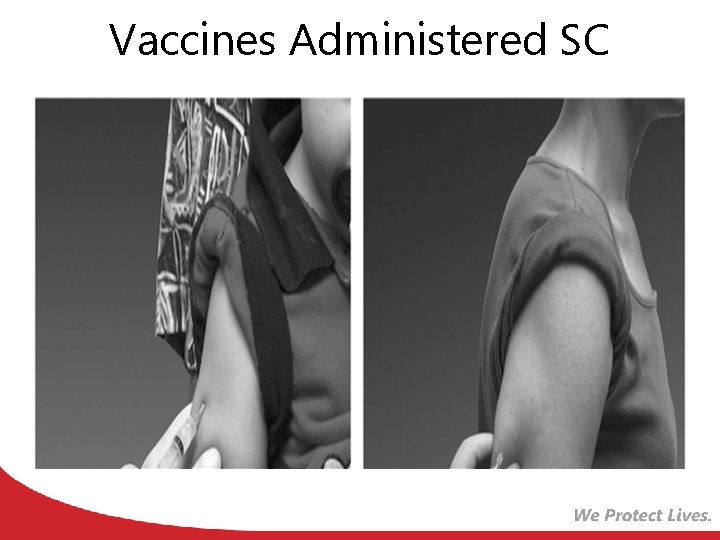
Vaccines Administered SC
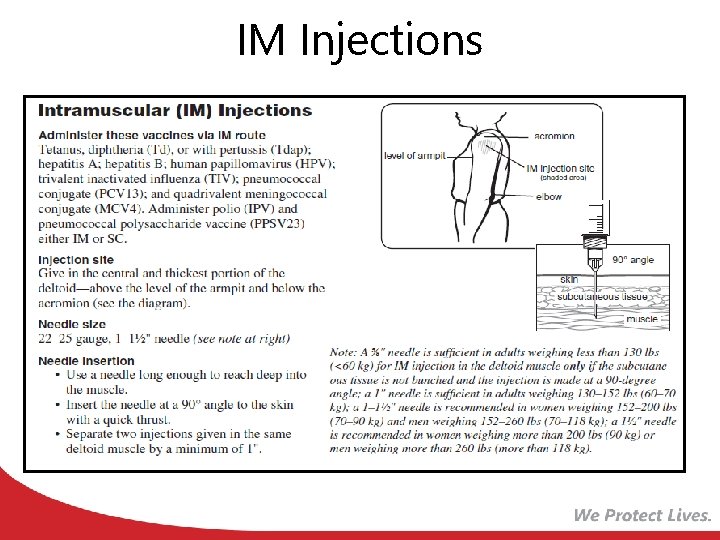
IM Injections
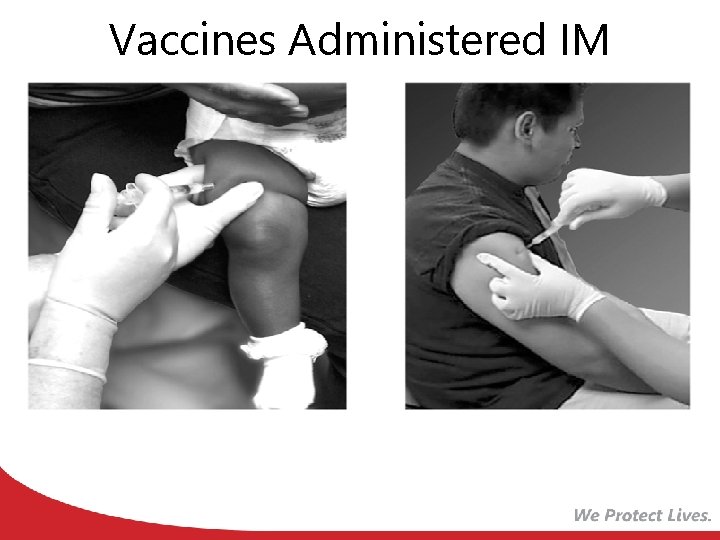
Vaccines Administered IM
SIRVA Shoulder Injury Related to Vaccine Administration • Incorrect injection technique • Antigen into tissues and structures • Severe, persistent shoulder pain and prolonged restriction of function • Symptoms develop within 24 to 48 hours of vaccination
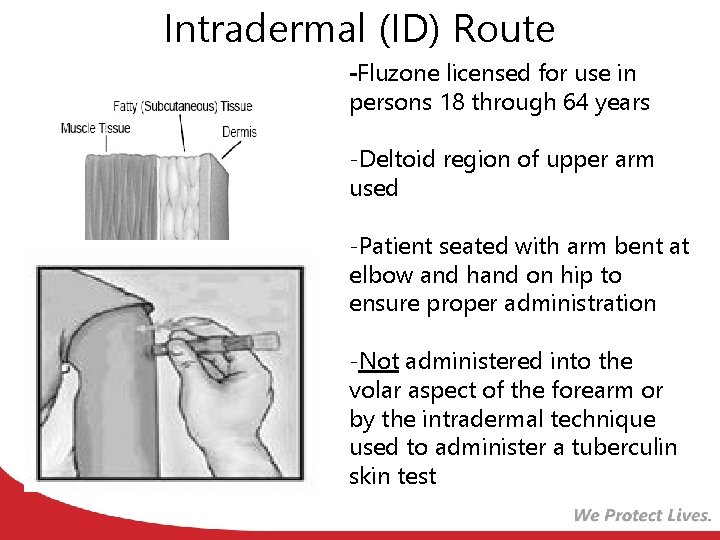
Intradermal (ID) Route -Fluzone licensed for use in persons 18 through 64 years -Deltoid region of upper arm used -Patient seated with arm bent at elbow and hand on hip to ensure proper administration -Not administered into the volar aspect of the forearm or by the intradermal technique used to administer a tuberculin skin test
Multiple Vaccines • Administer each vaccine at different anatomic site • Use anterolateral thigh for infants and young children • Use deltoid for older children and adults if muscle adequate • Separate injections by at least 1 inch • Use separate limb for most reactive vaccines (tetanus toxoid-containing and PCV 13) if possible • Use combination vaccines when appropriate
Test Your Knowledge! Are there any guidelines on how many vaccines can be administered at one time?
Test Your Knowledge! Are there any guidelines on how many vaccines can be administered at one time? There are no limits, which means that as many as nine vaccines could be administered at one visit. This would be in a circumstance where many doses have been missed previously. In this circumstance, one useful method to decrease the number of injections is the choice of combination vaccines, which combine antigens in one injection.
Bleeding Disorders • May develop hematomas in (IM) injection sites • Administer by recommended (IM) route if can be safely administered • Instruct about risk of hematoma • Schedule shortly after antihemophilia or similar therapy • Use 23 -guage or finer needle • Apply firm pressure to site at least 2 minutes • Do NOT rub or massage injection site
Non-Standard Administration Revaccination is recommended if: • Hep B vaccine administered by any route other than (IM) or in any site of an adult other than deltoid or anterolateral thigh • Rabies administered in gluteal site • HPV administered by any route other than (IM) • Less than standard dose/partial dose
Managing Acute Vaccine Reactions • Thorough screening for contraindications and precautions • Procedures in place for managing reaction • Be familiar with the signs & symptoms of anaphylaxis • Know staff role in the event of an emergency • CPR certified • Emergency cart & equipment available
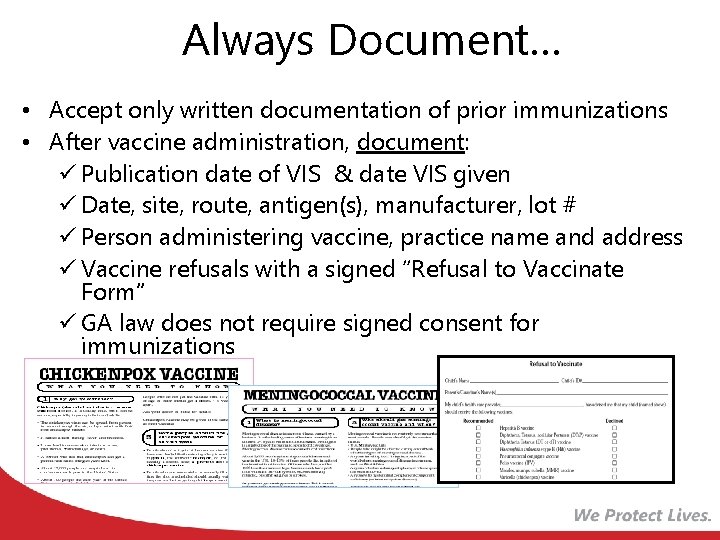
Always Document… • Accept only written documentation of prior immunizations • After vaccine administration, document: ü Publication date of VIS & date VIS given ü Date, site, route, antigen(s), manufacturer, lot # ü Person administering vaccine, practice name and address ü Vaccine refusals with a signed “Refusal to Vaccinate Form” ü GA law does not require signed consent for immunizations
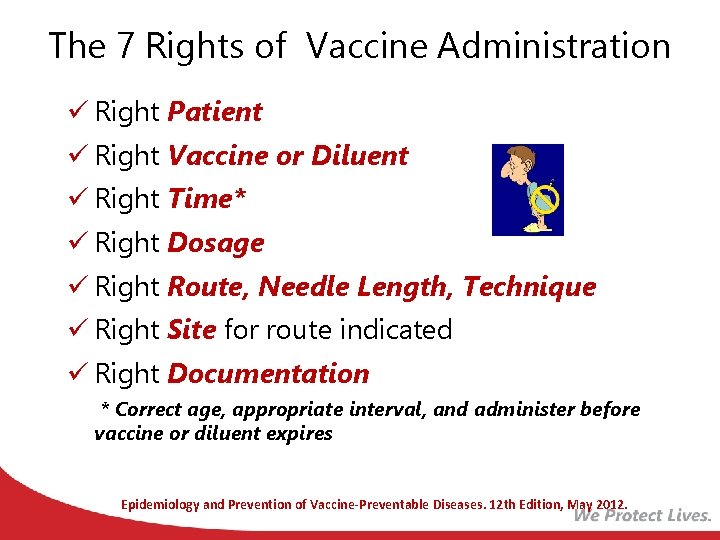
The 7 Rights of Vaccine Administration ü Right Patient ü Right Vaccine or Diluent ü Right Time* ü Right Dosage ü Right Route, Needle Length, Technique ü Right Site for route indicated ü Right Documentation * Correct age, appropriate interval, and administer before vaccine or diluent expires Ref: Epidemiology and Prevention of Vaccine-Preventable Diseases. 12 th Edition, May 2012.
Avoiding Vaccine Errors • When possible, involve staff in selection of vaccine products • Keep current reference materials on each vaccine • Rotate vaccines • Consider the potential for product mix-up • Triple Check Your work
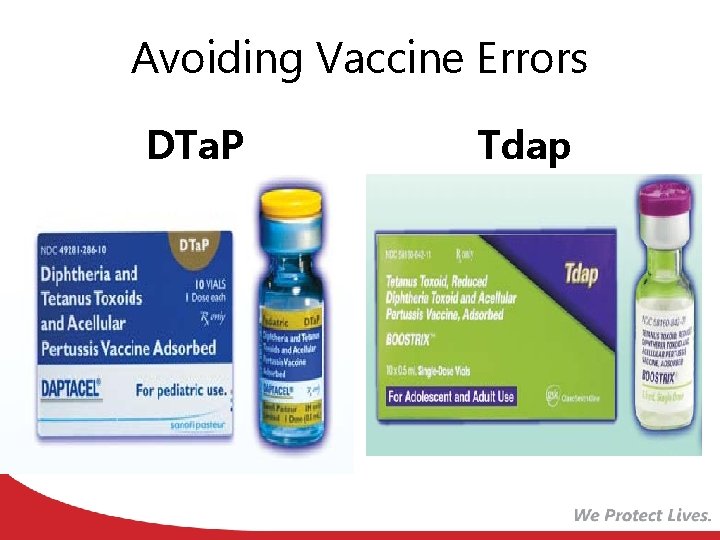
Avoiding Vaccine Errors DTa. P Tdap
Test Your Knowledge! Four month old Lucas was given Tdap instead of DTa. P. What should be done?
Test Your Knowledge! Four month old Lucas was given Tdap instead of DTa. P. What should be done? If Tdap was inadvertently given to a child under age 7 years, it should not be counted as either the first, second, or third dose of DTa. P. The dose should be repeated with DTa. P. Continue vaccinating on schedule. If the dose of Tdap was administered for the fourth or fifth DTa. P dose, the Tdap dose can be counted as valid. Please remind your staff to always check the vaccine vial at least 3 times before administering any vaccine. IAC Ask the Experts - Reviewed July 2014
Test Your Knowledge! Lillian, a 50 year old grandmother, was given DTa. P instead of Tdap. Does she need to receive one dose of Tdap?
Test Your Knowledge! Lillian, a 50 year old grandmother, was given DTa. P instead of Tdap. Does she need to receive one dose of Tdap? Lillian received the appropriate amount of tetanus toxoid and MORE diphtheria toxoid and pertussis antigen than is recommended. Count the dose as Tdap. The patient does not need a repeat dose of Tdap. Take measures to prevent this error in the future. IAC Ask the Experts - Reviewed July 2014
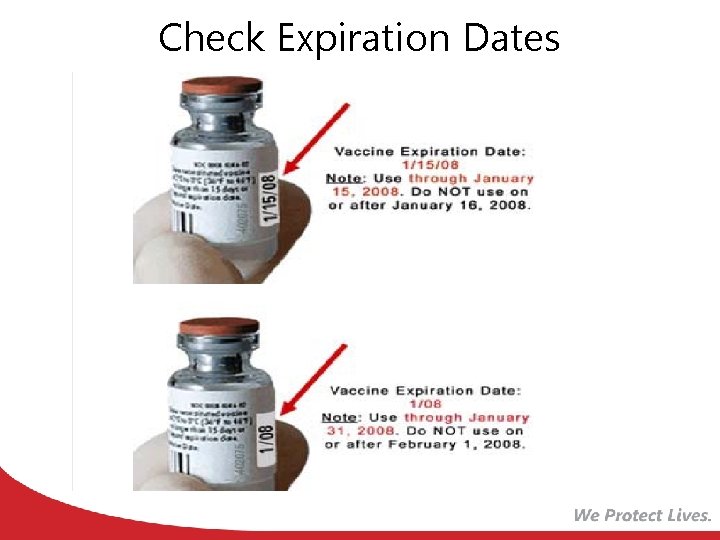
Check Expiration Dates
Test Your Knowledge! Five-year-old Tonia received her second MMR a week ago. How long should she wait before receiving live attenuated influenza vaccine (LAIV)?
Test Your Knowledge! Five-year-old Tonia received her second MMR a week ago. How long should she wait before receiving live attenuated influenza vaccine (LAIV)? LAIV can be administered simultaneously with another live vaccine (for example, MMR, varicella), but if not given at the same time, ACIP recommends waiting four weeks before administering the second live vaccine. IAC Ask the Experts - Reviewed January 2014
Vaccine Injury Compensation Program (VICP) National Vaccine Injury Compensation Program provides compensation to individuals found to be injured by or have died from certain childhood vaccines. – – Established in 1988 by NCVIA Federal “no fault” system to compensate those injured Claim must be filed by individual, parent or guardian Must show that injury is on “Vaccine Injury Table”
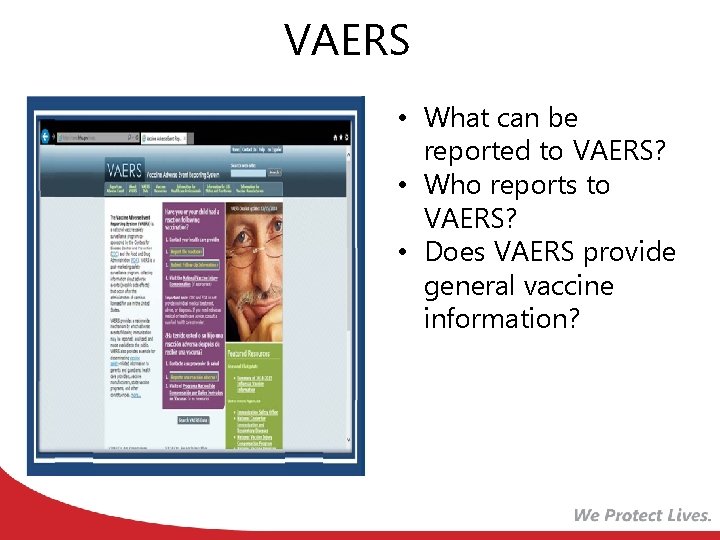
VAERS • What can be reported to VAERS? • Who reports to VAERS? • Does VAERS provide general vaccine information?
Are YOU up to date? Healthcare Personnel (HCP) Need These Immunizations • Annual influenza vaccine • Tdap or Td • Hepatitis B (exposure risk) Check immunity Validate immune status of: • Varicella • Measles, Mumps & Rubella(MMR)
Resources • Local health department • District Immunization Coordinator • GA Immunization Program Office – On call Help line: 404 -657 -3158 – GRITS Help Line: 1 -866 -483 -2958 – VFC Help Line: 1 -800 -848 -3868 – Website http: //dph. georgia. gov/immunization-section – Your local Immunization Regional Consultant (IRC) • GA Chapter of the AAP • GA Academy of Family Physicians
Internet Resources Georgia Department of Public Health l http: //dph. georgia. gov/immunization-section CDC Immunization information l http: //www. cdc. gov/vaccines/ CDC Flu information l http: //www. cdc. gov/flu/ Immunization Action Coalition l www. immunize. org

QUESTIONS?
- Slides: 48