
Vaccination Poster You will be creating and presenting
Vaccination Poster
You will be creating and presenting a poster: Think about who your poster’s target audience might be… (ex. Parents, teenagers, pregnant women, etc. )
Types of Vaccinations 1. 2. 3. 4. 5. 6. Polio MMR (measles, mumps, rubella) DTP (diphtheria, tetanus, pertussis) Hepatitis B Varicella (chicken pox) Others? ?
Questions that may be addressed What disease is this vaccine meant to prevent? Describe the disease this vaccine prevents: What are the symptoms? Who is most susceptible? Is the disease caused by a virus or bacteria? Who should be vaccinated? Who should not be vaccinated? How does the vaccine work? How often should a person be vaccinated? What are some possible side effects of the vaccine? What are some other interesting facts about this vaccine?
Here are some websites to help in your research… Vaccines Chart: www. cdc. gov/vaccines/vpd-vac/vaccines-list. htm All About Vaccines: www. fda. gov/Biologics. Blood. Vaccines/default. htm Guide to Childhood Immunization: www. cdc. gov/vaccines/pubs/parents-guide/default. htm Vaccines - What You Need to Know: Vaccines: www. babycenter. com/vaccines www. cdc. gov/vaccines/
Why Vaccination? Vaccines control diseases and can protect individual animals from illness and death.
Outline of Presentation l What vaccines do l How vaccines work
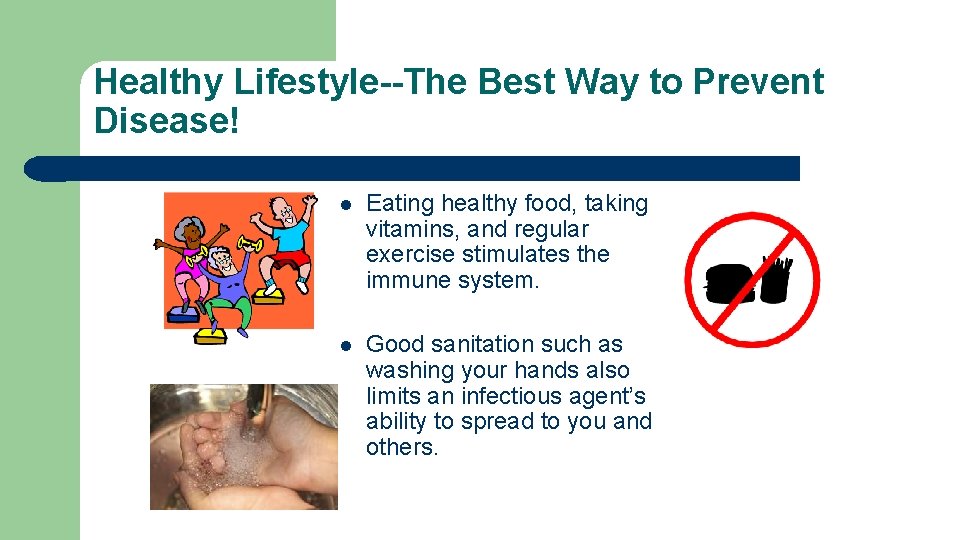
Healthy Lifestyle--The Best Way to Prevent Disease! l Eating healthy food, taking vitamins, and regular exercise stimulates the immune system. l Good sanitation such as washing your hands also limits an infectious agent’s ability to spread to you and others.
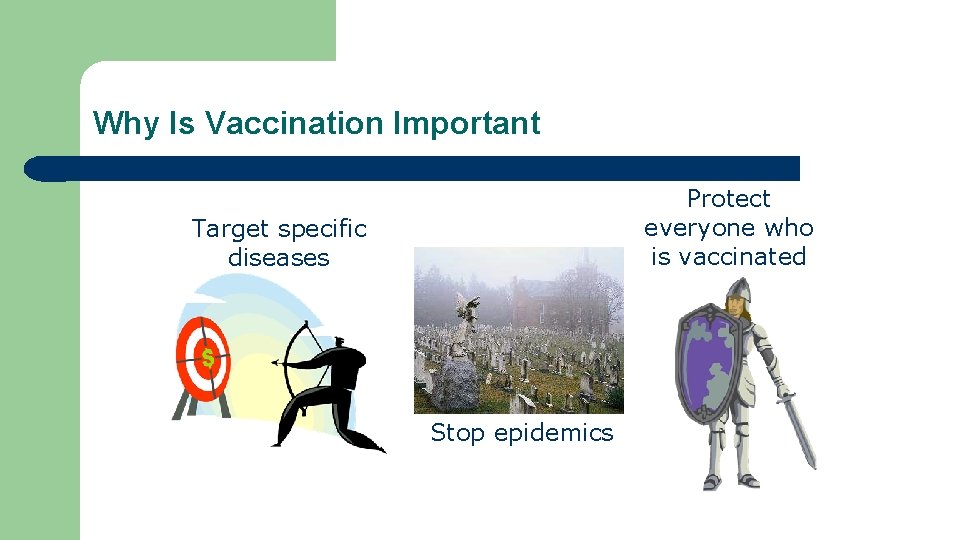
Why Is Vaccination Important Protect everyone who is vaccinated Target specific diseases Stop epidemics
Goals of Vaccination l l l Vaccinate the largest possible number of individuals in the population at risk. Vaccinate each individual no more frequently than necessary. Vaccinate only against infectious agents to which individuals have a realistic risk of exposure and subsequent development of disease.
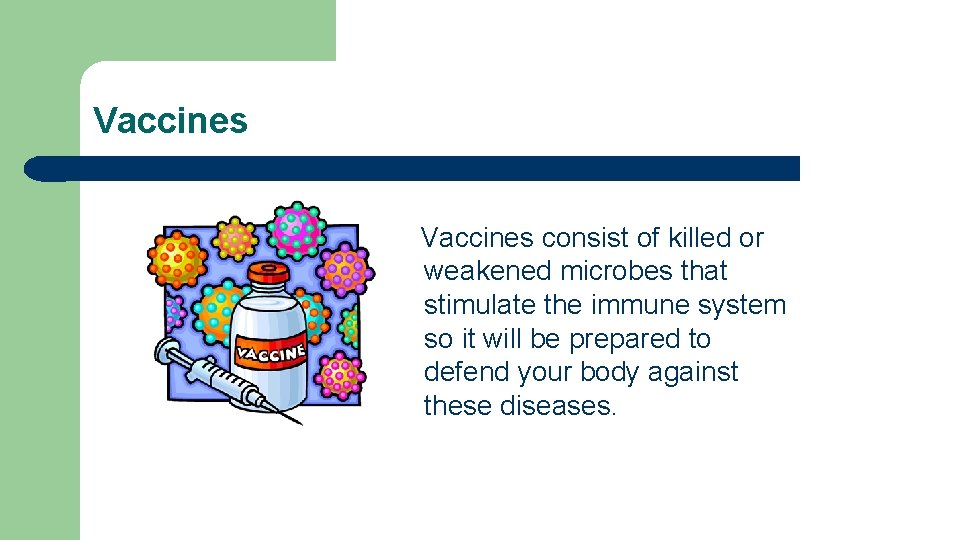
Vaccines consist of killed or weakened microbes that stimulate the immune system so it will be prepared to defend your body against these diseases.
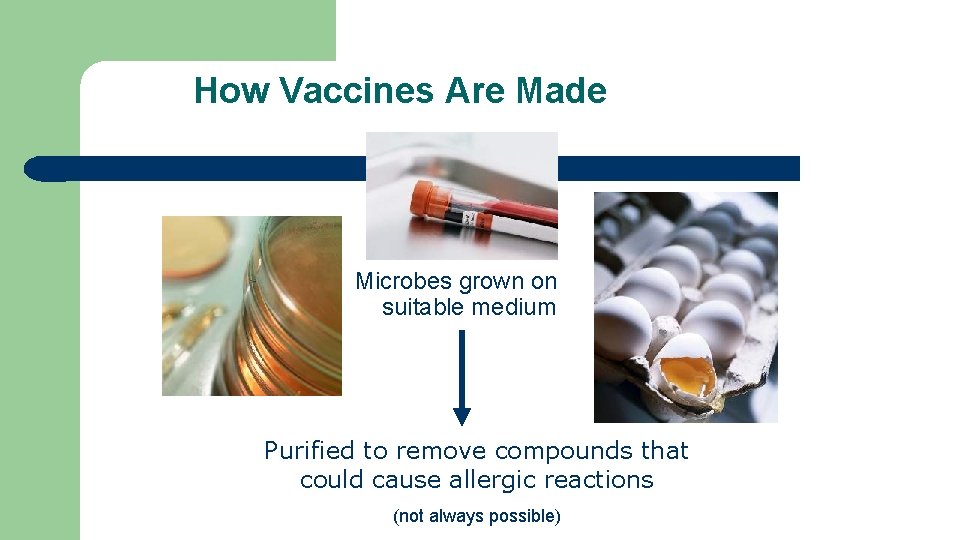
How Vaccines Are Made Microbes grown on suitable medium Purified to remove compounds that could cause allergic reactions (not always possible)
How Vaccines Work
How Vaccines Work l l ? Vaccines usually stimulate the immune system to recognize the infectious agent and to produce antibodies to the disease. If the immunized person/animal is later exposed to the infectious agent, the antibody-producing cells “remember” their earlier encounter with the infectious agent and respond quickly to make more antibodies.
So what’s an antibody? An antibody is a protein (called immunoglobulin) that can destroy infectious microbes by making it more easy for white blood cells to capture and destroy the microbes.
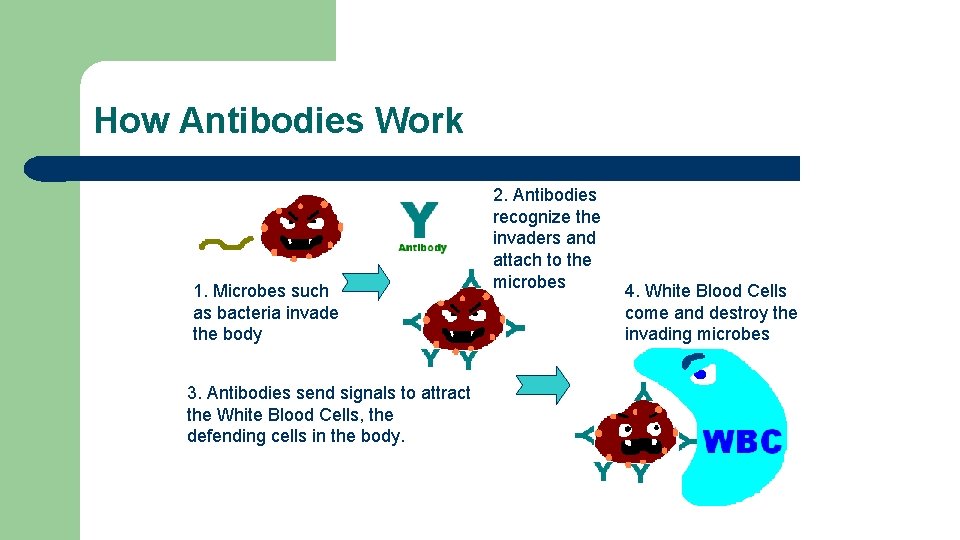
How Antibodies Work 1. Microbes such as bacteria invade the body 3. Antibodies send signals to attract the White Blood Cells, the defending cells in the body. 2. Antibodies recognize the invaders and attach to the microbes 4. White Blood Cells come and destroy the invading microbes
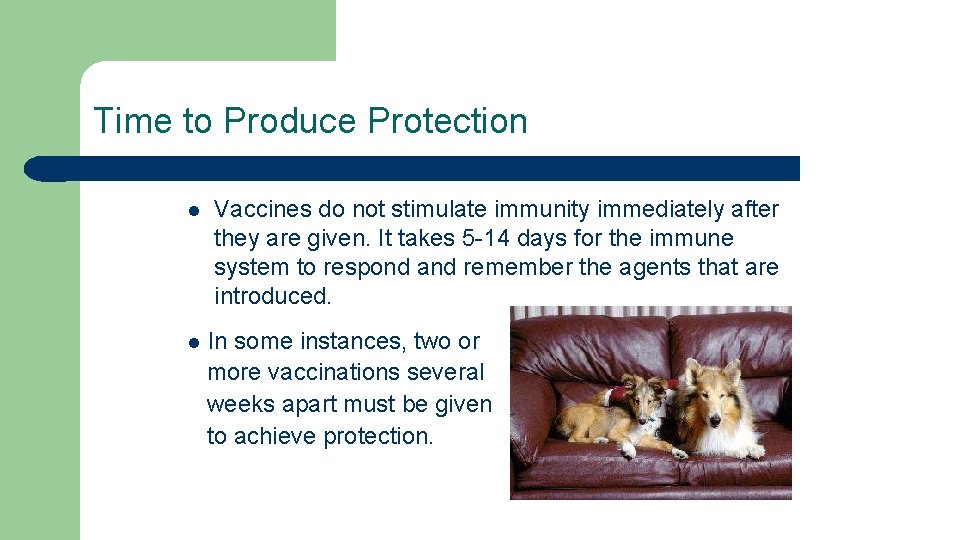
Time to Produce Protection l l Vaccines do not stimulate immunity immediately after they are given. It takes 5 -14 days for the immune system to respond and remember the agents that are introduced. In some instances, two or more vaccinations several weeks apart must be given to achieve protection.
- Slides: 17