
Vaccination How Necessary and How Often Paula Boyden
Vaccination: How Necessary and How Often Paula Boyden BVet. Med MRCVS Veterinary Director Dogs Trust
Disease Control Minimise risk of infection: • Good husbandry • Hygiene measures • Vaccination
Vaccination is not an excuse for poor husbandry!


People • Hand washing • Personal Gels • Clothing
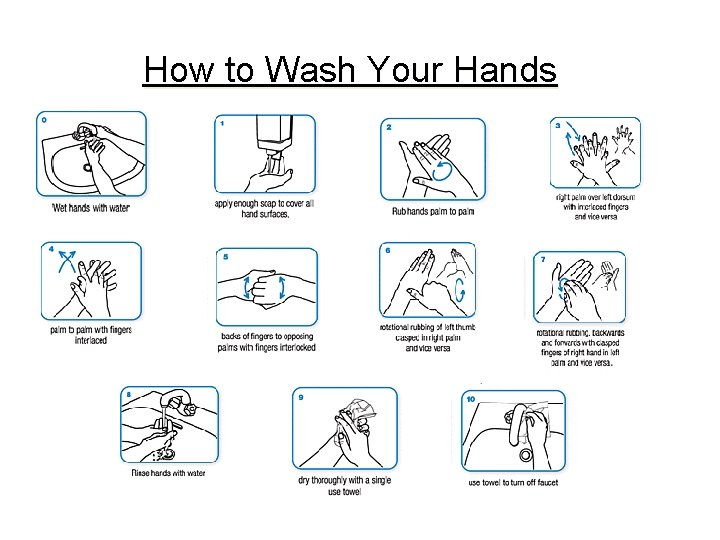
How to Wash Your Hands
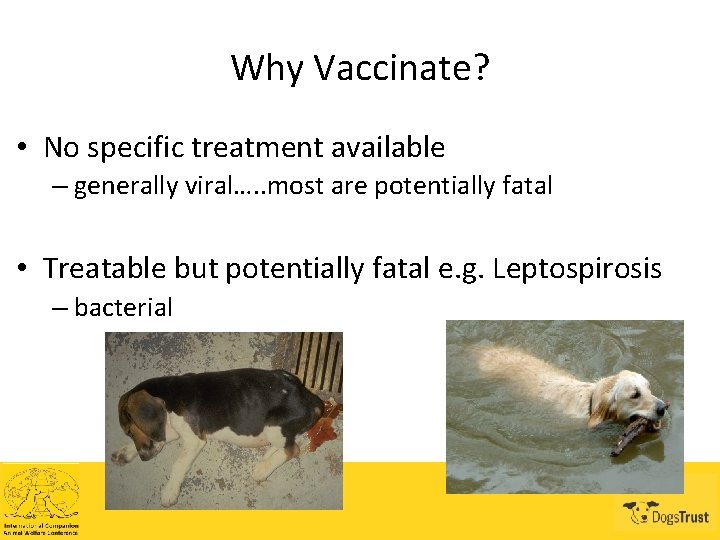
Why Vaccinate? • No specific treatment available – generally viral…. . most are potentially fatal • Treatable but potentially fatal e. g. Leptospirosis – bacterial
Is Vaccination appropriate? • May be other alternative control measures – eradication by removing infected individuals • Treatment with appropriate therapy – e. g. antibiotics
Aims of Vaccination Ideally. . . • Eradicate disease • Prevent infection • Protect against disease • Sometimes limiting clinical signs is the best we can do
Limitations of Vaccination • • • Disease management factors Carrier states: FCV, FHV Challenge pressure Immunocompetence Vaccine handling – best practice

High and Low Levels of Infection Symptoms High infection levels Immunity Low infection levels Excretion starts Time
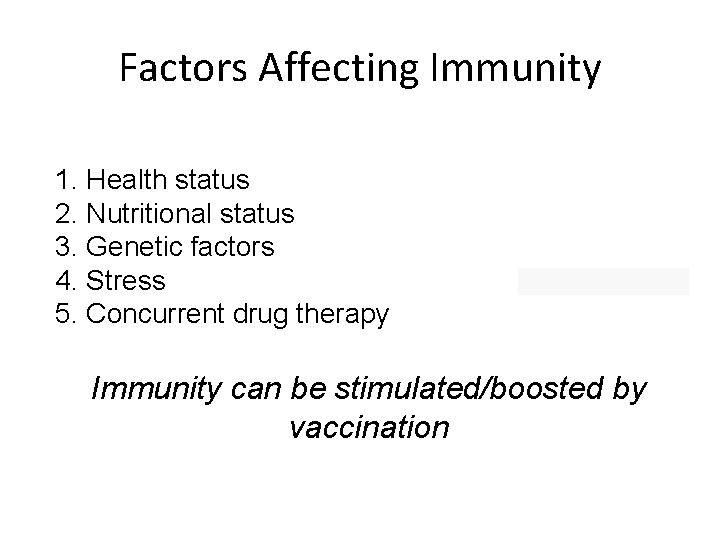
Factors Affecting Immunity 1. Health status 2. Nutritional status 3. Genetic factors 4. Stress 5. Concurrent drug therapy Immunity can be stimulated/boosted by vaccination
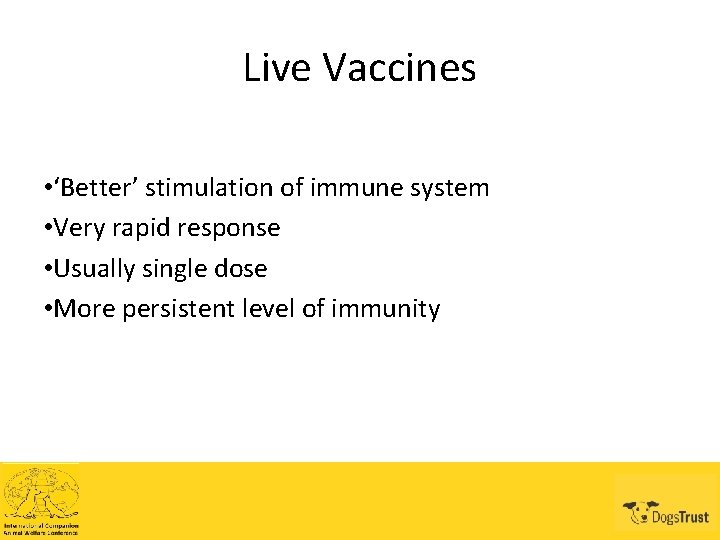
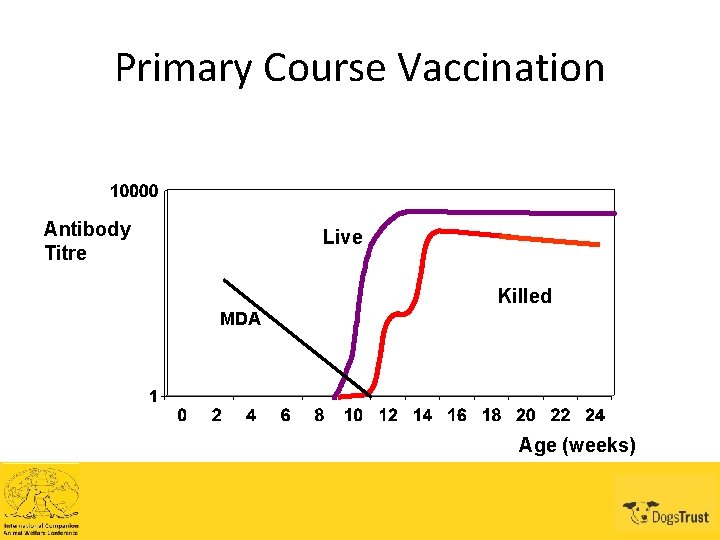
Live Vaccines • ‘Better’ stimulation of immune system • Very rapid response • Usually single dose • More persistent level of immunity
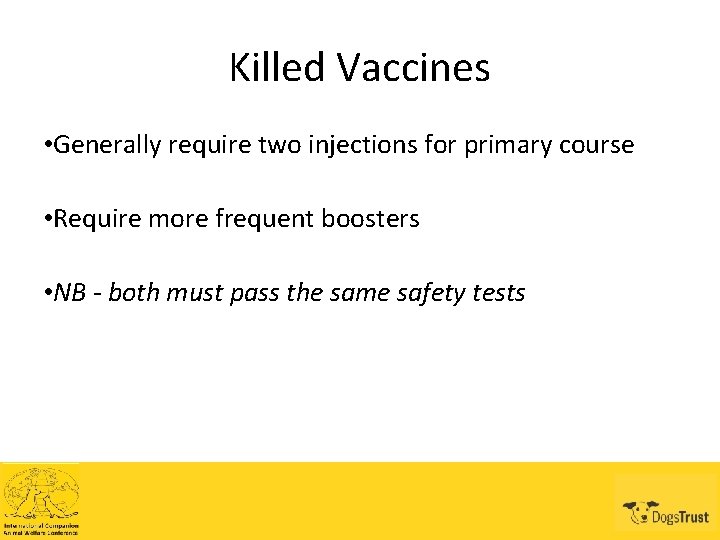
Killed Vaccines • Generally require two injections for primary course • Require more frequent boosters • NB - both must pass the same safety tests
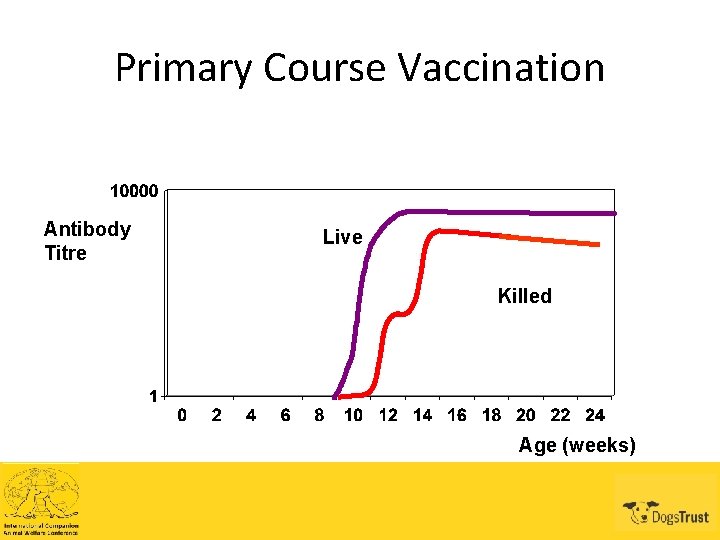
Primary Course Vaccination Antibody Titre Live Killed Age (weeks)
Naturally Acquired Immunity • Active –following infection (antibodies & CMI) • Passive –MDA • via dam’s milk (90%) • via placental transfer
Primary Course Vaccination Antibody Titre Live Killed MDA Age (weeks)
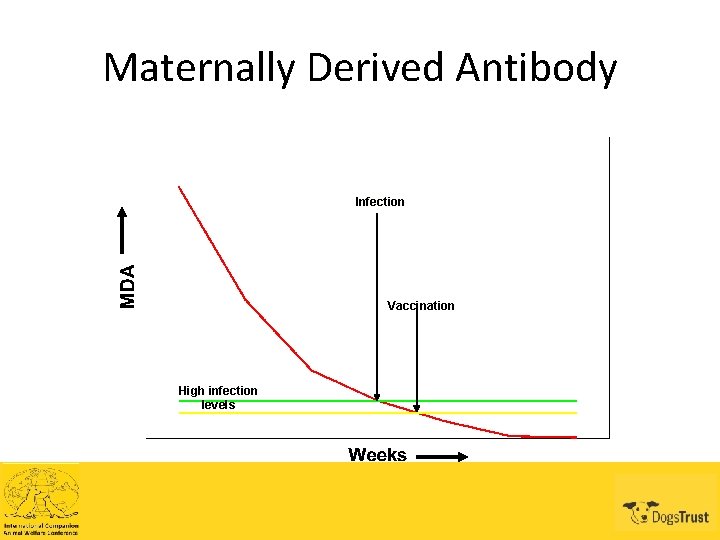
Maternally Derived Antibody Infection Vaccination High infection levels
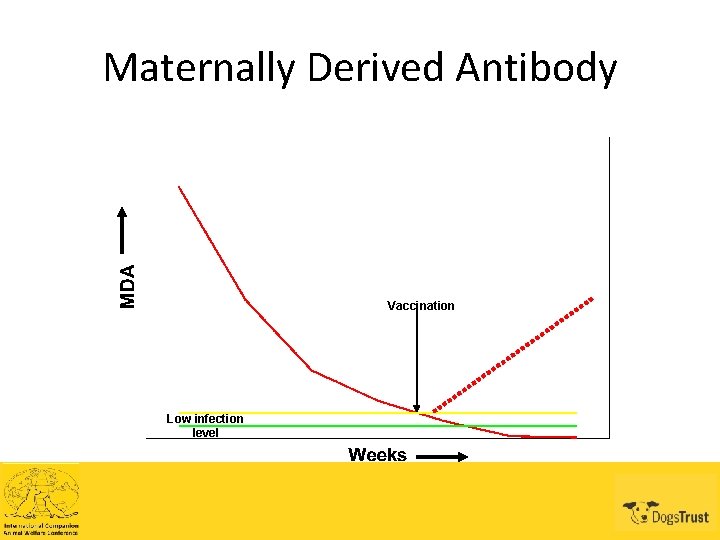
Maternally Derived Antibody Vaccination Low infection level
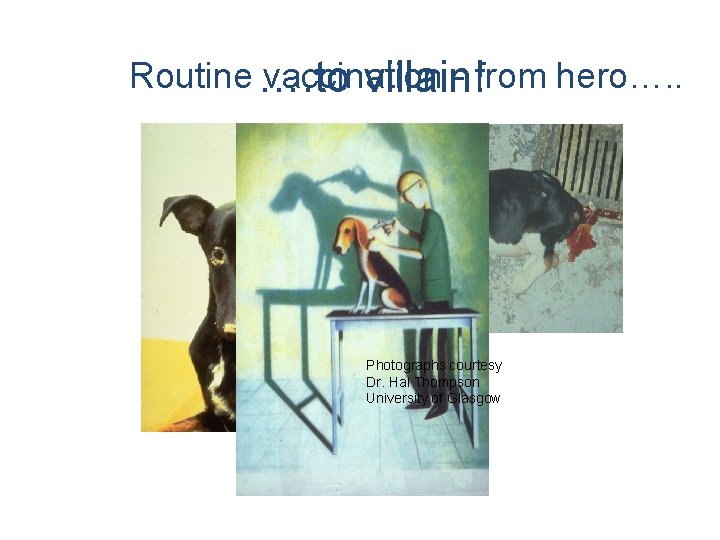
Routine …. to vaccination - from hero…. . villain! Photographs courtesy Dr. Hal Thompson University of Glasgow
Pet Vaccination: The Main Concerns • Do vaccines cause such significant side effects that we are doing more harm than good? • Do we need to revaccinate every year? – What is the risk of disease in the unvaccinated animal? – What is the duration of immunity (DOI)? • Do we need to vaccinate every animal with every available vaccine? – Core vs non-core vaccines
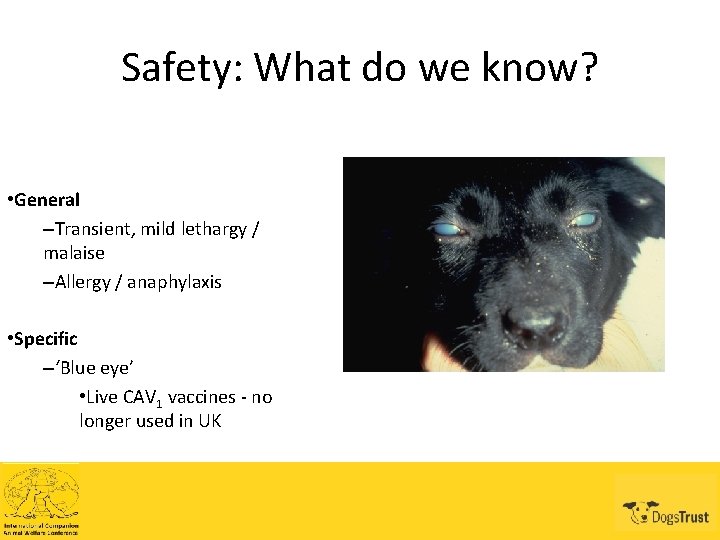
Safety: What do we know? • General –Transient, mild lethargy / malaise –Allergy / anaphylaxis • Specific –‘Blue eye’ • Live CAV 1 vaccines - no longer used in UK
Safety: POOCH Study • Objective – To determine whether a temporal association exists between canine vaccination and ill health • Method – General health questionnaire – 3966 useable records (2002 M, 1964 F)
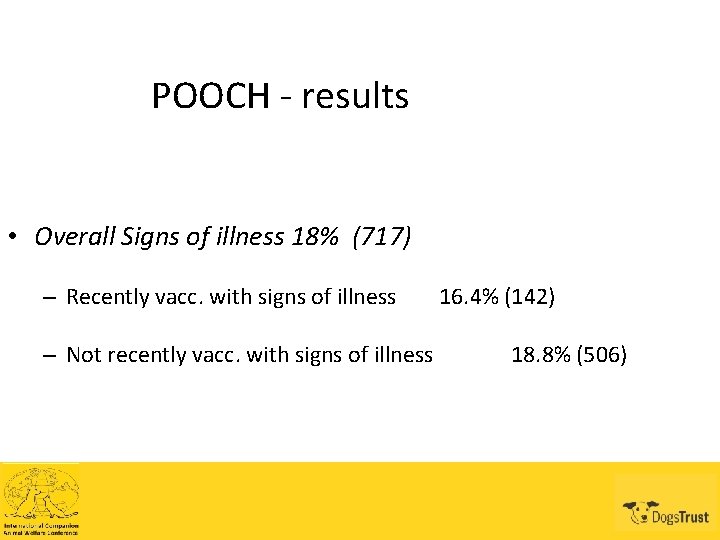
POOCH - results • Overall Signs of illness 18% (717) – Recently vacc. with signs of illness – Not recently vacc. with signs of illness 16. 4% (142) 18. 8% (506)
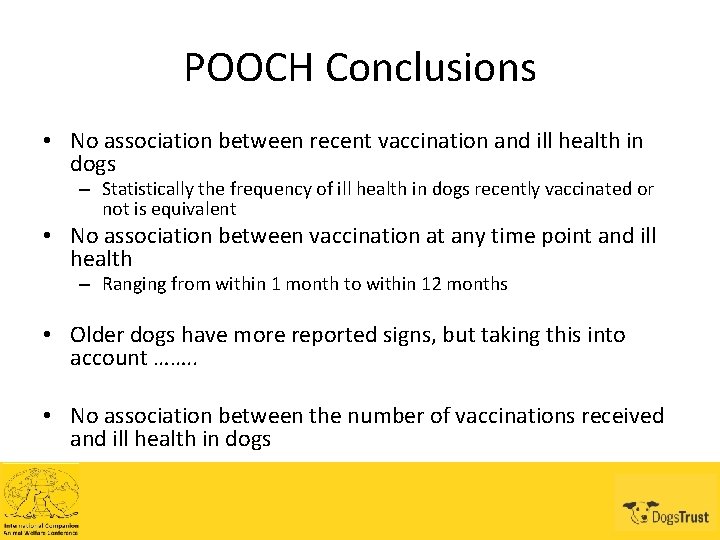
POOCH Conclusions • No association between recent vaccination and ill health in dogs – Statistically the frequency of ill health in dogs recently vaccinated or not is equivalent • No association between vaccination at any time point and ill health – Ranging from within 1 month to within 12 months • Older dogs have more reported signs, but taking this into account ……. . • No association between the number of vaccinations received and ill health in dogs
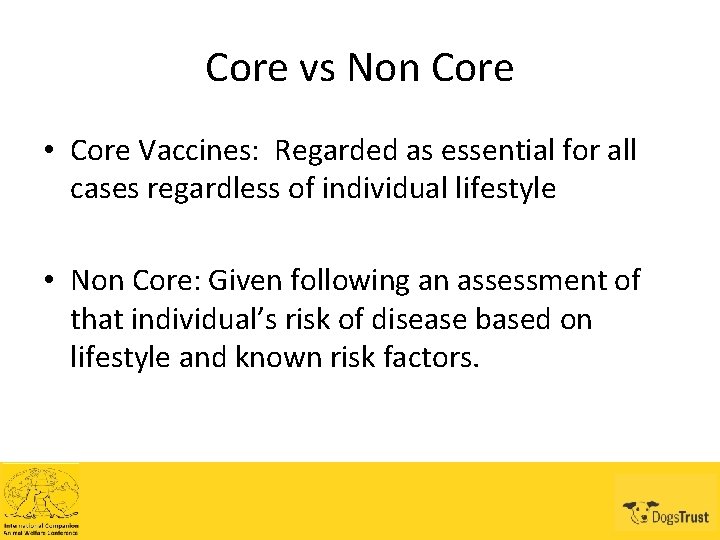
Core vs Non Core • Core Vaccines: Regarded as essential for all cases regardless of individual lifestyle • Non Core: Given following an assessment of that individual’s risk of disease based on lifestyle and known risk factors.
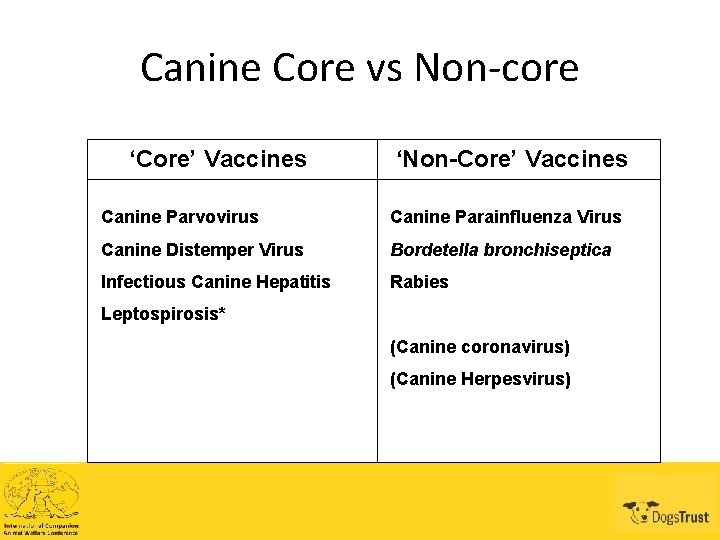
Canine Core vs Non-core ‘Core’ Vaccines ‘Non-Core’ Vaccines Canine Parvovirus Canine Parainfluenza Virus Canine Distemper Virus Bordetella bronchiseptica Infectious Canine Hepatitis Rabies Leptospirosis* (Canine coronavirus) (Canine Herpesvirus)
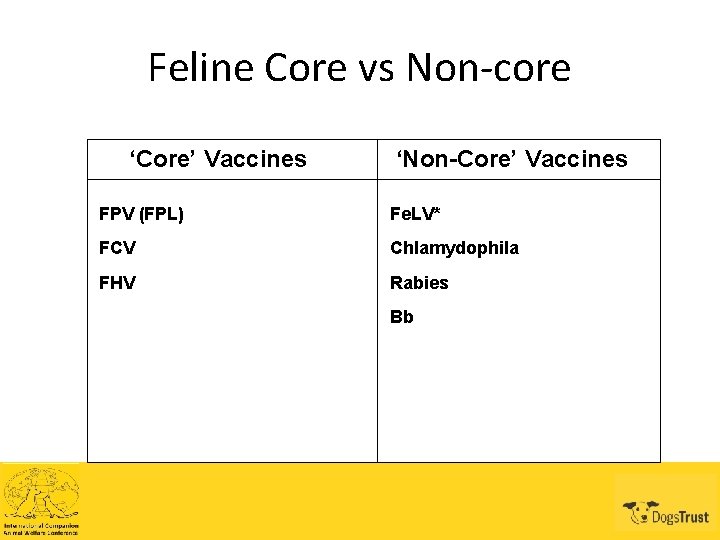
Feline Core vs Non-core ‘Core’ Vaccines ‘Non-Core’ Vaccines FPV (FPL) Fe. LV* FCV Chlamydophila FHV Rabies Bb
Why are boosters necessary? • Immunity is not lifelong to all diseases and therefore boosters will be required at intervals to maintain the high level of protection. • The manufacturers recommended booster intervals are designed to ensure, as far as is practically possible, that all animals under field conditions (even ones that do not respond as well to vaccination) maintain a level of protective immunity.
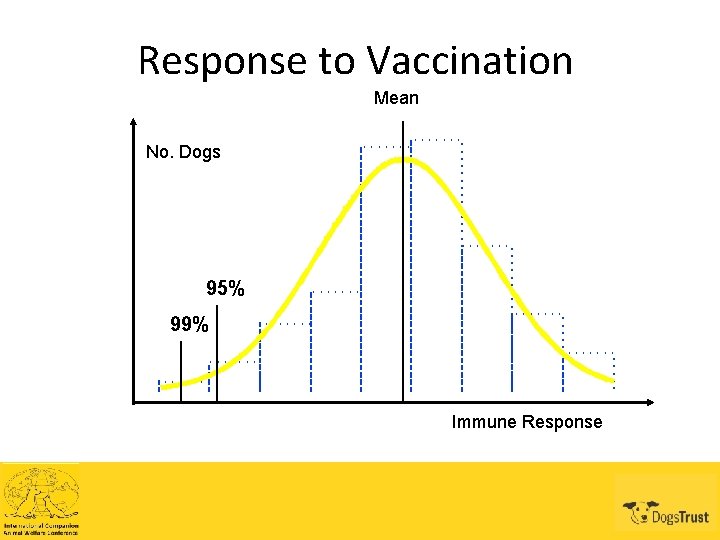
Response to Vaccination Mean No. Dogs 95% 99% Immune Response
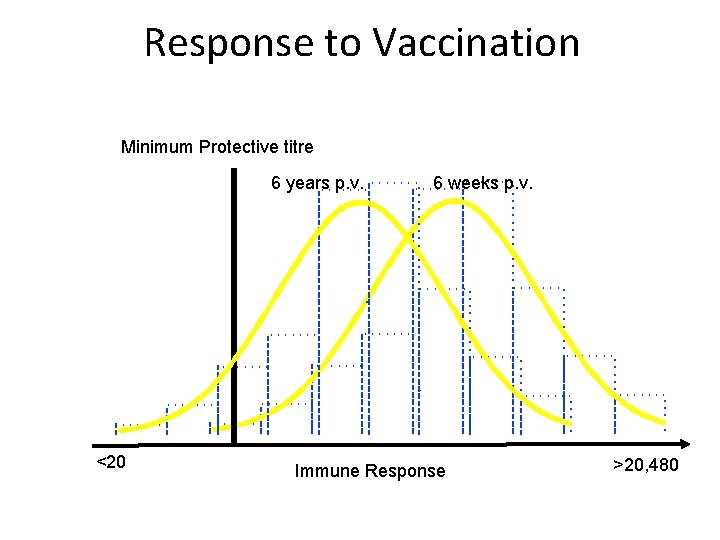
Response to Vaccination Minimum Protective titre 6 years p. v. <20 6 weeks p. v. Immune Response >20, 480

Thank You
- Slides: 32