
Vacaville Fire Department Standards of Coverage Update October
Vacaville Fire Department Standards of Coverage Update October 9, 2018
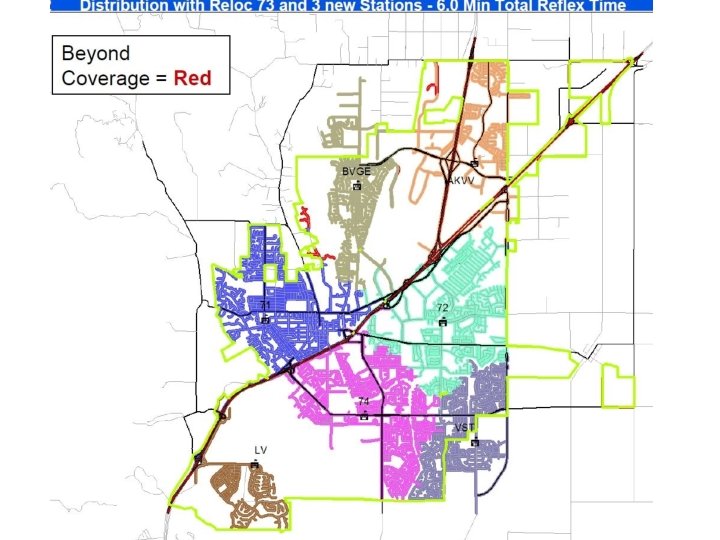
Background • Last study conducted by Citygate in 2003 • Recommendations: • Install traffic pre-emption on traffic signals on high response route corridors • Adoption of 7: 00 minute, 90 percentile response time for medical emergencies • Seven fire stations in the City to provide adequate coverage and response times • • Move Station 73 east Build a new station in South Town Build a new station in Browns Valley Build a new station in Lagoon Valley
Vacaville: 2002 vs. 2017 2002 • Population: 92, 000 • Four stations • Incidents: 6, 300 • 80% medical 2017 • Population: 98, 977 • Five stations • Incidents: 10, 589 • 70% medical • Simultaneous incidents: 12% 50% • Three simultaneous incidents: 17%
Questions for 2018 SOC • Based on the current information and anticipated growth per the General Plan, are Vacaville’s fire resources adequate and properly deployed? • Can we serve Vacaville with the current five stations, where they are currently located? • If expansion of a station were needed, can we remodel and expand Station 73? Can we move the truck there? • Is a fifth ambulance needed? If so, when should it be placed in service? • Is a fifth engine needed? If so, when should it be placed in service?

2018 SOC Findings • Vacaville contains all of the fire services risks of any similar size community in the Western United States • Vacaville’s current firefighting and ambulance deployment currently meets the risks to be protected from fire and emergency medical events. • The ongoing concern is when growth and simultaneous calls for service will overtax the current fire station location and staffing model. • Vacaville’s current adopted response time is 7: 00 minutes, 90% of the time
2018 SOC Findings (cont. ) • The highest incident demand the quantity of simultaneous incidents in the City are in Station 72’s area • The unit hour utilization workloads on Medic 72 and 74 are past saturation during peak demand hours of the day, and Medic 71 is not far behind • The City’s simultaneous incident rate, combined with ambulance workload, means the ambulance crews are likely missing training and other fire service duties
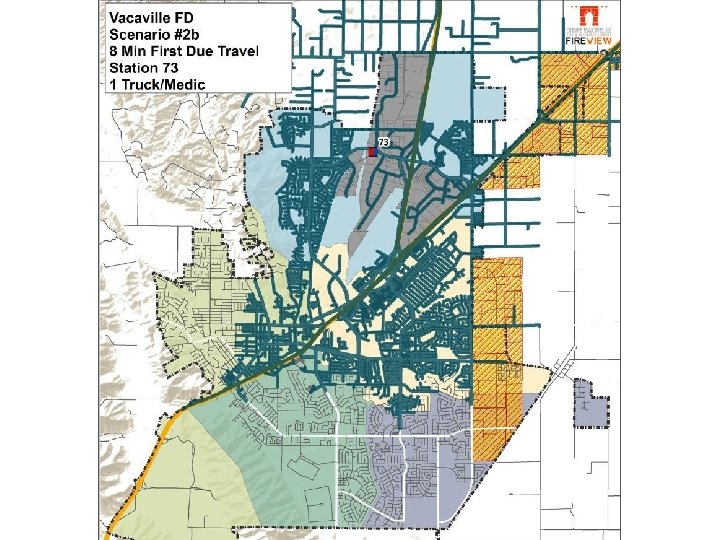
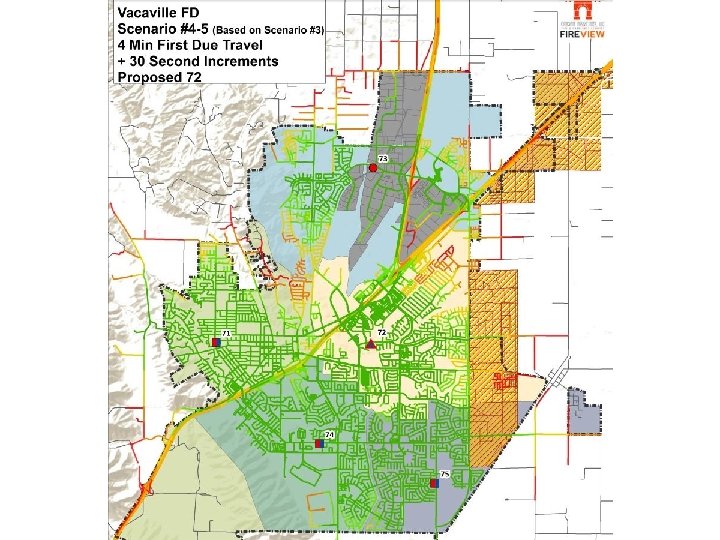
2018 SOC Findings (cont. ) • Geographic analysis shows the City can be covered with five well-spaced fire stations • If better than 4: 00 to 5: 00 minute “drive” time coverage is desired, Station 73 would have to be moved east and a new station built between Stations 71 and 73 • The best location for a single ladder truck is Station 72. • If possible, relocating Station 72 to the west would better balance the existing first-due engine, ambulance, and battalion chief coverage
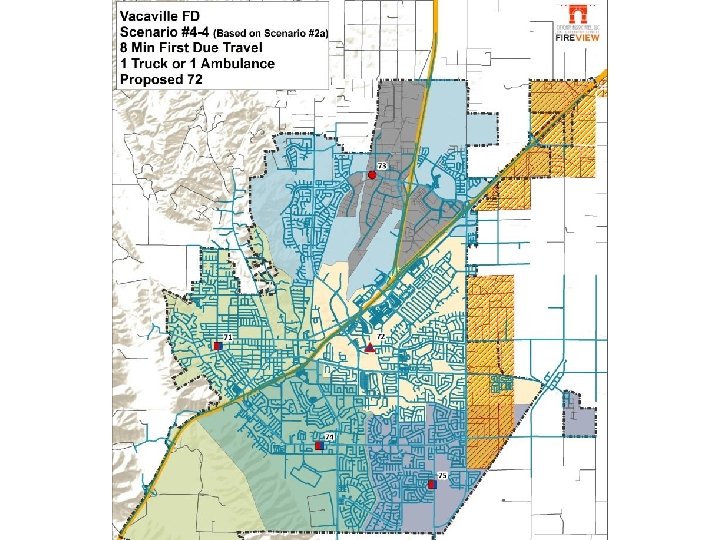
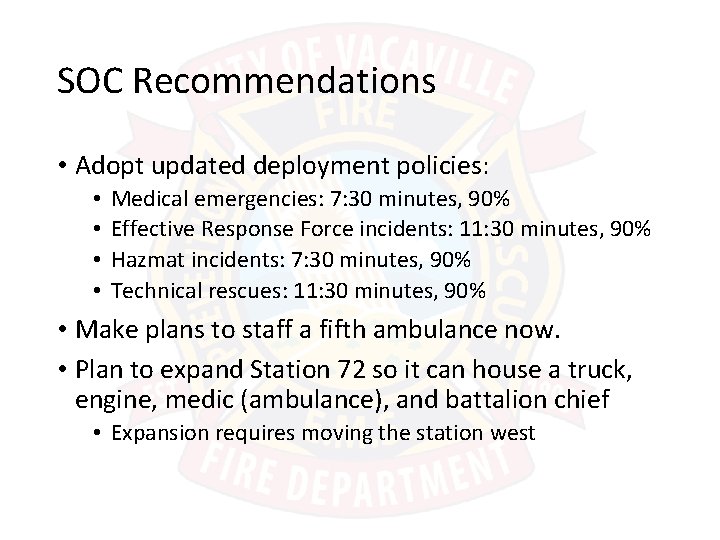
SOC Recommendations • Adopt updated deployment policies: • • Medical emergencies: 7: 30 minutes, 90% Effective Response Force incidents: 11: 30 minutes, 90% Hazmat incidents: 7: 30 minutes, 90% Technical rescues: 11: 30 minutes, 90% • Make plans to staff a fifth ambulance now. • Plan to expand Station 72 so it can house a truck, engine, medic (ambulance), and battalion chief • Expansion requires moving the station west
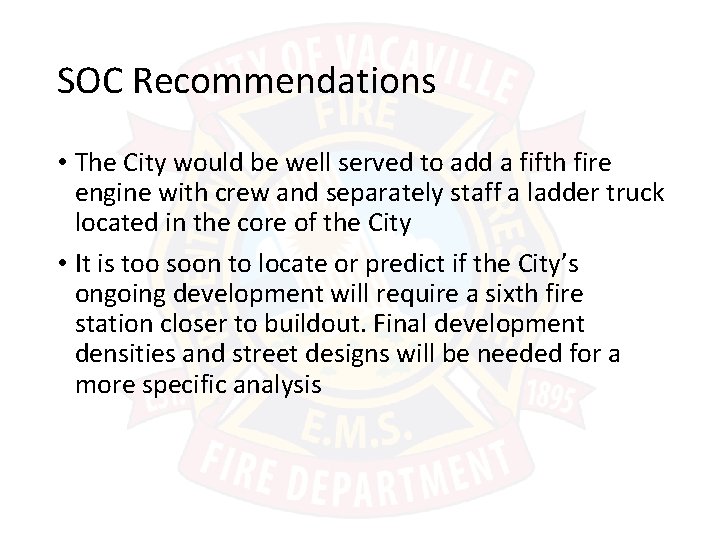
SOC Recommendations • The City would be well served to add a fifth fire engine with crew and separately staff a ladder truck located in the core of the City • It is too soon to locate or predict if the City’s ongoing development will require a sixth fire station closer to buildout. Final development densities and street designs will be needed for a more specific analysis
Questions?
- Slides: 15