
VAAL RIVER SYSTEM TARIFF TITLE Water PRESENTATION and
- Slides: 33
VAAL RIVER SYSTEM TARIFF: TITLE Water. PRESENTATION and Sanitation’s Long-term Water. Presented Requirement Scenarios by: Name Surname Directorate River Tariff Presentation Vaal Date Water Sevices Forum Venue: RW Glenvista Seef Rademeyer – 12 October 2016 1 to Rand
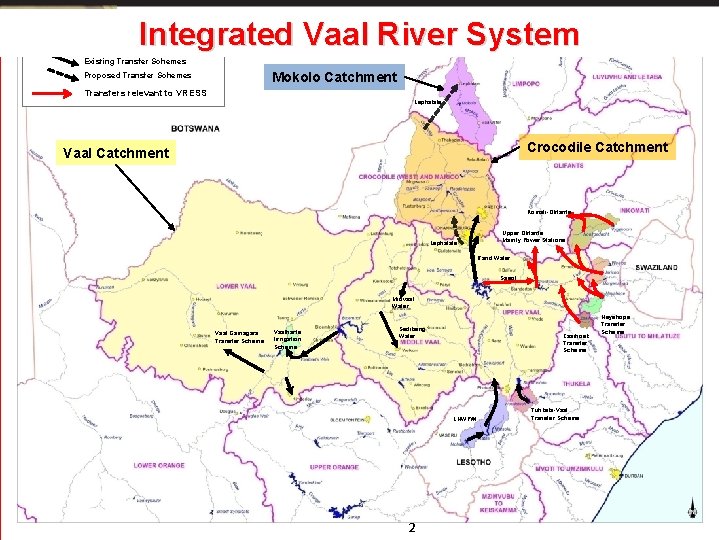
Integrated Vaal River System Existing Transfer Schemes Mokolo Catchment Proposed Transfer Schemes Transfers relevant to VRESS Lephalale Crocodile Catchment Vaal Catchment Komati-Olifants Upper Olifants Mainly Power Stations Lephalale Rand Water Sasol Midvaal Water Vaal Gamagara Transfer Scheme Vaalharts Iirrigation Scheme Sedibeng Water Zaaihoek Transfer Scheme LHWP#1 2 Tuhkela-Vaal Transfer Scheme Heyshope Transfer Scheme
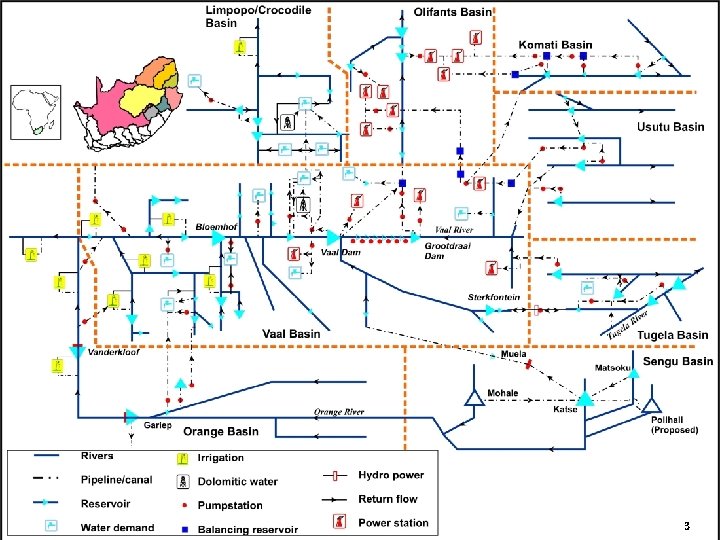
3
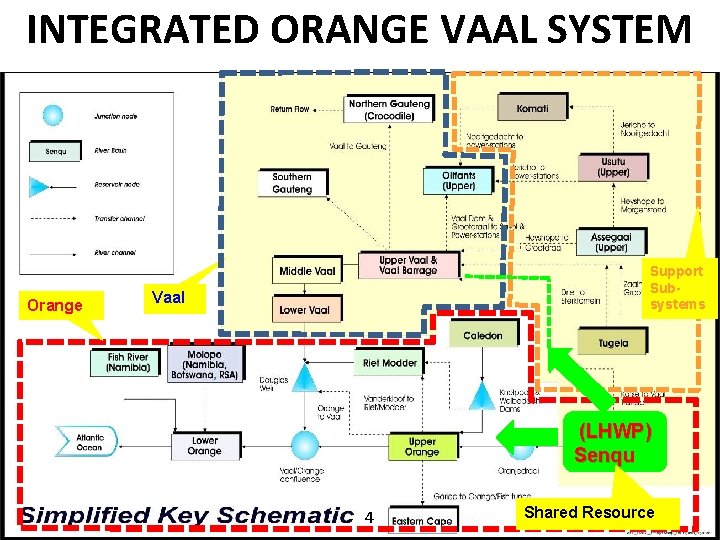
INTEGRATED ORANGE VAAL SYSTEM Orange Support Subsystems Vaal (LHWP) Senqu 4 Shared Resource
WATER REQUIREMENTS 5
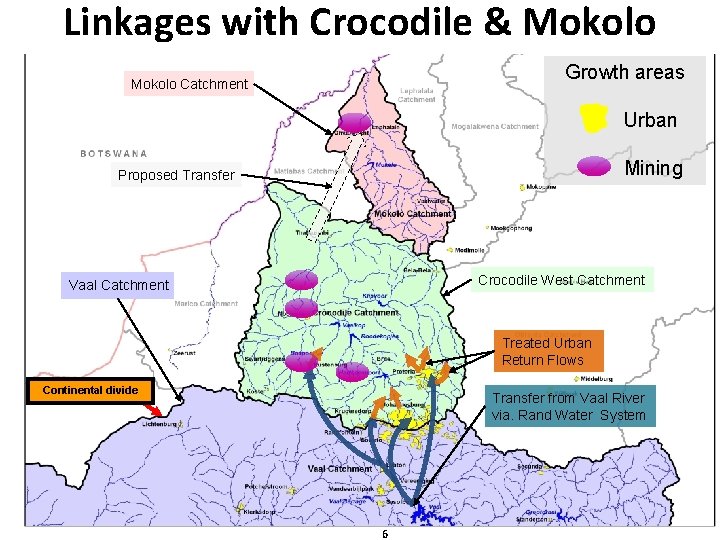
Linkages with Crocodile & Mokolo Growth areas Mokolo Catchment Urban Mining Proposed Transfer Crocodile West Catchment Vaal Catchment Treated Urban Return Flows Continental divide Transfer from Vaal River via. Rand Water System 6
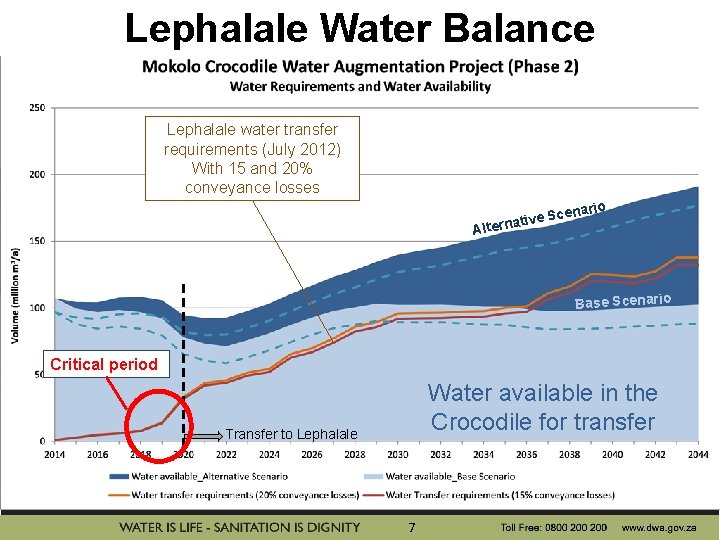
Lephalale Water Balance Lephalale water transfer requirements (July 2012) With 15 and 20% conveyance losses cenari ive S lternat A o Base Scenario Critical period Water available in the Crocodile for transfer Transfer to Lephalale 7
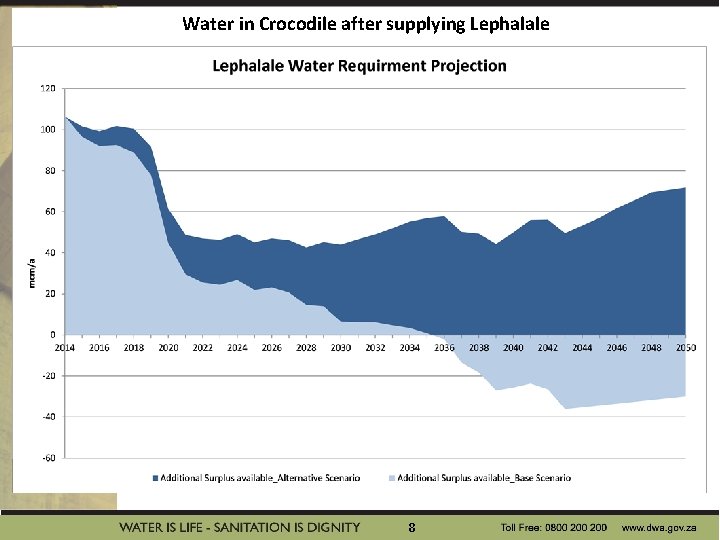
Water in Crocodile after supplying Lephalale 8
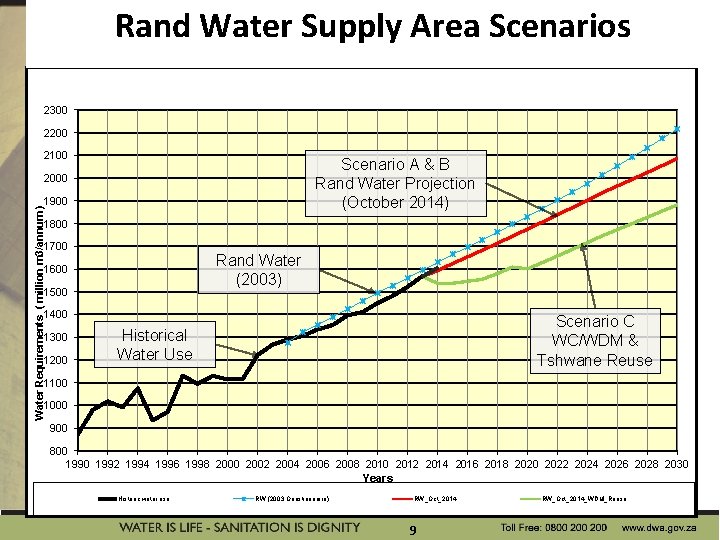
Rand Water Supply Area Scenarios 2300 2200 2100 Scenario A & B Rand Water Projection (October 2014) 2000 Water Requirements ( million m 3/annum ) 1900 1800 1700 Rand Water (2003) 1600 1500 1400 1300 1200 Scenario C WC/WDM & Tshwane Reuse Historical Water Use 1100 1000 900 800 1992 1994 1996 1998 2000 2002 2004 2006 2008 2010 2012 2014 2016 2018 2020 2022 2024 2026 2028 2030 Years Historic water use RW (2003 Questionnaire) RW_Oct_2014 9 RW_Oct_2014_WDM_Reuse
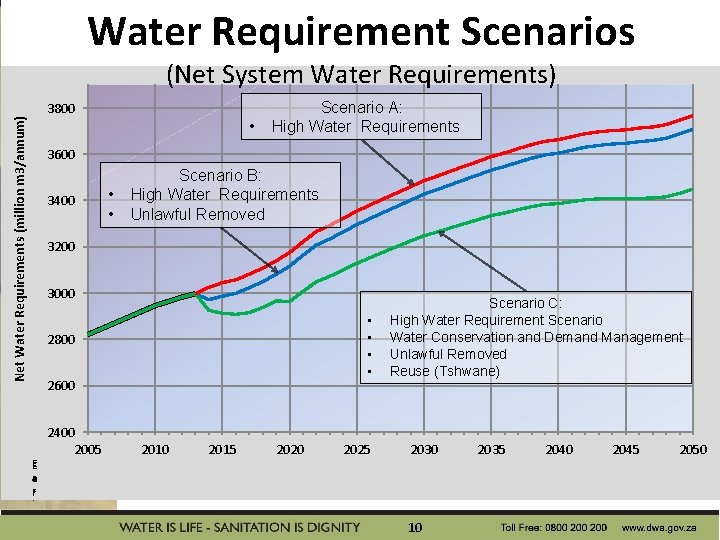
Water Requirement Scenarios (Net System Water Requirements) Net Water Requirements (million m 3/annum) 3800 • Scenario A: High Water Requirements 3600 3400 • • Scenario B: High Water Requirements Unlawful Removed 3200 3000 • • 2800 2600 E a r l i e 2400 2005 2010 2015 2020 2025 Scenario C: High Water Requirement Scenario Water Conservation and Demand Management Unlawful Removed Reuse (Tshwane) 2030 10 2035 2040 2045 2050
WATER QUALITY 11
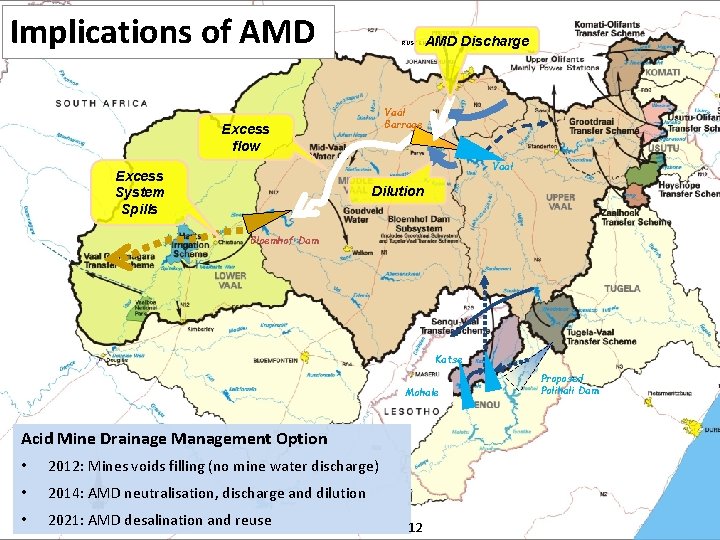
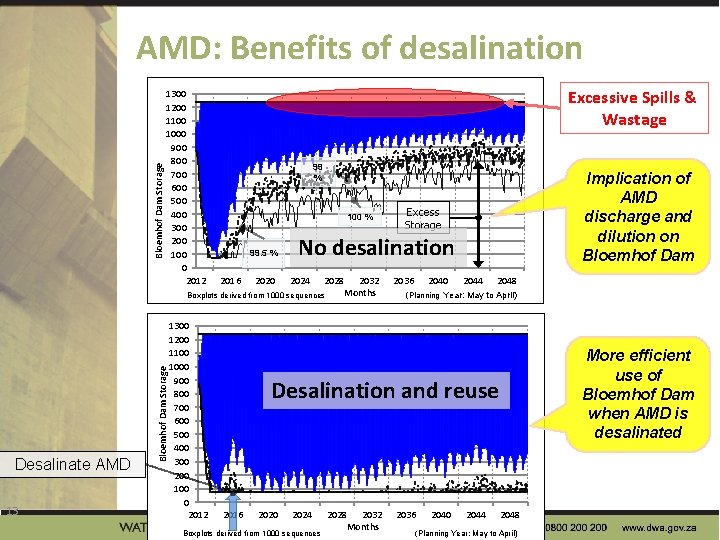
Implications of AMD Discharge RUSTENBURG Vaal Barrage Excess flow Vaal Excess System Spills Dilution Bloemhof Dam Katse Mohale Acid Mine Drainage Management Option • 2012: Mines voids filling (no mine water discharge) • 2014: AMD neutralisation, discharge and dilution • 2021: AMD desalination and reuse 12 Proposed Polihali Dam
Bloemhof Dam Storage AMD: Benefits of desalination 1300 1200 1100 1000 900 800 700 600 500 400 300 200 100 0 2012 Excessive Spills & Wastage 99 % 100 % 99. 5 % 13 Bloemhof Dam Storage Desalinate AMD 2020 Excess Storage No desalination 2028 2032 Months Boxplots derived from 1000 sequences 1300 1200 1100 1000 900 800 700 600 500 400 300 200 100 0 2012 2016 Implication of AMD discharge and dilution on Bloemhof Dam 2024 2036 2040 2044 2048 (Planning Year: May to April) More efficient use of Bloemhof Dam when AMD is desalinated Desalination and reuse 2016 2020 2024 Boxplots derived from 1000 sequences 2028 2032 Months 2036 2040 2044 2048 (Planning Year: May to April)
COMPLEX ISSUES • Dynamic area with huge growth in water requirements and we need to sustain water for social and economic activities • Complex infrastructure system • Efficient use of scarce resource important • All users contribute to the effluent and complex water quality issues • We need to ensure there will be enough water for this important area 14
RECONCILIATION STRATEGY 15
Background to the Integrated Vaal River studies • Various studies were done over many years • It culminated in the Vaal River Reconciliation Strategy Study • Stakeholders participation in Steering Committee is continuing • Strategy is presented at various stakeholder workshops 16
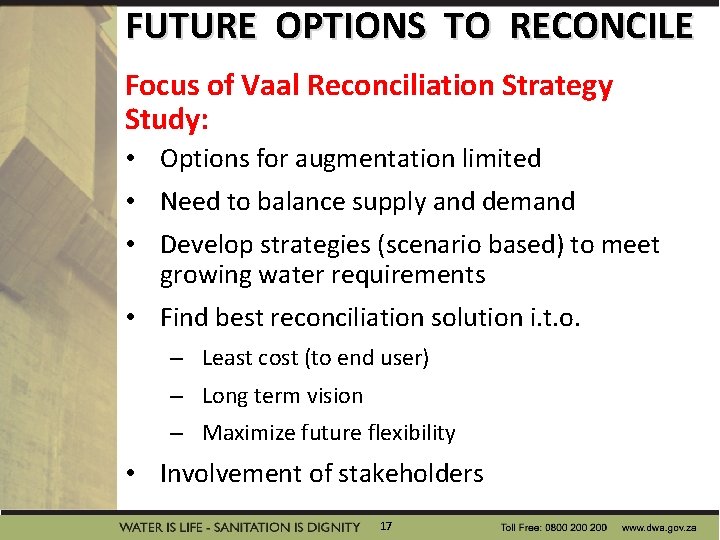
FUTURE OPTIONS TO RECONCILE Focus of Vaal Reconciliation Strategy Study: • Options for augmentation limited • Need to balance supply and demand • Develop strategies (scenario based) to meet growing water requirements • Find best reconciliation solution i. t. o. – Least cost (to end user) – Long term vision – Maximize future flexibility • Involvement of stakeholders 17
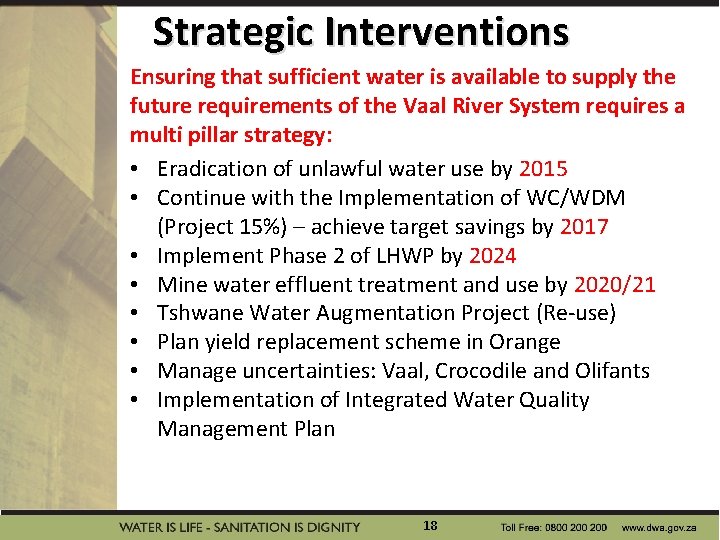
Strategic Interventions Ensuring that sufficient water is available to supply the future requirements of the Vaal River System requires a multi pillar strategy: • Eradication of unlawful water use by 2015 • Continue with the Implementation of WC/WDM (Project 15%) – achieve target savings by 2017 • Implement Phase 2 of LHWP by 2024 • Mine water effluent treatment and use by 2020/21 • Tshwane Water Augmentation Project (Re-use) • Plan yield replacement scheme in Orange • Manage uncertainties: Vaal, Crocodile and Olifants • Implementation of Integrated Water Quality Management Plan 18
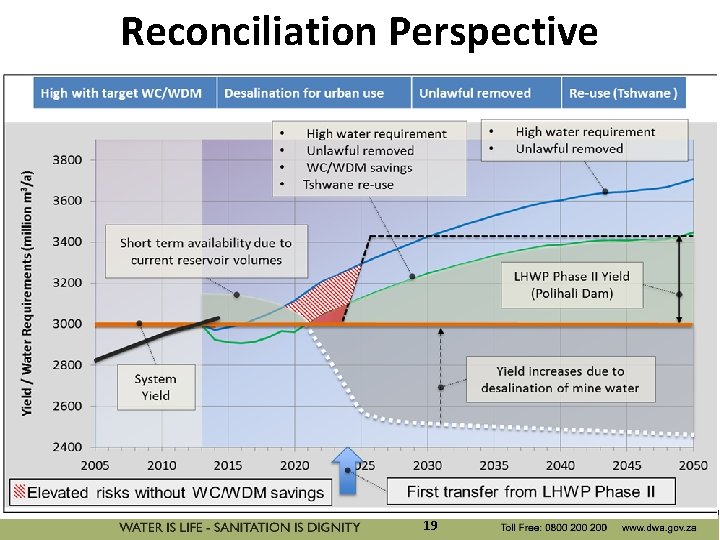
Reconciliation Perspective 19
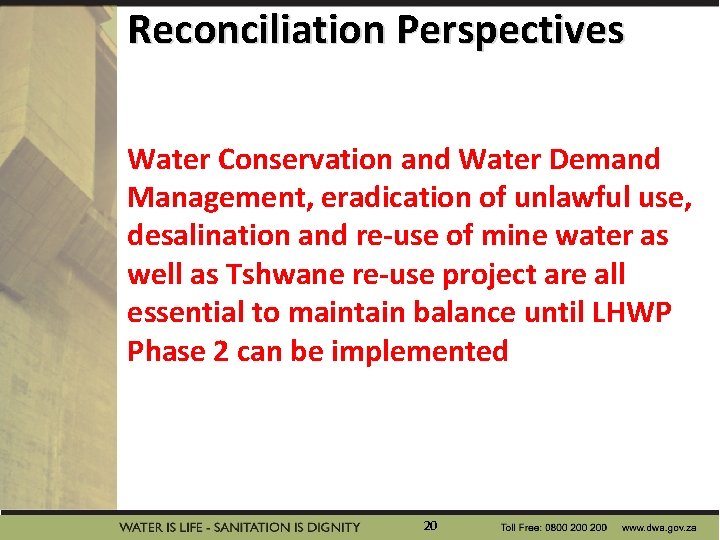
Reconciliation Perspectives Water Conservation and Water Demand Management, eradication of unlawful use, desalination and re-use of mine water as well as Tshwane re-use project are all essential to maintain balance until LHWP Phase 2 can be implemented 20
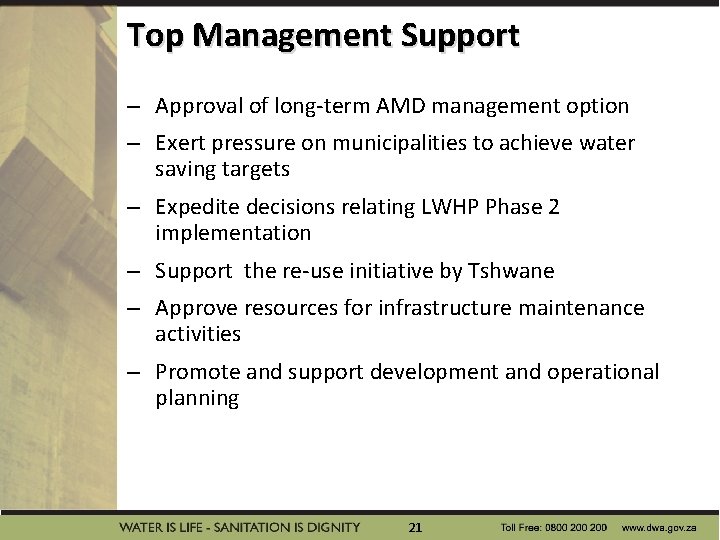
Top Management Support – Approval of long-term AMD management option – Exert pressure on municipalities to achieve water saving targets – Expedite decisions relating LWHP Phase 2 implementation – Support the re-use initiative by Tshwane – Approve resources for infrastructure maintenance activities – Promote and support development and operational planning 21
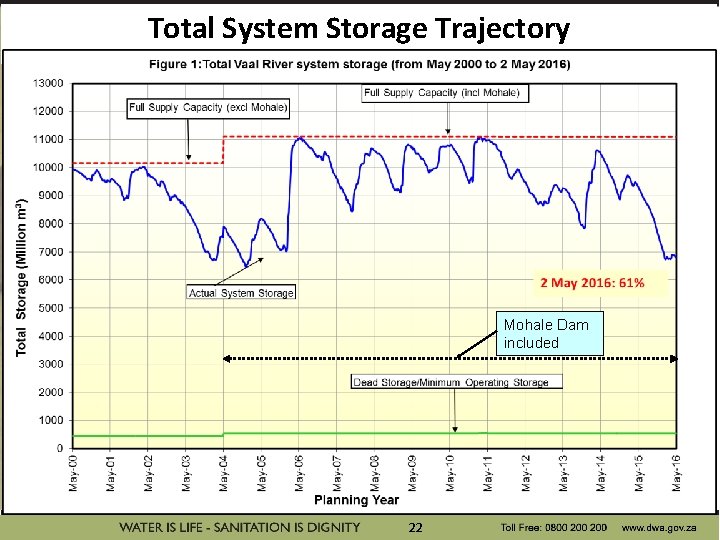
Total System Storage Trajectory Mohale Dam included 22
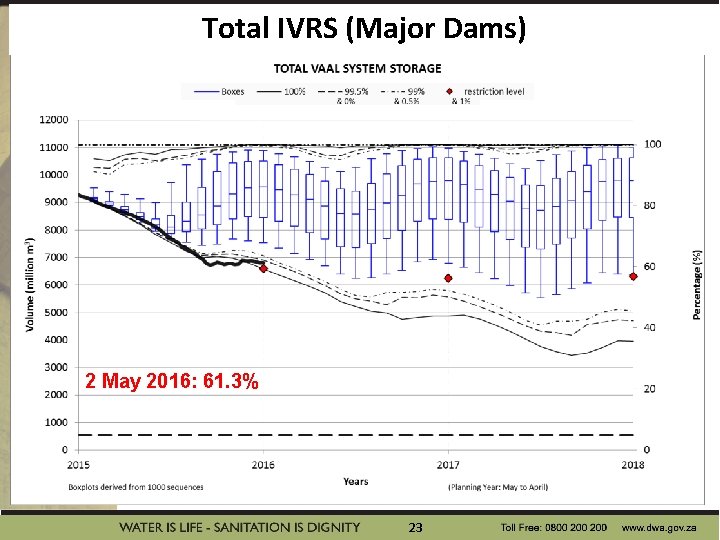
Total IVRS (Major Dams) 2 May 2016: 61. 3% 23
VAAL RIVER TARIFF CALCULATION (2016) INFORMATION SUPPLIED TO TCTA 24
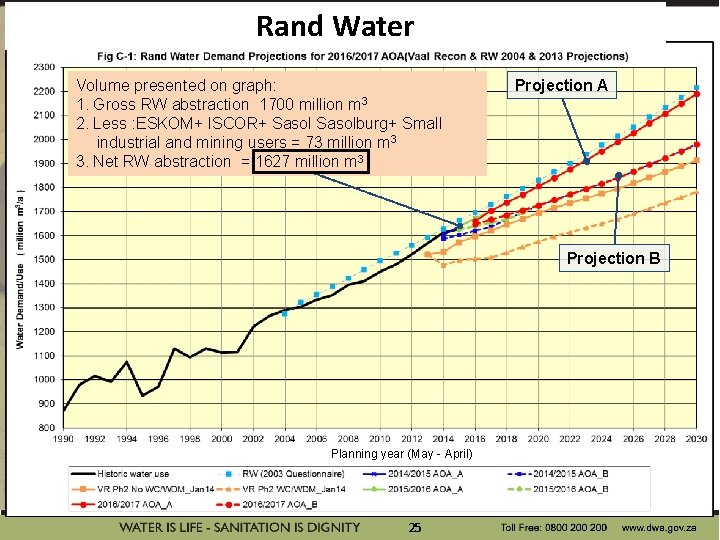
Rand Water Volume presented on graph: 1. Gross RW abstraction 1700 million m 3 2. Less : ESKOM+ ISCOR+ Sasolburg+ Small industrial and mining users = 73 million m 3 3. Net RW abstraction = 1627 million m 3 Projection A Projection B Planning year (May - April) 25
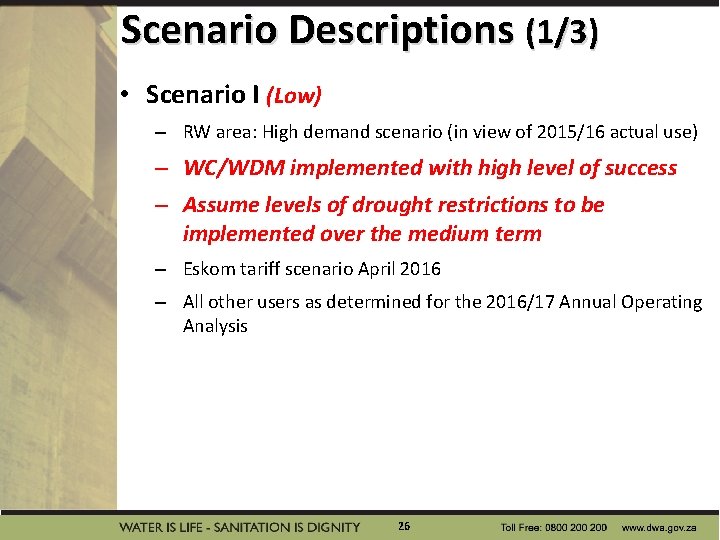
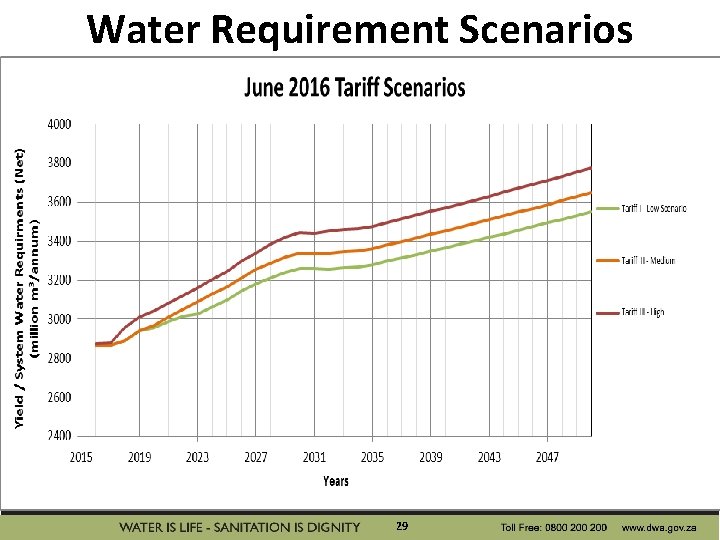
Scenario Descriptions (1/3) • Scenario I (Low) – RW area: High demand scenario (in view of 2015/16 actual use) – WC/WDM implemented with high level of success – Assume levels of drought restrictions to be implemented over the medium term – Eskom tariff scenario April 2016 – All other users as determined for the 2016/17 Annual Operating Analysis 26
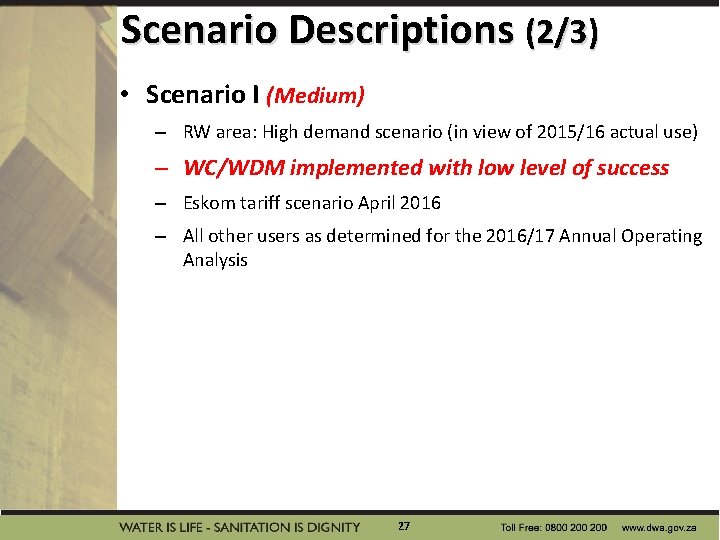
Scenario Descriptions (2/3) • Scenario I (Medium) – RW area: High demand scenario (in view of 2015/16 actual use) – WC/WDM implemented with low level of success – Eskom tariff scenario April 2016 – All other users as determined for the 2016/17 Annual Operating Analysis 27
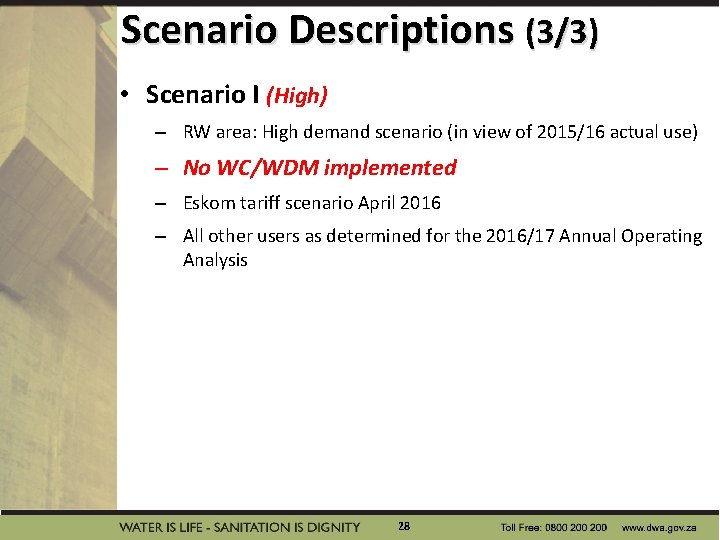
Scenario Descriptions (3/3) • Scenario I (High) – RW area: High demand scenario (in view of 2015/16 actual use) – No WC/WDM implemented – Eskom tariff scenario April 2016 – All other users as determined for the 2016/17 Annual Operating Analysis 28
Water Requirement Scenarios 29
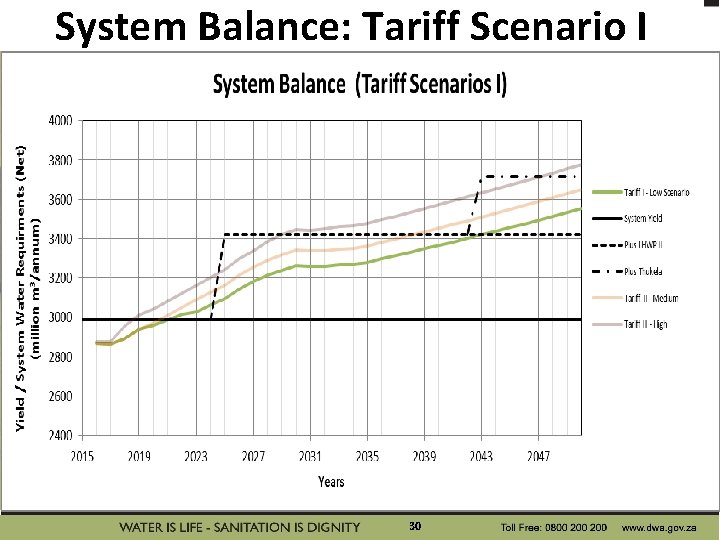
System Balance: Tariff Scenario I 30
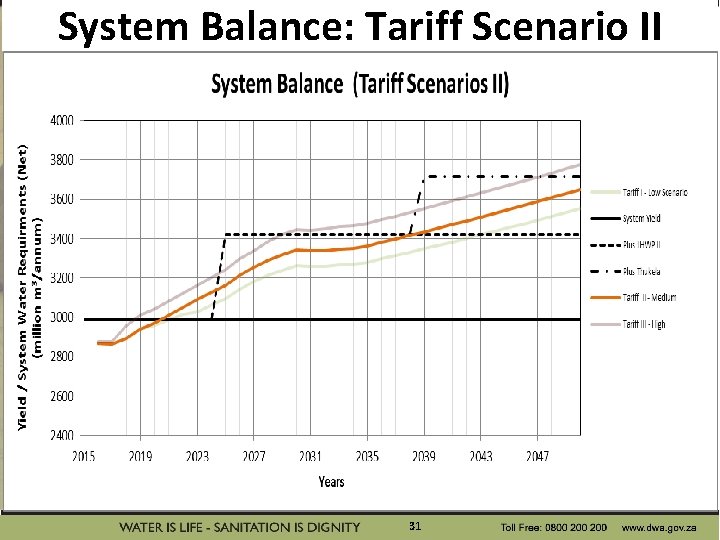
System Balance: Tariff Scenario II 31
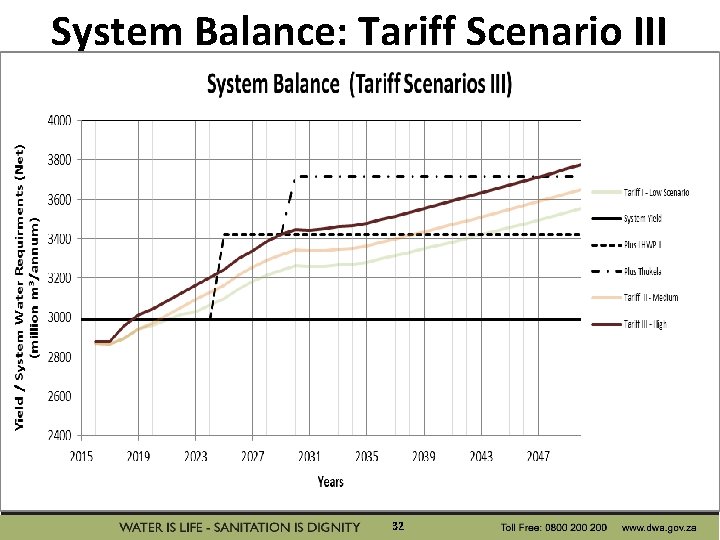
System Balance: Tariff Scenario III 32
Thank you! Any Questions? 33