
V C Muscular Stability Abdominal muscles on ventral
V. C. Muscular Stability Ø Abdominal muscles on ventral side: 1. Prevent V. C. hyperextension 2. Pull pelvis toward sternum 3. Pull thorax toward pelvis Ø Erector Spinae muscles on dorsal side: 1. Compress V. C. 2. Holds V. C. together
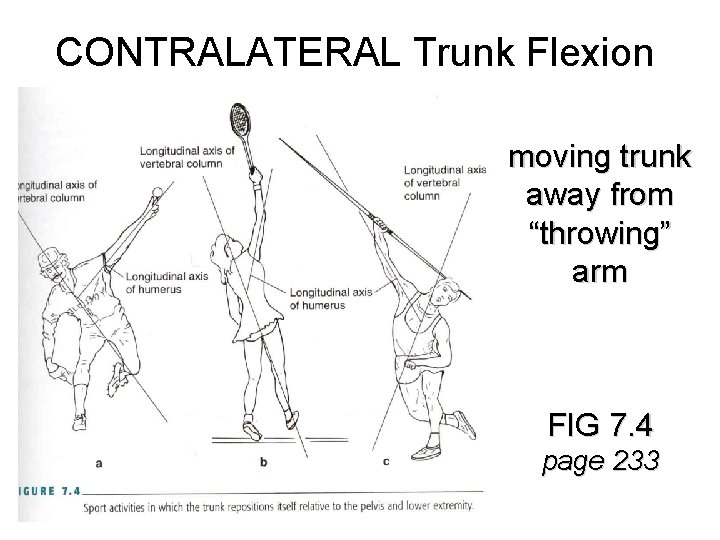
CONTRALATERAL Trunk Flexion moving trunk away from “throwing” arm FIG 7. 4 page 233

IPSILATERAL Trunk Flexion moving trunk towards the “throwing” arm “UNDERARM” Throw Pattern

LORDOSIS ü Pelvis tilted towards anterior ü often due to weak abdominal muscles ü treatment: 1. stretch hip muscles [extensors and flexors] 2. strengthen abdominals and hip flexors
![SCOLIOSIS ü mediolateral curvature of V. C. [“S” curve] ü often caused by one](http://slidetodoc.com/presentation_image_h2/3fede0e9f371df90a7111c22c6406826/image-5.jpg "SCOLIOSIS ü mediolateral curvature of V. C. [“S” curve] ü often caused by one")
SCOLIOSIS ü mediolateral curvature of V. C. [“S” curve] ü often caused by one leg shorter than other ü treatment of functional problem: 1. Stretch Concave side ) interior of curve 2. Strengthen Convex side curve ) exterior of
KYPHOSIS ü exaggerated curve of V. C. anterior/posterior ü bending forward of thoracic area along with flattening of lumbar curve ü treatment: 1. Strengthen V. C. extensors 2. Stretch V. C. flexors [thoracic area]
Rounded Shoulders Ø Treatment: 1. Strengthen retractors of shoulder girdle 2. Stretch protractors of shoulder girdle
Abdominals SIT UPS Hip Flexors Ø move vertebral column if pelvis is fixed or stabilized Ø move thighs if pelvis is fixed/stabilized Ø move pelvis if vertebral column is fixed or stabilized Ø move pelvis if thighs are fixed/stabilized
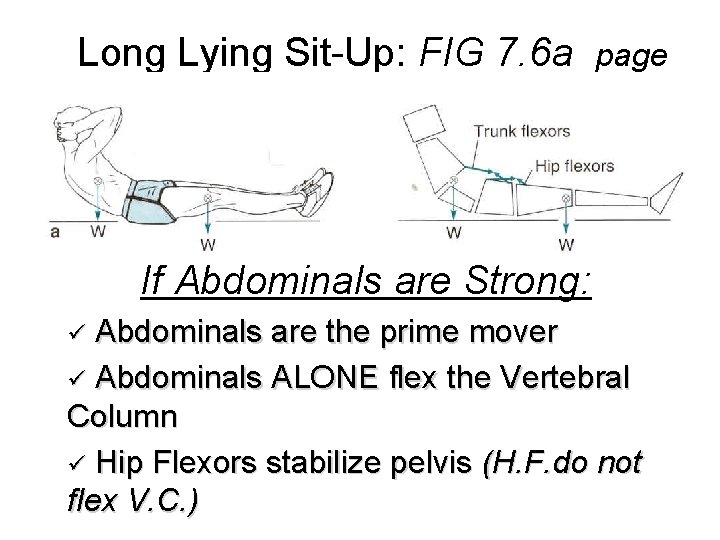
Long Lying Sit-Up: FIG 7. 6 a page 237 If Abdominals are Strong: Abdominals are the prime mover ü Abdominals ALONE flex the Vertebral Column ü Hip Flexors stabilize pelvis (H. F. do not flex V. C. ) ü
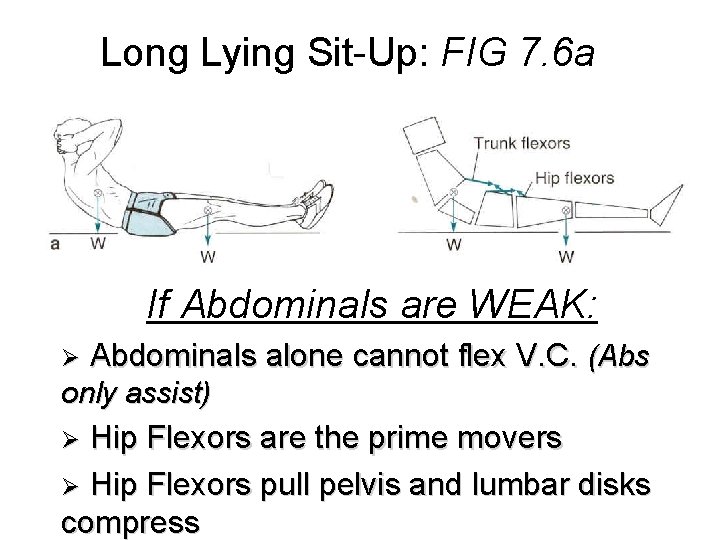
Long Lying Sit-Up: FIG 7. 6 a If Abdominals are WEAK: Ø Abdominals alone cannot flex V. C. (Abs only assist) Hip Flexors are the prime movers Ø Hip Flexors pull pelvis and lumbar disks compress Ø
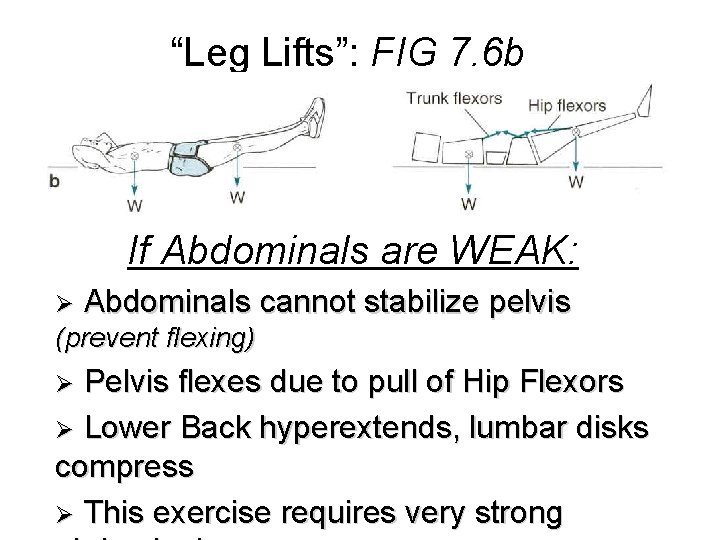
“Leg Lifts”: FIG 7. 6 b If Abdominals are WEAK: Ø Abdominals cannot stabilize pelvis (prevent flexing) Pelvis flexes due to pull of Hip Flexors Ø Lower Back hyperextends, lumbar disks compress Ø This exercise requires very strong Ø
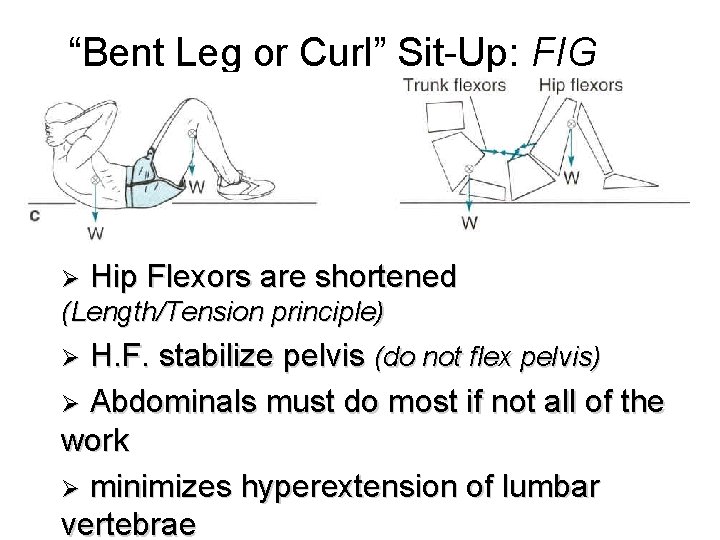
“Bent Leg or Curl” Sit-Up: FIG 7. 6 c Ø Hip Flexors are shortened (Length/Tension principle) H. F. stabilize pelvis (do not flex pelvis) Ø Abdominals must do most if not all of the work Ø minimizes hyperextension of lumbar vertebrae Ø
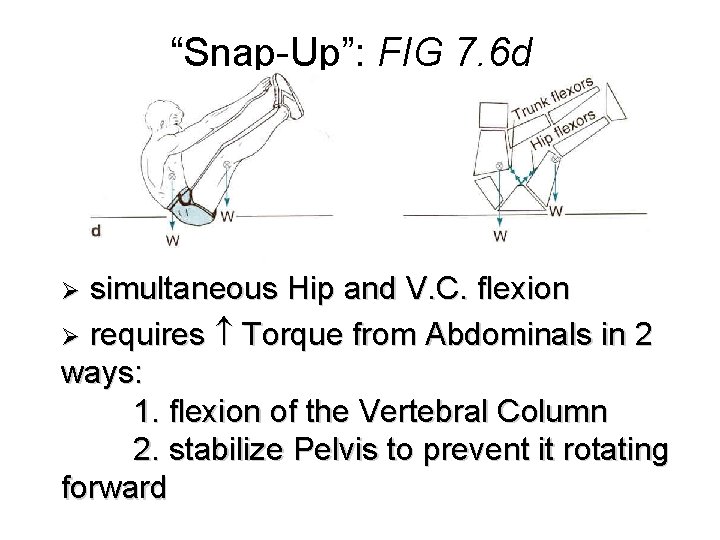
“Snap-Up”: FIG 7. 6 d simultaneous Hip and V. C. flexion Ø requires Torque from Abdominals in 2 ways: 1. flexion of the Vertebral Column 2. stabilize Pelvis to prevent it rotating forward Ø
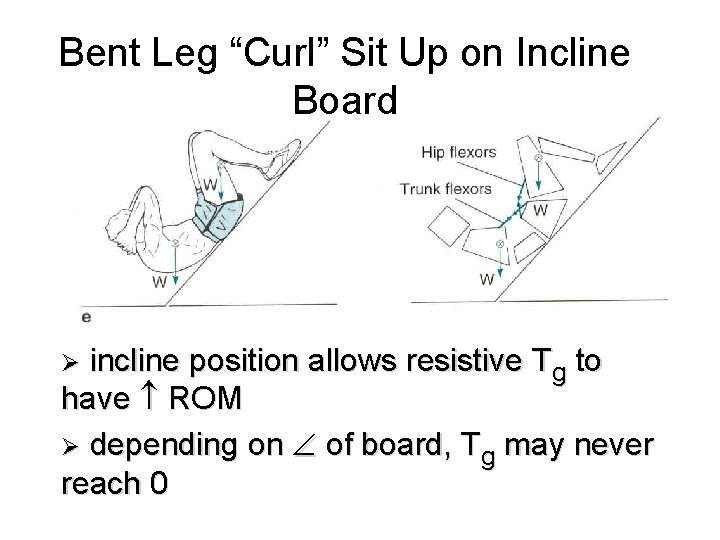
Bent Leg “Curl” Sit Up on Incline Board FIG 7. 6 e page 237 incline position allows resistive Tg to have ROM Ø depending on of board, Tg may never reach 0 Ø
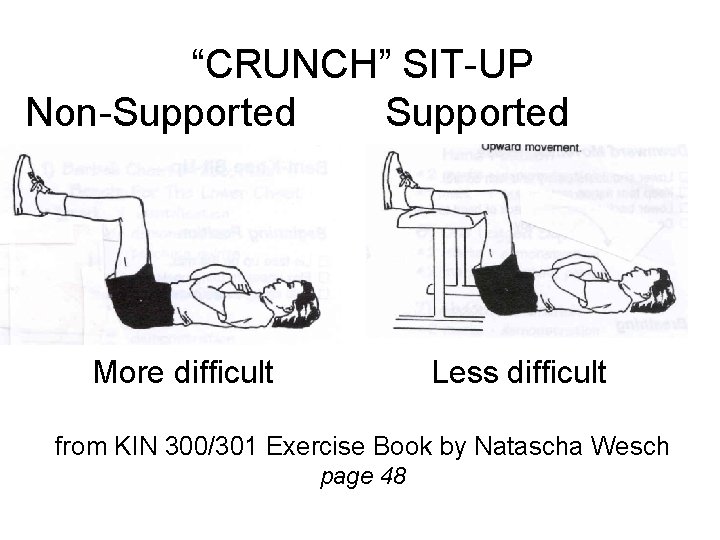
“CRUNCH” SIT-UP Non-Supported More difficult Less difficult from KIN 300/301 Exercise Book by Natascha Wesch page 48
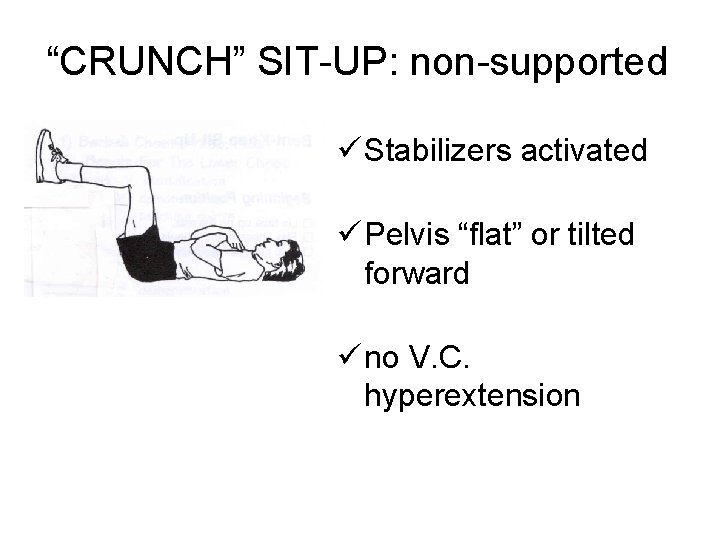
“CRUNCH” SIT-UP: non-supported ü Stabilizers activated ü Pelvis “flat” or tilted forward ü no V. C. hyperextension
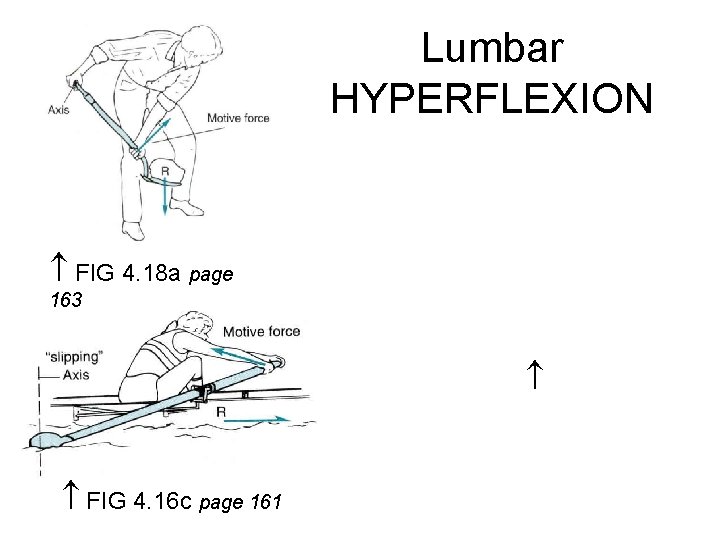
Lumbar HYPERFLEXION FIG 4. 18 a page 163 FIG 4. 16 c page 161
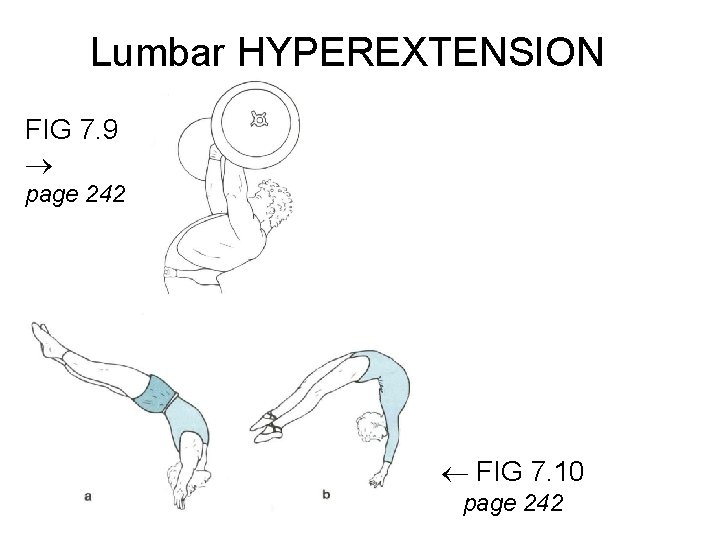
Lumbar HYPEREXTENSION FIG 7. 9 page 242 FIG 7. 10 page 242
- Slides: 18