
Utopian Societies n n n utopia an ideal
- Slides: 8
Utopian Societies n n n utopia – an ideal society Brook Farm – Massachusetts n the farm offered its members the chance to engage in intellectual activity while cooperatively running a farm Shakers – religious group n Got their name from a ritual “shaking” dance that members performed n Did not believe in marrying or having children the number of Americans who chose to live in utopian communities was relatively small many more people attempted not to escape society, but to reform it
Reforming Society Chapter 8 Section 3
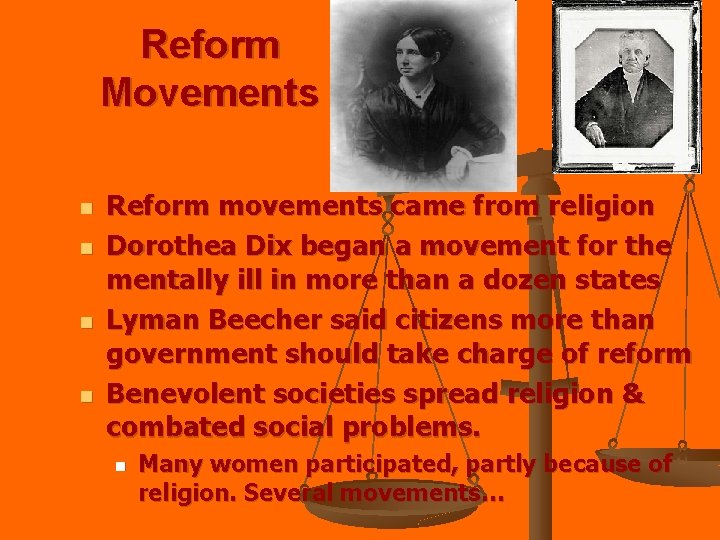
Reform Movements n n Reform movements came from religion Dorothea Dix began a movement for the mentally ill in more than a dozen states Lyman Beecher said citizens more than government should take charge of reform Benevolent societies spread religion & combated social problems. n Many women participated, partly because of religion. Several movements…
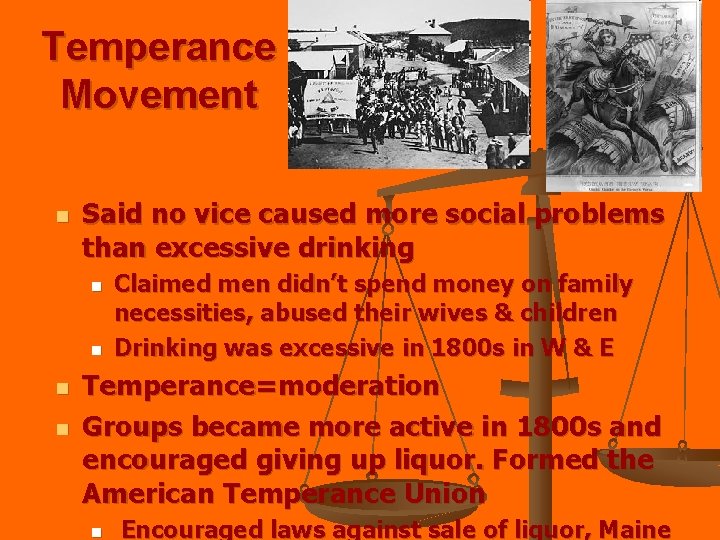
Temperance Movement n Said no vice caused more social problems than excessive drinking n n Claimed men didn’t spend money on family necessities, abused their wives & children Drinking was excessive in 1800 s in W & E Temperance=moderation Groups became more active in 1800 s and encouraged giving up liquor. Formed the American Temperance Union n Encouraged laws against sale of liquor, Maine
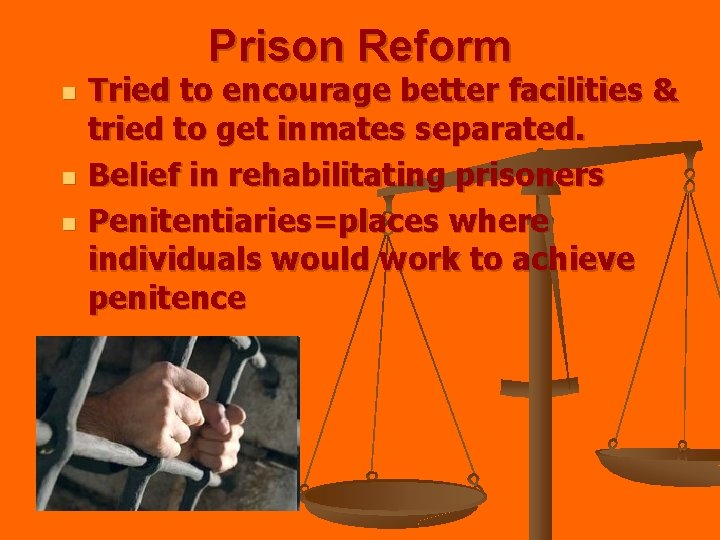
Prison Reform n n n Tried to encourage better facilities & tried to get inmates separated. Belief in rehabilitating prisoners Penitentiaries=places where individuals would work to achieve penitence
Educational Reform n n Public education, public funded schools open to all citizens. People believed that the electorate should be well educated Horace Mann, president of the MA Senate, 1837 pressed a bill for board of Education n n MA became model for all N states, also passed first mandatory school attendance Common school= elementary schools N states came around quickly but rural areas more slowly Southern reformer Calvin Wiley, Mann of NC n The rest of the South responded slowly, 1/3 white children by 1860
Women’s Education and the Women’ Movement n n Women could not vote but did take advantage of new education opportunities Emma Willbard, founded boarding school for girls that covered tradition subjects and also history, math, and literature Mary Lyon, Mount Holyoke Female Seminary in MA first institution of higher learning for women only Elizabeth Blackwell, first women to become a doctor in US or Europe founded Infirmary ofr Women and Children
Women’s Movement n Changes in how men and women worked n n Division between home and workplace Women were to tend the home sphere, raising children solemn Christian responsibility “true womanhood”, Catherine Beecher Some women felt women needed more political responsibility n Seneca Falls Convetion, Lucretia Mott & Elizabeth Cady Stanton n Declaration of Sentiments and Resolutions, Expanded Declaration of Independence