
Utility Permitting Overview Tim Pelotte Field Technician Region
- Slides: 10
Utility Permitting Overview Tim Pelotte, Field Technician, Region 2 Mike Moreau, Utility Engineer
Utility Accommodation Maine Statutes (Title 35 -A Chapter 23) authorize the use of highway corridors for various forms of utility accommodation. Such accommodation is subject to the conditions and restrictions of the “Applicable Licensing Authority”.
Permitting Jurisdiction Maine. DOT, as a designated “Licensing Authority”, issues “Utility Permits” in the following areas: • All State Highways outside of compact areas • All State-Aid Highways outside of compact areas • All controlled-access areas on state or state-aid highways, regardless of the compact limits • All state owned or maintained bridges, regardless of the compact limits
Utility Permits Location Permits – Provides legal authorization to locate a facility in a specific location within a highway corridor. Applications are typically submitted in the late planning or early design phase. Typically no cost. Highway Opening Permits – Provides authorization to enter upon and excavate within the highway corridor. Applications are typically submitted in the late design or pre-construction phase. A 10% fee, based on the area impacted, is applicable. Larger projects will typically require an escrow.
Governing Documents • Utility Accommodation Rule (17 -229 CMR Chapter 210) • Maine. DOT Highway Opening Policy • Maine. DOT Standard Specifications
Basic Accommodation Rules for Underground Utilities - All facilities constructed within the highway corridor must be permitted - Depth: 3 feet minimum - Horizontal Clearance: 3 feet minimum - Vertical Clearance: 1 foot minimum - Coordination with adjacent existing utilities for new utility construction is required. - A Dig Safe™ call is NOT coordination.
Typical Application Requirements • • • Signed Application Form General Location Map Specific Location Plan(s) Traffic Control Plan(s) Documentation of Utility Coordination
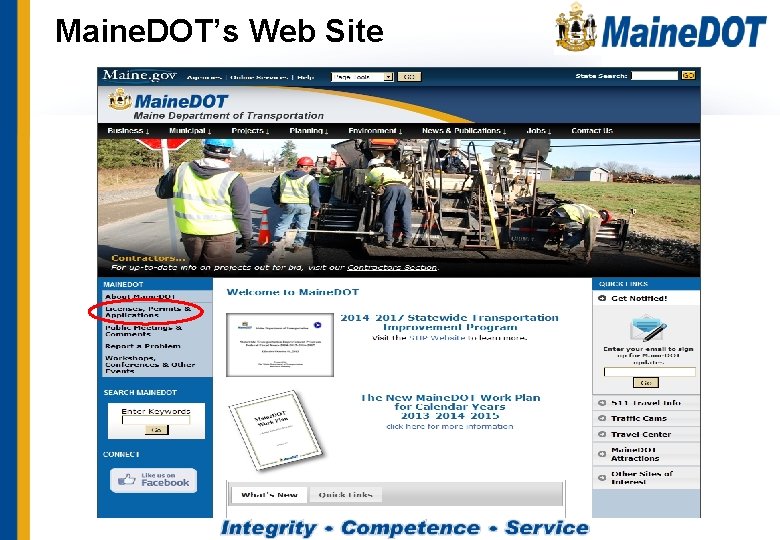
Maine. DOT’s Web Site
Web Site Resources • • Policies, Rules and Specifications Permit Application Forms Important Links Maine. DOT’s Map Viewer, which includes: • Roads and Corridor Priorities • Compact Areas • Traffic Volumes • Work Plan Projects • Survey Information • And much, much more!
Field Coordination